
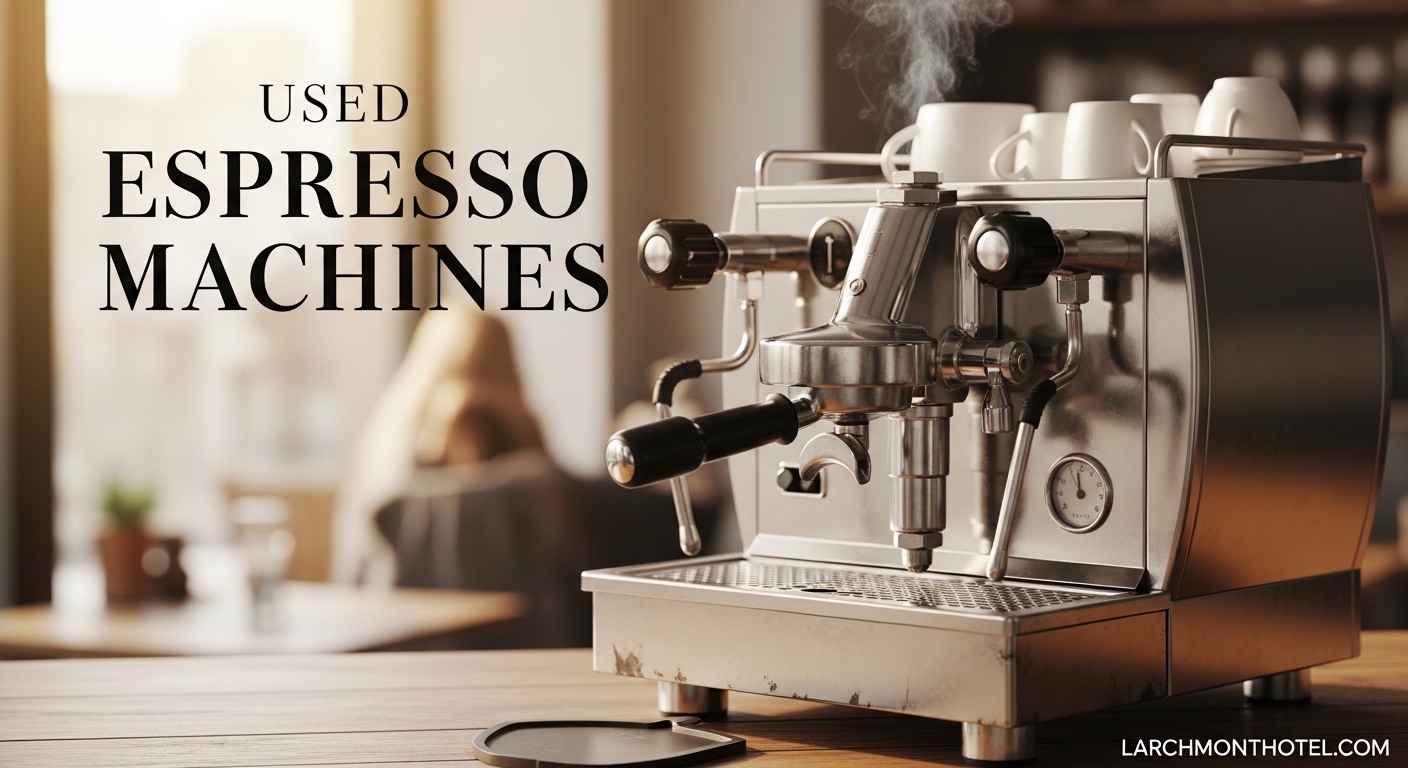
I’ve bought and sold over 50 used espresso machines in the past decade, helping friends upgrade from entry-level equipment and consulting for small cafes on tight budgets. The used market can save you hundreds or even thousands of dollars, but I’ve also seen people lose money on machines that turned out to be expensive paperweights. Let me walk you through how to buy used espresso equipment without getting burned.
Buying a used espresso machine is worth it for most people because you can save 30-70% compared to new prices while getting access to higher-quality equipment. The key is knowing what to inspect, where to shop, and which red flags should make you walk away.
In this guide, I’ll share what I’ve learned from years of navigating the secondary market. You’ll discover how to spot hidden problems, which brands hold their value best, realistic price expectations for different machine categories, and the exact questions I ask sellers before handing over money.
The math is simple: a prosumer espresso machine that costs $2,000 new can often be found used for $800-1,200 if you’re patient and know what to look for. That’s not just savings—it’s the difference between settling for a plastic home machine and stepping up to commercial-grade components.
Prosumer grade at home prices. The biggest advantage is accessing equipment built for cafes and serious enthusiasts. Machines like Rocket Espresso, ECM, or Rancilio are built with solid brass, stainless steel, and components designed to run for years. When you buy used, you can sometimes get these premium machines for what you’d pay for a mid-range new unit.
Better depreciation curve. Espresso machines lose value fastest in the first 2-3 years. A three-year-old Rocket Appartamento might sell for 40-50% off its original price, even with moderate home use. This depreciation works in your favor if you’re the buyer.
Environmental benefits. Quality espresso machines are built to last 10-15 years with proper maintenance. Buying used extends this lifecycle instead of adding to manufacturing demand.
However, there are real trade-offs. You won’t have a manufacturer warranty, maintenance history is often unknown, and you need to be comfortable with basic diagnostics or have access to a technician. Some machines need $200-400 in repairs immediately after purchase.
Home espresso machines typically last 8-12 years with proper maintenance, while commercial machines can run 15-20 years with regular servicing. Prosumer machines (higher-end home models) often fall in the 10-15 year range when well-maintained.
Entry-level machines under $500 new often last 5-8 years due to more plastic components and smaller boilers. These lose value quickly and aren’t always great used buys unless very recent and lightly used.
Maintenance matters more than age. A 10-year-old machine that was descaled regularly, backflushed weekly, and serviced annually will outperform a neglected 3-year-old unit.
Prices in the used market vary wildly based on brand, condition, and seller motivation. Here are realistic ranges based on current market conditions:
| Machine Category | New Price | Used Price Range | Savings | Best Age to Buy |
|---|---|---|---|---|
| Entry Level (Gaggia, De’Longhi) | $150-400 | $50-150 | 50-70% | 1-3 years old |
| Mid-Range (Breville Barista series, Rancilio Silvia) | $400-800 | $200-400 | 40-55% | 1-5 years old |
| Prosumer (Rocket, ECM, Profitec) | $1,200-2,500 | $600-1,200 | 35-50% | 1-8 years old if maintained |
| Home-Commercial Hybrids (La Marzocco Linea Mini) | $4,000-7,500 | $2,000-4,500 | 30-45% | 1-10 years if serviced |
| Commercial Machines | $5,000-15,000+ | $1,500-6,000 | 50-70% | Under 50,000 hours |
These are general ranges. A pristine Rocket with low hours and recent service might sell at the high end, while a similar machine with cosmetic issues or unknown history could be 20-30% cheaper.
The right marketplace depends on your budget, technical comfort, and location. Some sources offer buyer protection, while others require more diligence but better deals.
eBay offers the largest selection and buyer protection programs, but you typically can’t inspect before purchase. Prices run 10-20% higher than local marketplaces, but you can find specific models and have recourse if the item doesn’t match the description. Best for: Finding particular models when you’re not in a hurry, parts machines, or purchases protected by eBay’s money-back guarantee.
Facebook Marketplace has become my go-to for local deals. You can inspect in person, pay cash, and often negotiate. Sellers range from coffee enthusiasts upgrading their setup to people clearing out kitchen equipment. Trust is variable—check seller profile and look for detailed descriptions. Best for: Local machines you can test before buying, quick sales, and cash negotiation.
Craigslist still moves commercial equipment and older prosumer machines. No buyer protection means you need to be cautious, but deals can be found, especially from cafes upgrading equipment or commercial kitchen liquidations. Best for: Commercial equipment, local pickup deals, and test-before-buy scenarios.
Home-Barista Classifieds and CoffeeGeek Forums are where enthusiasts sell to other enthusiasts. Machines are typically well-maintained, described accurately, and priced fairly. You’ll often find detailed service history and community member vouching. Prices run slightly higher, but the risk is much lower. Best for: Prosumer equipment, well-maintained machines, and buying from knowledgeable sellers.
Reddit r/espresso has active buying/selling threads. Community vetting means problematic sellers get called out quickly. The community is generous with advice if you post listing links asking for opinions. Best for: Community-trusted sales, price-check requests, and advice-driven purchases.
Local coffee equipment stores often have trade-in or refurbished sections. You’ll pay more than private party, but machines are inspected, tested, and often come with a 30-90 day warranty. Best for: First-time used buyers who want warranty peace of mind.
Restaurant auctions and coffee shop closures can offer commercial machines at steep discounts. These machines often have high hours but are built for commercial use. Ask about usage patterns and maintenance if possible. Best for: Commercial buyers or those comfortable with potential repairs.
This is the most important section. I’ve created a step-by-step inspection process based on machines I’ve evaluated. Print this and bring it when examining a machine in person.
Red Flags: Visible rust on internal components, boiler leaks, non-functional pumps or heating elements, missing critical parts, seller refusal to demo, significantly below-market pricing, vague descriptions, or no knowledge of maintenance history. Walk away from these.
Caution Signs: Older machines without service records, discontinued models with limited parts availability, sellers with no coffee knowledge, machines stored unused for long periods, cosmetic wear suggesting poor care, or inconsistent seller stories. Proceed with caution or negotiate price accordingly.
Never buy a used machine without testing it if at all possible. Here’s my exact testing procedure:
Before meeting or committing, ask these questions. Evasive answers are themselves warning signs.
Some brands hold value better and are more likely to have been maintained properly. Based on resale demand and reliability data:
Rancilio – Very high demand, especially Silvia and Silvia Pro models. Parts are widely available, and the community has extensive repair documentation. These are workhorses that handle high home usage. Resale value remains strong.
Rocket Espresso – Premium build quality with E61 group heads and aesthetic appeal. Appartamento, Mofo, and Cellini models consistently sell quickly. These machines hold value exceptionally well and often have enthusiast owners who maintain them properly.
La Marzocco – Commercial heritage with prestige and reliability. The Linea Mini and GS3 are dream machines for many home baristas. Parts support is excellent, and these hold value better than almost any other brand. Used prices remain high but justify it through longevity.
ECM – German engineering with quality components. Mechanika, Classika, and Synchronika models are sought after. Serviceability is good, and the build quality means fewer problems when buying used.
Profitec – Known for build quality and heat exchanger options. Pro 500, Pro 700, and Go models have good resale demand. These are reliable machines with straightforward repairs.
Quick Mill – Italian build with E61 groups and good value. Andreja, Vetrano, and Carola models appear regularly on the used market. Parts availability is good, though resale value is moderate rather than high.
Nuova Simonelli – Commercial expertise with home options like the Oscar II. Parts availability is a strong point. These machines are workhorses but don’t have the enthusiast following that Rocket or ECM command.
Breville – Feature-rich and user-friendly. Barista Express, Barista Touch, and 870 models have high demand in entry to mid-range. Good for first-time used buyers, though build quality isn’t on par with prosumer Italian machines.
Entry-level De’Longhi and older Gaggia models can work for budget buyers but often have plastic construction, difficult repairs, and limited parts availability for very old units. I recommend sticking to newer models if considering these brands, or saving for a Rancilio Silvia instead.
| Factor | Used (Private Sale) | Refurbished (Dealer) | New |
|---|---|---|---|
| Price | Lowest | 20-40% above used | Highest |
| Warranty | None | 30-90 days typical | 1-2 years |
| Condition Known? | Variable | Inspected & tested | Guaranteed |
| Maintenance History | Unknown often | Documented | None needed |
| Risk Level | Higher | Lower | Lowest |
Refurbished machines are professionally inspected, repaired, cleaned, and tested by technicians. They typically include new gaskets, descaled boilers, and often come with warranty. Prices run higher than private party sales but lower than new.
Choose refurbished if you want some warranty protection and aren’t comfortable diagnosing problems yourself. The extra cost is essentially insurance against immediate repairs.
Choose private party used if you’re comfortable with risk assessment and have a bit of technical aptitude. The savings are larger, especially for motivated sellers.
Understanding what can go wrong helps you evaluate whether a machine is priced right. Here are common issues and what they cost to fix:
| Problem | Symptoms | Repair Cost (DIY / Pro) |
|---|---|---|
| Limescale buildup | Reduced flow, temperature inconsistency, weak steam | $10-50 / $100-200 |
| Worn gaskets/seals | Leaks around portafilter, steam wand dripping | $10-40 / $75-150 |
| Pump failure | No pressure, unusual noise, low flow | $50-150 / $150-350 |
| Heating element failure | No heat, temperature not rising | $150-300 / $300-500 |
| Pressurestat/thermostat failure | Overheating, no temperature control | $50-150 / $150-300 |
| Solenoid valve failure | Constant drip, pressure loss | $30-80 / $100-200 |
| Boiler leak | Water dripping, electrical hazard | Replace machine usually |
Use these costs as negotiation leverage. If a machine needs $200 in gaskets and descaling, factor that into your offer price.
Sellers often expect some negotiation, especially if the machine has been listed for a while. Based on successful deals I’ve closed:
Base your offer on condition. If you found issues during testing, point them out. “I noticed the steam wand has low power and it’s missing a filter basket—would you take $X?”
Research comparable listings. Show the seller similar machines and their prices. “I’ve seen three of these model sell for $Y-250 recently.”
Ask for included accessories. If the seller won’t drop price, ask for a knock box, tamper, or extra portafilter to be included.
Cash offers carry weight. “I can bring $X in cash today” often works better than higher offers contingent on later payment.
Walk away power. If the price isn’t right, be willing to pass. Many machines sit for weeks, and sellers may reach out with lower offers later.
Moving an espresso machine requires care. These are heavy (20-60 pounds typically) and contain fragile internal components and water.
Drain the machine before transport if possible. Run water through the group and steam wand to empty the boiler, then let it cool completely.
Secure internal components. Remove portafilter and lock the group handle in a position that protects the gasket. Pad the machine with towels or bubble wrap.
Keep it upright. Never lay a machine on its side—water can leak into electronics and damage components. Transport upright in a vehicle with adequate headroom.
Wait before powering on. If a machine was transported in cold weather, let it warm to room temperature for 2-4 hours before plugging in. Condensation can cause electrical shorts.
Yes, for most buyers the savings of 30-70% make used machines worth it, especially if you can access prosumer-quality equipment that would be out of budget new. However, you need to be comfortable with the risk of potential repairs and the lack of warranty. I recommend used for buyers who can inspect machines in person, have some technical aptitude, or can access repair technicians.
The key things to inspect are: overall cleanliness indicating maintenance level, rust or corrosion suggesting water damage, proper operation of pump and heating element, leaks around gaskets or boiler, all original components present (especially portafilter), and evidence of modifications. Always test the machine from cold start if possible—this reveals heating problems and slow warm-up times that a pre-warmed machine would hide.
Popular sources include eBay for the largest selection with buyer protection, Facebook Marketplace for local deals you can inspect in person, Craigslist for commercial equipment and local pickups, and coffee community forums like Home-Barista Classifieds and Reddit r/espresso for well-maintained machines sold by knowledgeable enthusiasts. Local coffee equipment stores often have refurbished sections with warranty included, though prices run higher than private sales.
Entry-level machines (Gaggia, De’Longhi) cost $50-150 used. Mid-range home machines like Breville Barista series or Rancilio Silvia run $200-400. Prosumer machines from Rocket, ECM, or Profitec range from $600-1,200. Premium home-commercial hybrids like La Marzocco Linea Mini sell for $2,000-4,500. Commercial machines vary widely but typically cost $1,500-6,000 depending on size, age, and hours.
Main risks include unknown maintenance history leading to expensive repairs, hidden problems that only appear after testing, lack of warranty or recourse with private sellers, potential for immediate $200-500 in repairs (gaskets, descaling, pump issues), difficulty finding repair technicians in some areas, and the possibility of buying a machine that ends up being uneconomical to fix. Boiler leaks or heating element failures can make machines total losses.
Refurbished machines are professionally inspected, repaired, cleaned, and tested by technicians. They typically include new gaskets, descaled boilers, and 30-90 day warranties. Prices run 20-40% above private party used sales but remain below new prices. Choose refurbished if you want warranty protection and aren’t comfortable diagnosing problems yourself. Choose private used if you’re comfortable with risk assessment and want maximum savings.
Home espresso machines typically last 8-12 years with proper maintenance. Prosumer machines (higher-end home models) often reach 10-15 years when well-maintained. Commercial machines can run 15-20 years with regular servicing. Entry-level machines under $500 new often last 5-8 years due to more plastic components. Maintenance matters more than age—a neglected 3-year-old machine may need more repairs than a well-maintained 10-year-old unit.
Rancilio has very high demand in the used market with excellent resale value, especially the Silvia line. Rocket Espresso machines hold value exceptionally well due to premium build quality and enthusiast following. La Marzocco commercial heritage means excellent resale value, particularly for Linea Mini and GS3 models. ECM and Profitec both have strong resale due to German engineering build quality. Breville holds moderate value in the entry to mid-range but depreciates faster than prosumer brands.
Request the machine be cold when you arrive. Time the heating cycle (10-15 minutes is normal for home machines). Run a blank shot without coffee to check for smooth water flow and no leaks. Pull an actual extraction if possible, checking pressure and flow consistency. Test steam power by steaming milk—strong machines finish in 20-40 seconds. Listen for unusual noises like grinding or banging. Watch the pressure gauge if present—it should cycle around 1.1-1.2 bar.
Ask: How long have you owned it and was it home or commercial use? How often was it descaled and when was it last professionally serviced? What’s your water source (hard water causes limescale)? Why are you selling? Have any repairs been done? Are all original parts included? Does everything work perfectly or are there any known issues? Evasive answers are themselves warning signs.
Only consider commercial machines for home if you have adequate space (they’re large and heavy), 220V electrical access (most commercial machines require it), and high daily volume needs. Commercial machines often have high hours when used, lack home-friendly features, and require 15-20 amp dedicated circuits. Prosumer machines like Rocket or ECM typically offer better experiences for home use. Commercial machines make sense only for serious entertainers or those hosting large gatherings regularly.
Minor repairs like gaskets ($10-40 DIY) or descaling ($10-50) are always worth it. Pump replacement ($50-150 DIY) makes sense for quality machines but may not for entry-level units. Heating element or boiler problems ($150-500+) typically exceed machine value for entry and mid-range models—repair only if it’s a prosumer machine like Rocket, ECM, or Rancilio where the machine base value justifies it. As a general rule, repairs over 50% of replacement cost mean it’s time to replace.
The Rancilio Silvia is often the best first used machine—it’s reliable, parts are widely available, and the community has extensive repair documentation. It typically sells used for $250-350. For even lower budgets, Gaggia Classic models can work but require more careful vetting. Breville Barista Express offers easier operation for beginners but check for descaling maintenance. Avoid highly complex prosumer machines (dual boilers, E61 groups) as your first machine unless you’re comfortable with maintenance.
Yes, negotiation is expected, especially for machines that have been listed for a while or have issues you discovered during inspection. Base your offer on condition—point out problems like missing accessories, low steam power, or needed descaling. Research comparable listings and show these to sellers. Cash offers carry more weight. Be willing to walk away if the price isn’t right—many machines sit for weeks and sellers may accept lower offers later.
Private party used sales are almost always as-is with no warranty or return option. That’s the trade-off for the lower prices compared to refurbished or new machines. Refurbished machines from dealers typically include 30-90 day warranties and sometimes extended warranty options for additional cost. Some eBay purchases offer buyer protection if the item doesn’t match the description, but this is not the same as a warranty and doesn’t cover issues that develop after purchase.
Buying a used espresso machine can be a smart financial decision or an expensive lesson. The difference is in your preparation. Research fair prices for your target model, learn basic inspection techniques, and be willing to walk away from deals that don’t feel right.
Start by defining what you need rather than what looks appealing. A reliable Rancilio Silvia that pulls great shots is better than a heavily discounted premium machine that needs $500 in repairs.
Trust your instincts during inspections. If the seller seems evasive, the machine looks neglected, or anything feels off, pass on it. Another listing will appear. Patience has saved me more money than aggressive negotiation ever has.
The used market rewards careful buyers who do their homework. With this guide’s inspection checklist, price expectations, and marketplace knowledge, you’re equipped to find a quality machine that will serve you well for years.