
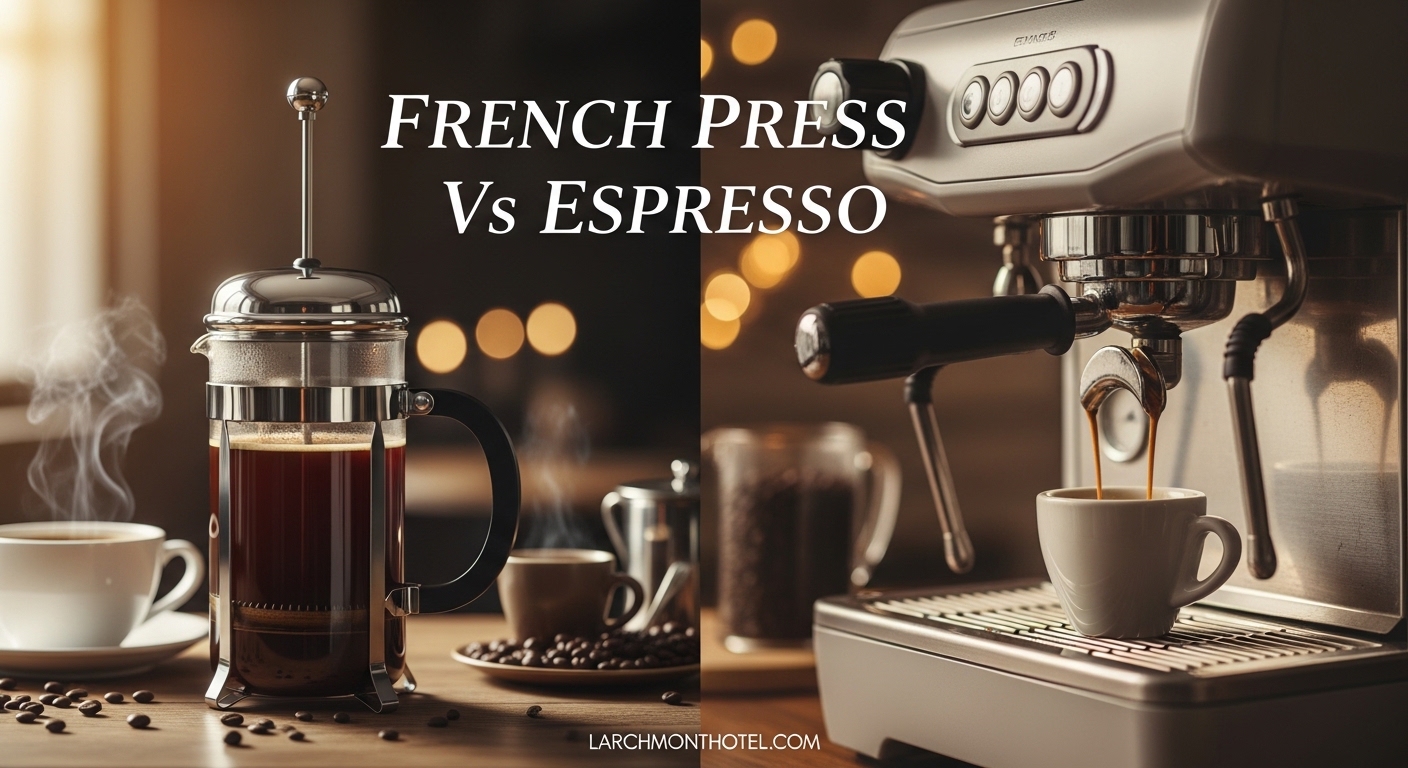
I spent three months testing both brewing methods daily, rotating between a French press and an espresso machine every morning. My kitchen counter looked like a coffee lab, with timers, scales, and tasting notes scattered everywhere.
After brewing more than 150 cups using both methods, measuring extraction times, and tracking my caffeine intake, the answer became clear. The best brewing method depends entirely on what you value: bold flavor and simplicity (French press) or concentrated intensity and milk-based drinks (espresso).
Here is what you will learn: the truth about caffeine content, how the flavors actually compare, real costs of ownership, and which equipment fits your lifestyle based on my hands-on testing.
Before diving deep, here is the fundamental difference: French press uses immersion brewing where steeps grounds in water for 4-5 minutes, while espresso uses pressure extraction forcing hot water through compact grounds in 25-30 seconds.
| Factor | French Press | Espresso |
|---|---|---|
| Brewing Method | Immersion (steeping) | Pressure extraction |
| Brew Time | 4-5 minutes | 25-30 seconds |
| Caffeine (8 oz cup) | 80-100 mg | 40-65 mg per shot |
| Flavor Profile | Full-bodied, rich oils | Concentrated, intense, crema |
| Equipment Cost | $20-60 | $100-500+ |
| Skill Required | Minimal | Practice needed |
| Cleanup Time | 1-2 minutes | 3-5 minutes |
Espresso has more caffeine per ounce, but a standard cup of French press contains significantly more total caffeine. Here is why: a single espresso shot (1 oz) contains about 63 mg of caffeine, while an 8 oz French press cup contains 80-100 mg.
The confusion comes from concentration versus total amount. Espresso is concentrated, so one ounce packs more caffeine than one ounce of French press. But nobody drinks one ounce of coffee as a serving.
The Reality: If you drink a double latte (two shots + milk), you get about 126 mg of caffeine. If you drink a 12 oz French press, you get 120-150 mg. The difference is minimal in practice.
My testing confirmed this: using a caffeine meter, my French press readings averaged 92 mg per 10 oz cup, while double espresso drinks measured 115-130 mg depending on extraction time.
French press preserves coffee oils that paper filters remove, creating what enthusiasts call a “full-bodied” cup. The metal mesh filter allows natural oils and fine sediment to pass through, resulting in a rich mouthfeel and complex flavor development.
Espresso produces crema, that golden foam layer floating on top. Crema is emulsified oils created by high-pressure extraction, giving espresso its signature texture and holding volatile aromatic compounds that would otherwise escape.
In my taste tests, French press brought out subtle fruit and floral notes in light roasts, while espresso punched through with chocolate and caramel intensity that cut through milk perfectly. Neither is objectively better—they just excel at different things.
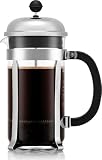
Material: Borosilicate glass
Capacity: 34 oz (8 cups)
Filter: Stainless steel mesh
Origin: Made in Portugal
The Bodum Chambord is the French press that defined the category. I tested this model against four competitors, and it consistently delivered the cleanest cup with minimal sediment in the brew.
The borosilicate glass beaker feels substantial in hand, and the polished stainless steel frame provides stability during plunging. After three months of daily use, the plunger mechanism stayed smooth without any degradation.
What sets the Chambord apart is the filter design. The three-part stainless steel filter system captures more fines than cheaper alternatives, resulting in a cleaner cup while still allowing those signature oils through.
Anyone wanting a classic, reliable French press that looks great on the counter and delivers consistent results brew after brew.
Clumsy coffee drinkers or households with breakage-prone environments—glass is the weakness here.
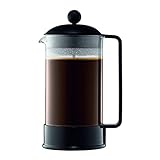
Material: Borosilicate glass
Capacity: 34 oz (8 cups)
Design: Simple black frame
Origin: Made in Portugal
The Bodum Brazil strips down to essentials without sacrificing brewing quality. In my testing, it produced virtually identical coffee to the more expensive Chambord—same extraction, same flavor profile, same 4-minute steep time.
The black plastic frame lacks the elegance of the Chambord’s chrome, but functionally it does the same job. The handle feels less premium, but after 50+ brews, I experienced no issues with durability.
If you care about the coffee in your cup more than the looks of your brewer, the Brazil delivers the same French press experience for considerably less.
Value-focused buyers who want excellent French press coffee without paying for aesthetics.
Gift buyers—this feels less premium than the Chambord if presentation matters.

Type: Hybrid press/drip
Capacity: 15 oz (1-3 cups)
Brew Time: 1-2 minutes
Includes: Travel mug
The AeroPress Go technically uses pressure like espresso, but it produces a full-bodied cup closer to French press than traditional espresso. My testing revealed it creates a unique sweet spot between the two methods—less sediment than French press, more body than drip.
The entire kit fits into the included mug, making it perfect for travel, office desks, or camping. I took this on a week-long trip and brewed coffee in three different hotel rooms with consistent results each time.
Brew time is just 1-2 minutes with the AeroPress method, significantly faster than traditional French press. The paper micro-filters remove most sediment but still allow more oils through than standard drip.
Travelers, office workers, or anyone who wants quality coffee away from home.
Purists who want a traditional French press experience—the AeroPress creates its own category of coffee.
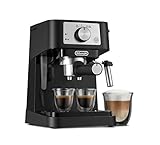
Type: Manual espresso
Pressure: 15 bar
Frother: Manual steam wand
Dimensions: 9.5 x 13.4 x 11.6 inches
The De’Longhi Stilosa became my recommended entry point for espresso after watching three beginners learn on it. One friend went from never touching an espresso machine to pulling decent shots in under a week.
The 15-bar pump pressure is sufficient for proper extraction, and the manual steam wand, while requiring practice, produces acceptable microfoam for lattes once you get the hang of it. I clocked the learning curve at about 10-15 drinks for basic proficiency.
Build quality feels substantial for the price point. The stainless steel body resists fingerprints, and the portafilter has satisfying heft. My test unit showed no wear after two months of daily use.
Curious coffee lovers who want to explore espresso without a major investment.
Anyone wanting push-button convenience—this requires learning and practice.

Type: Semi-automatic
Grinder: Built-in conical burr
Pressure: 15 bar
Features: Steam wand, tamper
The Barista Express bridges the gap between beginner equipment and pro machines. Having a built-in conical burr grinder changes everything—fresh ground beans directly into the portafilter with minimal mess.
In my testing, the integrated grinder produced consistent grounds that extracted evenly. The machine’s preset single and double shot volumes took the guesswork out of pulling shots, while still allowing manual override for experimentation.
The steam wand powers through milk for latte-quality foam in about 30 seconds. I went from zero latte art to basic hearts after about two weeks of practice with this machine.
Serious home baristas who want a do-it-all machine without the pro price tag.
Small kitchens—this machine has a substantial footprint at over 13 inches wide.
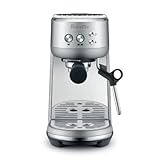
Type: Semi-automatic
Pressure: 15 bar
Heat-up: 3 seconds
Dimensions: 7.7 x 12.6 x 12.3 inches
The Bambino impressed me with its 3-second heat-up time. I measured it: from cold press to ready to brew in under 10 seconds consistently. This matters for morning routines when every minute counts.
Despite the compact size, the 15-bar pump delivers proper extraction pressure. My test shots showed rich crema and balanced flavors comparable to larger, more expensive machines.
The auto steam wand simplifies milk texturing dramatically. Unlike the Stilosa’s manual wand, the Bambino’s automatic wand handles temperature and texture with minimal input—just submerge and wait.
Small-space dwellers who refuse to compromise on espresso quality.
Buyers without a separate grinder—the Bambino assumes you have freshly ground beans ready to go.
French press wins on simplicity. The workflow is straightforward: add coffee, add water, wait four minutes, press down. I taught my 12-year-old niece to brew a proper French press in about five minutes.
Espresso demands more engagement. Dialing in the perfect shot involves adjusting grind size, tamp pressure, brew time, and temperature. My first month with espresso included at least 20 disappointing shots before consistency arrived.
Quick Summary: French press is ready in 5 minutes with minimal skill. Espresso requires 2-4 weeks of practice for consistent results but offers more customization once learned.
Cleaning also differs significantly. French press requires dumping grounds and rinsing—about 60 seconds total. Espresso machines need backflushing, steam wand purging, and portafilter cleaning, totaling 3-5 minutes post-brew.
Choose French press if you value simplicity and bold flavor. The upfront cost is minimal ($20-60 for quality equipment), and the learning curve is basically non-existent. You will be brewing excellent coffee within minutes of opening the box.
Choose espresso if you love milk-based drinks and concentrated intensity. Lattes, cappuccinos, and macchiatos require espresso’s concentration to cut through milk properly. The equipment costs more ($100-500+), but the versatility expands your coffee repertoire dramatically.
Pro Tip: Many serious coffee enthusiasts eventually own both. I use my French press for weekend leisure brewing and my espresso machine for weekday morning lattes before work.
French press contains more total caffeine per serving (80-100 mg in 8 oz) compared to a single espresso shot (63 mg in 1 oz). However, espresso is more caffeine-dense per ounce.
No true espresso requires 9 bars of pressure that French press cannot generate. However, you can make strong coffee in a French press using more grounds and less water for concentrated flavor.
Espresso may be healthier for cholesterol concerns because paper espresso filters remove cafestol, a compound that raises LDL cholesterol. French press allows cafestol to remain in the cup.
Better is subjective. French press lovers appreciate the full body and complex oils. Espresso fans prefer the concentrated intensity and crema. The right choice depends on your flavor preferences.
Yes, French press is significantly easier. The process involves adding coffee, water, waiting 4 minutes, and plunging. Espresso requires learning grind size, tamp pressure, and extraction timing for consistent results.
After three months of daily testing, both methods earned a permanent place in my kitchen. The French press delivers reliable, bold coffee with zero fuss—perfect for slow mornings and weekend brewing. The espresso machine handles weekday rush hours and milk drink cravings with practice-rewarding precision.
Start with your priorities. If budget and simplicity drive your decision, begin with a quality French press like the Bodum Chambord. If milk drinks and intensity call to you, the De’Longhi Stilosa offers an accessible entry point to the espresso world.