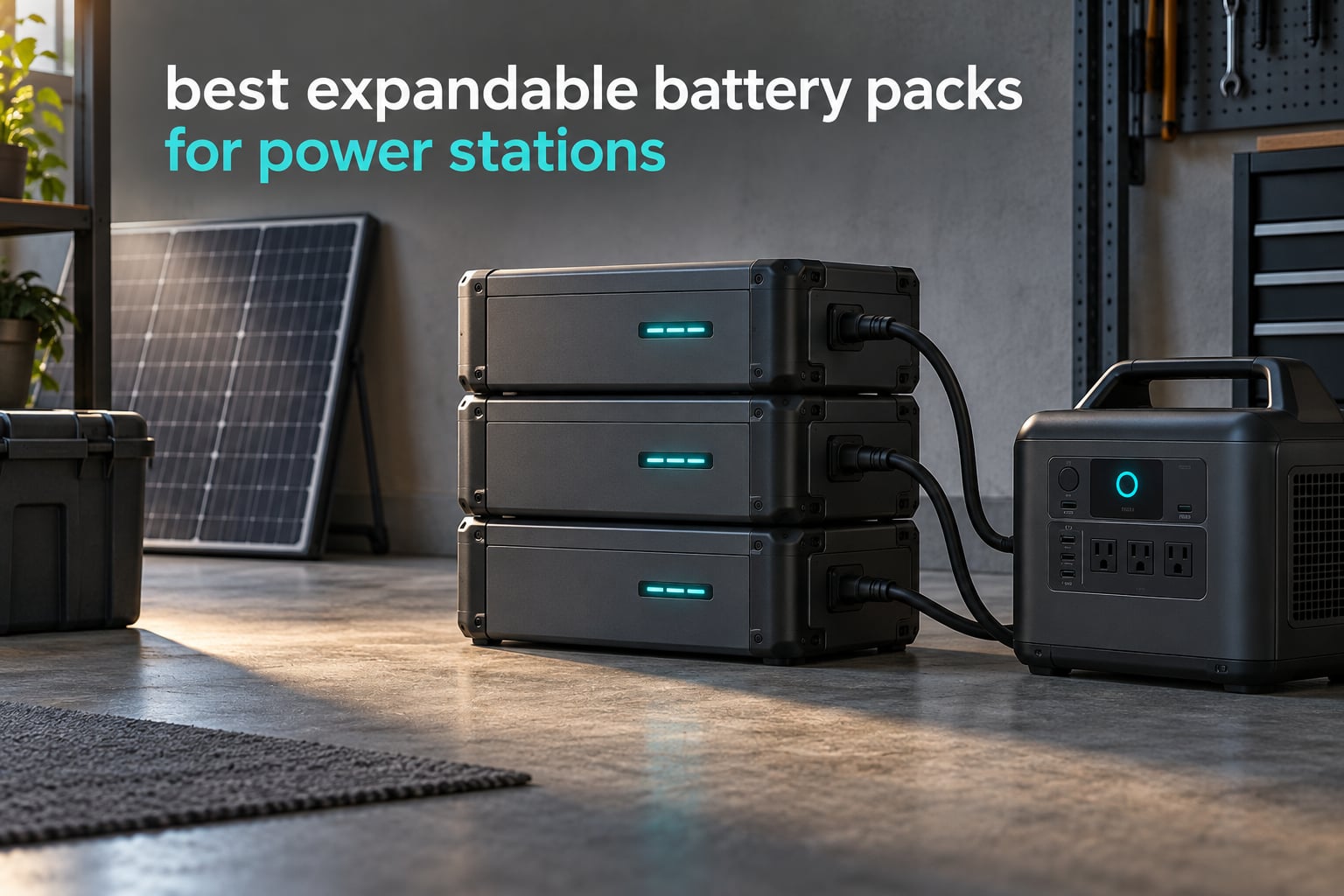

The best expandable battery packs for power stations are the EcoFlow DELTA 2 Max extra battery, the BLUETTI B300K, and the Jackery Battery Pack 2000 Plus, and the single fact that decides which one you can actually buy is compatibility. Expansion packs are locked to one brand and usually one model family. They are not universal accessories, and the connector on the box will not fit a unit from another manufacturer no matter how close the watt-hour numbers look.
That single rule explains why so many buyers end up with a sealed box and a return label. You identify the power station you already own, then you buy the pack that plugs into it. Get that order right and the pack becomes the cheapest stored watt-hour in the category, because you are adding capacity to hardware you already paid for instead of buying a second inverter.
We compared 10 of the leading expansion packs across EcoFlow, BLUETTI, Anker SOLIX, Jackery and GROWATT, reading the manufacturer specifications against what owners report after living with them. We weighted compatibility breadth, usable cycle life, warranty length, and the weight you have to move to get the capacity. If you are still choosing the base unit, our tested portable power station guide covers the units themselves. If you are heading into the woods, read our camping power station picks first, because weight matters there more than anywhere else.
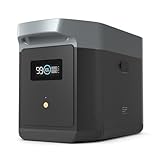

| Product | Specifications | Action |
|---|---|---|
| BLUETTI B300K 2764.8Wh Expansion Battery |
|
Check Latest Price |
| EcoFlow DELTA 2 Max Extra Battery 2048Wh |
|
Check Latest Price |
| Jackery Extra Battery Pack 2000 Plus 2042Wh |
|
Check Latest Price |
 Anker SOLIX BP2000 Expansion Battery 2048Wh Anker SOLIX BP2000 Expansion Battery 2048Wh |
|
Check Latest Price |
 BLUETTI BC200 Expansion Battery 2016Wh BLUETTI BC200 Expansion Battery 2016Wh |
|
Check Latest Price |
 GROWATT HELIOS 3600 Expansion Battery 3686Wh GROWATT HELIOS 3600 Expansion Battery 3686Wh |
|
Check Latest Price |
 Anker SOLIX BP3800 Expansion Battery 3840Wh Anker SOLIX BP3800 Expansion Battery 3840Wh |
|
Check Latest Price |
 EcoFlow DELTA Pro 3 Extra Battery 4096Wh EcoFlow DELTA Pro 3 Extra Battery 4096Wh |
|
Check Latest Price |
 BLUETTI B500K Expansion Battery 5120Wh BLUETTI B500K Expansion Battery 5120Wh |
|
Check Latest Price |
 EcoFlow DELTA Pro Ultra Smart Extra Battery 6144Wh EcoFlow DELTA Pro Ultra Smart Extra Battery 6144Wh |
|
Check Latest Price |
Every pack below adds stored energy to a power station you already own. None of them output meaningful AC power on their own except the GROWATT and the BLUETTI BC200, a distinction we come back to in the reviews. The table sorts them roughly by capacity added, smallest to largest, so you can find the class that matches your base unit.
2764.8Wh LiFePO4 expansion pack
At least 4000 cycles to 80% capacity
65 pounds
We kept coming back to this pack because compatibility is the whole game, and the B300K works with five BLUETTI model families rather than one. Owners running AC200L, AC200MAX, AC300 and AC500 systems all report the same thing: it plugs in and roughly doubles usable capacity. For most people reading this guide, that breadth removes the single biggest risk in the category.
The chemistry is where the value shows. At least 4,000 cycles to 80% capacity puts it ahead of the 3,000-cycle class most 2kWh packs claim, and BLUETTI pairs that with a 4-year warranty. The cable-free internal layout inside the pack is a quiet upgrade, because the failure points in most expansion batteries are the internal connections rather than the cells.
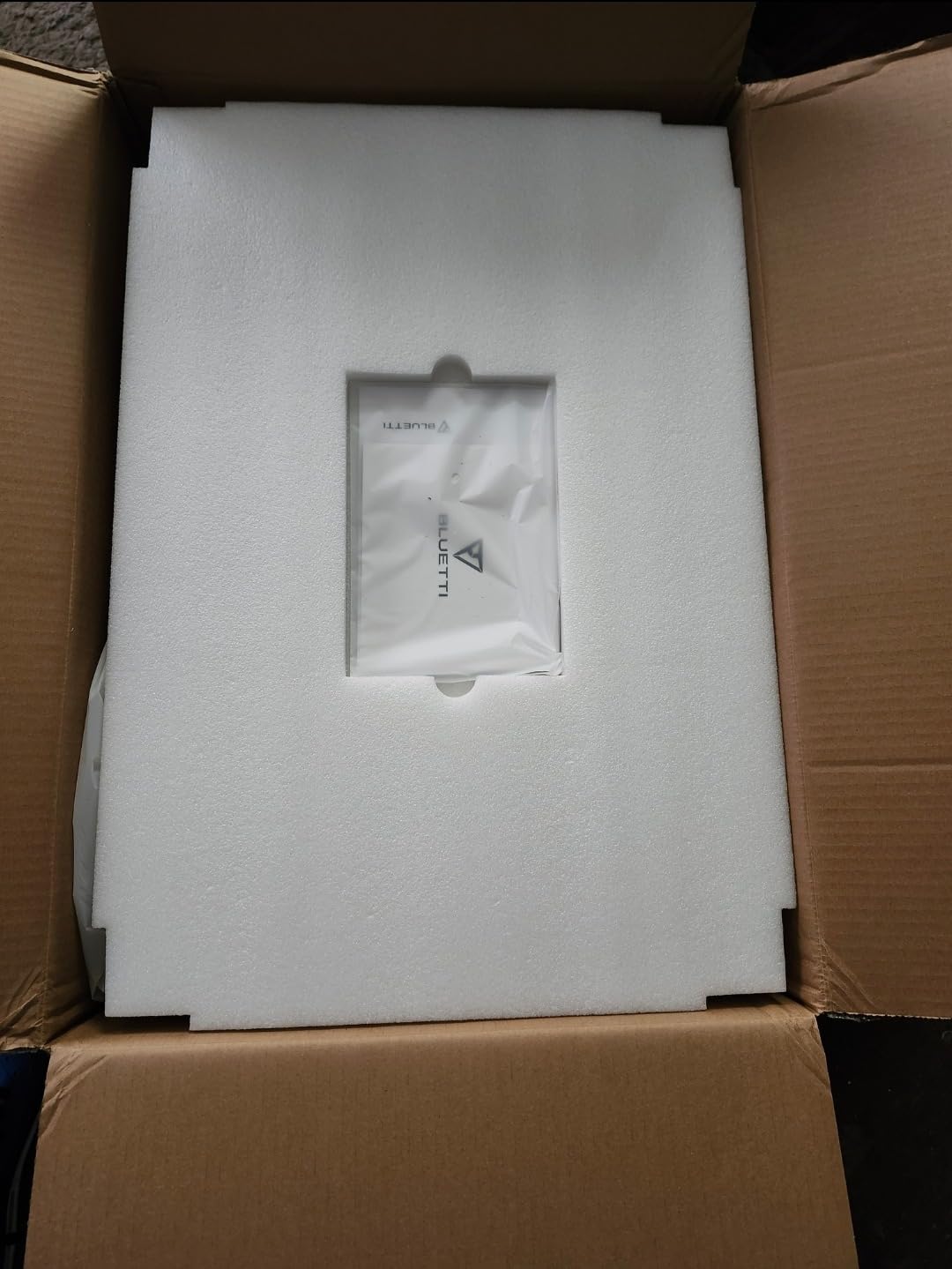
The design gripe that comes up repeatedly is the connector position. On a stacked AC200MAX build the port placement can force an awkward arrangement, and the included cable can be too short to reach a left-side expansion port without repositioning the whole stack. It is a five-minute fix once, but it is the first thing to plan your layout around.
A built-in USB port lets the pack run as a large power bank on its own, which is more useful than it sounds when the main unit is not with you. App monitoring shows state of charge across the chain, and the 65-pound weight is typical for a pack in this capacity class.
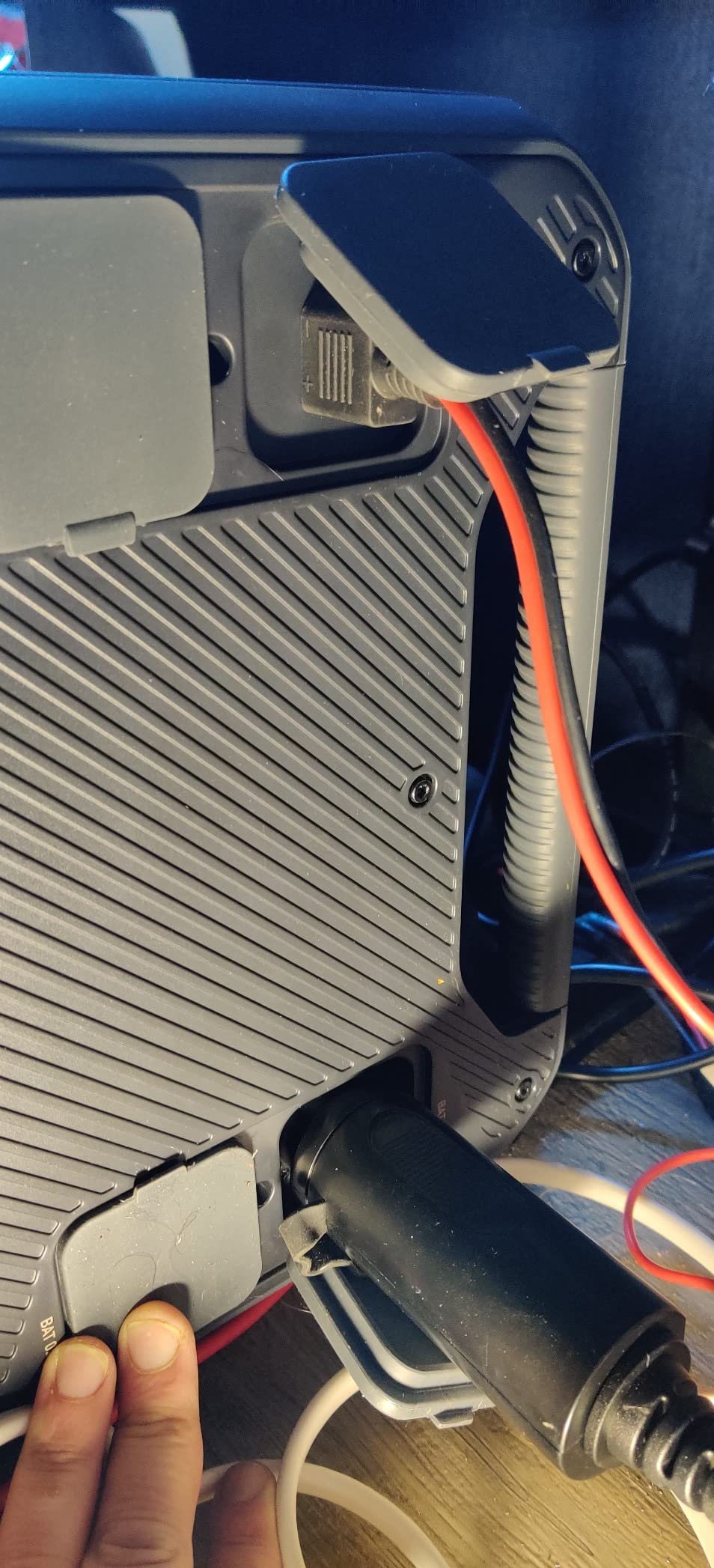
Check your station model number before anything else. AC200L, AC200MAX, AC300, AC500 and AC200PL are covered, but a unit outside that list will not accept this pack. The compatibility here is genuinely broad for the brand, and it is still brand-locked.
Budget for the stack footprint. At 20.7 by 12.9 by 8.3 inches and 65 pounds, this is a garage-and-closet battery, not a carry-around. If you need something you can lift with one arm, look at the BC200 later in this list.
Skip it if you own a non-BLUETTI power station, full stop. There is no adapter, no protocol handshake and no partial compatibility, and that is exactly the trap that makes expansion batteries look universal when they are not.
Also skip it if you need a flat wall-mounted install with clean cable routing. The connector side and short cable length make tidy installations harder than the slim-profile packs in this category manage.
2048Wh LiFePO4 extra battery for the DELTA 2 Max
Two packs take the system to 6144Wh
42 pounds
This is the pack with the deepest owner base in our comparison, and the reviews are unusually consistent about the same outcome. Owners describe a must-have capacity add-on that carries smaller EcoFlow units through multi-day outages without any fiddling. The connection is a single supplied cord, and the station recognises the pack immediately.
Two of these on a DELTA 2 Max gets you to 6144Wh, which is enough to run a refrigerator, a router and a few lights for a couple of days. That capacity ceiling is the reason the DELTA 2 Max has been such a popular base unit for people who wanted headroom without the footprint of a home backup system.
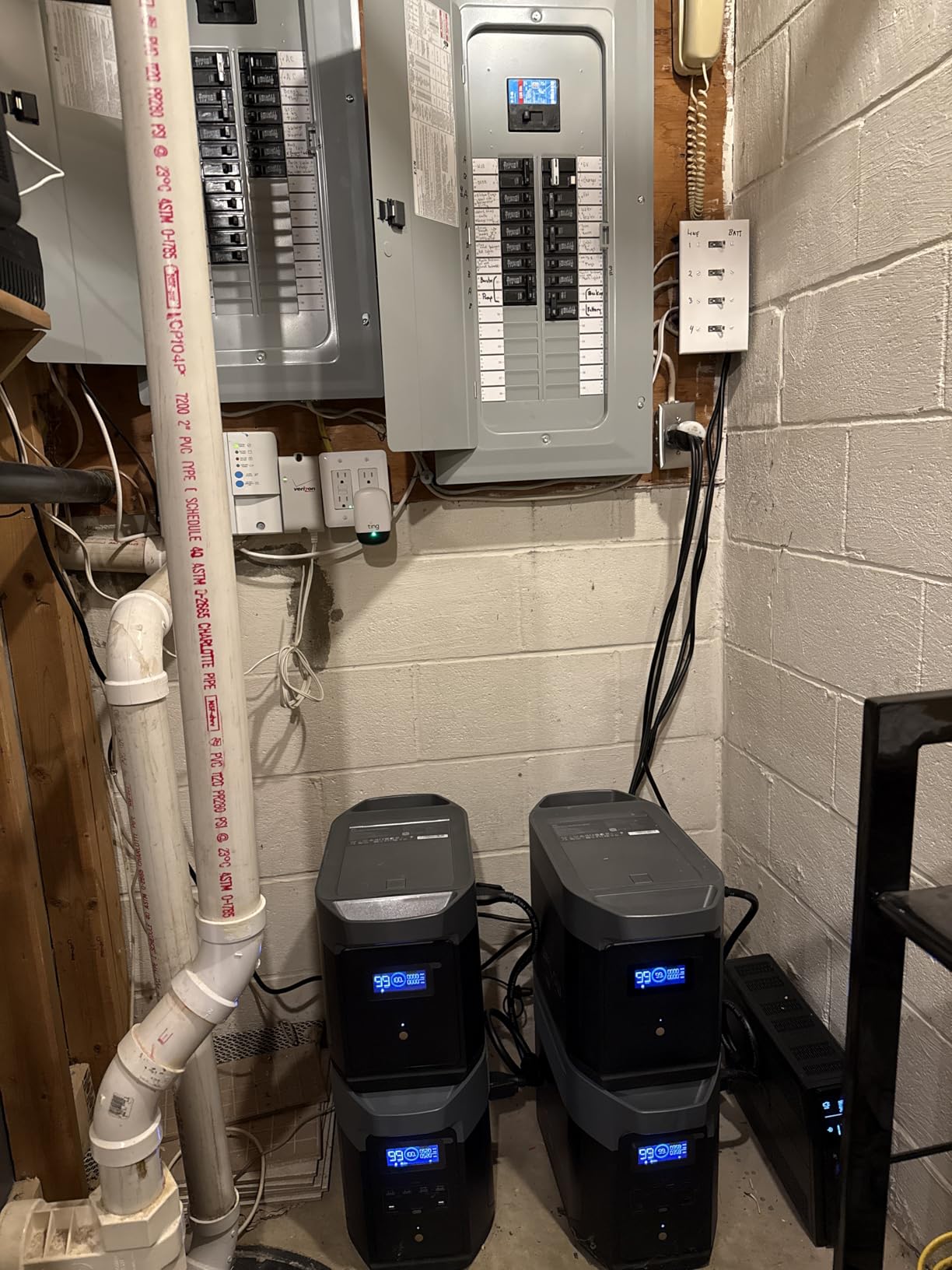
Two caveats deserve attention. The first is that portable air conditioners and other high-draw devices can still trip the overload protection, even with the pack attached, because the expansion adds energy rather than inverter headroom. The second is the warranty, listed at one year against the three to five years most competitors in this list offer.
That one-year warranty is the clearest weakness here, and it is a real one for a battery you plan to keep for a decade. If the LFP chemistry holds up as rated, you will probably never use it. If you want the coverage, the BLUETTI B300K is the pick instead.
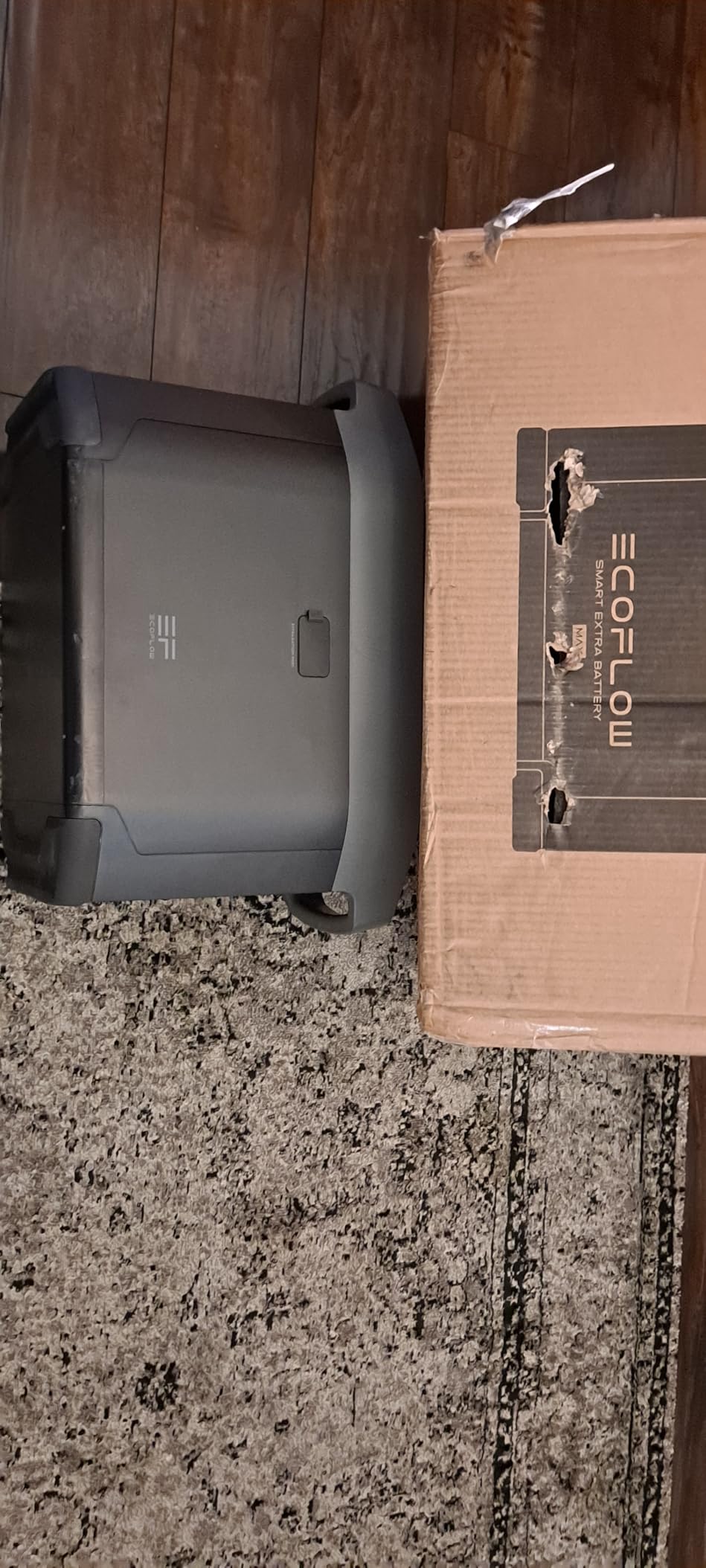
Confirm you own a DELTA 2 Max. The listing names that unit specifically, and EcoFlow uses a different extra battery for the DELTA Pro line. Buyers who assume any EcoFlow pack fits any EcoFlow station are the most common source of returns in this whole category.
Think in energy, not power. A 2048Wh pack extends how long your appliances run; it does not raise the wattage ceiling. If your loads are heavy compressors, solve that with a bigger inverter, not more battery.
Skip it if warranty length is a deciding factor for you. One year of coverage on a two-kilowatt-hour lithium pack is the shortest we found across the ten products compared here.
Skip it if you need a light pack. At 42 pounds it is portable only in the sense that a second person could help. For single-person handling, the 23.6-pound BC200 is a genuinely different category.
2042.8Wh pack for the Explorer 2000 Plus
Scales to 12kWh with five packs
41.8 pounds
Of the ten packs we compared, this one carries the highest average rating from owners, and the reason is simple. Buyers highlight fast, uncomplicated installation, solid build quality and dependable runtime extension with no recurring complaints beyond the ecosystem lock-in and the weight.
2042.8Wh is designed specifically for the Explorer 2000 Plus. From there the scaling is generous: up to five packs takes the system to 12kWh, and paralleled units push toward 24kWh. For someone who bought a Jackery and plans to keep it for years, that headroom is the strongest argument in this category.
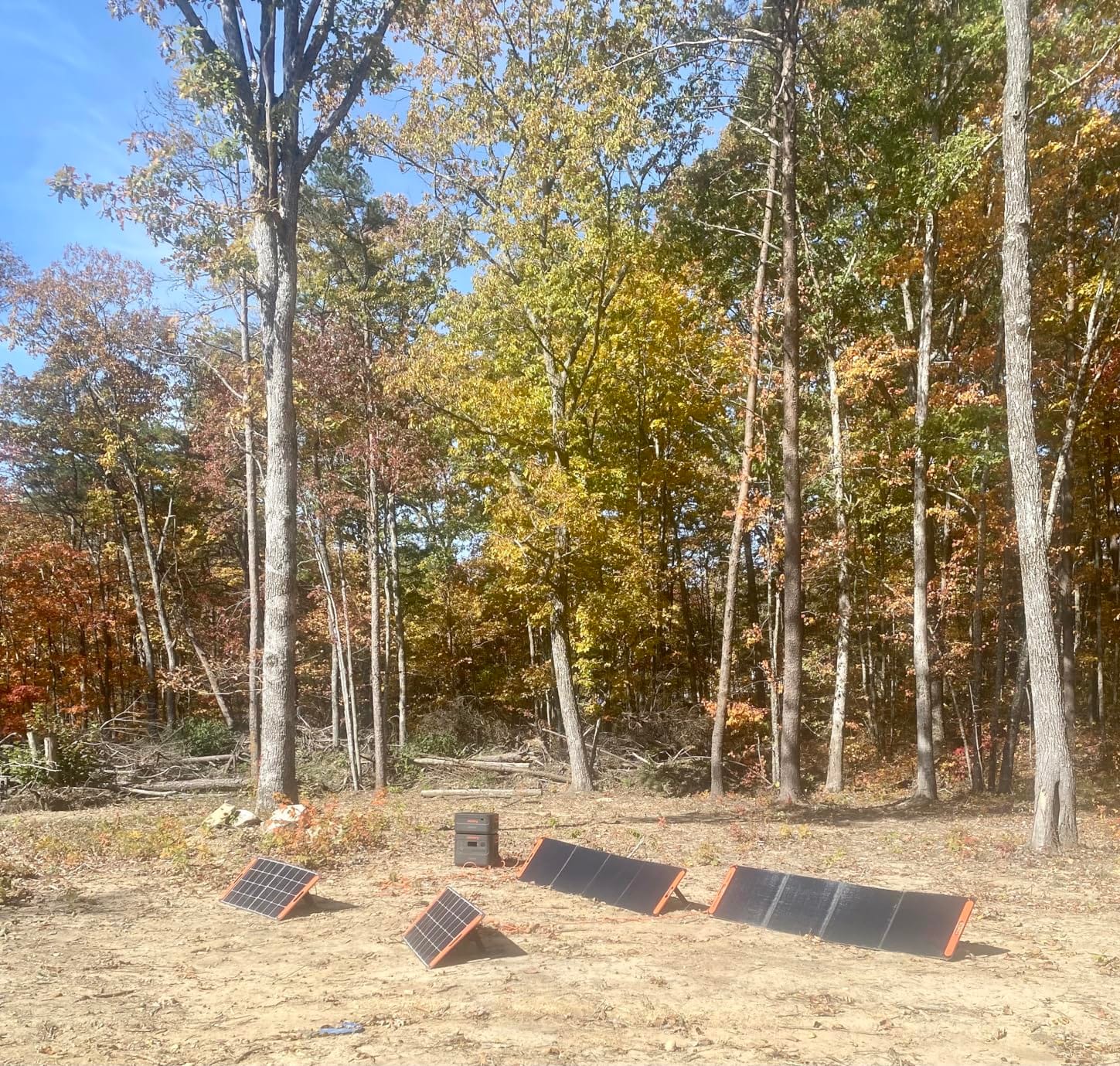
Charging speed is the quiet headline. Owners report about two hours from six SolarSaga 200W panels, or roughly 2.3 hours from a wall outlet. That is fast enough that the pack can be refilled during a sunny morning and carry a full load through the following night, which is the actual use case for most buyers.
The built-in cooling system improving heat dissipation by 30 percent matters more than it sounds, because a battery that runs cooler in summer is a battery that ages slower. The 5-year warranty also outlasts the one-year coverage on the EcoFlow DELTA 2 Max pack.
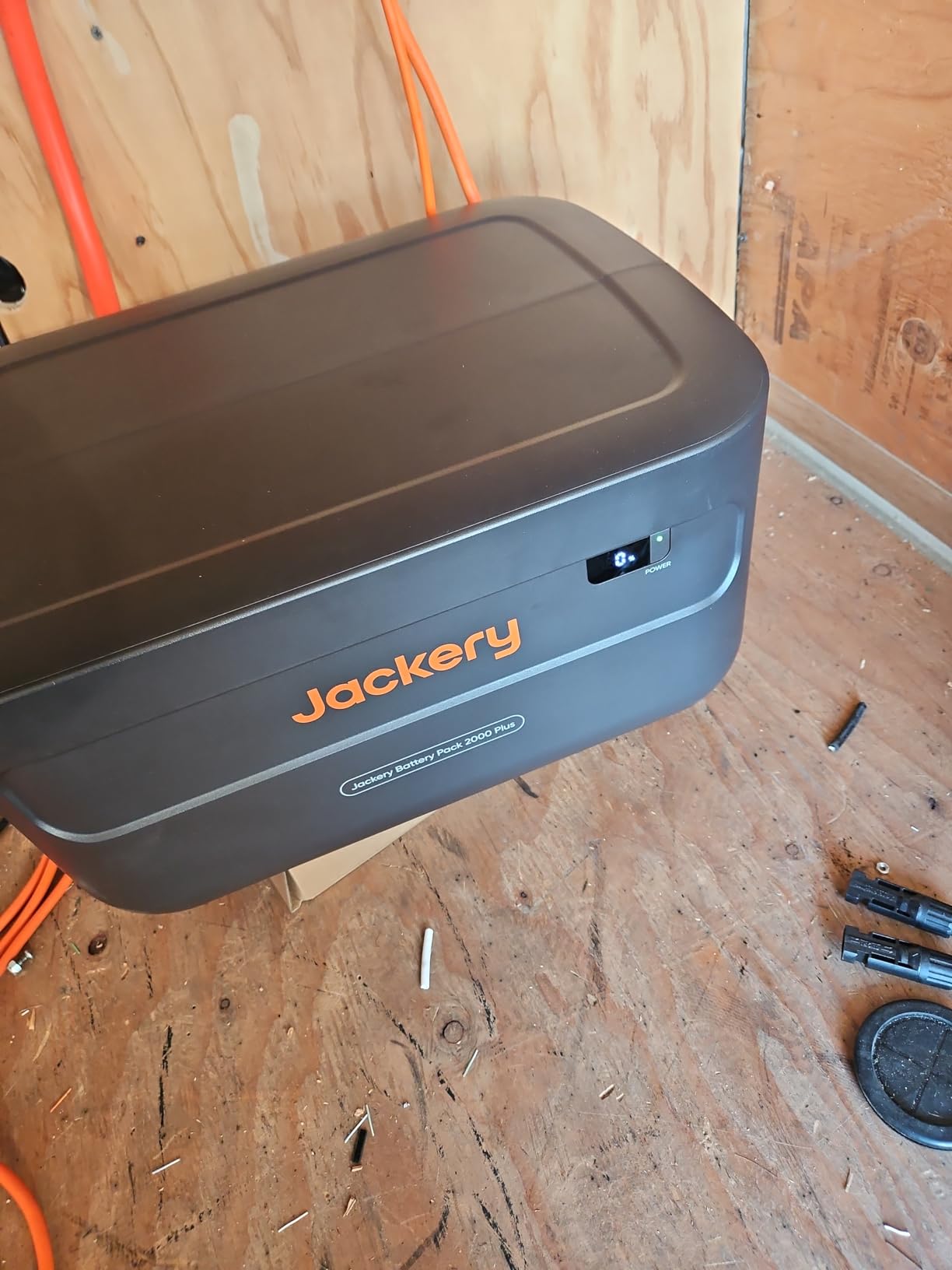
It only works with the Explorer 2000 Plus, and it cannot be used standalone. That is a hard limit with no workaround. Jackery sells other packs for other Jackery stations, so verify the base unit before ordering anything.
Confirm your panels can keep up. Two hours from six 200W panels means you need roughly 1.2kW of solar on a clear day to refill it. With one 400W panel the same job takes far longer.
Skip it if you might ever want to power devices without the main unit. The pack is a pure add-on with no output of its own, unlike the GROWATT or the BC200.
Skip it if you already own a Jackery unit that is not the Explorer 2000 Plus, or if you are not sure which generation you have. Near-identical Jackery model names are a routine source of mismatched purchases.
2048Wh pack for the PowerHouse 767
Doubles capacity to 4096Wh
45.6 pounds
If your power station is an Anker PowerHouse 767, this is the only answer. A single pack takes 4096Wh to 8192Wh territory in practice terms, and owners confirm it reliably doubles runtime for fridges and household loads during outages. Anker’s replacement support gets singled out repeatedly, which matters more than it sounds for a component this heavy.
The 2048Wh of LFP capacity carries an InfiniPower rating of over a decade of daily use, and the 5-year full-device warranty is longer than the two-year norm the industry still runs on. The drop-proof unibody shell with a 3-point protective clasp is a sensible design for something you will be moving around a garage.
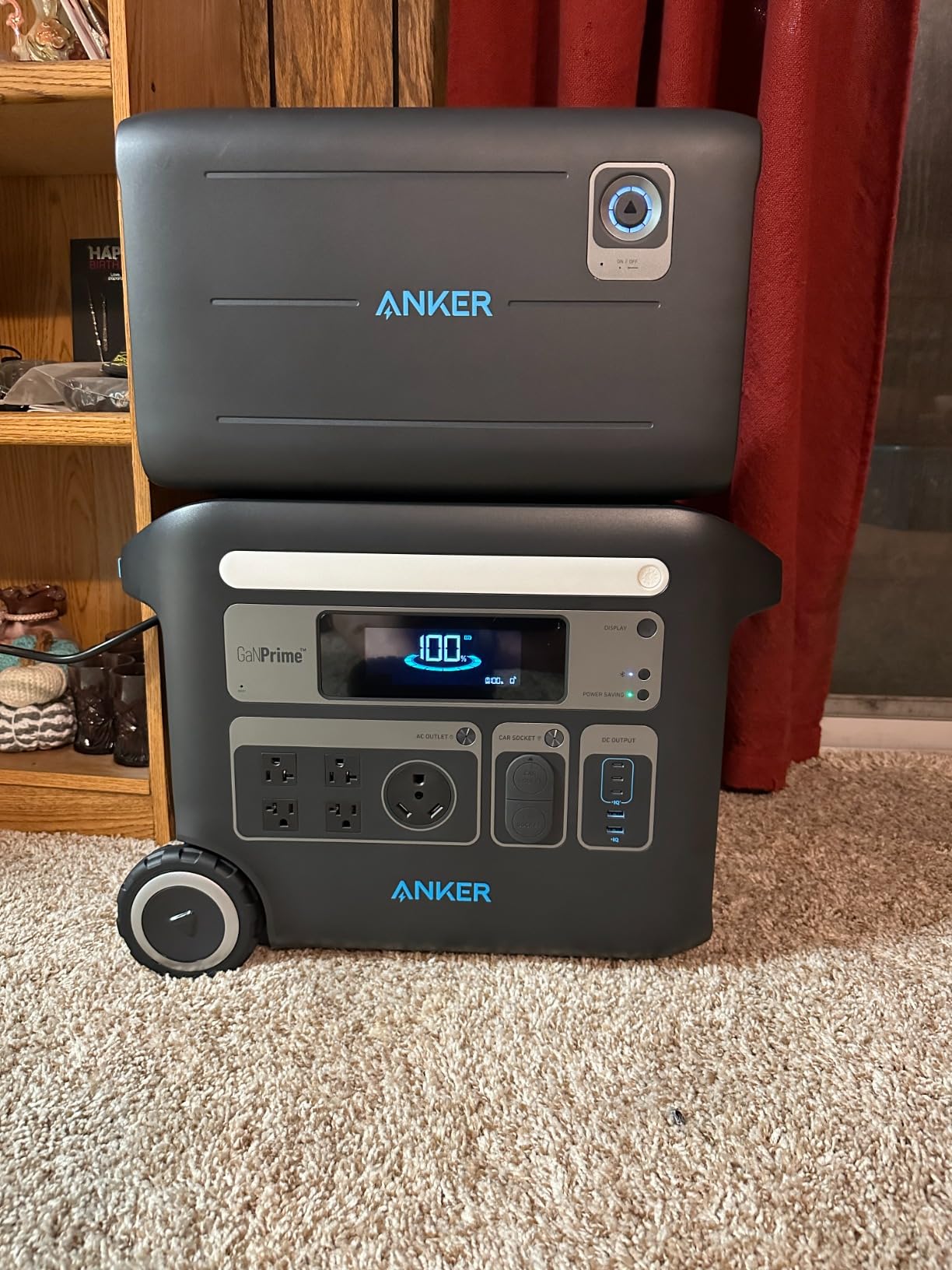
Two complaints recur and neither is fatal. The connecting cable is short, so the pack has to sit on top of the main unit rather than beside it, which constrains where you can put the stack. And owners report that the main unit tends to discharge the expansion pack first and charge it last, so during a long outage the add-on empties before the base unit does.
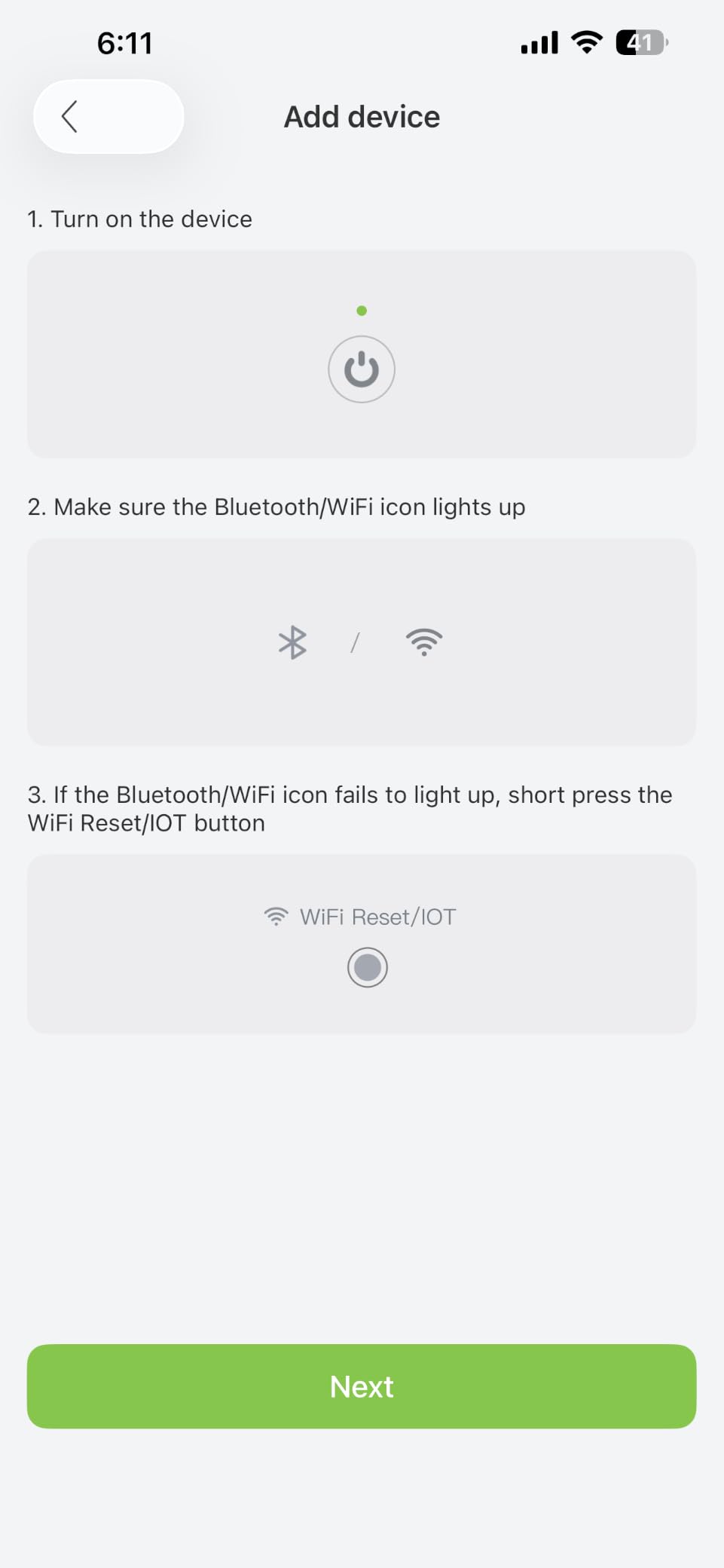
A handful of units also needed a firmware update before they would charge at all. That is a ten-minute fix with the app, but it is worth knowing before the storm arrives rather than during it.
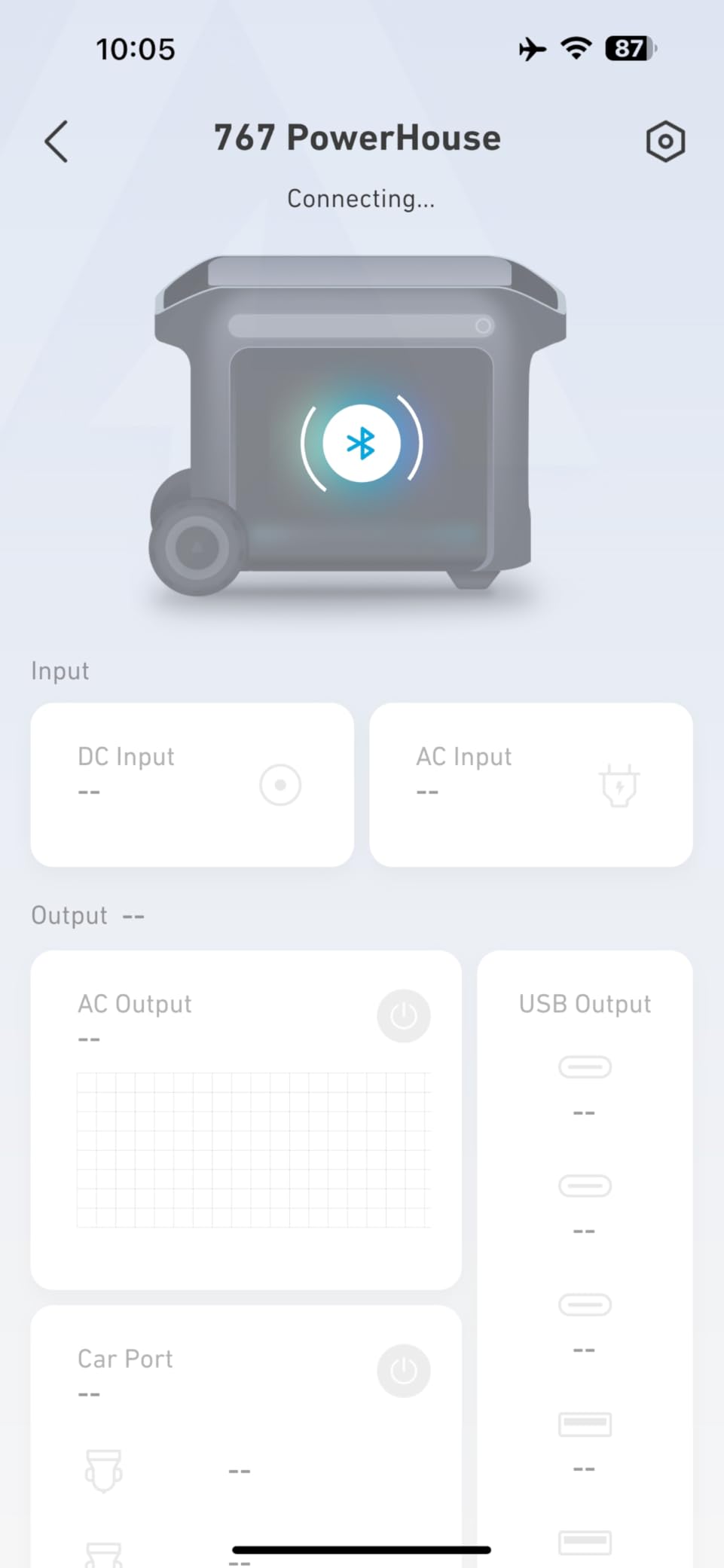
Anker uses a different expansion battery for the F3800 series, and the naming across the PowerHouse line is genuinely confusing. Check the model number on the base unit rather than assuming a BP-series pack fits any Anker station.
Plan the stack as a single object. With 45.6 pounds of battery on top of a 767, you will be moving both together or neither, so pick a spot both can reach.
Skip it if you plan to add more than one pack. Several owners report charge prioritisation between the main unit and the expansion, which gets messier as the chain grows. The DELTA Pro 3 and BP3800 handle larger stacks more predictably.
Skip it if you value charging order over warranty length. The five-year coverage here is excellent, but the pack is not the most flexible multi-pack option in this comparison.
2016Wh LiFePO4 pack in a 75mm slim profile
Stack 1-3 units for up to 8064Wh
23.6 pounds
This pack wins on form factor and almost nothing else. At 23.6 pounds with a 75mm profile, it is less than half the weight of most 2kWh packs in this comparison, and it is the only one that fits behind a fridge or on a wall bracket without eating floor space. The included mounting bracket, wall anchors and leveling feet make a permanent install realistic.
2016Wh is a respectable addition to the FridgePower main unit, and stacking one to three units reaches up to 8064Wh. The built-in BMS auto-balances with the main unit, and the app shows combined capacity and estimated runtime, which is the number most people actually care about during an outage.
The 4,000-cycle LFP rating and 10-year life figure put it on chemistry footing with the larger BLUETTI packs. Buyers in the FridgePower ecosystem use it for fridge and small-load backup, praising the slim profile, quiet operation and automatic time shifting.
It ships with a protruding AC plug rather than a flat one, which limits how close to a wall you can push it. If you planned a flush install, account for the extra clearance or route the cable differently.
The Wi-Fi module only connects on 2.4 GHz networks. On a 5 GHz-only router you will get no app monitoring, which is a real loss when the app is how you see remaining runtime.
Skip it if you want a standalone power source. Unlike the GROWATT pack, the BC200 needs the main unit to deliver meaningful output, so the wall-mounting advantage only pays off if you keep the FridgePower unit installed alongside it.
A small number of buyers reported units arriving defective and a difficult replacement process, so inspect the pack on arrival and test it before you depend on it. This is also the lowest-rated pack in the comparison at 4.4, driven mostly by accessory details rather than battery quality.
3686Wh LFP pack for the HELIOS 3600
9 DC output ports, runs standalone
45 pounds
Most expansion packs are dead weight when disconnected from their power station. This one is not. The dual-function design lets the pack output power on its own through nine DC ports for phones, tablets, laptops and other small devices, which owners consistently highlight as the reason it feels more than an add-on.
That makes it genuinely useful in a way its category peers are not. A job site, a van or a cabin where the HELIOS 3600 stays installed but you need to grab a couple of days of device power elsewhere is a real use case, and no other pack in this list covers it as directly.
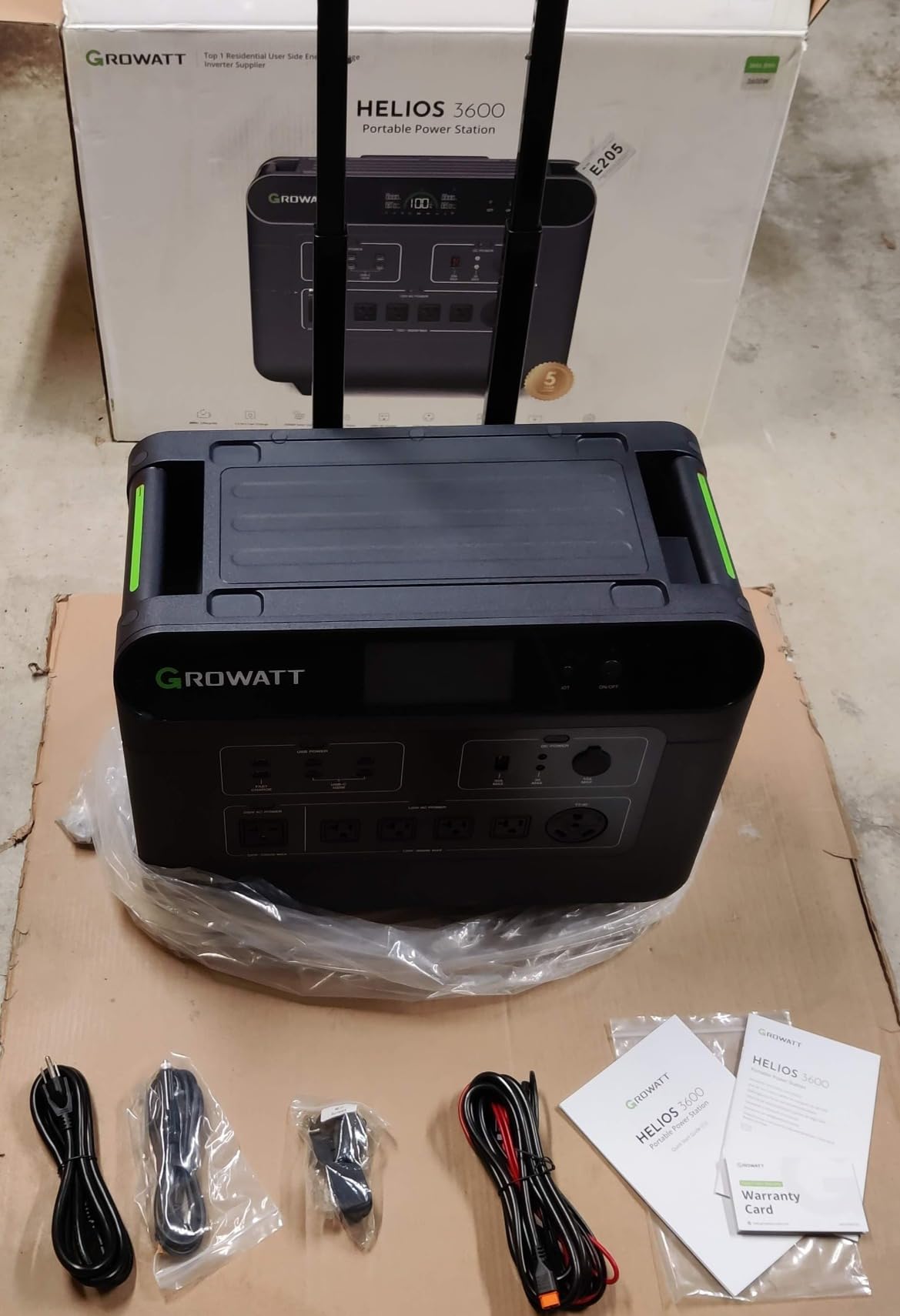
The LFP cells hold 80 percent of rated capacity after 4,000 cycles, and the pack is UL certified with a 5-year warranty backed by US-based service. That combination of certification and support coverage is worth more than it sounds for anyone running medical or refrigeration loads.
It charges through the main power station using the dedicated cable. The pack is not independently fast-chargeable from a wall or panel, so plan your charging around the HELIOS 3600 being present.
Compatibility is narrow. This works with the GROWATT HELIOS 3600 platform and nothing else, which is the most restrictive ecosystem in this comparison despite the large capacity.
Skip it if you are comparing watt-hour per pound for home backup. Reviewers note it carries lighter capacity per pound than the larger home-backup packs, and at 45 pounds for 3686Wh it does not lead on density.
Skip it if you need AC output away from the main unit. The nine ports are DC, which covers phones, tablets and laptops but not a kettle, a microwave or a power tool.
3840Wh LFP pack for the F3800 series
Up to six packs reach 26.9kWh
83.8 pounds
This is the pack for someone who has decided that a power station is home infrastructure rather than camping equipment. Each BP3800 adds 3.84kWh, and up to six packs take an F3800 system to 26.9kWh. Owners running this configuration report easy hookup, silent operation and solid build quality with no complaints about the connection process.
One practical detail stands out. This pack does not drain while switched off, unlike some competing systems, so leaving it connected over a season of non-use does not quietly cost you capacity. For a pack that will sit installed for years, that matters.
The EV-class LFP cells carry a 10-year lifespan claim under Anker InfiniPower, backed by a 5-year full-device warranty. Owners also frequently mention strong value during sale events, which is a reasonable way to approach a purchase this size.
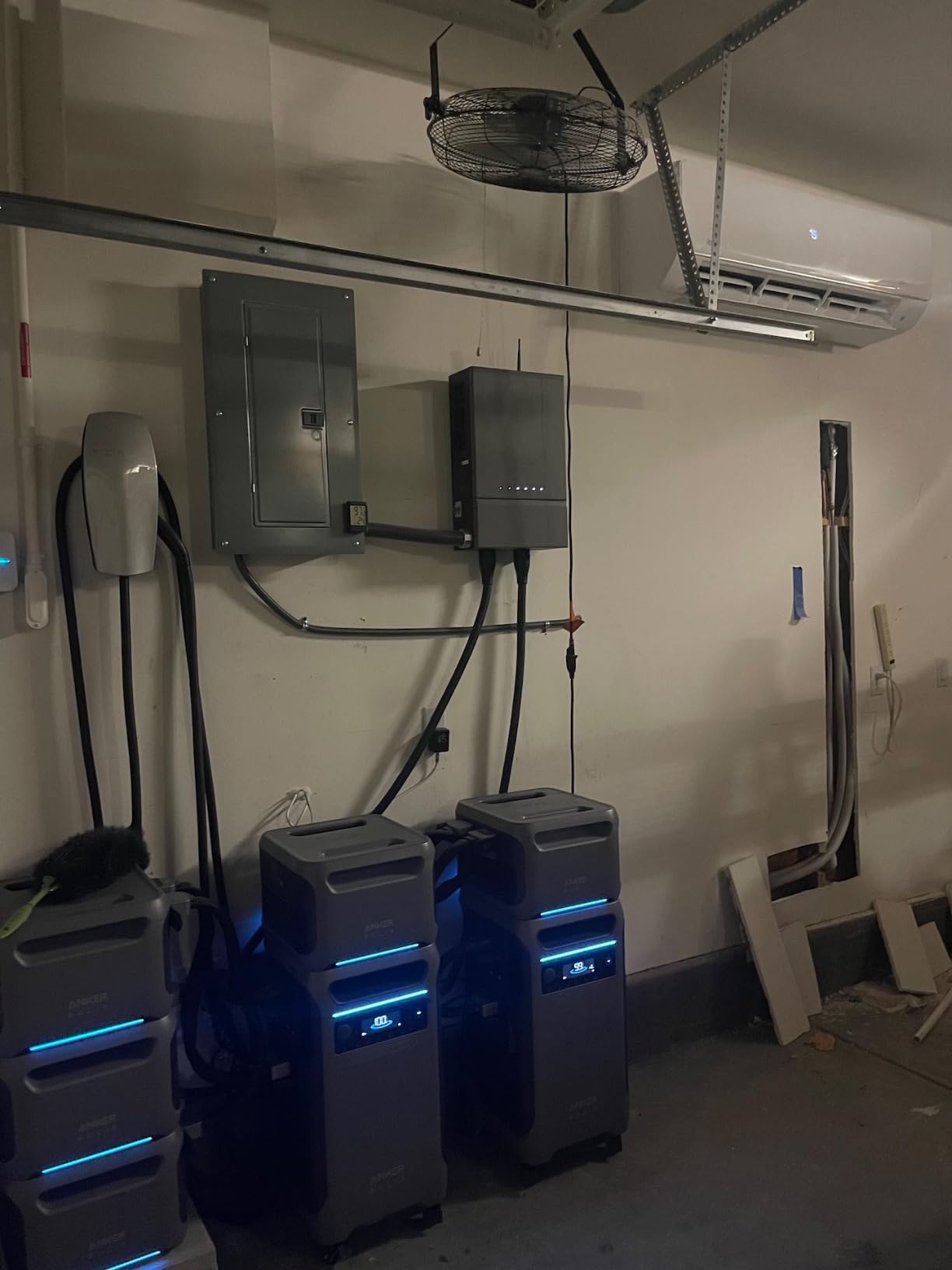
It is for the F3800 series only. Anker’s smaller PowerHouse and Powerhouse 760 lines use the BP2000, and mixing them is not possible. Check the model number on your station first, because the F3800 naming is easy to confuse with the older F2000.
Do not plan to run air conditioning on this. Owners are explicit that the pack cannot carry AC loads on a typical home setup, so treat it as energy reserve for essential circuits rather than a whole-home comfort system.
Skip it if you need to move the system after installation. At 83.8 pounds, the stacked unit is hard to roll and effectively a permanent fixture.
Skip it if one or two packs would do. The cost per added kilowatt-hour is well above the 2kWh packs in this list, so a single BP3800 only makes sense when you are already committed to filling all six slots.
4096Wh LFP pack for the DELTA Pro 3
Scales to 48kWh with parallel units
72 pounds
The highest ceiling in this entire comparison belongs to the DELTA Pro 3 ecosystem. A single 4096Wh pack roughly doubles a DELTA Pro 3 to about 8kWh, and parallel units carry the system to 48kWh. No other pack here gets you past the mid-20s in kilowatt-hours, and for a genuinely whole-home build that difference decides the platform.
Owners report quick, simple installation and roughly doubled runtime, including running a 10,000 BTU heat pump for many hours. The chemistry is rated at 4,000 cycles to 80 percent, roughly 11 years of regular use, and the IP65-rated CTC pack technology is a meaningful upgrade for a battery that may live in a damp garage or an exterior enclosure.
Charging flexibility is the other strength. The pack supports AC, solar, generators and EV charging piles through the main unit, and supports both 120V and 240V with 4000W output, 6000W with X-Boost. The 5-year warranty and responsive customer service are repeatedly mentioned as positives.
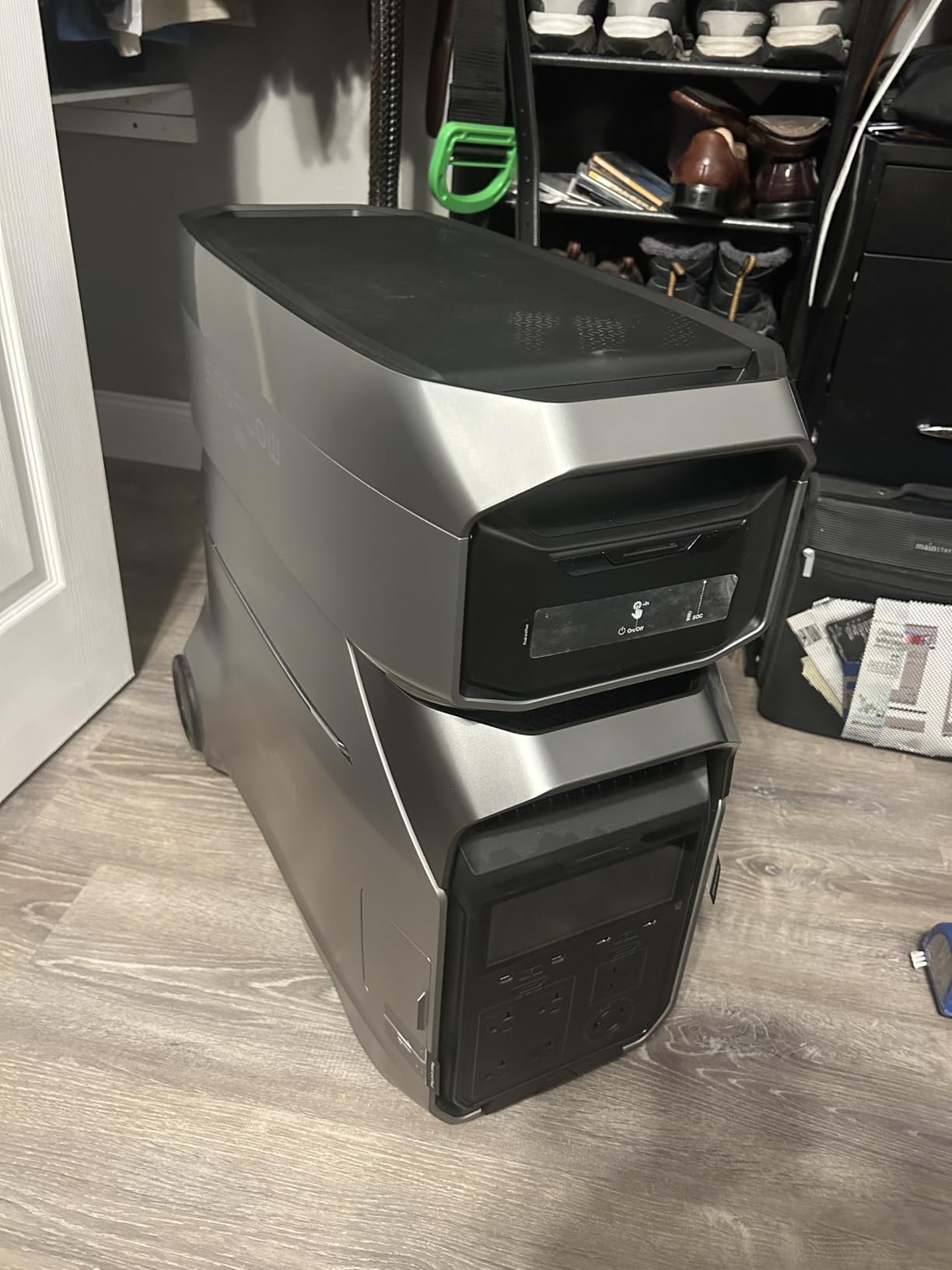
Charge balancing is the recurring complaint. The system shares charge between the main unit and the extra pack, so a full main unit can leave the expansion pack undercharged. Plan your charge windows around the chain, not just the base unit.
Check whether your DELTA Pro 3 variant needs a separate adapter. Some listings do not clarify this, and it is the kind of detail that turns a ten-minute install into an afternoon.
Skip it if 8kWh already covers what you need. The 72-pound pack is awkward to reposition, and installing more than one is a two-person job in a real garage.
Skip it if you camp or travel. This is fixed-installation capacity. The 2kWh packs earlier in this list are the ones you can load in a vehicle.
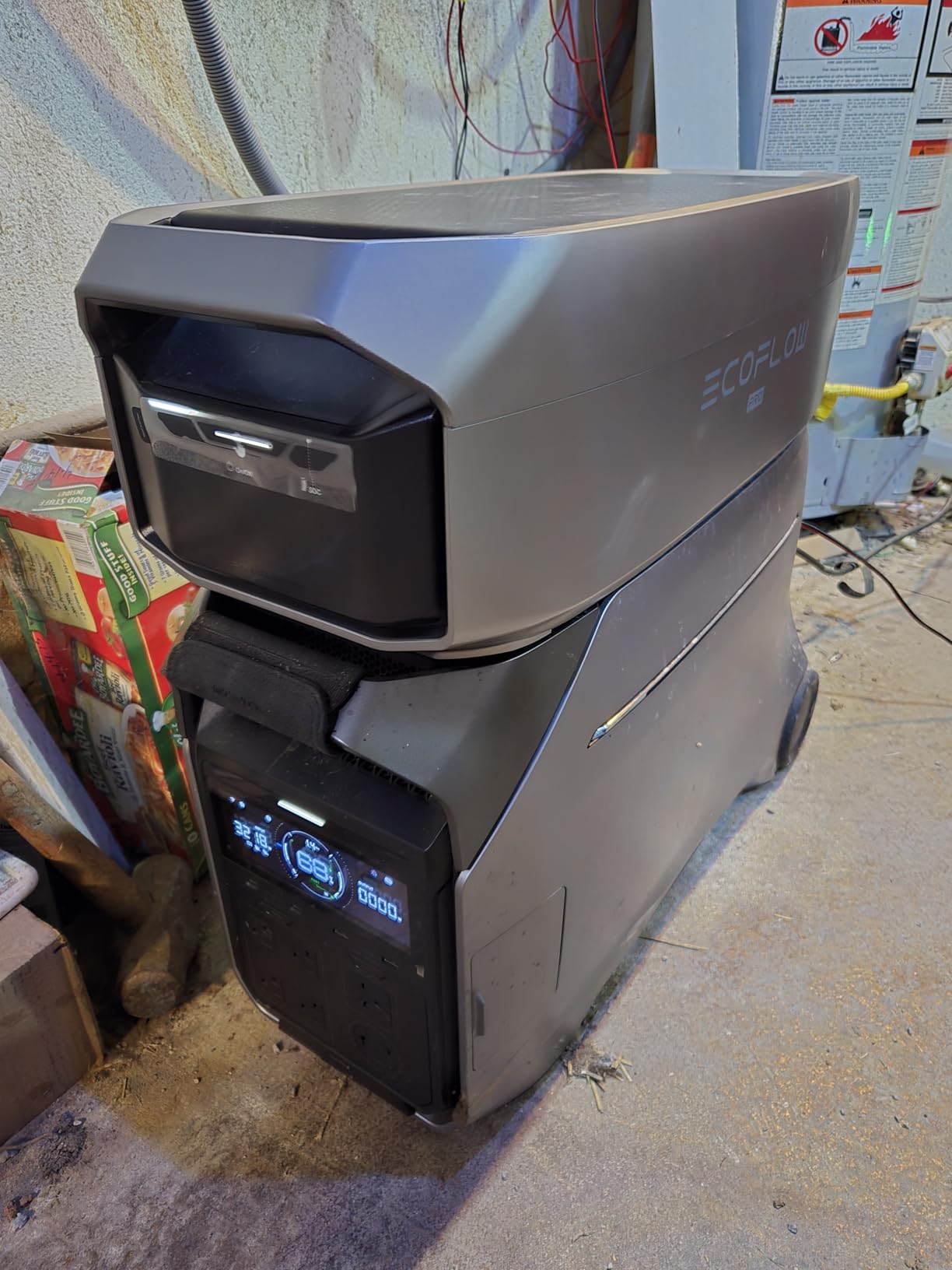
5120Wh LFP pack with 4,000+ cycles
Up to six packs per Apex 300
99.2 pounds
Where the B300K is the compatible choice, the B500K is the headroom choice. At 5120Wh per pack it more than doubles the capacity of a single expansion, and the scaling is extraordinary: up to six packs per Apex 300, and 100kWh across three units. Nobody reaches that ceiling, but the architecture is there.
The cable-free internal architecture makes the pack more compact and easier to move than its capacity suggests, and it works with the wider BLUETTI accessory ecosystem including SolarX 4K, the alternator charger and the Hub D1. Compatibility with both past and current BLUETTI stations is the same advantage the B300K offers.
We are flagging the evidence level here honestly. This is the newest listing in the comparison with the smallest owner base, so our confidence rests on the spec sheet and the shared BLUETTI architecture rather than on long-term reports. Early Apex 300 owners describe solid six-month performance and easy integration, with enough capacity for van and off-grid camping loads.
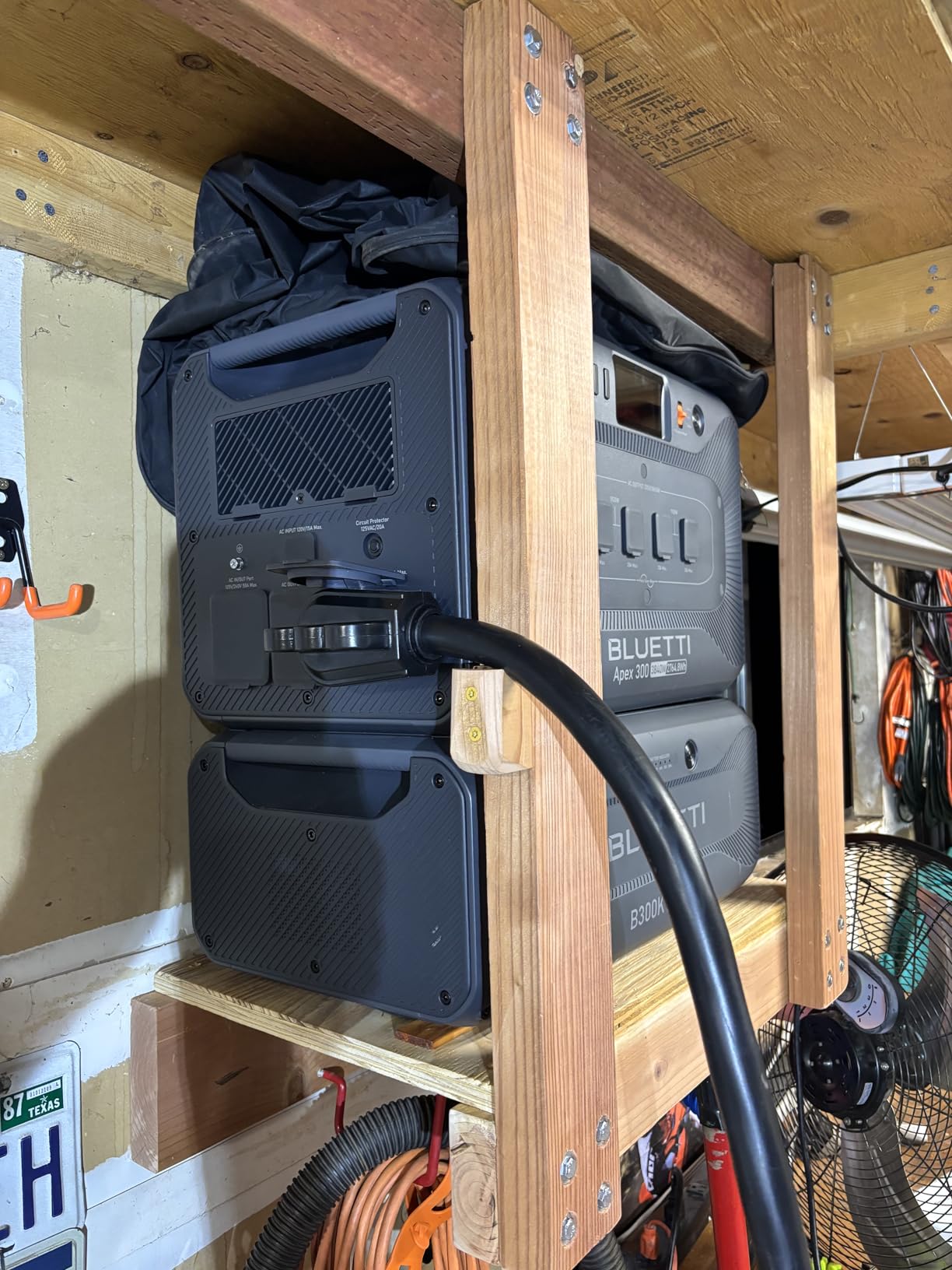
The included CA90 cable is only compatible with the Apex 300. If you plan to move the pack to an older BLUETTI station later, budget for the right cable rather than assuming the supplied one travels.
At 99.2 pounds this is the second-heaviest pack in the comparison. Early owners also note wishing for a larger solar array, which is the honest constraint on a 5.12kWh pack. You need roughly 2kW of panels to refill it in a full sunny day.
Skip it if you want an established track record. Nine ratings cannot tell you how a cell chemistry performs across a decade, whatever the datasheet claims.
Skip it if you are still deciding between BLUETTI platforms. The B300K serves the same brand, carries far more owner feedback and costs materially less per unit of capacity. Buy the B500K only when you know you will fill the slots.
6144Wh LFP Smart Extra Battery for DELTA Pro Ultra
7200W output
111.8 pounds
This is the largest single expansion pack in the comparison at 6144Wh, and it carries the most owner reviews of any product here at 373. Buyers largely use it as part of a whole-home backup build, and they praise the capacity, the quiet operation and the app visibility it provides.
The safety architecture is the differentiator. EV-grade LFP cells sit behind a dual BMS with a three-level safety design, and the pack is rated at 7200 watts of system output on a 120-volt platform. Setup is genuinely plug-and-play, with monitoring and control through the EcoFlow app and a 5-year manufacturer warranty.
It also works as a capable whole-home backup system in EPS mode with a Smart Home Panel 2, which is how most owners deploy it. At 111.8 pounds it is the heaviest pack here by a wide margin, and that weight is not incidental, it is the reason this product exists.
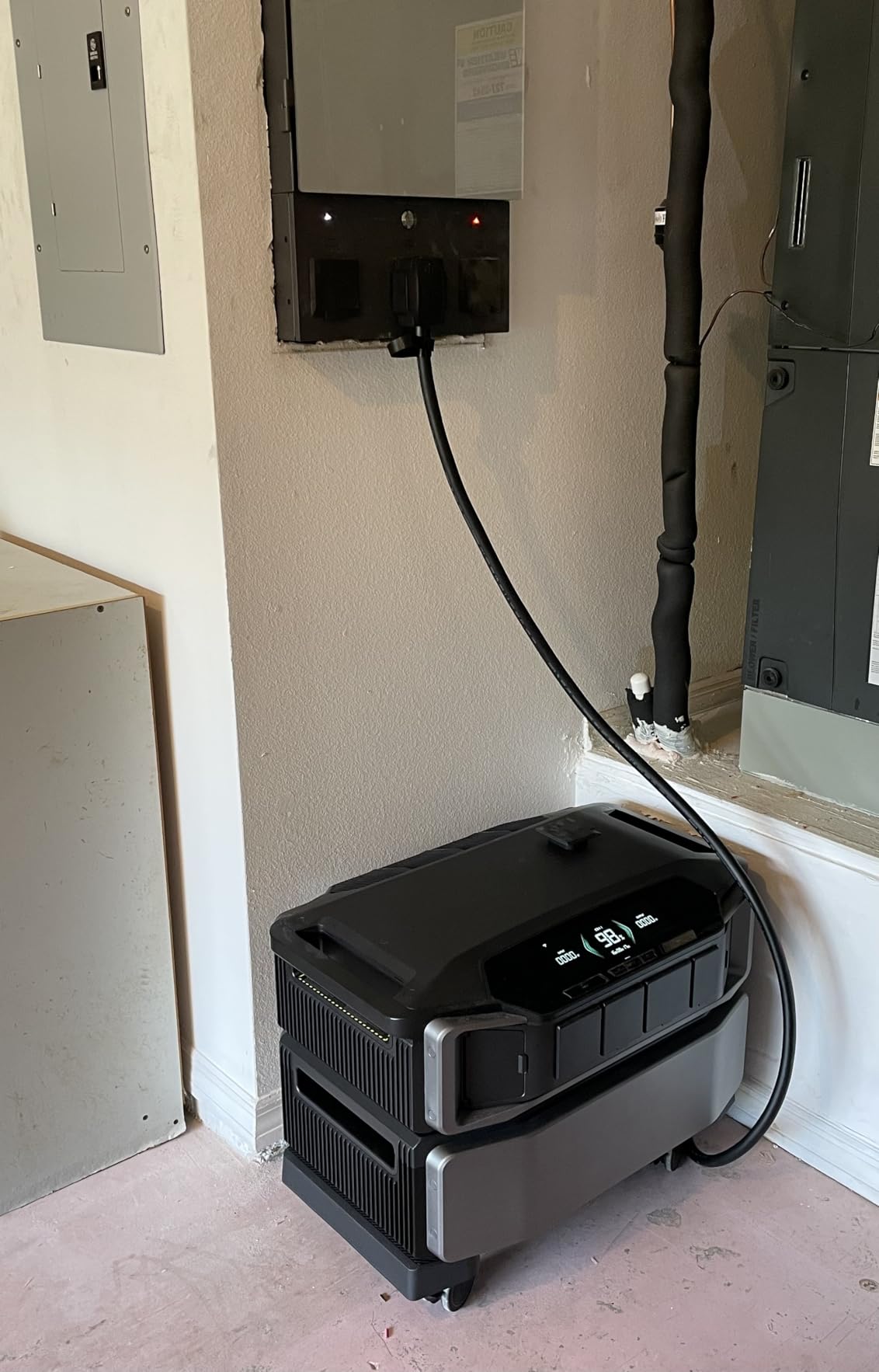
The battery state-of-charge readout can be inaccurate in some setups. Owners managing larger systems report this directly, so plan your monitoring around the app rather than the panel display if you are running critical loads.
You cannot schedule fail-over tasks while operating in EPS mode. If your backup plan depends on automatic switching at a set time, test that behaviour on the base unit before you rely on it.
A small number of units also needed a firmware or app update after installation before full operation, and the display and unit generate noticeable heat during charging. None of these are dealbreakers, but all of them are easier to handle before an outage than during one.
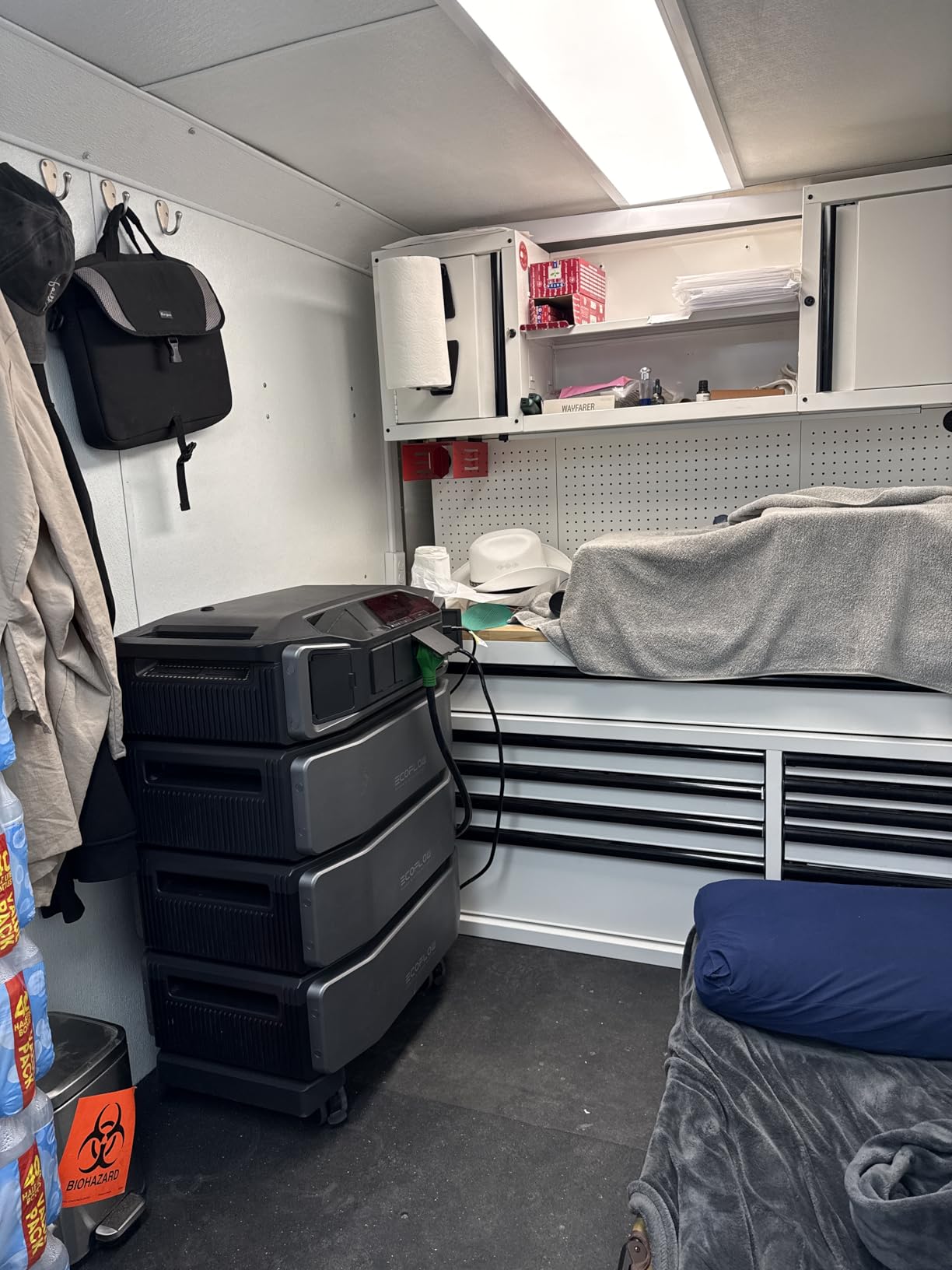
Skip it if you need to move the system at all. At 111.8 pounds this requires two people and a clear floor plan. It is a garage battery and nothing else.
Skip it if you only need another day or two of runtime. The 2048Wh packs earlier in this list achieve that at roughly a third of the mass, and a 4.2 rating against 4.6 or 4.7 for most of the field reflects real complaints rather than chemistry doubts.
Every other decision on this page is downstream of compatibility. Read the model number on the base unit, find that exact model in the brand’s support documentation, and confirm which pack the manufacturer lists for it. Not the family, not the similar-looking sibling, the exact model including generation.
Backwards compatibility exists but is not guaranteed. The DELTA 3 Plus, for example, accepts expansion batteries designed for the DELTA Max, DELTA 2, DELTA Pro and DELTA Pro 3, which is a genuine four-way compatibility claim. Other ecosystems do not offer this, and near-identical SKUs across a single brand make the wrong purchase easy.
If you own a power station with no expansion port at all, stop here and read the section below. No pack in this guide will work for you, and the return process is more painful than the ordering decision was.
Do the appliance math honestly, then apply a margin. Independent discharge testing found usable capacity varies with load, roughly 82 percent at a light 200W load against roughly 96 percent at a heavier 1,400W load. A 2kWh pack is closer to 1.6kWh of dependable runtime in a light-load overnight scenario.
A refrigerator cycling at about 150W running twelve hours a day needs under 2kWh. A CPAP machine, a router and a Starlink terminal running continuously is a different problem entirely, and CPAP plus Starlink is the combination most people underestimate. Medical devices for overnight use are where a second pack genuinely earns its weight.
Ignore idle draw in your planning and it will surprise you. One measured unit drew 13.8W at idle, which over three days of continuous operation is a meaningful slice of any pack you have added. If you are buying capacity for a multi-day outage, this is the number that decides how many packs you need.
Pack price alone is a poor guide, because a 2kWh pack and a 6kWh pack are not comparable products. Divide the cost by the watt-hours added and the ranking changes. The 2kWh packs in this comparison sit well below the large home-backup units on that measure, and the gap is wide enough to change the recommendation entirely.
Then subtract the inverter you already own. That is the hidden advantage of expansion: you are not buying a second power station, a second set of outlets and a second set of transfer switch hardware. You are buying only stored energy.
Also read the warranty as part of the cost. The EcoFlow DELTA 2 Max pack is the cheapest per kilowatt-hour in the set and carries a one-year warranty. A five-year warranty on a battery you plan to keep for a decade is worth real money, even if you never claim against it.
All ten packs in this comparison use lithium iron phosphate chemistry, and that is a change worth noting. LiFePO4 cells are rated in the range of 3,000 to 6,000 cycles to 80 percent capacity against a few hundred to a couple thousand for the older NMC lithium-ion chemistry, and they tolerate heat better.
Long-term degradation is the dominant lived experience among owners of older units. Reported cases include a unit whose display read 100 percent and then died within 24 hours after a year, and a three-year-old unit that lost capacity after 3,000 cycles on standard lithium-ion. Both were resolved by moving to LiFePO4, which is why we treat the chemistry as a hard filter rather than a preference.
One caveat belongs here: inverters and control boards fail independently of the cells. A 4,000-cycle battery in a unit with a failed inverter is still a paperweight, and the long cycle rating does not protect the rest of the system.
Expansion packs add 23 to 112 pounds in this comparison, and most of them convert a portable camping unit into a garage-only unit. That frustration comes up constantly from owners who did not think it through, and no competitor in this space addresses it.
Measure the footprint too, not just the mass. The BLUETTI BC200 exists specifically to solve this, with a 75mm profile and included wall anchors. At the other end, the DELTA Pro Ultra pack measures 26 by 18 by 8 inches and weighs 111.8 pounds, which is a floor plan, not a product.
If you move the system at all, weight is a first-order constraint. If it is permanently installed, ignore it and optimise for capacity instead.
This is the question a ranking video addresses directly at position three, and it has a straightforward answer in most cases. Expansion is cheaper per added kilowatt-hour because you already own the inverter, the outlets and the battery management system. A second power station duplicates all three, and it also gives you redundancy, which matters if your first unit fails mid-storm.
The case for a second unit is specific. You need two separate locations, you want a spare that can be carried into a vehicle, or you need to power something while the first system is being recharged. Otherwise the arithmetic favours expansion.
The order we would buy in runs solar first, then an expansion pack, then a second unit, then a larger base station. Solar extends the time between charges rather than the capacity you have, and it costs nothing per kilowatt-hour to add later. A pack you buy today still works with the panel you add next year.
One more variable deserves mention. A pack that can only be charged through the main unit, which includes the GROWATT in this comparison, ties up your base station during charging. A second unit lets one charge while the other runs. For a household treating this as real infrastructure rather than occasional backup, that flexibility is worth something.
The first trap is assuming any pack from the same brand works. EcoFlow alone sells separate extra batteries for the DELTA 2 Max, the DELTA Pro 3 and the DELTA Pro Ultra. Same brand, three different packs, three different connectors. The product name alone is never enough.
The second trap is near-identical model numbers. Anker C1000 Gen 2 versus C1000X, C300 versus C300X, Jackery Battery Pack 2000 Plus versus HP 2000ac Plus V2. These are different products with different expansion options, and the difference is often only visible in the fine print.
The third trap is buying cheap third-party packs. Generic expansion batteries listing themselves as compatible with several brands carry almost no trust signal, and the pattern of low ratings on those listings is consistent. A pack with a 48V bus and no published BMS specification is not the same product as a pack from the manufacturer, and the connector may fit while the communication protocol does not.
The fourth trap is buying during a sale and discovering the station is discontinued. Model churn in this category is fast, and an expansion pack for hardware the manufacturer no longer supports is a paperweight with a warranty nobody honours. Check that your base unit is still in the current line before you buy a pack for it.
The fifth trap is ignoring idle draw and round-trip efficiency. Stacking three packs does not triple your usable runtime, because each stage of the chain loses energy and every unit draws a small amount continuously. Stack realistically.
The sixth trap is a plan that depends on a timing you have not tested. Automatic fail-over, scheduled tasks and app-based control all behave differently once extra packs are attached, and the most common reports in this category involve discovering that during the outage rather than before it.
A meaningful share of the most popular power stations cannot be expanded at all, and no pack on this page will help you. The C1000 and C1000X from Anker, the Explorer 2000 v2 from Jackery, the Goal Zero Yeti 700 and the EcoFlow River 2 Pro are all fixed-capacity designs.
Your options are narrower but not zero. A second identical unit gives you twice the capacity and adds redundancy, which is genuinely valuable in storm-prone regions. A larger base station gives you more capacity and a better inverter in one purchase. A third path is building a portable power station from separate inverter and battery components, which is more complex and only makes sense for someone comfortable with the electrical work.
Whatever you choose, decide before you need it. Buying a non-expandable unit today locks you out of the cheapest path to more capacity tomorrow, and that is the single most expensive mistake in this category.
No. Expansion batteries are locked to one brand and usually one model family. EcoFlow alone sells separate extra batteries for the DELTA 2 Max, the DELTA Pro 3 and the DELTA Pro Ultra, and each uses a different connector. Always match the exact model number of your power station, including the generation, before buying a pack.
No. There is no adapter and no cross-brand protocol, so a BLUETTI pack will not connect to an EcoFlow or Anker station. Some cheap third-party packs claim multi-brand compatibility, but the connector may fit while the battery management handshake does not, and those listings attract consistently poor owner ratings.
It varies by ecosystem and model. The Anker BP3800 takes up to six packs to reach 26.9kWh on an F3800, the BLUETTI B500K allows six per Apex 300, and the EcoFlow DELTA Pro 3 ecosystem scales to 48kWh with parallel units. Smaller units like the DELTA 2 Max typically accept two packs, reaching 6144Wh.
Yes, but through the main power station. Solar input on the base unit charges the chain, so panel wattage and the station’s solar ceiling determine how fast the packs refill. Faster examples include the Jackery pack filling in about two hours from six SolarSaga 200W panels, while some units must be charged through the main unit’s cable and cannot take solar directly.
An expansion battery is usually cheaper per added kilowatt-hour, because you already own the inverter, the outlets and the battery management system. A second power station duplicates all three but adds redundancy and lets one unit charge while the other runs, which matters for households treating power as infrastructure rather than occasional backup.
For capacity you can add later, the BLUETTI B300K is the most flexible choice, fitting the AC200L, AC200MAX, AC300, AC500 and AC200PL with 4,000-plus rated cycles. For a single station at the lowest entry point, the Jackery Extra Battery Pack 2000 Plus takes an Explorer 2000 Plus from 2kWh to 12kWh with five packs.
For expansion flexibility, EcoFlow and BLUETTI lead. The BLUETTI B300K spans five model families, and the EcoFlow DELTA 2 Max ecosystem reaches 6144Wh with two packs. Jackery has the widest retail distribution and a fast-charging pack, but note that the Explorer 2000 v2 cannot be expanded at all.
The BLUETTI B300K is our top pick in 2026 because compatibility is the whole decision and this pack covers the most stations, carries a 4-year warranty and is rated for at least 4,000 cycles. If you own an EcoFlow DELTA 2 Max, take the 2048Wh extra battery instead, and accept the one-year warranty as the trade. If you own a Jackery Explorer 2000 Plus, the Battery Pack 2000 Plus is the only option and it is a good one.
Match your station before you match anything else, buy LiFePO4 without exception, and add solar before you add a third pack. A wrong-brand pack costs you a return trip, not a discount.