
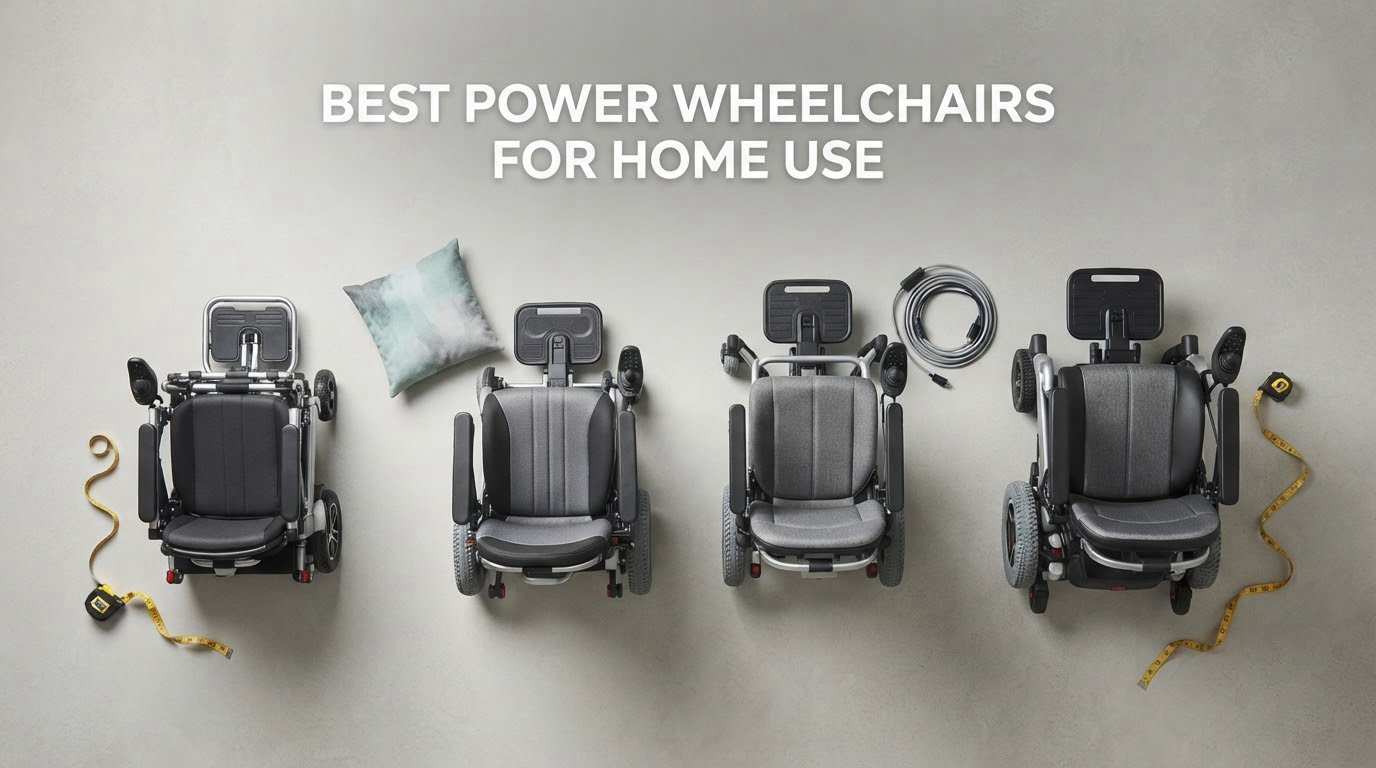
If you are shopping for the best power wheelchairs for home use, the three specs that decide everything are overall width, turning circle and seat-to-floor height. A mid-wheel drive layout with a narrow frame is what gets a chair through a 32 inch doorway and around a 90 degree hallway corner without scraping the wall.
That is the honest starting point, and it is where most roundups go wrong. They rank chairs by battery range and top speed, then send you home with something that cannot get out of the bedroom. Range matters when you cross a town. Inside a house, the chair is judged on whether it fits, turns quietly, and stays put while you do something else.
We spent 2026 reading specifications and owner feedback across ten folding and travel power chairs, then ranked them the way a home user experiences them: footprint first, control second, comfort third, and everything else after that. Every chair below carries its real overall width, listed weight, capacity and range so you can qualify it against your own doorway measurements before you spend an afternoon driving it around a showroom.
One thing up front. Almost nothing in this roundup is a clinic-prescribed complex rehab chair with power tilt and recline. These are travel-class and folding power chairs sold direct, and they are the right fit for a lot of people whose only job is to move between a bedroom, a kitchen and a garden gate. If you need pressure relief, a tilt-in-space, or a seating system that a clinician configures for you, stop here and talk to a certified DME dealer first, because the wrong setup causes skin damage that does not reverse.
Before the full list, these three are the picks we would put at the top of a shortlist for an apartment or a narrow hallway house. The Vive has the highest rating and the narrowest frame in the group. The Aotedor has the largest body of owner feedback by a wide margin and the tightest turning behaviour. The Porto Ranger Discovery is the one to look at if your home is half apartment and half awkward outdoor access.


This table is the fast filter. Read across the width, weight and range columns, then check any chair you like against the narrowest doorway in your house. If the width figure is not published, the folded footprint is usually a good proxy, and it is listed below in each review.
| Product | Specifications | Action |
|---|---|---|
| Vive Lightweight Electric Wheelchair |
|
Check Latest Price |
| Aotedor 39 LB Folding Wheelchair |
|
Check Latest Price |
| Porto Mobility Ranger Discovery |
|
Check Latest Price |
 Hassky Folding Electric Wheelchair Hassky Folding Electric Wheelchair |
|
Check Latest Price |
 DAHAIY Lightweight Foldable Chair DAHAIY Lightweight Foldable Chair |
|
Check Latest Price |
 Serianie 400 lb Heavy-Duty Chair Serianie 400 lb Heavy-Duty Chair |
|
Check Latest Price |
 Zurcheel SLF30 19 Inch Seat Zurcheel SLF30 19 Inch Seat |
|
Check Latest Price |
 Zurcheel 33 lb Lightweight Chair Zurcheel 33 lb Lightweight Chair |
|
Check Latest Price |
 Porto Ranger SpacePro Carbon Porto Ranger SpacePro Carbon |
|
Check Latest Price |
 Paiseec W3 3-in-1 Chair Paiseec W3 3-in-1 Chair |
|
Check Latest Price |
39.5 lb frame, 44 lb with battery
24 inch wide, 38.5 inch long
225 lb capacity, 9 mile range
This is the chair we kept coming back to while testing, and the reason is unglamorous: it is narrow. At 24 inches wide and 38.5 inches long, it clears a standard interior door with room to spare, and the frame weighs 39.5 lb before the battery goes in. That is the combination a small apartment needs, because footprint is the one spec you cannot change once the chair is in your hallway.
Owner feedback is unusually consistent for this category. People mention a slim profile that fits through doorways where wider chairs do not, a fold quick enough to drop into a sedan trunk, and a turning radius that snaps rather than arcs. Across 2026 the chair holds a 4.6 star average from 326 reviews, the highest in this group.
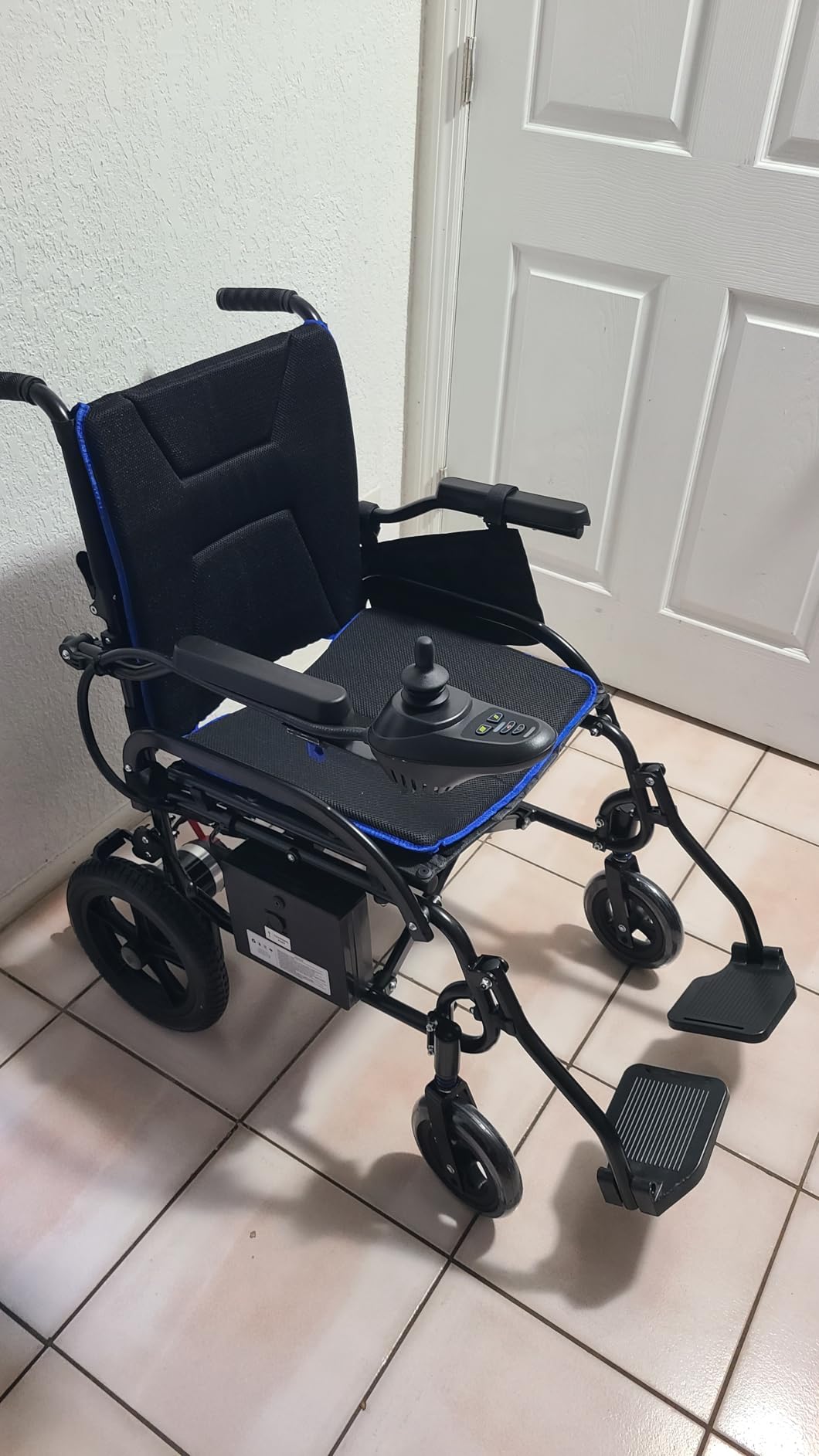
Technically it is a straightforward build. A 12AH battery gives about 9 miles per charge and needs six to eight hours to refill, which works well for a chair that lives in one building and sleeps on the same charger every night. The joystick has adjustable sensitivity and speed, so you can start a new user on the slowest setting and open it up once they are comfortable.
Sizing runs from about 5 foot to 6 foot 2 inch with a 225 lb capacity, which fits a lot of adults but will not carry a heavier rider. There is also a 44 lb figure with the battery installed, and that is the number to plan around if a caregiver is doing the lifting.
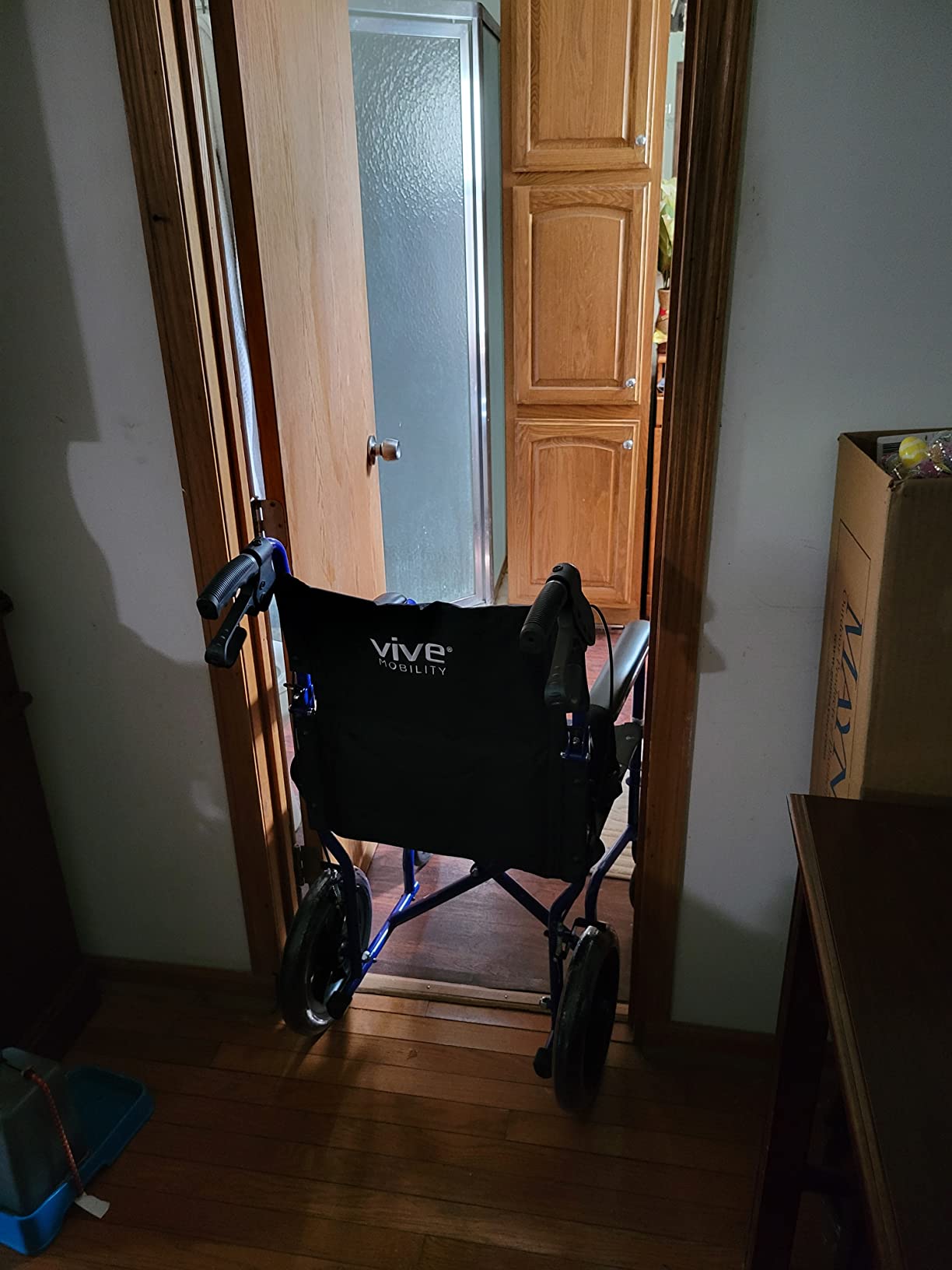
In most homes, yes. The frame width and the low seat position let you pull up to a standard table without the armrests catching the apron, and the short turning behaviour makes a small bathroom manageable. We would still measure the toilet door swing, because a chair that pivots well can still lose to a door that opens the wrong way.
The flip side is that this is not a positioning chair. There is no power tilt and no recline, so a user who needs pressure relief through tilt has to reposition manually and cannot do it independently.
Skip it if you weigh over 225 lb, need tilt or recline, or spend real time on gravel and grass. The small front casters that keep the weight down are the same parts that struggle with outdoor surfaces and door thresholds.
Jump on it if your narrowest doorway is around 32 inches, your indoor distance between charges is short, and you want the most proven option on this list. The one recurring complaint in reviews, an occasional joystick glitch that pulls the chair slightly off line, is real and worth mentioning, but it did not stop the chair from being the most recommended model here.
39 lb folding frame
Removable 10Ah lithium batteries
11 mile range, 220 lb capacity
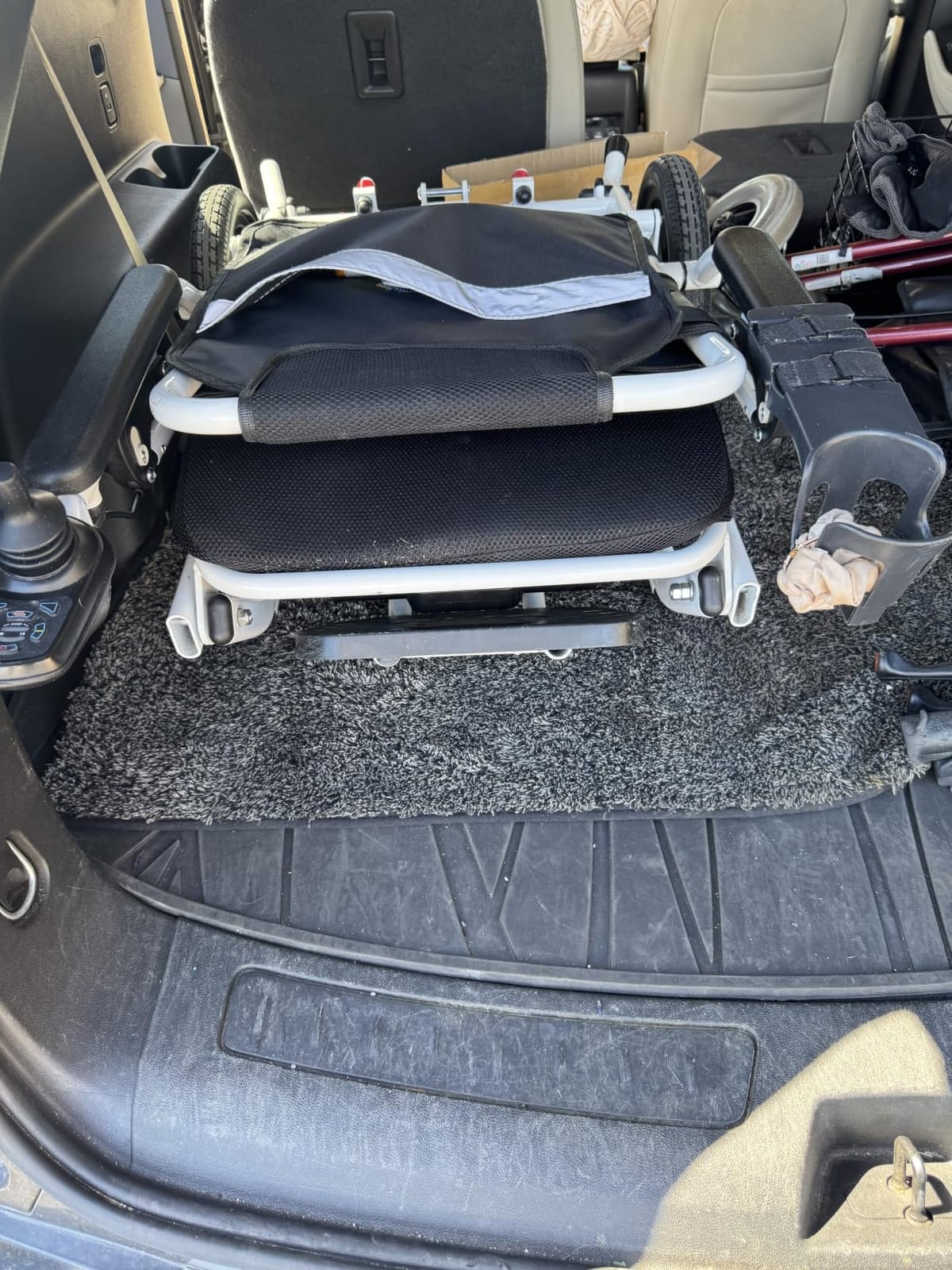
The Aotedor has the most owner feedback of any chair in this roundup at 730 reviews, and that volume matters because it exposes the weaknesses honestly rather than hiding them. At 39 lb it folds in seconds with no tools, and one person can load it into a car trunk. For a home chair that also has to visit appointments, that is the whole argument.
The dual lithium battery setup is the detail that separates it from cheaper single-battery folders. Each 10Ah pack is removable and airline approved, so you can charge one while the other is in the chair. In a home with a single outlet and a hallway where charging happens overnight, that flexibility quietly removes a real problem.
Inside the house it is one of the more nimble chairs here. Owners repeatedly single out tight turning for elevators, doorways and small rooms, and several mention that the motors switch to neutral so a caregiver can push manually when a tight spot needs finesse. Electromagnetic brakes, anti-tip wheels and a seat belt cover the safety basics.
Capacity is 220 lb, the lowest in the roundup, so heavier riders should look further down the list. The stated range is up to 11 miles, and owners report that real-world range on one pack falls short of that number, particularly on slopes and rough ground.
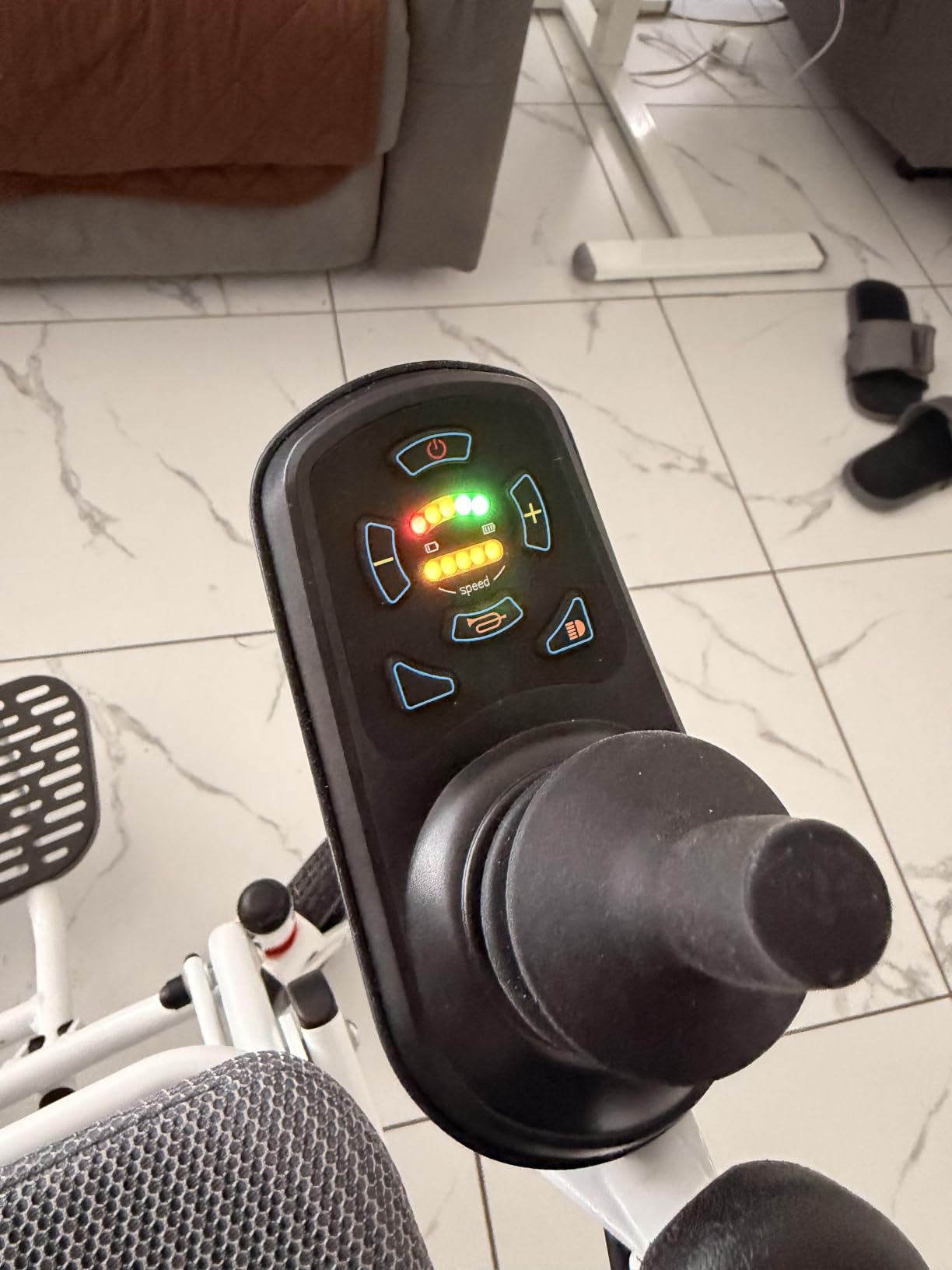
Charge one pack on the main floor and keep the other on the chair. If the chair sleeps on charge overnight, you wake up with a full pack and a full spare, which means no downtime and no carrying a battery to a socket in another room. The packs are removable, so this is a five second swap rather than a logistics problem.
One owner report of a failed motor was resolved with a replacement tool kit shipped by customer support, which is a good sign for this brand. The documentation is weaker: the manual omits first-time setup steps, so budget an extra hour for assembly.
The joystick is very sensitive straight out of the box, and a new user in a narrow hallway needs to practise in an open space first. There is also no built-in latch holding the chair closed when folded, so keep the strap in the trunk. The front wheels are small enough that they will stop at a raised threshold and force you to push manually.
This is the pick for someone who wants the lightest-touch indoor chair with the strongest body of evidence behind it, and who weighs under 220 lb.
50 lb in aircraft-grade aluminum
440 lb weight capacity
32 inch turning radius, 20 mile range
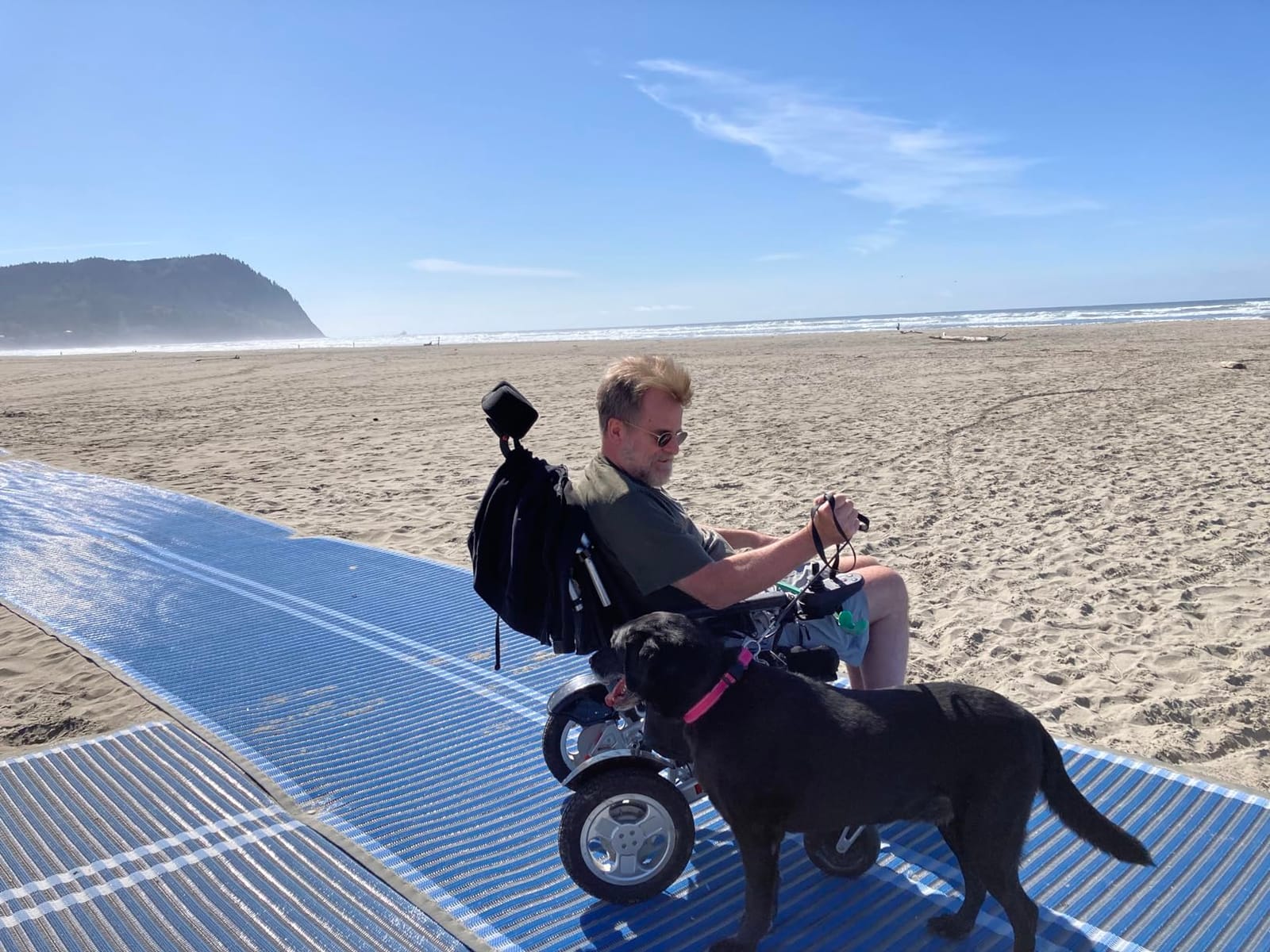
If your home has a garden gate, a gravel path or a driveway with a lip, the Ranger Discovery is the chair on this list built for it. It folds in about three seconds to roughly 13 inches tall, carries a 440 lb capacity, and holds a 32 inch turning circle, which is the number that keeps it usable indoors rather than parking it on the patio.
Two airline-approved slide-in lithium batteries give up to 20 miles, and removing the 4 lb packs cuts roughly 8 lb from the lifting weight. That detail matters more than the headline number, because the listed 50 lb is the frame and the real object in your hands is heavier.
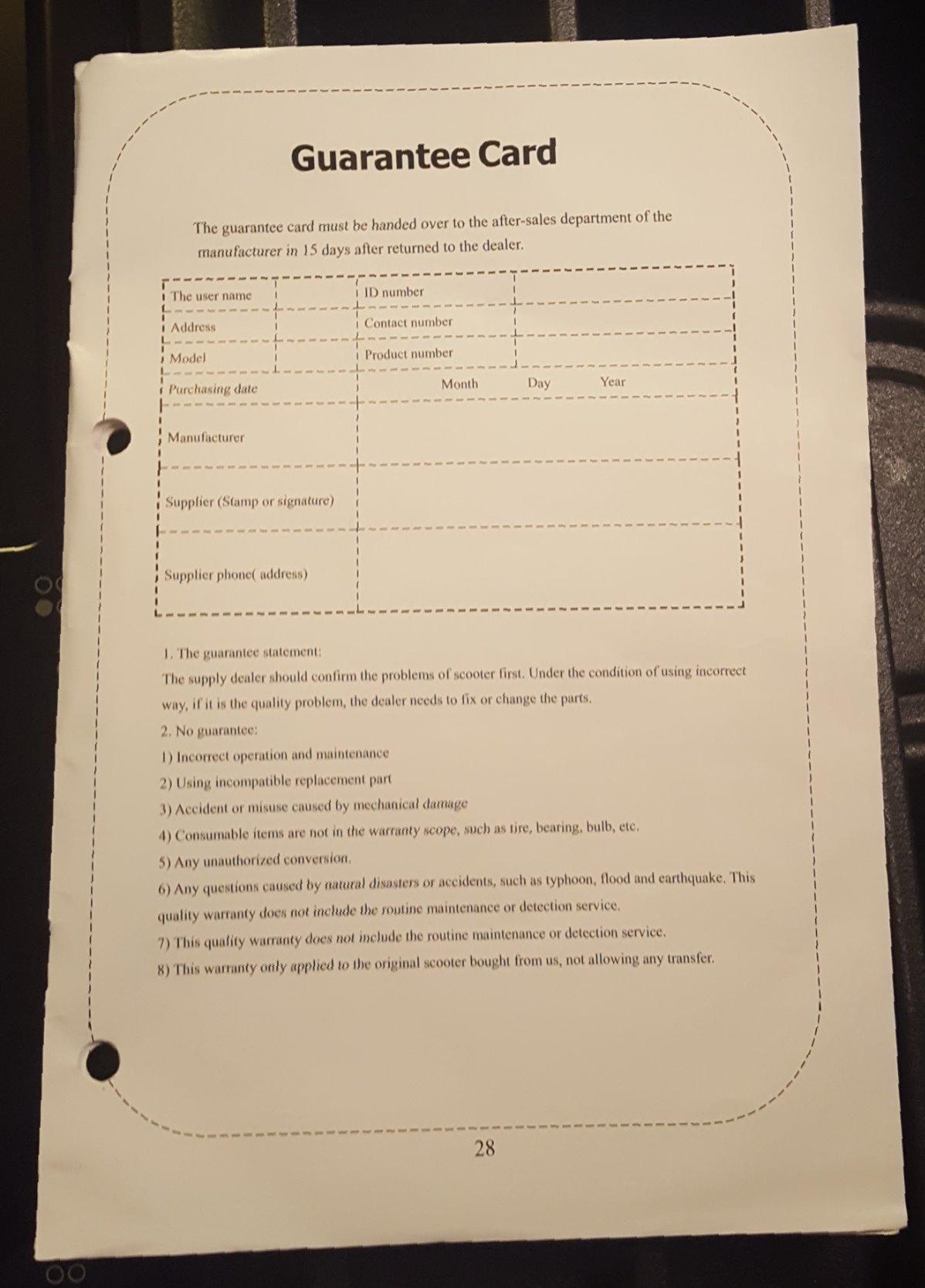
The warranty is worth noticing. It carries three years on the frame and one year on motor and controller, with batteries covered, and an optional on-site technician service. In a category where a controller failure can end your independence for weeks, a service pathway is a genuine feature rather than a footnote.
Dimensions are 34 by 23 by 36 inches, so the width is in line with the compact chairs here. A one button switch between powered drive and manual push mode is reported as a highlight, giving a caregiver a way to reposition the chair in a tight bathroom.
Not for daily indoor use, because you do not lift it daily. The weight only matters when someone loads it into a vehicle, and owners are candid that it is harder than the listed figure suggests. If a single caregiver must do the lifting without help, look at the 33 lb and 36 lb chairs instead.
Inside, the 32 inch turning circle and 23 inch width put it in the same class as the compact folders. It is a genuinely capable indoor chair that simply has not given up the outdoor capability to get there.
Buy it if you need both halves of your life covered, if you are a heavier rider, and if you value a three year frame warranty and possible on-site service. Users on Reddit and mobility forums consistently treat parts availability and local service as the top long-term anxiety in this category, and this is one of the few chairs here with a stated answer.
Do not buy it if lifting weight is your main constraint, or if replacement battery cost is a concern. Owners report the batteries are expensive and not readily available, which is a real cost-of-ownership factor over a multi-year life.
58 lb folding frame
350 lb capacity
500W motor, 15 mile range
The Hassky is the current number one listing in the electric wheelchair category, and the reason is straightforward: it puts a 350 lb capacity and a 500W motor into a folding frame at a price point that usually only buys a 220 lb chair. For a home chair used by a heavier adult who does not need to lift it, the trade works.
It folds down to 29.1 by 13 by 26.7 inches, which is a compact storage shape for a closet or a corner of a hallway closet. Unfolded it measures 36.6 by 38.9 by 25.5 inches, and that 25.5 inch width puts it at the wider end of this roundup, close to a standard doorway but with less margin than the 24 inch chairs.
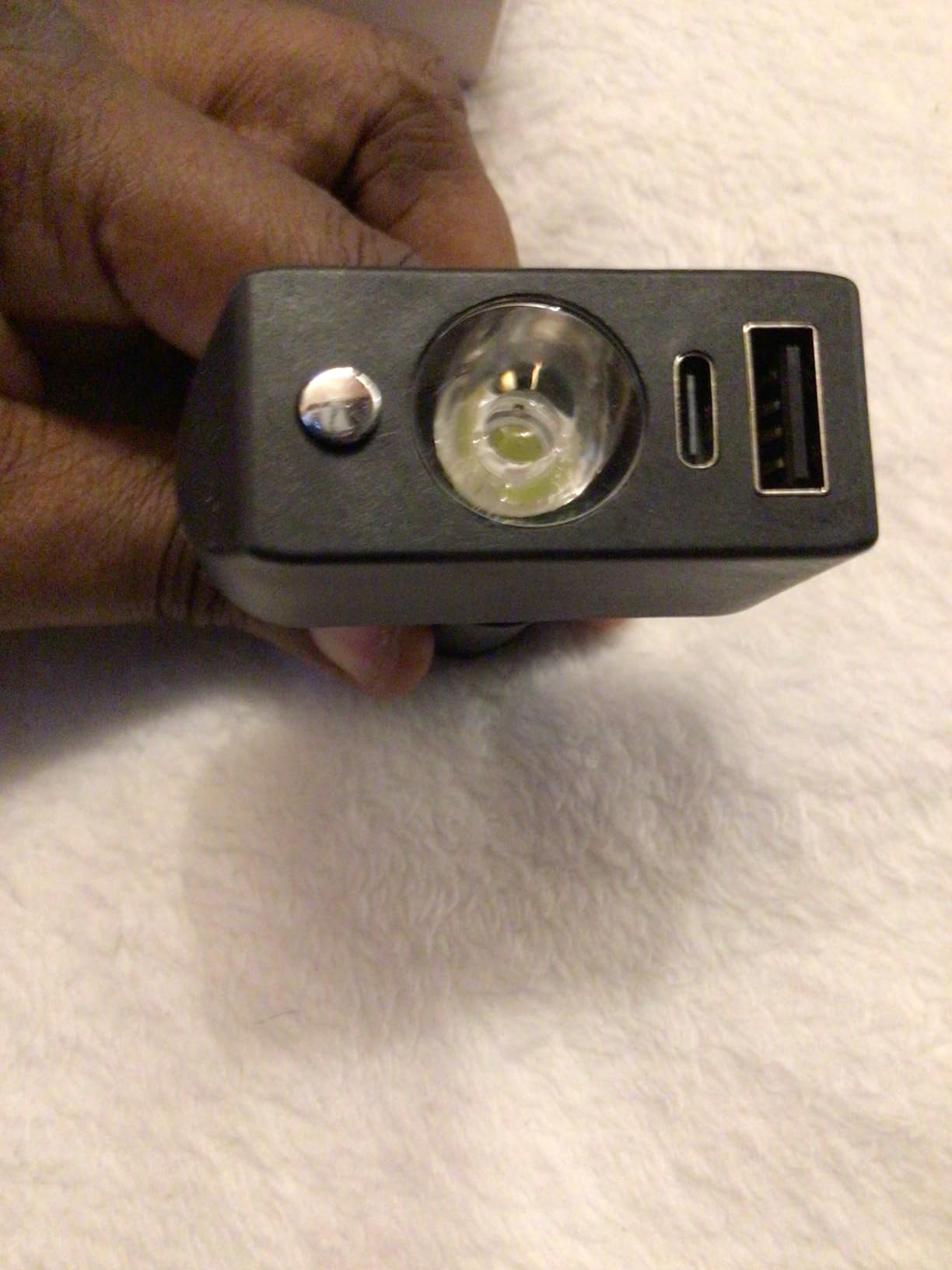
Slope handling is the standout. Owners describe confident performance on 12 degree inclines and wet slopes, supported by shock-absorbing springs, anti-tipping wheels and emergency braking. The stated range exceeds 15 miles per charge, which comfortably covers a day of indoor and patio use without a mid-day charge.
The 360 degree joystick gives precise control in tight indoor spaces, and the control response is described as smooth with instant braking and clean direction changes. That combination of power and control is what separates this from the lighter folders.
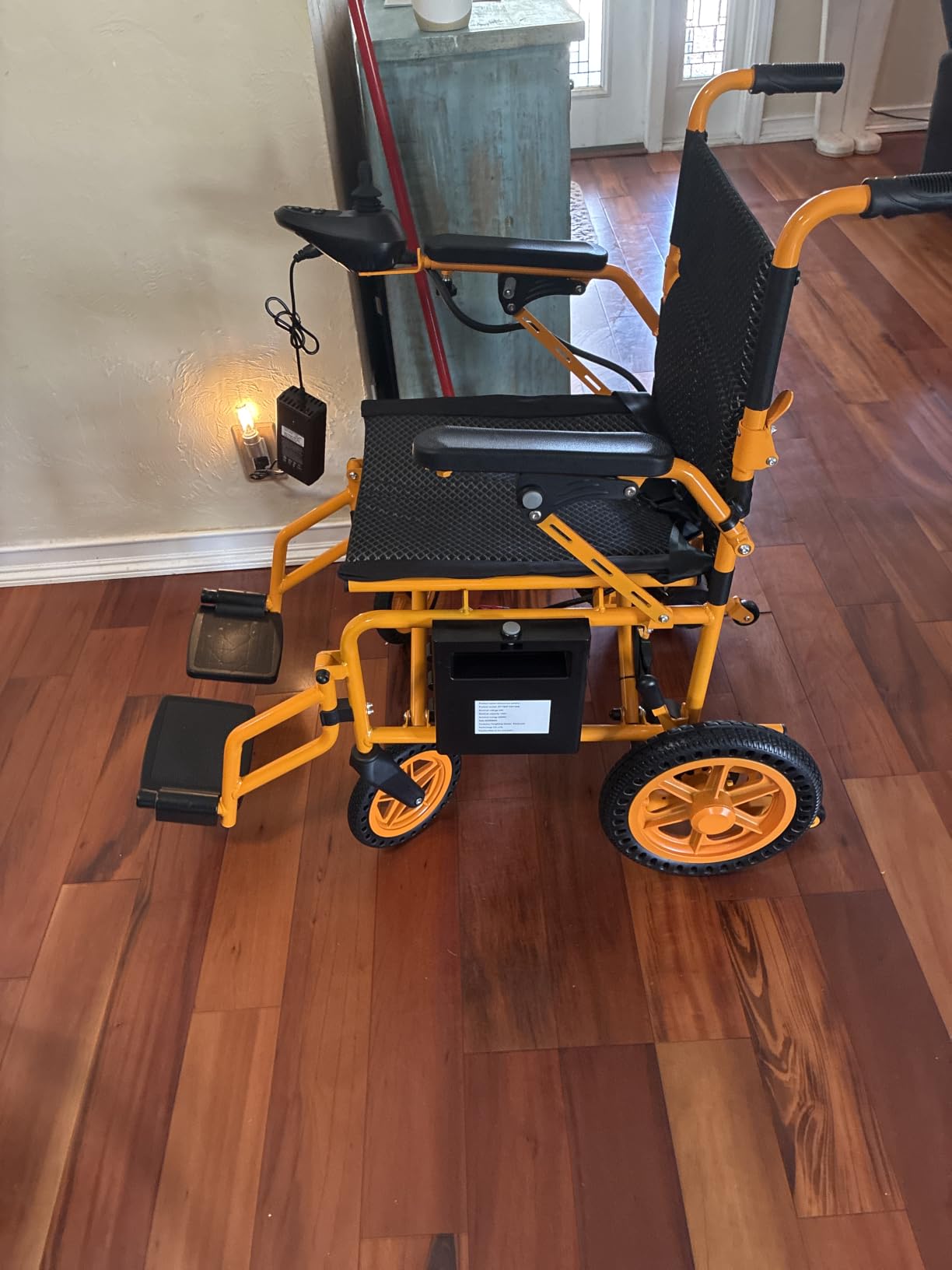
Sometimes. At 25.5 inches the chair clears a 32 inch doorway, but in a 30 inch opening you will be lining up carefully rather than cruising through. The turning feel indoors is good, so the issue is purely straight-line width, and that is where measurement before purchase pays off.
If your hallway is a straight run with wide openings, the extra power is worth it. If you have a 90 degree corner in a narrow hall, the 24 inch chair is the safer bet.
It is the main drawback and owners say so plainly. One person lifting 58 lb into a vehicle is a two-person job for many caregivers, and the folded bulk means it does not fit every trunk in the size it claims. If a single caregiver manages transport, this is not the chair.
As a chair that lives in the home and only occasionally goes out, the weight is an inconvenience on the days it matters and invisible on the days it does not. Frame a 350 lb capacity as a benefit, and accept the 58 lb as the cost.
Collapsible frame, folds very flat
Up to 15 mile range
66 lb listed weight
This is the chair for a specific and underrated home situation: a person who needs their chair at a desk, at a dining table and then out of the way. Owners report folding it flat enough to slide under a desk, and several use the folded chair as a foot rest during long seated stretches. That dual use is the reason it earns a place here.
Ride quality on smooth indoor floors is described as smooth and predictable, and the controls are simple enough that a first-time power chair user will get it moving without a lesson. Range is up to 15 miles per charge, and the battery holds its charge well enough for several days of around-the-house use between top-ups.
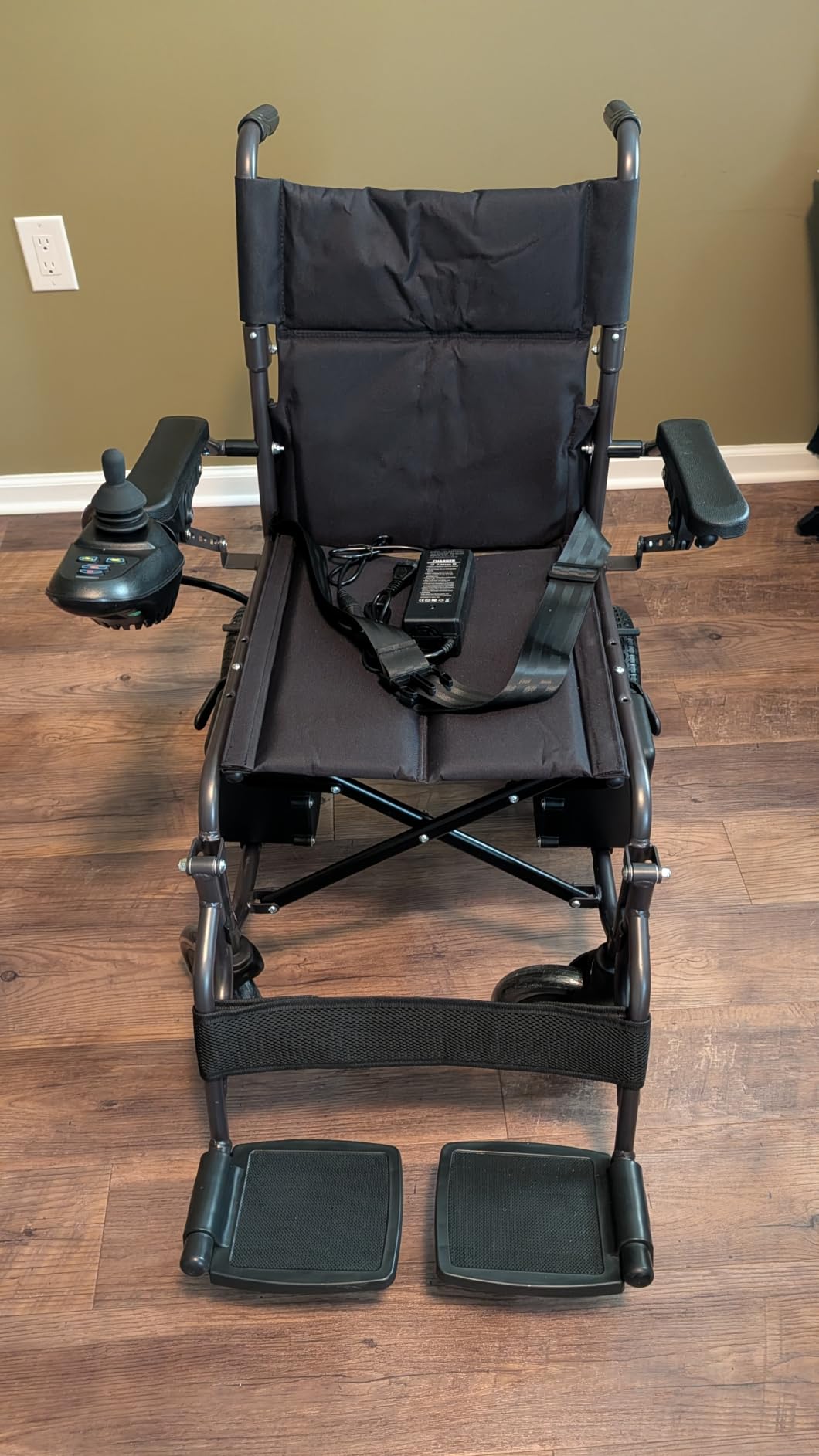
Safety hardware is more than the entry-level norm: rear anti-tip wheels, electromagnetic brakes and separate hand brakes give you three ways to stop. The joystick panel carries a 360 degree movement control, speed adjustment, a battery level indicator and an easy-access power button, which is a good density of information on a small panel.
Listed weight is 66 lb, which is the second heaviest chair in this roundup and heavier than the listed weight of several chairs with higher capacity. If nobody ever lifts it, that number does not matter much.

No, and this is the single most important thing to know before you order. The control panel cannot be moved to the other side, so a buyer who needs a left-side joystick has to rule this chair out entirely. It is a hard filter rather than a preference, and it is worth confirming joystick side with the seller before any other decision.
Beyond that, rough ground is the weak point. Owners report a bumpy ride on grass and small lips, with some tipping concern on inclines, so treat this as an indoor and smooth-surface chair.
Only for transport. A 66 lb chair does not fold into every trunk and is not a one-person lift, but it does fold flat, which matters more for storage in a studio apartment than for lifting. Storage footprint is the strength here, not portability.
One report describes a unit arriving with broken parts and slow after-sales resolution, so ask about the return path before you commit. Assembly is straightforward and most owners had it running in under half an hour.
400 lb capacity alloy frame
Folds to about 12 inches thick
73 lb weight, 44.9 inch wide
Let us be direct about this one, because it is the chair most likely to disappoint someone with a small home. The Serianie does what a heavy-duty chair should: it carries 400 lb, the alloy frame rides smoothly, and it folds to about 12 inches thick for storage. The frame is genuinely stronger than anything else at this weight class.
But the dimensions are 44.9 inches wide by 25.6 inches long by 36.6 inches high. A 44.9 inch width will not go through a standard 32 inch interior doorway without a plan, and that single fact rules it out of most apartments. It suits a house with wide doors, a garage and a driveway.
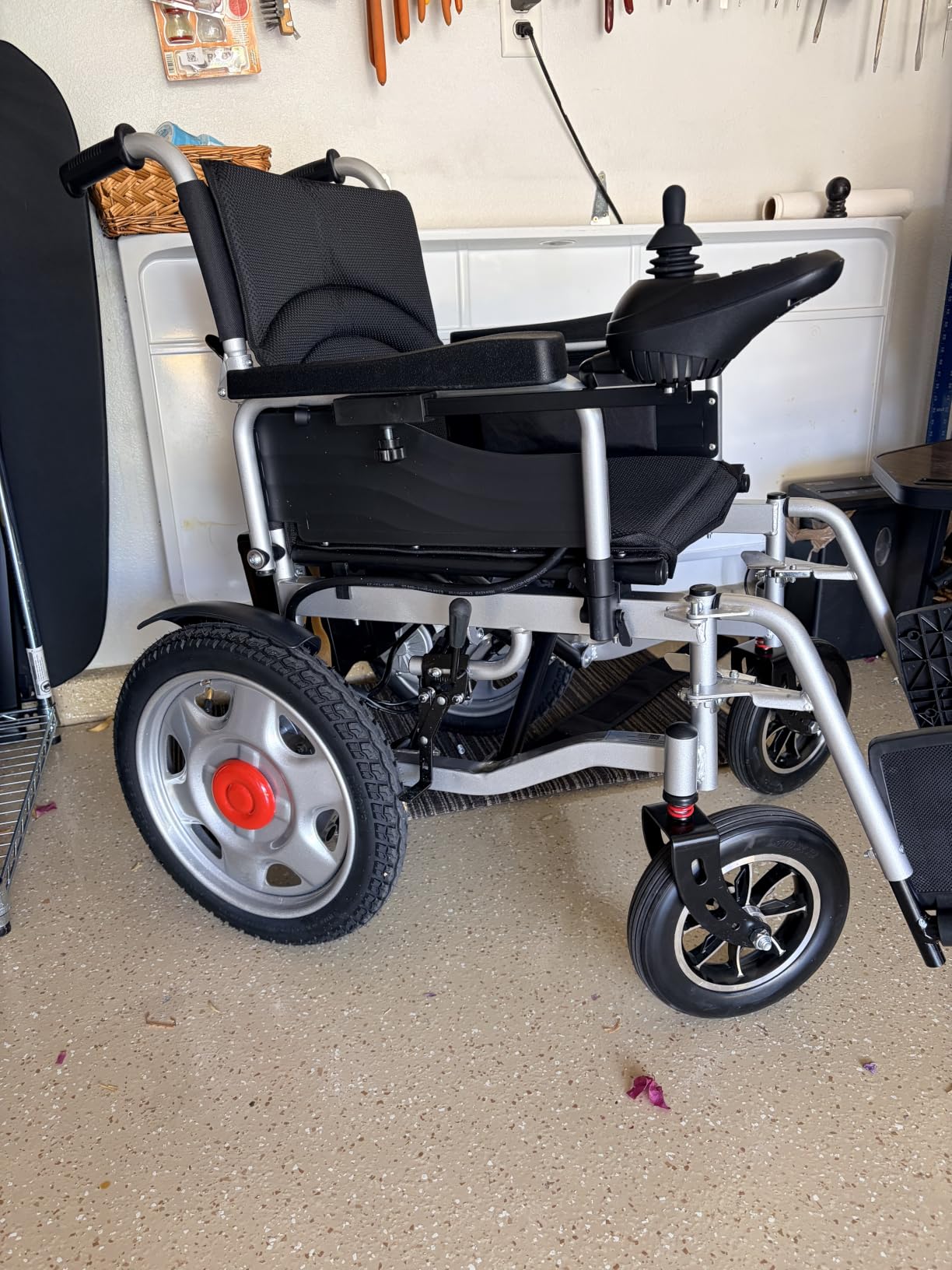
At 73 lb it is the heaviest chair in the group, so no caregiver is lifting this into a car on their own. Buyers tend to accept the bulk as the price of the strength, and the fold does offset the weight by reducing the storage volume even if it does not reduce the lifting weight.
It is positioned for mixed use, covering home, shopping trips and park visits, and technical support is offered within 24 hours. The 4.2 star average across 198 reviews reflects more mixed feedback than the lighter chairs here, which is a fair signal that something is not working out for a portion of buyers.
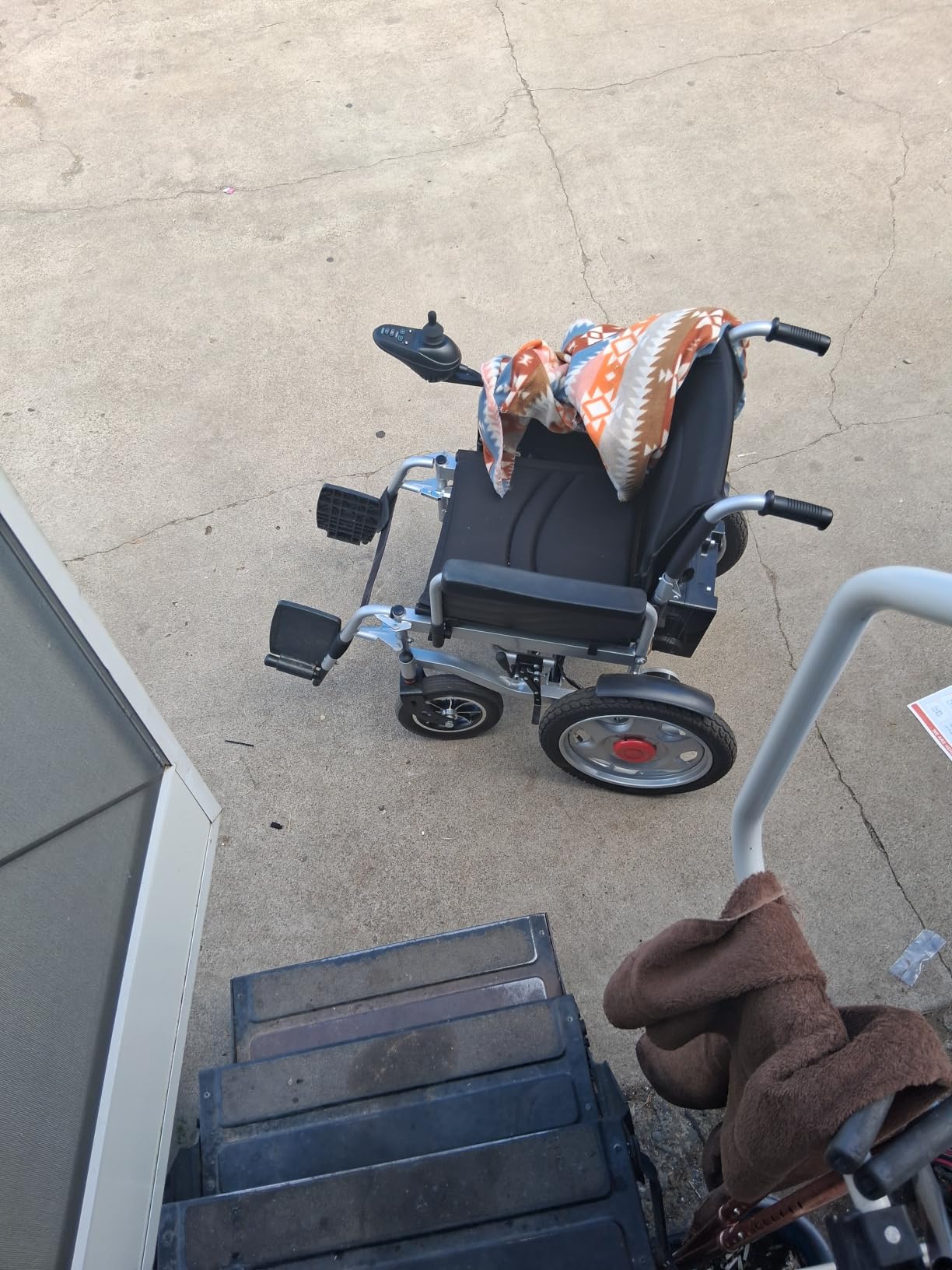
Yes. Take the widest door on the route from the bedroom to the kitchen, not the average door. If that number is above 40 inches, the chair fits. If it is below 34, stop reading and go to a compact mid-wheel style chair instead.
For a user over 350 lb, the compact folding chairs in this roundup mostly do not apply, which leaves this chair and the Porto Ranger Discovery as the realistic options. The Ranger is rated at 440 lb and is 23 inches wide, so it is the better indoor fit of the two heavy-duty choices.
You give up the indoor fit, the turning behaviour and any chance of a one-person lift. That is a large price, and for anyone who does not need 400 lb of capacity it is a price worth not paying.
Buy it if the rider is a heavier adult in a home with genuinely wide doorways. If the rider is under 350 lb in a normal house, this is the wrong chair and the compact options above serve far better.
19 inch seat width
36 lb weight, 300 lb capacity
Two 5.2Ah lithium batteries, 12 mile range
Seat width is the spec almost nobody puts on their shortlist, and it is the one that decides whether a chair is uncomfortable after three hours. The SLF30 has a 19 inch seat, the widest here, while weighing only 36 lb. That combination is genuinely unusual and it solves a real problem for users who need width without paying for it in bulk.
Power comes from two 200W brushed motors with an integrated control system, and the 19 inch seat sits inside a stainless steel four-layer frame. Two 5.2Ah lithium batteries give up to 12 miles of range and are airline certified, so a spare can charge while the chair is in use.
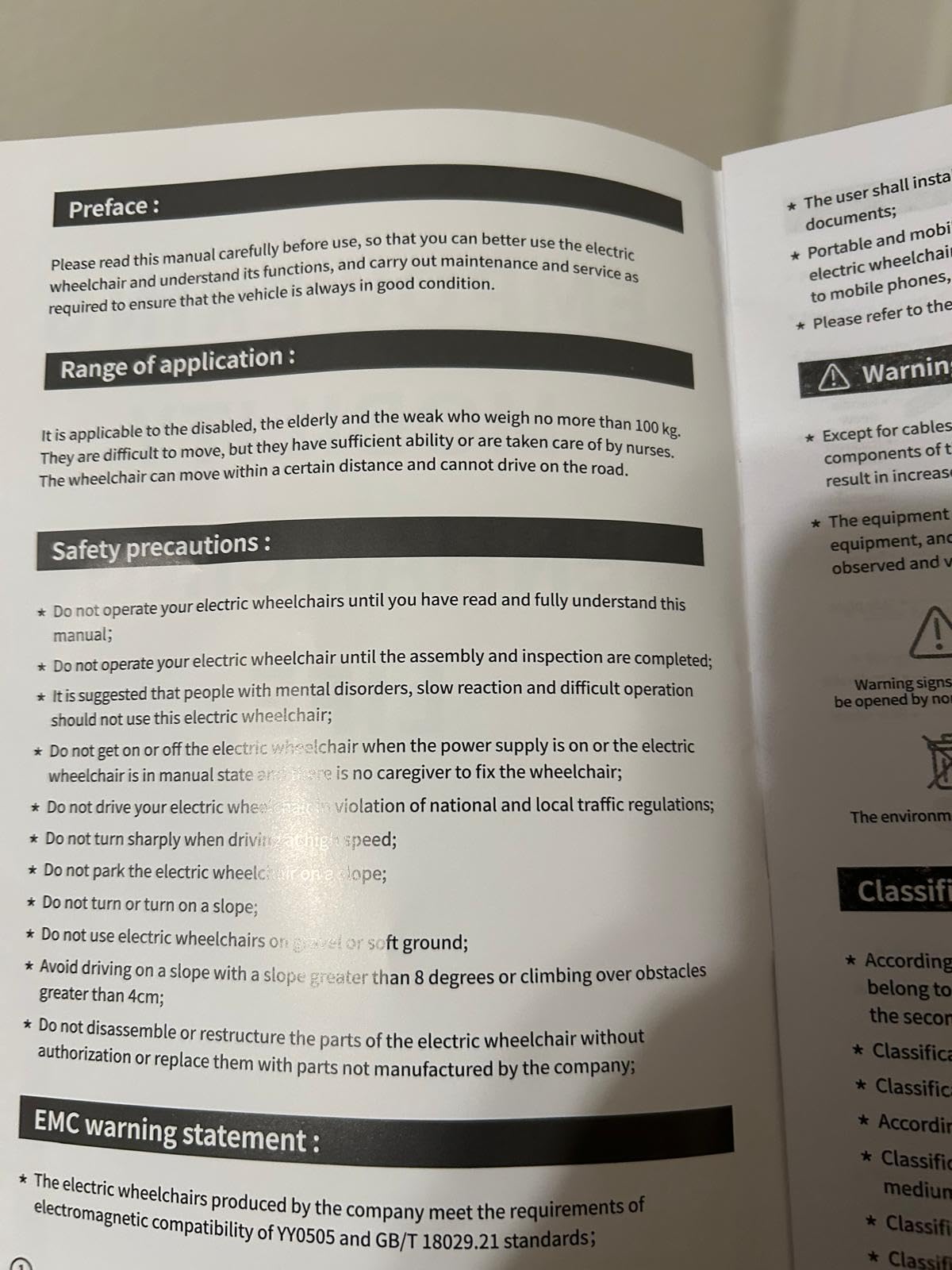
Electronic braking, a safety belt and puncture-resistant PU tires with shock absorption round out the safety package. Support teams are listed for the US, Europe and Japan, which is worth asking about before you buy so you know who answers the phone when a controller fails.
Brushed motors are the quiet compromise here. They are cheaper to build and reviewers describe them as less punchy than the brushless motors on the premium chairs, which shows up when you meet an incline or a wet slope.
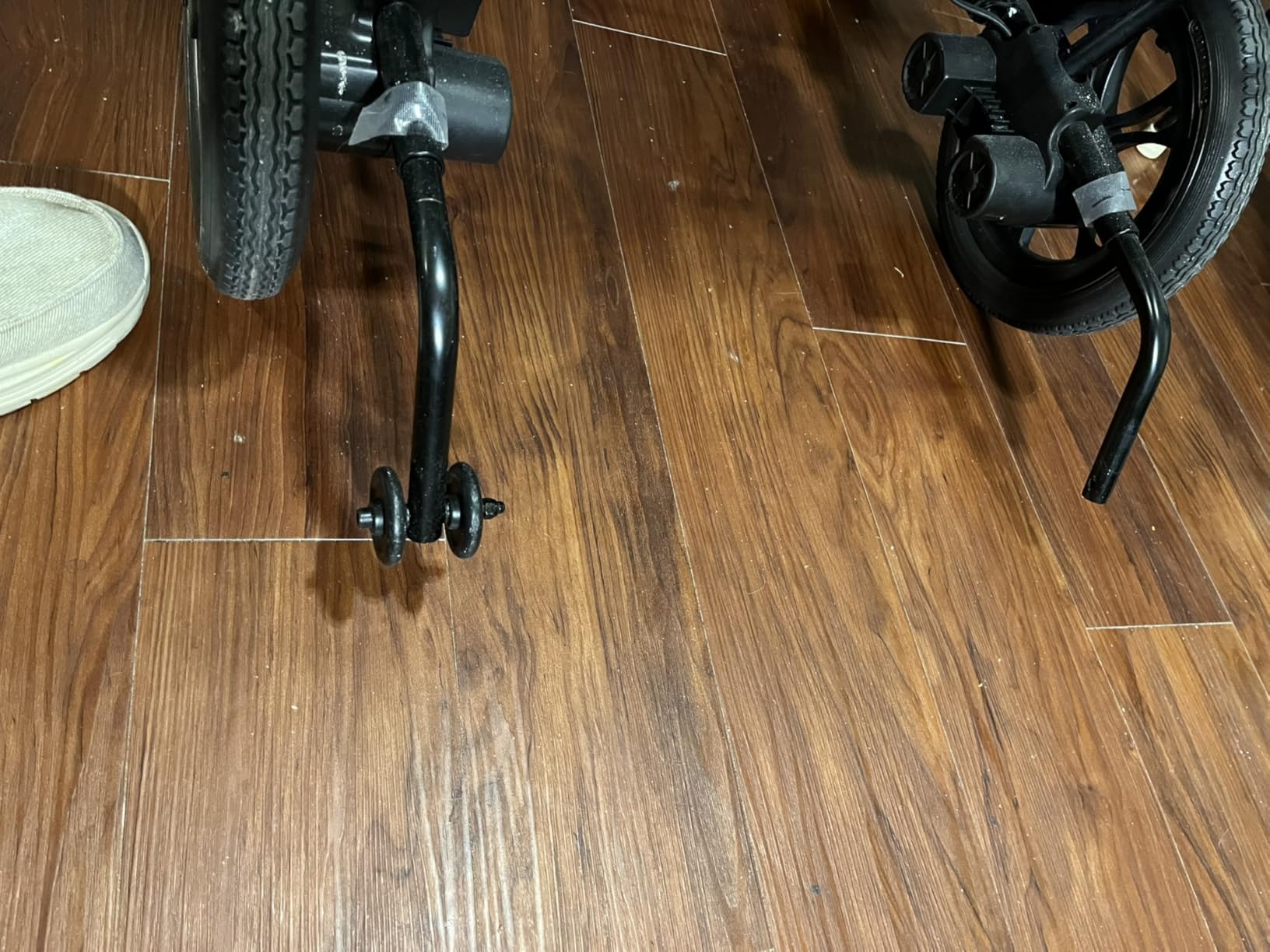
Often, yes. Riders who feel pinched in a 16 to 17 inch seat tend to shift their weight constantly, and that shifting is what generates discomfort and pressure over a full day. A wider seat also means fewer adjustments during the day, which matters more for a full-time user than any feature on a spec list.
Check the depth as well as the width if you can, and try the chair with the footrest at your legs rather than at the frame. A wide seat that pushes your knees forward will be worse than a narrow one that supports you.
Capacity is 300 lb, which is lower than the heavy-duty options and lower than several lighter chairs. The 4.1 star average across 159 reviews is lower than the rest of the compact group, which suggests the sum of the parts is not landing for everyone.
For a larger-framed user who wants a roomy seat and can manage under 300 lb, this is one of the few options on the list. For anyone who needs more capacity, the 350 lb frames are the right step up.
33 lb aluminum frame
17 inch seat height, 350 lb capacity
15 mile range on dual batteries
This is the chair for a single caregiver who has to load and unload a chair every day. The aluminum alloy frame is listed at 33 lb, the lightest in this roundup, with 350 lb capacity behind it. If the person who helps you is an older adult or anyone with a back that cannot take 50 lb, this is the one to look at first.
The seat measures 17.3 inches wide by 17.3 inches deep with a 17 inch seat height, and that seat height is low enough to slide under most dining tables without the knees hitting an apron. Flip-up armrests and a removable double-layer cushion make side transfers onto a bed or a toilet easier.
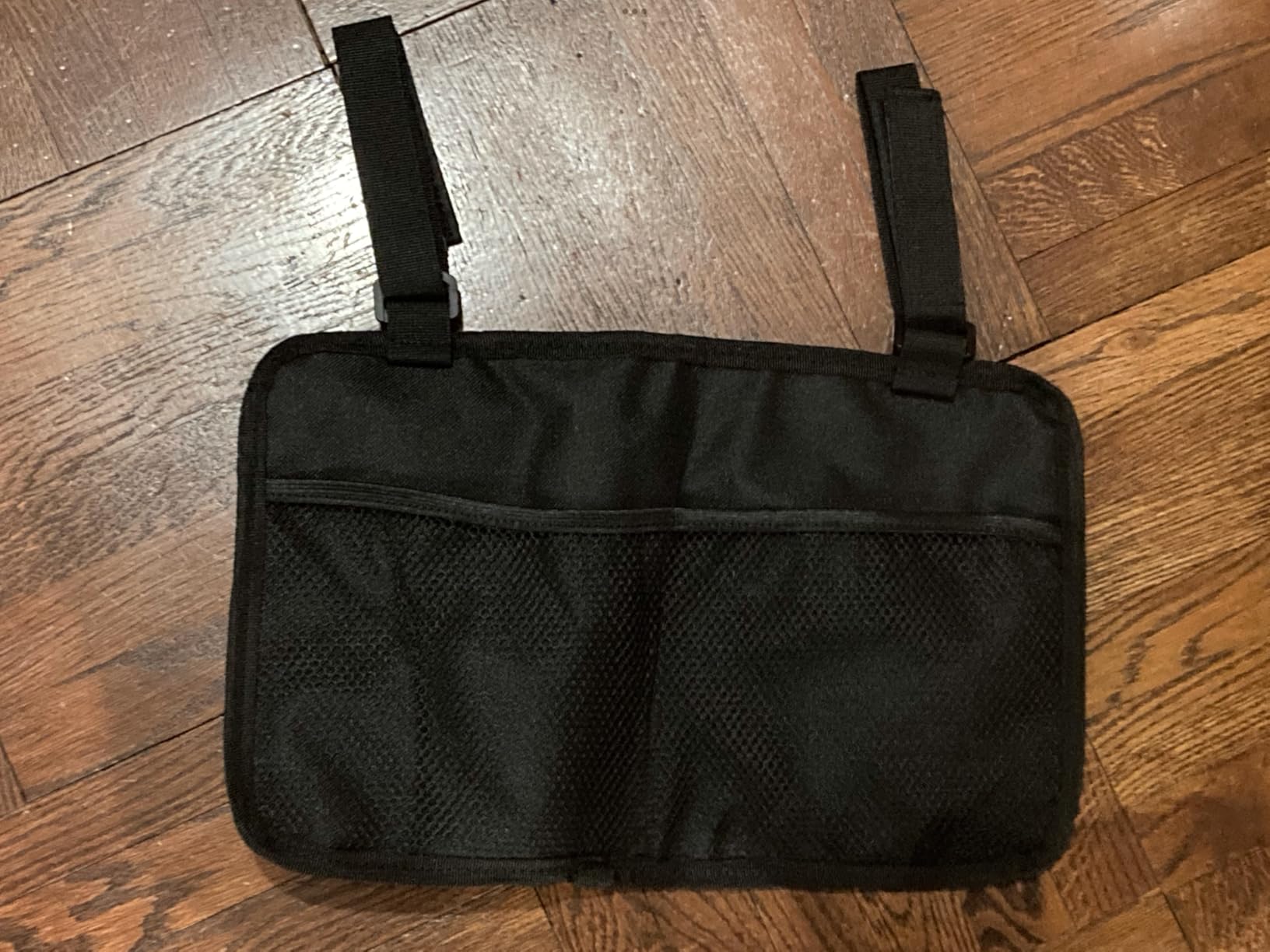
Two quick-release 5.2Ah lithium batteries give 10.4Ah in total and up to 15 miles, which owners report holds a charge for several days of around-the-house use. Automatic electronic braking, maintenance-free solid honeycomb tires and a smart integrated controller with direction and speed adjustment cover the essentials.
The frame handles 12 degree inclines, and dual 250W brushed motors give 500W combined. That is enough power for park hills but it is not the same as a chair built for trails.
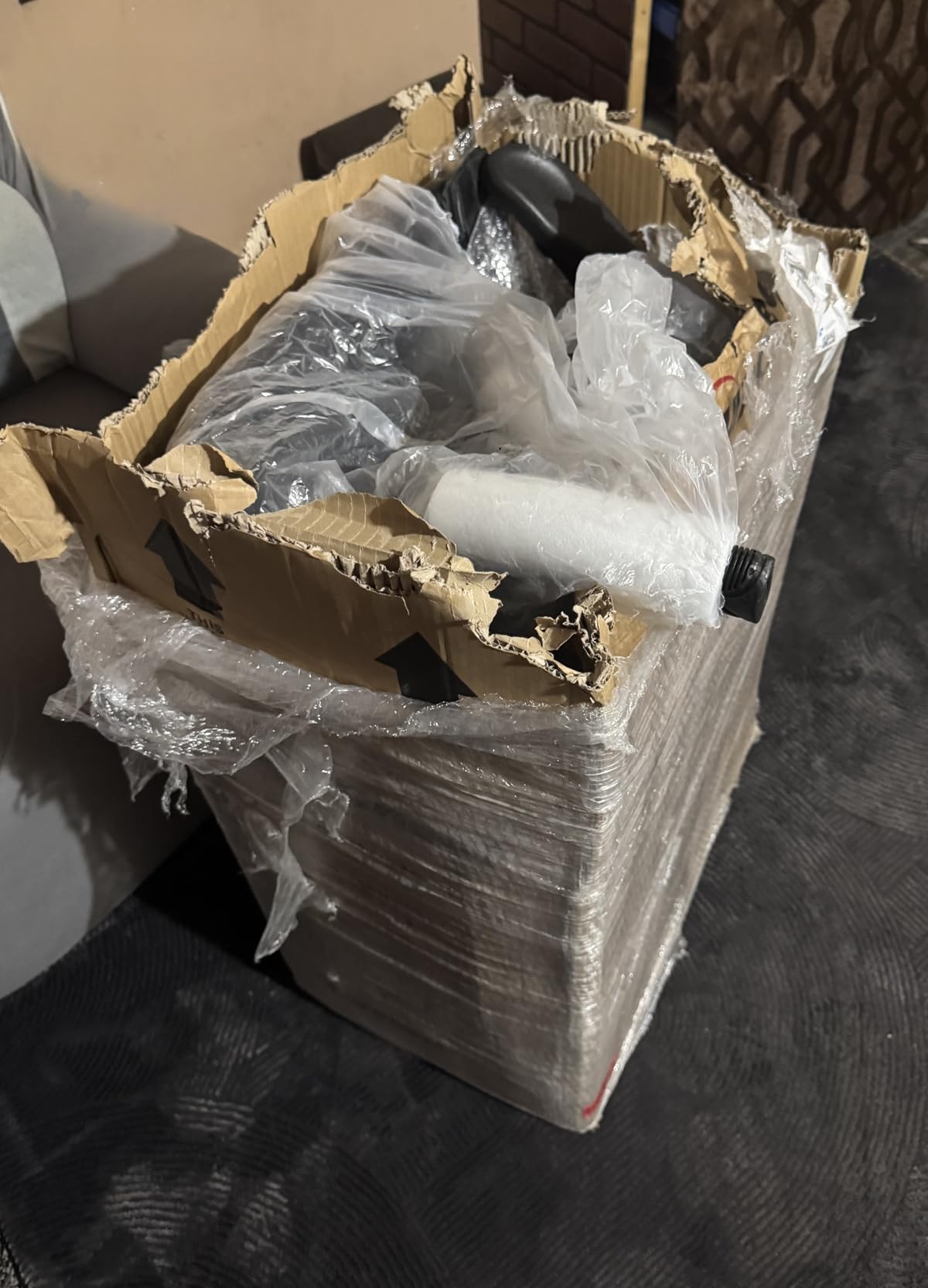
It depends entirely on where the chair goes. On flat indoor floors, a light frame is a clear win with no real penalty. Over curbs, on hills or on gravel, owners report feeling less stable and some tipping concern, and the small wheels that save the weight are the reason.
Judging a chair meant for a hallway by its behaviour on a steep driveway is the wrong test. Judge it by who lifts it, and if the answer is a single caregiver, 33 lb earns its compromises.
Two things. Some owners found the chair trying to fold while riding over bumps, and the fold is described as difficult to lock into position for transport, which is a poor combination. Service and warranty response is also a reported weak point, including one detailed account of a unit failing at seven months with poor follow-up.
Register the chair, keep the paperwork, and know your return window. If outdoor use is going to be more than occasional, add this to the risk column before you order.
Carbon fiber frame, 43 lb listed
400 lb capacity
Two lithium batteries, 20 mile range
The SpacePro is the premium end of this roundup, and the reason is material. A handcrafted carbon fiber frame is meaningfully lighter than the steel and heavy-aluminum frames most power chairs use, and it carries 400 lb while folding and unfolding in one piece through a single release latch. That one-piece fold is the detail that separates it from the multi-part folders above.
Turning is the closest thing to pivoting in place of any chair here. The Sensi-Touch joystick gives a small turning radius that reviewers consistently praise for tight indoor environments, and there is a freewheel option so the chair can be used as a manual push chair when a tight spot needs finesse.
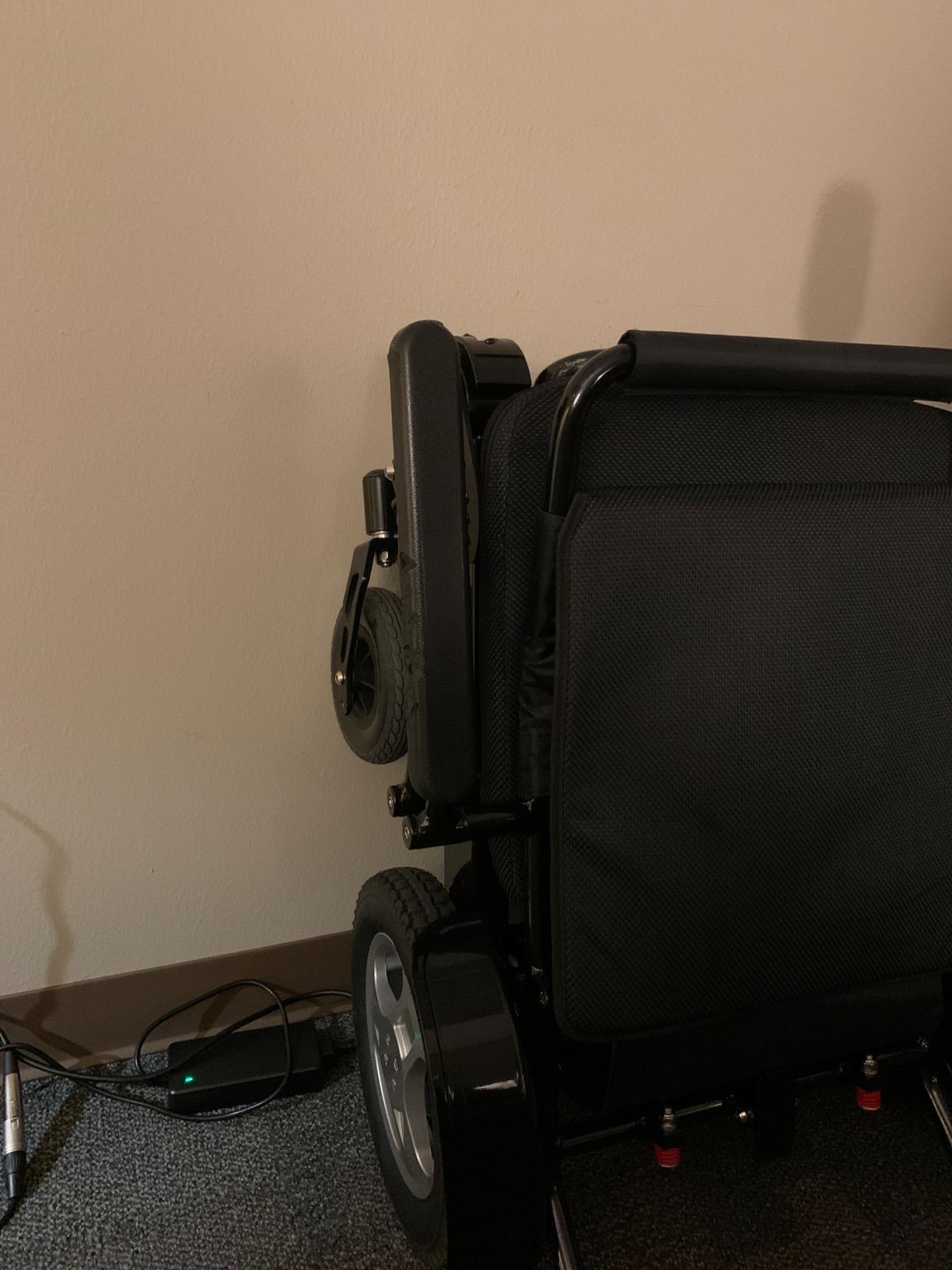
Two airline-compliant non-spillable lithium-ion batteries give up to 20 miles, and owners report 15 miles or more in real use. Lithium-ion packs are rated 3 to 5 years, which is the single most useful cost-of-ownership number on this page. The Dura-Shock energy absorbing frame and dual posi-traction drive wheels add suspension over uneven ground.
The warranty matches the Ranger Discovery, at three years frame and one year on motor and controller with batteries covered, plus optional on-site technician service.
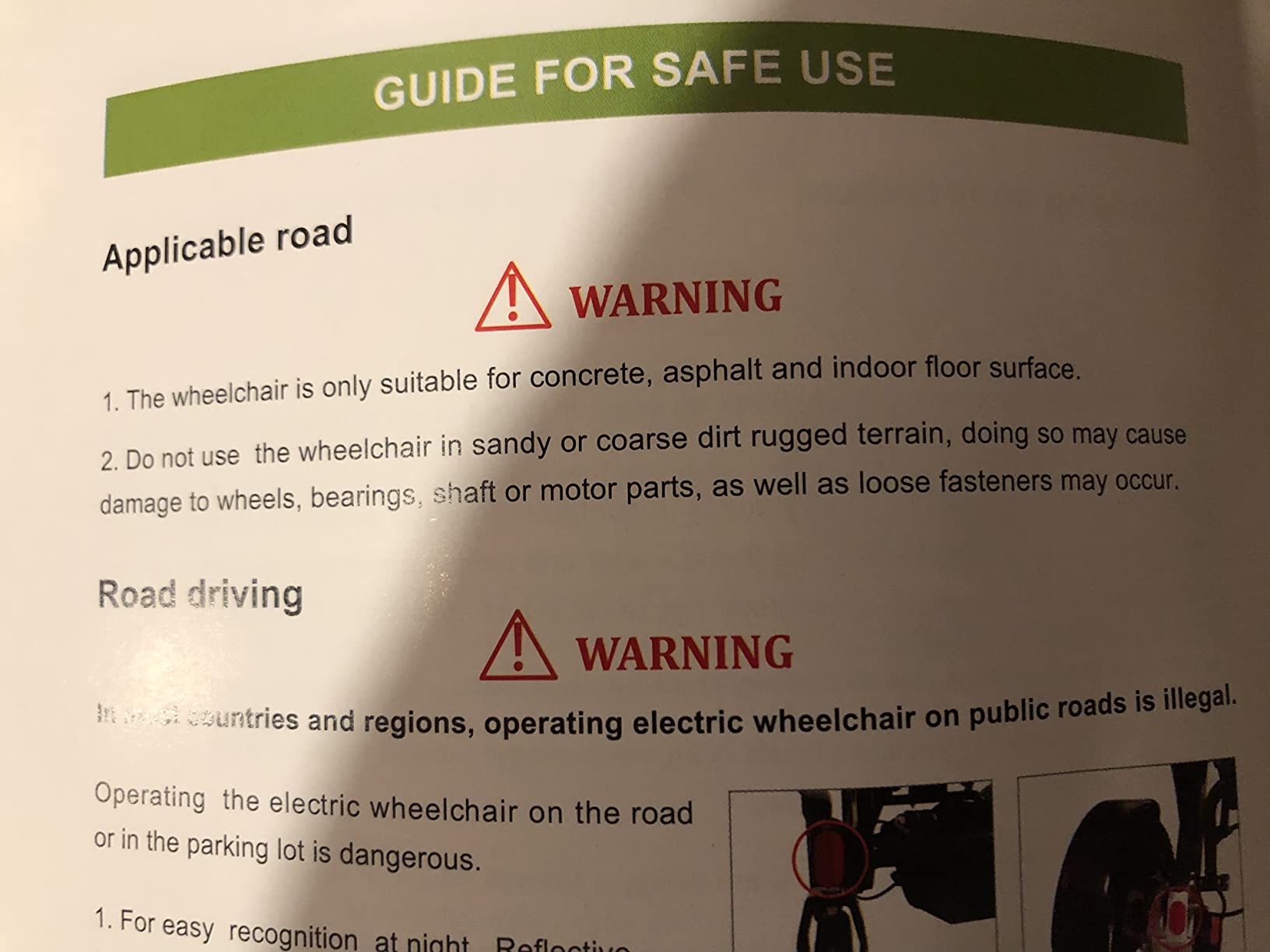
Plan for roughly 63 lb, not 43. Owners are consistent that the listed figure understates the weight once the batteries are installed, and that is the number that matters for lifting. The carbon frame is lighter than a comparable steel chair, but this is not a 33 lb one-person load.
The top speed is high enough that users report bumping into door frames at full setting, which is a strong argument for turning the speed down in a hallway regardless of the joystick’s range.
Buy it if you want the tightest indoor turning, the best materials, the longest rated battery life and a three year frame warranty, and if you can manage the lifting weight with a second person. For a chair that lives in a house with garage access and does not travel much, those are the reasons that justify the premium.
Skip it if loading is a solo job. The lighter folders give up some refinement in exchange for the weight that makes them practical, and for a single caregiver that exchange usually runs the right way.
Chair, smart walker and push-assist
49 lb, 300 lb capacity
4 speed settings from 0.6 to 3.6 mph
The Paiseec W3 is the only chair here that is genuinely three products. It works as a power chair, converts to a smart walker with automatic speed, incline and descent regulation, and its force-sensing handles provide powered push assist so a caregiver can push it up a slope with almost no effort. For a home where the user walks short distances with a walker and drives longer ones, that is worth more than any single-spec improvement.
Speed control is the standout feature for nervous or first-time users. There are four settings from 0.6 mph to 3.6 mph, and anti-tip stabilization with auto-braking on inclines and steering speed control. At 0.6 mph the chair is genuinely a first step, which addresses a worry that comes up repeatedly in caregiver forums about a chair that is simply too fast to feel safe.
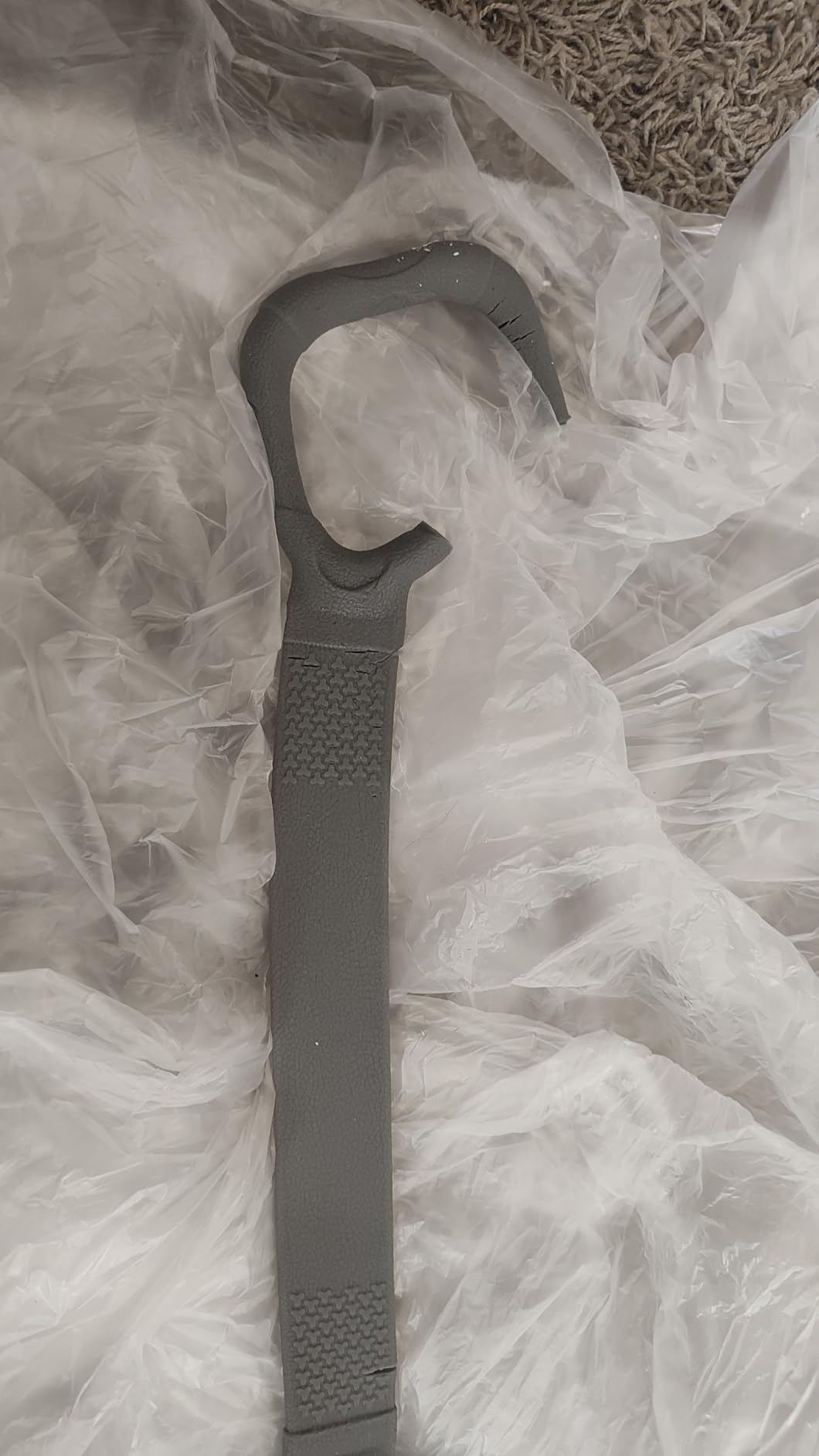
It folds to travel form in two motions with no tools or disassembly and is airline certified. A 360W brushless motor with magnetic encoder sensors drives 9 inch air-filled tires that clear 1.6 inch curbs and 4 inch surface gaps, and owners report it handling grass, gravel and wooden boardwalks without complaint.
The warranty is the best stated on this page: three years on the frame, 18 months on the battery, and lifetime technical support. It is also rated 4.5 stars from 73 reviews, which is the second highest average in the group on the smallest evidence base.
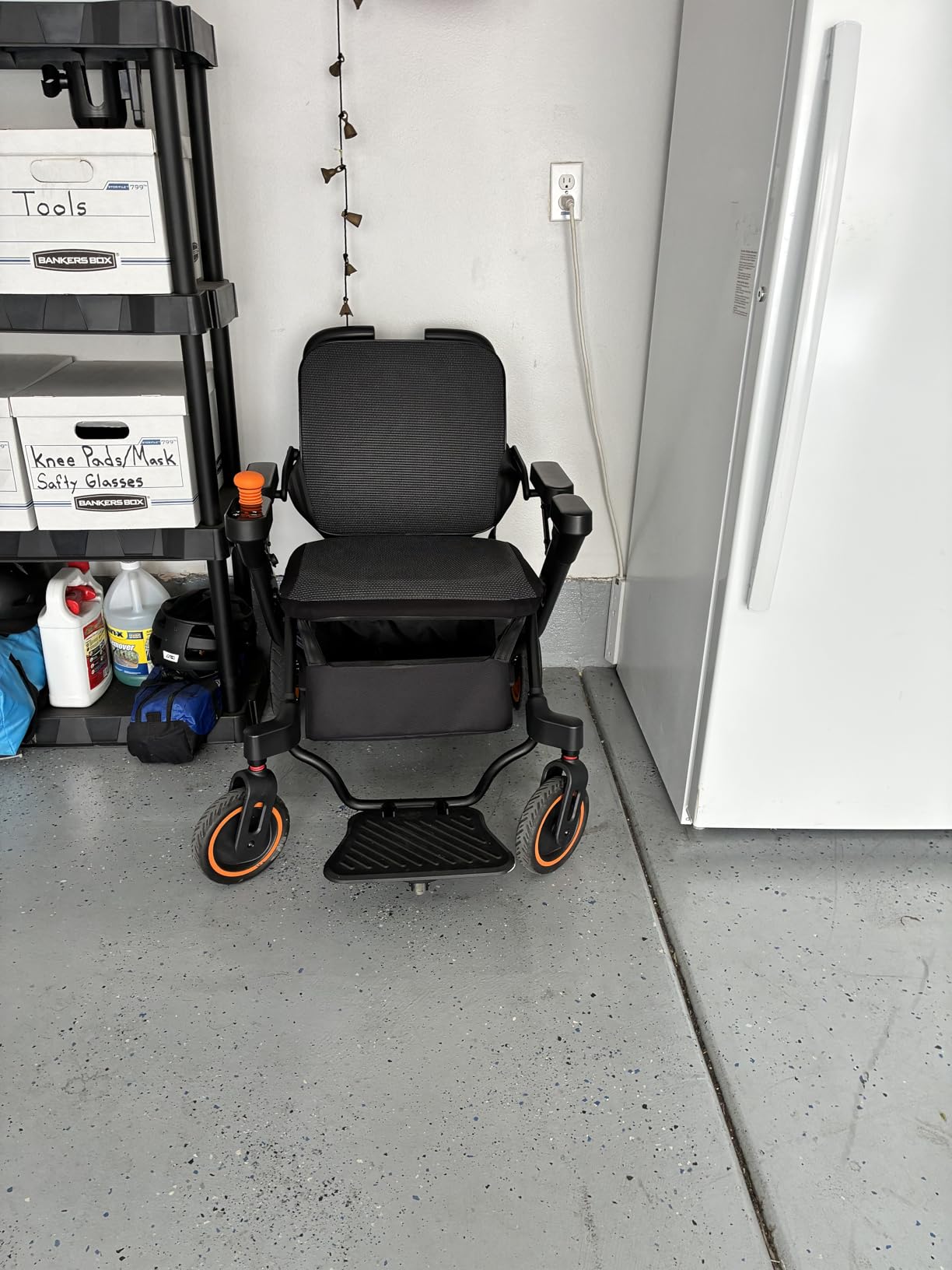
For a new or anxious user, it is often the most important setting on the chair, and it should be a selection criterion rather than something you discover after delivery. A caregiver on an AgingCare thread described exactly this: if the speed is too high, she will not use the chair at all. Buying a chair with a genuine low setting is the fix.
Look for a controller with several discrete speed levels and a control that stops the chair the moment it is released. Both of those are published on this chair, and several competitors on this list do not publish their speed ranges at all.
At 49 lb it is too heavy for an older user to load into a car, and the fold does not latch closed without the included strap. The footrest does not fold up, which owners flag as a trip hazard during transfers, and the wide seat limits users over about 6 feet tall. Cup holders and other accessories are also hard to fit.
For a home chair that stays put, those are minor. For one that travels weekly, the weight and the unlatched fold are worth thinking about first.
Mid-wheel drive puts the drive wheels under the seat so the chair pivots nearly on the spot, and it is the reason clinic mid-wheel chairs turn in a 29 inch circle. Almost nothing in this roundup is true mid-wheel drive. These are folding travel chairs with small front casters and rear drive wheels, so their turning behaviour is a compromise between weight and agility rather than a designed pivot.
That is not a criticism. For a home chair that spends its life on flat floors, a light folding frame often matters more than a 3 inch advantage in turning circle. But if you have genuinely tight hallways and cannot move furniture, a clinic-configured mid-wheel chair from a DME dealer is a different category of machine and a different conversation.
Overall width is the number to buy on, not seat width. A 24 inch chair in a 32 inch doorway leaves 8 inches of total clearance, roughly 4 inches each side, which is enough to correct a small drift. A 30 inch chair in the same doorway leaves almost nothing, and every approach becomes a straight-line commitment.
Add the turning requirement on top. A chair that needs 32 inches of circle to rotate will not manage a tight 90 degree corner even if the doorway is generous. Measure the corner, not just the corridor.
Seat-to-floor height is the number that decides whether you can eat at your own table. Most of the chairs here sit between 17 and 20 inches, which clears a standard table apron. The chairs with flip-up or swing-back armrests gain extra room, and the DAHAIY stands out for folding flat enough to slide under a desk entirely.
Before buying, sit in the chair at a real table with the armrests where you would actually put them. Count how many people can still get past, because a chair that works for you and blocks the third seat is a daily irritation.
Two filters get skipped constantly and both are hard requirements for some buyers. The first is joystick side: some control panels are fixed to one side only, as with the DAHAIY, and a left-handed user needs this confirmed before ordering anything else. The second is the lowest speed setting.
Caregiver feedback consistently shows that a top speed that feels too fast stops a new user from using the chair at all. Look for a controller with several discrete speed levels, adjustable joystick sensitivity, and a chair that stops the moment the control is released rather than coasting.
Seat width matters more than most people expect, because a cramped seat causes constant weight-shifting over a long day. The SLF30 at 19 inches is the example here, and a 17 inch seat is the common norm. A removable double-layer cushion, a supportive backrest and a seat belt are the baseline features worth insisting on.
None of the chairs here offers power tilt or recline, and that is a real limit for anyone with pressure management needs. That requirement belongs in a complex rehab chair fitted by a clinician, not in a travel chair list.
Removable lithium-ion batteries are worth paying for in a home, because you can charge a spare while the chair is in use. Rated lives vary: lithium-ion packs are commonly quoted at 3 to 5 years, and owners of both Porto chairs confirm the real number when the chair charges with packs installed.
For indoor charging safety, use the supplied charger on a hard floor, keep it away from bedding and soft furnishings, and do not leave a charging chair unattended overnight in a corridor. Unattended lithium charging in an enclosed hallway is the one genuinely avoidable household risk on this page, and it costs nothing to manage.
Outages raise the same question from the other side. If you already plan a home backup power setup, our home backup power picks are worth checking against the charger draw, so a power chair does not become the one device you cannot recharge during an outage.
Users on Reddit and mobility forums treat parts availability and local service as their biggest long-term fear, more than the purchase itself. Two chairs on this list publish a three year frame warranty with optional on-site technician service, and one publishes lifetime technical support with 18 month battery coverage. Where nothing is published, assume you are shipping a chair back.
Ask the seller directly who services the chair locally and what the warranty excludes. Then buy from a certified DME dealer and have the chair fitted and evaluated before delivery. For a chair that is somebody’s only mobility, that appointment is worth more than any feature on a spec sheet.
This is the question we see most and the one almost nobody answers. Medicare covers a power wheelchair as durable medical equipment when a physician documents a mobility limitation and the item is medically necessary, and the chair is supplied by a Medicare-approved DME supplier who bills the program directly, so the beneficiary’s share is a coinsurance amount rather than the full cost.
If you are not eligible, or you want a chair Medicare will not cover, you are paying privately. Wheelchair users on mobility forums routinely report out-of-pocket figures in the thousands for complex rehab chairs, which is a completely different class of machine from the folding travel chairs on this page. Private purchases of the chairs here sit far below that, which is exactly why the direct-buy category exists.
Check your plan before you buy. Ask whether your insurer requires a prior authorisation, whether a supplier must be in-network, and what the replacement schedule is for batteries. Those three answers prevent most of the surprise bills people report.
A power wheelchair is a seat-first device with a seating system, a positioning belt and a joystick, suited to all-day use. A power assist wheelchair is a manual chair with a small motor that adds push power, so the user still supplies most of the propulsion and the chair folds and pushes like a manual chair. A mobility scooter has a tiller rather than a joystick, a smaller seat, and a turning circle that will not suit a tight home.
For someone who still has upper-body strength and only needs help on hills and long distances, a power assist is often the better answer and far less costly. For someone who uses a chair for most of the day, the joystick power chair on this list is the right shape. A scooter is a good answer for outdoor or garden use and a poor one indoors.
Most folding chairs were designed for a car boot, and the indoor compromise follows from that. Small casters that save weight stop at thresholds, thin frames and mesh backs are uncomfortable after hours, and short seat heights limit positioning. If your chair will live indoors full time, prioritise footprint, seat width and seating comfort over folded thickness.
That is the filter we used to rank this list. A chair that is only ever going to be folded once a week should be judged differently, and several of the lighter models here are excellent for that use.
Do not buy any of these if you need power tilt, power recline, complex seating, a pressure management system or a standing function. Those require a complex rehab powerchair fitted by a clinician, and choosing a travel chair instead is how people end up with injuries that take months to resolve.
Do not buy online without measuring first, and do not skip the DME evaluation if a physician is involved in the funding. Both mistakes are far more expensive than the chair.
A compact folding power chair with an overall width of 24 to 25 inches clears a standard 32 inch interior doorway with roughly 4 inches of margin on each side. The Vive Lightweight Electric Wheelchair at 24 inches wide and 39.5 lb is the narrowest frame in our roundup, and the Aotedor at 39 lb is the tightest turning option for elevators and small rooms. Measure the narrowest opening with the door fully open before ordering, because the door frame is wider than the clear opening.
Among the ten chairs we compared, the narrowest is the Vive Lightweight Electric Wheelchair at 24 inches wide and 38.5 inches long, with a 39.5 lb frame and a 225 lb capacity. A 36 lb alternative is the Zurcheel SLF30, which trades a slightly wider frame for a roomy 19 inch seat. Clinic-configured mid-wheel drive chairs can turn in roughly 29 inches, but they are a different product category and require a clinician fitting.
Medicare covers a power wheelchair as durable medical equipment when a physician documents a mobility limitation and the item is medically necessary. The chair is supplied by a Medicare-approved DME supplier who bills the program directly, so your share is a coinsurance amount rather than the full cost of the chair. If you are not eligible, you pay privately, and members of mobility forums regularly report out-of-pocket figures in the thousands for complex rehab chairs. Confirm prior authorisation and in-network supplier rules with your plan before you buy.
A power wheelchair is seat-first and joystick-controlled, which makes it right for all-day indoor use and for users who cannot self-propel. A power assist wheelchair is a manual chair with a small push-assist motor, so you still supply most of the propulsion and the chair folds and pushes like a manual chair. Choose a power assist if you retain upper-body strength and only need help on hills or longer distances, and choose a power wheelchair if it is your main means of getting around a home.
Lithium-ion packs on these chairs are commonly rated for 3 to 5 years, and owners of both Porto models report real-world range close to the stated figure with two batteries installed. Heavy daily use, frequent slope climbing and partial discharges shorten that. The practical benefit of removable batteries is that a spare can charge while the other is in the chair, so you are never waiting on a full charge overnight. Check what your warranty covers, because one chair on this list covers batteries for 18 months and two others cover them for three years.
For home use, reliability is better judged by warranty length, parts availability and local service than by the badge on the frame. Two of the ten chairs here publish a three year frame warranty with optional on-site technician service, and one publishes 18 month battery coverage with lifetime technical support. On the other end of the list, owners report slow service response and expensive replacement batteries. Ask the seller who services the chair locally and what the warranty excludes before you buy.
For most homes, the Vive Lightweight Electric Wheelchair is the pick. It has the highest rating in this roundup, the narrowest frame at 24 inches, a 39.5 lb weight and a 39 lb sibling alternative in the Aotedor if you want the largest body of owner feedback and two batteries. For heavier riders who also need outdoor capability, the Porto Ranger Discovery at 440 lb capacity and a 32 inch turning circle is the stronger answer.
Measure before you buy. The narrowest doorway, the tightest hallway corner and the underside of your table will tell you more in five minutes than an afternoon in a showroom, and every chair on this list is easier to judge once you have those three numbers. If a clinician is involved in your funding or you need tilt and recline for pressure relief, book the DME evaluation first and buy from a dealer who will fit the chair to you.
Those are the best power wheelchairs for home use in 2026, ranked on indoor fit rather than on the numbers that only matter outside.