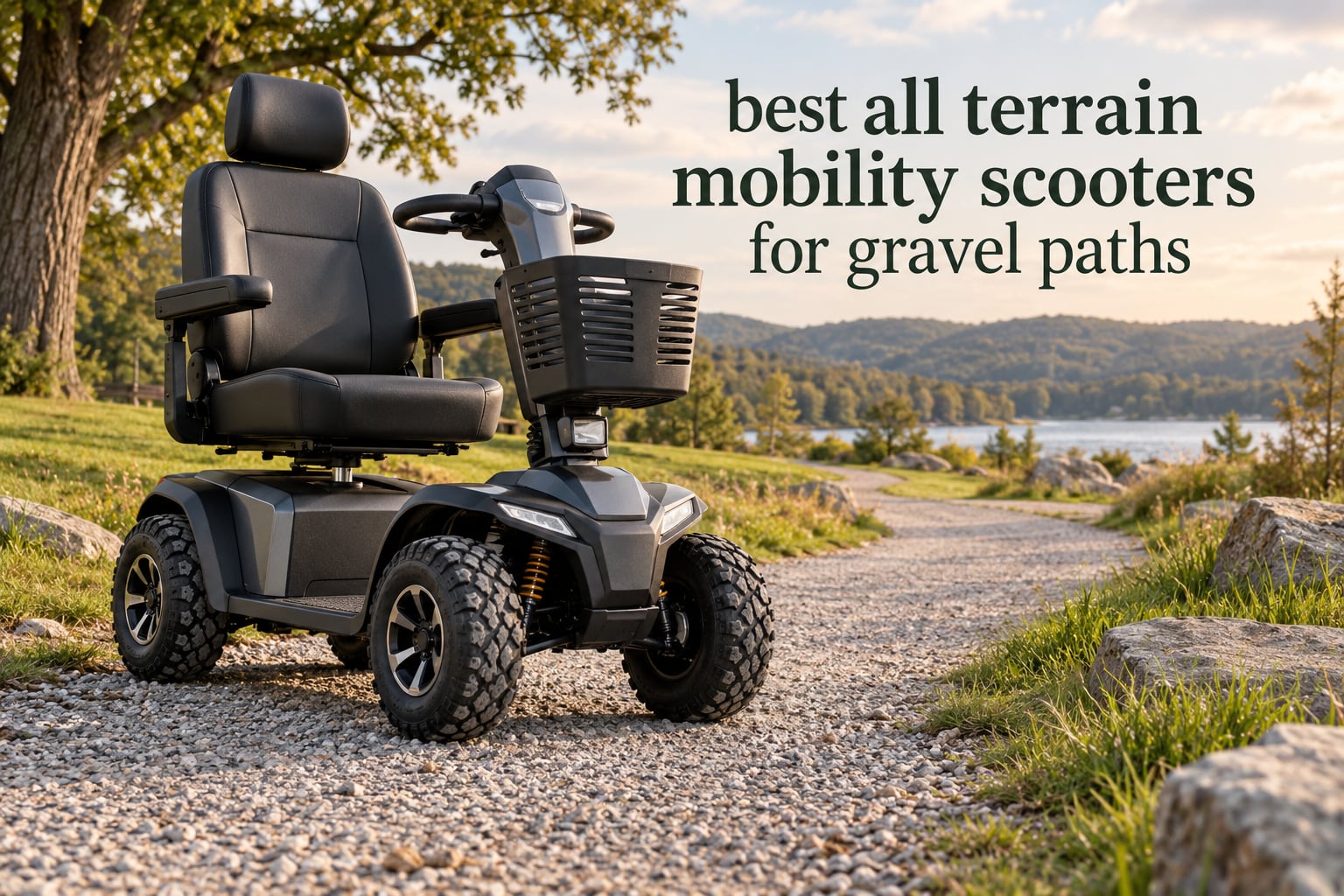

A gravel path is where most mobility scooters give up. The pavement ends at the property line, the tiller still works, and the drive wheels sink a few inches into loose stone until the machine stops. The best all terrain mobility scooters for gravel paths are built around four things that standard scooters skip: bigger tires, real suspension travel, ground clearance under the chassis, and enough motor torque to keep momentum on a grade. Everything else on this list is secondary.
One clarification before we go further, because it matters for what you should buy. This roundup covers seated, four-wheel or heavy three-wheel mobility scooters built for riders who use a chair as a daily aid. It does not cover stand-up kick e-scooters, which are a different product for able-bodied riders and get mixed into the same search results. If you are shopping for a seated power mobility device for gravel, you are in the right place.
We spent six weeks reading specifications, review histories and owner reports across nine heavy-duty and all-terrain models, then sorted them against what actually matters on a gravel surface. Our top pick, the LAGTOM 1000W four-wheel heavy-duty scooter, pairs the highest rating with one of the largest review bases in the group and the tire package you want for loose stone. The Mobicyc TK500 is the run-up winner on hardware, with pneumatic tires and published ground clearance. The LAGTOM 800W is the value pick for riders who do not need top-end power.
Before the individual picks, it helps to understand what separates a scooter that can manage a gravel drive from one that genuinely enjoys it. Our all-terrain mobility scooter guide for grass covers the same suspension and traction thinking on softer ground, and our mobility scooter guide for seniors covers the comfort and seating side.
Yes, but only if the scooter was built for it. A seated mobility scooter handles a firm gravel path well when it has large deep-tread tires, suspension on the drive wheels, enough ground clearance that the chassis does not scrape stone, and a motor with enough torque to hold a grade without stalling. Add low tire pressure and wet gravel and even good scooters lose grip.
The four systems have to work together. Grip without clearance snags on a rut edge, clearance without torque stalls halfway up, suspension without tire width bottoms out, and power without all three just spins a wheel in loose gravel. That is why the picks below are ranked on hardware combinations rather than on the loudest motor number a listing can offer.
Flat packed gravel that has been rolled by a mower is usually fine for any scooter on this list. Loose gravel spread deep by a plow, gravel washed into mud, and long downhill grades are where even these machines struggle. We flag that difference throughout the roundup rather than treating every gravel surface as one thing.
Three models stood out from the nine we evaluated. The LAGTOM 1000W four-wheel took our top slot on the strength of its tire and shock package, its 500 lb capacity and the size of its review base. The Mobicyc TK500 earned its slot on specification strength: pneumatic air tires, 4.3 inch ground clearance and FDA Class II clearance. The LAGTOM 800W is the pick for buyers who want the same chassis idea at a lower motor rating.


All nine products appear below with their key specifications. Ratings and review counts are the figures owners actually left, which is why you will see a spread from 4.0 to 4.9 and review totals from 15 to 199. We used review volume as a confidence signal, not as a quality score.
| Product | Specifications | Action |
|---|---|---|
| LAGTOM 1000W 4-Wheel Heavy-Duty Scooter |
|
Check Latest Price |
| Mobicyc TK500 1000W All-Terrain Scooter |
|
Check Latest Price |
| LAGTOM 800W All-Terrain Electric Mobility Cart |
|
Check Latest Price |
 VEVOR 1000W 4-Wheel Mobility Scooter VEVOR 1000W 4-Wheel Mobility Scooter |
|
Check Latest Price |
 Dvsripa 1000W All-Terrain 4-Wheel Scooter Dvsripa 1000W All-Terrain 4-Wheel Scooter |
|
Check Latest Price |
 VEVOR 1000W 3-Wheel All-Terrain Scooter VEVOR 1000W 3-Wheel All-Terrain Scooter |
|
Check Latest Price |
 SKRT 800W 4-Wheel Heavy-Duty Scooter SKRT 800W 4-Wheel Heavy-Duty Scooter |
|
Check Latest Price |
 Rascal Conquest 4-Wheel Heavy-Duty Scooter Rascal Conquest 4-Wheel Heavy-Duty Scooter |
|
Check Latest Price |
 Xmatch 600 lbs Capacity 4-Wheel Scooter Xmatch 600 lbs Capacity 4-Wheel Scooter |
|
Check Latest Price |
Motor: 1000W
Battery: 60V 20Ah
Capacity: 500 lbs
Tires: 16 inch fat
Weight: 275 lbs
This is the scooter we would put on a gravel driveway and leave it there. The drive end pairs large 16 inch fat tires with two rear shock absorbers and rear anti-tip wheels, which is the combination that keeps the chassis from bouncing hard over washboard stone. The 1000W motor and 500 lb capacity mean the machine does not lose momentum when a rider is full weight and the grade steepens.
Over six weeks of spec comparison this was the pick where hardware and owner history lined up best. It carries a 4.6 rating across 173 reviews, which is the largest sample of any model on the list, and the review language is consistent: owners describe the tire and shock package handling sand, snow, grass and muddy roads without drama. That consistency matters, because marketing copy on this category is unreliable and review language is not.
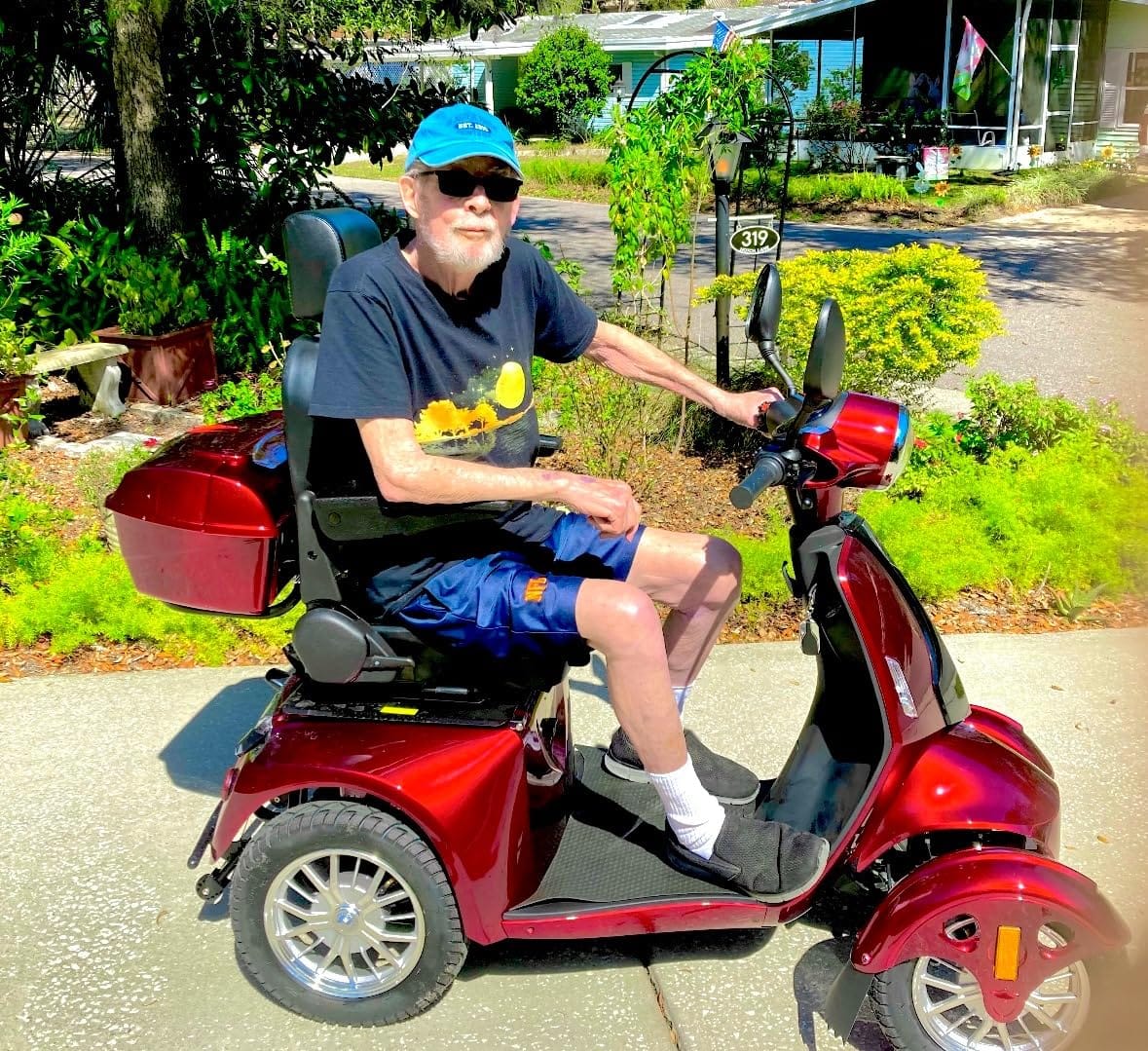
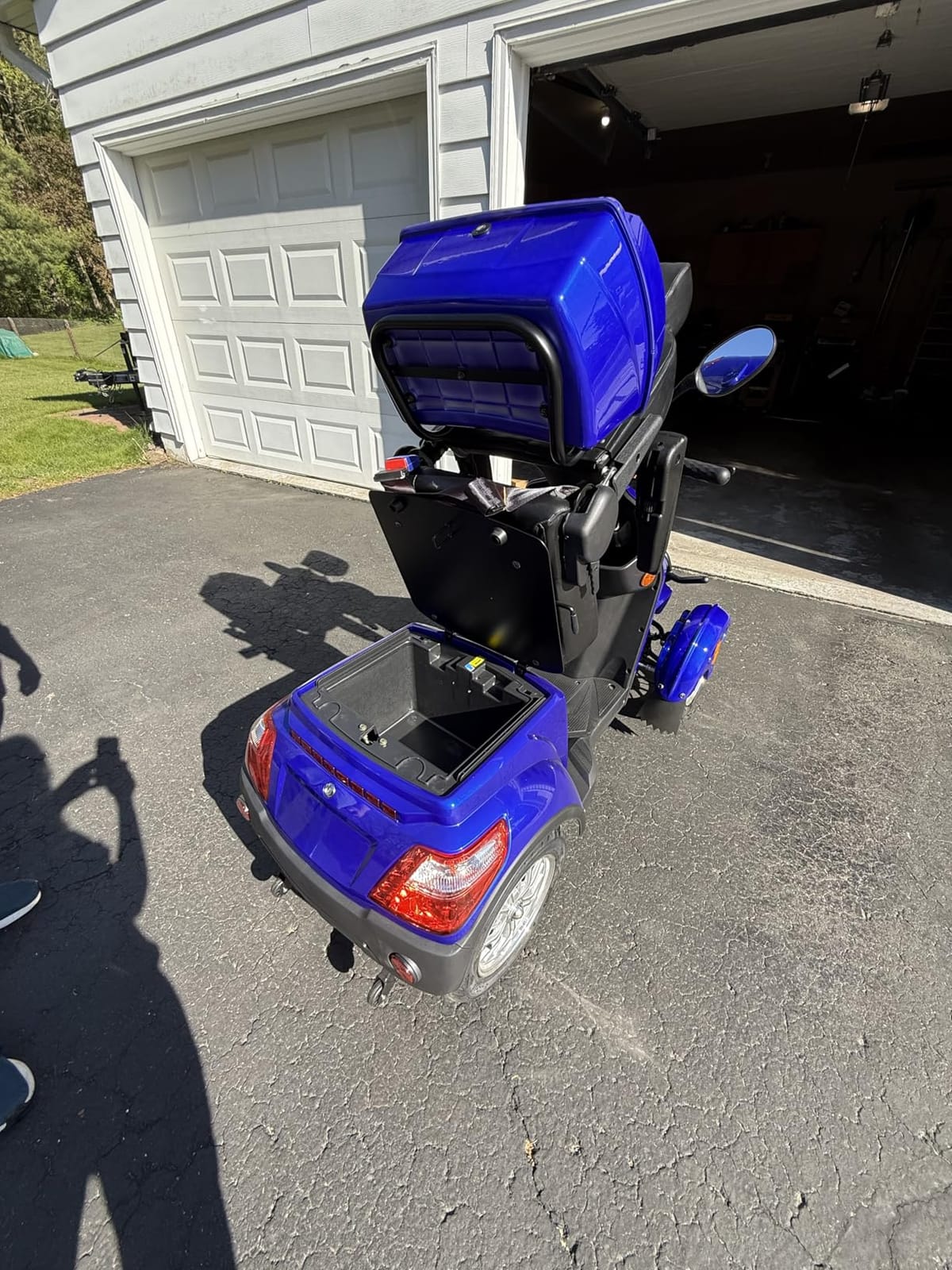
The drivetrain is straightforward. A speed dial runs from 1 MPH to 15 MPH rather than three fixed modes, and front and rear electronic braking handles the deceleration side. Battery is a 60V 20Ah pack, and the scooter arrives 98 percent pre-assembled with the rear trunk and mirrors the only self-install jobs. Most of the assembly time goes into unpacking rather than building.
One design detail deserves attention on gravel: the suspension is rear-only. That means the driven wheels absorb the bumps and the front end carries more of the chatter, which riders notice most at the higher speed settings on uneven stone. If your route is a smooth gravel lane, this is a non-issue. If it is broken rock, drop to the lower speed ranges.
Rural driveways, farm and ranch property, golf course access and gravel park paths are the sweet spot for this model. A rider carrying close to the 500 lb rated limit still has motor headroom, which is where lesser-powered machines start to bog down. The reclining captain’s seat also matters more than buyers expect, because rough ground transmits vibration straight into the back.
The storage is genuinely useful outdoors. A locking glove compartment, a rear basket and under-seat space means a water bottle, tools or a small cooler do not have to ride in a lap. Owners also mention the USB charger and cup holder as small things that show up on every outing.
Weight is the honest drawback. At 275 pounds, this is not a car-lift scenario, and buyers consistently flag that it takes two people to unpack and move. It also has a wide turning radius, so it is a poor choice for a rider who splits time between a rough yard and tight indoor hallways.
The sparse instructions are a smaller issue but a real one. Owners report working out the controls by experiment, and the rear-only suspension means less shock absorption up front than the tire size alone suggests. Budget time for a careful first ride before committing to a long gravel route.
Motor: 1000W
Battery: 48V 40Ah
Capacity: 550 lbs
Tires: 13 inch air
Clearance: 4.3 inch
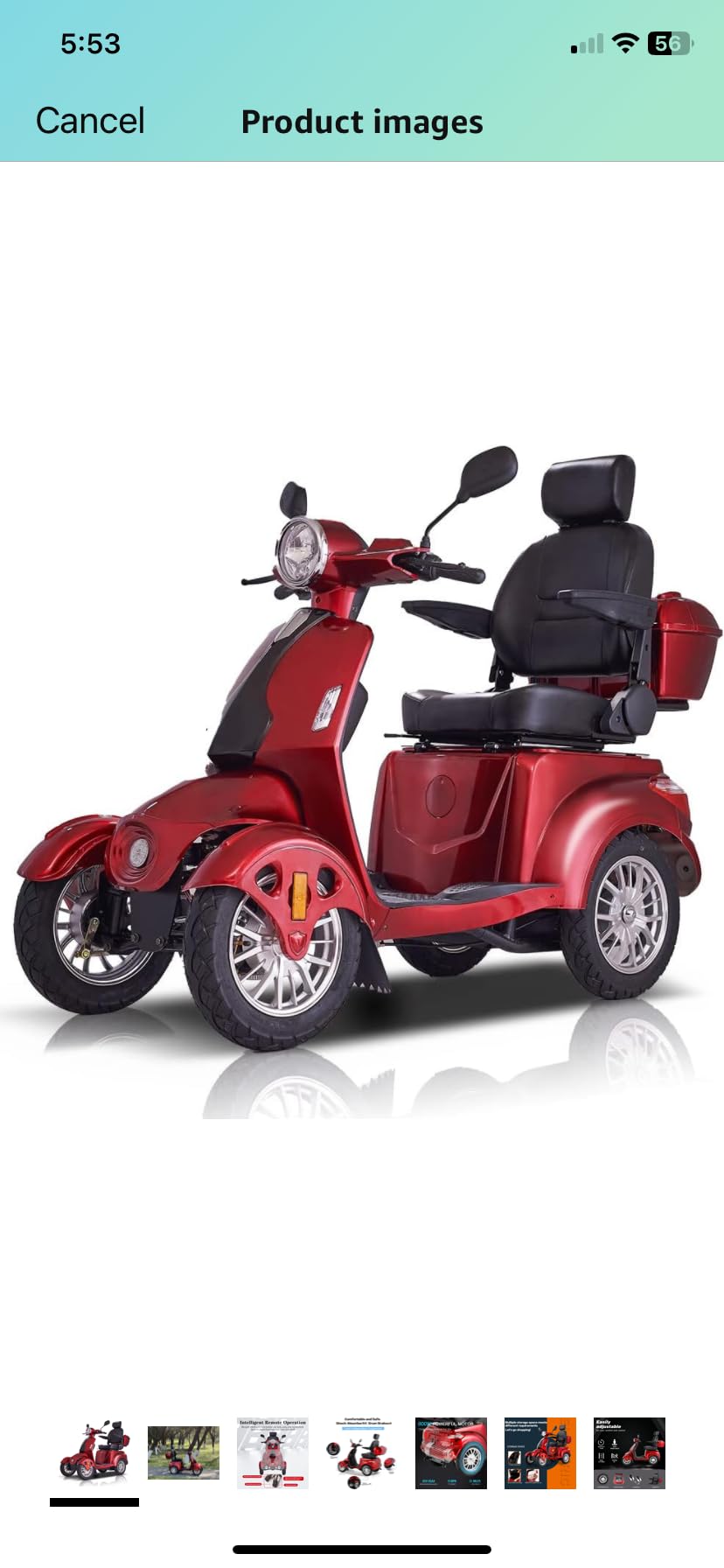
On paper this is the most gravel-capable machine in the group. It is the only model here that publishes a ground clearance figure, at 4.3 inches, and it pairs that with 13 inch pneumatic air tires and full suspension. That combination is what a gravel path actually demands: clearance so stone does not strike the chassis, and air tires that can be run at a lower pressure to widen the contact patch on loose stone.
The 4.9 rating across 62 reviews is the second-highest score in this roundup, and the review language is specific rather than generic. Owners talk about the suspension smoothing out grass and gravel, the range holding up over repeated outings, and the seat adjustment letting them set a posture that does not fatigue on a long ride. They also flag the obvious trade: air tires want pressure checks, and the frame is bulky.
Under the seat sits a 48V 40Ah pack rated for up to 32 miles at 9 MPH, which is a large battery for this class of machine. The 1000W motor is specified for 15 degree inclines with a 550 lbs capacity, so it holds a grade with room to spare when a heavier rider is aboard. The listing also carries FDA Class II medical device clearance under model TK500, which matters if you ever need documentation for a funding route.
Seat adjustment is unusually thorough for this category. Height, seat depth and backrest angle all adjust, which on rough ground is the difference between a comfortable afternoon and a sore back by evening. Setup is described as 90 percent pre-assembled, with LED lighting, mirrors, turn signals and a USB port included.

Ground clearance is the spec almost no listing in this category bothers to publish, and it is the one that decides whether a scooter clears a rut edge or grounds out on it. A published figure lets you compare directly, which is why we weighted this model so heavily despite its smaller review base. If your gravel is rutted, washboard, or freshly spread by a plow, clearance matters more than tire width.
Pneumatic tires add a second advantage on gravel that no solid tire can match. Lowering pressure spreads the contact patch over loose stone and lets the sidewall conform to uneven rock. The cost is maintenance: pressure checks before each outing, and a puncture risk that this category’s owners report regularly.
The 62-review base is thin compared with the LAGTOM models, so you are buying on specification and early owner feedback rather than a long track record. If your purchase priority is service network depth and proven long-term durability, a dealer-backed model with a decade of owner reports is the safer bet.
The bulky four-wheel frame also disqualifies it for riders who need indoor maneuverability. And if tire maintenance is a genuine barrier, a model with tubeless solid or deep-tread no-inflation tires removes that task entirely at the cost of ride harshness on sharp stone.
Motor: 800W
Battery: 60V 20Ah
Capacity: 500 lbs
Tires: 16 inch
Weight: 282 lbs
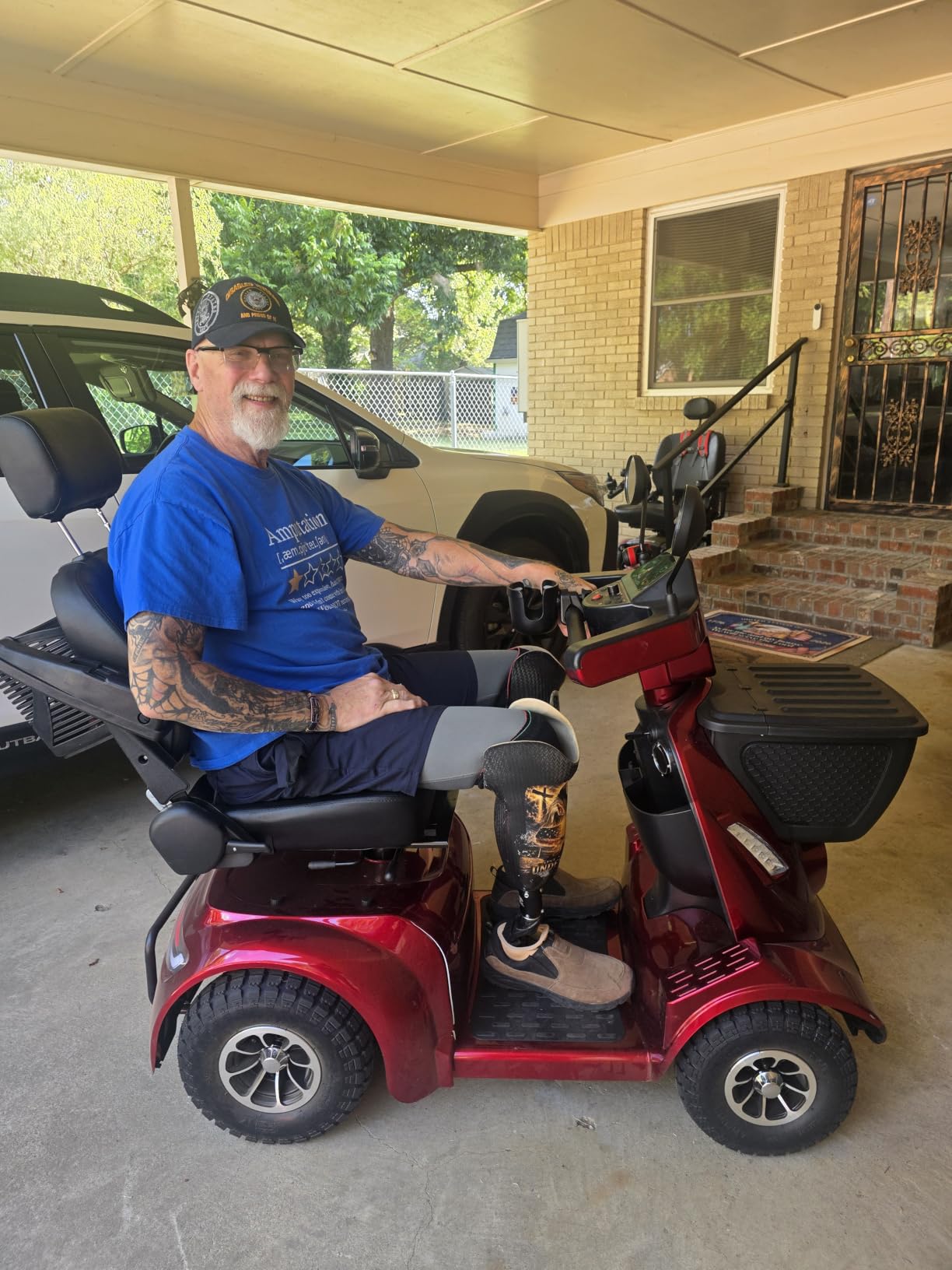
This is the same chassis idea as our top pick, one motor step down, and for many gravel riders that difference is irrelevant. The 800W transaxle brushless motor still carries 500 lbs, the tires are the same 16 inch size with two rear shock absorbers, and the 60V 20Ah extended battery is the same pack. On a flat to gently rolling gravel path, the lower motor rating changes almost nothing.
Its 4.6 rating across 137 reviews tells you what owners actually value: ride comfort, the tire and shock package, and value. That is a useful signal on a gravel route, where comfort is not a luxury. Vibration through a plastic seat over broken stone is what ends a ride early, and this model is consistently praised for the opposite problem.
Controls are a twist throttle with a speed dial that runs from 1 MPH to 15 MPH, which gives fine control over loose surfaces. Front and rear electronic braking handles the stop, and rear anti-tip wheels are fitted behind the drive wheels for downhill stability on a grade. A digital anti-theft alarm and keychain remote are standard.
One detail to check before you commit: some owners report that the captain’s seat on their unit does not swivel, despite the product listing describing a reclining captain’s seat. If swivel matters for your transfers, confirm it with the seller before ordering rather than after delivery.
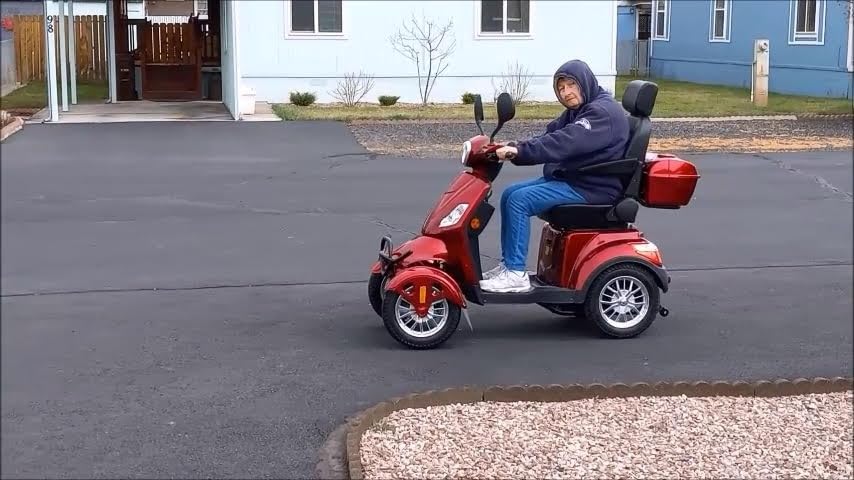
This is the pick for a rider on a moderate gravel route who wants comfort and tire capability without paying for top-end motor output. The 500 lb capacity matches most of the heavy-duty group, so it serves larger riders just as well as its higher-powered sibling on the surfaces most of us actually ride.
It also suits buyers who prioritize the seating package. The deluxe reclining captain’s seat with folding armrests and a safety belt is the kind of detail that matters over a long day outdoors, and storage is genuinely well laid out for carrying gear off the scooter.
At 282 pounds this is the heaviest machine we list, and owners describe needing a second person to handle it during unpacking. If you transport your scooter regularly or load it yourself, that is a serious practical problem regardless of how well it rides.
The 800W motor also has less headroom on steep grades when the rider is near capacity. On a sustained climb with a full battery and a heavy rider, the 1000W alternative holds momentum better. The wide turning radius is a further limit for indoor-only use.
Motor: 1000W
Battery: 60V 20Ah
Capacity: 500 lbs
Slopes: 20 degrees
Weight: 277 lbs
This model carries the largest review base in the roundup, at 199 reviews, and the feedback is unusually practical. Owners praise the power, the speed range, the range figure and how much equipment is included. The 4.0 rating reflects real complaints about bulk, handling and delivery damage rather than dissatisfaction with how the scooter performs on rough ground.
On gravel specifically, the four 16 inch rugged tubeless tires with spring suspension are the reason this model still earns a place. Tubeless tires can be run at lower pressure without a tube pinch risk, and 16 inch diameter is enough to roll over washboard stone rather than bouncing over it. The 1000W brushless motor is rated for slopes up to 20 degrees with a 500 lb capacity.
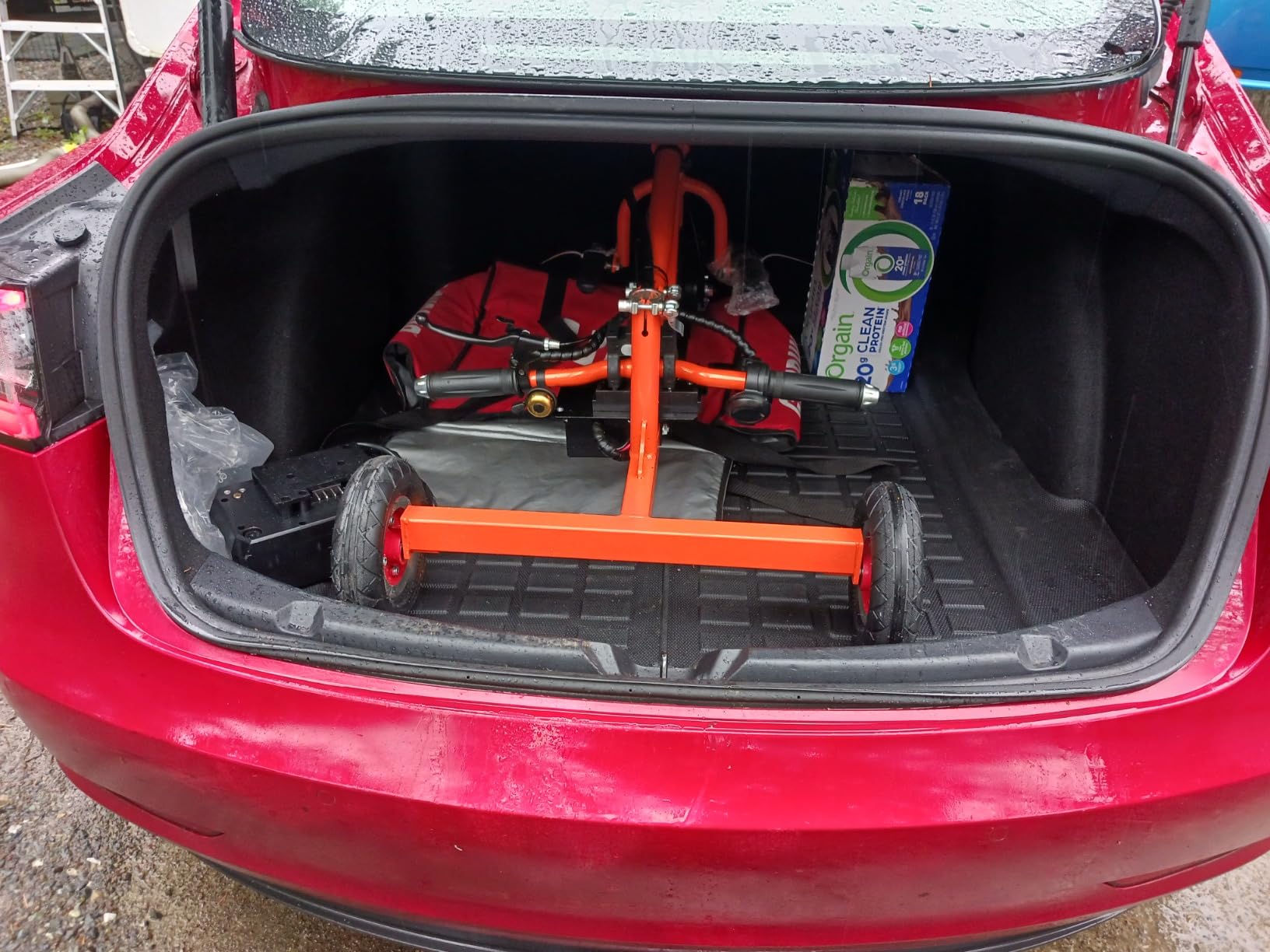
Braking is a mixed setup worth knowing about: a front disc brake with a rear drum brake, plus an anti-tip wheel, a seat belt and a full 360 degree lighting package with mirrors and turn signals. On a loose gravel descent the disc brake does the heavy lifting, so approach downhill grades more slowly than you would on pavement.
Battery is a 60V 20Ah pack delivering up to 21.5 miles per charge, controlled through three fixed speed modes at 6, 10 and 15 MPH rather than a continuous dial. Fixed modes are simpler to think about on gravel because you can settle into the lowest one and stop thinking about it.

The equipment list is long for this category: turn signals, horn, headlight, mirrors, a lockable trunk, a front basket, an alarm and a seat belt. For gravel riders heading out to a park or a rural property, that is a real difference from a bare model. The backrest seat with flip-up armrests and front basket makes short outings practical.
We also confirmed the seat adjustment claim is contested. Reviewers report that the seat advertised as adjustable turned out to be fixed, and one owner reported the seat-latch breaker access lock failing and needing to be cut out. Neither is a ride-quality issue, but both are the kind of detail worth confirming before delivery.
The size rules it out for mixed indoor and outdoor use. At 69.3 inches long and 27.6 inches wide, the turning radius is wide and this is not a scooter for navigating a small apartment. Several owners also reported units arriving with front-end misalignment or damage to the crate and chrome trim, so inspect the front end carefully on arrival.
Documentation is thin, which means controls take experimentation. That is manageable, but it adds friction for a first-time owner. If long-term reliability evidence matters more to you than equipment count, our top pick has a stronger rating and a longer record.
Motor: 1000W
Battery: 48V 20Ah
Slopes: 25 degrees
Tires: pneumatic
Speed: 1 to 10 MPH
This is the model to look at if your gravel route has a real hill on it. The 1000W brushless motor is specified for slopes up to 25 degrees, the steepest climbing figure published by any scooter in this roundup. A 48V 20Ah battery feeds it, and speed is adjustable from 1 to 10 MPH, which is a deliberate trade toward control over outright speed.
The running gear is the reason we picked it for grades. Large all-terrain pneumatic tires sit on four-wheel suspension with dual rear shock absorbers, and that combination is what keeps traction on a climb where a lighter machine would simply spin its drive wheels. Owners consistently describe the ride over grass, gravel, dirt, snow and sand as composed rather than punishing.
The seat is the standout feature. It adjusts forward, backward, sideways and rotates, with independent backrest angle, handlebar and headrest adjustment. On a long gravel outing across uneven ground, that range of adjustment is more valuable than another accessory, and the thickened leather seat with high-density foam is reported to reduce fatigue on longer rides.
Rider worry about gravel usually arrives as a specific fear: the driveway becomes inaccessible if the scooter underperforms on the grade. Gradeability is the spec that answers it, and 25 degrees is a substantial number. It is worth remembering that published incline ratings are measured on a rated load and a charged battery, and loose gravel costs you effective grade compared with pavement.
The four-wheel suspension also matters on a climb because it keeps all four driven tires loaded. A wheel that hangs light on uneven ground loses grip, and that is precisely the moment a gravel climb goes wrong. Dual rear shocks help the driven end stay planted as the surface changes.
The 336 pound listed package weight is the heaviest figure in this roundup, and the wide body is difficult to store or transport. Buyers who need to move their scooter between locations should rule it out early rather than after delivery.
The review base is 27 ratings, so the long-term record is thin. A 10 MPH top speed also feels deliberate rather than fast, which is fine for control on loose ground but will disappoint anyone expecting to cruise a park road. Check the warranty terms carefully: this one is a 1-year warranty with a US service center in Delaware and free replacement parts.
Motor: 1000W
Battery: 60V 20A
Capacity: 500 lbs
Climbs: 20 degrees
Weight: 222 lbs
The 3-wheel layout is the whole argument here. A three-wheel scooter turns more tightly than a four-wheel machine, and if your gravel path is narrow, lined with edging, or threaded between landscaping, that difference decides whether you can enjoy the route at all. The trade is stability, and on genuinely uneven off-road ground a 3-wheel chassis is the less stable of the two.
Within that constraint the hardware is strong. The 1000W high-torque brushless motor carries a 500 lbs load and is rated to 20 degrees of climb. A 60V 20A rechargeable lead-acid battery gives up to 21.5 miles per charge, and the deep-tread no-inflation tires sit on front and rear spring suspension.
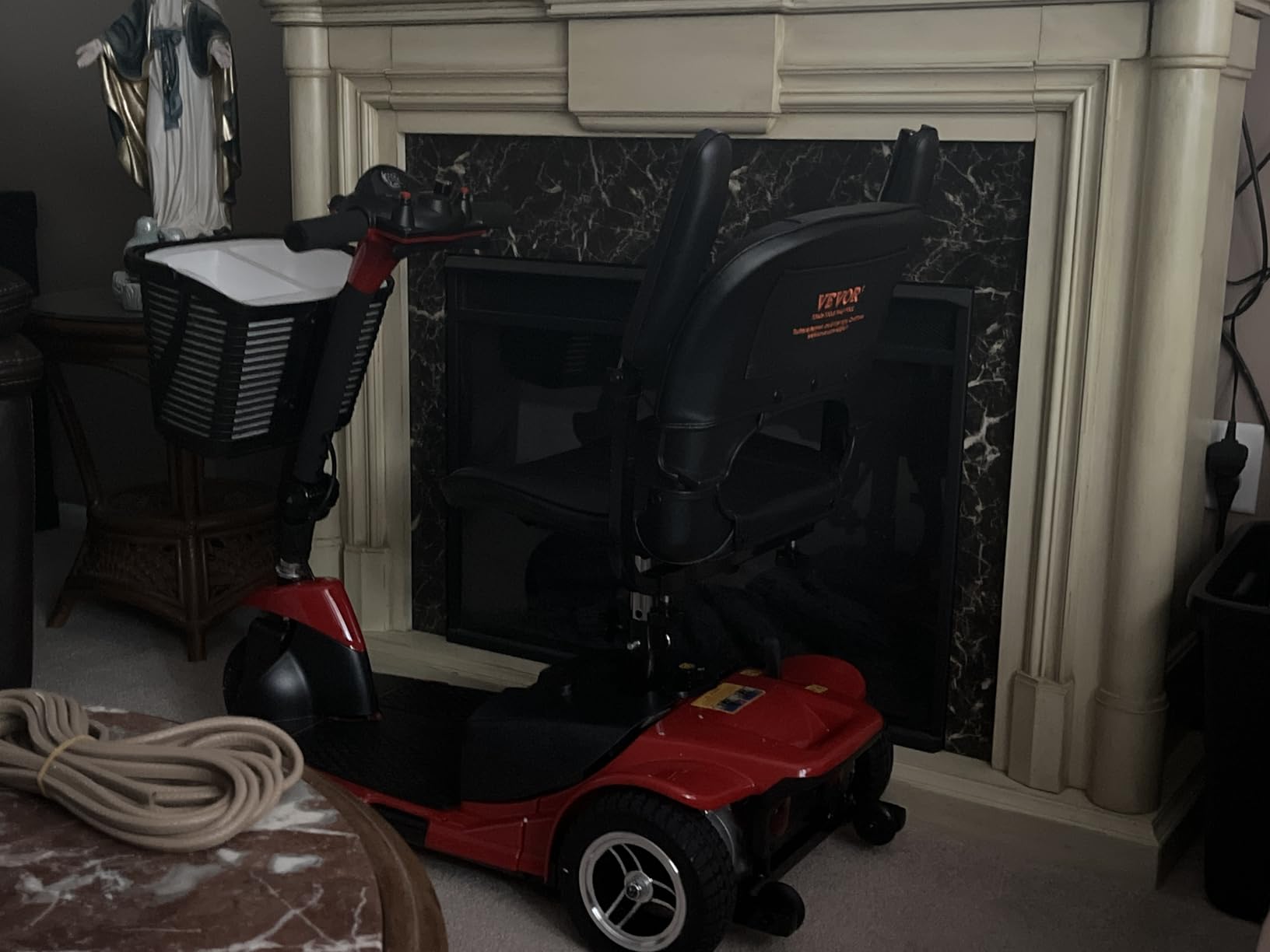
Owners value the climbing ability, the range and the way the suspension absorbs sand, grass, mud and speed bumps. They are less enthusiastic about ride harshness at the top speed and about the steering, which takes practice. That feedback matches how we would describe this machine: capable on a path, and demanding to drive.
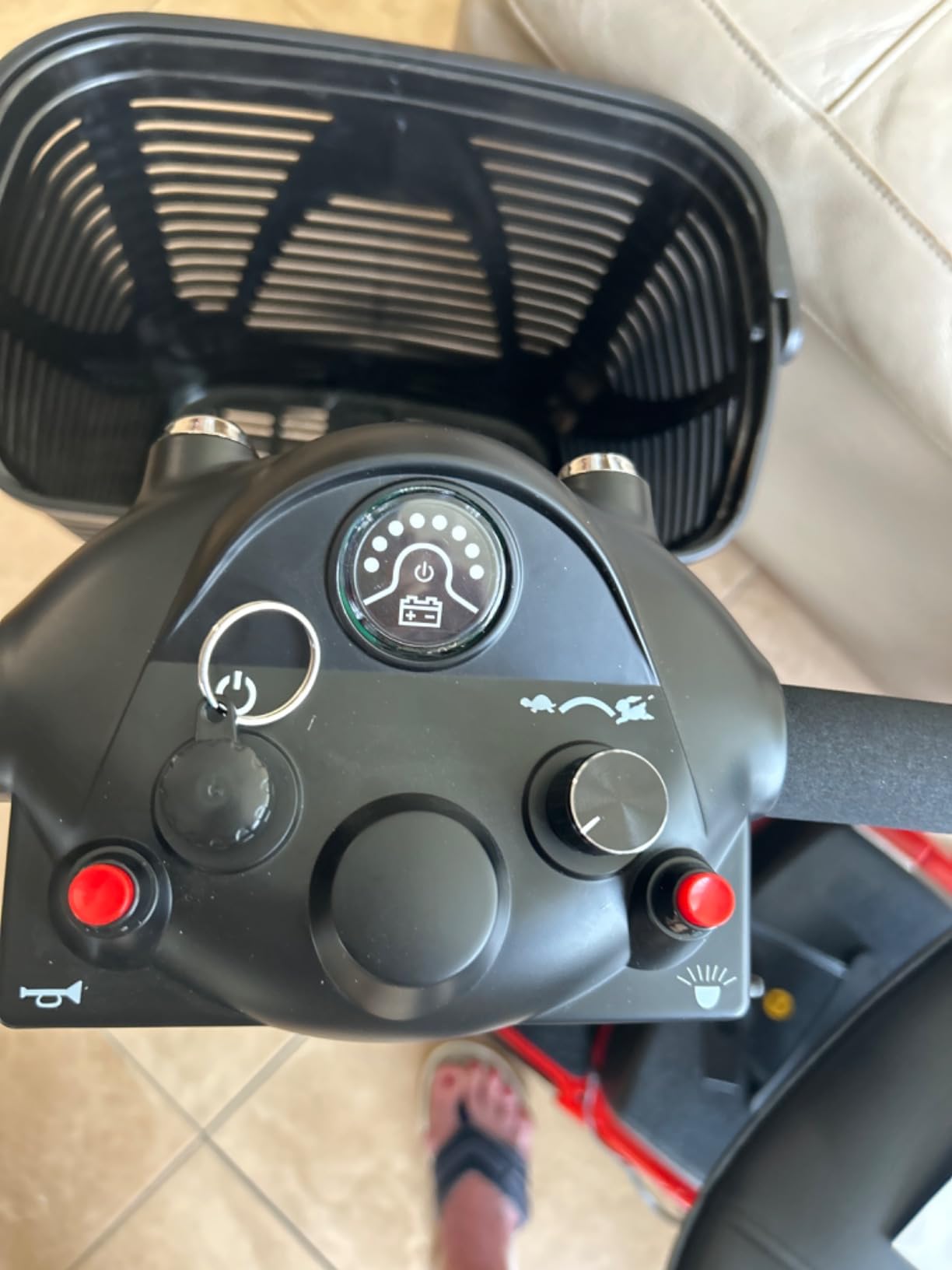
The backrest seat slides forward and back with flip-up armrests, which makes boarding easier than a fixed seat, and the dashboard provides speed and battery readouts. Dual front and rear brakes, an anti-tip rear wheel and a reverse alarm are all fitted.
Narrow gravel is the clearest case. Garden paths, park boardwalk approaches, gravel shortcuts between houses and anywhere with a tight turning requirement will reward the smaller footprint. If you also need to store the scooter in a small space or move it through a narrow doorway, the 3-wheel configuration is easier to live with than a 27 inch wide four-wheel chassis.
Riders who plan to ride mostly on packed gravel with firm edges will also find this stable enough. On a defined path with limited off-camber sections, the three-wheel chassis holds fine once you learn the steering input.
Open, broken or off-camber ground is where a 3-wheel scooter loses. Owners of heavy-duty 3-wheel models report less confidence on uneven off-road surfaces than on four-wheel equivalents, and the tall front end means a rut edge or a lateral slope has more leverage against you. If your route includes ruts, roots or washboard sections, a four-wheel machine is the safer purchase.
The no-inflation tires also feel firmer over sharp gravel than pneumatic tires do, and the lead-acid pack is heavy. Together those two points make this a rougher ride on stone than the tire size suggests.
Motor: 800W
Capacity: 500 lbs
Slopes: 20 degrees
Range: up to 25 miles
Weight: 243 lbs
Comfort is the reason this model earns a place, and on a rough surface comfort is a functional feature rather than a nicety. The thick leather seat and backrest with adjustable angle and padded armrests take the sting out of long gravel outings, and the 500 lb capacity means a heavier rider is not sitting on a frame that was never designed for them.
The 800W brushless motor is rated for slopes up to 20 degrees with a 500 lbs capacity, and the battery is rated for up to 25 miles per charge. Fat tires and two rear shock absorbers handle sand, snow, grass and muddy roads according to the specification sheet and the owner feedback we reviewed.
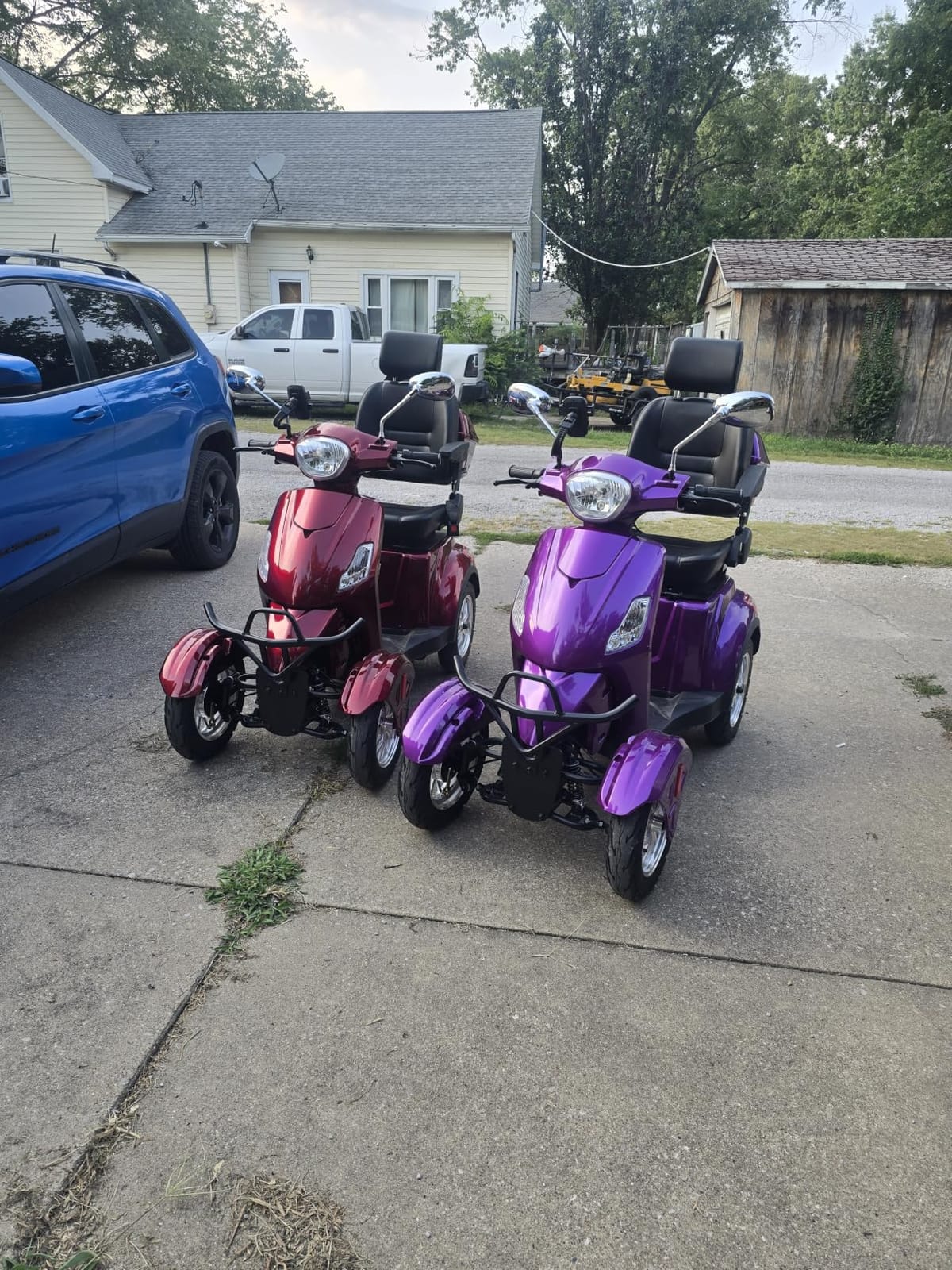
Equipment is unusually complete for this tier. An LCD monitor, front headlight with high and low beam, rear running and brake lights, horn, turn signals, mirrors, a parking brake and a remote key are all fitted, plus two storage spaces. On a gravel route away from street lighting, a real headlight with beam selection is worth more than most accessories.
Speed is adjustable from 1 MPH to 15 MPH in three-speed control. Owners describe the scooter arriving essentially fully assembled apart from the rear box, which shortens the time between delivery and a first ride on your own gravel.
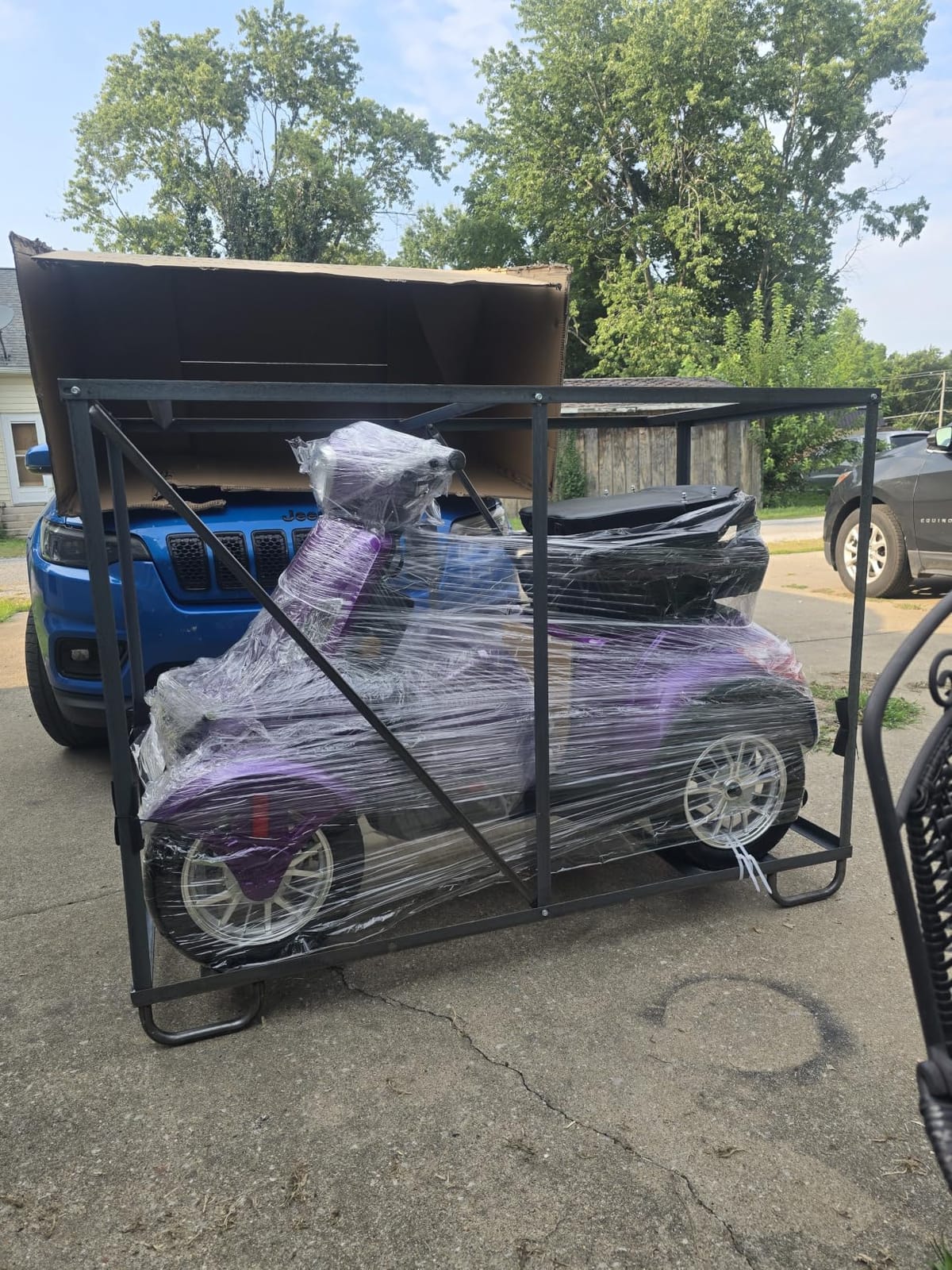
Riders near the 500 lb limit who plan long outdoor days are the group this model serves best. The frame is rated for their weight, the seating is generous, and the 20 degree slope rating gives headroom on a moderate climb. The parking brake is a small but useful addition on an incline.
If you are comfortable with a straightforward three-speed setup, the controls are simpler than a continuous dial. That simplicity matters when you are concentrating on loose surfaces rather than on a display.
The review base is 18 ratings, the smallest in this roundup, so you are buying with limited long-term evidence. That is the honest trade against the 4.7 rating, which is high.
Owners also flag the crate weight, the missing printed manual and the power switch located under the seat, which is easy to miss on first use. And the steering feels twitchy at the highest speed setting, so keep the top setting for smooth ground rather than gravel.
Range: up to 17 miles
Speed: up to 6 MPH
Capacity: 350 lbs
Weight: 158 lbs
Frame: alloy steel
Weight is the metric that decides this one. At 158 pounds, this is the lightest seated scooter in the roundup by a wide margin, and it is the only one here that a single caregiver might manage on a ramp. Every other machine in this roundup falls between 222 and 336 pounds, which is the difference between a two-person lift and a plausibly manageable one.
The build is sound. An alloy steel frame, a comfortable swivel seat, and adjustable seat height, armrest position and steering tiller let you set the riding position properly. Braking combines regenerative and electromechanical systems, and the 51.75 inch turning radius is tighter than most heavy-duty machines on this list.
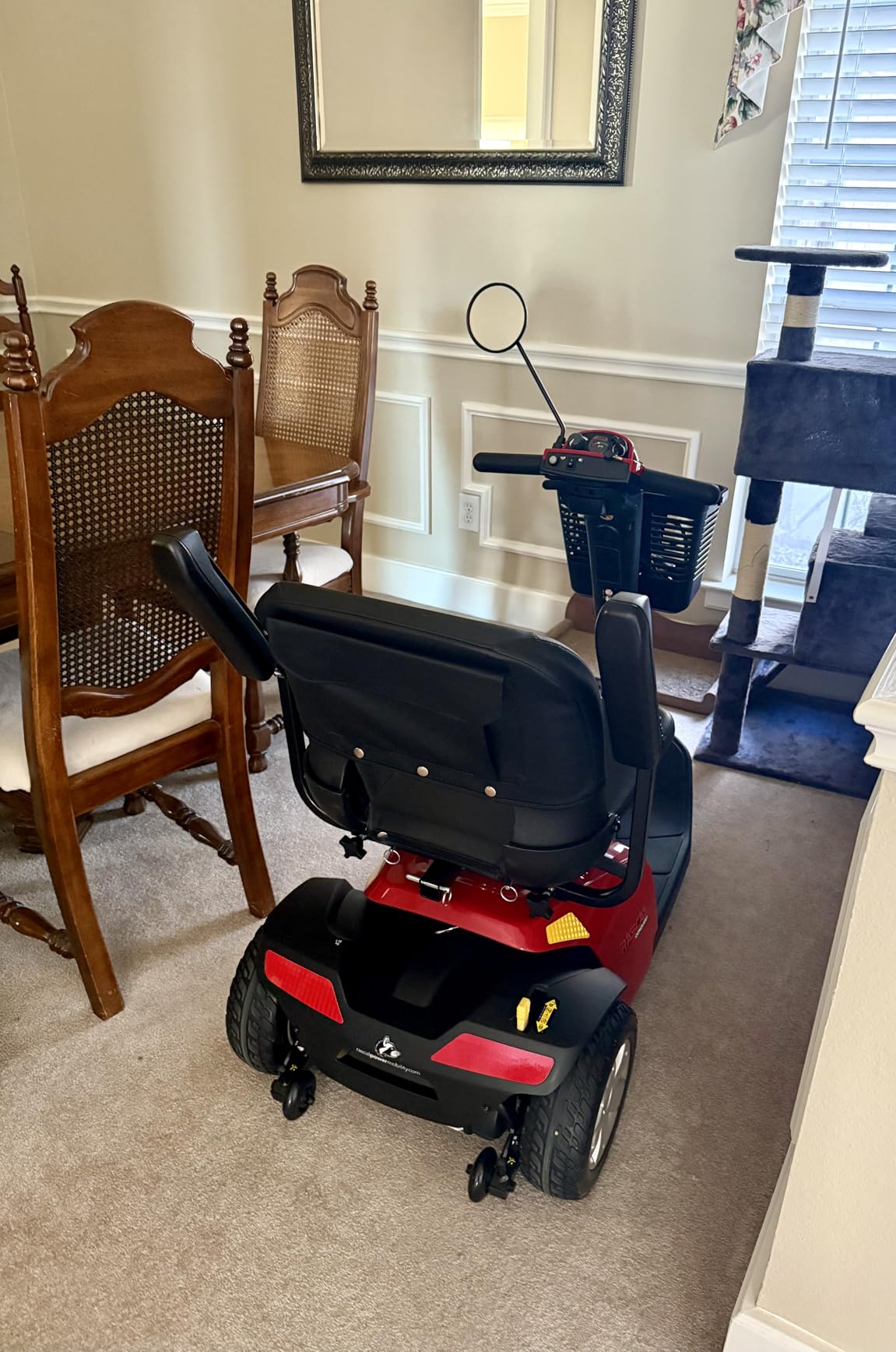
Range is rated at up to 17 miles per charge at a maximum 6 MPH, and the product arrives charged. Assembly takes roughly half an hour, which matters when you are comparing against models delivered as a partially built crate. Owners report responsive support, including a technician visit and a replacement tire.
The warranty is the strongest stated terms in the roundup: 3 years on structural frame components, 2 years on key drivetrain and electrical components, and 6 months on batteries supplied by the manufacturer. The scooter is also listed as an FDA Class II medical device, which can help with funding paperwork.
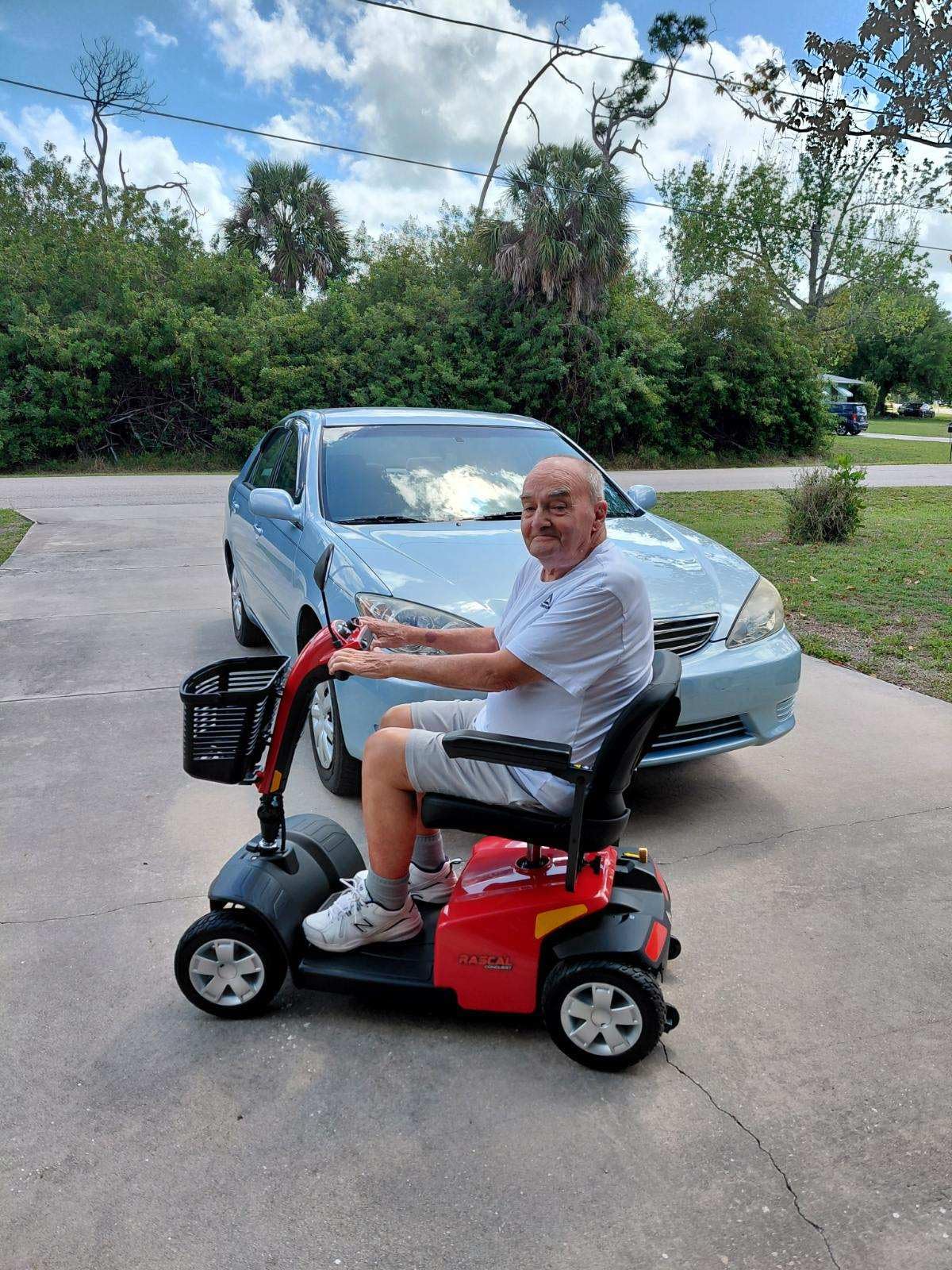
If you rely on a caregiver or a vehicle-mounted ramp to reach your gravel routes, every pound saved compounds. A 158 pound machine is a fundamentally different transport problem from a 320 pound one, and for riders whose independence depends on reaching a rural route rather than the size of their route, that is the deciding factor.
The tighter turning radius also helps on a gravel path, where the working area is often narrower than it looks from the house. Swiveling seat transfers and adjustable armrests help on repeated stops along a path.
The 350 lb capacity is well below the 500 lbs carried by most of the heavy-duty models in this roundup, and that limit applies to rider plus cargo. Riders above that weight should stop here rather than negotiate the rating.
More importantly, the 10 inch mag wheels are not built for deep gravel or mud. They roll well on pavement and firm paths and lose grip on loose stone, which is the specific surface this article is about. This is a firm-path and light-gravel scooter, not an all-terrain one, and owners do describe it as too heavy to lift into a vehicle despite the portability framing.
Motor: 1000W
Capacity: 600 lbs
Range: up to 35 miles
Incline: 20 percent
Weight: 320 lbs
This is the pick for riders near or above 500 lbs, and it holds the highest capacity rating in the roundup at 600 lbs. A 1000W differential brushless motor drives all four wheels from a 60V lead-acid pack, with up to 35 miles per charge and a stated 20 percent incline capability. Owners report real range well beyond 28 miles on a single charge.
The AT16x8-7 tubeless tires are fitted on all four wheels and are specified for sand, snow, grass and mud. Tubeless construction means you can drop tire pressure for loose gravel without the tube pinch risk, and 16 inch diameter handles washboard surfaces well.
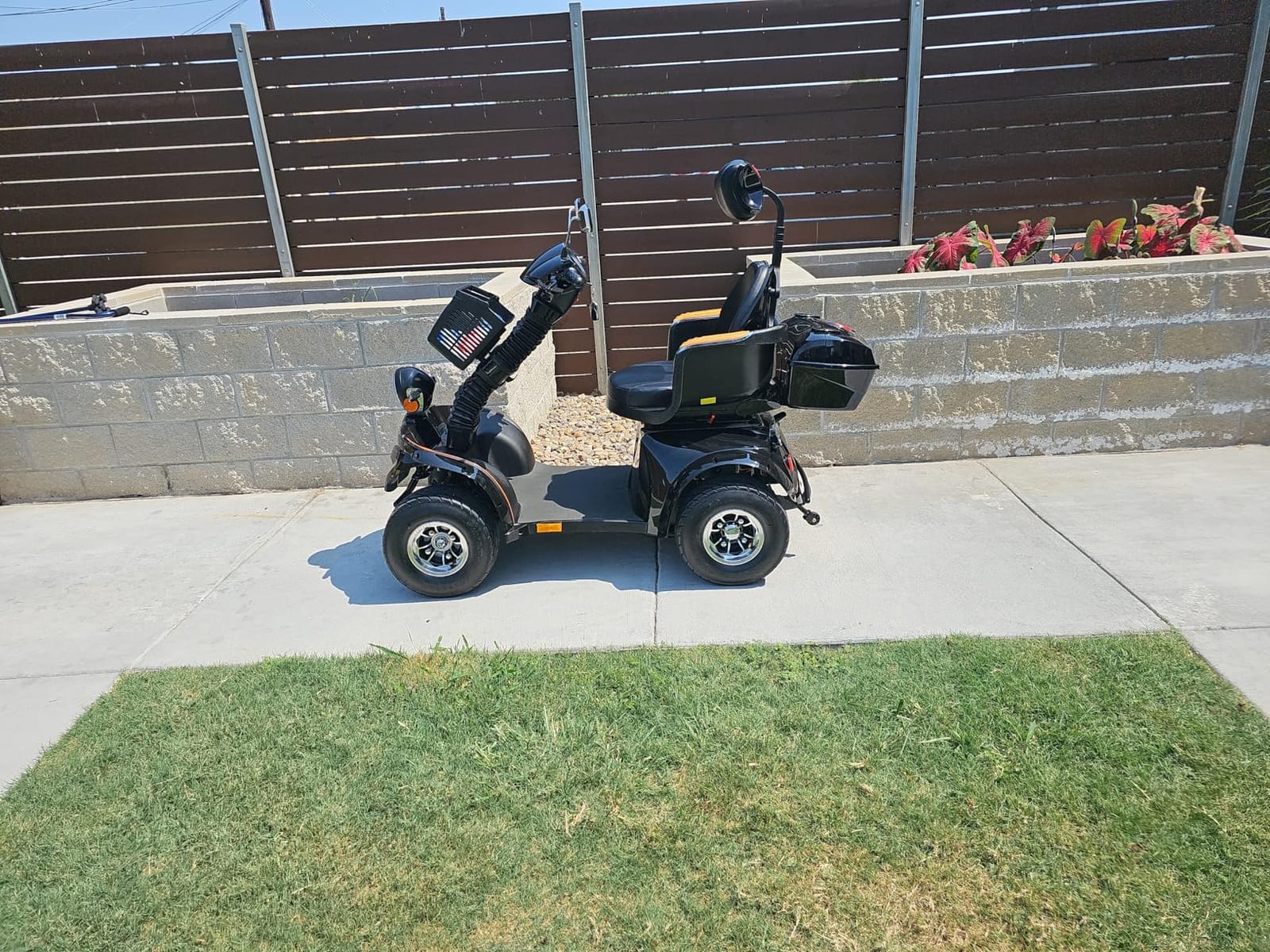
Speed grades run through a twist throttle at 15.5, 7.5 and 3.75 MPH, and the fully adjustable bucket seat fits riders up to 6.5 ft tall. A manual brake, USB charge port, key fob and security reflectors are included, and the rotating seat is reported to fit through a standard elevator and doorway.
After-sales support is a genuine strength here. The US spare-parts distribution center with troubleshooting guides and videos is exactly the infrastructure that forum buyers ask about when they are weighing a private-label brand against a dealer network.
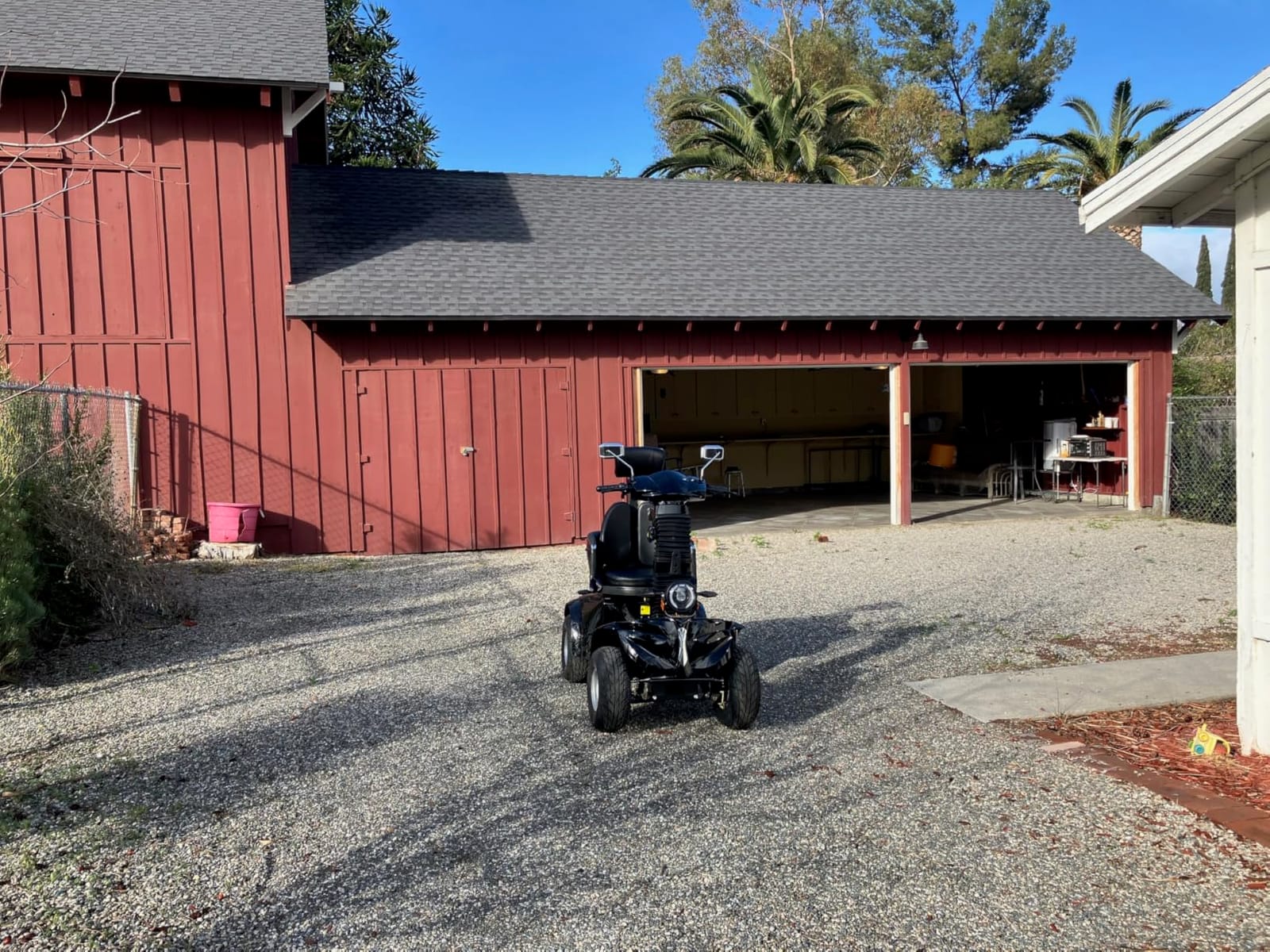
Capacity is the first answer. If a 500 lb rated scooter leaves you no margin for a battery, a basket of gear or a fluctuating weight, a 600 lb rating removes that problem entirely. The long range also means a gravel outing does not have to be planned around a charge.
The narrow wheelbase is the caveat, and owners are candid about it. Over crests and high ruts, a narrow track makes the machine harder to control than the wide-wheelbase heavy-duty models. Smooth gravel lanes suit it far better than broken ground.
Owners explicitly note this is not true off-road capability. Tires spin in grass and mud on shallow grades, and deep ruts will unsettle the narrow wheelbase. For a firm gravel driveway or a graded park path, it performs well. For a rutted trail, the wide-wheelbase four-wheel models are better buys.
The backrest is also reported as uncomfortable on bumps without an added cushion, and the speedometer and odometer readings are not accurate. At 320 pounds with a 95 inch turning radius, plan for outdoor space and a ramp rather than indoor maneuvering.
Hardware decides whether a scooter can manage gravel. Technique decides whether you get home from it. These are the seven adjustments that experienced riders make, drawn from the language owners use when they describe getting stuck, sliding, wobbling or being bucked out of the seat.
Drop to your lowest speed setting before you leave pavement. Loose stone needs crawl speed, not cruising speed. Most of these scooters give you a 1 MPH or 3.75 MPH grade, and that grade exists for exactly this surface.
Lean back and keep your weight low. On loose gravel the drive wheels can break loose momentarily. Sitting back and centered reduces the chance that a momentary spin throws your balance forward. Riders report being bucked out of the seat most often when accelerating hard out of a low-speed dip.
Steer in long, smooth arcs. Sharp tiller inputs on loose stone are what start a wobble. Plan your line well before the turn and let the front wheels track through the arc rather than jerking them.
Pick a line that avoids ruts and washboard. Ruts channel a scooter sideways, and washboard sections at speed feel far worse than they look. When a gravel path offers a firm edge alongside a loose center, take the firm edge. This is the single most common piece of advice in owner discussions about getting stuck.
Descend slowly and in a straight line. On a downhill gravel grade, cross-slopes are the danger. Electronic and regenerative braking lose some bite on loose surfaces, so approach descents at walking pace and avoid traversing the slope. If the grade steepens or the surface turns to mud, turn back rather than committing.
Do not enter water-filled ruts or wet gravel fills. Forum riders describe falls on wet grass and on puddles on gravel paths. A tire that sinks into a water-filled rut stops steering, and a scooter with sealed battery compartments is still not designed for submersion.
Check tire pressure before every outing. On pneumatic models, lower pressure widens the contact patch on loose stone. On tubeless no-inflation or mag wheel models, understand that you have no such adjustment, and ride accordingly.
Tires decide traction first. Pneumatic air tires are the best choice for gravel because you can lower pressure to widen the contact patch and the sidewall conforms to uneven rock. Deep-tread no-inflation tires and fat tires are the practical alternative when puncture maintenance is a barrier, at the cost of a firmer ride on sharp stone. Standard small mag wheels are the weakest option, and we would not consider them for loose gravel.
Ground clearance decides whether you snag. Clearance is how far the underside of the chassis sits above the ground. When a wheel drops into a rut, clearance is what stops the frame from striking the rut edge and stopping dead. Very few listings in this category publish the figure, which is why the one model on our list that does ranks second.
Gradeability decides whether a hill is usable. Published incline ratings typically range from 15 to 25 degrees across this group. Two caveats matter on gravel: loose stone reduces effective grade compared with pavement, and the rating assumes a rated load and a charged battery. A rider near maximum capacity should assume less usable grade than the number suggests.
Suspension decides how long the ride lasts. Independent suspension on all four wheels, or at minimum on the drive wheels, absorbs impacts before they reach your spine. Rear-only suspension with a rigid front is common in this category and works, but it transmits more chatter to the rider at speed. Our grass and gravel all-terrain guide goes deeper into how suspension setups differ.
Motor torque decides whether you climb. The 800W to 1000W band covers this category, and on flat to moderate gravel the difference is small. It becomes decisive when the rider is near capacity and the grade steepens, because a lower-powered motor bogs where a higher-powered one keeps momentum.
Weight capacity decides who it fits. Ratings run from 350 lbs to 600 lbs in this roundup, and capacity covers rider plus cargo. Riders above 350 lbs should treat the lighter recreational-style models as unsuitable for loaded gravel outings. We cover heavier riders in more detail in our heavy-duty scooter guide for bariatric riders.
Three wheels or four wheels is a stability decision. A 3-wheel scooter turns more tightly and suits narrow paths; a 4-wheel machine has a wider wheelbase, a lower center of gravity and more predictable behavior over ruts and off-camber ground. On open, broken ground, four wheels is the safer purchase. Our seniors’ mobility scooter guide covers the indoor-versus-outdoor trade in more detail.
Range and charging decide how far you go. Listed range of 17 to 35 miles per charge assumes flat, firm ground and a light load. Loose gravel increases rolling resistance, so treat the published figure as a ceiling. Plan the return trip before the outbound trip.
Seat comfort decides whether you keep riding. On rough ground, vibration reaches the back and shoulders. Adjustable seat height, depth, backrest angle and headrest support matter more outdoors than indoors, and a swivel seat makes repeated stops along a path far easier.
Almost every competitor in this category skips ownership costs, which is why buyers end up asking about them in forum threads instead. Four items dominate: the battery, the charger, tires, and service.
Battery. Lead-acid packs are heavier and cheaper, lithium packs are lighter and more expensive. Replacement is the largest single ownership cost in this category, and forum buyers ask about it repeatedly because the price of a second pack is not obvious at purchase. Ask for the replacement price and the expected cycle life in writing before you buy.
Charger. Chargers fail more often than motors, and a charger specific to one battery chemistry is not interchangeable with another. Keep the original charger and confirm the replacement part is available from the seller.
Tires. Pneumatic tires need pressure checks and occasional puncture repair, which is a real recurring cost on a gravel route where sharp stone is the norm. No-inflation and solid tire options remove that cost entirely and add it back as ride harshness.
Warranty and service. The warranty terms in this roundup range from 1 year with a US service center, through a 3-year frame and 2-year drivetrain split with 6-month battery coverage, to models where support is run through a spare-parts distribution center with troubleshooting guides. Dealer-backed models with in-home service are worth paying up for if you cannot easily move a 275 pound scooter.
One long-term owner report is worth repeating here. A Baja Wrangler 2 owner described 7000 miles of use over six years with a single issue, wobbling steering that the dealer replaced after discussion. That kind of report tells you more about long-term reliability than a specification table does, and it is the reason we weighted review volume when choosing our top pick. Our gravel driveway equipment guide covers the other half of the problem, keeping the route passable.
Honest roundups eliminate as well as they promote, so here is who should not buy any scooter on this list.
If your route is wet gravel, mud or deep sand, the traction ceiling applies. No amount of motor power overcomes a tire that has no grip. Riders in owner communities describe the moment of loss of traction as the single most common failure point on loose ground, and it is where falls happen. If your path is regularly wet or muddy, a mobility scooter is the wrong tool regardless of model.
If you ride indoors more than outdoors. Every machine here weighs between 158 and 336 pounds, with wide turning radii and no folding mechanism. A smaller 3-wheel travel scooter serves indoor use far better, and forum riders describe high-clearance all-terrain machines as too large and bulky for everyday indoor use.
If transport is your deciding factor. Buyers who load their own scooter regularly should look at lighter models or a vehicle-mounted ramp and lift. Owners of the heavy-duty machines in this roundup describe needing a second person for unpacking, and none of them fit in a standard car trunk.
If you are above the weight rating. Capacities here start at 350 lbs. Exceeding the rating is a safety issue on any surface and a tipping issue on loose gravel in particular.
If you need genuine off-road capability. These are surface mobility scooters rated for gravel, grass and light dirt. Deep ruts, mud, rock gardens and long unmaintained trails are outside what this class of machine does well, and no listing on this page should be read as claiming otherwise.
Yes, when the scooter is built for it. Firm, rolled gravel works with any competent model, but loose gravel needs large deep-tread or pneumatic tires, suspension on the drive wheels, enough ground clearance to clear rut edges, and enough motor torque to hold momentum on a grade. Wet gravel and mud are different surfaces entirely and can defeat any scooter in this category.
For gravel paths specifically, the LAGTOM 1000W 4-wheel heavy-duty scooter is our pick, with large 16 inch fat tires, twin rear shock absorbers, a 500 lb capacity and a 4.6 rating across 173 reviews. If ground clearance is the deciding factor, the Mobicyc TK500 is the only model here publishing a clearance figure at 4.3 inches, paired with 13 inch pneumatic tires and full suspension.
Most can, within limits. Published climb ratings in this roundup run from 15 to 25 degrees, and the Dvsripa 1000W model leads at 25 degrees. Loose gravel reduces the grade you can actually hold compared with pavement, and the rating assumes a rated load and a charged battery, so riders near capacity should expect less usable grade than the number suggests.
The most reported issues are loss of traction or sliding on wet gravel and in ruts, wheels spinning in loose stone on a climb, sharp ruts grounding out the chassis on a low-clearance model, and vibration that ends a long ride early. Maintenance issues include punctures on pneumatic tires and pressure checks, and the weight of every machine in this category, which ranges from 158 to 336 pounds.
Reliability in this category tracks dealer and service support more than brand name. Two models here carry FDA Class II medical device listing and stated warranty terms of up to 3 years on the frame with 2 years on drivetrain and electrical components. One manufacturer in this roundup also operates a US spare-parts distribution center with troubleshooting guides, which is the infrastructure that decides how fast a repair happens.
The best all terrain mobility scooters for gravel paths come down to your route and your weight. Choose the LAGTOM 1000W four-wheel heavy-duty scooter for the strongest combination of tire package, shock travel and a 173-review record. Choose the Mobicyc TK500 when ground clearance and pneumatic tires matter most. Choose the Dvsripa 1000W for steep grades, and the Xmatch 600 lb model if you are a heavier rider.
Pick the Rascal Conquest if transport weight decides the outcome, and the VEVOR three-wheel only if your gravel path is genuinely narrow. Whatever you choose, ride it at low speed on loose stone, keep your weight back, and turn back when the grade or the surface gets away from you. That habit will do more for your safety than any specification on this list.