

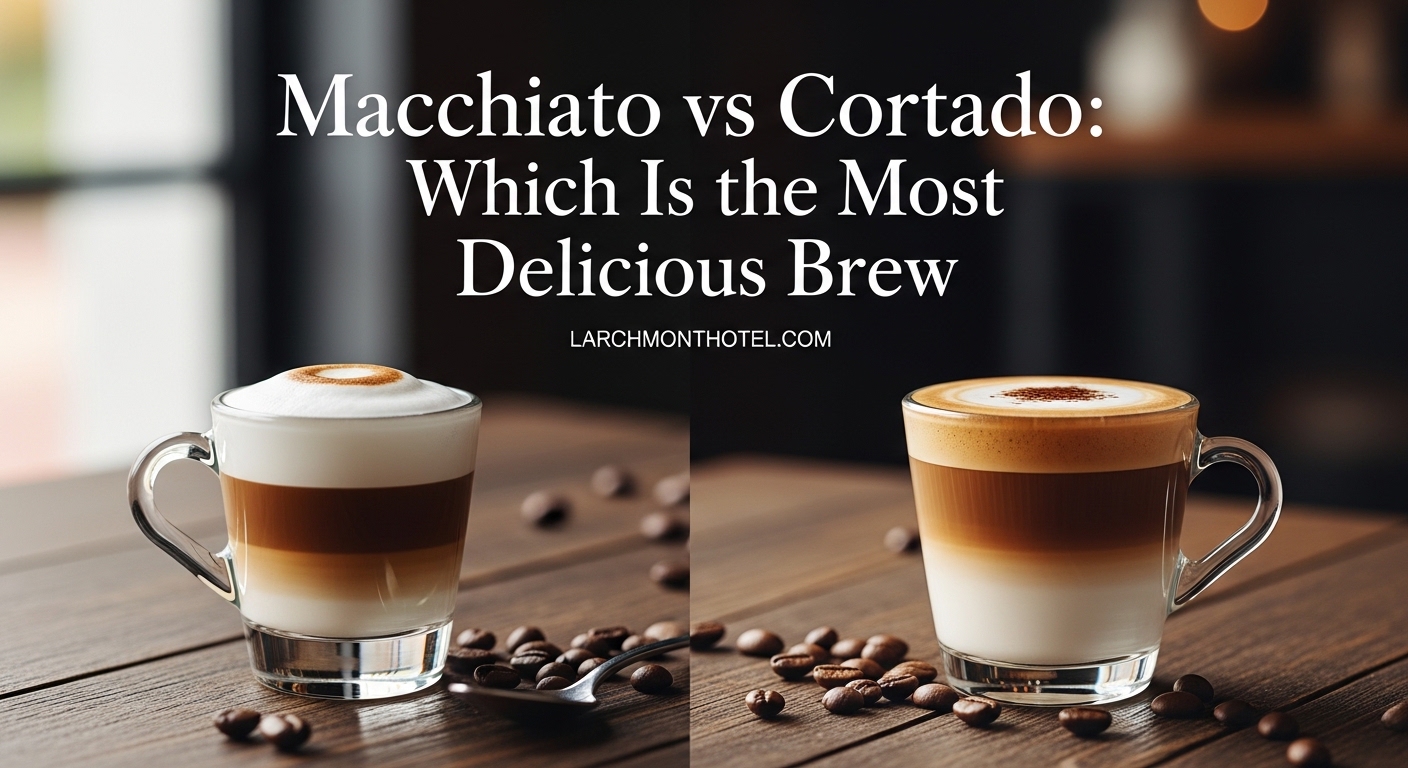
Standing at a coffee shop counter, staring at the menu, wondering what exactly distinguishes a macchiato from a cortado? You’re not alone. These two espresso drinks confuse even seasoned coffee enthusiasts, and the reality is that many cafes don’t follow strict definitions.
The cortado offers a smoother, more balanced experience with equal parts espresso and steamed milk, while the macchiato delivers an intense espresso punch with just a stain of milk foam.
After spending years exploring specialty coffee shops and experimenting with home brewing, I’ve discovered that understanding these drinks goes beyond ratios. It’s about knowing what you actually want from your coffee experience and managing expectations when ordering.
In this guide, I’ll break down the real differences between macchiatos and cortados, including what happens when cafe definitions don’t match textbook definitions, and how to choose the drink that matches your taste preferences.
A macchiato is an espresso-based drink consisting of a single shot of espresso “stained” with a small dollop of milk foam, typically in a 2:1 espresso to milk ratio.
The name comes from the Italian word “macchiare,” meaning “to stain” or “to mark.” Essentially, you’re marking the espresso with just enough milk to take the edge off.
Traditional macchiatos serve as a bridge between straight espresso and milkier drinks. They contain approximately 1.5 to 2 ounces of liquid, making them quick, intense coffee experiences.
Most specialty coffee shops serve macchiatos in a demitasse cup. The visual appeal is part of the experience; you should see distinct espresso with a small cap of white foam on top.
Whole milk is standard for traditional macchiatos. The foam should be thick and spoonable, not the thin microfoam used in lattes.
Espresso Macchiato: The traditional macchiato consisting of a single shot of espresso marked with a dollop of milk foam, distinct from the sweet, caramel-laden “macchiato” popularized by certain coffee chains.
A cortado is an espresso drink made with equal parts espresso and steamed milk (1:1 ratio), creating a balanced, smooth flavor that cuts the espresso’s intensity while maintaining its character.
Originating from Spain, the cortado’s name comes from “cortar,” meaning “to cut.” The milk cuts through the espresso’s bitterness without overwhelming its flavor.
Cortados typically measure 3 to 4 ounces total. This larger serving size compared to a macchiato means you get a more extended drinking experience rather than a quick shot.
The key to a proper cortado is the milk texture. It should be steamed but not foamy; think velvety and smooth rather than frothy. The milk integrates seamlessly with the espresso.
Unlike Italian espresso drinks that use foamy milk, Spanish cortados emphasize the smooth integration of milk and coffee without distinct foam layers.
I’ve found cortados particularly appealing for late morning coffee when I want something more substantial than a straight espresso but less heavy than a latte.
Understanding the technical differences between these drinks helps you know what to expect. Here’s a comprehensive breakdown:
| Characteristic | Macchiato | Cortado |
|---|---|---|
| Milk to Espresso Ratio | 2:1 (espresso-dominant) | 1:1 (equal parts) |
| Milk Type | Foam only (dollop) | Steamed milk (minimal foam) |
| Serving Size | 1.5-2 oz | 3-4 oz |
| Taste Profile | Bold, intense, acidic | Smooth, balanced, mellow |
| Origin | Italy | Spain |
| Caffeine Content | ~64mg (single shot) | ~64mg (single shot) |
| Calories (whole milk) | ~5-10 calories | ~25-35 calories |
| Drinking Time | 2-3 minutes | 5-8 minutes |
| Typical Glassware | Demitasse cup | Gibraltar glass or small cup |
The most significant difference between these drinks comes down to taste experience. A macchiato delivers the full force of espresso with slight modification.
When I drink a macchiato, I experience the espresso’s acidity, sweetness, and bitterness with just enough milk to soften the harsh edges. It’s an uncompromising coffee experience.
The cortado, by contrast, feels like a completely different drink. The equal milk ratio creates harmony between espresso’s intensity and milk’s creaminess.
The taste difference becomes even more pronounced depending on the beans used. Light roasts in a macchiato showcase bright, fruity notes that might get lost in a cortado.
Dark roasts tend to work better in cortados; the milk balances out deeper, chocolatey notes while preventing the drink from becoming too heavy or bitter.
⏰ Pro Tip: If you’re new to espresso drinks, start with a cortado. The balanced flavor profile is more approachable. Macchiatos reward those who already appreciate straight espresso’s intensity.
Macchiato texture varies sip to sip. The first taste is pure espresso, followed by increasingly milky sips as you reach the foam cap at the bottom.
Cortados maintain consistent texture throughout. The steamed milk integrates fully, creating a velvety mouthfeel from first sip to last.
This textural difference explains why many coffee enthusiasts consider them completely different drinks despite sharing espresso as their base.
Here’s something most comparison articles won’t tell you: cafe definitions vary wildly. After ordering macchiatos and cortados at dozens of coffee shops, I’ve learned that names don’t always match textbook definitions.
Some cafes pour cortados with more foam than others. Some make macchiatos that look like miniature cappuccinos. And yes, some baristas will admit they don’t strictly differentiate between the two.
The biggest confusion comes from coffee chain menus. That caramel-dotted dessert drink called a “macchiato”? That has virtually nothing in common with a traditional espresso macchiato.
I’ve had cortados that tasted like small lattes and macchiatos that seemed more like tiny flat whites. This inconsistency frustrates coffee purists but creates opportunity for curious drinkers.
To get what you actually want, try these specific questions instead of relying on drink names:
These questions work because they describe what you want rather than relying on inconsistent terminology. Most baristas appreciate customers who know what they’re looking for.
Want to recreate these drinks at home? The good news is you don’t need thousands of dollars in equipment, though quality tools help.
You can create approximations using other brewing methods. I’ve made decent versions using Moka pot coffee as an espresso substitute:
These won’t match cafe-quality drinks, but they cost a fraction of the price and help you understand the flavor profiles.
Both drinks work with various milk alternatives, though results vary:
| Milk Type | Macchiato Result | Cortado Result |
|---|---|---|
| Oat Milk | Foams reasonably well; neutral flavor lets espresso shine | Excellent balance; natural creaminess complements espresso |
| Almond Milk | Light foam; nutty notes add complexity | Thinner texture; may require larger ratio for balance |
| Soy Milk | Foams well; creamy texture works nicely | Natural choice for plant-based cortados; good integration |
| Coconut Milk | Rich foam but strong coconut flavor may overpower | Best with dark roasts; pronounced tropical notes |
I’ve found oat milk creates the closest texture to dairy, especially for cortados. The natural creaminess mimics whole milk’s mouthfeel.
After tasting countless versions of both drinks, here’s my straightforward recommendation:
Choose a macchiato if you love espresso’s intensity and want milk to enhance rather than dilute the coffee. It’s ideal for morning caffeine kicks or after-dinner coffee.
Choose a cortado if you want a balanced, smooth coffee experience. It’s perfect for mid-morning or afternoon drinking when you want flavor without intensity.
Ask yourself these questions:
Understanding macchiatos and cortados opens the door to a whole world of espresso drinks. Here’s how they compare to similar options:
A piccolo is essentially a miniature latte, typically 3-4 ounces with a ristretto shot and more milk than a cortado. It’s creamier and milder than both macchiato and cortado.
Larger than a cortado (5-6 ounces) with more microfoam. The flat white emphasizes velvety texture and typically uses two ristretto shots.
Essentially the same drink as a cortado, just served in a specific glass tumbler. Some cafes distinguish between them, but most use the names interchangeably.
The French version of a macchiato. Similar concept—espresso marked with milk—but traditions vary slightly in preparation.
Yes, a macchiato is stronger than a cortado. The macchiato has a 2:1 espresso-to-milk ratio, meaning you get a bold, intense espresso flavor with just a ‘stain’ of milk foam. A cortado uses a 1:1 ratio of espresso to steamed milk, which significantly mellows the intensity while maintaining the espresso’s character.
The closest Italian equivalent to a cortado is the ‘macchiato’ or more specifically, a ‘latte macchiato.’ However, the true Spanish cortado doesn’t have a direct Italian equivalent with the exact same 1:1 ratio. The Italian ‘macchiato’ has less milk (2:1 ratio), while a ‘cappuccino’ has more milk and foam.
A piccolo is an Australian espresso drink that’s essentially a mini latte, typically served in a 3-4 oz glass. It consists of a ristretto shot (extracted with less water) topped with warm, velvety milk. Compared to a macchiato, it has more milk. Compared to a cortado, it’s similar in size but often uses a ristretto instead of full espresso and has slightly more foam.
No, a cortado and flat white are different drinks. A cortado is smaller (3-4 oz) with a 1:1 espresso-to-steamed-milk ratio and minimal foam. A flat white is larger (5-6 oz), has more microfoam, and typically uses two ristretto shots. The cortado emphasizes the espresso’s brightness, while the flat white has a creamier, velvety texture from the increased microfoam.
A cortado has more calories than a macchiato due to the larger milk content. A macchiato with whole milk contains approximately 5-10 calories, while a cortado with whole milk contains 25-35 calories. Using milk alternatives will alter these numbers slightly, but the relative difference remains the same.
The macchiato versus cortado debate ultimately comes down to personal preference. Both drinks celebrate espresso in different ways—one through intensity, the other through balance.
After sampling these drinks at countless cafes and making them at home with various equipment, I’ve learned that the “best” choice depends entirely on your mood, the time of day, and your relationship with espresso’s intensity.
Don’t be afraid to order both on separate visits. Pay attention to how each cafe interprets the drink. Ask questions. Taste mindfully. The beauty of specialty coffee lies in these subtle variations and discoveries.
Whether you land firmly in the macchiato camp or find yourself leaning toward cortados, understanding the differences ensures you’ll know exactly what you’re ordering—and what to expect when that cup arrives at your table.