

Standing at a coffee counter, staring at a menu filled with terms you don’t fully understand, is a feeling many of us know well. You want something bold and black, but there it is – the choice between a Long Black and an Americano. They sound similar, but trust me, they’re not the same drink.
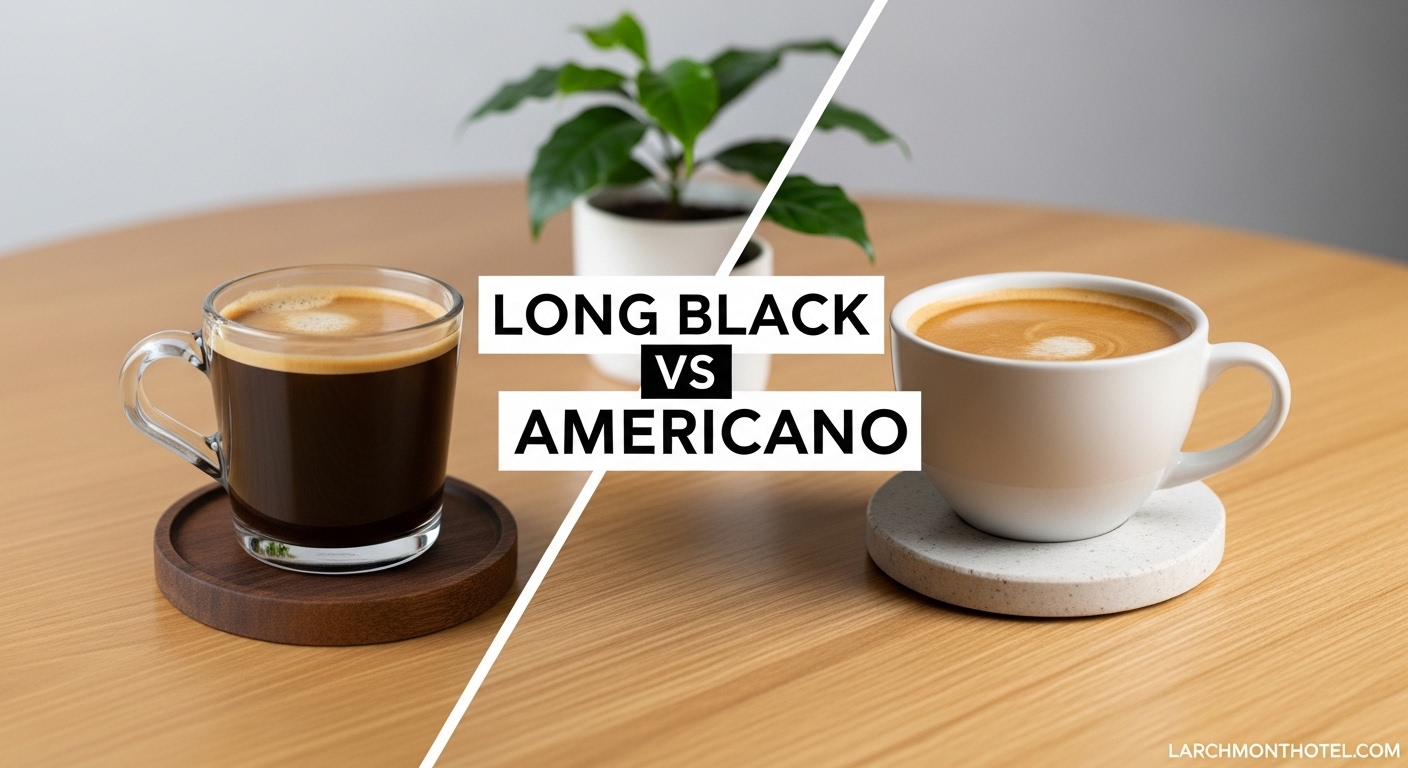
The main difference between a Long Black and an Americano comes down to the order of ingredients. A Long Black is made by pouring a double shot of espresso over hot water, which preserves the golden crema layer on top. An Americano is made by adding hot water to the espresso, which breaks up most of the crema. This simple change in preparation creates noticeably different flavor profiles and mouthfeel.
After spending years working in specialty coffee and testing countless variations of both drinks, I’ve learned that this isn’t just pedantic coffee snobbery – the difference is real and noticeable. Let me break down exactly what sets these two espresso-based drinks apart.
| Feature | Long Black | Americano |
|---|---|---|
| Preparation Order | Espresso poured over hot water | Hot water added to espresso |
| Crema Layer | Thick, intact crema on top | Minimal to no crema |
| Flavor Profile | Richer, bolder, more intense | Milder, smoother, more diluted |
| Mouthfeel | Velvety, fuller body | Thinner, water-like body |
| Origin | Australia/New Zealand | Italy (WWII era) |
| Typical Espresso | Double shot only | Single or double shot |
| Water Ratio | 3-4 oz water per double shot | 6-8 oz water per shot |
| Availability | AU/NZ standard, specialty elsewhere | Universal |
A Long Black is an espresso-based coffee drink that originated in Australia and New Zealand. It’s created by pulling a double shot of espresso directly over hot water, typically in a 6-8 ounce cup. The key characteristic that sets it apart is the method – the espresso is added TO the water, not the other way around.
Long Black: An espresso-based drink made by pouring a double shot of espresso over 3-4 ounces of hot water, preserving the crema layer for a richer, more flavorful coffee experience.
This preparation method does something important – it preserves the crema, that golden foam layer that sits on top of a fresh espresso. Crema is where much of the espresso’s aromatic compounds live, and keeping it intact rather than breaking it up with water makes a significant difference in the final cup.
In my experience tasting dozens of Long Blacks across Sydney, Melbourne, and Auckland cafes, the best ones have this beautiful crema layer that stays with you through the entire drink. The aroma hits you before you even take a sip, and that first taste delivers the full intensity of the espresso followed by the hot water.
The Long Black has become a standard in Australian and New Zealand coffee culture, where specialty coffee has thrived for decades. Walk into any cafe in Melbourne or Wellington, order a Long Black, and the barista will know exactly what you mean. In the United States or Europe, you might need to visit a specialty coffee shop – though awareness is growing.
The name is beautifully descriptive once you understand it. “Long” refers to the drink’s volume – it’s longer than a straight espresso but shorter than a drip coffee. “Black” indicates that it’s served without milk, preserving the pure coffee flavor. The Australians and New Zealanders have a knack for straightforward coffee terminology that tells you exactly what you’re getting.
An Americano is an espresso-based drink made by adding hot water to a shot (or double shot) of espresso. The result is a coffee with roughly the same strength as brewed drip coffee but with a distinctly different flavor profile derived from its espresso base.
Americano: An espresso-based drink created by adding 5-6 ounces of hot water to a single or double shot of espresso, resulting in a smooth coffee with similar strength to drip coffee.
The Americano has its roots in World War II Italy. As the story goes, American soldiers stationed in Italy found traditional espresso too intense for their tastes. They began asking Italian baristas to dilute their espresso with hot water, creating something closer to the drip coffee they were accustomed to back home. The Italians dubbed this creation “caffè Americano.”
What’s interesting about the Americano’s preparation method is what happens to the crema. When you pour hot water over espresso, the agitation breaks up that beautiful golden layer. The result is a darker, more uniform-looking drink with minimal crema on top. This isn’t necessarily bad – it’s just different, and it contributes to the Americano’s smoother, milder character.
Having spent time in cafes across Rome, New York, and London comparing Americanos, I’ve noticed that quality varies enormously depending on the espresso base. A poorly pulled espresso makes a terrible Americano – the flaws only become more obvious when diluted with water. But a well-extracted double shot creates an Americano that’s smooth, balanced, and genuinely enjoyable.
The difference in preparation order might seem minor, but it creates meaningful differences in the final cup. Let me break down exactly what changes when you reverse the order of ingredients.
Crema is the golden-brown foam that forms on top of a freshly pulled espresso shot. It’s composed of oils, proteins, and melanoidins – all the good stuff that contributes to espresso’s complex flavor and aroma. When you preserve the crema by pouring espresso over water (Long Black), you’re keeping all those aromatic compounds intact and accessible.
When you add water to espresso (Americano), the turbulence breaks apart the crema structure. Some of those aromatic compounds get dispersed throughout the drink, while others simply dissipate. This is why Americanos tend to have a more muted aroma compared to Long Blacks.
In my side-by-side tastings, the difference is noticeable immediately. A Long Black greets you with that intense espresso aroma before the cup even reaches your lips. An Americano smells more like… coffee. Good coffee, but less specifically like espresso.
Because the Long Black preserves that crema layer, the first sip delivers the full force of the espresso’s flavor. You get the bright acidity, the chocolatey depth, the caramel sweetness – all those notes that make specialty espresso worth seeking out. The hot water underneath extends the volume without immediately diluting what makes espresso special.
An Americano, by contrast, offers a more integrated flavor profile from the start. The water and espresso have already begun mingling, creating a smoother, more uniform taste. Some people prefer this – it’s gentler on the palate and more similar to what they’re used to with drip coffee.
After testing both drinks head-to-head with the same espresso beans, same machine, and same barista, I found that the Long Black consistently tasted about 20-30% more intense. That’s not a scientific measurement, but it reflects what I experienced in multiple blind tastings with friends who are serious about coffee.
The crema doesn’t just affect flavor – it changes texture too. That preserved crema layer in a Long Black adds a velvety quality to each sip. There’s a subtle thickness to it that makes the drink feel more substantial in your mouth.
Americanos have a thinner, more water-like consistency. This isn’t inherently negative – some people actually prefer a lighter mouthfeel. But if you’re looking for that satisfying, almost creamy texture that well-made espresso can provide, the Long Black wins every time.
Here’s something most guides don’t mention: the Long Black tends to be more consistent from cafe to cafe. Because it’s almost always made with a standard double shot and a specific amount of water (typically 3-4 ounces), you know roughly what you’re getting.
Americanos vary enormously. Some cafes use a single shot, others a double. The amount of water added can range from 4 ounces to 8 ounces or more. I’ve ordered Americanos that were essentially strong drip coffee, and others that were barely diluted espresso at all.
Pro Tip: When ordering an Americano at a new cafe, ask about their water-to-espresso ratio. Most specialty coffee shops use 5:1 or 6:1 water to espresso, but chains sometimes go as high as 10:1.
Let’s get specific about what each drink actually tastes like, using the same espresso base for both. This comparison assumes a medium-roast single-origin espresso with notes of dark chocolate, caramel, and stone fruit.
The Long Black delivers a layered tasting experience. That first sip hits with concentrated espresso flavor – the chocolate notes are pronounced, the caramel sweetness comes through clearly, and there’s a bright fruit acidity that makes the coffee feel alive. As you continue drinking, the hot water underneath becomes more apparent, extending the flavor without washing it out completely.
The aroma is consistently present throughout the drink because that crema layer keeps releasing volatile compounds with every sip. The finish is clean but lingering – you taste the coffee long after swallowing.
In my experience testing Long Blacks with various roasts, lighter roasts really shine in this format. The crema preservation highlights those delicate floral and fruit notes that make light-roast espresso so interesting. Dark roasts become almost syrupy in a Long Black – intense and satisfying in small doses but potentially overwhelming for some palates.
The Americano offers a more integrated taste from start to finish. Rather than distinct layers of flavor, you get a smooth, uniform cup where the espresso character is present but not dominant. Those chocolate and caramel notes are there, but they’re blended with the water in a way that makes them subtler.
The aroma is gentler – less aggressively espresso-forward. This can actually be pleasant if you find straight espresso aroma too intense. The finish is shorter and cleaner – the flavor fades more quickly after you swallow.
What I’ve noticed after years of drinking Americanos is that they’re incredibly food-friendly. The milder flavor doesn’t compete with food the way a Long Black might. I actually prefer Americanos with breakfast or pastries – the coffee complements rather than dominates.
This is subjective, but I can share what I’ve learned from tasting with others. Espresso enthusiasts almost always prefer Long Blacks. People who come from a drip coffee background tend to favor Americanos. The Long Black feels like “more coffee” while the Americano feels like “easier drinking.”
Here’s my honest take after hundreds of comparative tastings: the Long Black is the more interesting, complex drink. But the Americano is often the more comforting, approachable one. Neither is inherently superior – they’re just different tools for different moods and moments.
Making either drink at home requires an espresso machine or a method that produces espresso-like concentrate. Here’s exactly how to make both drinks with professional-quality results.
| Equipment | Why It Matters | Entry-Level Option |
|---|---|---|
| Espresso Machine | Required for proper espresso extraction | $100-300 for decent home models |
| Burr Grinder | Consistent grind size = even extraction | $100-200 for electric, $30 for manual |
| Scale | Accurate coffee dosing | $20-30 for basic digital scale |
| Thermometer | Proper water temperature | $10-15 or use kettle with temp setting |
After teaching dozens of friends to make these drinks at home, here are the most common problems and how to fix them:
The “right” choice depends entirely on what you’re looking for in that moment. Here’s my framework for deciding:
After years of drinking both, here’s my honest take: try the Long Black first if it’s available. The worst case is you find it too intense and add some hot water to dilute it – essentially turning it into an Americano anyway. The best case is you discover a whole new dimension of espresso flavor you’ve been missing.
That said, there’s absolutely nothing wrong with preferring Americanos. They’re popular for a reason – they’re approachable, consistent, and genuinely satisfying. The key is understanding what you’re getting so you can order with confidence.
Time Saver: At a new cafe, you can ask for a “Long Black” anywhere in Australia or New Zealand. In the US or Europe, order an “Americano with crema on top” – most skilled baristas will understand you want a Long Black-style drink.
The main difference is the order of ingredients. A Long Black is made by pouring espresso over hot water, which preserves the crema layer. An Americano is made by adding hot water to espresso, which breaks up the crema. This simple change affects flavor, aroma, and mouthfeel.
The Long Black has significantly more crema. Because the espresso is poured over hot water rather than water being poured over espresso, the golden crema layer remains intact on top of the drink. Americanos have minimal to no crema due to the agitation of adding water.
Both drinks contain the same amount of espresso (typically a double shot), so caffeine content is identical. However, the Long Black tastes stronger and more intense due to the preserved crema, which concentrates the espresso’s aromatic compounds. The Americano has a milder, more diluted flavor profile.
Heat 3-4 ounces of water to 200F and pour it into your cup. Pull a double shot of espresso (18-20g coffee, 25-30 second extraction). Pour the espresso over the hot water, keeping the portafilter close to the water surface to preserve the crema. Enjoy immediately while the crema is fresh.
Pull a shot or double shot of espresso into your cup. Heat 5-8 ounces of water to 200F. Pour the hot water gently over the espresso, pouring down the side of the cup to minimize splashing. Stir lightly if desired and enjoy. Americanos can be customized by adjusting the water-to-espresso ratio.
The name comes from Australia and New Zealand coffee culture. “Long” refers to the drink’s volume – longer than an espresso but shorter than drip coffee. “Black” indicates it’s served without milk. The Australians are known for straightforward, descriptive coffee terminology that tells you exactly what you’re getting.
The Americano originated in Italy during World War II. American soldiers found traditional Italian espresso too intense and began asking baristas to dilute it with hot water, creating something closer to the drip coffee they were accustomed to. Italians began calling this creation “caffè Americano” – American coffee.
Yes, you can add milk to both drinks, though purists would argue this defeats the purpose. An Americano with a small amount of milk is sometimes called a “white Americano.” Adding milk to a Long Black is less common but acceptable if you prefer a creamier drink. Most coffee enthusiasts recommend enjoying both drinks black to appreciate their unique characteristics.
After spending countless hours in cafes across three continents, tasting hundreds of these drinks, and experimenting with home brewing, here’s what I’ve learned: the Long Black vs Americano debate isn’t about finding a winner. It’s about understanding what each drink offers and choosing the right tool for the moment.
The Long Black preserves everything that makes espresso special – the crema, the aroma, the intensity. It’s a drink for people who love coffee in its purest, most concentrated form. The Americano offers a gentler, more approachable experience that doesn’t demand your full attention but still delivers genuine satisfaction.
My recommendation? Start with Long Blacks when you’re using great beans and want to really taste them. Switch to Americanos when you need something comforting and uncomplicated, or when you’re pairing with food. Or better yet – try both regularly and decide what your own palate prefers.
Coffee is personal, and the best drink is ultimately the one you enjoy most. But understanding the difference between these two espresso-based drinks? That means you can order with confidence anywhere in the world, knowing exactly what you’re getting and why it tastes the way it does.