

I spent three years making iced coffee the wrong way. I’d brew hot coffee, let it sit on the counter, then pour it over ice. The result? Watery, bitter disappointment.
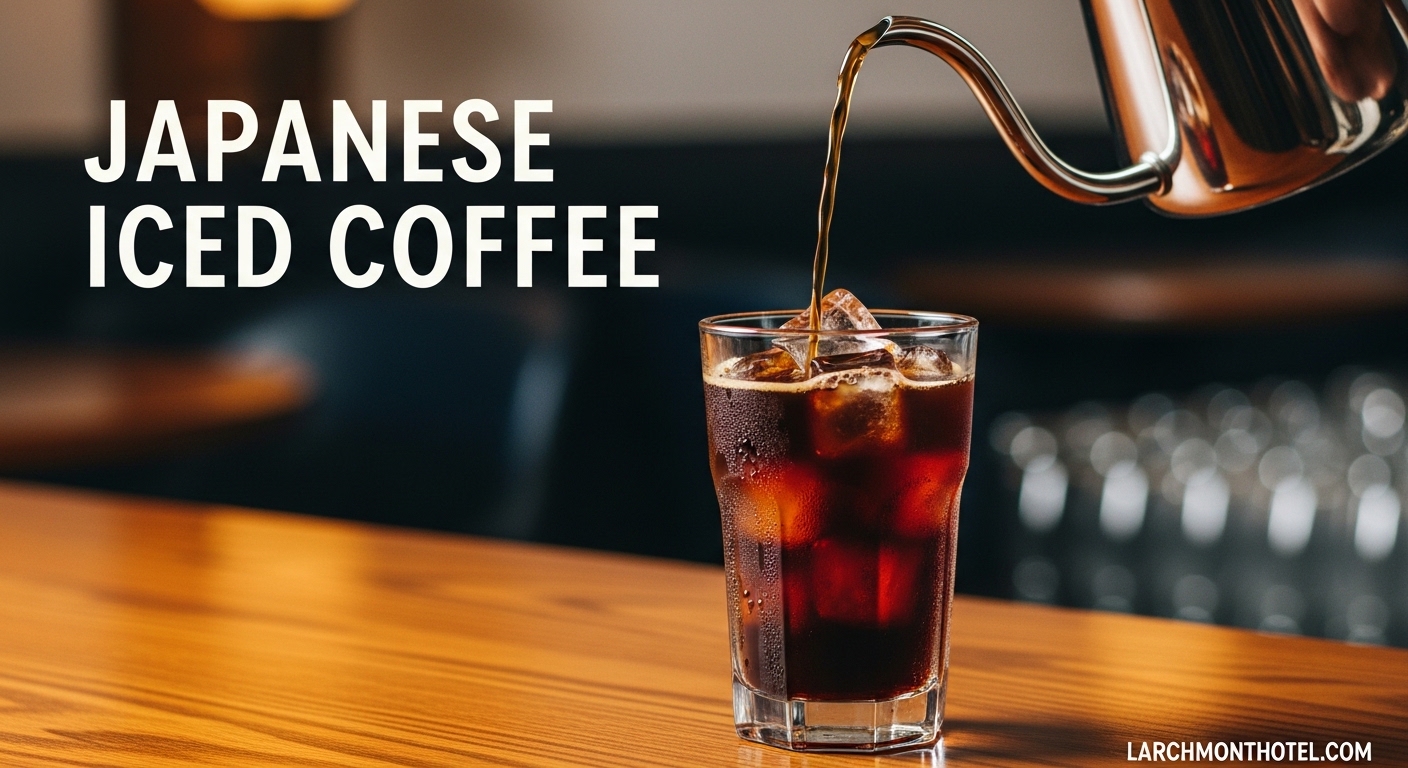
Japanese iced coffee is a brewing method that combines hot pour-over techniques with immediate cooling over ice. It captures the bright aromatic compounds that cold brew misses, delivering a clean, flavorful cup in under five minutes.
After experimenting with dozens of methods across my home brewing journey, I’ve found Japanese iced coffee produces the most flavorful iced coffee possible. The hot water extraction preserves delicate floral and fruity notes that get lost in cold extraction.
In this guide, I’ll walk you through everything you need to know to make cafe-quality Japanese iced coffee at home, including equipment alternatives and troubleshooting tips I learned through plenty of failed batches.
Japanese iced coffee, also called flash brew or flash-chilled coffee, is hot-brewed coffee extracted directly onto ice. This method combines the flavor clarity of pour-over with immediate cooling that preserves delicate aromatic compounds.
Flash Brew: A coffee brewing method where hot water extracts coffee grounds directly onto ice, creating immediate temperature shock that locks in volatile flavor compounds.
The key difference between Japanese iced coffee and other methods is temperature. Hot water (195-205degF) extracts soluble compounds differently than cold water. Coffee contains hundreds of flavor compounds, and some only dissolve at higher temperatures.
When coffee hits the ice immediately, those heat-extracted compounds get locked in before they can break down. This creates a cup with bright acidity, clear flavor separation, and pronounced aromatic qualities.
I first discovered this method at a specialty coffee shop in Tokyo. The barista explained that Japan’s hot, humid summers demanded iced coffee that didn’t sacrifice flavor. The technique spread globally as specialty coffee culture expanded.
The science is straightforward: heat extracts more flavor compounds than cold water, and rapid cooling preserves them. Cold brew can taste flat by comparison because it never accesses those heat-soluble compounds.
The beauty of Japanese iced coffee is its flexibility. You can invest in specialized gear or use what’s already in your kitchen.
Pour-Over Device: A Hario V60, Chemex, or Kalita Wave works best. These drippers control flow rate for optimal extraction. I started with a basic V60 and still use it daily.
Filter: Paper filters remove oils and sediment for cleaner flavor. Cone filters work with V60 and Kalita, while disc filters fit Chemex.
Kettle: A gooseneck kettle gives precise pour control, which matters for even extraction. Regular kettles work but require more careful pouring.
Scale: Coffee ratios matter more with iced coffee. A digital scale helps hit the right proportions. Without one, use tablespoons (1 tablespoon coffee approximately 5-6 grams).
Heat-Safe Server: You need something that holds ice and won’t crack from thermal shock. Glass measuring cups work in a pinch.
| Equipment | Ideal Choice | Acceptable Alternative | Will Work If Needed |
|---|---|---|---|
| Dripper | Hario V60 or Chemex | Kalita Wave | Melitta pour-over |
| Kettle | Gooseneck temperature-controlled | Standard gooseneck | Regular kettle with steady hand |
| Scale | Digital coffee scale (0.1g) | Kitchen scale (1g) | Tablespoons for volume |
| Grinder | Burr grinder | Quality pre-ground | Standard blade grinder |
| Server | Glass carafe | Heat-safe glass pitcher | Large measuring cup |
⏰ Time Saver: Don’t have a gooseneck kettle? Pour slowly in circles from the center outward. A standard kettle works fine if you pour steadily rather than dumping water.
If you’re just starting, you only need: a dripper, filter, kettle, scale (or measuring spoons), and something to hold ice. Don’t let equipment perfectionism stop you from trying.
I’ve made excellent Japanese iced coffee with nothing more than a plastic Melitta dripper and a standard whistling kettle. The technique matters more than the gear.
This recipe produces about 12 ounces of finished coffee. Adjust proportions up or down while maintaining the same ratio.
This 1:1 ratio of water to ice is crucial. The ice replaces half the usual brewing water and immediately cools the coffee to proper serving temperature.
Quick Summary: Japanese iced coffee uses half hot water, half ice. Standard pour-over uses all water. Reduce your water amount by the same weight of ice you add.
✅ Pro Tip: Use large ice cubes in your drinking glass. They melt slower, preserving your coffee’s flavor longer. Silicone molds make 2-inch cubes perfect for iced coffee.
The same ratio works for any batch size:
| Yield | Coffee | Hot Water | Ice |
|---|---|---|---|
| Single serving (8 oz) | 13g | 100g | 100g |
| Standard serving (12 oz) | 22g | 150g | 150g |
| Large (16 oz) | 30g | 200g | 200g |
| Batch (32 oz) | 60g | 400g | 400g |
For batches larger than 16 ounces, consider brewing multiple batches rather than scaling up. Large batches are harder to control and may extract unevenly.
Chemex Method: The thicker Chemex filter requires a slightly coarser grind. Use 22g coffee with 180g water and 180g ice for the full Chemex capacity. Bloom time may extend to 60 seconds.
Kalita Wave Method: The flat bottom creates more even extraction. Use same ratio as V60 but pour more gently—the wave drips faster. Total brew time may be shorter, around 2:00-2:30.
Automatic Dripper: Some automatic drip machines have iced coffee settings. If yours doesn’t, use half the usual water amount and place ice in the carafe. Results vary but can be passable for convenience.
After brewing hundreds of batches, I’ve learned that small adjustments make big differences. Here’s what I wish someone had told me when I started.
| Problem | Cause | Solution |
|---|---|---|
| Coffee tastes watery | Too much ice melt or under-extraction | Use larger ice cubes, grind slightly finer, extend brew time by 15 seconds |
| Coffee tastes bitter | Water too hot or over-extraction | Lower water temperature to 195degF, grind slightly coarser, reduce brew time |
| Coffee tastes sour | Under-extraction | Grind finer, increase water temperature, extend brew time |
| Dripping too slow/stalled | Grind too fine or fines present | Coarsen grind, ensure filter isn’t clogged, don’t press down on grounds |
| Dripping too fast/weak flavor | Grind too coarse | Finer grind, pour more slowly, ensure proper bloom |
| Not cold enough | Insufficient ice | Add more ice to server (adjust water down to maintain ratio), serve over fresh ice |
Light and medium roasts shine in Japanese iced coffee. Their bright acidity and complex fruit notes really come through. I’ve had Ethiopian Yirgacheffe taste like fruit punch when brewed this way.
Dark roasts work but lose some nuance. If you prefer chocolatey, nutty profiles, a medium-dark roast from Central America produces excellent results.
Experiment with single-origin beans. The clarity of this method lets regional characteristics shine. Kenyan beans give bright citrus, Sumatran offers earthy depth, Colombian provides balanced sweetness.
Japanese iced coffee is best enjoyed immediately, but life doesn’t always allow for fresh-brewed perfection. Here’s what I’ve learned about storage:
Refrigerator storage: Store in an airtight container for up to 24 hours. Flavor holds up reasonably well but expect some oxidation. Give it a quick stir before serving.
Freezer storage: Not recommended. Ice crystals form and alter texture. Free coffee concentrate (brewed at double strength) freezes better if you must stock up.
Weekend prep: Brew larger batches on Sunday and refrigerate in Mason jars. It won’t match fresh-brewed quality but beats drive-thru coffee on Monday mornings.
⚠️ Important: Never leave coffee at room temperature more than 2 hours. Bacteria growth becomes a concern. Refrigerate promptly if not drinking immediately.
People often ask me to explain the difference between these two popular iced coffee methods. The distinction matters because they produce completely different flavor profiles.
| Aspect | Japanese Iced Coffee | Cold Brew |
|---|---|---|
| Brewing temperature | Hot (195-205degF) | Cold (room temp or refrigerated) |
| Brewing time | 3-5 minutes | 12-24 hours |
| Flavor profile | Bright, acidic, aromatic, complex | Smooth, mellow, low-acid, chocolatey |
| Caffeine content | Similar to hot coffee | Slightly higher (longer extraction) |
| Equipment needed | Pour-over setup | Jar or French press |
| Planning required | None—brew on demand | Must start day ahead |
| Best beans | Light/medium roast for complexity | Dark roast for smoothness |
| Shelf life | 1 day max | 7-10 days refrigerated |
When should you choose Japanese iced coffee? Choose it when you want bright, complex flavors with aromatic intensity. It’s perfect for fruit-forward Ethiopian beans or floral Central Americans.
When should you choose cold brew? Cold brew wins for convenience. Make a big batch Sunday and drink all week. It’s also better if you’re sensitive to acidity—the cold extraction produces a smoother cup.
My take? Keep both in your rotation. I make Japanese iced coffee on weekend mornings when I want something special. Cold brew handles my weekday grab-and-go needs.
The standard ratio is 1 gram of coffee to 15 grams of total liquid, with half the liquid as hot water and half as ice. For a 12-ounce serving, use 22g coffee, 150g hot water, and 150g ice.
Yes, use volume measurements. For each cup of finished coffee, use 3 tablespoons coffee, 1/3 cup hot water, and 3/4 cup ice. Results may vary slightly but produce drinkable coffee.
Use water between 195-205degF. If boiling, wait 45-60 seconds. Water that is too hot extracts bitterness; water that is too cool under-extracts and tastes sour.
Best enjoyed immediately. Refrigerate in an airtight container for up to 24 hours if needed. Flavor declines noticeably after 12 hours due to oxidation and continued ice melting.
Japanese iced coffee has similar caffeine to hot coffee, while cold brew typically has slightly more due to longer extraction time. The difference is modest—about 10-15% more in cold brew.
After testing countless variations across three years of home brewing, Japanese iced coffee remains my favorite method for hot weather. The clarity and brightness you get from hot extraction simply can’t be matched by cold brew alone.
Start with the basic recipe and V60 setup. Once you’ve dialed in your technique, experiment with different beans and pour-over devices. I now keep dedicated light-roast beans specifically for Japanese iced coffee—their floral notes really shine through this method.
The learning curve is gentle. Your first batch might not be perfect, but by your third or fourth brew, you’ll understand the rhythm. The morning cup you create will rival what you find at specialty cafes.
Remember: good equipment helps, but technique matters more. I’ve made outstanding Japanese iced coffee with nothing more than a plastic cone and steady hand. Focus on your ratio, water temperature, and pour speed. The rest is refinement.