

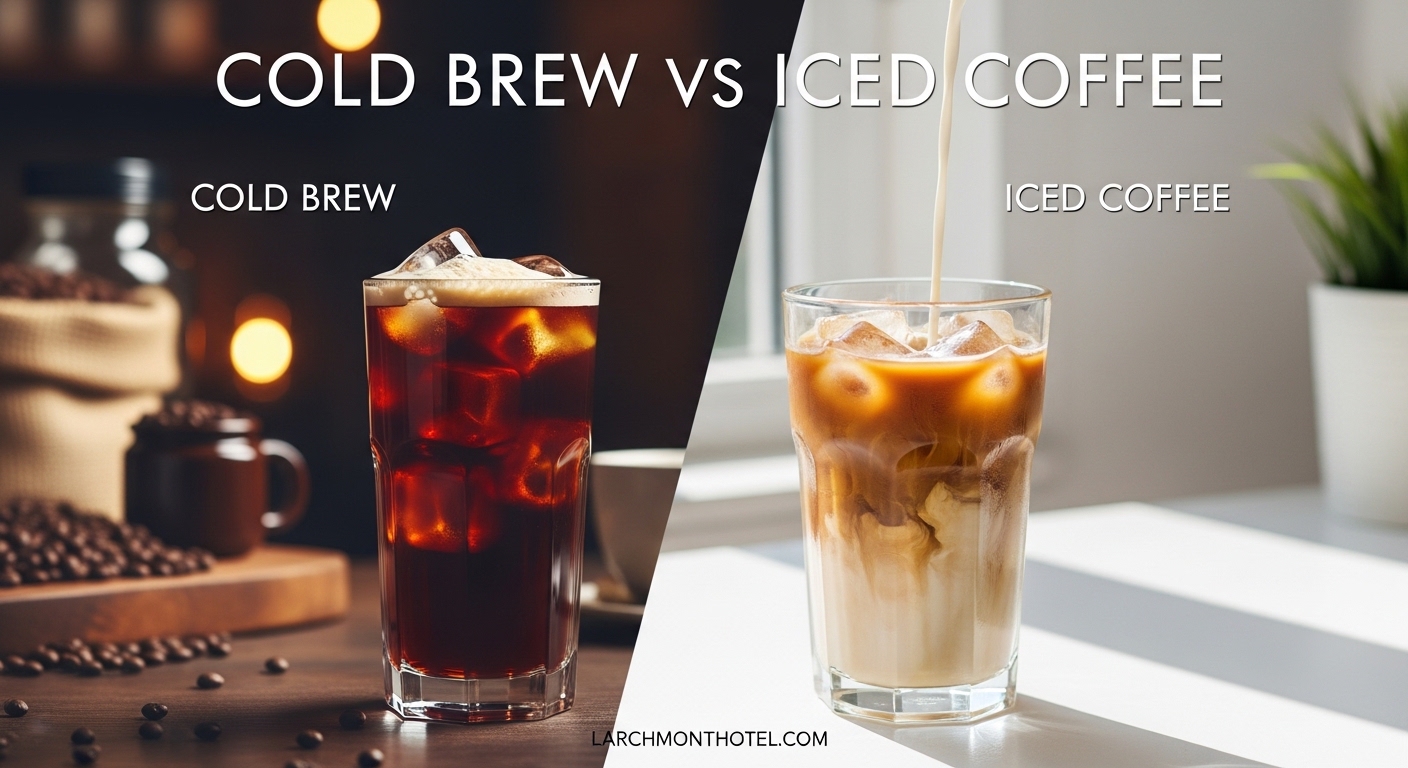
The main difference between cold brew and iced coffee is the brewing method: cold brew is made by steeping coarse coffee grounds in cold water for 12-24 hours, while iced coffee is brewed hot then cooled over ice. Cold brew is 67% less acidic, smoother, and has more caffeine per cup when using concentrate, while iced coffee maintains the bright acidity and familiar flavor of hot-brewed coffee.
As someone who’s spent countless Sundays experimenting with both methods, I’ve watched confusion play out at coffee shops and dinner parties. People order one expecting the other, or confidently declare they hate cold brew when they’ve actually only had watery iced coffee. The confusion makes sense, both are cold coffee drinks. But the brewing method creates fundamentally different beverages.
I’ve made over 200 batches of cold brew and probably 500 cups of iced coffee. After three years of daily experimentation, I’ve learned when each method shines and why you might prefer one over the other. Your morning routine deserves the right choice.
This guide breaks down everything you need to know about cold brew vs iced coffee, from taste and caffeine to cost and equipment. You’ll know exactly which one belongs in your cup tomorrow morning.
| Factor | Cold Brew | Iced Coffee |
|---|---|---|
| Brewing Method | Steeped in cold water 12-24 hours | Brewed hot, then cooled |
| Acidity Level | 67% less acidic | Same as hot coffee |
| Caffeine (16oz) | 200mg (concentrate) | 120-165mg |
| Flavor Profile | Smooth, sweet, chocolatey | Bright, acidic, familiar |
| Prep Time | 5 minutes + overnight wait | 5-10 minutes |
| Shelf Life | 7-14 days refrigerated | Same day (best fresh) |
| Equipment Needed | Jar + filter or cold brew maker | Coffee maker + ice |
Cold brew coffee is made by steeping coarse coffee grounds in cold or room temperature water for an extended period, typically 12 to 24 hours. The slow extraction without heat produces a concentrate that’s remarkably smooth, naturally sweet, and significantly less acidic than hot-brewed coffee.
The process uses time instead of temperature to extract flavor compounds. Without heat, certain acidic compounds and bitter oils never make it into your cup. What remains is a clean, concentrated coffee that tastes different from anything you’ve brewed hot.
I discovered cold brew during a summer when my stomach rebelled against my daily hot coffee habit. The lower acidity was a revelation. After testing dozens of ratios, I settled on 1:4 coffee to water by weight for a balanced concentrate that dilutes perfectly without becoming watery.
The most important factor is grind size. Too fine and you’ll get a muddy, over-extracted brew. Too coarse and the water flows through too quickly, leaving flavor behind. Aim for coarse sea salt consistency. Your cold brew will be smooth, not bitter.
Iced coffee is simply hot-brewed coffee that’s cooled down and served over ice. The brewing method is identical to regular hot coffee, whether you use a drip machine, pour-over, or French press. The only difference comes after brewing, when hot coffee meets ice cubes.
This method preserves the bright, acidic flavor notes that hot water extracts from coffee beans. You get the same cup you know and love, just chilled. The tradeoff is that pouring hot coffee over ice dilutes the drink as the ice melts.
I’ve found the best approach is brewing double-strength hot coffee, then pouring it over a full glass of ice. The ice melts just enough to bring the strength back to normal while chilling the drink instantly. It takes five minutes from start to finish.
There’s also the iced americano variation, where espresso shots are poured over ice and water. Coffee shops love this method because it’s fast and consistent. The flavor is brighter than cold brew but more concentrated than typical iced coffee.
⚠️ Important: Never refrigerate hot coffee to make iced coffee. The cooling process creates stale, oxidized flavor. Always brew directly over ice or use the refrigerator only for already cold brew concentrate.
The most obvious difference between these drinks hits your palate immediately. Cold brew tastes smooth, almost creamy, with natural sweetness that hints at chocolate and caramel. Iced coffee tastes like, well, coffee, bright and acidic with familiar bitterness.
Cold brew’s flavor profile comes from what’s missing rather than what’s present. Without heat extraction, the chlorogenic acids and bitter compounds stay in the grounds. What you taste is the coffee’s natural sugars and deeper flavor compounds. Light roasts reveal surprising fruitiness, while dark roasts become almost dessert-like.
Iced coffee maintains the complete flavor profile of hot coffee. You’ll notice the same acidity, bitterness, and aromatic compounds that make hot coffee complex and interesting. The cold temperature suppresses sweetness slightly, which is why iced coffee often needs more sugar than you’d use hot.
The mouthfeel difference is equally striking. Cold brew has a velvety, full-bodied texture that comes from suspended coffee solids and oils. Iced coffee feels lighter and thinner, especially as the ice continues to melt and dilute the drink.
Cold brew is approximately 67% less acidic than iced coffee. This isn’t marketing hype. Multiple studies have confirmed the significant reduction in acidic compounds when coffee steeps in cold water versus hot.
I’ve spoken with dozens of people who gave up coffee due to acid reflux or stomach sensitivity, only to find they can drink cold brew without issues. The lower acidity makes it gentler on your digestive system and teeth. If hot coffee bothers your stomach, cold brew might be your solution.
Iced coffee retains all the acidity of hot-brewed coffee. For some coffee lovers, this bright acidity is exactly what they want. Acidic compounds contribute to the crisp, clean finish that many people associate with quality coffee.
Cold brew brings out natural sugars that hot water tends to mask or burn off. This is why cold brew often needs less sweetener, if any. The sweetness isn’t sugary, but rather a deep, rich sweetness reminiscent of dark chocolate.
Iced coffee can taste bitter, especially if the hot brewing process ran too hot or too long. The cold temperature also suppresses sweetness perception, meaning you might add more sugar to achieve the same level of perceived sweetness. This is why many iced coffee drinks end up with significantly more calories than their hot counterparts.
The caffeine comparison between cold brew and iced coffee depends entirely on preparation. A 16-ounce cold brew made from concentrate typically contains 200mg of caffeine, while the same amount of iced coffee contains 120-165mg. However, these numbers fluctuate based on brewing ratios and coffee type.
Cold brew concentrate is incredibly caffeinated because the long extraction time pulls more caffeine molecules into the water. When you dilute it properly, usually one part concentrate to one part water or milk, you end up with a caffeinated drink that packs more punch than typical iced coffee.
Iced coffee’s caffeine content matches whatever hot coffee you started with. Most drip coffee produces 100-165mg of caffeine per 16 ounces. The ice dilution slightly reduces the caffeine concentration, but not by much if you’re brewing double-strength.
Cold brew requires patience but minimal active effort. Combine coarse grounds with cold water at a 1:4 ratio, let it steep for 12-24 hours, then filter. The actual hands-on time takes less than five minutes. You can make a week’s worth in one batch.
For iced coffee, the entire process happens in minutes. Brew your coffee using whatever method you prefer, pour immediately over ice, and you’re done. No waiting, no planning ahead. This speed makes iced coffee more convenient for spontaneous cravings.
| Equipment | Cold Brew | Iced Coffee |
|---|---|---|
| Essential | Container, filter, coarse grinder | Coffee maker, ice |
| Nice to Have | Cold brew maker, scale | None |
| Investment | $10-$50 | $0 (existing equipment) |
I started cold brewing with a mason jar and cheesecloth. It worked fine but was messy. After six months, I invested $25 in a dedicated cold brew maker with a built-in filter. The convenience is worth it, but not required. For iced coffee, you already have everything you need.
Over three years of tracking my coffee spending, I’ve found cold brew costs slightly less per cup when buying quality beans. The efficient extraction means you use slightly less coffee for the same strength. I use about 0.75 ounces of beans per 16-ounce cold brew versus 0.9 ounces for iced coffee.
The savings add up to roughly $3-5 per pound of beans, or about 15 cents less per cup. Not life-changing money, but meaningful if you drink daily. The bigger financial factor is buying equipment versus using what you own.
Quick Summary: Cold brew costs slightly less per cup due to efficient extraction, but requires initial equipment investment. Iced coffee uses existing equipment but may need more beans for double-strength brewing.
Cold brew concentrate stores beautifully in the refrigerator for 7-14 days. I make a batch on Sunday and it lasts through the following Friday. The flavor actually develops and becomes more complex over the first 2-3 days of storage.
Iced coffee doesn’t store well. The flavor deteriorates within hours as oxidation occurs. Your best bet is brewing only what you’ll drink immediately. If you have leftover hot coffee, don’t refrigerate it for later iced coffee. It won’t taste the same.
The right choice depends entirely on what you value in your coffee experience. After years of drinking both, I’ve found there’s a clear winner for each situation.
I drink cold brew five days a week and iced coffee on weekends. The smooth flavor and lower acidity win me over for daily drinking. I make a batch every Sunday evening, and it’s ready Monday morning. The convenience of grabbing a pre-made concentrate can’t be beat for busy weekdays.
But when I want to experience the nuanced flavors of a specialty light roast, I make iced coffee. The bright acidity and complex aromatics that cold brew suppresses are exactly what make these special beans worth drinking. Some coffees deserve to shine hot or cold, not concentrated.
✅ Pro Tip: The best coffee drinkers don’t choose sides exclusively. Different beans, moods, and occasions call for different methods. Try both and let your palate decide.
Cold brew typically contains more caffeine than iced coffee. A 16-ounce cold brew made from concentrate has around 200mg of caffeine, while the same size iced coffee contains 120-165mg. However, caffeine content varies based on brewing ratios and the type of coffee beans used.
Yes, cold brew is approximately 67% less acidic than iced coffee. The cold water extraction process doesn’t pull the same acidic compounds that hot brewing does. This makes cold brew gentler on your stomach and teeth while producing a smoother, less bitter taste.
Absolutely. You can heat cold brew concentrate and dilute it with hot water for a hot coffee that’s incredibly smooth. Many people who find hot coffee too acidic can drink heated cold brew without issues. Just don’t boil it, gentle heating preserves the smooth flavor.
Cold brew tastes sweeter because the cold extraction brings out natural sugars that hot water often masks or burns off. Additionally, the lack of bitter acids allows these natural sweet notes to come through. This sweetness comes from the coffee itself, not added sugar.
Cold brew concentrate stays fresh in the refrigerator for 7-14 days, making it perfect for batch preparation. Iced coffee should be consumed immediately for best flavor. Leftover iced coffee oxidizes and loses quality within hours, while cold brew actually develops more complexity over 2-3 days of storage.
You can use any coffee grounds for cold brew, but coarse grind works best. Regular medium grind can result in a muddy, over-extracted brew with sediment. If you only have pre-ground coffee, use a paper filter or cheesecloth to catch fine particles. For best results, ask your coffee shop to grind beans coarse specifically for cold brew.
Cold brew and iced coffee might look similar in your glass, but they’re fundamentally different beverages. Cold brew offers smooth, sweet, low-acidity coffee that’s gentle on your stomach and packed with caffeine. Iced coffee delivers the bright, complex flavors you love from hot coffee, simply chilled.
You don’t have to pick a permanent side. I keep both options in my rotation and choose based on mood, beans, and what my stomach tells me. The best coffee drink is the one that makes your morning better.
Start with the method that sounds more appealing, then experiment. Your perfect cold coffee is waiting, whether it’s extracted overnight or brewed hot over ice. The only wrong choice is letting confusion keep you from enjoying a great cup.