
Standing at a coffee shop counter, staring at a menu filled with Italian terms and fancy drink names, I’ve been that confused customer more times than I’d like to admit.
After spending 15 years working in specialty coffee and testing countless drink variations, I’ve learned that understanding the basics eliminates decision paralysis.
The main difference between a Caffe Misto and a latte is the coffee base: Caffe Misto uses drip coffee while latte uses espresso.
This single distinction changes everything about the drink’s taste, strength, and overall character. Let me break down exactly what you need to know so you can order with confidence.
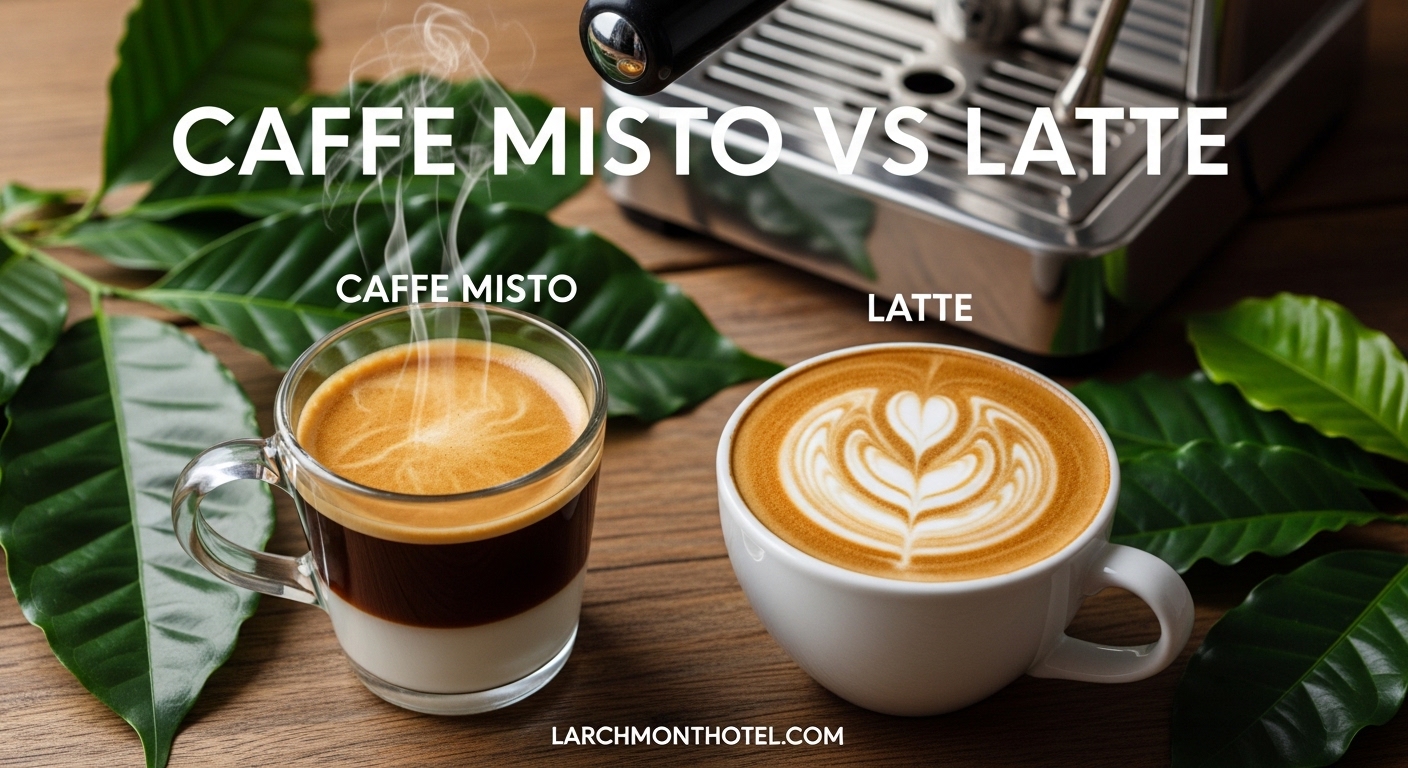
A Caffe Misto is equal parts brewed coffee and steamed milk.
It’s essentially the same drink as a French cafe au lait, just with a different name. Starbucks trademarked “Caffe Misto” while the traditional French version goes by cafe au lait.
The drink starts with regular drip coffee, not espresso. This means you can make it at home with any standard coffee maker. The brewed coffee gets combined with an equal amount of steamed milk, creating a drink that’s about 50% milk by volume.
Unlike espresso-based drinks, the Caffe Misto has no crema. The flavor comes entirely from the drip coffee extraction method, which produces a different taste profile than pressurized espresso brewing.
Caffe Misto: Equal parts drip coffee and steamed milk, with no foam layer. The Starbucks version of the traditional French cafe au lait.
A latte is espresso with steamed milk and a small layer of microfoam on top.
This Italian classic, properly called caff latte, consists of one-third espresso, two-thirds steamed milk, and a thin layer of foamed milk about 1/4 inch thick. The microfoam creates that velvety texture latte drinkers love.
What sets a latte apart is the espresso base. Pressurized brewing extracts coffee differently than drip methods, producing crema and a more concentrated flavor. The steamed milk in a latte gets textured differently too, creating that smooth, almost creamy mouthfeel.
I’ve made thousands of lattes behind the counter, and the key difference is in the milk preparation. Proper latte milk gets steamed to create microfoam, tiny bubbles so small they make the milk silky rather than frothy.
Latte: Espresso-based drink with steamed milk and microfoam. Typically 1/3 espresso, 2/3 steamed milk, with a thin foam layer on top.
Here’s a side-by-side breakdown of how these drinks differ across the key factors that matter most.
| Feature | Caffe Misto | Latte |
|---|---|---|
| Coffee Base | Drip coffee | Espresso |
| Milk Ratio | 50% milk | 65-70% milk |
| Texture | No foam | Microfoam layer |
| Caffeine (16oz) | 150-200mg | 75-150mg |
| Calories (16oz) | 100-120 | 190-200 |
| Equipment Needed | Coffee maker | Espresso machine |
The fundamental difference comes down to brewing method. Drip coffee, used in Caffe Misto, relies on gravity pulling water through grounds. Espresso uses 9 bars of pressure to force water through compacted coffee grounds.
This difference affects more than just taste. Espresso extraction concentrates caffeine and flavor compounds into a small volume. Drip coffee produces a lighter, more dilute brew that requires more volume to deliver similar impact.
From my experience training new baristas, this distinction confuses people most. Both are coffee, but the extraction method creates fundamentally different flavor profiles and strength characteristics.
Caffe Misto uses simply steamed milk poured directly into brewed coffee. No special texturing happens. The milk gets hot but doesn’t develop the microfoam texture that characterizes espresso drinks.
A latte requires skilled milk steaming. The steam wand introduces air while heating, creating microfoam, tiny bubbles so small they make the milk velvety. This requires practice and proper technique.
The milk ratio differs too. Caffe Misto is half coffee, half milk, exactly even. A latte contains more milk relative to coffee, roughly 2 parts milk to 1 part espresso by volume.
Caffe Misto tastes like coffee with milk. Simple as that. The drip coffee flavor comes through clearly, with milk softening the acidity and adding creaminess. You’ll taste more of the bean’s origin characteristics.
Lattes taste milder and creamier. The espresso gets diluted by more milk, and the microfoam creates a smooth texture that mutes harsh notes. The flavor feels integrated, with coffee and milk blending into one taste rather than sitting side by side.
I personally prefer Caffe Misto when I want to actually taste the coffee. Lattes work better when I want something comforting and mild, or when adding flavored syrups that need milk as a canvas.
Here’s where Caffe Misto often wins. A 16-ounce Caffe Misto typically contains 150-200mg of caffeine, depending on the beans used. A 16-ounce latte with two espresso shots generally has 75-150mg.
Why the difference? Drip coffee extraction pulls more caffeine from the grounds than espresso’s pressurized, short-duration brew. Plus, you’re getting more coffee liquid volume in a Caffe Misto.
Caffeine Tip: If you need a stronger morning kick but don’t like black coffee, Caffe Misto delivers more caffeine than a latte of the same size.
Plain versions of both drinks come from milk calories, but latte’s higher milk content means more calories. A 16-ounce Caffe Misto with 2% milk has about 100-120 calories. The same size latte runs 190-200 calories.
Using non-fat milk reduces the gap significantly. Whole milk widens it. Any added sweeteners or flavors increase calories for both drinks equally.
Time Saver: Ordering “skinny” means non-fat milk at most coffee shops. Ask for it to reduce calories in either drink by about 30-40%.
Home preparation couldn’t be simpler, which is why I recommend Caffe Misto to people wanting cafe-style drinks without investing in expensive equipment.
That’s it. No special technique required. I’ve been making Caffe Misto at home for years using nothing more than a basic coffee maker and a microwave.
Proper lattes require an espresso machine with a steam wand. Home espresso machines start around $100 for basic models, with quality equipment running $500-plus.
The milk steaming technique takes practice. I burned my first dozen attempts and created foam that looked like dish soap bubbles. Six months behind a coffee shop counter taught me the proper whirlpool technique and timing.
Home Hack: No espresso machine? Use strong drip coffee or a Moka pot as a substitute. Use a handheld milk frother to create foam-like texture. It won’t match authentic latte texture, but it gets close.
After sampling both drinks hundreds of times, my personal preference shifts based on time of day. Morning means Caffe Misto for the caffeine boost and flavor. Afternoons call for latte when I want something milder and more comforting.
The main difference is the coffee base. Caffe Misto uses drip coffee while latte uses espresso. This affects taste, strength, and caffeine content.
No. Caffe Misto is made with brewed drip coffee, not espresso. This is what distinguishes it from espresso-based drinks like lattes.
Caffe Misto typically has more caffeine than a latte of the same size. A 16-ounce Caffe Misto contains 150-200mg of caffeine, while a latte has 75-150mg depending on the number of espresso shots.
Essentially yes. Both drinks are equal parts drip coffee and steamed milk. Cafe au lait is the traditional French name, while Caffe Misto is Starbucks branded version of the same drink.
Caffe Misto contains equal parts coffee and milk, exactly 50% milk. This differs from lattes, which typically contain 65-70% milk.
Both drinks have their place, and understanding the differences makes ordering easier. Caffe Misto delivers more coffee flavor and caffeine with simpler preparation. Latte offers a creamier, milder experience with that characteristic velvety texture.
My advice? Try both on separate visits and pay attention to what you enjoy. Your preference might surprise you. I started as a latte-only drinker but gradually shifted toward Caffe Misto as my palate developed and I learned to appreciate drip coffee’s subtler flavors.