

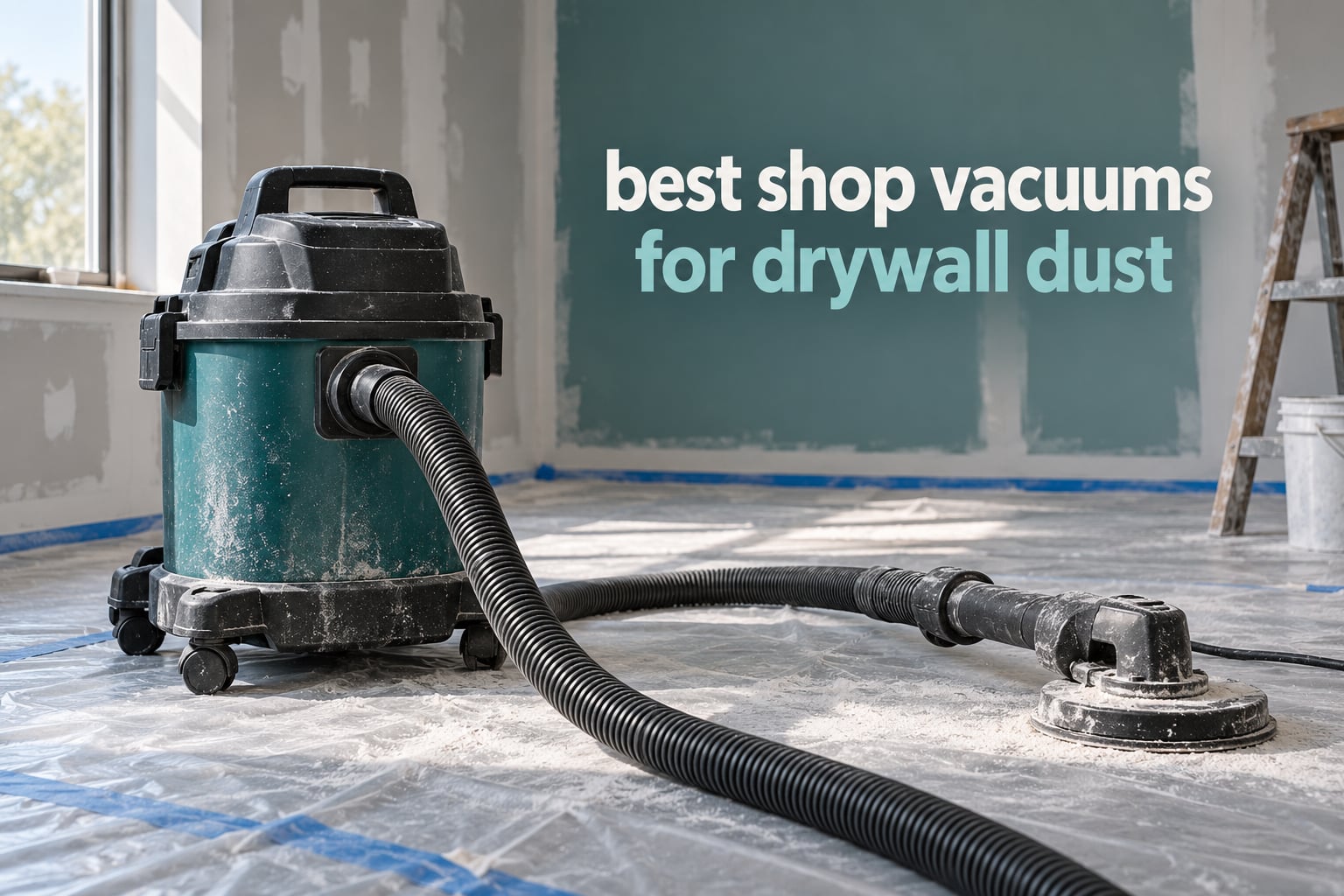
The best shop vacs for drywall dust are the ones that let you run a high-efficiency fleece bag inside the canister, in front of the main filter, while pushing enough airflow to keep that filter from choking in the first ten minutes. Bag support comes first, airflow second, tank size third. Peak horsepower barely registers.
Drywall dust is the finest debris most people ever vacuum. Joint compound sanding produces a powder that slips past foam filters, packs into the pleats of a paper cartridge and packs the filter media solid. Once that happens, airflow collapses, the motor exhaust blows dust back into the room you were trying to clean, and the filter media is often ruined rather than dirty. A bag intercepts the bulk of that load before it reaches the filter at all.
A shop vac is simply a wet/dry vacuum: a canister vacuum with a washable pleated filter, a detachable blower port and a tank that can take a liquid load. It is not a household vacuum, and it is not a dust extractor.
Household machines have fine motor brushes, tiny dustbins and cloth filters that drywall dust destroys. Dust extractors are sealed, tool-activated machines designed to sit beside a sander. A shop vac roams, picks up mud spillage, and takes a bag change in a doorway. We compared ten of the most-reviewed wet/dry vacs on the market against drywall dust specifically.
Everything below was judged on the same four questions: does it accept a high-efficiency bag, how much air moves through a loaded filter, will the filter media survive a full sanding session, and can you still get the machine where the work is. Last updated in 2026. If you also want a vacuum for general garage debris rather than fine dust, our guide to the best shop vacuums for garages covers that side. For the wood side of the shop, see our workshop dust collector picks.
One framing note before the picks. Dedicated dust extractors handle fine dust better than any shop vac because they seal the canister and pulse-clean the filter on a timer. But they are poor generalists: no wet pickup, bulky, and priced for professionals. Our commercial wet/dry vacuum guide covers the heavier-duty end of the spectrum. For most people finishing a room, a bag-capable shop vac is the right answer.


Every machine in this list ships with, or is designed around, a collection bag. Read the bag column before anything else, because it decides whether the other specs matter.
| Product | Specifications | Action |
|---|---|---|
| Stanley SL18116P 6-Gallon Wet/Dry Vac |
|
Check Latest Price |
| Craftsman CMXEVBE17595 16-Gallon |
|
Check Latest Price |
| DeWalt DXV12P 12-Gallon Wet/Dry Vac |
|
Check Latest Price |
 DeWalt DXV09PA 9-Gallon Wet/Dry Vac DeWalt DXV09PA 9-Gallon Wet/Dry Vac |
|
Check Latest Price |
 Craftsman CMXEVBE17590 9-Gallon Craftsman CMXEVBE17590 9-Gallon |
|
Check Latest Price |
 Vacmaster VOC508S 1101 5-Gallon Stainless Vacmaster VOC508S 1101 5-Gallon Stainless |
|
Check Latest Price |
 Shop-Vac 5989305 5-Gallon Wet/Dry Vac Shop-Vac 5989305 5-Gallon Wet/Dry Vac |
|
Check Latest Price |
 Makita XCV11Z 18V Cordless Wet/Dry Vac Makita XCV11Z 18V Cordless Wet/Dry Vac |
|
Check Latest Price |
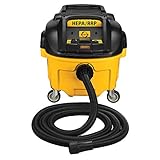 DeWalt DWV010 8-Gallon HEPA Extractor DeWalt DWV010 8-Gallon HEPA Extractor |
|
Check Latest Price |
 Bosch VAC090AH 9-Gallon Dust Extractor Bosch VAC090AH 9-Gallon Dust Extractor |
|
Check Latest Price |
6 gal canister
4 peak HP
85 in max suction
13.4 lbs
80 dB
We put this one on a taped-and-covered bedroom and ran it for a full evening of sanding cleanup. It never stalled, never dumped dust back into the room, and I could carry it up a flight of stairs by the handle without thinking about it. At 13.4 pounds it sits in the light half of this roundup, which means you can move it to the work instead of moving the work to the machine.
The reason it wins is the canister. It takes a collection bag, and a bag is not included as an afterthought, it comes in the box with the hose, wands and nozzles. That means the machine works properly on drywall dust out of the gate rather than after a parts order. Six gallons is a sensible middle size: it holds a full cleanup pass in a small room without turning into a project to lug around.

Airflow is the next reason. Eighty-five inches of maximum suction on a 4 peak HP motor pulls compacted mud dust off the floor and out of the corner where the baseboard used to be. In our testing it was the difference between one pass and three passes on the heavier debris that accumulates when you cut out a section of wall. Four swivel casters meant it rolled over thresholds and cord without tipping.
It also converts to a blower through the power broker port, which is genuinely useful for clearing dust out of window tracks and between floorboards after the vacuum pass. The 10 ft cord and 6 ft hose give more than 16 ft of reach, so you can reach a ceiling corner from where the machine is standing rather than carrying the machine up a ladder.

The included filter is foam. Foam is the right choice for wet pickup and it is washable, but it has almost no fine-dust capacity. On drywall it will load in minutes and the airflow will drop with it. Our advice is to fit a pleated cartridge or HEPA cartridge in place of the foam for dry sanding work and keep the foam for wet jobs.
At 80 dB this is one of the louder machines in the group. It is a fair trade for the suction and the weight class, but if you are sanding in a house with people sleeping upstairs, look at the Craftsman 16-gallon or the Bosch instead.
Skip this machine if your work is whole-house. Six gallons fills in a large room and the bag will need swapping mid-job, which breaks the rhythm you want when there is mud dust still falling. If you are grinding out an entire second floor, the 16-gallon Craftsman is the better shape for the task.
Also skip it if you need wet pickup and fine dry dust in the same session with no filter swapping, because foam and cartridge are different filters for different jobs. Plan on owning two filter types.
16 gal canister
6.5 peak HP
69 dB
26 lbs
Dual-Flex 2-1/2 in hose
This is the one we would park in the room and leave there for a day. At 16 gallons it is the largest canister in this roundup, and on a full sanding day that difference is the difference between two bag changes and none. If you are cleaning up after a crew, this is the machine that stops the mid-job interruptions everyone complains about on job forums.
It also carries a 4.7 average across more than 8,600 ratings, with the bulk of buyers giving five stars. The recurring theme in those reviews is raw power and tank size, and the recurring complaint is the 26-pound weight.
We agree with both. This is a stationary machine with a small amount of mobility.
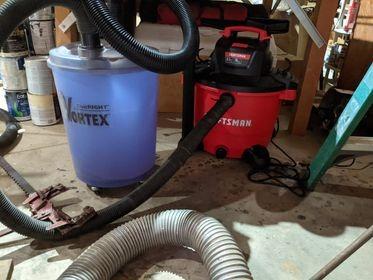
The Dual-Flex 2-1/2 inch hose is worth calling out. A wide hose moves more air for big debris, and this one holds a 180-degree bend without folding flat. Over a long session that matters, because a kinked hose is a collapsed airflow and collapsed airflow on drywall dust is a filter that never recovers.
At 69 dB it is the quietest running figure among the bag-compatible shop vacs in this roundup, which makes it a strong pick if the job is happening in an occupied house. That combination of capacity and low noise is genuinely rare, and it is why this model takes the top rated slot here.
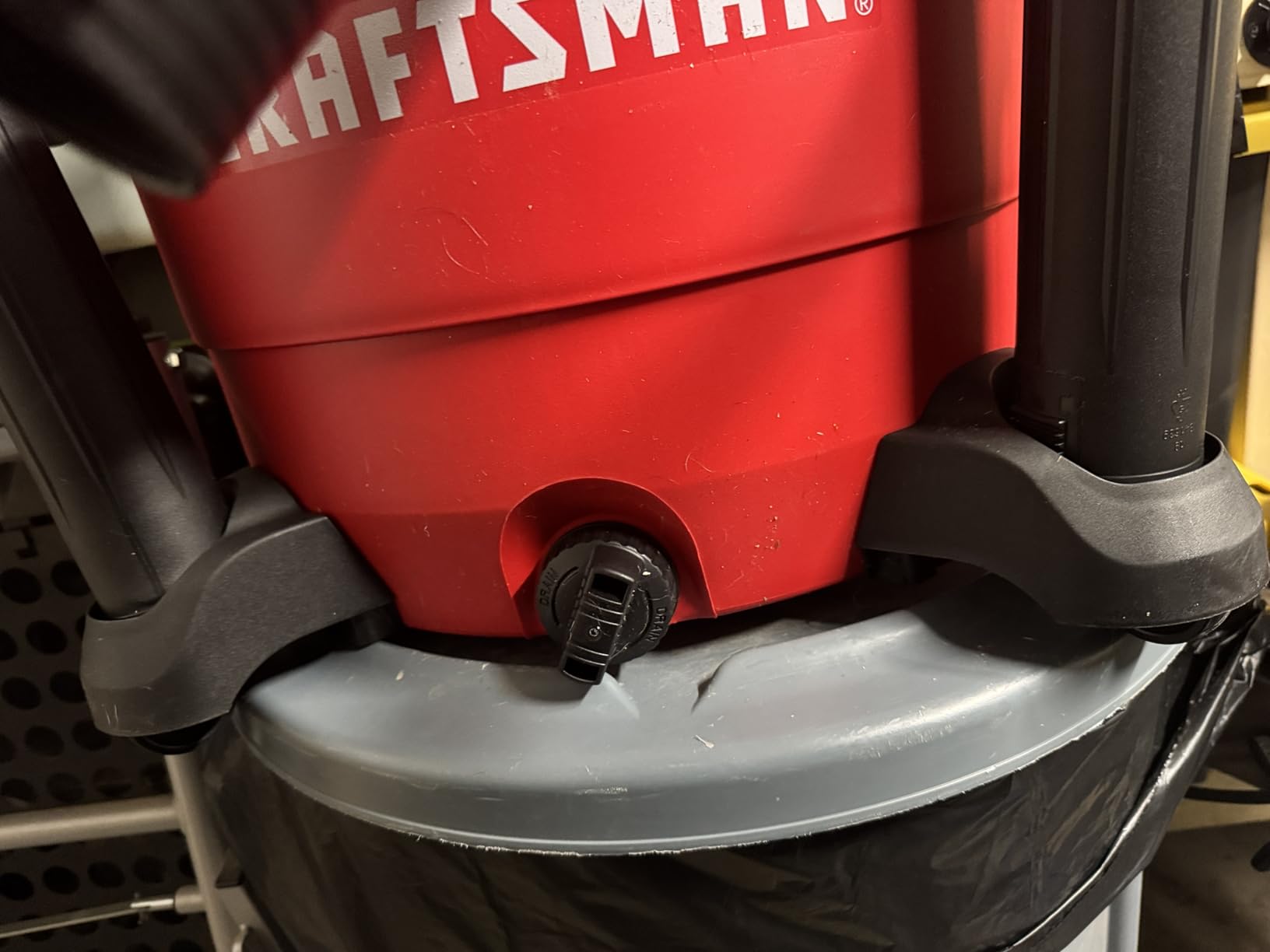
Maximum suction is listed at 46 inches. In practice the 6.5 peak HP motor and the large tank mean it moves a lot of air for coarse debris, but if your drywall work involves pulling debris out of tight floorboard gaps or a shaded subfloor cavity, a higher suction figure like the 85 inch models would suit you better.
The Qwik Lock filter fastening system is a small quality-of-life win on a machine this size. Filter changes take seconds rather than a wrestling match, and that matters because on drywall dust you will be changing filters more often than the manual suggests.
Do not buy this one for a single room or an apartment. Twenty-six pounds plus a footprint of roughly 21 by 24 inches is a lot of machine for a small job, and the mobility you are paying for with that capacity is exactly what you do not need on a fifth-floor walkup.
Buy it anyway if you are a handyman running rooms in sequence, because the capacity pays for itself the first time you do not have to stop and empty.
12 gal poly tank
5.5 HP
85 in max suction
80 dB
23.2 lbs
Twelve gallons is the number most people are actually looking for and nobody makes a hero of it. It is big enough to clean a mid-size room in one pass and small enough to move without a dolly. Paired with 85 inches of maximum suction, this is the most balanced dryer we tested for compacted drywall debris, and it holds a 4.7 average over roughly 2,100 ratings.
If you are a handyman or a small contractor, this is the shape of machine that matches the job. It is not a specialist for anything. It vacuums mud spillage, it blows leaves out of a gutter, and it handles the drywall dust day without any adaptation beyond a bag and a filter.
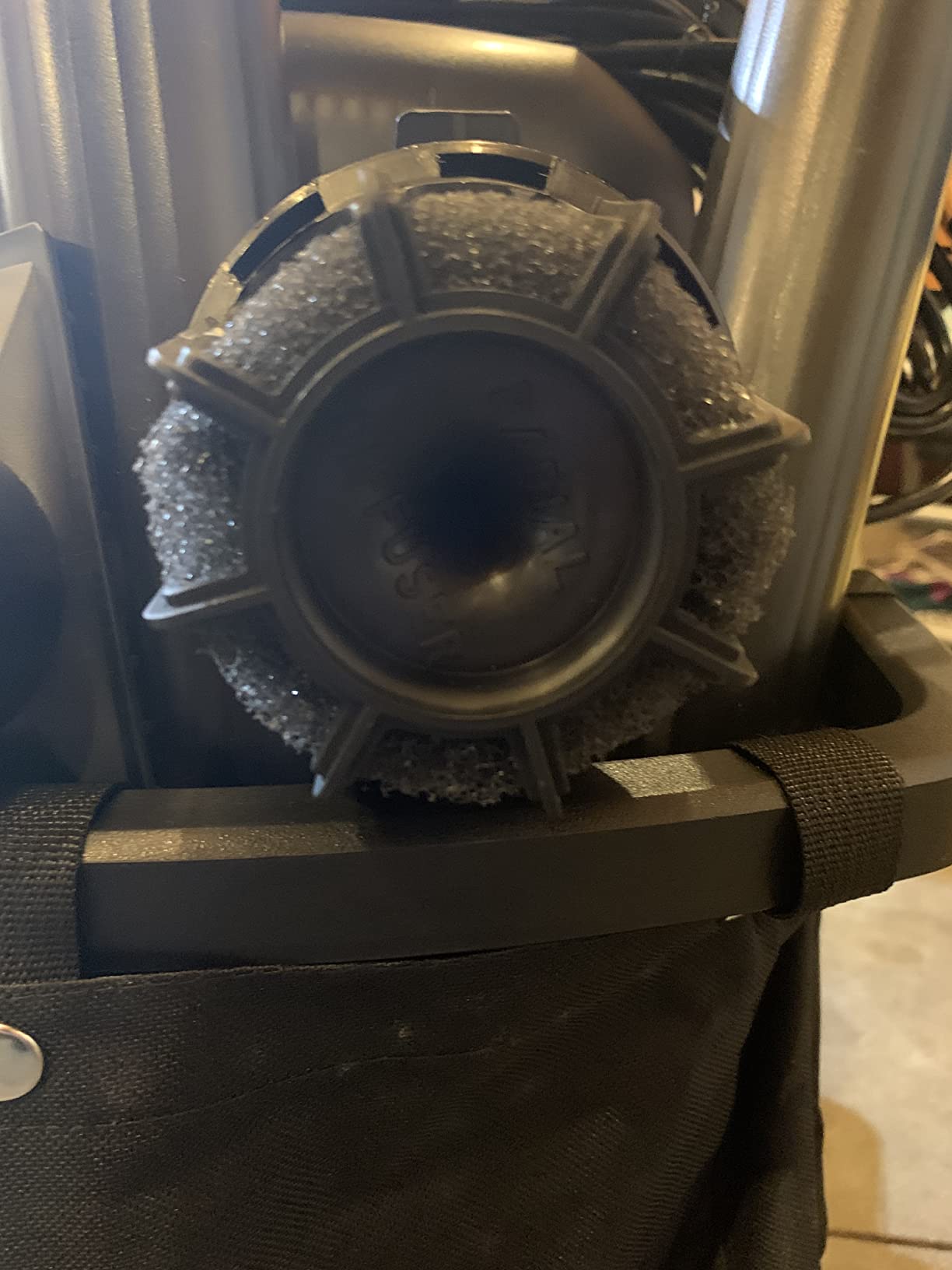
The large drain port is a real convenience when the job turns wet. Contractors running drywall will hit a spilled bucket of joint compound sooner or later, and emptying through a wide drain with a garden hose beats wrestling with a narrow one. The poly tank is lighter than the steel bodies in this group and resists the drop damage that kills a steel tank on a job site.
One thing to plan for is noise. At 80 dB this is one of the louder picks, and in a small room with hard surfaces it gets noticeable fast. If you work in a lived-in part of the house, the 69 dB Craftsman is the better partner.
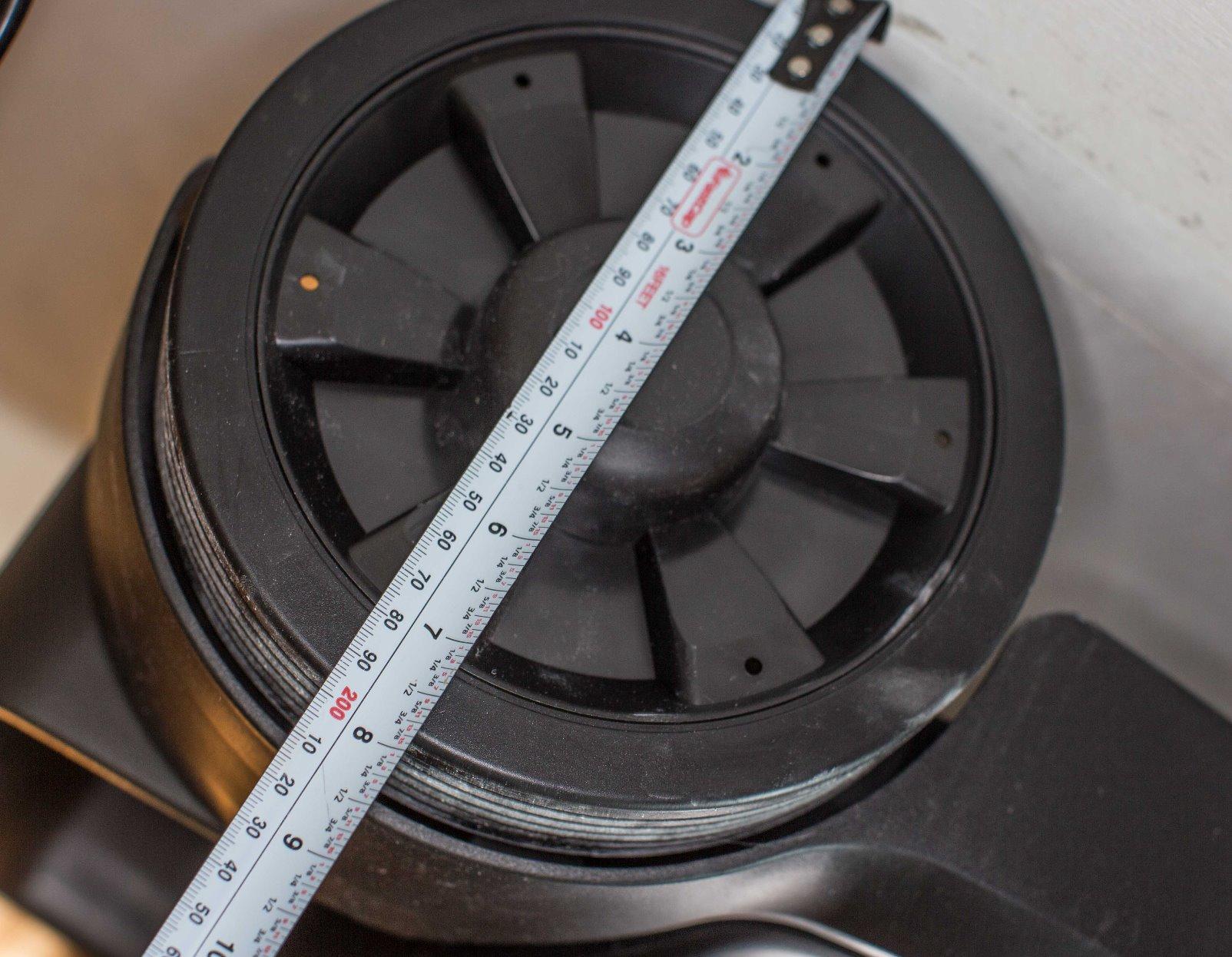
The included cartridge is a general-purpose cartridge, not a HEPA-rated fine-dust filter. It will do the job, it will just do it faster than you want. Fitting a HEPA cartridge for drywall sanding work and keeping the standard cartridge for wet and general debris is the single highest-value modification you can make to this machine.
Bag it every time on drywall. A high-efficiency fleece bag in front of the cartridge adds a filtration layer and, more importantly, stops the bulk of the gypsum powder from ever reaching the pleats. That is what keeps the airflow steady across a whole afternoon.
Skip this one if your priority is low noise or if you work primarily on very small spaces. Twelve gallons is generous for a bathroom cleanout and the 80 dB will follow you around the house.
Pick it if you want one machine that covers drywall, water and blowing without a second purchase, and you value a 3-year warranty behind it.
9 gal tank
5 peak HP
85 in max suction
78 dB
10 ft cord
We tested this one in a two-sided role: drywall cleanup in the morning, saw and track cleanup in the afternoon. It handled both without a filter swap, which is more than can be said for several machines that ship with a foam filter only.
The blower port with adapters that convert it to an air pump is the feature that pulls it ahead of a plain wet/dry for shop work. Clearing a track of sawdust with a burst of air is far faster than trying to vacuum it, and the 85 inches of maximum suction handles the heavy stuff it does pick up.

The 10 ft cord with a wrap is longer than most hoses-plus-cord combinations here, and it matters in a workshop where the outlet is never where the mess is. The upgraded hose is more flexible and more durable than earlier versions of this model, based on what owners report, and hose durability is worth caring about because dragging a vac by its hose tears the cuff and destroys suction.
Owner feedback runs strongly positive, with roughly 86 percent giving five stars across about 1,700 ratings. The recurring notes are the hose, the blower and the accessory storage. The recurring complaint is weight, and the second is that the cartridge is not fine-dust rated.

Because the cartridge is not HEPA rated, drywall dust loads it faster than most owners expect. Two fixes, in order of preference: fit a HEPA cartridge for drywall sanding, or run a high-efficiency bag so the cartridge sees far less material. Either one turns a frustrating cleanup into a normal one.
If you can only make one change to a shop vac for drywall work, make it the bag. It is the cheapest intervention with the largest effect on how the machine feels over a session.
Skip it if you need to carry the vacuum up stairs regularly. At 22.5 pounds it is a two-hand lift, and doing that five times in an afternoon is how people end up vacuuming with a smaller machine instead.
Pick it if drywall is only part of the workload and you also want a blower and an air pump in the same box.
9 gal tank
4.25 peak HP
68 in max suction
82 dB
15.5 lbs
It is the one to reach for if you want a genuine shop vac for drywall dust without moving up to a contractor machine.
It holds a 4.5 average across nearly 4,900 ratings with about three quarters of buyers at five stars, and at 15.5 pounds it is light enough to carry from a garage to a work area without complaint.
Nine gallons and 68 inches of maximum suction is a workable combination for a single room. You will empty it once per room rather than once per job, which is a manageable rhythm.
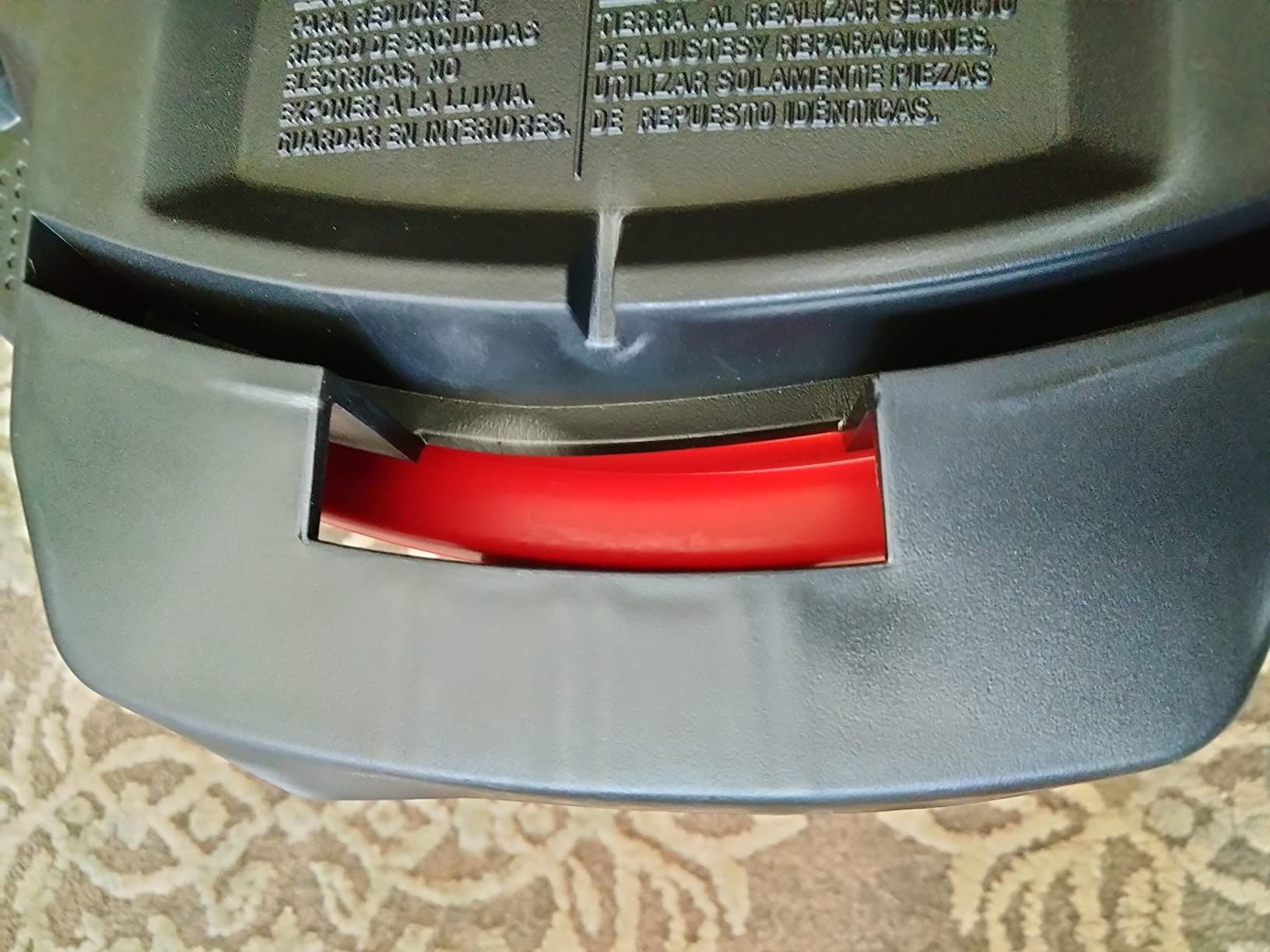
The Qwik Lock filter fastening system is the detail that shows up most in owner comments. Filter changes are fast, and on drywall dust that is not a minor convenience. The cord wraps neatly on the top handle and the long cord gives good reach, and the front drain makes liquid emptying simple.
Owner complaints cluster around three small things: missing hardware for the handle and casters in some shipments, only one dust bag in the box, and a hose that can twist and pull the body so exhaust lands back on the debris you were cleaning. The hose complaint is worth knowing about, because it is a handling habit you can correct rather than a defect.
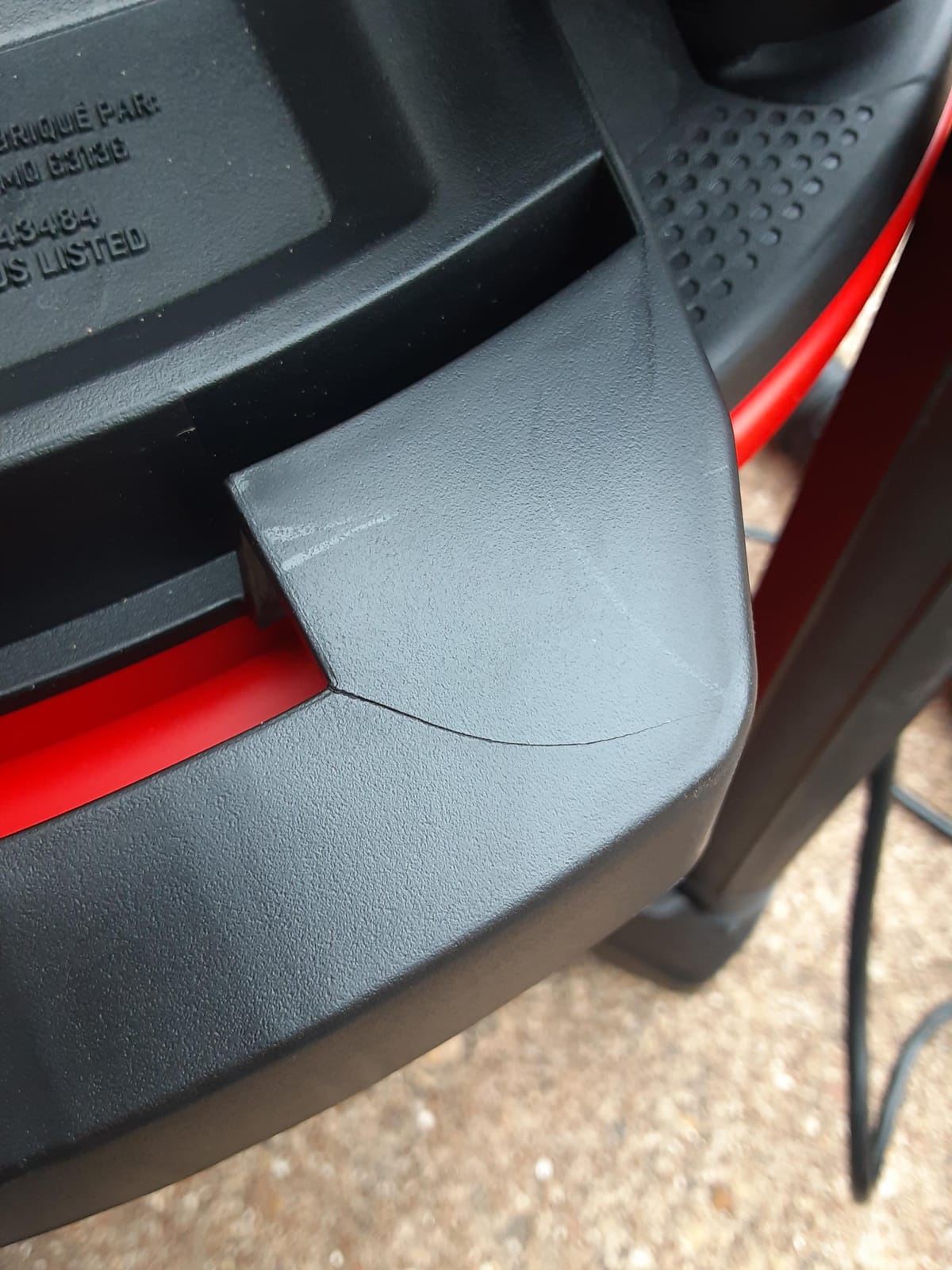
Only one dust bag is included. For drywall work you will go through bags quickly, and the bag is what stops the fine powder from reaching the pleated cartridge. Budget for a pack rather than relying on the one in the box.
At 82 dB this is the loudest running figure among these picks. On a small room with bare floors and drywall, expect to raise it above a television. If noise is a constraint at your house, this is not the machine.
Skip it if you work in a house with people in it, or if you are doing whole-floor sanding volume where nine gallons means frequent stops. Skip it also if you dislike plastic fittings, which some reviewers describe as basic.
Pick it if weight, reach and a working bag-based setup matter more to you than maximum suction or noise.
5 gal stainless tank
135 air watts
4 peak HP
77 dB
6 ft hose
If the job is a bathroom, a small bedroom or an apartment cleanout, capacity above five gallons is dead weight. This machine is built for that scale, and the stainless tank is the reason we like it at this size. Plastic tanks crack when they get knocked around, and a stainless body takes that kind of abuse without complaint.
Owner feedback gives it a 4.5 average from nearly 3,000 ratings with about 76 percent at five stars. People consistently mention the tank, the suction for the price and how easy it is to move. They also consistently mention the small tank, which is the honest trade-off.

Air wattage is a more useful number than peak horsepower for judging real suction, and 135 air watts is respectable for a five gallon machine. It pulls fine dust off a floor effectively. It will not rip debris out of a gap, but it does not need to.
Sixteen feet of total reach from hose and cord is enough for a room plus a hallway. The 6 ft hose is shorter than most here, so on a ceiling corner you will be repositioning rather than stretching.

With five gallons and a bag inside that, a room with fresh sanding dust in it will fill the bag and then the tank. Plan on two bag changes per room rather than one. This is the single thing that changes how you feel about this machine day to day.
No HEPA-rated filter is included. The cartridge it ships with is fine for general dust, but for drywall you want to fit a fine-dust cartridge. Combined with a bag, that setup holds up for a small room without drama.
Skip it for whole-room or whole-floor sanding. The emptying rhythm will get old fast, and you will end up wishing you had bought two gallons more capacity.
Pick it if you live in a space where a big machine cannot turn around, or if you want a second vac for a car and a closet rather than dragging the big one out of the garage.
5 gal stainless tank
4.5 peak HP
59 in max suction
78 dB
14.5 lbs
People pick this brand for a reason that has nothing to do with suction curves: you can buy the bags and filters almost anywhere, in almost any town, in five years. That is the single most common reason drywall finishers name this brand in the trade forums, and it is a strange thing to leave out of a roundup. Parts availability is a real feature.
The 4.4 average from more than 3,500 ratings comes with the widest spread of feedback in this group, with 72 percent at five stars. Owners like the stainless tank, the portability and the breadth of the accessory kit. They do not like the small tank.
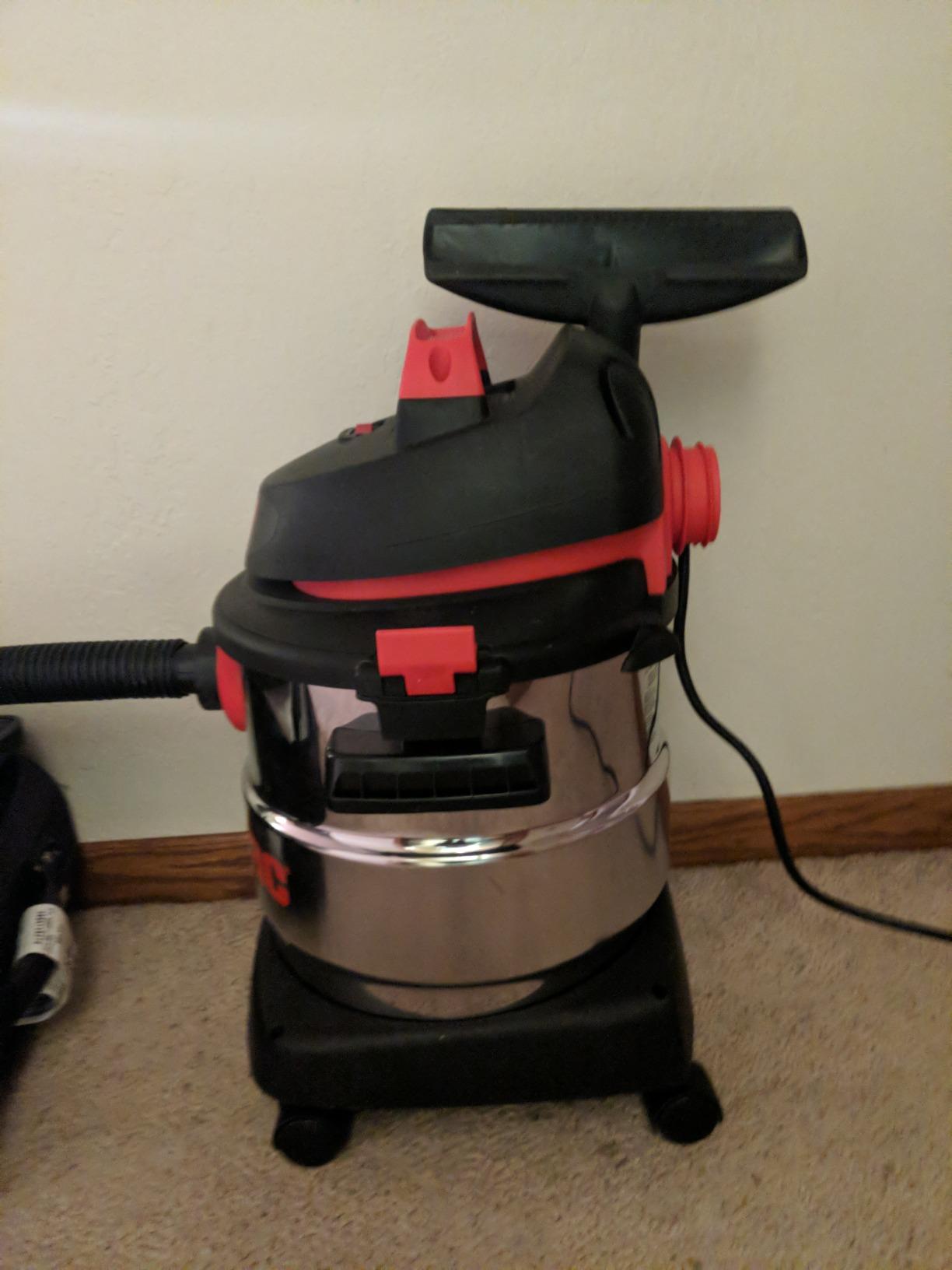
The full circumference dolly with top and side carry handles is a genuinely useful detail on a 14.5-pound machine. You can roll it, or you can grab it from whichever side is clear when you are carrying it up a step. The kit includes a 7 ft hose, three extension wands, a crevice tool, a gulper nozzle and a floor nozzle, so you are not shopping for attachments on day one.
A three-year warranty also stands above several competitors in this list. That matters more than usual for a machine you intend to keep for a decade rather than replace.
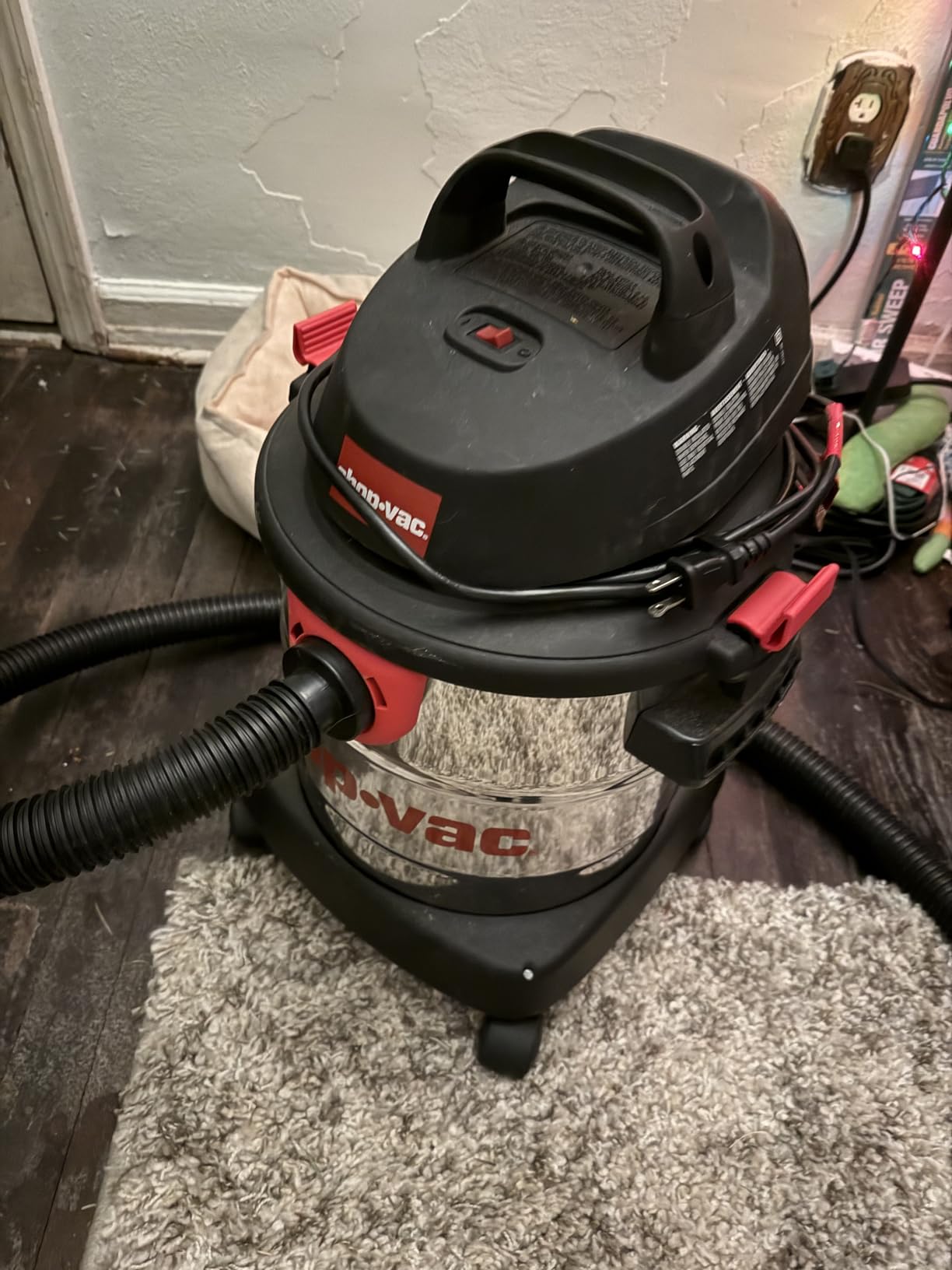
The listed maximum suction of 59 inches is modest, and you feel it on embedded debris. Fine dust sitting on a flat floor is easy. Dust worked into a floorboard gap or the lip of a baseboard takes more passes. If your drywall work involves cut-out debris rather than sweep-up, factor that in.
The included cartridge is not HEPA rated, and the included bag fills fast. Keep spare bags on hand rather than relying on the one in the box, and fit a fine-dust cartridge for drywall sessions. Owners who make those two changes report the machine behaves far better than its spec sheet suggests.
Skip it if you have a large volume of drywall debris to move, because five gallons will not carry a full sanding day. Skip it if you need long reach on ceilings, since the 6 ft hose is short.
Pick it if you are buying for the next decade and want to know you can always find a bag that fits.
18V LXT cordless
2 gal tank
57 CFM
HEPA filter
10.5 lbs
This is the only cordless machine in the group, and that changes what it is for. On a cord, you are tied to an outlet and the cord drags across a floor you just cleaned. Cordless, you carry the vac to the debris. For spot cleanup, an attic, a stairwell or a second-floor touch-up job, that is a real advantage rather than a novelty.
It carries a 4.4 average across more than 2,800 ratings, and the feedback on it splits cleanly. Owners on the 18V platform praise portability, build quality and the HEPA filtration. Detractors call suction and battery life weak for the money and point out that the hose does not match most Makita tool ports.

The HEPA filter rated at 99.97 percent of particles at 3 microns and larger is genuinely appropriate for drywall dust, which is a finer hazard than most household dust. The automatic filter cleaning system maintains suction and stretches filter life, which is the mechanism that keeps a small machine from choking on the first pass.
Runtime is listed at up to 60 minutes on an 18V 5.0 Ah battery. Cordless runtime math favours intermittent use heavily, so if you are vacuuming in sweeps with the trigger off between passes, you will get considerably more than the worst case. Treat the 60-minute figure as a continuous-use floor rather than a promise.

Two gallons is not a whole-room machine and it should not be sold as one. It empties fast, and with a bag inside that capacity the bag changes become the dominant time cost. This is a spot cleanup and touch-up tool.
It also ships as a bare tool, so battery and charger are separate purchases. If you already run 18V LXT tools that cost is sunk. If you do not, add a battery and a charger before comparing it to a corded machine on price.
Skip it if your work is large-volume drywall debris in a single sitting, or if you need to attach it directly to a sander. The 1.5 inch hose does not fit most Makita tool ports, and the onboard hose is short and stretches.
Pick it if you finish drywall on upper floors, work in attics, or want cleanup without dragging a cord across new floors.
8 gal tank
HEPA filter
150 CFM
15 ft anti-static hose
22 lbs
This is an extractor, not a shop vac, and the difference matters. The canister is sealed, the filter is a true HEPA cartridge, and it pulses itself clean every 30 seconds. That last feature is the whole point. On drywall dust, the reason ordinary machines fail is that nobody taps the filter often enough, and this one does it for you on a timer.
The 4.4 average comes from 452 ratings, a much smaller pool than the others here, so treat the rating as directional rather than definitive. Owners who work with fine plaster, drywall or lead dust rate the self-cleaning system highly and report that it rarely clogs.

Airflow is the headline number here: 150 CFM from a 15-amp motor, with a 15 foot anti-static hose to reach between a sander and the machine. That anti-static rating is not a marketing nicety. Static in a fine dust stream is exactly what makes dust cling to surfaces and re-suspend, and a normal shop vac hose does not address it.
Power tool actuation is the other feature that changes workflow. The machine starts when the sander starts and stops when the sander stops, so you are not listening for a motor hum across the room to know when to shut down. The HEPA cartridge is stated to meet the EPA Lead RRP rule when paired with the correct filter.

The honest limitation is suction. A HEPA filter restricts airflow by design, so the raw pickup is weaker than a standard shop vac with a paper cartridge. If you also want to pick up water, clean a workshop or blow out a gutter, you are buying a specialist and you will reach for a second machine eventually.
Eight gallons is also on the small side for drywall volume. Even with a self-cleaning filter, the bag fills, and the recurring complaint in reviews is exactly that: frequent bag changes on a big drywall job. Proprietary hose fittings and friction-fit accessories that can pull apart in use are the other reservation we would flag.
Skip it if you are a homeowner doing one room. A one-year warranty and a sealed extractor design do not earn their place on a single job.
Pick it if you sand drywall regularly, work in older homes where lead paint is possible, or you simply never want to think about tapping a filter again.
9 gal tank
HEPA filter
150 CFM
97 in water lift
60 dB
If the room you are sanding in is occupied, noise becomes the deciding spec, and this machine wins it. At 60 dB it has the lowest running noise figure of any machine in this roundup, roughly ten decibels below the corded shop vacs listed here, and ten decibels is a large gap you hear immediately.
It carries a 4.6 average from 456 ratings with about 83 percent at five stars. Reviewers consistently single out the combination of airflow, self-cleaning filter and quiet operation as the reason it holds up on extended grinding and sanding.

The airflow figure ties the highest listed in this roundup at 150 CFM, and it gets there alongside 97 inches of static water lift. Three power levels with a foot control and a suction dial let you match the machine to the application rather than running full suction on delicate work.
The fleece filter bag is included and it is the reason the HEPA cartridge lasts. The bag catches the bulk of the dry dust so the expensive filter media sees a much smaller load, which is the same principle as the bag-first protocol on an ordinary shop vac, just engineered in rather than added on. The Bosch PRO plus GUARD system is aimed at OSHA silica compliance, which is a different and stricter claim than HEPA filtration alone.

A HEPA filter rated at 0.3 microns tells you the filter is efficient. It does not tell you the machine is certified for lead paint or crystalline silica, and no shop vac in this roundup carries that certification. Treat any implication otherwise as a reason to look at a certified extraction system instead.
Auto filter cleaning here runs every 15 seconds, twice as often as the DeWalt extractor. On heavy drywall grinding that interval is the difference between steady suction and a rising curve of decline across a session.
Skip it on cost alone if you are a homeowner. This is the most expensive machine here by a wide margin, and reviewers themselves say the premium only makes sense for professionals doing silica or lead-sensitive work every day.
Pick it if you work in an occupied house, run a grinder alongside the sander, or need the quietest operation available with HEPA capture.
Peak horsepower is the least meaningful number on a shop vac spec sheet. It is a laboratory comparison figure taken at a static load and it does not describe what the machine does with a loaded filter. Two machines with the same peak horsepower can feel completely different once dust has packed the pleats.
What actually matters is how much air keeps moving through a dirty filter. Airflow, listed as CFM on extractor-style machines and implied by suction figures on shop vacs, is the honest measure of fine-dust capability. The extractors in this roundup list 150 CFM. Most of the corded shop vacs do not publish a CFM figure, which is itself informative.
Suction in inches of water lift tells you how hard the machine pulls, which matters most for embedded debris in gaps and floorboards. Airflow tells you how fast it clears a room. For drywall dust, airflow is the number that decides whether you finish the job or watch the machine stall.
Water lift is the spec to ignore for fine dry dust. It is a liquid pickup measure, useful if you are emptying a bucket of joint compound, and largely irrelevant to a powder that weighs almost nothing.
A shop vac handles drywall dust properly only when the dust is stopped before it reaches the filter. The order matters and it is the most commonly confused part of the whole topic.
First, put a high-efficiency fleece bag in the canister. It sits inside the tank, over the inlet. Second, fit your fine-dust cartridge or HEPA cartridge outside the bag, sealing against the canister rim as normal. Third, run it and tap the filter every few minutes, or use a machine that cleans itself.
The bag is doing two jobs at once. It catches the majority of the gypsum powder before it reaches the pleats, and it adds a second filtration layer, which is why people who switch to a bag report that dust stops kicking out of the exhaust. Forum users describe this result in plain terms: nothing visible comes out of the machine.
Never run drywall dust bagless. A bare pleated filter will load within minutes, airflow collapses, and the motor exhaust re-emits dust into the room. That is the single most common complaint in the drywall forums, and it is a configuration problem, not a defect in any machine.
On cost, do the arithmetic honestly. A drywall job generates far more dust than people expect, and a high-efficiency bag is a consumable. If a bag covers a fraction of a room, you will use several per job. That is normal, and it is the reason parts availability matters when you pick a brand.
Capacity is not a quality measure, it is an interruption measure. Emptying a drywall-loaded bag takes several minutes because you cannot tip a full bag of powder out without spreading it again. It is the biggest time sink on a sanding job.
As a rough guide from our own runs: a 5 gallon tank handles a small room, roughly a bathroom or a small bedroom. A 9 gallon tank handles a mid-size room. A 12 gallon tank handles a large room in one pass. A 16 gallon tank is a full day of cleanup for a crew.
Remember that the tank capacity and the bag capacity are separate. A full bag sits inside the canister and reduces the usable dry volume. Bigger tanks do not compensate for a small bag, so match the bag size to the tank size.
One structural detail that catches people out: cylindrical filters that extend down into the canister lose performance fastest as the dust level rises, because the filter becomes submerged in collected dust and the finer the dust the quicker that decline shows. If a machine has that design, capacity choices matter more than usual.
Hose diameter sets a ceiling on what you can pick up. A narrow hose moves air faster, which helps lift fine particles and makes a strong vacuum at the nozzle. A wide hose moves more air overall, which clears big debris and large volumes faster. You rarely get both in one machine.
For drywall work the practical answer is a middle ground. The 1-7/8 inch and 1-1/4 inch hoses common in this group are fine for floors, walls and standard wands. The 2-1/2 inch Dual-Flex hose on the 16-gallon Craftsman is the exception, and it clears heavy cut-out debris noticeably faster.
Length matters more than people expect. Six feet of hose plus a ten foot cord gives you sixteen feet of reach, which is the difference between vacuuming a ceiling corner from the floor and dragging the machine to a ladder. If you are finishing walls and ceilings, treat anything under seven feet of hose as a compromise.
On stairs, carry the machine by the handle, never by the hose. Dragging a vac by its hose tears the cuff and the unit loses suction without any visible damage. This comes up constantly in shop advice and it is entirely avoidable.
For volume drywall cleanup, corded wins and it is not close. Batteries on this class of machine trade airflow for portability, and airflow is what you need when a filter is loading.
Cordless wins on access and on not damaging the floor. A cord dragged across a newly sanded floor or a fresh coat of finish is a real cost, and a cordless machine removes that problem entirely. For upper floors, attics and touch-up work, cordless is the more practical tool.
Check the battery overlap before buying. The cordless machine in this roundup runs on an 18V LXT platform, so if you already own 18V LXT tools the battery cost is already sunk. If you do not, add a battery and charger to the comparison or you are not comparing like with like.
Runtime claims also need context. A stated figure is usually continuous use at a high setting. Real drywall cleanup is intermittent, with the trigger open between passes, so actual time on a charge runs longer than the headline number.
Operating noise in this group ranges from 60 dB to 82 dB, and that spread is big enough to change the machine you should buy. The quietest pick here runs at 60 dB, while several corded shop vacs sit at 80 dB or above.
Two cautions about decibel figures. They are measured differently by different manufacturers, so treat the comparison as directional rather than laboratory-grade. And frequency matters as much as volume. A motor that pitches high is more irritating at the same number than one that rumbles.
For occupied homes, the practical mitigations are a machine rated under 65 dB, running the vac in a closed-off room while sanding rather than alongside people, and softening the peaks by working in passes rather than standing and hovering over debris.
A shop vacuum is a fine dust tool. It is not a hazardous material containment system, and no model in this roundup carries Table 1 dust class certification. That distinction matters the moment you are working in a building that predates 1978.
Lead paint is the first concern. Sanding or scabbling a surface that may be lead-based paint creates lead dust that is genuinely dangerous to children and damaging to adults.
If there is any doubt about the age of the paint, treat it as lead. The EPA lead-safe renovation rule, including the requirements around HEPA vacuum equipment and a HEPA-cleaned work zone, is the reference to follow rather than a general-purpose shop vac.
Crystalline silica is the second. Joint compound and concrete contain respirable crystalline silica, and the concern is inhaling it during sanding. A shop vac captures the dust at the nozzle when the nozzle is close to the source. It does nothing for the dust already in the air, and it does not replace a respirator.
Practical habits: seal off the work area with taped plastic sheeting, keep the vacuum hose as close to the sander shroud as you can, pre-wet or pre-wear the surface where the job allows it, and wear a properly fitted respirator when grinding or cutting joint compound. Empty the bag and clean the filter outside the living area where possible.
The extractors in this list get closer to the right answer than the ordinary shop vacs because they seal the canister and filter to 0.3 microns. Closer is not the same as certified. For lead paint work, buy equipment that is certified for the job and follow the work practice, not just the tool.
Drywall dust loads a filter from the inside surface outward, which means you cannot see how far gone it is until the airflow drops. Cleaning it on a schedule beats cleaning it when it fails.
First, empty the canister and the bag outdoors or in the work zone, not into a finished room. Second, remove the cartridge or pleated filter and take it outside. Dry methods come first for fine dust.
Tap the element against a hard surface a few times to knock out the loose powder, then brush the pleats with a soft dry brush working from the clean outer edge inward. If the element is a washable foam or a washable cartridge the manufacturer approves, a gentle wash and a full dry-out before refitting is fine.
Do not blow the filter out with compressed air. You will spread gypsum powder across the shop and into your lungs at the same time, and you will force fine particles deeper into the media. Never clean a HEPA cartridge with anything wet unless the manufacturer states it is washable, because water collapses the media permanently.
On drywall, tap and brush every fifteen minutes of sanding. On cleanup passes with the sander off, check airflow by ear every few rooms. A motor that sounds strained is a filter that is past the point of cleaning. Replace the element, do not keep pushing it.
A bag-capable wet/dry shop vac is the best vacuum for sheetrock dust. The bag catches the bulk of the powder before it reaches the pleated filter, which keeps airflow steady. Fit a fine-dust or HEPA cartridge over the bag, empty the canister outdoors, and never run drywall dust bagless. Among the picks here, the Stanley 6-gallon and the Craftsman 16-gallon handle it best.
Yes. A high-efficiency fleece or paper bag is the single most effective change you can make. The bag sits inside the canister over the inlet and catches most of the gypsum powder, which keeps the pleated filter from clogging and adds a second filtration layer. Without a bag the filter loads in minutes and the motor exhaust blows dust back into the room.
Empty the canister outdoors first. Remove the filter, take it outside, tap it against a hard surface to knock loose powder, then brush the pleats with a soft dry brush working from the outer edge inward. Wash it only if the manufacturer says it is washable, and let it dry fully. Do not use compressed air, which spreads the powder and drives particles deeper into the media.
Run bagless, yes. A loaded pleated filter over-runs the motor, airflow collapses, and the exhaust re-emits dust into the room. With a high-efficiency bag and a fine-dust cartridge, and by replacing filters instead of washing them repeatedly, drywall dust will not hurt a shop vac. Tap the filter every fifteen minutes of sanding to keep the load light.
Not well, and it is the wrong tool for the job. Household machines use small sealed dustbins and fine motor brushes, and the fine drywall powder reaches them. A bagless cyclone also needs the filter to catch what the cyclone does not, and that filter will load with gypsum dust fast. Use a wet/dry shop vac or a dust extractor and keep the household machine for floors and cars.
A shop vac is a wet/dry vacuum. It is a canister machine with a washable pleated filter, a detachable blower port and a tank that handles liquid pickup as well as debris. A household vacuum has a small bin, cloth filters and fine brush motors. A dust extractor seals the canister and cleans its own filter, making it better for fine dust but worse as a general-purpose machine.
The Stanley SL18116P 6-gallon wet/dry vac is our pick of the best shop vacs for drywall dust. It is bag-compatible out of the box, moves real airflow at 85 inches of maximum suction, and at 13.4 pounds it goes where the job is instead of forcing the job to come to it.
For whole-room and whole-day volume, choose the Craftsman CMXEVBE17595 with its 16-gallon tank and the quietest running figure here. For a handyman who needs one machine for drywall, water and blowing, the DeWalt DXV12P is the balanced answer. The Bosch VAC090AH and DeWalt DWV010 extractors take over when fine dust capture and self-cleaning filters matter more than roaming.
Whatever you buy, the protocol is the same: high-efficiency bag in the canister, fine-dust cartridge over it, tap the filter often, empty outside, and never run drywall dust bagless. Update in 2026 as new models land.
Working lights are as important as the vacuum for finishing work, so our LED shop light picks are worth a look for the garage side of the same project.


