

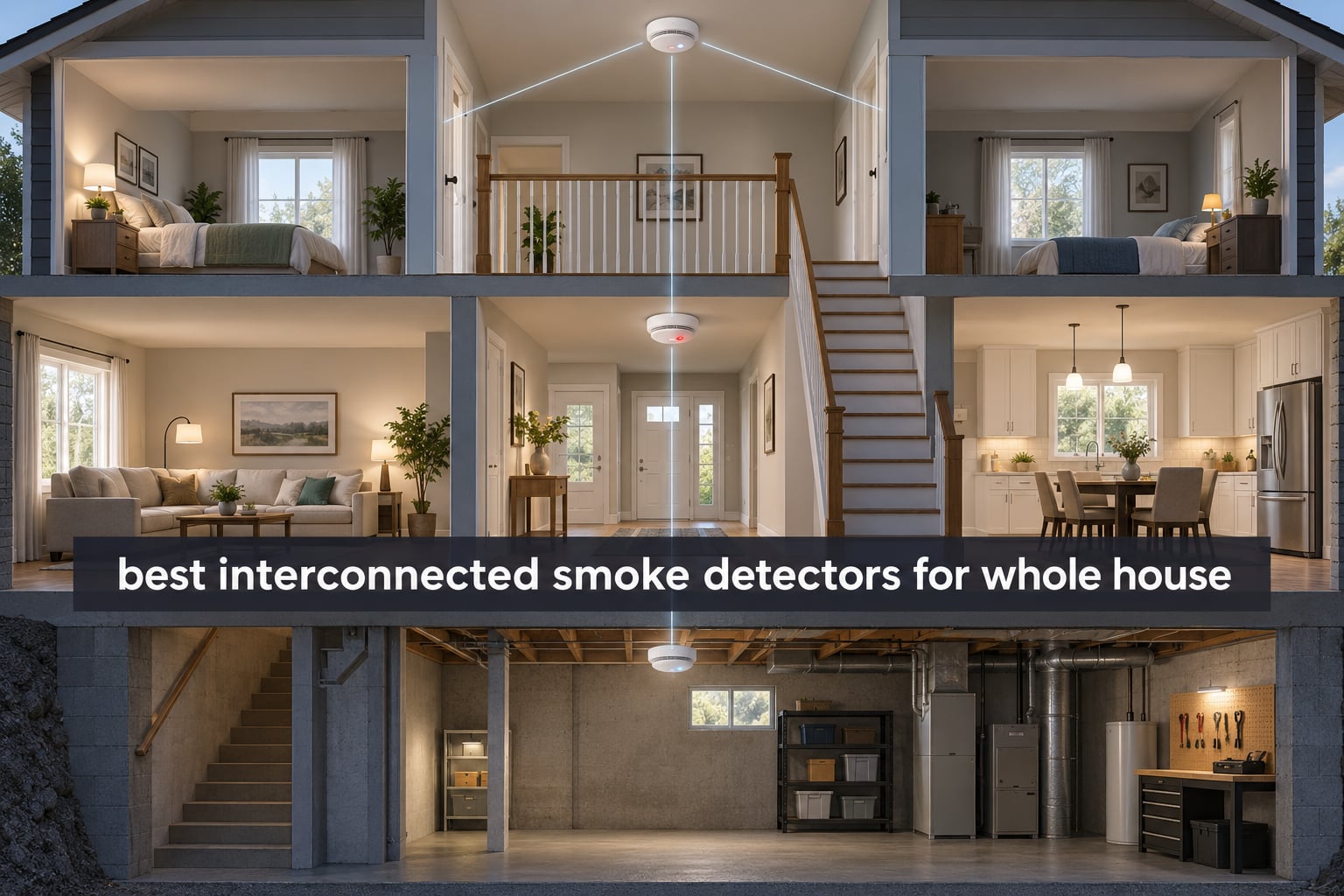
Most people who die in a home fire are not in the room where it started. The National Fire Protection Association puts the figure plainly: sleeping is the most dangerous time, and a fire that begins downstairs will not wake you upstairs unless something upstairs is listening. That single fact is the reason the best interconnected smoke detectors for whole house coverage are not an upgrade, they are the baseline. When one alarm senses smoke, every alarm in the house sounds at once.
We spent several weeks working through the units that dominate this category, from battery-only retrofit packs to AC hardwired models that run on the wiring already in your walls. Ten made the final list. We looked hard at three things: whether the alarm actually links to others without extra hardware, whether it keeps working when the power goes out, and whether it stays quiet about cooking fumes. We also spent time on the question buyers ask most and retailers answer least, which is how many alarms a house really needs and whether brands can be mixed.
If your main concern is app-based alerts and voice prompts rather than local siren-only coverage, read our smart smoke detector guide first. This roundup is deliberately narrower, focused on the hardwired and wireless systems that cover a whole house on their own.


All ten alarms below link to at least one other alarm without a separate hub or base station. Five run on AC hardwire, five run on a sealed 10-year battery, and every one is listed for smoke detection under UL 217. Combo models add a carbon monoxide sensor and are marked CO.
| Product | Specifications | Action |
|---|---|---|
| Kidde Hardwired Smoke and CO Detector |
|
Check Latest Price |
| First Alert SC7010B-3 3-Pack |
|
Check Latest Price |
| X-Sense SC06-W 6-Pack |
|
Check Latest Price |
 First Alert 9120B 6-Pack First Alert 9120B 6-Pack |
|
Check Latest Price |
 Siterlink GS562A 6-Pack Siterlink GS562A 6-Pack |
|
Check Latest Price |
 X-Sense SD20-W 6-Pack X-Sense SD20-W 6-Pack |
|
Check Latest Price |
 X-Sense SC01-W 3-Pack X-Sense SC01-W 3-Pack |
|
Check Latest Price |
 Kidde 21007588 4-Pack Kidde 21007588 4-Pack |
|
Check Latest Price |
 X-Sense SC07-W 3-Pack X-Sense SC07-W 3-Pack |
|
Check Latest Price |
 Kidde 30CUAR 3-Pack Kidde 30CUAR 3-Pack |
|
Check Latest Price |
An interconnected smoke alarm is one that is linked to every other alarm in the home, so that when a single unit detects smoke or carbon monoxide, all of them sound together. Linking happens in one of three ways: a radio frequency signal between matching brand alarms, a dedicated signal wire running between hardwired models, or a smart hub that relays alerts. Every linked alarm then triggers its 85 dB horn at the same moment, so a fire in the basement is heard in a closed bedroom on the third floor.
RF linking is the newest method and the simplest to retrofit. Sealed-battery models like the X-Sense SC06-W and SD20-W pair with other alarms from the same Link+ family by radio, with no wiring, no hub, and no subscription. The catch is brand lock: those alarms will only talk to their own family, which is exactly the confusion that derails a lot of whole-house projects.
Signal-wire interconnection is the older method and the one most existing homes already have. A third wire, often carrying a low-voltage signal, runs between hardwired alarms so a signal from any one of them trips the rest. The mikeholt forums have long explained this detail better than most retailer copy, and it matters because it is the difference between an interconnected system and a set of alarms that merely sit on the same circuit.
Hub or base-station linking is the smart approach, where each alarm is individually addressable and a hub relays alerts to an app. It is the only one of the three that gives you phone notifications. The units in this roundup deliberately skip that layer so you get reliable local coverage first, with no hub to fail and no account to create.
Worth noting: none of these alarms detect natural gas, propane, radon, or water leaks. If your home has a gas appliance, a fuel-burning whole house generator, or a fuel-fired furnace, you still want a dedicated CO alarm placed near that source.
Hardwired wins on reliability and code acceptance, wireless wins on installation cost and retrofit access. Most people end up with a mix, and that is fine as long as each group is internally consistent.
Hardwired AC with battery backup draws alarm power from the 120V line and keeps sounding during an outage because every alarm also carries a replaceable backup cell. If your house already has alarm wiring, this is the cleanest path. The trade is installation: someone has to open boxes, run or reuse the signal wire, and land each unit on a box correctly.
Sealed 10-year battery wireless mounts on a ceiling with two screws and joins the network from the test button. It is the only realistic option for rentals, finished ceilings you do not want to open, and additions like a basement or garage. The trade is that the battery is not replaceable by the user, so the whole generation goes end-of-life together after ten years.
Two other differences come up constantly in homeowner discussions. Hardwired networks cannot be split across brands any more than wireless ones can, because a signal protocol is a signal protocol. And a wireless network has one shared failure mode: if the pairing was never finished properly, some alarms stay silent when others trip, and that gap is invisible until the night you need it.
Our read after going through both segments: if you own the house and the wiring is already there, hardwired. If you rent, are wiring a bonus room, or live in a place with finished ceilings, wireless. The ten alarms here cover both, and the segment mix mirrors what most of our readers are actually doing.
Ionization sensing
Voice alarm names the threat
120VAC with 2-AA backup
Interconnects up to 24
This is the alarm we would put in our own house, and the reason is the voice announcement. When it trips, it says out loud whether it is smoke or carbon monoxide, which removes the single most common confusion in a panicked moment. The rating is backed by the largest review base in this roundup at more than eleven thousand, which tells us the voice module and the interconnect hold up over years, not weeks.
On the network side, this unit links with up to 24 Kidde devices, 18 of which can be the initiating alarm. That is the broadest reach of anything we tested, which matters in a large house or a small building where a typical 18-alarm ceiling is tight. If you already own Kidde alarms elsewhere, adding these keeps one network instead of two.
It runs on 120V AC with two AA cells for backup, so an outage does not silence the house. The ionization sensor is the one real trade-off. Ionization units tend to be more responsive to the fine aerosol a failing toaster produces, which is why the Test-Hush feature matters here: pressing it quiets the alarm for roughly nine minutes while the kitchen clears.
The housing is compact at 1.8 inches deep and 5.6 inches across, so it fits a standard round box without fuss. Operating range is 10 to 95 percent relative humidity, and the unit carries a 10-year limited manufacturer warranty. It is a single alarm, so plan on buying several; there is no multipack of this particular model.
One thing to know before ordering: this is a previous-generation model, and newer versions in the same line exist. That is a genuine advantage in disguise, since secondhand availability is plentiful and the wiring standard is unchanged.
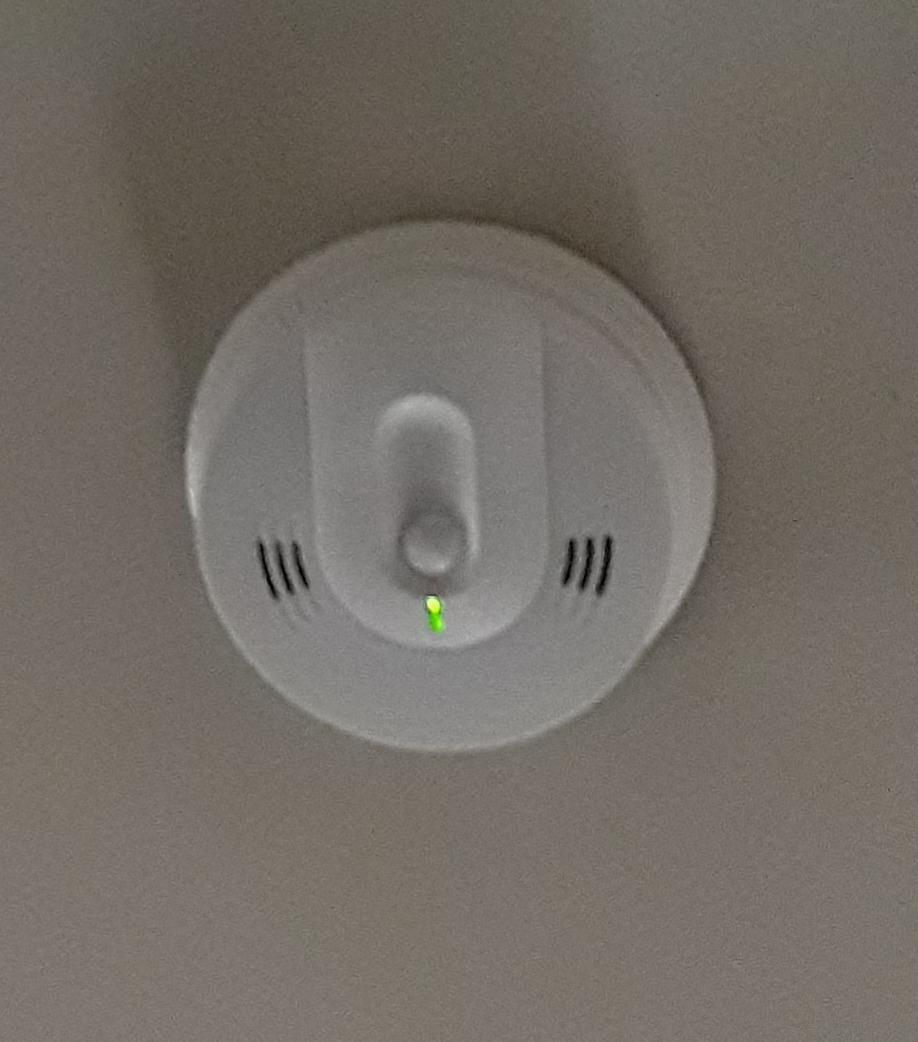
Replacement logic here is simple. The backup cells are ordinary AA, so you swap them yourself on a schedule rather than replacing the alarm. There is no sealed battery to worry about, and no end-of-life chirp to ignore. For anyone who has had a sealed pack slowly go quiet and never got around to replacing it, that predictability is worth a lot.
The Test-Hush button doubles as the network test. Pressing it checks the alarm and quiets the network, and the LED indicators show whether a fault is present. In practice the LED pattern is the fastest way for us to tell a nuisance trip from a genuine fault, which is exactly the distinction that sends people to forums at two in the morning.
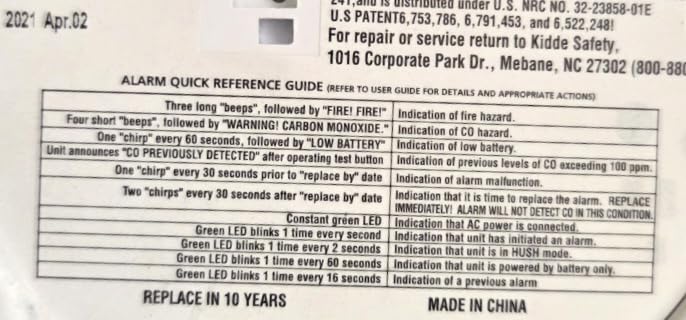
It suits households with a hardwired network already in place, especially ones where bedrooms are closed at night or there is a finished basement. The voice announcement is the feature that pays for itself in a house with deep sleepers, young children, or an older adult on the top floor.
It also suits anyone who wants CO coverage in the same box rather than maintaining a separate CO alarm. One mounting point, one test button, one thing to check monthly, and both hazards reported clearly when something goes wrong.
Skip it if you cook heavily and are tired of ionization alarms reacting to aerosol. A photoelectric unit like the Siterlink GS562A or the X-Sense SD20-W is calmer in a kitchen, and a mix of one photoelectric near the cooking zone plus ionization elsewhere is a perfectly normal approach.
Skip it if you want to add alarms from another brand later. Kidde alarms do not link to First Alert or X-Sense hardware, so this is a one-brand network. Decide that before mounting the first one, because adding a competing brand later means running a second independent system.
Photoelectric plus electrochemical
120V hardwire with 2-AA backup
Latching alarm
Spread spectrum horn
This is the pick for anyone who wants a hardwired network without a single ionization sensor anywhere in the house. The SC7010B-3 pairs a photoelectric smoke sensor with an electrochemical CO sensor, and the spread spectrum horn pattern is designed to be easier for older ears to pick out than a plain tone.
What made it stick for us is the latching alarm feature. After the network is silenced, the initiating alarm keeps indicating that it was the origin, so you go straight to the right room instead of searching every level of the house. On a two-story home with four bedrooms, that saves the minute that matters most.
It is a three-pack, which lines up well with a standard three-bedroom layout: one inside each bedroom, or one per sleeping area plus the hallway and the stairwell. Photoelectric sensing also means this is the pack I would put nearest a kitchen, since it resists the aerosol false alarms that drive people to disable their alarms altogether.
Power is 120V hardwire with two AA cells for backup, and the alarm runs at 85 dB. Each unit is 2.25 inches deep, 5.25 inches wide, and 5 inches tall, weighing 11.84 ounces, so it fits a standard box without the shallow-mount problem. Operating humidity is listed at 85 percent, which is fine for interior hallways and bedrooms but worth knowing if you are placing one in an unfinished basement.
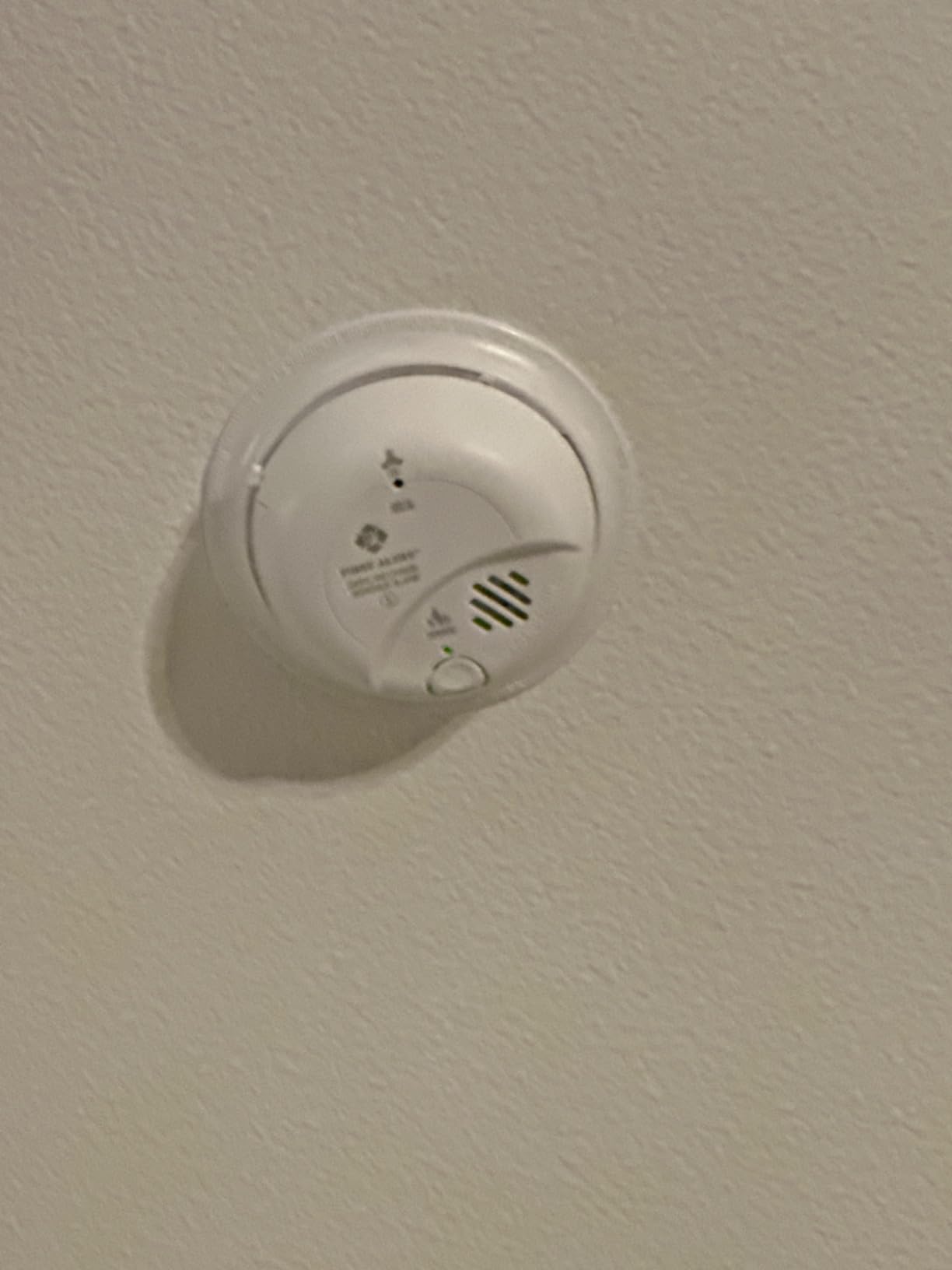
The low battery latch gives you a visual warning rather than only a chirp, which matters in a network where a single tired cell can make the whole system feel unreliable. When an alarm indicates a low battery, the network tells you which one, and you replace it rather than ignoring the noise.
There is also a dust cover on each unit, which is a small detail that pays off during renovation. Cover the heads while you patch and paint, and you avoid the dusty false alarms that make people distrust a brand they just installed.
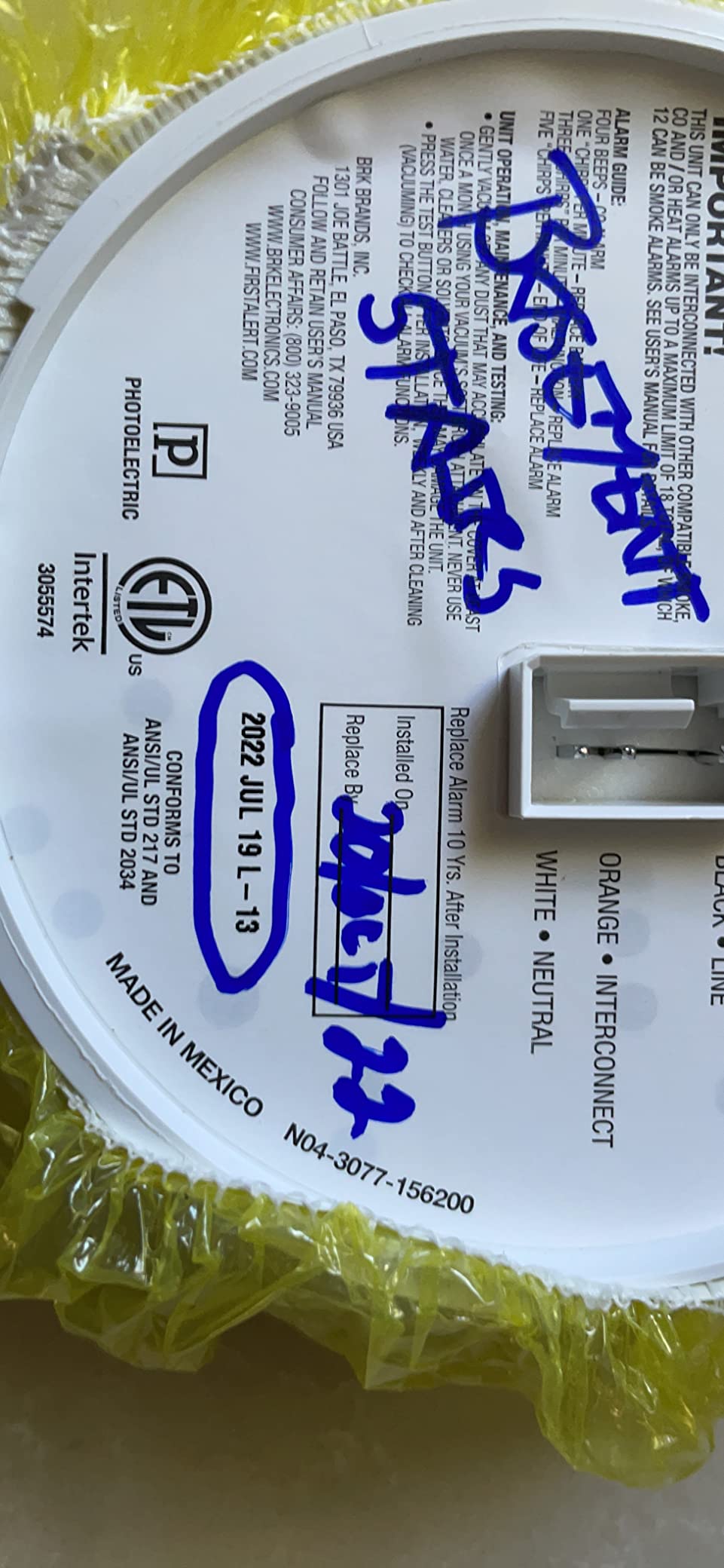
It suits households replacing a partial hardwired network, since a three-pack lets you swap three alarms at a time and keep the rest of the system on the same standard. Owners of 1990s hardwired alarms usually find the existing boxes already sized for this class of unit.
It also suits families with mixed ages in the house. The combination of photoelectric sensing, a CO sensor, and a horn designed for intelligibility covers the three things that most often get people hurt: slow smoldering fires, an unvented combustion appliance, and sleeping through a siren.
Skip it if you have no alarm wiring and no appetite for opening walls. Two AA cells do not make a unit hardwire-capable, and this one is a wired install end to end. If the wiring does not exist, a wireless 10-year battery pack gets you full interconnection in an afternoon.
Skip it if three alarms will not cover your layout. A three-bedroom with a basement and an upstairs landing commonly needs six or more, and mixing a three-pack of one type with singles of another within the same network is where compatibility questions start.
Six wireless combo alarms
10-year sealed lithium battery
RF linking to 18 alarms
UL 217 and UL 2034
If you do not have alarm wiring and do not want to create any, this is the most complete package we found. Six interconnected combo alarms, each with a photoelectric smoke sensor and an electrochemical CO sensor, each with a 10-year sealed lithium battery. For most two- and three-bedroom houses that is a complete first-floor-plus-upstairs-and-basement coverage in one order.
Linking is radio frequency between matching X-Sense Link+ alarms, and a network holds up to 18. There is no hub, no base station, and no app, which sounds like a limitation until you consider what that removes: nothing to power, nothing to lose Wi-Fi, no account that goes dead, and no cloud subscription layered over a life-safety device.
The Test/Silence button checks every alarm on the network and silences the network, so one button by the stairs tells you whether the whole system is healthy. That single-button check is what turned our confidence up, because the alternative on the maintenance calendar is walking floor to floor pressing buttons.
Each unit is 5.7 inches across and 2 inches deep in heat-resistant PC material, and the six together weigh 2.31 kg. The listing carries UL 217 and UL 2034 certification, which is the standard pair for smoke and CO detection respectively. Reviewers are broadly positive, with the main recurring note being that a few alarms needed a second pairing attempt before they joined the network reliably.
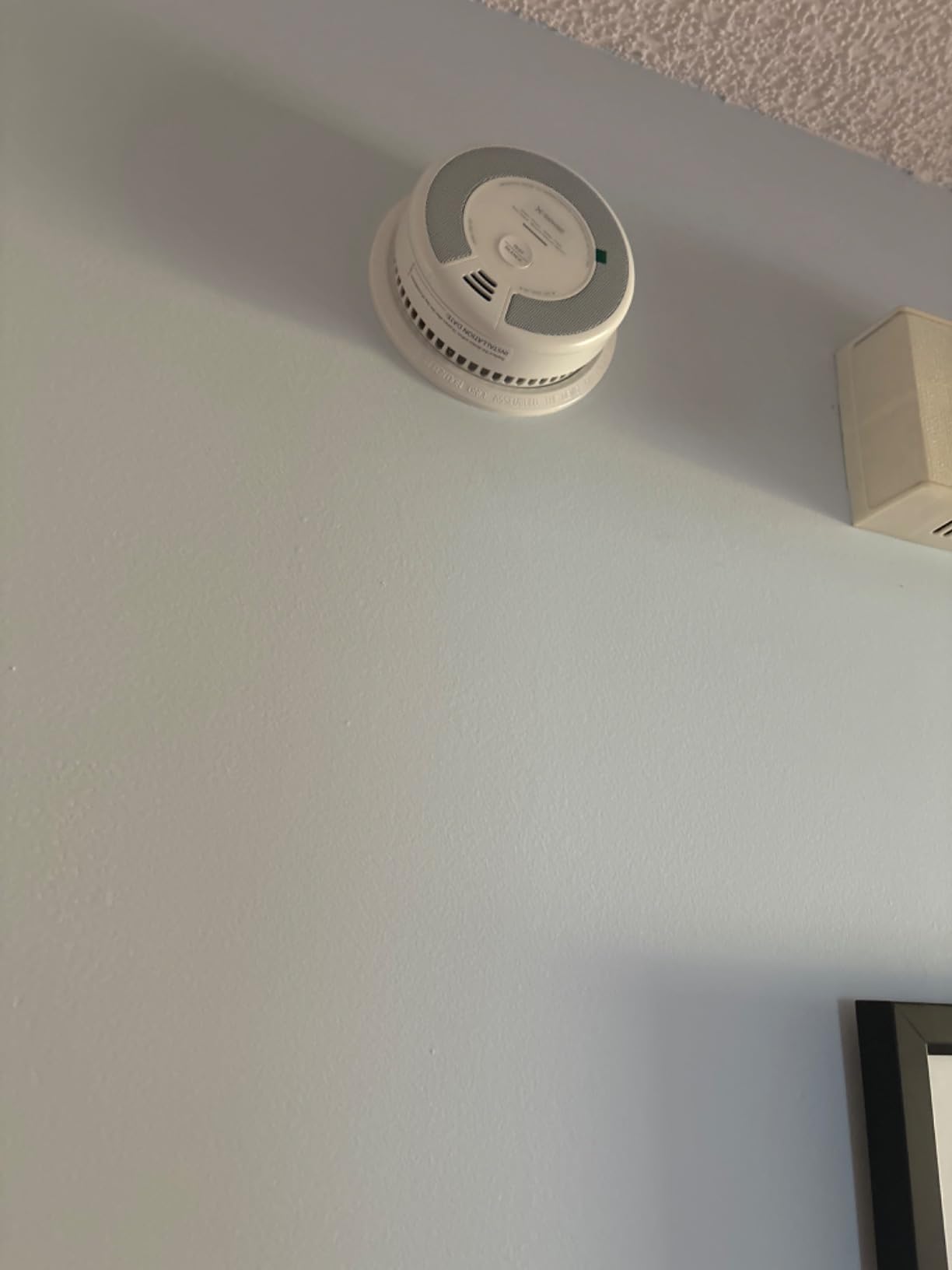
Installation is genuinely two screws and a button press per head, assuming you have a drill and a ladder. Place each one on the ceiling per the usual rules, then press and hold the test button on the first until the others respond, and repeat until the network is closed. Budget an hour for a six-alarm house rather than a whole afternoon.
The sealed battery is the feature most people care about ten years later and few people think about on day one. It is also the single biggest scheduling fact, because six alarms bought together reach end-of-life together. Put a reminder on your calendar for the purchase month a decade out, or the whole network goes quiet at the same time.
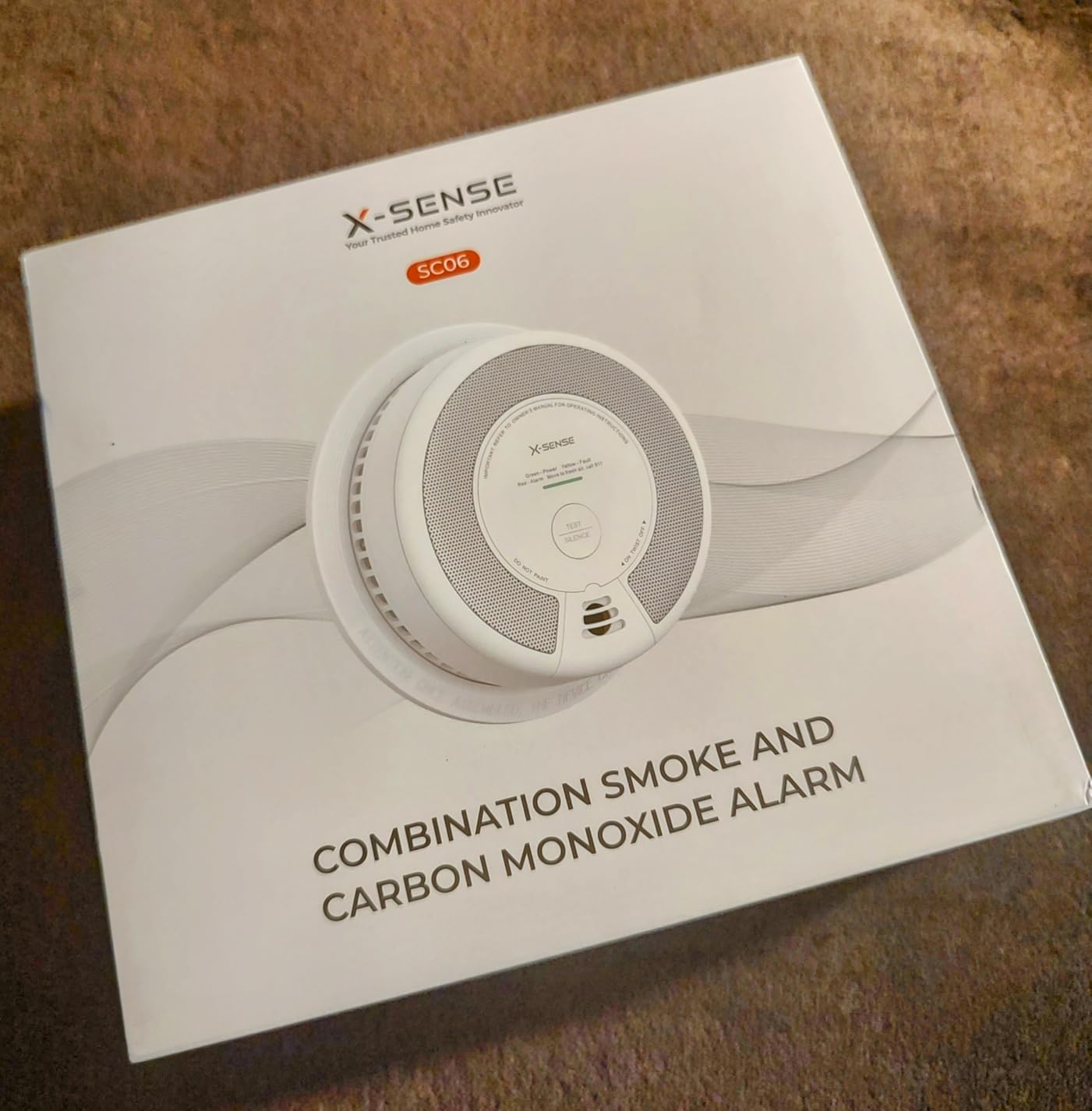
It suits renters, and it suits owners with finished ceilings, cathedral ceilings, or a basement where running new wire means opening drywall. The installation cost is close to zero, and the interconnection is complete on day one rather than after an electrician visit.
It also suits anyone who wants CO coverage in every habitable space rather than only near a fuel appliance. Six combo heads mean every bedroom, hallway, and landing carries both sensors, which is a more defensible arrangement than one CO alarm near the furnace and nothing anywhere else.
Skip it if your local authority having jurisdiction requires hardwired alarms with battery backup. A number of municipalities do for new work and for rentals, and a wireless-only install can fail an inspection. Check with your fire marshal before you mount anything, not after.
Skip it if you want phone alerts while you are away. There is no hub and no app here by design, so the alarm reaches the household and not the smartphone. If you travel regularly, pair this kind of network with a monitoring plan rather than expecting the alarm itself to reach you.
Six hardwired smoke alarms
9V battery backup
Interconnectable to 18
10-year limited warranty
When you already have the wiring and you need a lot of alarms, the math changes fast. Six hardwired smoke alarms in a single order is the most practical way we found to get a full network onto every level, and the 9120B carries a 10-year limited warranty to go with it.
It is smoke only, with no carbon monoxide sensor. That is not a flaw, it is a decision. Smoke belongs in every sleeping area and every level, while CO belongs near a fuel-burning appliance, so a smoke-only network plus one or two combo units near the mechanical room is a legitimate and common layout.
Interconnection runs through the same signal wire as the rest of the network, and the alarm links with up to 18 First Alert devices, of which 12 can be smoke alarms with the balance reserved for CO, heat, or relay modules. The horn is 85 dB with a single button for both test and silence, and tamper-resistant locking pins help in a house with small children.
Each head is 2.2 inches deep, 5.6 inches wide, and 5.6 inches tall, weighing 9.6 ounces, and it is rated for 10 to 95 percent relative humidity. The 9V backup cell is the piece of ongoing maintenance to budget for, roughly once a year across the network, and it is a five-minute job with a screwdriver.
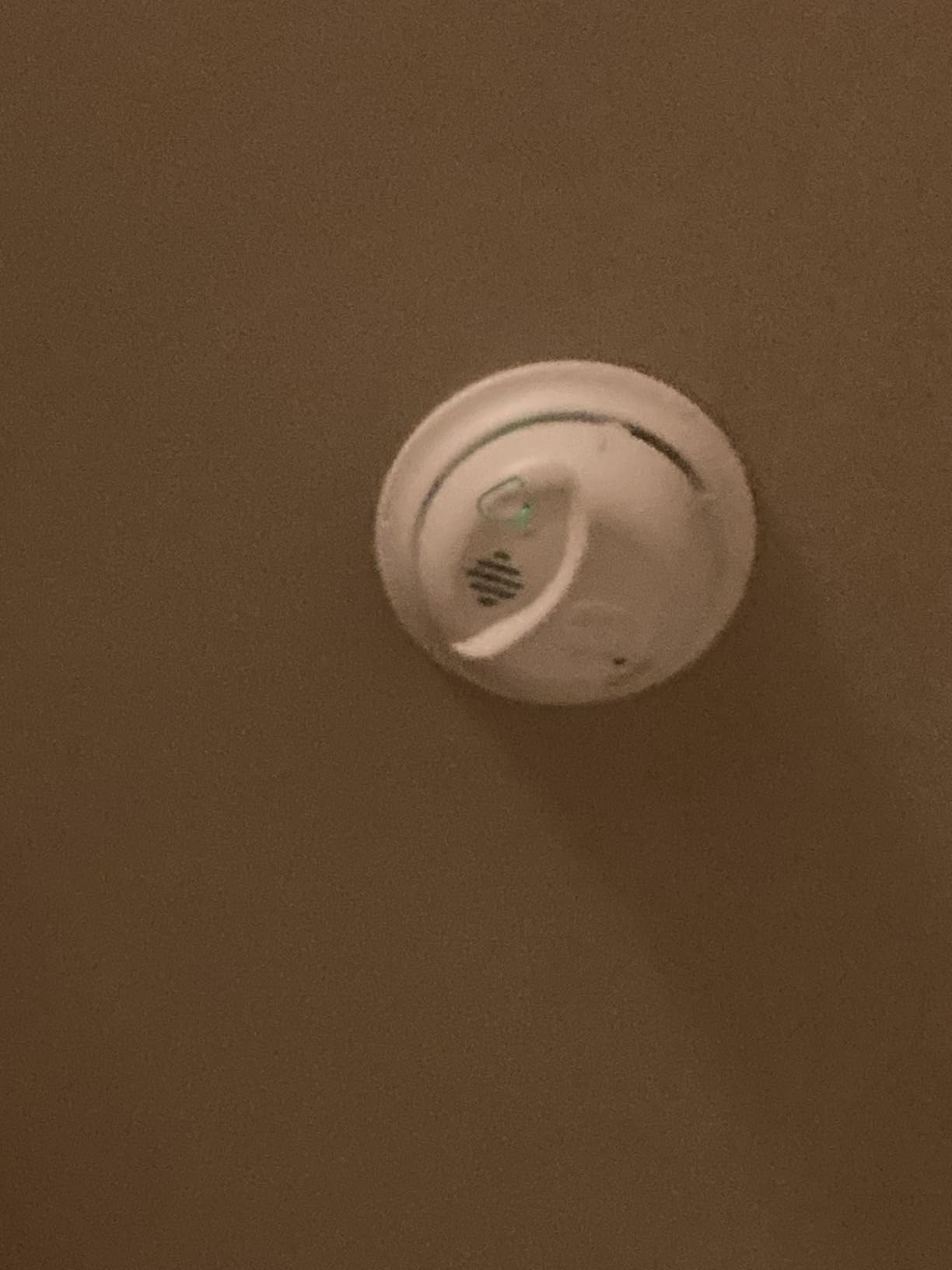
One caution worth stating plainly, because reviewers raise it: the ionization sensor is more sensitive to fine cooking aerosol than a photoelectric unit. Mount the ionization heads away from the kitchen door and put a photoelectric head nearest the cooking zone if your layout allows, and the nuisance problem largely disappears.
Because the backup is a 9V cell rather than a sealed pack, this network ages more gracefully than a wireless one. You can replace cells alarm by alarm, at whatever date each one needs, rather than swapping the entire generation in a single weekend a decade from now.
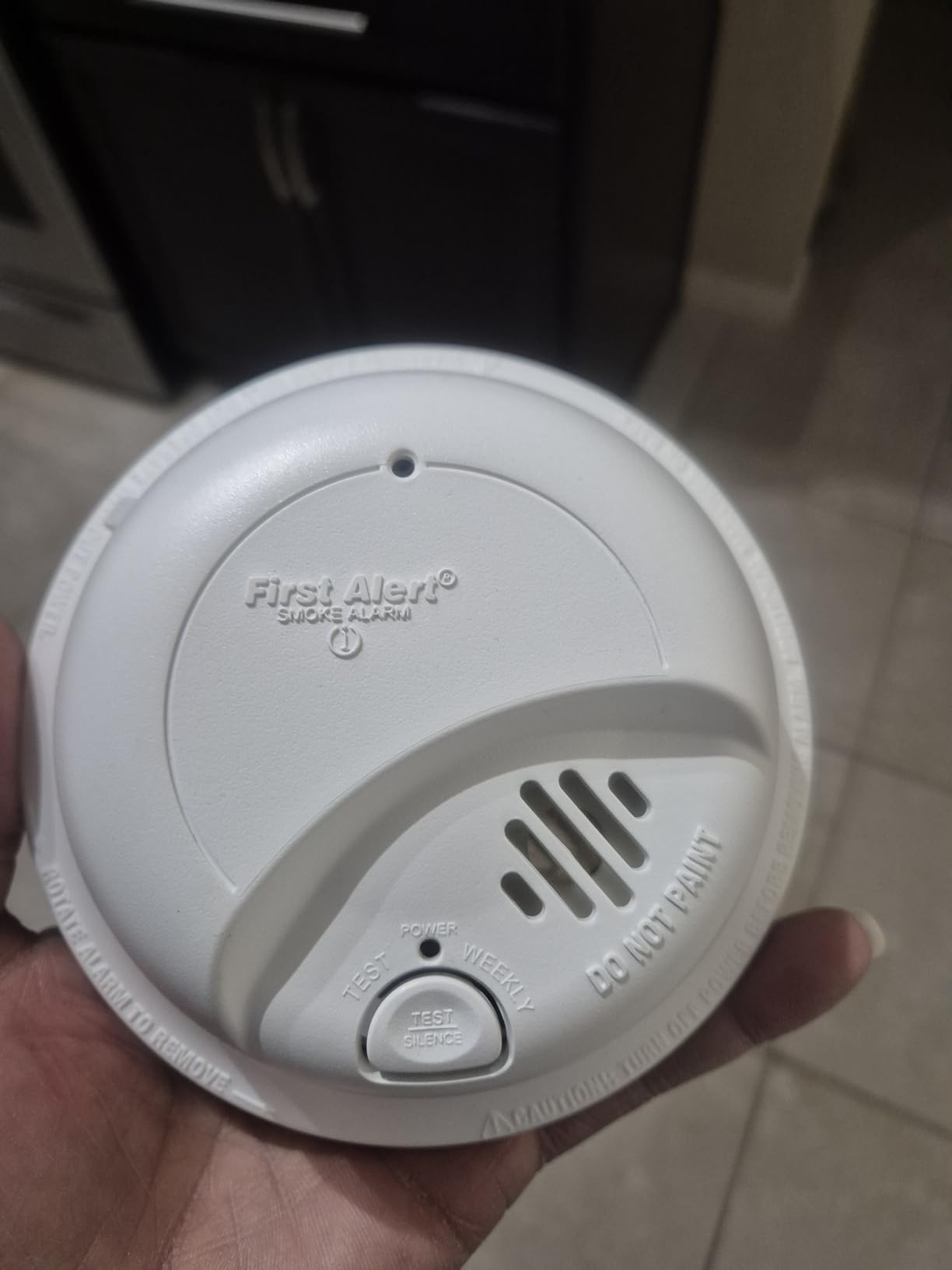
It suits owners of a wired house who want a complete refresh in one weekend, especially larger homes and small multi-unit buildings where the eighteen-alarm ceiling is real. Six in a box also means six identical units, which makes troubleshooting far easier when one behaves differently from the rest.
It suits anyone who has already decided CO alarms belong near the appliance rather than everywhere. Spreading sensors that read CO in every bedroom is not a goal; a focused placement near a furnace or a fuel-burning generator is.
Skip it if you rent, or if there is no alarm wiring in the walls. Hardwired is a wiring project, and it is the wrong one to start from a YouTube tutorial at midnight.
Skip it if your main problem is cooking-related false alarms. This is an ionization network, and it will not stop telling you about toast. A photoelectric network is the calmer choice for kitchens, and the Siterlink GS562A is one such option.
Hardwired 120V AC with 9V backup
Photoelectric sensing
Interconnect up to 12
Hidden soft LED
The thing we noticed first on this one was the LED. Most alarms use a bright status light that pulses and draws the eye in a dark hallway, and this model hides the indicator behind a soft glow that is visible when you walk past without lighting up the room. For light sleepers, or for a bedroom with a sleeping child, that is a real quality-of-life difference every night.
It is also fully photoelectric, which means it is much less likely to announce that dinner is burning. A photoelectric sensor responds to the smoldering particles that precede a real flash fire, and it largely ignores the fine kitchen aerosol that sets ionization networks off. For a home where someone actually cooks, that matters more than any app feature.
Power is 120V AC hardwire with a 9V backup cell, and interconnection handles up to 12 alarms. That ceiling is the one place this unit trails the field, and it is worth planning around: a two-story with four bedrooms and a basement can get close to twelve, so count your mounting positions before committing the whole network to this brand.
The alarm is 5.67 inches across and 1.5 inches deep, which is a shallow profile that suits low ceilings. Sound output is above 85 dB. Green LED means normal operation and red means alarm or warning, a convention that is easy to learn once and useful at three in the morning.
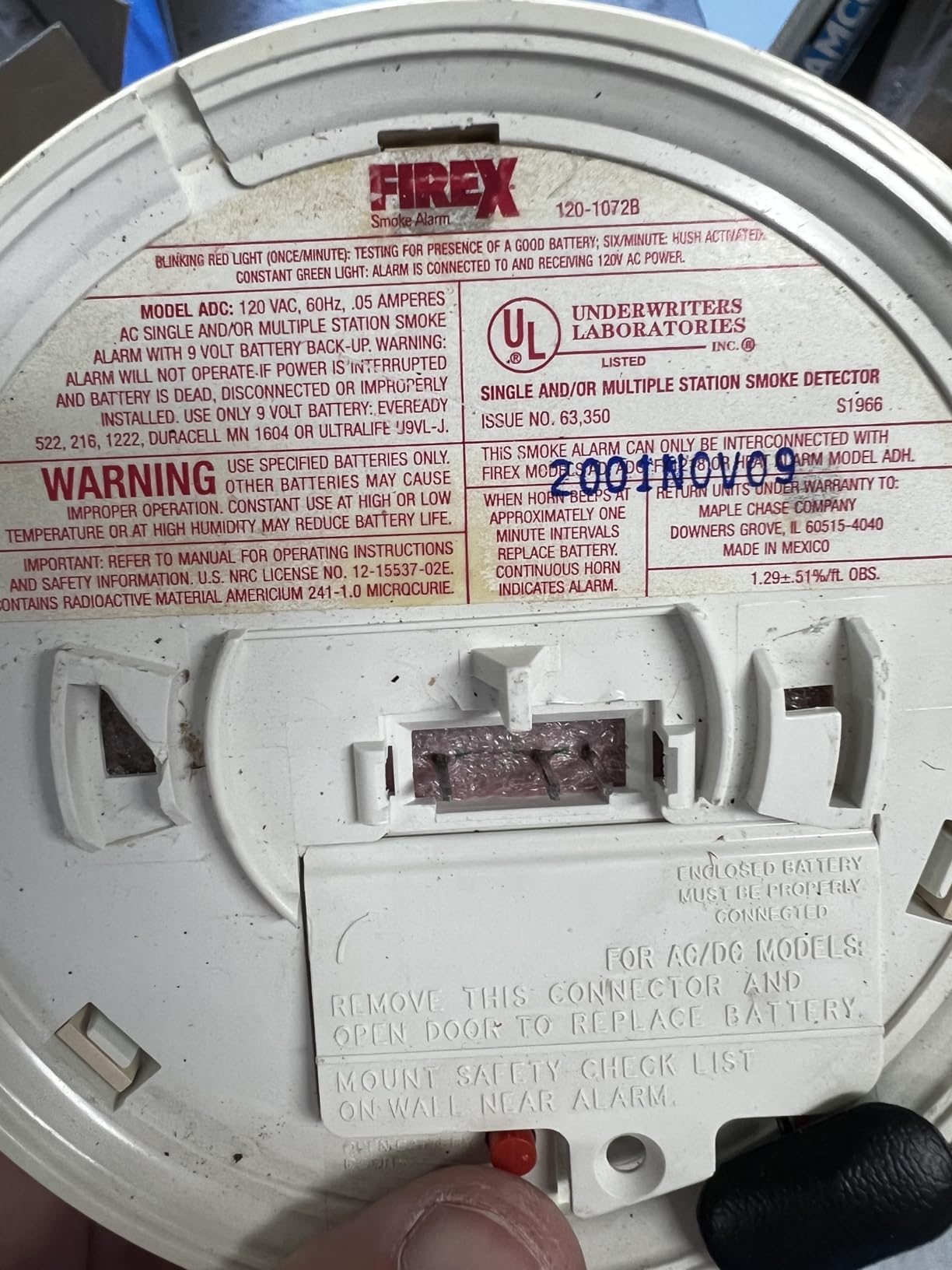
The honest drawback is history. With 658 reviews this brand has a shorter field record than the established names here, and we would treat the ten-year track record on the sensor as unproven rather than assumed. That is a fair trade for photoelectric behavior and the soft LED if you are starting from scratch, and a poor trade if you already own a network from another brand.
Worth pairing with a plan: use these as the network backbone on every level, then decide separately where a CO alarm belongs near your mechanical equipment. Smoke coverage and CO coverage are different jobs with different placement rules, and forcing both into the same head often ends up compromising one of them.
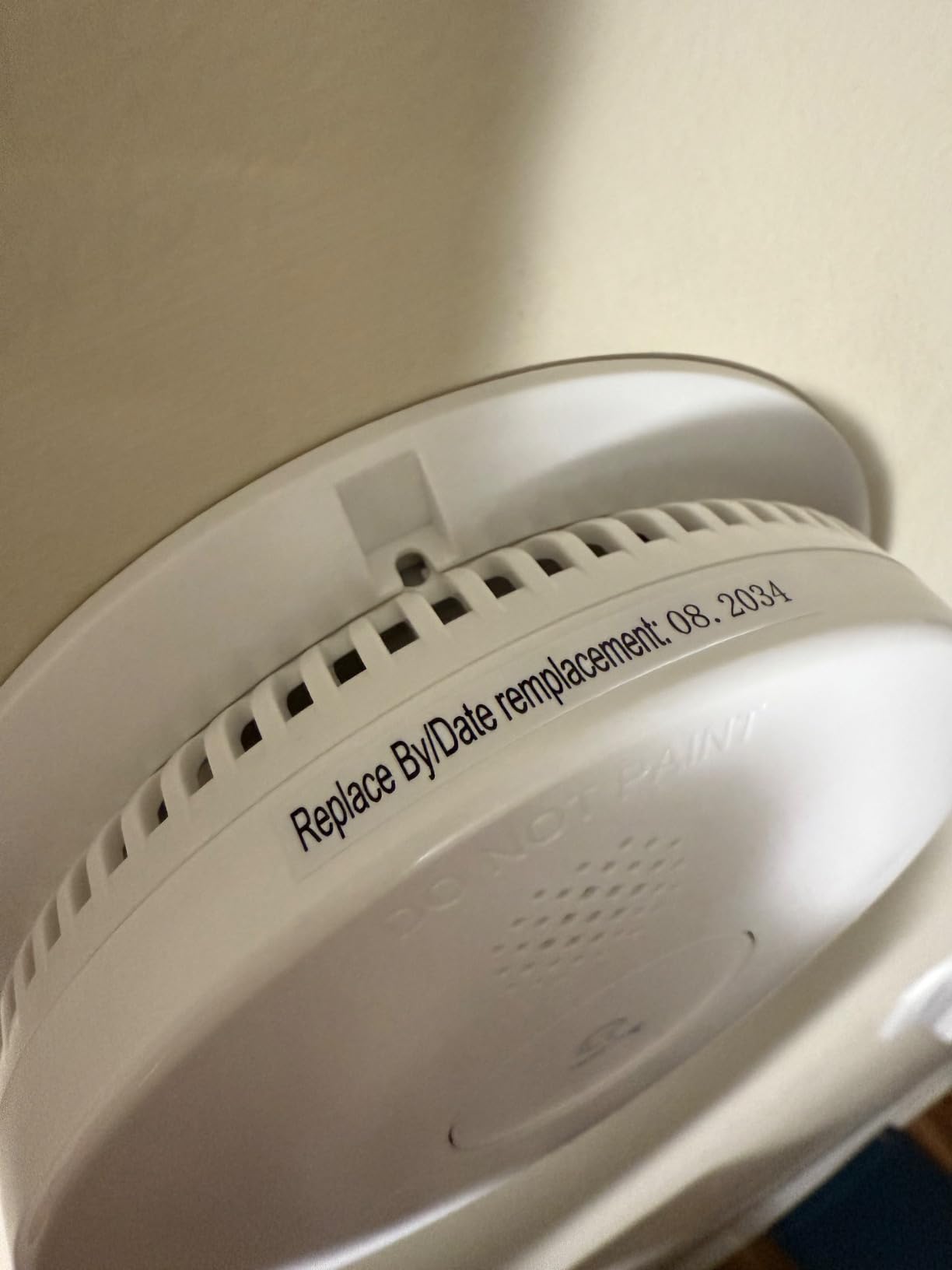
It suits households that cook a lot and have given up on their alarms because of false alarms. Photoelectric sensing plus a soft status light addresses both halves of that frustration, the false trigger and the glowing bedroom ceiling.
It suits homes of a size that fits comfortably inside a twelve-alarm network, which is most two-bedroom and small three-bedroom houses without a basement. Count first, because going over the ceiling quietly breaks interconnection and you would not notice until it mattered.
Skip it if you are a large household with a finished basement and an upstairs landing, where the count climbs toward or past twelve. Split into two networks rather than exceeding the documented limit, because a partial network is worse than no plan at all.
Skip it if you are replacing alarms one at a time across mixed brands. This will not join a First Alert or Kidde network, so a staggered replacement ends with two separate systems that never alert each other.
Wireless photoelectric
10-year sealed lithium battery
Link+ network to 18 alarms
Self-check diagnostics
Inside a bedroom, sensor behavior matters more than anywhere else in the house. A hallway alarm can be slightly over-eager and nobody notices, but an ionization head in a bedroom is a good way to get woken at 2 a.m. for no reason, and once people start ignoring it they end up removing it. The SD20-W is photoelectric, so that failure mode is largely designed out.
The self-check function is the feature that stands out to us. It monitors both the sensing element and the battery on its own, and it reports a fault into the network rather than waiting for the alarm to fail silently. Combined with the 10-year sealed lithium battery, that gives you a network that tells you when something is wrong instead of just going quiet.
Linking is wireless through the X-Sense Link+ system, up to 18 compatible alarms, and it mixes freely with the other Link+ models in this roundup. That matters for building a network over time: if you later want combo heads on the lower level, the SC07-W joins the same family rather than starting over.
Each alarm is 4.8 inches in diameter and 1.7 inches deep, in a flame-retardant ABS housing, and it is UL 217 certified. The one-button test and hush handles both functions, so a bedroom test does not require finding the right button in the dark. The trade is that there is no CO sensor here, so a separate CO alarm near any fuel-burning equipment is still on your list.
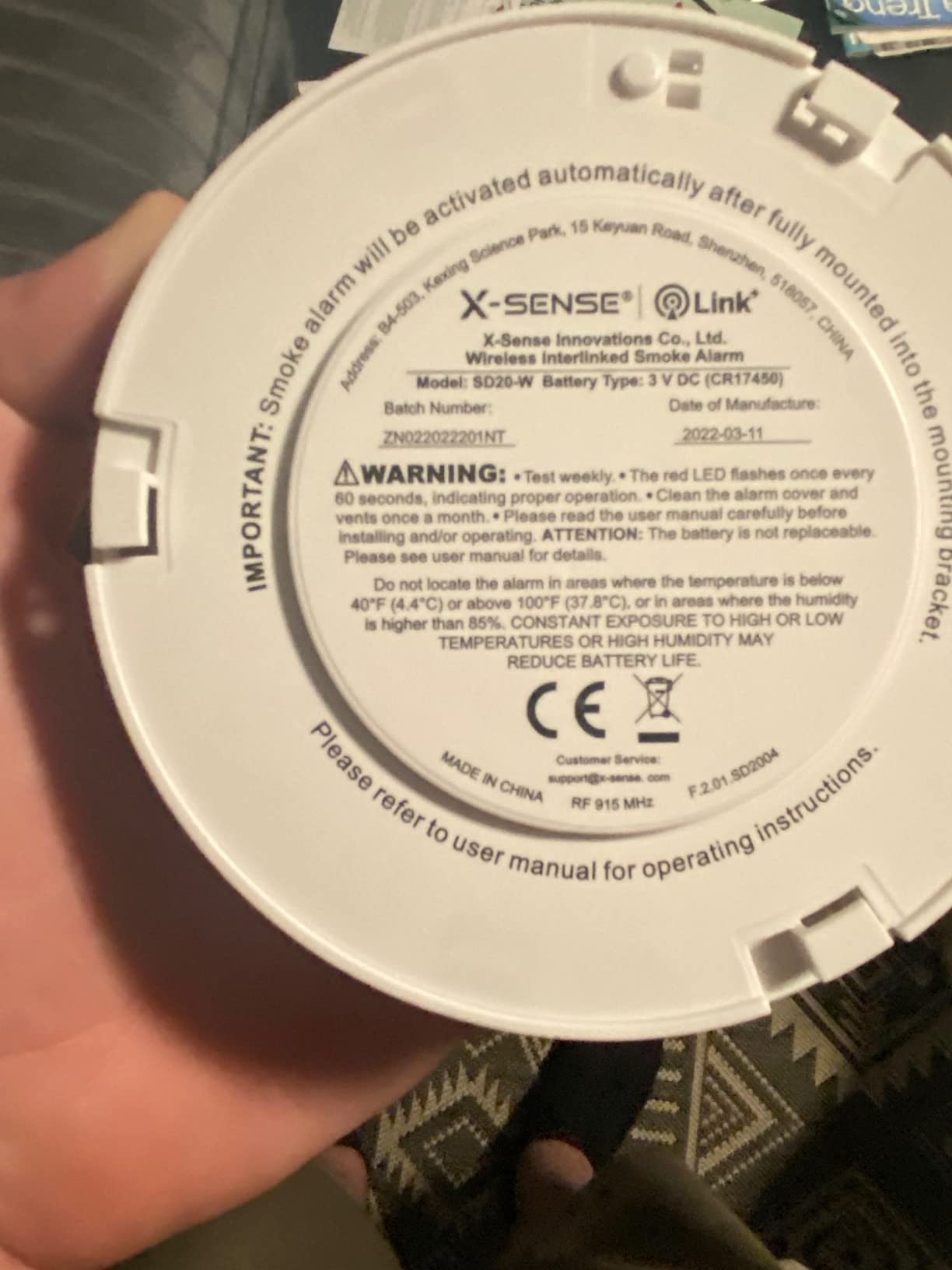
It is rated 4.4 across 581 reviews, which puts it a notch behind the combo units in overall satisfaction. Reading the reviews, the pattern is that people are happy with the unit and mildly disappointed it does not include CO, which is a feature expectation issue rather than a fault.
Our take is that this is the right model for the private rooms and the wrong model for the mechanical end of the house. A mixed network of photoelectric SD20-W heads in bedrooms and hallways plus SC07-W combo heads near the utility side gives you photoelectric calm where you sleep and CO coverage where the risk actually is.
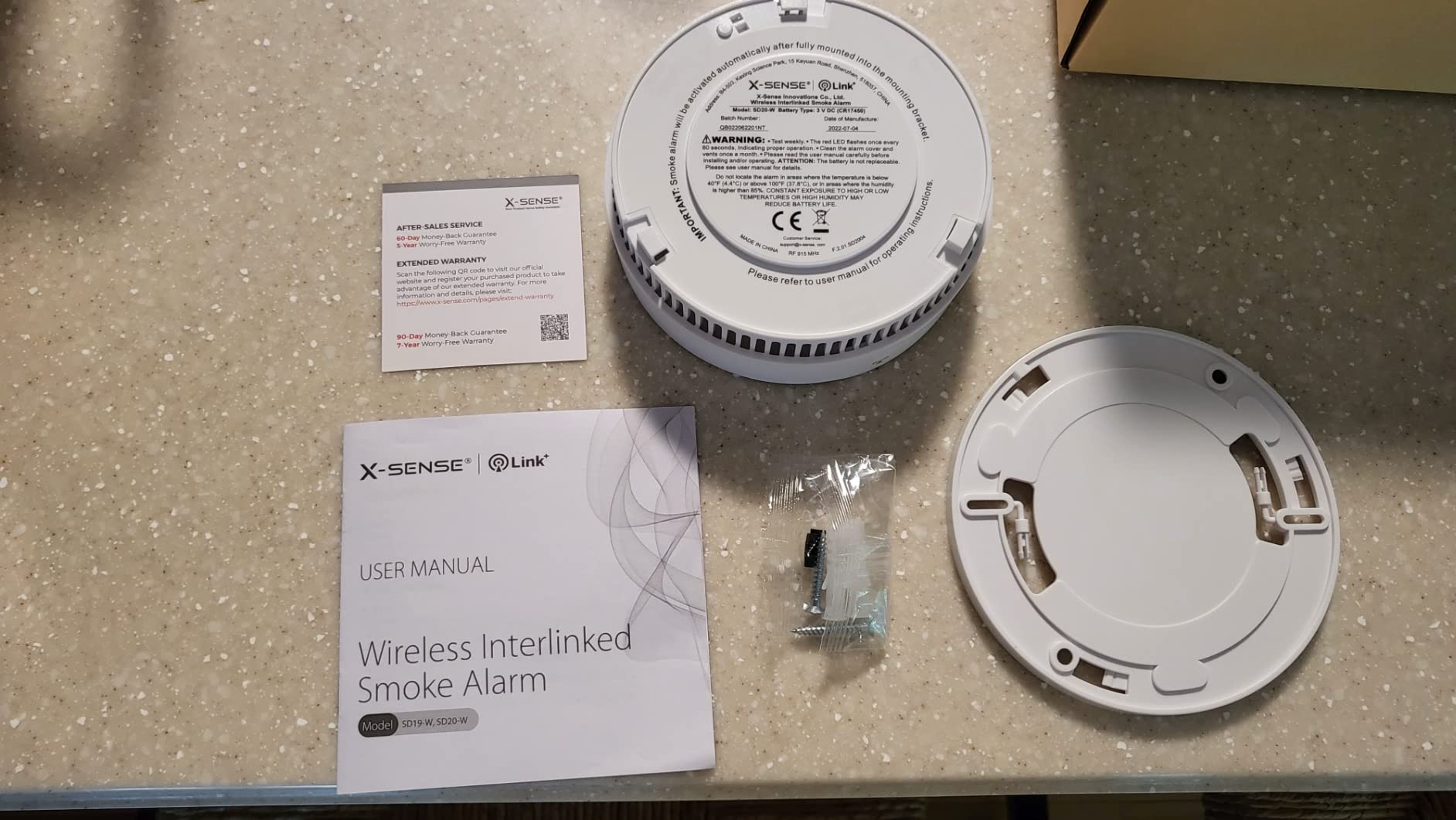
It suits anyone whose previous alarm experience has been a string of false alerts and a habit of ignoring them. Photoelectric sensing plus a self-check that surfaces problems early is the combination that keeps a bedroom alarm trusted for a full decade.
It also suits people who already own an X-Sense Link+ network, since these join an existing system as additional alarms rather than a competing one. Adding coverage to a basement or a converted garage is straightforward with this pack.
Skip it if you want a single network that covers both hazards everywhere. With no CO sensor, this is a smoke network, and a house with a fuel-burning generator, a furnace, or a wood stove needs dedicated CO coverage near that source.
Skip it if you dislike a fixed ten-year horizon. The sealed battery cannot be replaced one at a time, so all six alarms in this pack reach end-of-life together and need replacing on the same weekend. That is manageable, it is just not flexible.
Wireless combo smoke and CO
10-year sealed lithium battery
LCD shows CO level
ETL listed to UL 217
Three alarms is not many, which is why we scoped this one to smaller homes and additions. For a one-bedroom or a two-bedroom cottage, or for finishing off a basement with three connecting points, a three-pack of wireless combo heads is a complete and tidy answer with no wiring involved.
Each unit carries a photoelectric smoke sensor and an electrochemical CO sensor behind one cover, with a 10-year sealed lithium battery and wireless interconnection. The LCD is the feature that changes daily behavior: when the alarm chirps, the display shows a numeric CO level rather than a red light, so you can tell a low background reading from a genuine alarm condition.
Linking follows the same Link+ protocol as the rest of the X-Sense range, up to 18 compatible alarms in one network, and the units are ETL Listed to UL 217 and UL 2034. Each alarm is 5.7 inches across and 2 inches deep in heat-resistant PC, with a 300 gram class of housing, and the manufacturer backs them with a 60-day money-back guarantee, a 5-year quality warranty, and lifetime technical support.
The honest weak spot in the reviews is a small cluster of early-failure reports, with end-of-service indicator codes appearing sooner than ten years. Across 379 reviews it is not a dominant pattern, but it is the reason this model sits below the SC06-W in our ordering, and it is the reason the money-back guarantee is worth having on the calendar when you order.
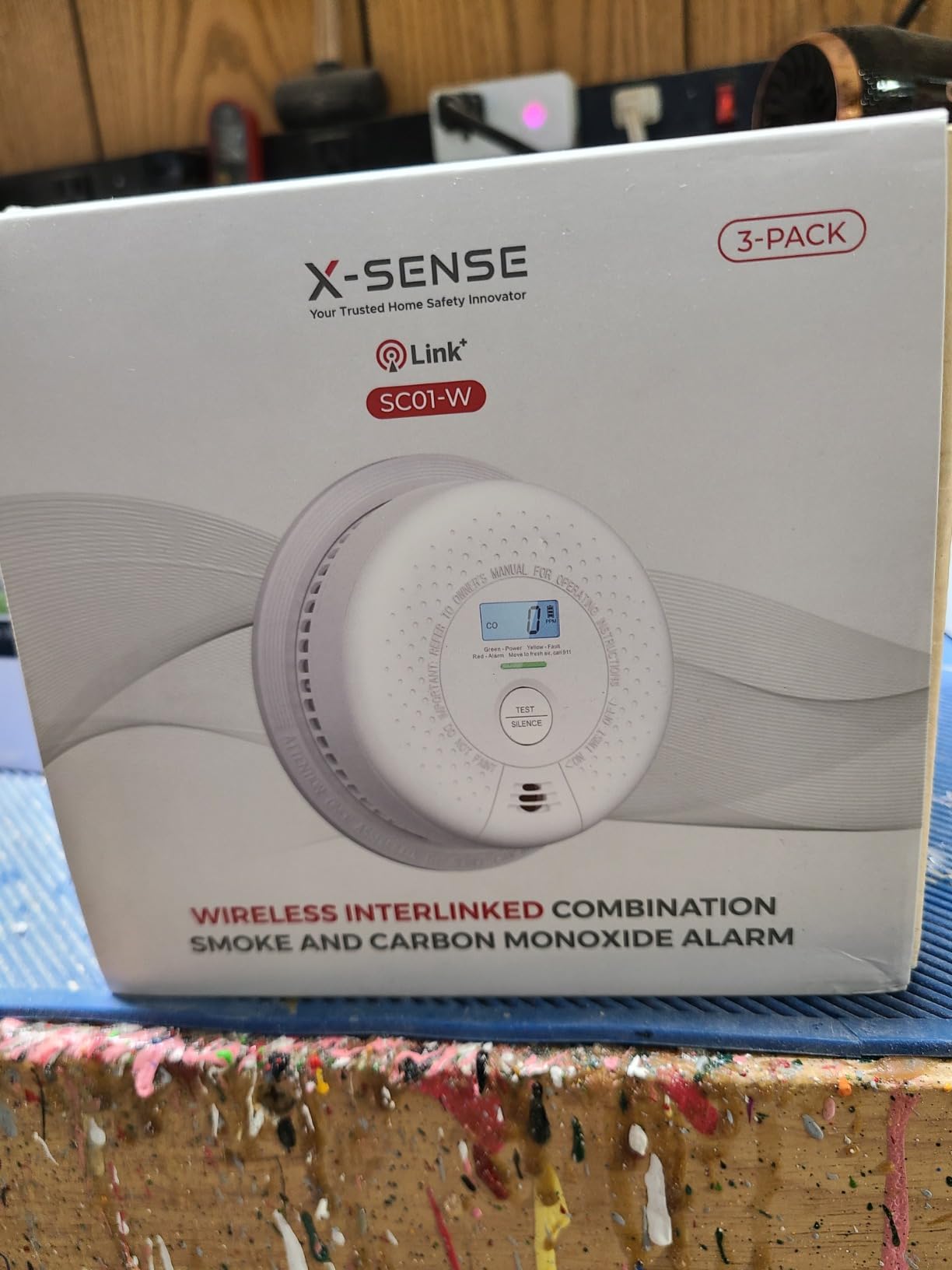
Reports also note that the LCD is hard to read in a dark hallway at night, which is a fair criticism given it is a bedside unit. If you rely on the display, test it from where you would actually be standing at 3 a.m. before you trust it as your first diagnostic.
Set the placement rules before you mount anything. Smoke wants a ceiling, and CO wants to be near the fuel source rather than in a hallway, so a combo head in the right place is a compromise rather than a perfect answer for both hazards. Use these where the room genuinely needs both, and place dedicated heads where only one hazard applies.
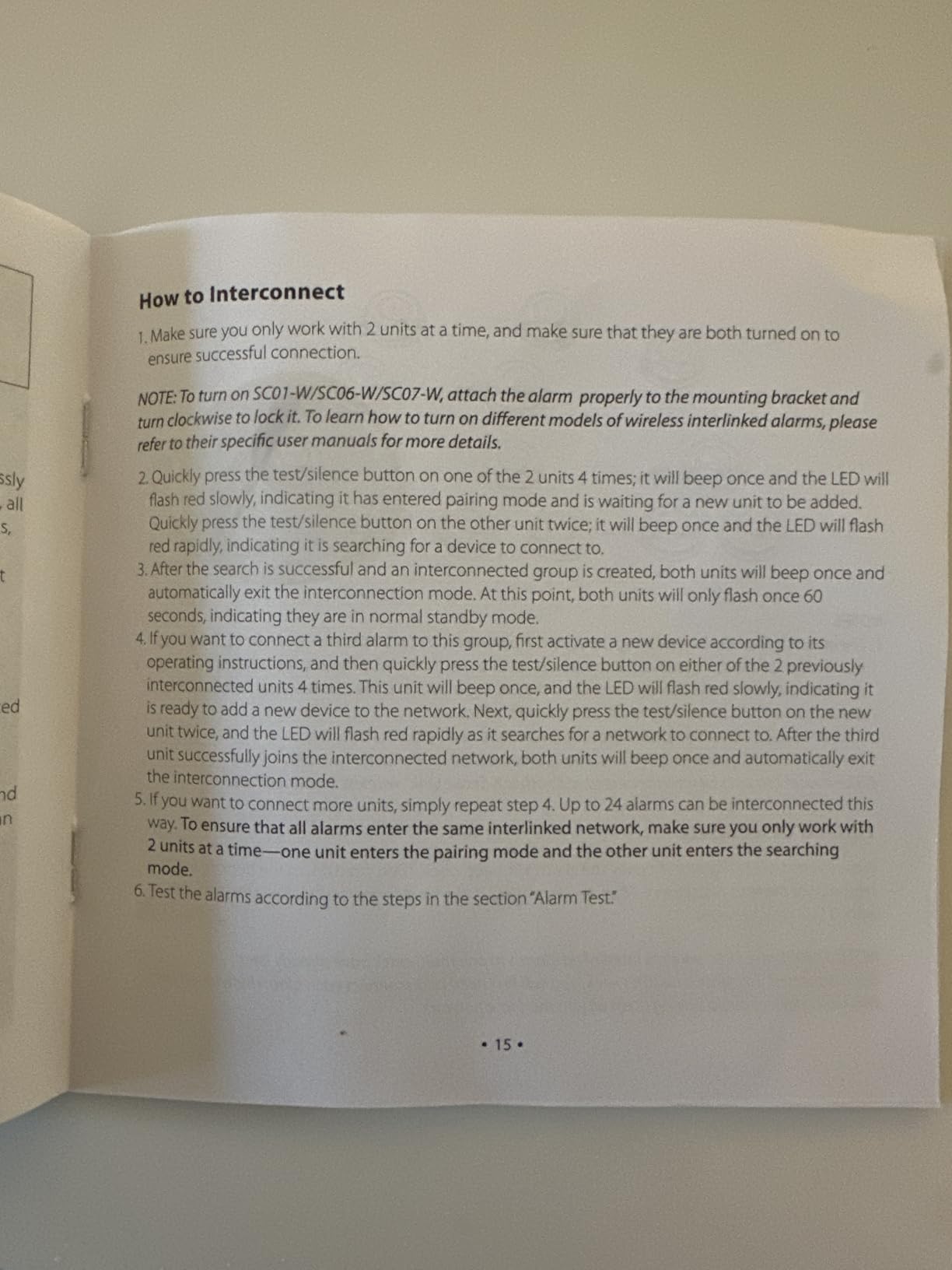
It suits smaller homes, flats, and additions where three positions cover the required locations. It also suits anyone adding to an existing X-Sense network who wants CO coverage in a specific room without rebuilding the whole system.
It suits people who like a numeric reading. The LCD turns a vague chirp into a number you can act on, and for anyone with an older adult or a family member sleeping in that room, that distinction between a warning and an alarm is genuinely useful.
Skip it if your layout needs six or more positions, because you will end up buying two packs and pairing two boxes, which is more work than starting with the six-pack. Nothing is wrong with the unit, the arithmetic simply works against it.
Skip it if you need alerts away from home. There is no hub here and no app, so a network of these reaches the house and nobody else. That is a fine design for a life-safety device, but it is not a monitoring service.
Hardwired 120V with battery backup
Smoke and heat sensing
Hush and test buttons
Interconnectable with Kidde
Heat detection is what separates this model from most of the smoke-only packs in this roundup. Smoke and heat together cover the two conditions that precede most of the fires that damage a house, and a heat-sensing element also responds usefully in spaces where smoke does not travel well, such as a closed garage or a utility closet.
It is hardwired 120V with a battery backup and interconnectable with other Kidde alarms, so it drops into an existing Kidde network without renegotiating anything. Separate hush and test buttons are a small ergonomic win over single-button models, because you can silence a nuisance without cancelling the monthly diagnostic you meant to run.
The rating is high at 4.6, but it sits on 241 reviews, which is a much smaller base than the current-generation models here. That pattern usually means the unit is well established and widely installed rather than newly evaluated, and it is a reasonable read for a hardwired platform that has not changed in years.
The four-pack covers a mid-size layout without the bulk commitment of a six-pack. It is the sweet spot between the First Alert 9120B six-pack and buying singles, and for a three-bedroom with a basement it is often the exact count you need.
The classic styling is dated compared with the newer housings, which is purely cosmetic but does matter if you are matching visible heads in a renovated hallway. The red body is unusual among the white units in this roundup, so if appearance is a factor, check how it looks against your ceiling before committing to four of them.
As with the other ionization models here, plan the kitchen carefully. Ionization is more eager to react to fine cooking particles, and on a hardwired network that reaction propagates through the entire house rather than staying in one room. Mount the heat-capable heads away from the cooking zone and put a photoelectric head nearest it.
It suits owners of an existing Kidde hardwired network who want to extend coverage without changing brand, and it suits anyone who wants heat sensing alongside smoke, such as households with an attached garage, a laundry area, or a workshop.
It suits four-alarm layouts, which are extremely common. A hall outside the sleeping area, one inside the main bedroom, one in a second bedroom, and one in the basement is a defensible arrangement that this pack delivers in a single order.
Skip it if you want CO coverage. There is no CO sensor here, so a fuel-burning appliance still needs its own dedicated alarm, and the households most likely to want heat detection, such as those with a garage, are also the ones most likely to need CO coverage.
Skip it if the dated housing bothers you or if you are starting fresh with no Kidde hardware on the walls. In a full retrofit, a current model with a more recent listing and a larger review base is the safer default.
Wireless combo smoke and CO
10-year sealed lithium battery
820 ft wireless range
ETL listed to UL 217
The SC07-W is the wireless combo we would pick when carbon monoxide is the main worry. It carries a photoelectric smoke sensor and an electrochemical CO sensor, and unlike several cheaper units the display gives a numeric reading rather than only a light, so a low background level looks different from an alarm condition.
Range is the spec that earns it a place in a whole-house argument. At a stated 820 feet of wireless reach, distance between heads and awkward floor plans matter far less than they do on a shorter-range network, which makes it a better fit for a wide house, a house with a detached garage, or a layout where the basement stairwell is far from the main hallway.
It is a 3-pack, which is right for adding coverage in stages or for a smaller home, and it joins the same Link+ network as the rest of the X-Sense range, so it pairs with the six-pack and the smoke-only model. One-button silencing stops every alarm in the network, and the units are ETL Listed to UL 217 and UL 2034 with a five-year quality warranty behind them.
Across 1,494 reviews it holds a 4.4, which is a solid base for a wireless combo. The recurring critical note is again early unit failures, plus the practical complaint that three alarms will not cover a large house without a second order.

One reviewer pattern worth repeating: the LCD does not display a continuous parts-per-million reading, so it shows an alarm or warning state rather than a live trend. That is fine as a warning device and not a substitute for a dedicated CO analyzer if you have a specific exposure concern in a garage or workshop.
Weight per unit is 300 grams and the housing is heat-resistant PC plastic, so there is no mounting weight concern on a standard ceiling. Plan the pairing in batches, hold the test button on the first unit until the network responds, and confirm the count matches what you installed before you put the ladder away.
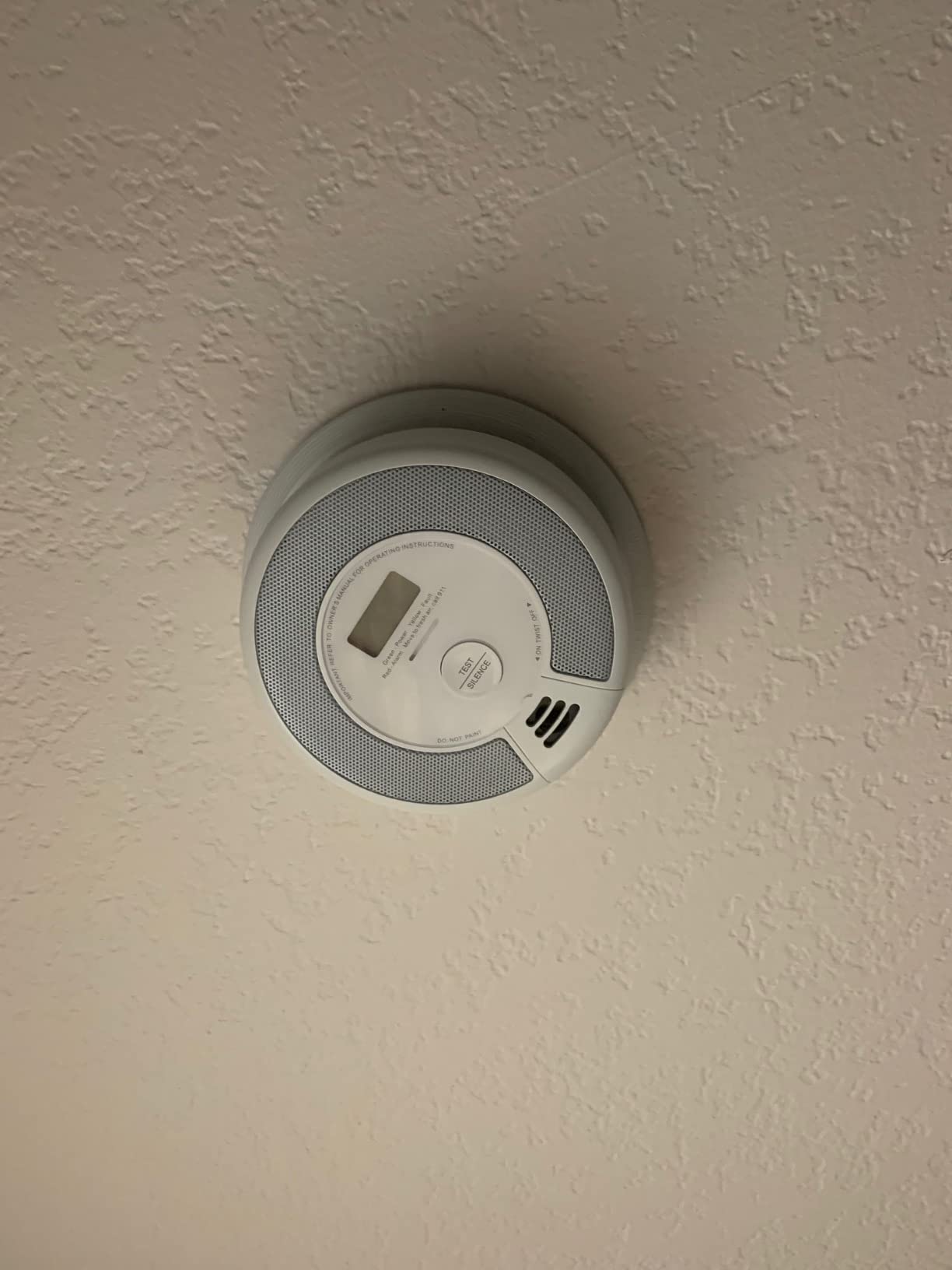
It suits households where CO is a live concern, such as homes with a fuel-burning whole house generator, a gas furnace, a gas water heater, or a wood stove, and where extra distance between mounting points makes a long-range network valuable.
It also suits people adding to an X-Sense system already installed. Because it shares the Link+ protocol, ordering a second three-pack later is a straightforward extension rather than a new network to learn.
Skip it if you need a hardwired install for code reasons or for outage resilience beyond the sealed battery. This is battery only, by design, and while the ten-year cell outlasts most outages, a house on a flaky supply is better served by AC power with backup.
Skip it if you are covering a large home on one purchase. Three heads rarely cover a three-bedroom with a basement, and splitting the order across two batches is fine but takes planning.
Photoelectric plus electrochemical
120V AC with AA backup
UL 217 10th Edition
LED status lights
This is the current-generation Kidde hardwired combo, and it is the one to specify if you are wiring from scratch rather than replacing an existing unit. It is listed to the 10th Edition of UL 217 and the 5th Edition of UL 2034, which is the standards pair you want specified in new construction paperwork.
Sensing is photoelectric for smoke and electrochemical for CO, which is the pairing we would choose for a house that actually cooks. The manufacturer claims detection up to 25 percent faster than earlier generation, and reviewers generally report fewer nuisance events, which is the claim that matters day to day.
Power is 120V AC with AA battery backup rather than a 9V cell, and the horn is 85 dB with a red LED. Operating humidity runs up to 95 percent relative humidity, non-condensing, and each unit is 1.88 inches deep, 5 inches wide, and 5 inches tall, weighing 7.2 ounces. That shallow depth is genuinely useful in shallow ceiling boxes.
The significant warning is compatibility, and it comes straight from reviews: the wiring harness on this generation does not fit older Kidde plug-in bases. If your existing network is a previous-generation Kidde system, check the base before ordering, because you may need to swap the backplates as well as the alarms.
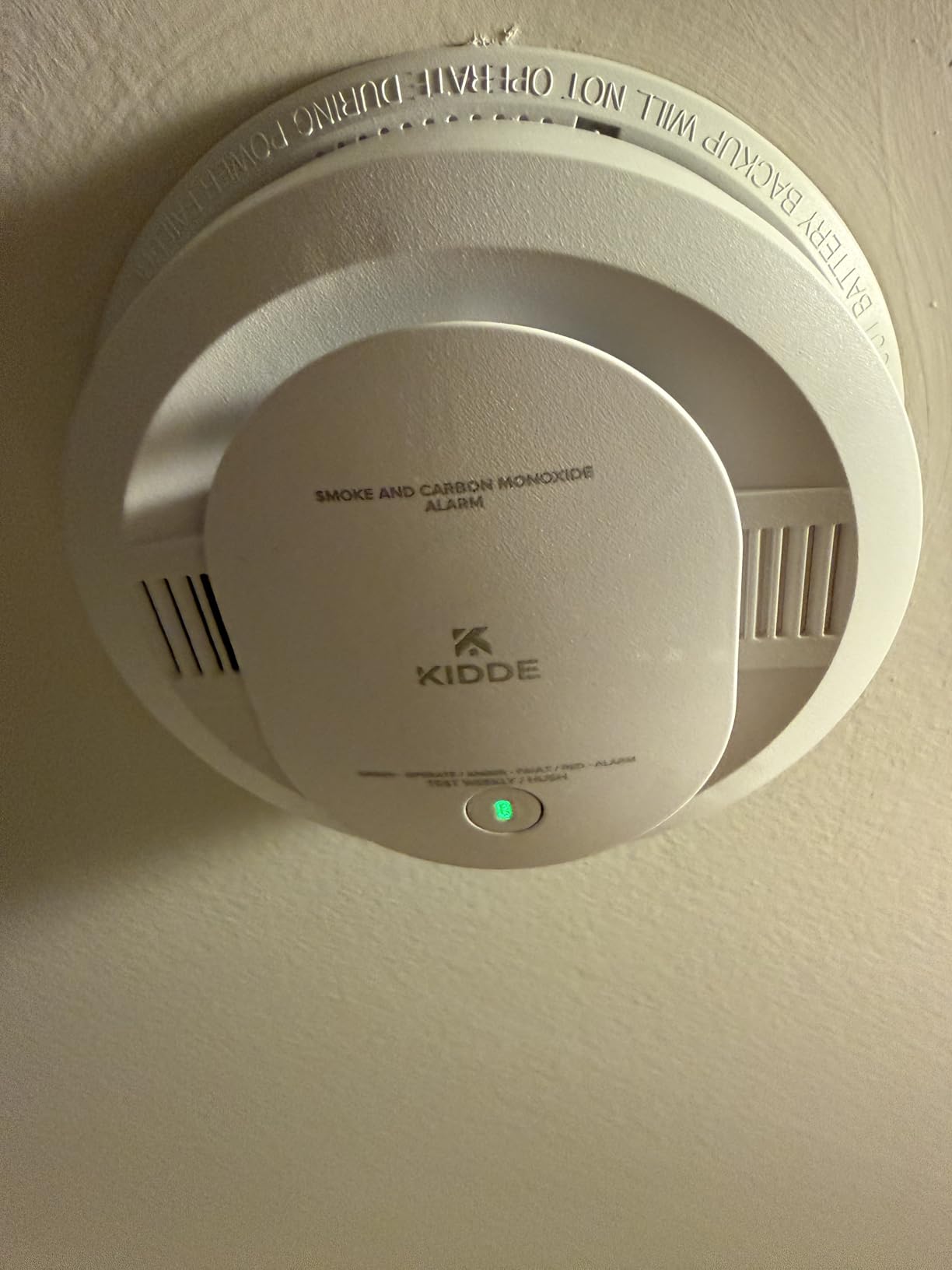
It carries the lowest average rating in this roundup at 4.2, with a meaningful share of one-star reviews concentrated on that same base incompatibility. Read as a wiring problem rather than a detection problem, it is largely avoidable, and the shallow housing and current listing make it a strong choice for new work.
AA backup cells are a genuine convenience in a hardwired network, since the same cells fit half the devices in the house. The ongoing cost is a small recurring job rather than a decade-long sealed commitment, which some households prefer because they can replace a single cell rather than a single alarm.
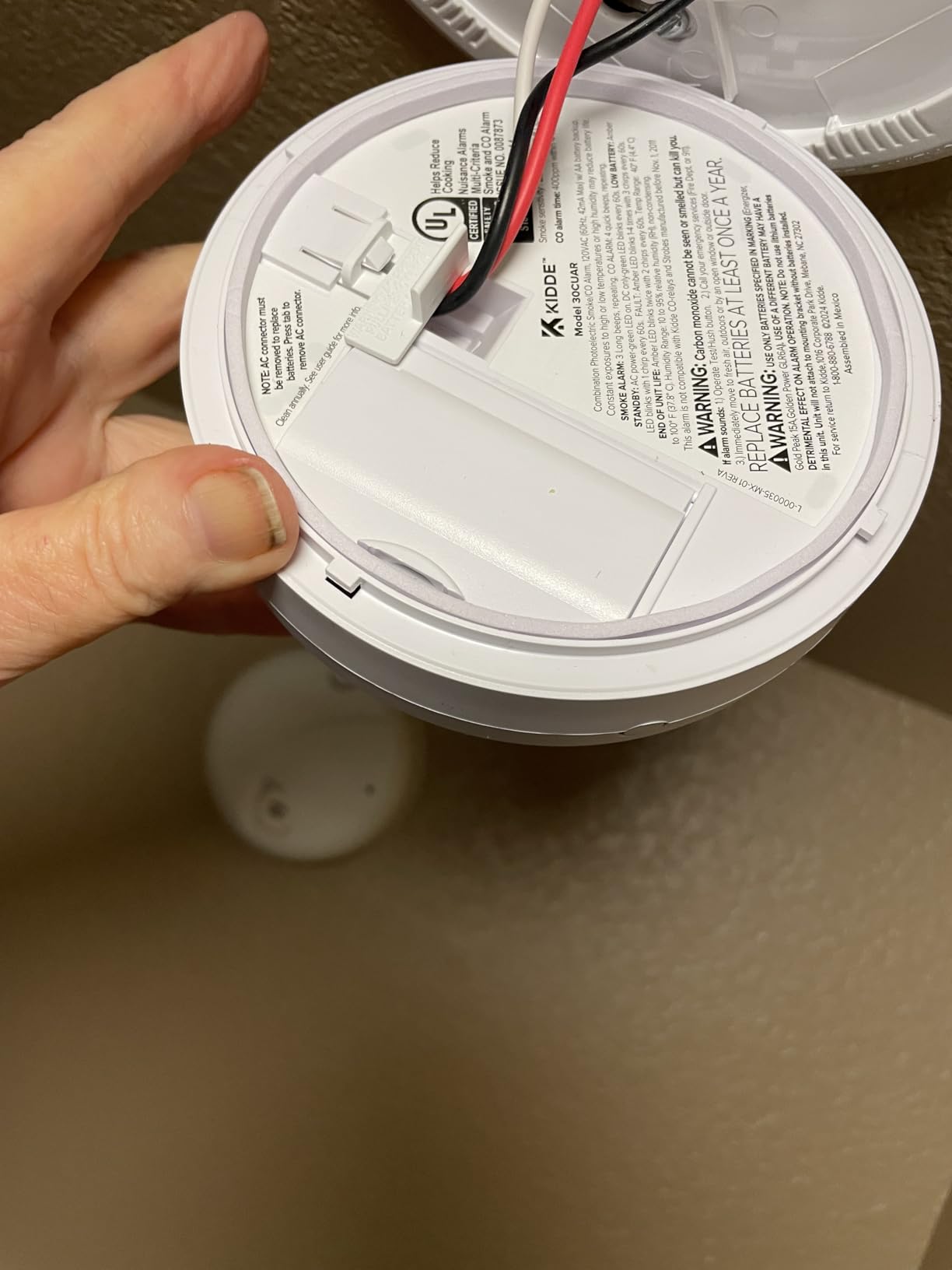
It suits builders and renovators wiring a new installation, where the current UL 217 edition matters for inspection paperwork and the shallow 1.88 inch body clears tight boxes. It also suits anyone replacing older Kidde hardware anyway, since you are already committed to changing the backplates.
It suits households that want photoelectric calm in a hardwired network. Across this roundup, the newer Kidde and First Alert hardwired combos both moved to photoelectric, and that is a meaningful upgrade in kitchens for anyone tired of false alerts.
Skip it if you are replacing a few older Kidde alarms one at a time and want the existing bases to stay. This is the clearest compatibility trap in the roundup and it is the leading source of one-star reviews here.
Skip it if you want a sealed 10-year battery and no maintenance at all. The AA backup means a recurring small task, and on a six-alarm network that adds up to a schedule you have to keep rather than a single decade marker.
Most people under-install because they count ceilings rather than rules. The National Fire Protection Association guidance is straightforward: an alarm inside every bedroom, an alarm outside each sleeping area, an alarm on every level, an alarm in every basement, and additional coverage in living areas, hallways, and attached garages. A typical three-bedroom house lands between six and nine alarms once you count properly.
Work from this count for a standard single-family home with a basement and no attached garage: one inside each of three bedrooms, one in the hallway outside the sleeping area, one in the upstairs hallway, one on the main level living area, one in the basement, and one at the top of the stairs if there is a landing. That is seven, and a fourth bedroom or a finished basement media room pushes it to eight or nine.
Add ceilings rather than rooms. A long hallway that splits into two runs, a stairwell landing, a laundry area, a garage, and an attic all add positions. The trick is that every one of those extra positions still has to be inside the interconnect limit of the system you buy, which is why the six-packs matter for larger homes.
Two limits are worth checking before you commit to a brand. Wireless Link+ networks cap at 18 compatible alarms, First Alert and Siterlink hardwired networks cap around 12 to 18 depending on how many positions are reserved for non-smoke devices, and you cannot exceed those numbers without splitting into two systems, which defeats the purpose.
Renters should confirm the local rules first. A number of municipalities require hardwired alarms with battery backup, and some require them to be interconnected regardless of what the current owner installed. Check with your fire marshal before mounting anything.
The alarms are only part of a complete installation, and the add-ons are where whole-house budgets get surprised. A fire alarm network has no hub requirement in any of the ten models above, but some setups still need a relay module to trip a siren, an exterior strobe, or a stairwell light, and those modules are brand-specific parts rather than generic hardware.
CO coverage is the most commonly skipped add-on. Smoke-only networks are appropriate on sleeping levels, but a house with a furnace, a gas water heater, a wood stove, or a fuel-burning whole house generator needs CO sensing close to that equipment. Placing a CO head in a hallway is the compromise people make, and it is a compromise rather than a correct placement.
Coverage gaps are the second add-on. An attached garage, a workshop, a laundry area, and an attic are all places where smoke travels poorly and where nobody hears a siren in the main house. Attic ventilation and attic fans change how smoke moves through a house, and a head in the attic or garage connects a space that would otherwise be blind.
If you want phone alerts alongside local alarms, plan for that as a separate layer rather than assuming these units will do it. None of the ten models here has Wi-Fi or a base station, which keeps the life-safety layer simple and independent, and it also means a monitored layer has to be added deliberately. Some people pair a hardwired network with a relay module feeding their security panel, and r/smarthome threads are full of owners who went that route to get alerts into Home Assistant.
No, and this is the single most expensive misunderstanding in the category. Interconnection depends on a shared signal protocol, so an X-Sense Link+ alarm only links to other X-Sense Link+ alarms, and Kidde alarms only link to Kidde hardware. Buying a Second Brand because one unit was on offer leaves you with two systems that never sound together.
There is a partial exception in the hardwired world, and it is technical rather than commercial. Signal-wire interconnect is a physical wire protocol, so in principle a hardwired smoke alarm and a compatible CO alarm can share a network. The catch is manufacturer approval: the same manufacturer, the same listed design, and usually a documented compatible device list. Mixed-brand hardwired installs are not a supported configuration and will not pass inspection in most jurisdictions.
The workaround is segmentation, and it is worth understanding before you buy. Some households run one network for a hardwired core and a second wireless network for an addition, then accept that the two do not talk to each other. That is a real limitation, and a system that alerts half the house is meaningfully weaker than one that alerts all of it.
Property managers raise a legitimate operational objection, seen repeatedly on r/PropertyManagement: in a multi-unit building, one faulty sensor can trigger every alarm in the structure, and residents disable the whole network after a few false events. The fix is good photoelectric placement and a proper hush policy, not removing interconnection, but it is worth weighing if you are managing a building rather than a house.
So decide the brand first, then the count, then the model. Choose the family that fits your count and your power source, and buy the entire network from it in one pass. Swapping one alarm at a time across brands is how people end up with a house where the basement hears nothing.
False alarms are the number-one reason people disable or remove interconnected alarms, and a disabled network is worse than no network because it looks protected. The good news is that most cooking-related triggers are placement problems rather than equipment problems.
Photoelectric sensors are markedly calmer around food than ionization sensors, which is why the Siterlink GS562A, the X-Sense SD20-W, the First Alert SC7010B-3, and the Kidde 30CUAR all earn their place in kitchens. If your existing network is ionization, keep it away from the cooking zone and add one photoelectric head nearest the kitchen door rather than replacing the whole network.
Humidity is the second big trigger, and a house running a whole house humidifier through the winter in a cold climate is a common setup. High moisture in a stairwell or an attic can trigger units that are otherwise fine. If alarms are active only on humid days, check the whole house dehumidifier setting and the bathroom and laundry vent routing before you blame the alarms.
The 3 a.m. chirp is a separate problem. A low-battery warning that cannot be silenced, a dust particle that drifted in during a renovation, and a supply voltage dip that resets a hardwired network all arrive at the same hour, and they get confused with each other. The first is a battery job, the second is a vacuum and a ten-minute wait, and the third is worth checking at the panel.
Two habits prevent most of this. Test the whole network monthly from a single button so you always know what a healthy system sounds like, and vacuum each head every few months because dust accumulation is the most common cause of a false trip in an otherwise good installation. The Test-Hush feature on the Kidde hardwired combo quiets the network for about nine minutes, which is long enough to clear a smoky kitchen without pulling the battery.
Check the interconnect limit before anything else, because it is the constraint you cannot undo later. Write down the number of mounting positions your home needs, including basement, garage, and attic, and confirm the family you are buying supports that count with room to spare.
Next, decide the power source honestly. Hardwired AC with backup is the most resilient and the most work. Sealed 10-year battery is the fastest install and the least flexible later, since the whole generation expires together. Replaceable backup cells on an AC install are the most forgiving option for people who would rather do a small annual job than plan a decade.
Check sensor type against your cooking. Photoelectric for calm in a kitchen, ionization for faster response to certain smolder conditions, and a combo if you need both hazards in one head. Also confirm the operating humidity range suits where the alarm will live, particularly for a basement or an attic.
Confirm the certification you need. UL 217 covers smoke alarms and UL 2034 covers CO alarms, and a current edition matters if you are in new construction or under inspection. Note the listing and keep it with your paperwork, since that is what an inspector asks for.
Check the network maximums precisely, not approximately. Hardwired families typically cap near 12 to 18 devices with part of that reserved for relay or heat devices, and wireless Link+ networks cap at 18 compatible alarms. Exceeding either limit quietly breaks interconnection.
Check whether your home already has wiring. If it does not and you are not opening walls, stop looking at hardwired models entirely. If it does, verify the existing boxes take the unit you have chosen, and check backplate compatibility, which is exactly where the Kidde 30CUAR reviews run into trouble.
Plan the CO placement separately from the smoke placement, and order dedicated coverage for any fuel-burning equipment. A combo head is a compromise position chosen by where the room needs both hazards, not a way to skip CO coverage in a house with a furnace or a generator.
Finally, write the end-of-life date down the day the system goes in. For sealed 10-year batteries that is a single deadline for the entire network. For hardwired units with replaceable cells it is a recurring note in your calendar. Systems fail silently, and the only real defense is a date you wrote down when you were not thinking about it.
NFPA 72 is the standard that governs smoke alarm installation in the United States, and it permits wireless interconnection as well as signal-wire interconnection. That is the national picture. The local picture is what matters, because your authority having jurisdiction, the fire marshal or building department, can require hardwired alarms with battery backup for new construction and often for rentals.
Because of that, the first action before a purchase is a call. Ask your local fire marshal whether hardwired is required in your jurisdiction and whether a wireless interconnected system is acceptable in an existing home. It is a five-minute conversation that can save you from an install you cannot pass inspection, and the answer varies more than most people expect.
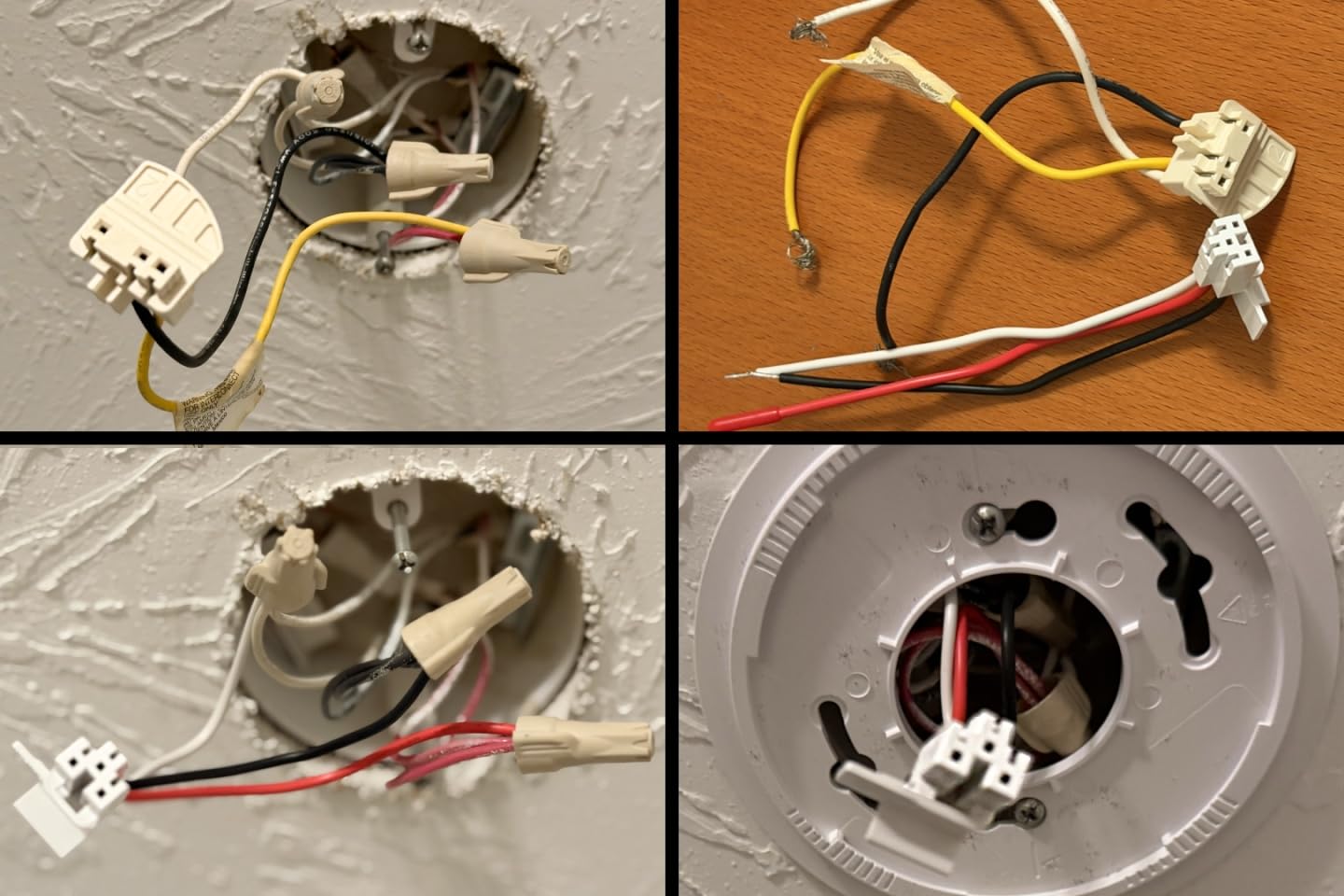
For the hardwired path, the job is straightforward for anyone who has opened a box before. Shut off the circuit at the panel, verify with a tester, mount the backplate, connect the power leads, the neutral, and the interconnect signal wire, then seat the alarm and confirm the network responds to a test press. The third wire is the one people miss, and an alarm wired without it is not interconnected, no matter how many you install.
For the wireless path, the whole install is a drill, two screws, and a pairing button on each head. Hold the test button on the first alarm until the others acknowledge, add each one in turn, and then test the entire network from any single alarm. Allow an hour for six units rather than twenty minutes, because the pairing is the part that eats time when a head does not join on the first press.
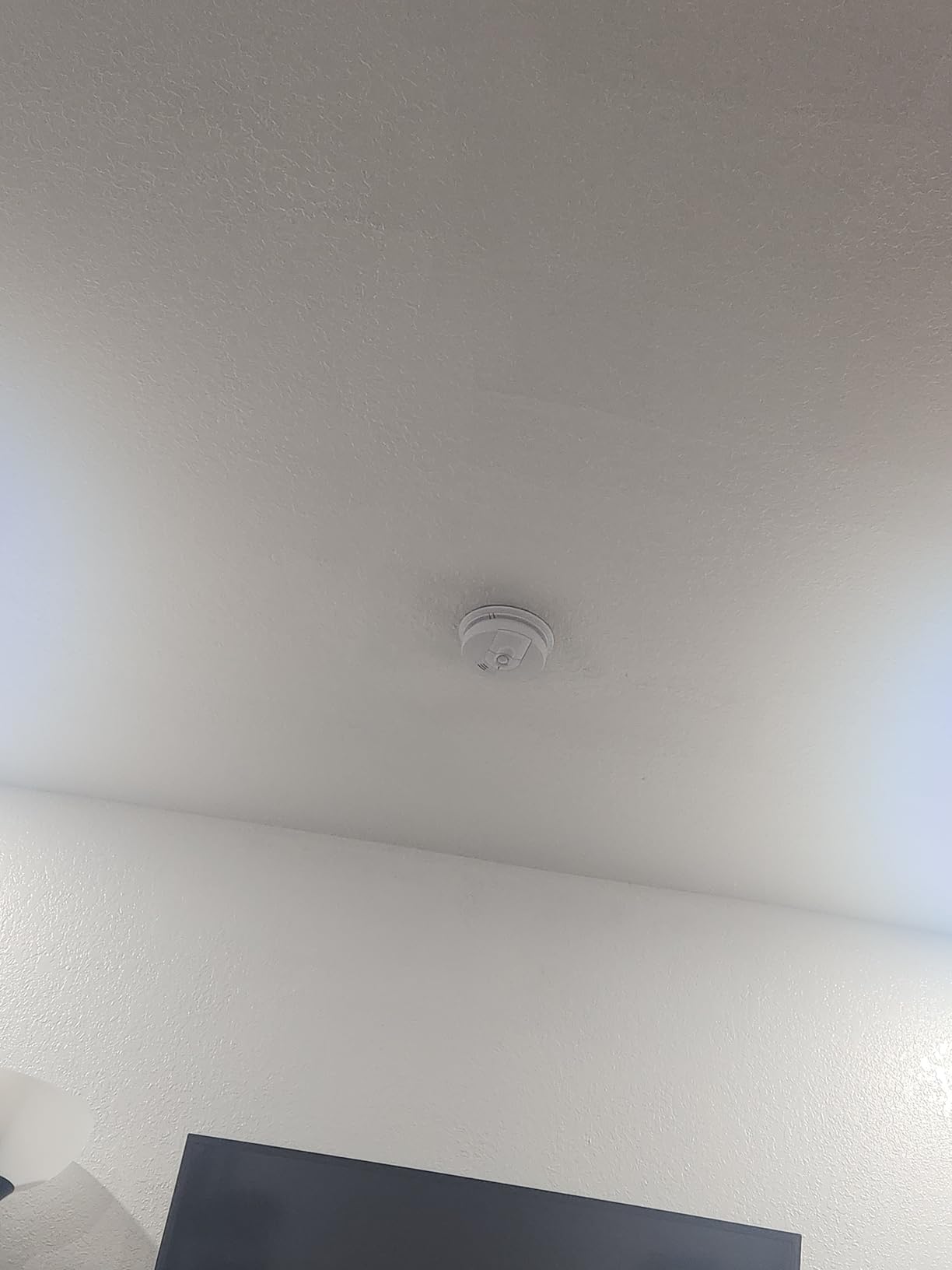
Two placement rules cause most disputes. Alarms go on the ceiling or high on a wall, not in the middle of a wall, and away from air vents, ceiling fans, and bathroom doorways where air movement either delays detection or carries moisture and cooking aerosol straight to the sensor.
Monthly, test the network from one alarm and confirm every head responds. That single action catches a dead head, a low backup cell, and a failed interconnect in under a minute, and it is the maintenance habit with the highest payoff by a wide margin.
Every six months, replace the backup cells on hardwired alarms and vacuum each head gently to remove dust. Dust is the most common cause of a false trip in an otherwise healthy installation, and a soft brush on the vents takes a couple of minutes per alarm.
Yearly, walk each head and confirm the test and silence button still works without a battery being removed, and check the LED pattern on the hardwired units for a fault indication. Also review whether the layout still matches the house, since a finished basement, a new bedroom, or a converted garage each add a position.
At the ten-year mark, replace the entire sealed-battery generation. You cannot refresh these one at a time, and a network where half the heads have been replaced is a network with mixed generations, so plan one weekend and replace all of them together, following the test procedure for your model to confirm the new network closes properly.
For hardwired systems, there is no ten-year cliff, but there is a practical replacement cycle. Smoke sensors drift, and the industry norm is to consider replacing smoke alarms roughly every ten years, and CO sensors on the same date as the alarm they share a housing with. Record the install date on the back of each alarm with a pencil, which is invisible and takes two seconds.
Most homes need between six and nine. The National Fire Protection Association guidance is an alarm inside every bedroom, one outside each sleeping area, one on every level, and one in every basement, plus living areas, hallways, and attached garages. A three-bedroom with a basement and stairs usually lands at seven, and a fourth bedroom or finished basement room pushes it to eight or nine. Check your chosen network’s interconnect limit before ordering, because wireless families cap at 18 alarms and hardwired families cap around 12 to 18.
For a whole house, yes. The National Fire Protection Association reports that most people killed in home fires were in a different room from where the fire started, and sleep is the most dangerous time. Interconnection means a fire detected in the basement sounds every alarm upstairs within seconds instead of relying on sound travelling through a closed door. The cost difference over a full installation is modest once you compare it to the number of positions you need to cover.
Hardwired is better if your house already has alarm wiring, because the network runs on AC power with a backup cell and satisfies the stricter local code requirements some jurisdictions enforce. Wireless 10-year battery is better for rentals, finished ceilings, and additions, because installation is two screws and a pairing button with no wiring at all. Many homes end up with both, as long as each group is internally consistent within one brand.
At the national level, NFPA 72 permits wireless interconnection. In practice, many local authorities having jurisdiction require hardwired alarms with battery backup, particularly for new construction and rental properties. A wireless-only install can fail an inspection in those jurisdictions. Ask your local fire marshal before you mount anything, and keep the UL listing paperwork for each alarm you install.
No, and this is a common and costly misconception. Only units wired with a dedicated interconnect signal wire, or units using a matching wireless brand protocol, alert each other. A run of hardwired alarms sharing a power circuit but lacking the signal wire will stay silent when one of them trips. In practice interconnection also does not cross brands, so Kidde, First Alert, Siterlink, and X-Sense networks are each separate systems.
In rooms that need both hazards, yes, because one housing covers both and there is only one thing to test. The compromise is placement. Smoke detection wants a ceiling and clear air, while CO detection wants to be near the fuel source, so a combo head in a hallway is a reasonable balance but not an ideal spot for either. For a house with a furnace, gas water heater, wood stove, or fuel-burning generator, add dedicated CO coverage near that equipment.
The main one is brand lock, because a wireless protocol only links units from the same family, and buyers usually discover that after ordering. Sealed 10-year batteries cannot be replaced one at a time, so the entire network reaches end-of-life together after a decade. There is also no phone notification without a separate hub, and a pairing that was never finished properly can leave a head silent until the night it matters.
The best interconnected smoke detectors for whole house coverage come down to one honest question: is there alarm wiring in your walls? If there is, the Kidde hardwired combo with the voice alarm is where we would start, and the First Alert SC7010B-3 is the choice when you want photoelectric calm in a kitchen. The First Alert 9120B six-pack covers the most positions for the least commitment, and the Siterlink GS562A is the one with the soft LED for light sleepers.
If there is no wiring, the X-Sense SC06-W six-pack is the strongest single order in this roundup, with six wireless combo alarms, a 10-year sealed battery, and interconnection out of the box. The SC07-W covers a wider floor plan with its long wireless range, the SD20-W keeps bedrooms quiet, and the SC01-W fits a smaller home in one box.
Whichever path you take, pick the brand before the count, count your mounting positions before you order, and write the replacement date down the day the system goes in. That last step is the one people skip, and it is the one that matters ten years later. This roundup was updated in 2026, and every model number above is worth confirming against your local code before mounting.