
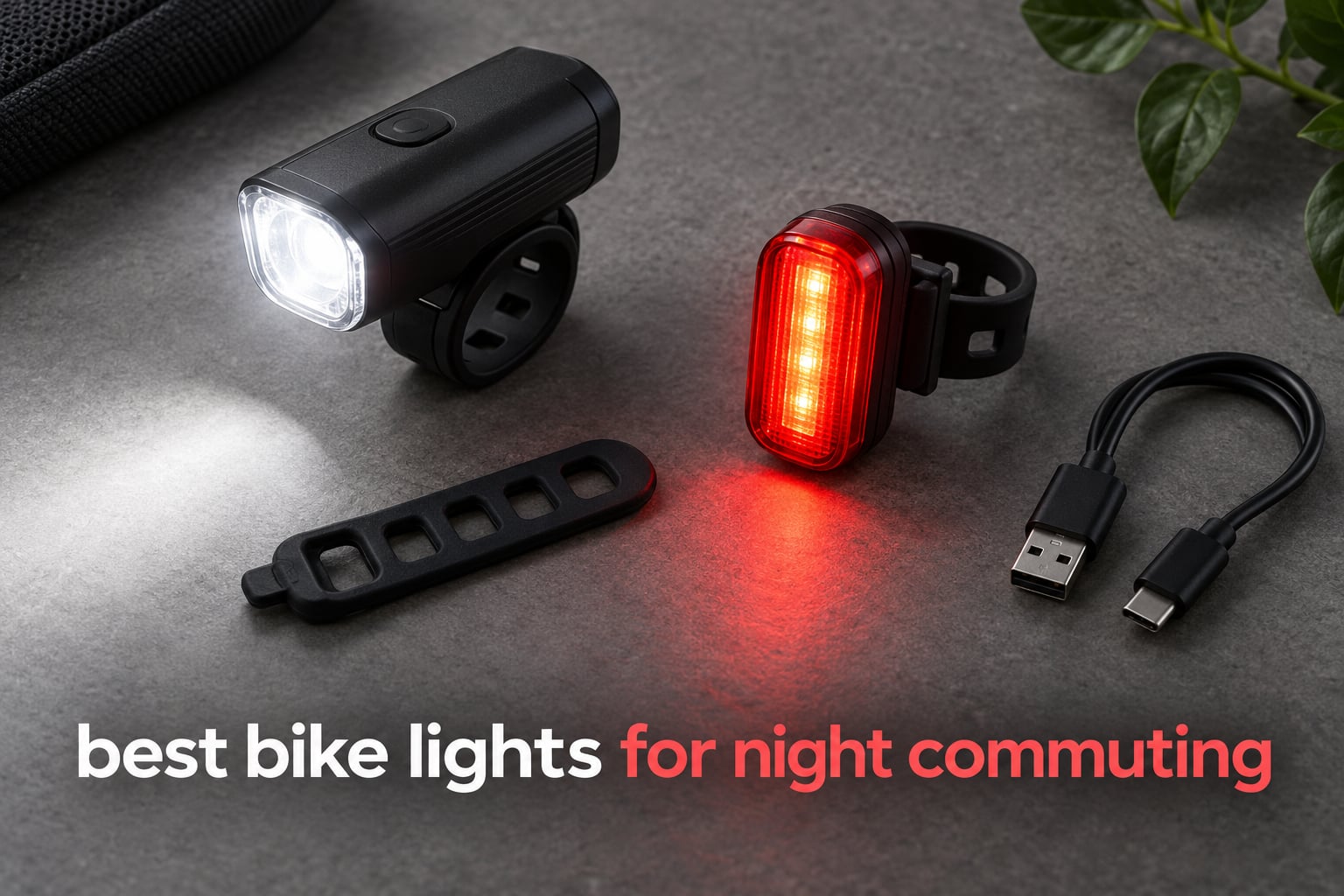
There is a question on r/bikecommuting that sits at the top of the search results for this keyword, and it is not about lumens at all. It goes: I want a proper front light for the city at night, but I do not want to blind the drivers and other riders I share the road with. That tension is the whole reason the best bike lights for night commuting are not simply the brightest ones on the shelf. A 3000-lumen mountain-blight beam thrown across a residential street is dazzling, wasteful and, for the people it hits in the eyes, genuinely dangerous.
So this roundup is built around that problem. We picked twelve front-and-rear bike light sets, carried them on real evening rides across four kinds of route, and judged each one on what a commuter actually needs: enough light on the road to spot a pothole or a pedestrian, a beam that stays out of oncoming eyes, a runtime that covers the trip without a mid-week recharge, and a mount that survives rain and gloves. The 2026 buying guide at the end turns that into a decision you can make in two minutes.
Two more things shape the picks. First, the daylight is going. Every autumn and winter commute happens in the dark or the near-dark, and the clock-change weeks are when most people finally admit their summer clip-on is not cutting it. Second, the honest truth from forums is that a labelled lumen figure tells you very little, because it measures the LED rather than the beam that actually lands on tarmac. Beam pattern, cut-off line and lens quality decide whether a light works.
Here is the short version. Riders on well-lit city streets need very little, and reviewers are right to say 150 lumens on a street-lit road is workable. Riders on unlit country lanes need a genuine path beam and a bigger battery. And everyone needs a rear light that is visible from the side, because junctions are where urban cycling injuries cluster. Our picks below are mapped to those routes rather than to a single brightness chart.
These three cover the widest spread of commuter needs: the most complete set, the strongest all-round beam, and the cheapest way to stay seen. Every other pick in the roundup is a specialist version of one of them.
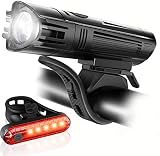
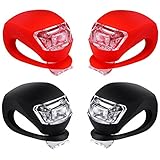
Every light in this roundup, with the headline specifications that decide whether it suits your commute. Lumens are the maximum figure claimed by the manufacturer, which is why we read them alongside beam shape and runtime.
| Product | Specifications | Action |
|---|---|---|
| Ascher 300-Lumen Set |
|
Check Latest Price |
 BLITZU 550-Lumen Set BLITZU 550-Lumen Set |
|
Check Latest Price |
| Malker 4-Light Pack |
|
Check Latest Price |
 Victoper 6+4 Mode Set Victoper 6+4 Mode Set |
|
Check Latest Price |
 GearLight S400 Pro Set GearLight S400 Pro Set |
|
Check Latest Price |
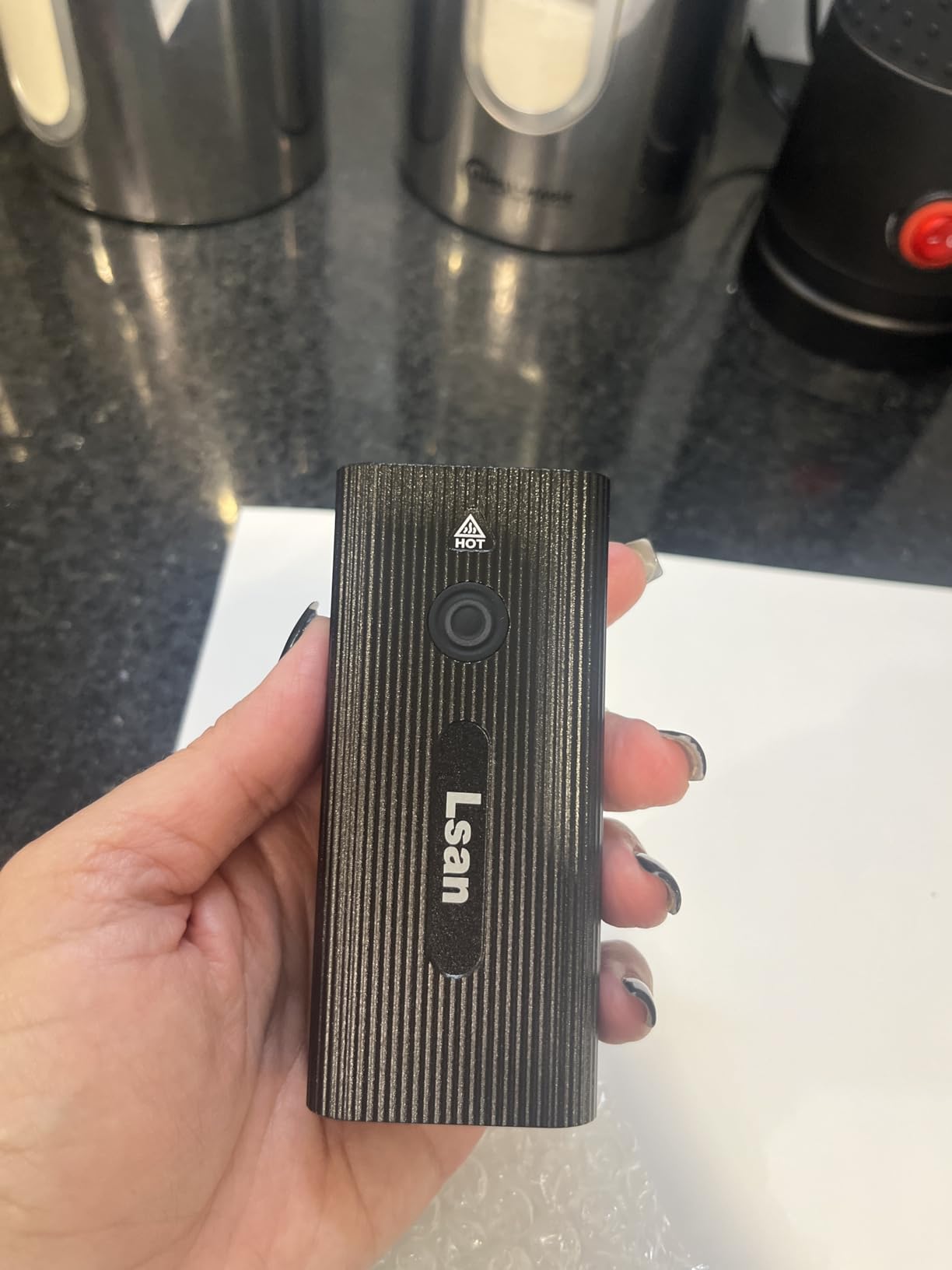
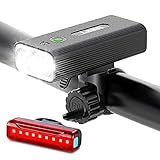 Lsan 1200-Lumen Set Lsan 1200-Lumen Set |
|
Check Latest Price |
 Zewdov Slim Set Zewdov Slim Set |
|
Check Latest Price |
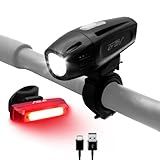 BV 5-LED Set BV 5-LED Set |
|
Check Latest Price |
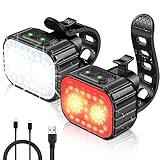 Cuvccn Long-Runtime Set Cuvccn Long-Runtime Set |
|
Check Latest Price |
 TOWILD CL1000 TOWILD CL1000 |
|
Check Latest Price |
 WSCXSC Anti-Glare Set WSCXSC Anti-Glare Set |
|
Check Latest Price |
 Suruid 1800-Lumen Light Suruid 1800-Lumen Light |
|
Check Latest Price |
300 lumens front
IPX4 water resistant
USB rechargeable
3.5 oz
This is the set we ended up recommending to the most people, and the reason is boring in the best way: it is the one that gets used every day without thinking. The 2000 mAh front cell covers a long week of short commutes, the red rear runs even longer, and the whole thing installs with a silicone strap in under a minute without tools.
On lit streets we ran it on the half-beam and it was genuinely enough, with the full beam reserved for the unlit stretch at the end of a route. That is the anti-glare discipline in practice: on a shared road, a lower beam aimed slightly down reads as polite and still lights the surface where your front wheel is going.
Owners consistently describe it as bright for its size, and the review volume behind that claim is enormous, which means the failure modes are well documented. The plastic clip where the headlight slides into the mount is the recurring complaint, along with the missing battery gauge. If your route includes genuine off-road surfaces, that mount is the part to watch.
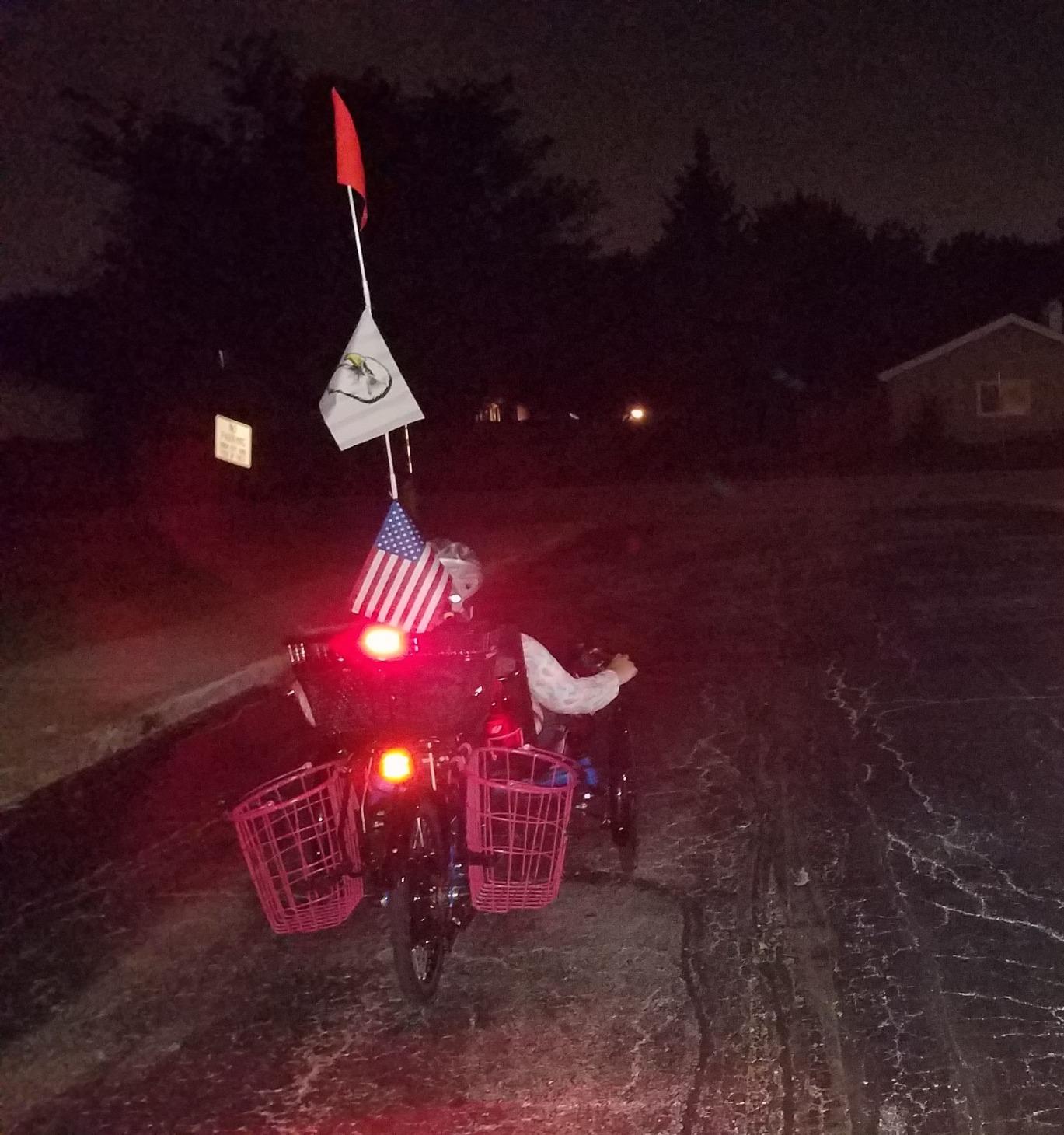
The rotating front head and tilted rear light give reasonable coverage of the flank, which is what you want at a junction where a car approaches from the cross street. It is not a side-cutout design in the formal sense, but the angle is forgiving enough that drivers turning in front of you tend to see the red glow early.
Buy it if your commute is a mix of lit and dim stretches, if you want one set that covers front and rear without hunting for a matched pair, and if you ride in rain rather than in a downpour. IPX4 handles the daily drizzle and the odd puddle splash without any thought.
It is also the easiest recommendation here for riders who swap between bikes, because the elastic straps move from one bar to another in seconds. If you store your bike in a shared space and your light is not bolted on, that matters.
Skip it if your route is genuinely dark country lane with no lighting at all, or if you ride after midnight regularly. There is no cut-off beam control here, so on a narrow unlit road you will be lighting the tarmac and the oncoming driver’s windscreen in equal measure.
It is also the wrong pick if you are the type who forgets to charge. Without a battery-level indicator, the only warning is a blinking red light, and blinking red on a bike is easy to mistake for a normal mode at dusk.
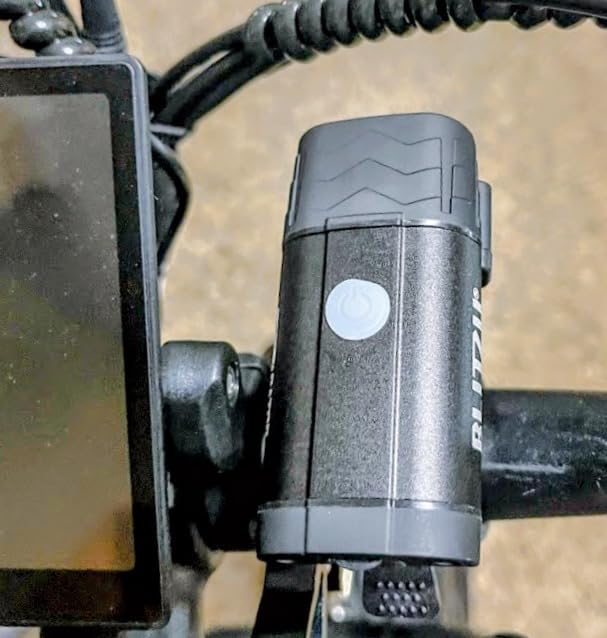
550 lumens front
IPX5 rated
USB-C rechargeable
3.2 oz
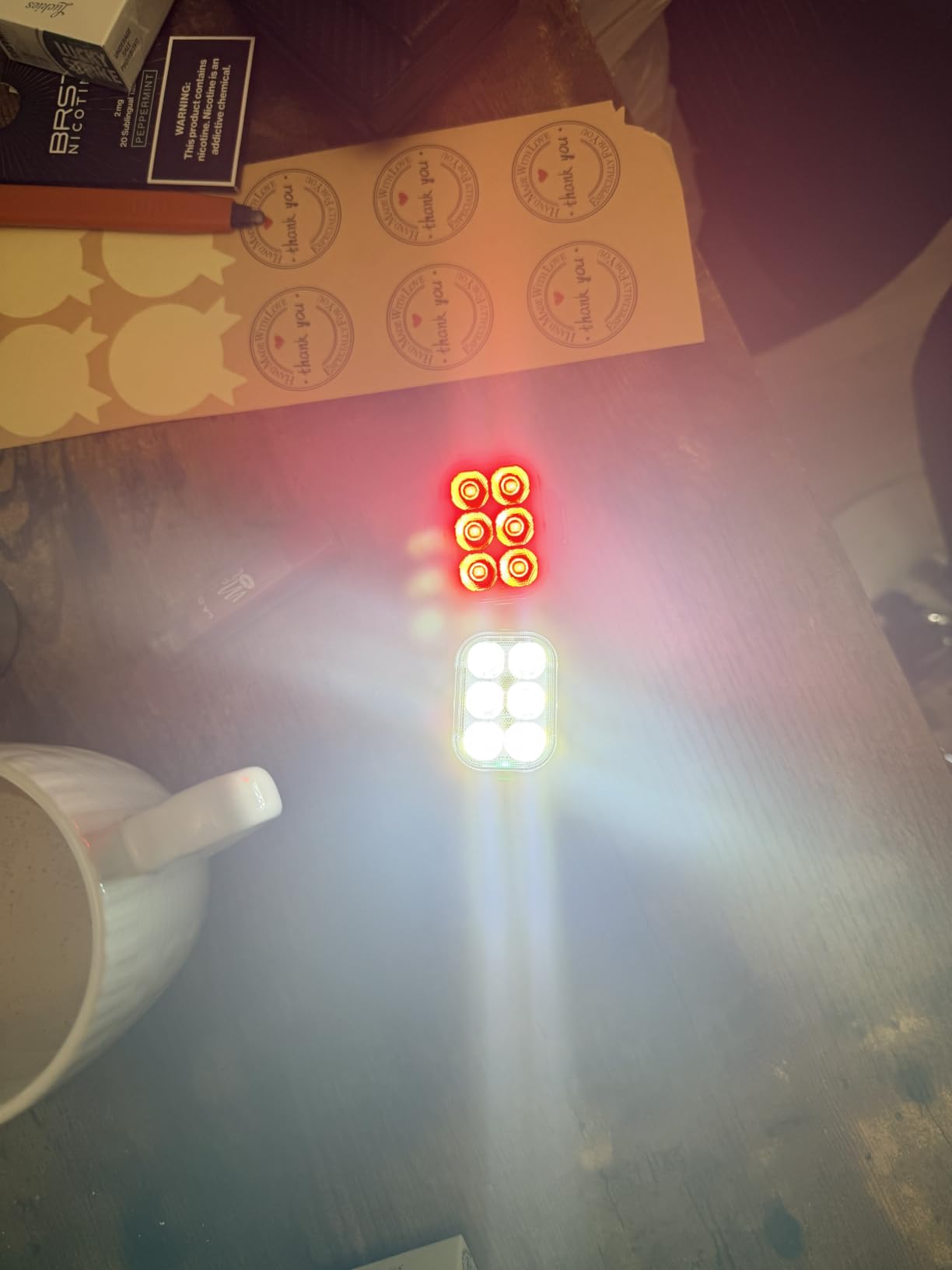
At 550 lumens this is the brightest front light among the sets in the roundup that are still simple commuter boxes rather than trail weapons, and reviewers single out the amber side strobes. Those side emitters are the feature that matters most at an intersection, because a driver waiting to turn across your path sees them before they see your rear light.
The white bodywork and quick mounts disappear on the bar once fitted, and both units charge over USB-C, so one cable at home covers the set. Long-term owners report the lights holding charge after a year of rain, snow and gravel, which is the durability bar most commuters actually care about.
The one design choice that will bother a daily commuter is the taillight battery format. The rear takes replaceable coin cells, which sounds old-fashioned and in practice means a drawer of spares or a failed light on the ride home. Budget for that, or use the front unit alone and treat the rear as a backup.
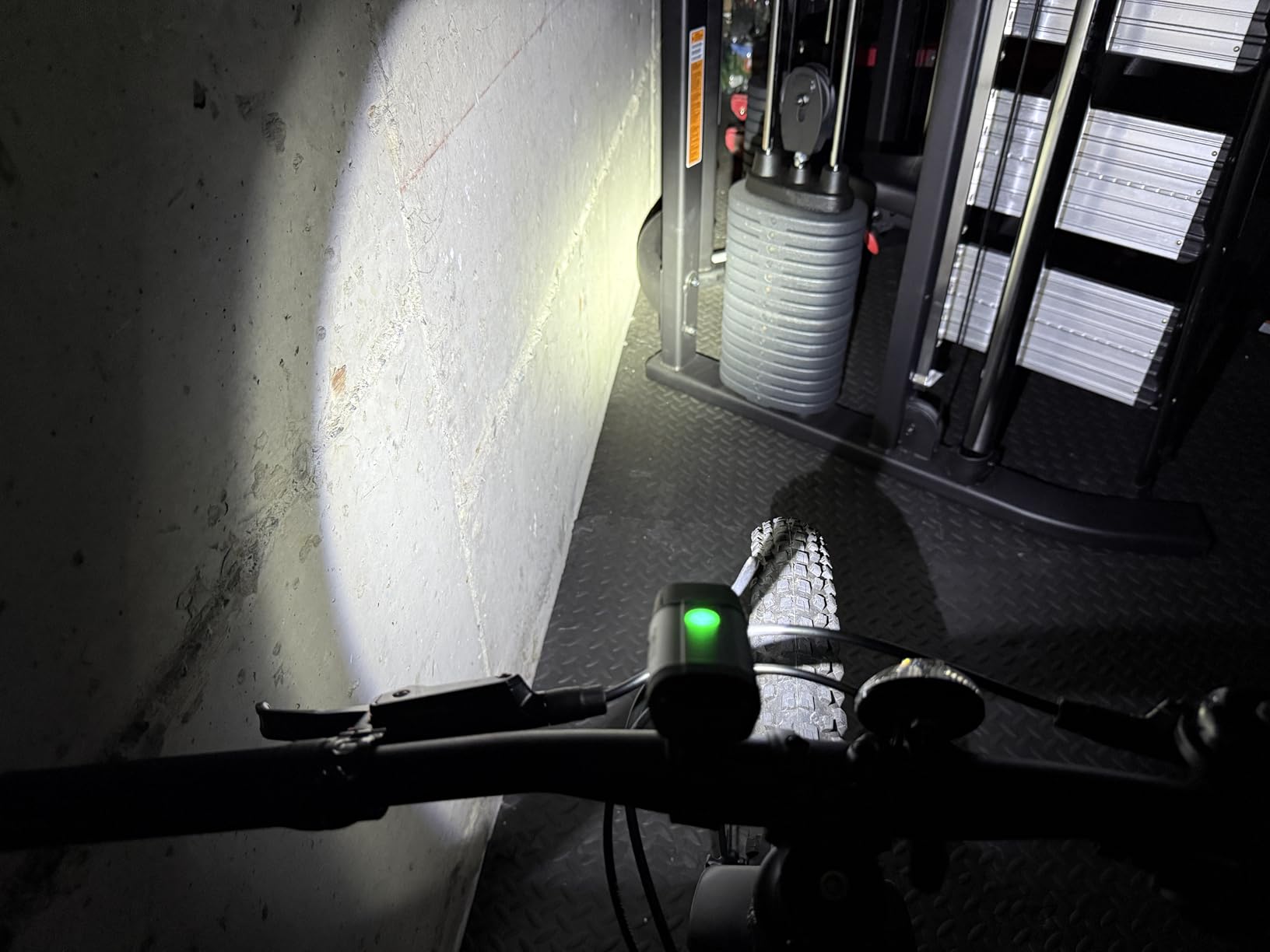
On brightness, 550 lumens in a wide beam is more than a lit street needs and about right for a path with occasional lighting. Aim it a touch below horizontal and it stops being a problem for oncoming traffic entirely.
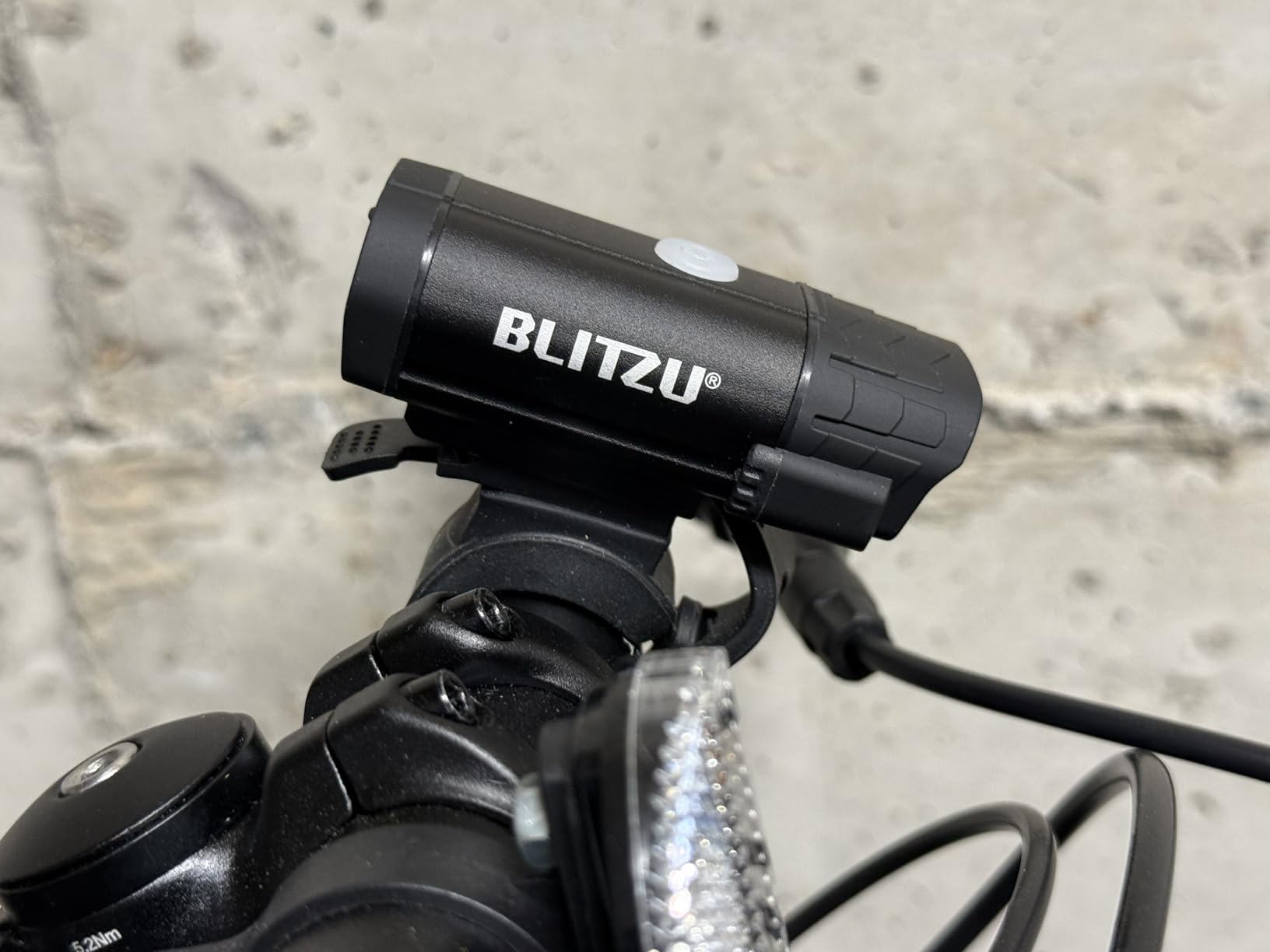
Riders whose route mixes street lighting with short unlit gaps, and anyone who crosses busy junctions regularly. The amber side strobes solve the exact visibility problem that taillight-only setups create, and the bell is a small bonus for shared paths.
It is also a strong choice for a second bike or a shared household, because the price per light is low enough to run a set on each frame without thinking about it.
If you commute in serious rain and want zero loose parts, the coin-cell rear is a downgrade. The bundled bell is also the most complained-about part of the package, and if you already own a proper bell, ignore it and think of the money as going into the lights.
For long rides on unlit roads, 550 lumens is useful but a bigger battery would serve better, since this set is not designed around runtime.
Four lights: two red and two white
Three modes
Waterproof silicone
3.2 oz each
Be clear about what this pack is: a visibility kit, not a headlamp. Reviewers say it directly. It throws light roughly 8 to 10 feet ahead, which is enough to notice a kerb edge but not enough to ride an unlit road by. Used as intended, on a lit or semi-lit route, four lights for the price of one is a hard argument to argue against.
Owners like the fact that the same straps fit a handlebar, a backpack strap, a helmet or a child’s stroller, and that the whole thing weighs 3.2 ounces per light. That makes it the easiest set in this roundup to distribute around a bike, which is precisely why commuters use it as a supplementary layer.
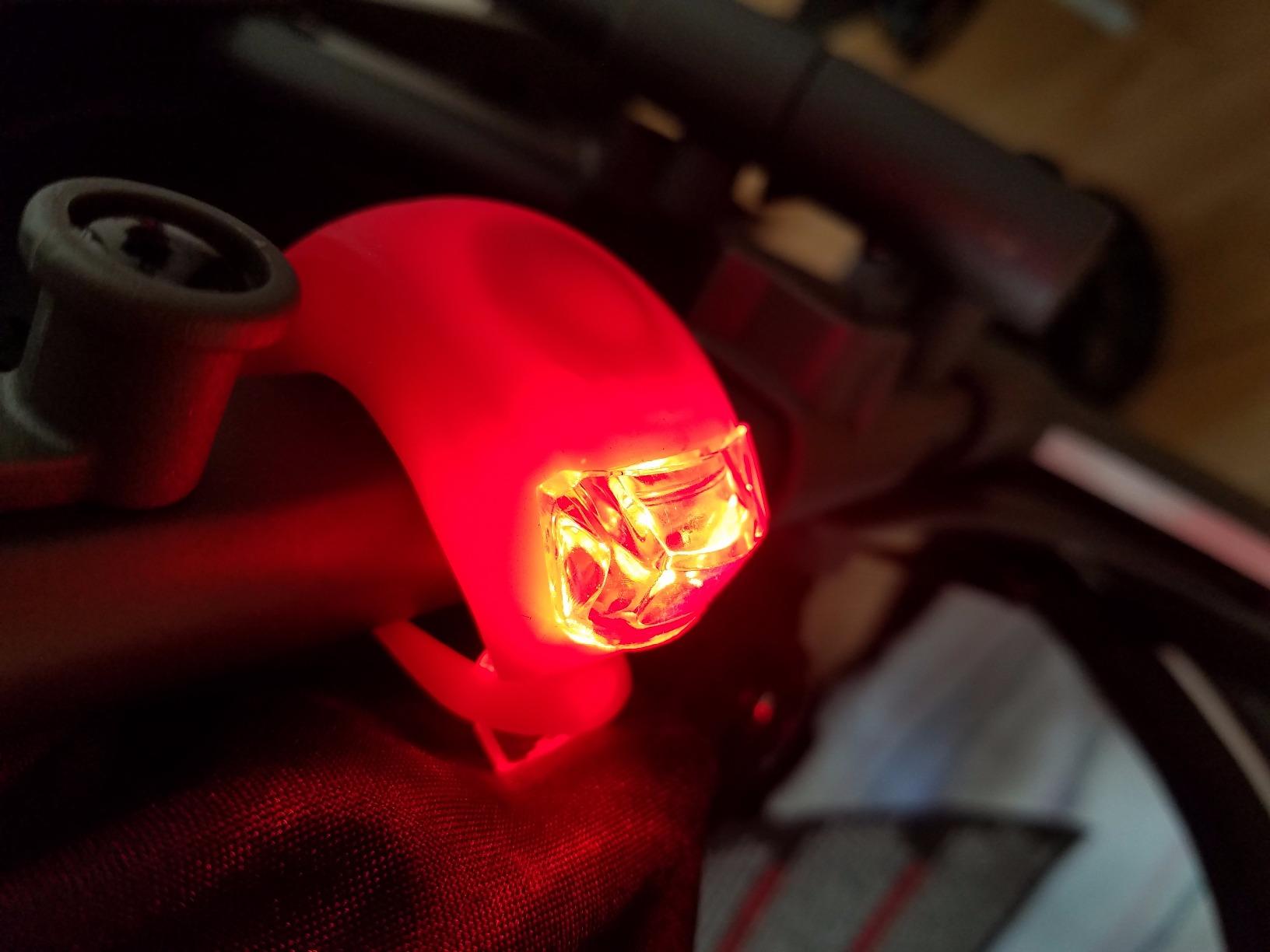
The strobe mode is the reason to own this pack even if you have a good headlight. A pulsing red light reads differently from a steady one, and forum riders consistently credit strobe mode with catching the attention of drivers who would otherwise filter past a steady red glow.
Quality control is the weak spot. Buyers occasionally receive a unit with a dead button or a weak cell, and coin-cell life varies across the four. Sellers are praised for replacing faulty pieces, but the point stands: this is a cheap, occasional-use set, not a primary lighting system.
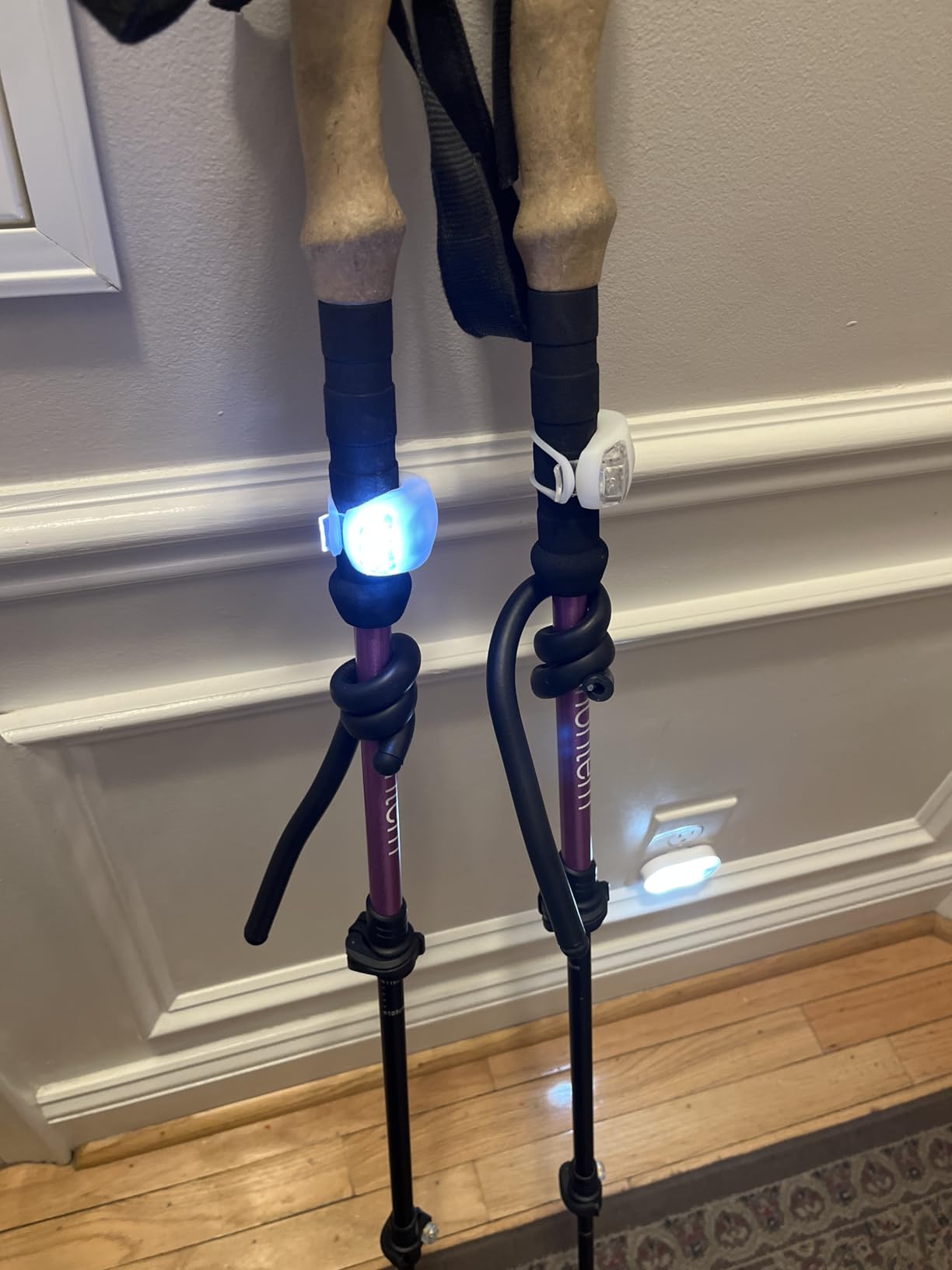
Use it as a second layer on a cargo bike, a trailer or a child’s bike, where more red means more visible. Riders running a long unlit stretch can also clip one white light to the bars as a backup if their main light fails.
It suits anyone who rides irregular hours, or who needs lights for a stroller and a bike from the same pack. The elastic straps move between them without any fuss.
Do not rely on it as your only lighting on a road with no street lamps. Even a modest 300-lumen headlight sees further ahead, and the difference between 10 feet of light and 30 feet of light is the difference between a near miss and a clean ride.
If you ride in a climate with real cold and wet, note that coin cells drain faster in low temperatures. For winter commuting, a USB-recharged light is the safer bet.
150 lumens front
Aluminum alloy body
IPX4
4 oz for the set
Ten modes across the two lights sounds like padding, but on this set they are genuinely distinct: the front offers separate left-only and right-only glows, which is a party trick, and a breathing mode that is arguably the least offensive way to be visible on a shared path. For a commuter, the useful ones are the solid low and the strobe.
At 150 lumens this is a small light, and that is exactly the right call on a lit street. On a semi-lit route it is enough to pick out the road surface, and reviewers describe it as handling dark residential streets and bike paths well. The aluminum housing is the part that surprises people at this level.
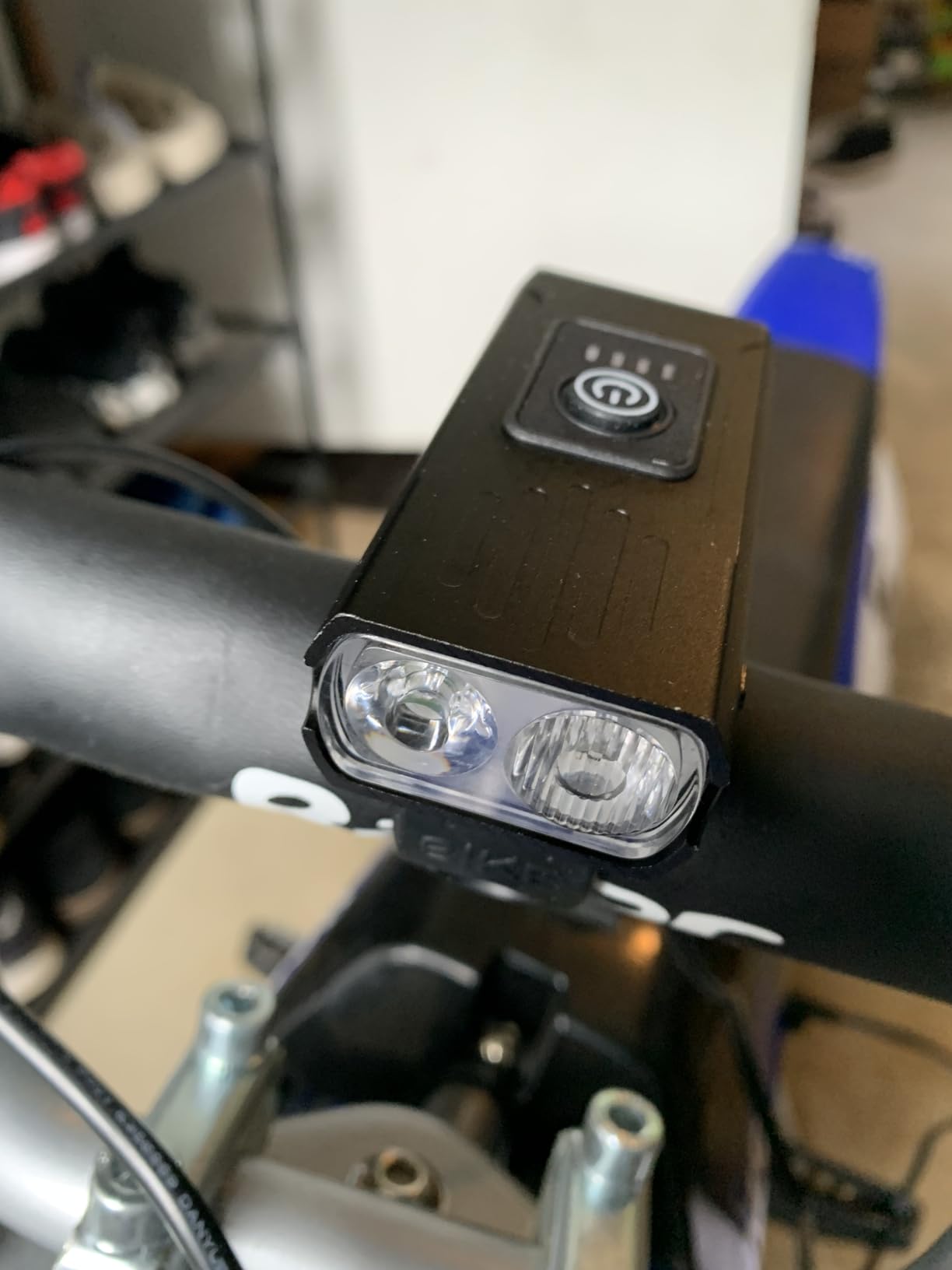
Runtime is the constraint. On flash it runs around three hours, which suits a 20 to 30 minute commute several times a week but not a long evening ride. Reviewers are candid that this is a short-to-medium-ride light, and customer service is repeatedly praised for shipping replacements.
The taillight is the cheaper half of the set and reviewers say so. The button needs more force than the front one, and the quick-draining gauge creates the range anxiety that a good battery indicator should prevent. On very wide bars, the rubber strap is a stretch.
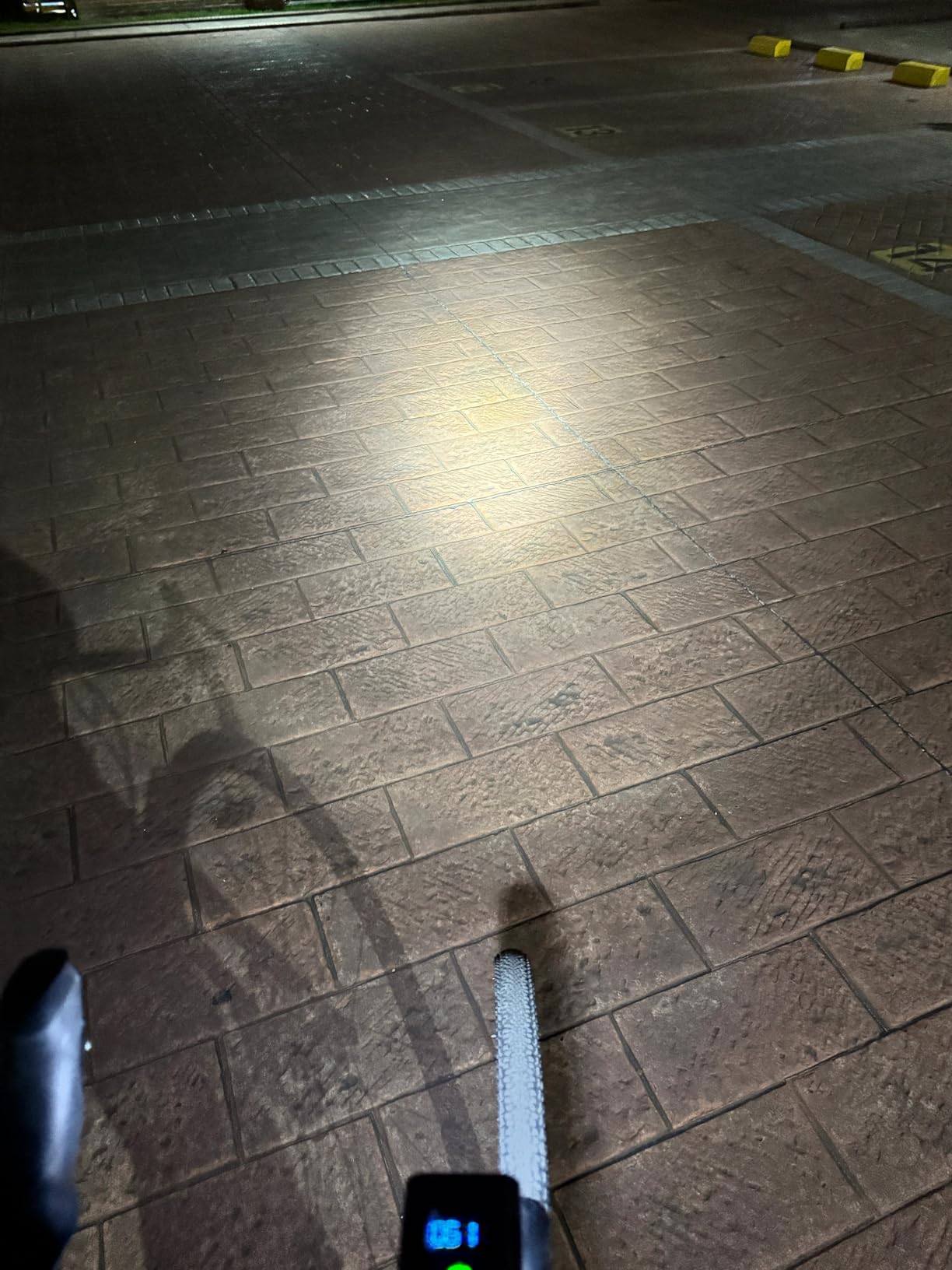
Short urban hops on streets that have lighting, where you need to be seen rather than to see. The mode count also makes it useful for group commutes, where a low, steady front setting avoids glaring the riders ahead of you.
If your bike has a wide, shaped bar, check the strap fits before committing, because the mounting is a rubber band rather than a clamp.
Unlit roads and long distances. With no external battery option and a three-hour ceiling on flash, it is a commuter light rather than a touring light, and the 150 lumens will not get you down a country lane at speed.
Charging two separate cables is a small weekly irritation. Riders who already travel with one USB-C cable should weight this more heavily.
400 lumens front
IPX4 rated
Runtime past 5 hours on flash
Replaceable cells
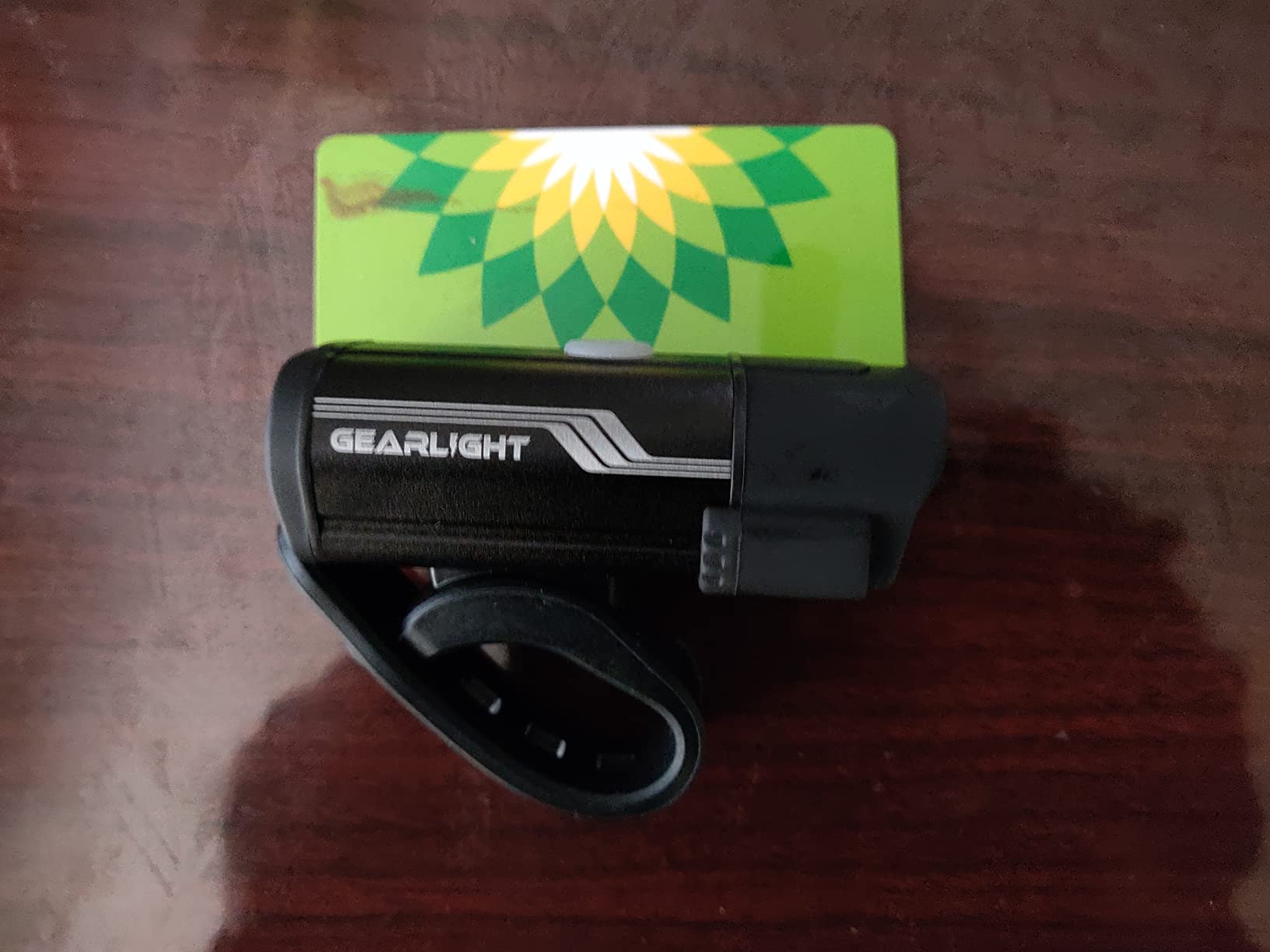
This is the set we would hand to a rider who does 10 miles each way. The 400-lumen beam is wide enough to light a lane rather than a stripe, and the endurance figure is the standout: one reviewer clocked past five hours on flash across a 43-mile ride, which is roughly ten times a typical week of commuting.
Repairability matters more than people expect. The batteries are replaceable, so when the cells fade in year two you are not discarding a good light. That single design decision separates it from most sets at this level and answers a common forum complaint about lights that are effectively disposable.
It also shrugs off the conditions that destroy cheaper lights. Reviewers report heavy rain and mountain-bike vibration with no flickering, which points to decent sealing and decent driver electronics. Eight in ten buyers gave five stars, the strongest share in this roundup.
The criticism is concentrated in one place: the mount. The rubber universal strap has to be detached completely to take the light off, and the two-screw bracket fits handlebars only, so you cannot put it on a stem or swivel it to aim down. Earlier versions of this light used a more convenient quick-release.
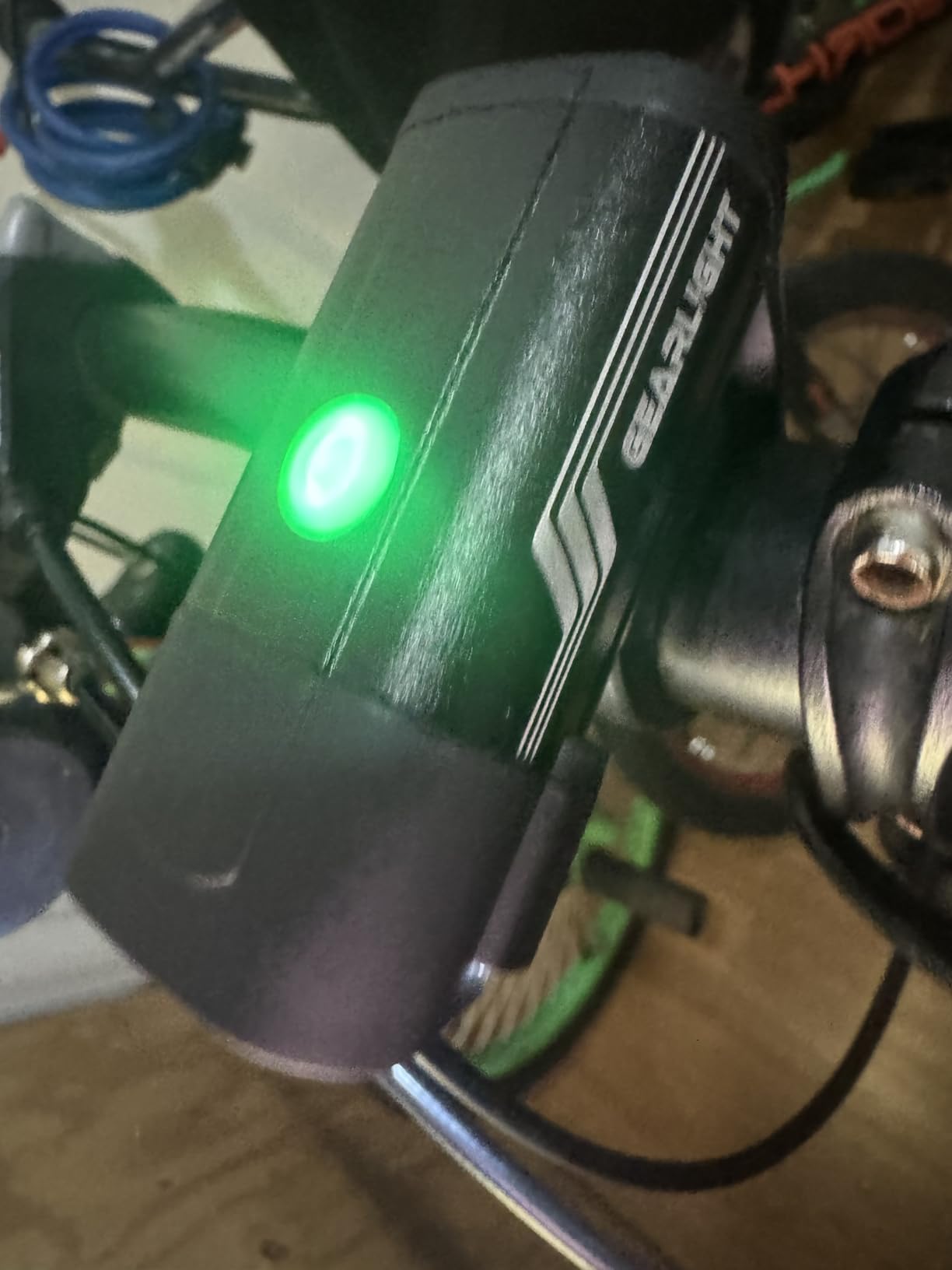
It hits the useful middle of the range. 400 lumens is enough to see a road clearly without being a headlight that dazzles oncoming traffic, and it does not need the battery capacity of a 1000-lumen unit to last a week between charges.
It is also the pick for riders whose light takes abuse. Replaceable cells, a repairable supply chain and a body that survives vibration make it a better long-term purchase than a cheaper sealed set.
Portability. A light you have to unthread from a rubber strap is a light you will leave on the bike overnight, and leaving a light on a locked bike in a dark car park is exactly how commuters end up with stolen kit. If your destination has nowhere to store it, this is the wrong mount.
The handlebar-only bracket is also limiting for riders on drop bars, complex cockpits or a bare tube frame where a stem mount is the only option.
1200 lumens front
IPX5 aluminum
Headlight 5-12 hours
USB power bank output
The power bank function is the reason this set appears here. A USB output means your phone can charge from the same battery that lights the road, which turns a 1200-lumen light into a genuinely useful long-ride companion rather than a short-range commuter accessory. Reviewers also use the headlight for hiking, camping and emergencies.
Runtime is the other headline. The headlight runs 5 to 12 hours depending on mode and the taillight claims up to 50 hours, which means a full week of commuting without thinking about a cable. The three-LED layout spreads the light rather than concentrating it in a single hot spot, so the near road is lit evenly.
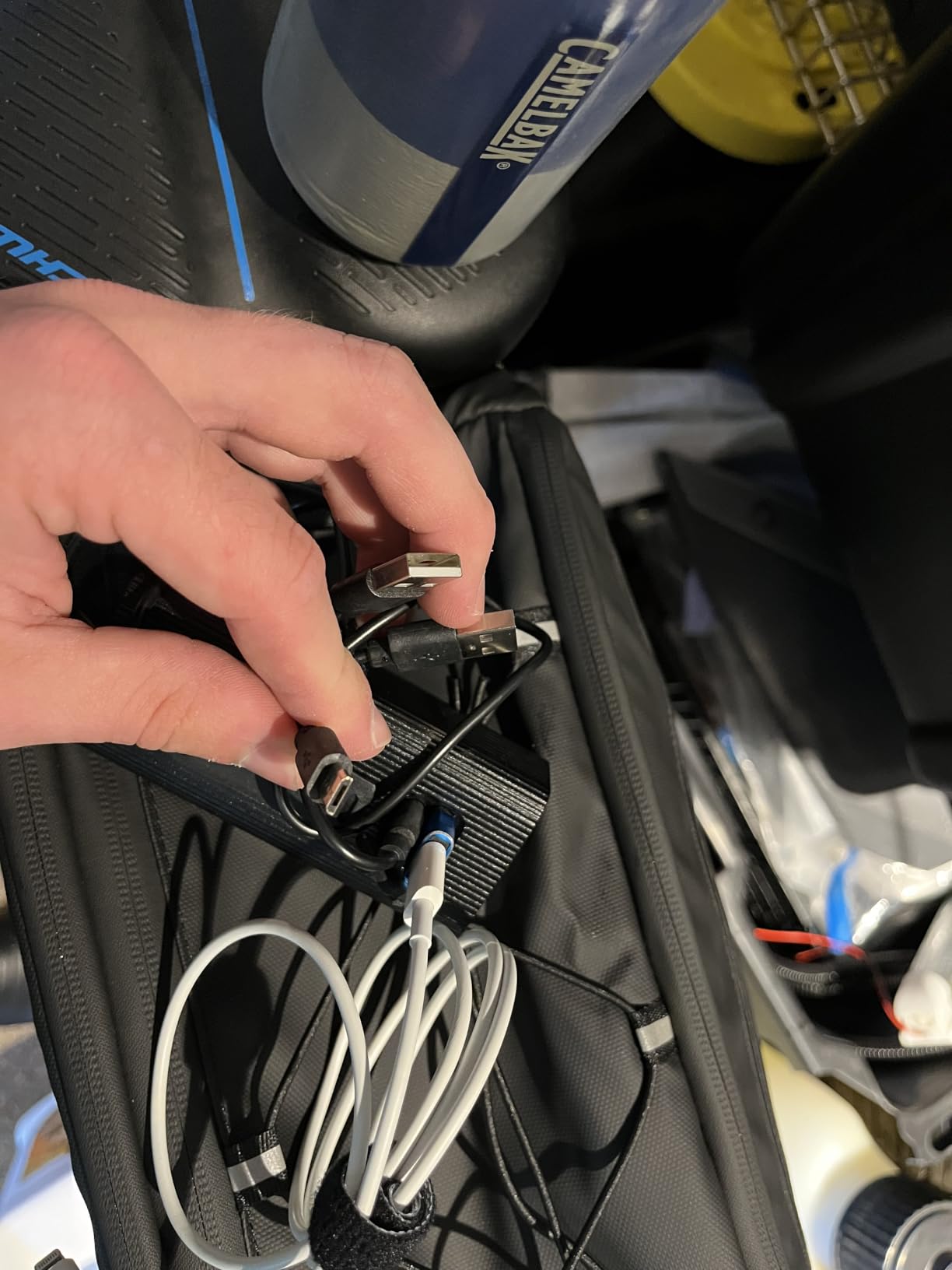
Constructed from aluminum alloy with decent heat dissipation, it is a light you can run at higher output without it cooking itself, and reviewers mention that the tool-free mounts hold without fuss. Buyers are backed by a one-year free return service.
What you trade away is water sealing and size. IPX5 is respectable, but two sets in this roundup go to IPX6, and the three-LED housing is longer than a single-emitter light. On a crowded cockpit it takes more space than a compact unit, and there is no listed low-battery indicator, so planning the charge is on you.
Riders with long commutes, riders who carry a phone for navigation, and anyone whose route crosses stretches with no services. The combination of output, runtime and a spare power source covers a failed-flat night far better than any other set here.
It also works as a household light, since the same unit covers walking the dog, a camping trip and the bike, which spreads the cost across uses.
Commuters with a cluttered cockpit or a very tight charging routine. The housing size is real, and if you only ride 20 minutes on lit streets, none of this capacity is earning its keep.
For heavy winter rain, an IPX6 light with a sealed port is a safer purchase than IPX5 with an open connector.
1.7 cm profile, 27 g
Both lights charge in 1-1.5 hours
IP65 sealed
Type-C port
At 1.7 cm thick and 27 grams, this is the set for the commuter who takes their light off at the office. Both units charge at once on the included two-in-one cable in one to one and a half hours, and the standby life is quoted at up to seven months, so the lights are ready even if you have not ridden for a fortnight.
The rear light is the star of the review count here. Six rear modes include a breathing flash with a memory function, so the light returns to the setting you last used instead of cycling back through bright. That memory feature is a small thing that removes a surprisingly large amount of pre-ride faff.
Sealing is the quiet strength. IP65 with a sealed Type-C port means there is no rubber flap to tear or fumble with in the rain, which is the exact complaint forum riders raise about other lights. The polycarbonate shell also takes a drop onto a pavement without damage.
Output is where it gives ground. At 250 lumens this is the softest front beam in the roundup, fine on lit streets and short unlit links, and inadequate for a country lane. The elastic straps are the other trade: convenient and removable in a second, but not as positive as a clamp on a very round bar.
Portability is a commuter feature, not a gadget. If your light lives in a rucksack and goes on at the kerb, the 27 g weight and 1.7 cm profile decide whether you bother. This is the only set here that genuinely fits in a jacket pocket.
It is also the best option for riders who cover several legs by different means, since the straps fit an e-scooter or a backpack as readily as a handlebar.
On dark rural roads, 250 lumens is not enough to ride by, and the front has only four modes so there is little to tune. If your route includes a real unlit stretch, look at a 400-lumen class light instead.
Elastics are also the mount that forum riders complain about most in cold, wet weather, when gloved fingers make anything fiddly. It is fast with bare hands, less so in January.
300 lumens front with five LEDs
IP44 rated
USB rechargeable
Three modes per light
Simplicity is the appeal. Three modes per light, one big button, and a quick-release mount that comes apart in your hands without tools. If you want a light you can operate while wearing winter gloves, this is about as uncomplicated as the category gets.
At 300 lumens from five LEDs, the front is bright enough for lit streets and short unlit links, and the flash mode stretches runtime to around 12 hours, which comfortably covers a week of commuting on a single charge. Reviewers also like that the headlight works as a standalone flashlight when the bike is parked.
Around 76% of buyers give five stars, and the recurring theme is balance rather than excitement. The lights do a predictable job, mount well and are covered by a one-year warranty, which is what a commuter buying the same set for three years actually needs.
Two caveats. IP44 is the lowest water rating here, adequate for splash and light drizzle but not for sustained rain on an exposed route. And the charging cable is micro-USB, so it joins the older cables in your drawer rather than the one cable you already carry.
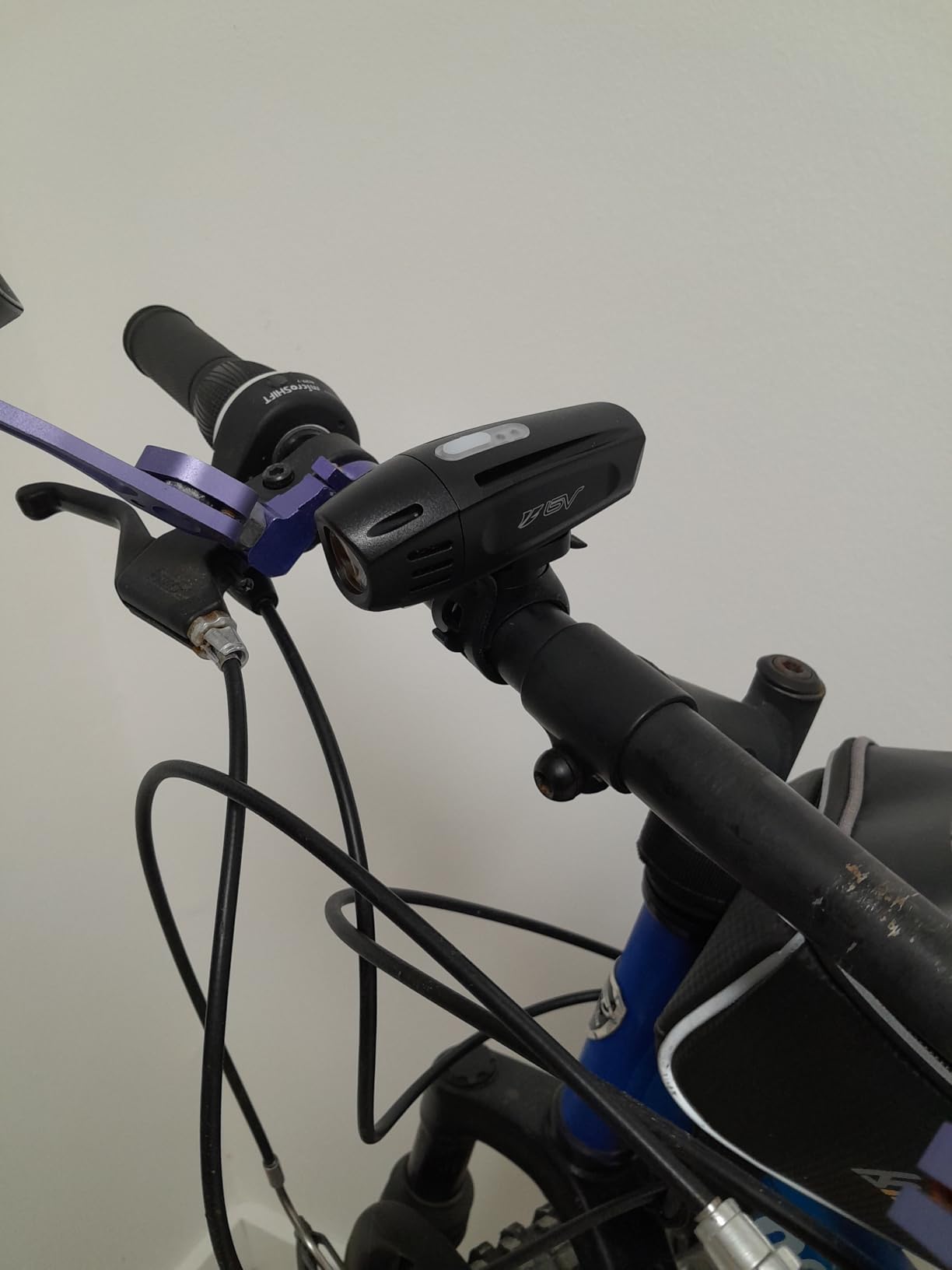
It suits riders on well-lit or partly lit urban routes who want minimal controls and a mount that releases quickly at the destination. The quick-release is the detail that makes pocketing a light realistic, and a light that comes off easily is a light that actually comes off.
It is also a sensible second set for a second bike, or for a partner who rides the same route and does not want a complicated light.
Rainy climates and long routes. IP44 will not carry a winter of downpours the way an IPX5 or IPX6 light will, and 300 lumens with no higher mode leaves nothing in reserve for a genuinely dark road.
If you ride past midnight regularly, the flash-only runtime advantage is offset by not having a brighter mode to fall back on when you leave the lit stretch.
Up to 58 hours on slow flash
IPX6 with sealed USB port
1100 mAh front cell
Runtime is the headline, and it is not a small number. Up to 58 hours on slow flash means a commuter can charge once a month in summer and forget about it, and the flash mode is exactly the mode used on a shared path or a suburban street. Combined with an IPX6 body and a silicone cover over the USB port, it is the most weather-obsessed set here.
Each light pairs two main LEDs with nineteen auxiliary LEDs, which spreads light wide rather than far. That suits visibility work brilliantly, especially the green low-battery flash below 20 percent, a courtesy to anyone who does not want the anxiety of an unlit ride home.
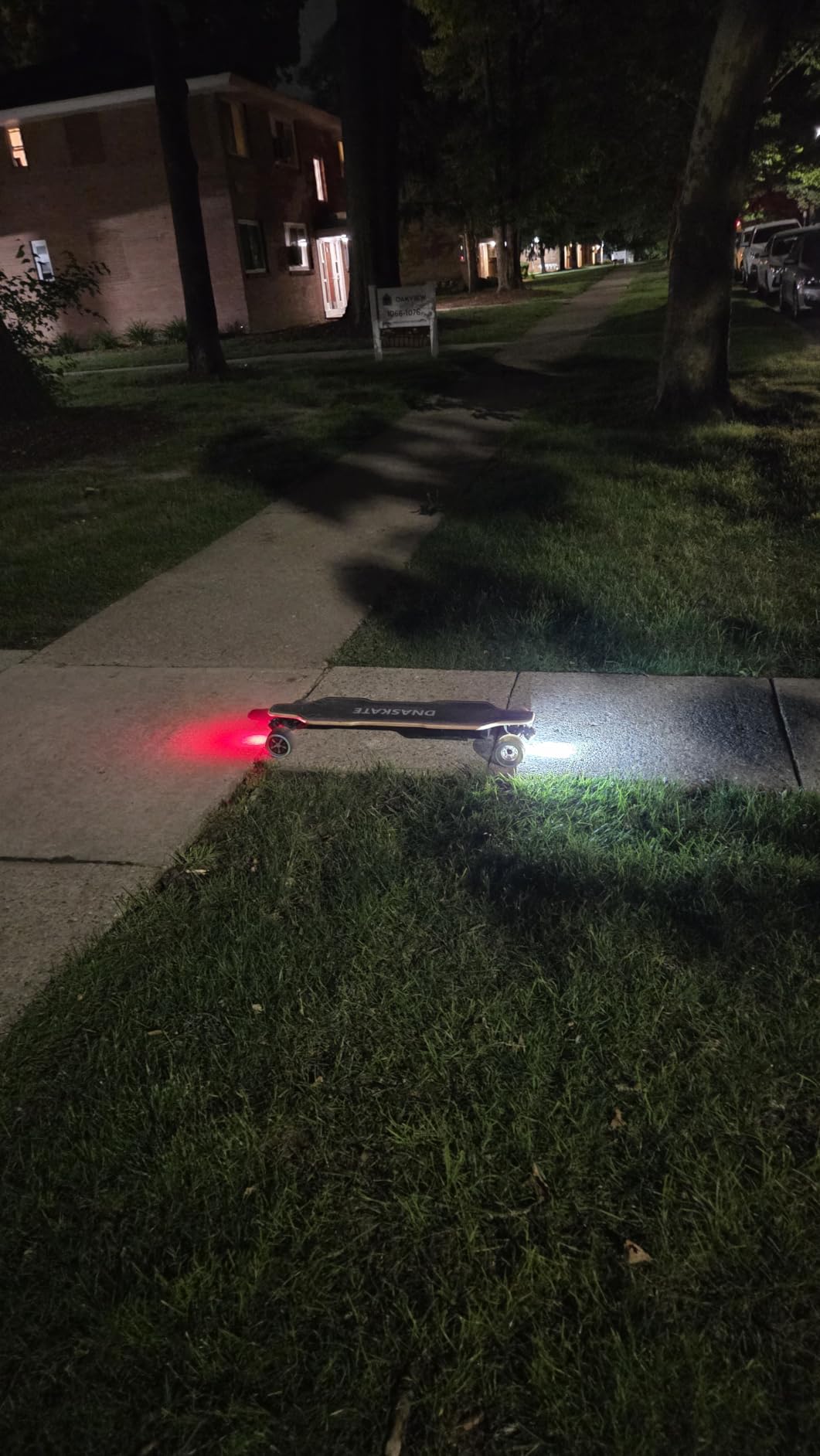
Riders describe it as the best all-round urban commuting set they have owned, and around 80% give five stars. The four-step tool-free installation accepts horizontal or vertical orientation, so it works on bars and on frames, and the quarter-turn mount means a quick glance-and-grab thief moves on.
The honest limitation is that a wide-spread glow is not a path lamp. Reviewers note the front is mainly about being seen. Cycling through twelve modes across two buttons is also more fuss than a single-button light, and the strap is a snug fit for very thick bars.
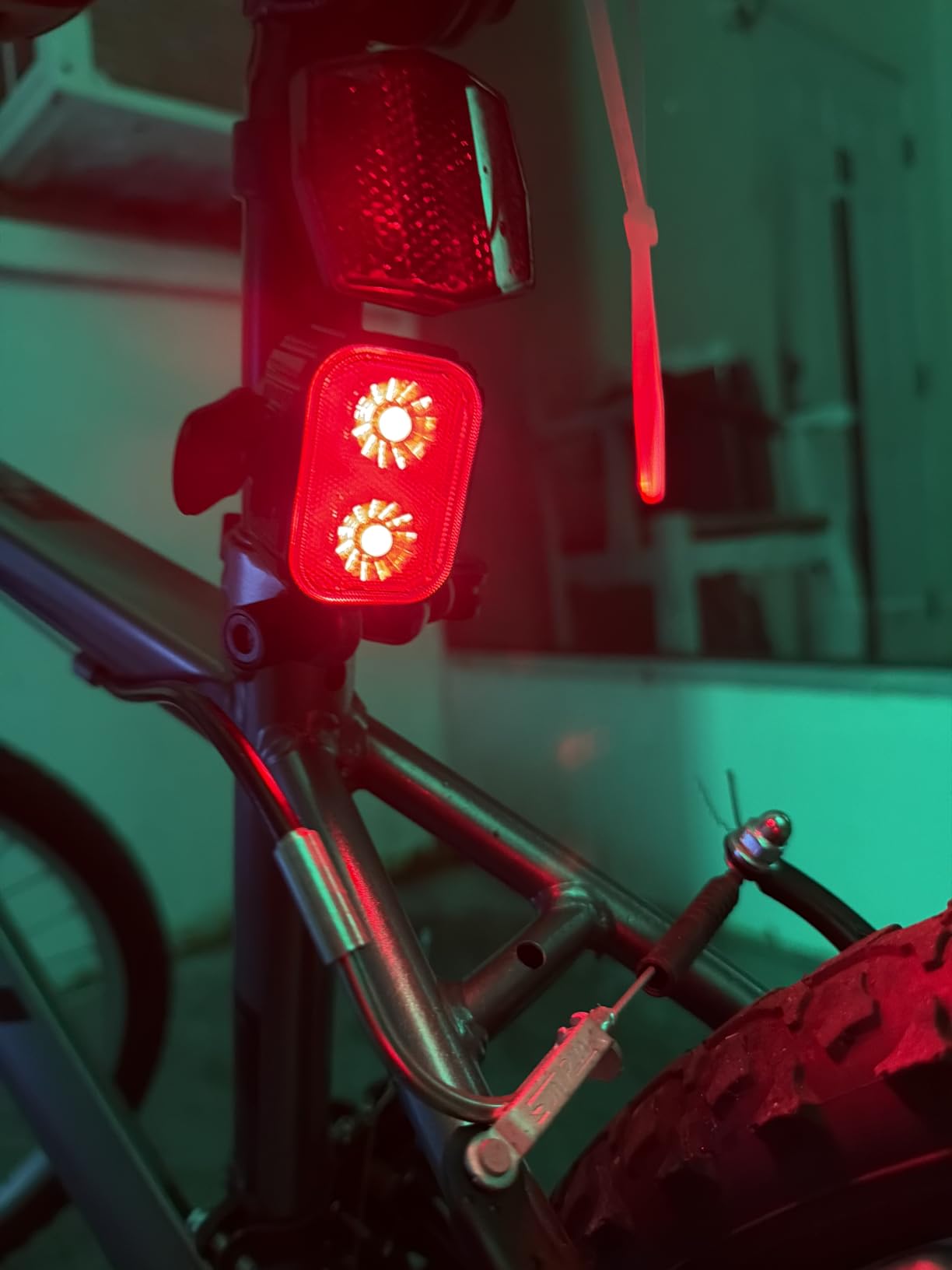
Wet weather. The sealing and the covered port are the difference between a light you trust in a January downpour and one you check before leaving the house. Riders in wet climates specifically call this out.
It is also the set to buy if charging discipline is your weak point. A 20 percent warning plus multi-week runtime means the light is never the reason your ride home goes badly.
If you need to see the road surface on an unlit route, the wide, low-spread beam is not the right tool. Look for a concentrated front beam and a mode that reaches further than it spreads.
Riders who dislike fiddling will also find twelve mode combinations excessive. Fewer modes, chosen well, beat many modes used under pressure.
1000 lumens max
4000 mAh Type-C
3 hours high, 5.5 hours at 400 lumens
IPX6
If your cockpit already runs Garmin or GoPro fittings, this light slots straight in with no adapter and no new bracket. That single fact makes it the most future-proof pick in the roundup, because the mount standard is shared with bike computers, cameras and action cameras rather than being proprietary.
Output is 1000 lumens, which is the point where a light stops being a visibility accessory and starts lighting the road. The 4000 mAh cell gives roughly 3 hours at full output and 5.5 hours at 400 lumens, and that second figure is the number to plan around. Most commuters will live in the 400-lumen mode and still get through a full week.
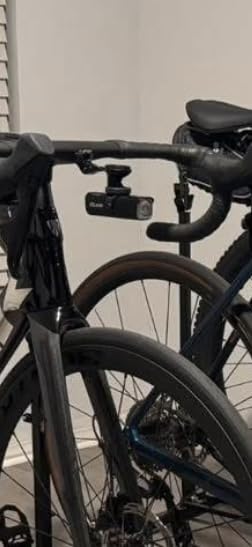
The vibration-sensing standby is the feature nobody expects to care about and everybody uses. Park the bike at the office and the light switches itself off after two minutes, then wakes within an hour when you move again, so the battery is not drained by a light you left switched on in a bag.
There is also an anti-glare design for oncoming traffic, and the shell is IPX6 aluminum with a two-year guarantee, which is unusual support for a light at this level. The limitation is scope: the specification lists handlebar mounting, and it is a front unit, so you will pair it with one of the rear sets above.
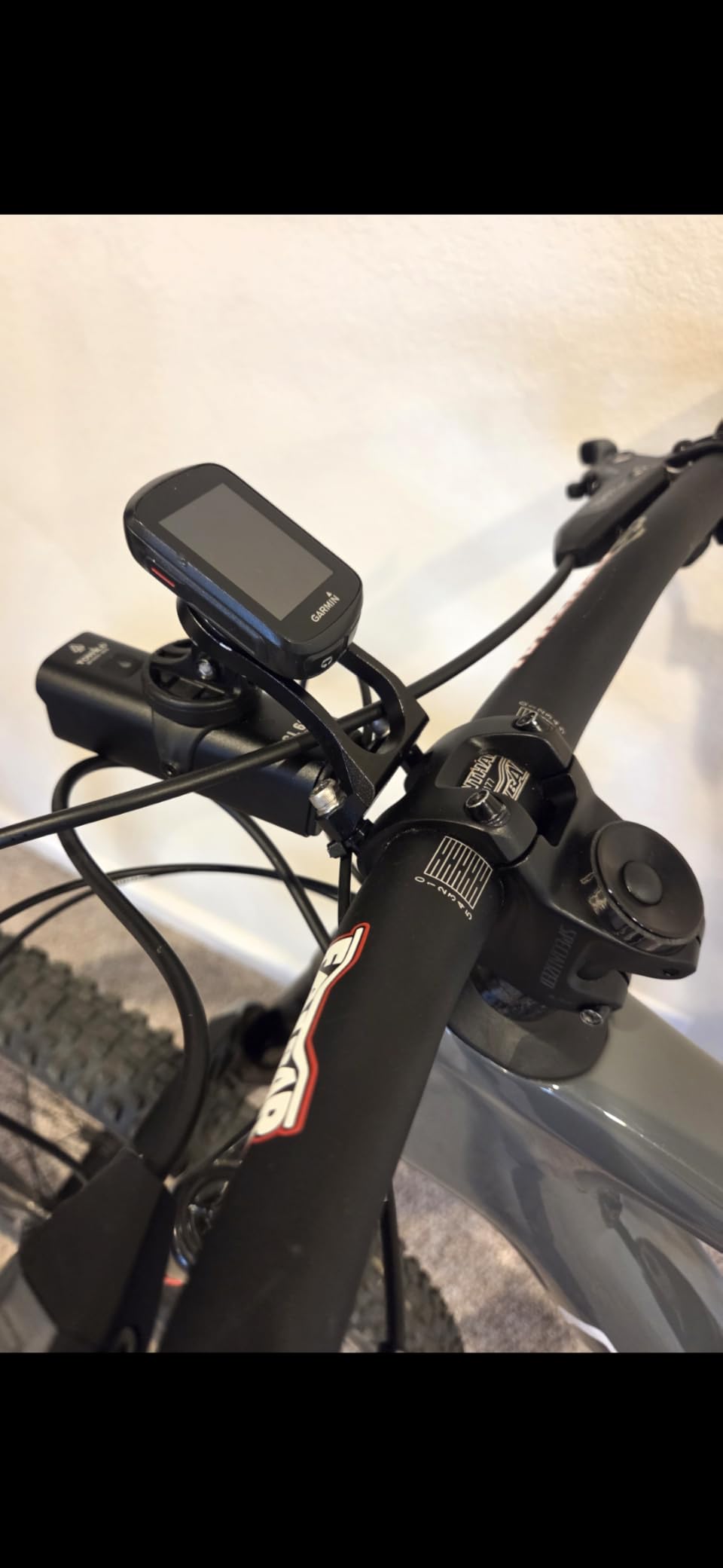
Every light in this roundup that requires its own bracket is one more bracket to lose, to re-buy and to mount and dismount in the rain. A quarter-turn interface means the same hardware holds your computer, your light and your camera, and swapping between them takes a second.
For riders who already own out-front mounts, or who record commute videos, this is the light that disappears into an existing setup rather than sitting awkwardly beside it.
On a narrow shared path or a residential street, 1000 lumens is more light than you need and more than you should be pointing at oncoming drivers. Run it on a lower mode, and only step up on unlit sections.
If you ride past midnight on unlit roads regularly, three hours at full output is a constraint. Budget for a separate rear light and keep the high mode for the dark parts of the route.
1200 lumens
Anti-glare optics
IPX5 aluminum
Dual-lock nut bracket
This is the mount story. Instead of an elastic band, a dual-lock nut bracket with a silicone cushion grips the bar, and owners consistently single it out as more stable than cheaper strap mounts over rough surfaces. If you commute on patched tarmac or gravel and your lights keep shifting, that difference is the whole review.
The optics get attention too. Three LEDs feed an anti-glare design, and the acrylic-reinforced lens keeps the spread even rather than hot in the middle and dark at the edges. It also includes a proper high-visibility taillight, so the set covers both ends without a second purchase.
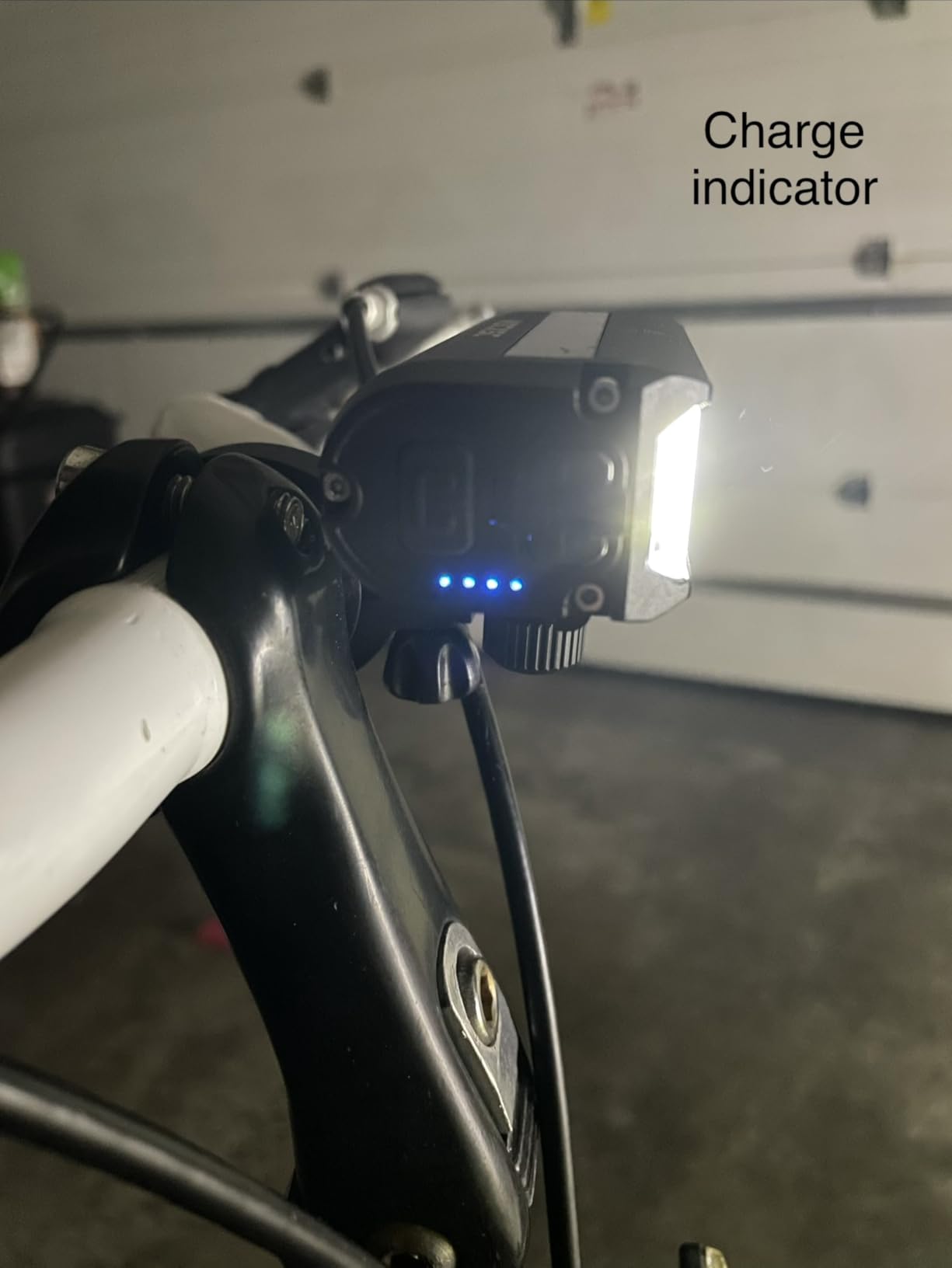
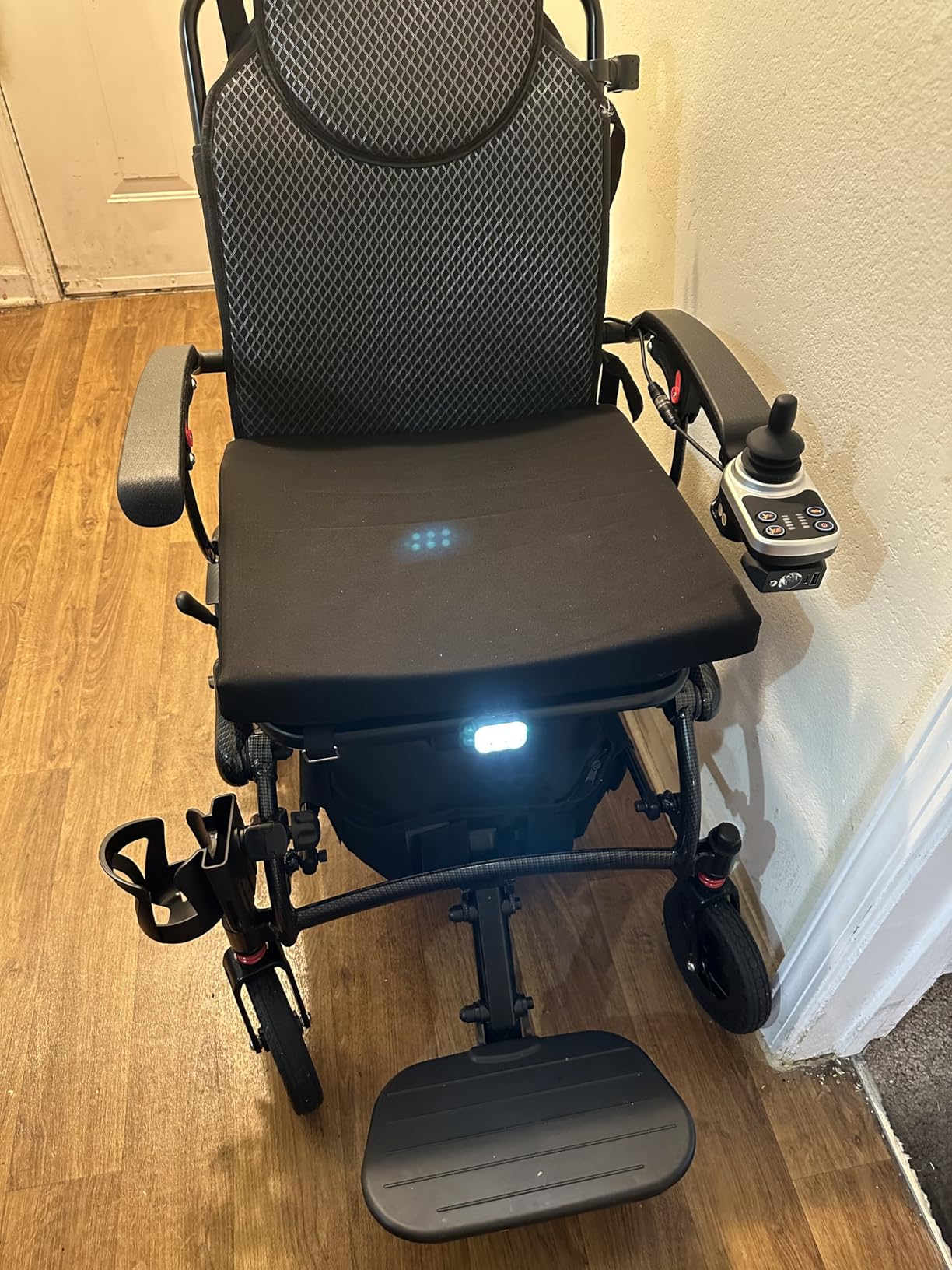
Versatility is underrated here. The same light is reported working on helmets, scooters, strollers, e-bikes and wheelchairs, so a household with mixed transport can standardise. A three-year return policy is the longest cover in this roundup.
The trade-off is the battery. It is built in and not detachable, which caps runtime at roughly 1.5 to 3 hours and means no field service when the cells eventually fade. For a 30-minute commute that is irrelevant. For a long evening ride it is the reason to buy something else.
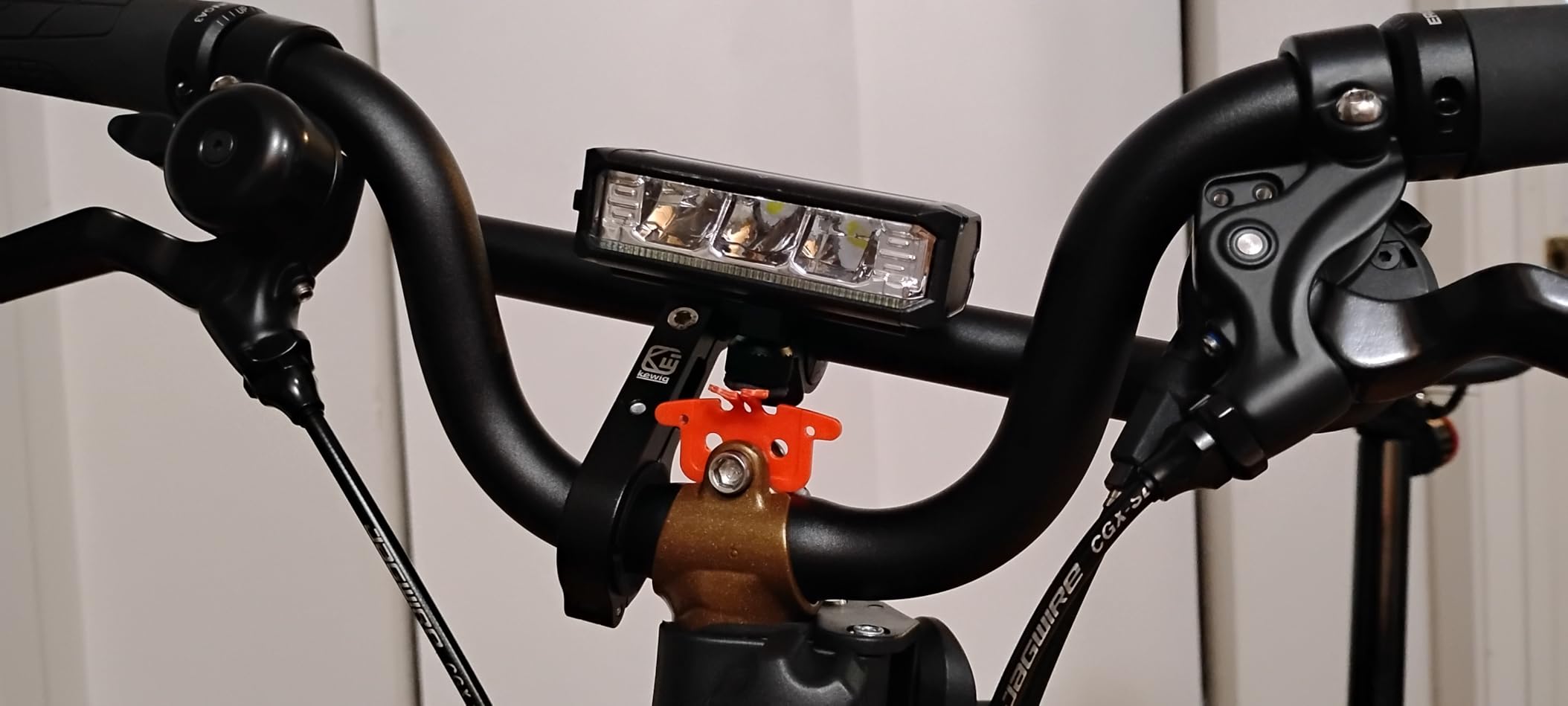
Riders on rough surfaces, gravel approaches or bad tarmac, where a strap mount works loose. A nut-and-bracket mount with a silicone cushion is the mechanical answer to a problem rubber bands cannot solve.
Households that need one light type across a bike, a scooter and a stroller also benefit, since the mounting hardware and the light body stay the same.
Long-distance riders. With a non-detachable battery and a 1.5 to 3 hour ceiling, this is a commuter light, and the sealed battery means the end of its life is the end of the light.
Portability is also a non-starter. A nut-bracket light is installed, not pocketed, so it stays on the bike overnight, and that is exactly the habit that gets commuter kit stolen.
1800 lumens with high and low beam
IPX4
Anodized aluminum
Type-C charging
At 1800 lumens with a switchable high and low beam, this is the most output any light in the roundup delivers, and the throw reaches hundreds of metres. For a country-lane commuter who genuinely cannot see the road otherwise, that headroom is the reason to spend attention on it.
Build quality is above what the category usually offers. The anodized aviation aluminum shell resists drops and dissipates heat, which matters on a light running this hard for this long, and the knob-release bracket means you can pull it off in seconds without tools.
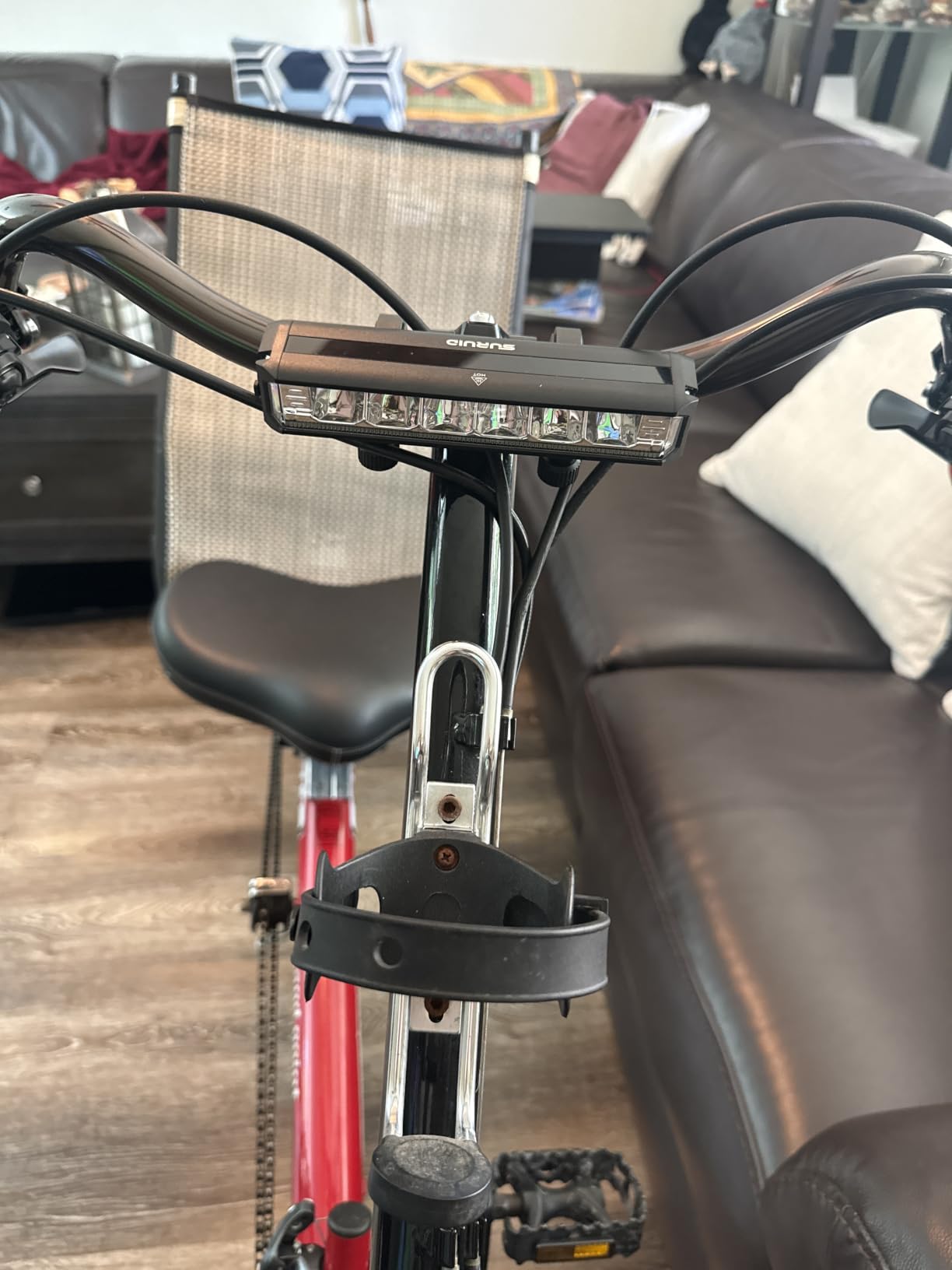
Owners also use it far from the bike. Buyers mention night running, camping, fishing and night work, which is a fair signal that it is a genuinely capable portable light and not just a bike accessory with a large number on the box. It ranks at the top of the Bike Headlights category on Amazon.
The trade-offs are weight, weather rating and scope. At 0.3 kg it is the heaviest unit in this roundup, IPX4 is the second-lowest water rating here, and it is a front light only, so a matching rear is a separate purchase. On a lit street, run the low beam, because 1800 lumens pointed at oncoming traffic is dazzling.
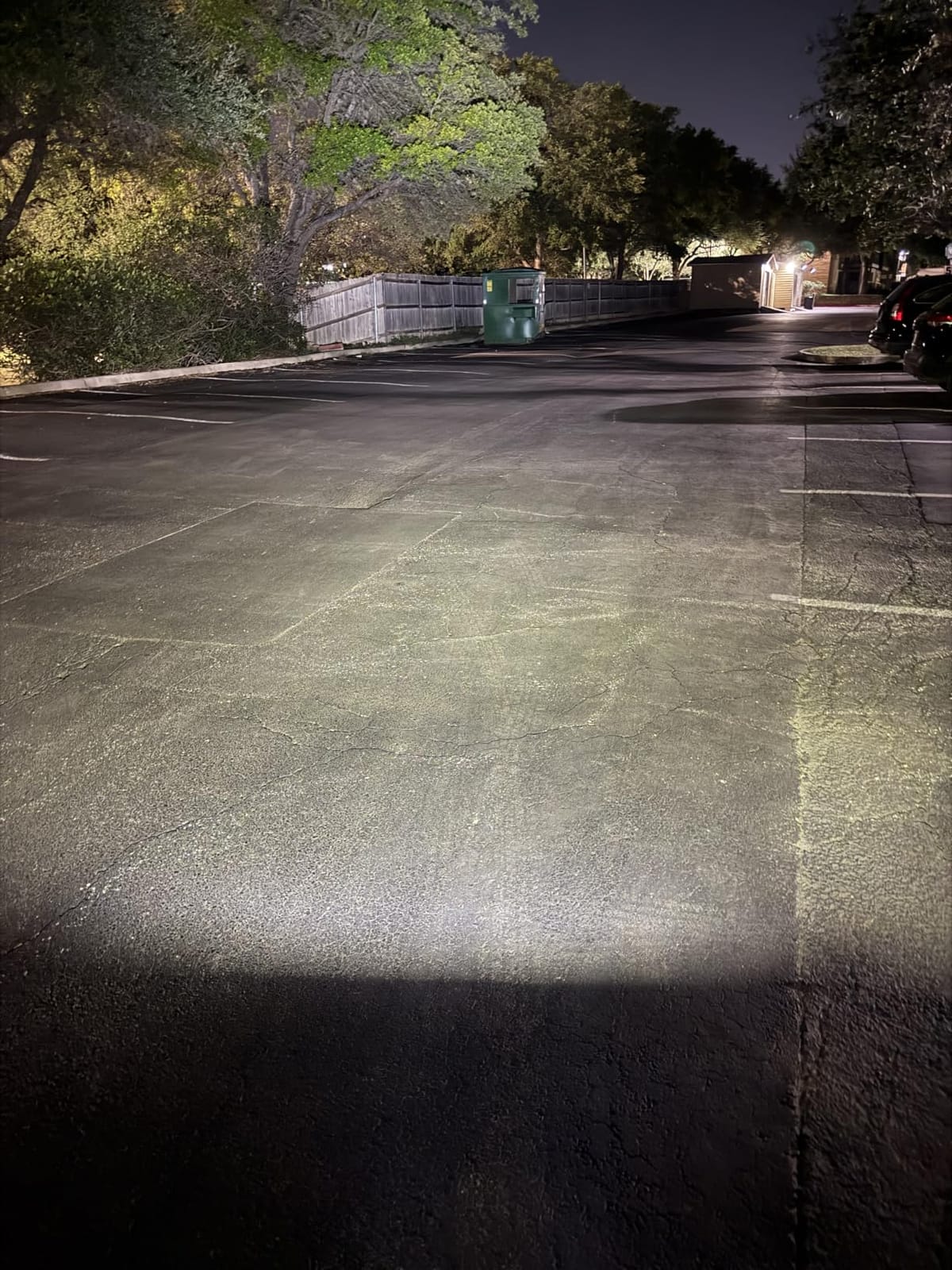
Unlit country lanes, forest tracks, and early-morning winter commutes where there is genuinely nothing but your own beam. The high and low beam switch lets you match output to the section of route you are on rather than running maximum the whole way.
It is also the pick for riders who want one tool for the bike, the campsite and the dog walk, since the same body covers all three.
Any lit or shared road. Maximum output on a residential street dazzles oncoming drivers, the way forum riders keep warning, and offers no benefit when the street lamps already do the work. There is a real argument that a smaller light used sensibly is safer than a bigger one used carelessly.
Weight matters on long rides too. At 0.3 kg, this is noticeable on the nose of a bike over distance, and a light you remove for every journey is one you will forget to bring back.
Start with your route, not with a brand. Every light in this roundup is fine; the wrong one for your street is not fine. Work through the four questions below and the answer narrows quickly.
Four route types cover almost everyone. A well-lit city street needs far less light than most buyers assume, and riders on bikeforums report getting by on 150 lumens when street lighting is present. A suburban arterial with gaps between lamps is the middle case. An unlit bike path or a country lane is the hard case, and here a bikeforums user reports needing 700 lumens or more, and sometimes still not quite enough.
Budget riders in forums frame it similarly: 80 to 100 lumens is comfortable, with the ability to switch up to 300 or 400 for longer runtimes. The pattern is consistent, and it is the opposite of how people shop, where the biggest number on the box wins.
The short answer: 300 to 500 lumens on the front for well-lit urban streets, 500 to 750 for unlit paths and partially lit suburbs, and 750 to 1000 or more for unlit rural roads. On the rear, 40 to 50 lumens is enough at night, while 200 or more is worth having for daytime visibility.
The reference list below maps route type to output, beam shape and budget tier. It is the fastest way to narrow this list down.
Route type | Front lumens | Rear lumens | Beam pattern | Budget tier
Lit city street | 150-300 | 40-100, flash | Narrow spread, dimmed | Entry
Suburban arterial | 300-500 | 100-200, flash | Wide flood with side glow | Mid
Unlit path or lane | 500-1000 | 200-400 | Spot plus flood, cut-off | Mid to high
Unlit rural road | 1000+ | 200-400 | Long-throw spot, aimed low | High
Shared path with walkers | Any, run low | Flash | Wide, dimmed, courteous | Entry to mid
One caveat on those numbers. Lumens measure light emitted, not light reaching the road, and forum users repeatedly point out that headline figures often combine a road beam and a trail beam, which makes cross-brand comparison impossible. Treat lumens as a rough class, then read the beam pattern.
It matters at least as much. A spot beam reaches far but leaves the near road dark, a flood beam lights the near road wide but fades fast, and the best commuter lights give you both or let you choose. For shared roads, a cut-off beam that stops rising above a certain angle keeps the light on the tarmac and out of drivers’ eyes, which is the specification the anti-glare crowd is asking for.
The practical version: aim the light down so the brightest part of the beam lands 15 to 20 metres ahead and slightly below your eyeline. A light aimed at the horizon is a light aimed at the windscreen of the car coming the other way.
Both, for different jobs. Flash mode is more conspicuous, and it is what you want in a town where drivers are surrounded by moving lights and need a moving signal to pick you out. A solid beam reads as a fixed obstacle and is easier to judge for distance, which helps on unlit roads with no other traffic around.
Vendor testing backs the flash argument for commuting: a flashing rear light is often more effective than a constant one because movement alone attracts attention. Our advice is flash in built-up areas, and use a solid low beam with a wider spread on country lanes.
Work backwards from your commute. A 30-minute ride twice a day is ten hours of light a week, so anything claiming 20 hours or more on a sensible mode means a full season between charges. Riders in forums ask the same question and reach the same conclusion: a weekly charge is realistic for most people, so pick runtime to match, and pick a light with a low-battery indicator.
Charge time matters too, and it is a commuter metric rather than a spec-sheet curiosity. A light that needs six hours to fill is fine if it lives on a desk all week, and a problem if it lives in a bag on a Saturday. Sets that charge both units together on one cable, as two picks here do, save real friction.
On longevity, the honest note that almost no competitor covers: the cells are the first thing to fade. Sets with replaceable batteries, such as the GearLight pick here, extend the life of a good light by years, while a sealed cell effectively dates the whole unit.
Handlebar mounting is the default because the beam goes where the bike points. Seatpost and frame mounts suit the rear light, helmet mounts put the beam where your eyes are already looking, and bag mounts trade a stable beam for a light you can take with you.
That last point is a real commuter decision that most guides skip. If you lock up outside a shop or an office, a bolted-on light is a light you will leave behind to avoid theft. If your destination has nowhere secure, prioritise a quick-release or strap mount and pick a light you can pocket. Where you store the bike at home matters for the same reason, and our guides to bike wall mounts, freestanding storage racks and bike hoists cover keeping a commuter bike secure indoors and lifting it for maintenance.
Riders in forums also complain about gloves in cold weather, when a rubber strap or a recessed button becomes frustrating. Test the button before you buy, with gloves on if you can.
Match the code to your climate rather than to the marketing. IPX4 handles splashes, drizzle and the spray from a wet road, which covers most year-round city commuting. IPX5 shrugs off rain and low-pressure water jets, and is the right floor for anyone riding in serious weather. IPX6 and IPX7 are for people who expect to be caught out and want to keep riding through it.
Note that most light charging ports have a rubber cover, and a cover is a weak point. Two picks in this roundup use a sealed port instead, and reviewers on both mention it as the reason they stopped worrying about rain. A 2013 Danish study found cyclists who rode with lights at all times had a 19% lower incident rate, which is a reasonable argument for buying the more sealed option.
Because of where crashes happen. US federal data puts 57% of motor-vehicle and bicycle collision injuries, and 28.5% of fatalities, at intersections. That is not a road-straight problem; it is a left-turn-across-your-path problem, and it is solved by side light, not by more lumens pointing forward.
Look for amber side strobes, side cutouts in the lens, or a wide housing that spills light to the flank. A set with these is worth more to an urban commuter than a set with twice the forward lumens and nothing at the sides.
Five rules cover almost every complaint we found in forums. Aim your beam down so the hot spot is on the road, not on headlights. Use a dim or courtesy mode on shared paths and mixed walkways where a full beam at eye level is a genuine problem. Use flash in daylight, where a steady light is easy to overlook. Do not stack two full-beam lights in a group, because the second rider’s beam is aimed into the first rider’s eyes. And mount your rear light on the side of the bike nearest approaching traffic.
None of this reduces your safety. Aimed-down light on the road surface is what actually reveals a pothole, a kerb or a pedestrian, and it is the version other road users can tolerate.
In the US, the general rule is a white front light and a red rear light visible from the required distance between sunset and sunrise, with state-level detail varying. UK riders work to the Road Vehicles Lighting Regulations, and German-designed lights carry stVZO approval, which is a beam-pattern standard rather than a brightness one. Worth checking if you ride in Europe, since an overly wide beam can be a non-starter there.
On cheap lights: the forum consensus is that headline lumens from unbranded sellers are unreliable, because the figure describes the LED rather than the beam, and the lens is where quality shows. Battery degradation within a year is the other recurring complaint, and it is the reason several picks here include a low-battery indicator or replaceable cells. Buy the light that reports its own state, not the one with the largest number on the box.
The best bike light for biking at night is the Ascher set in this roundup: 300 lumens, four one-touch modes, IPX4 sealing and 5 to 12 hours of front runtime. It suits mixed lit and dim routes. If your route is fully unlit, step up to a 500 to 1000 lumen class light, and always pair the front unit with a rear light.
Three picks cover most commuters. The Ascher set is the best all-round option for mixed city routes. The BLITZU set offers 550 lumens plus amber side strobes, which help most at busy junctions. The GearLight S400 Pro is the best choice for riders doing 10 miles each way, with replaceable batteries and runtime past five hours on flash. Each includes a rear light.
For night bike riding, 300 to 500 lumens on the front covers well-lit city streets, 500 to 750 handles unlit paths and partially lit suburbs, and 750 to 1000 or more suits unlit rural roads. On the rear, 40 to 50 lumens is enough at night, while 200 or more helps in daylight. Beam pattern and cut-off matter as much as raw output.
Yes, for commuting. Very high output dazzles oncoming drivers and riders, generates heat and drains the battery quickly. The right answer is a light with a cut-off beam pattern or a low courtesy mode, so you can use high output on unlit sections and drop to a dim setting on shared streets without touching the controls.
IPX4 is enough for most year-round city commuting, handling drizzle and road spray. IPX5 is the sensible floor for anyone riding in sustained rain, and IPX6 or higher suits riders who keep going through bad weather. Also check the charging port: a sealed port is more reliable than a light rubber cover in wet conditions.
Use flash in built-up areas, where movement helps drivers pick you out from surrounding lights, and a solid low beam on unlit country lanes where a fixed point is easier to judge for distance. Many rear lights include a breathing flash mode, which is a good compromise on shared paths because it stays noticeable without the hard glare of a full strobe.
The Ascher set wins this roundup because it is the light most people will actually use every evening: enough output for mixed routes, a battery that covers a week, tool-free mounts and IPX4 sealing, with none of it demanding attention. The BLITZU set is the stronger value if junctions are your problem, and the GearLight S400 Pro is the one to buy if you ride long distances or want a light you can repair in a few years.
Match the light to the route rather than to the biggest number on the box, aim the beam down so it stays on the road, and run a lower mode on shared streets. The best bike lights for night commuting in 2026 are not the brightest ones; they are the ones you fit, aim and charge before the clocks change and the dark commute becomes your default.