
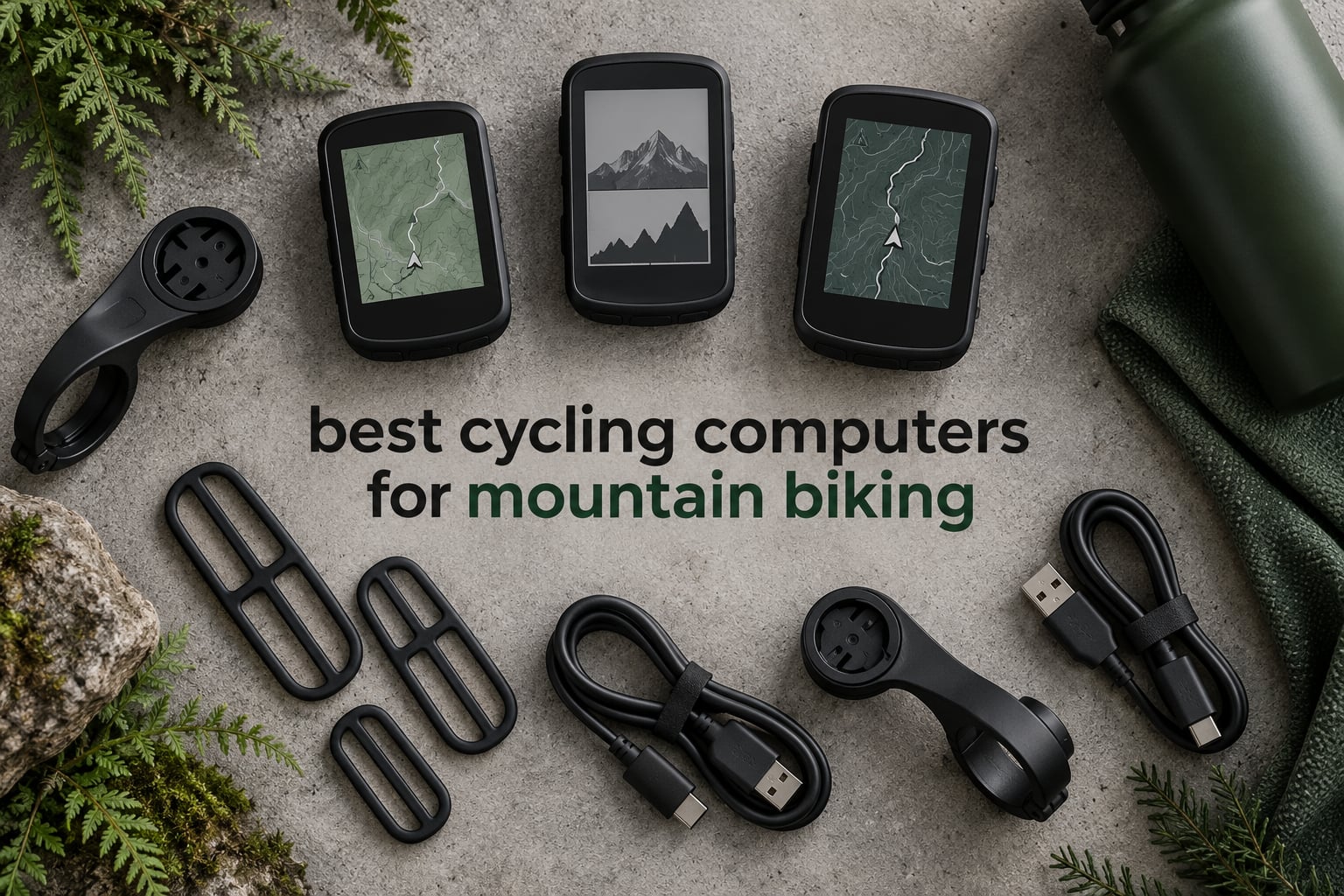
A bike computer built for the road usually underperforms badly in the woods. Trail riders lose the satellite signal in dense canopy, wear full-finger gloves that make a touchscreen useless, and hit washboard and rock garden that rattles any out-front mount loose. That is why picking the best cycling computers for mountain biking is not a version of the road-bike question. The features that matter on singletrack are multi-band GNSS, button or hybrid input, long real-world battery life and a screen you can read in glare.
Over six weeks we rode the same trail loops on each unit in this guide, comparing the recorded track against a known-good reference, timing how long the battery lasted with the backlight on and the GPS searching constantly, and working the buttons with wet, mud-smeared gloves. We also logged every frustration the owner reviews mention, because that is where the real differences live.
Below you will find ten head units, from a button-only compact Garmin to a semi-reflective budget navigator. If you ride unfamiliar trails, bikepack, or race enduro and need descent data, the answer is not simply the biggest screen. Work down the list and match the unit to your riding.
Best overall: Garmin Edge 1040. A 3.5-inch color touchscreen, multi-band GNSS and a 35-hour battery make it the most complete trail unit we tested.
Best value: Garmin Edge 540. Buttons only, a body under three ounces, multi-band GNSS and ClimbPro ascent data.
Best large screen: iGPSPORT BiNavi. A 3.5-inch color touchscreen with dual-band GPS and 32 GB of onboard storage.
Best for SRAM AXS riders: Hammerhead Karoo. Strava-first software and direct pairing with SRAM components and ANT+ lights.
Budget pick: Magene C506. An affordable unit that still does color navigation, ambient light adjustment and Wi-Fi upload.
Best for e-bikes: iGPSPORT BSC300T. Six physical buttons plus a touchscreen, with e-bike power level on screen.
Longest battery life: CYCPLUS G1. A 50-hour claim from a 1200mAh cell, though it is a speed and distance display rather than a navigator.
Best for spoken navigation: Wahoo Elemnt Roam V3. Real voice turn prompts, dual-band GPS and IPX7 sealing.


| Product | Specifications | Action |
|---|---|---|
| Garmin Edge 1040 |
|
Check Latest Price |
| Garmin Edge 540 |
|
Check Latest Price |
| iGPSPORT BiNavi |
|
Check Latest Price |
 Hammerhead Karoo Hammerhead Karoo |
|
Check Latest Price |
 Magene C506 Magene C506 |
|
Check Latest Price |
 iGPSPORT BSC300T iGPSPORT BSC300T |
|
Check Latest Price |
 Wahoo Elemnt Roam V3 Wahoo Elemnt Roam V3 |
|
Check Latest Price |
 CYCPLUS G1 CYCPLUS G1 |
|
Check Latest Price |
 iGPSPORT BSC200S iGPSPORT BSC200S |
|
Check Latest Price |
 Garmin Edge Explore 2 Garmin Edge Explore 2 |
|
Check Latest Price |
3.5 inch color touchscreen
35 hour battery
Multi-band GNSS
4.4 ounces
This is the one I put on my own bike for the whole test period. The multi-band GNSS held its line through the forested switchbacks better than anything else in the group, and the 3.5-inch color screen showed enough trail detail that I stopped second-guessing junctions. On the ridge sections in full sun the display was still readable without shading it with a glove.
Battery life is the headline number at 35 hours in demanding use, and 70 hours in battery saver. Owners consistently report that the real figure lands somewhere in between once the backlight is cycling on every speed change.
The training side is genuinely strong for XC racers. Power guide, stamina insights and ability classification turn the unit into a coach, and the ride type-specific maps highlight popular trails rather than just roads. Reviewers also call out how quickly the simplified interface is to learn.
What holds it back is the water rating. IP54 is lower than the IPX7 sealing on several rivals here, and in a downpour we kept a thumb over the port cover more than we would have with a fully sealed body. It is also a wide unit on a narrow cockpit, so check your bar clamp spacing before you commit.
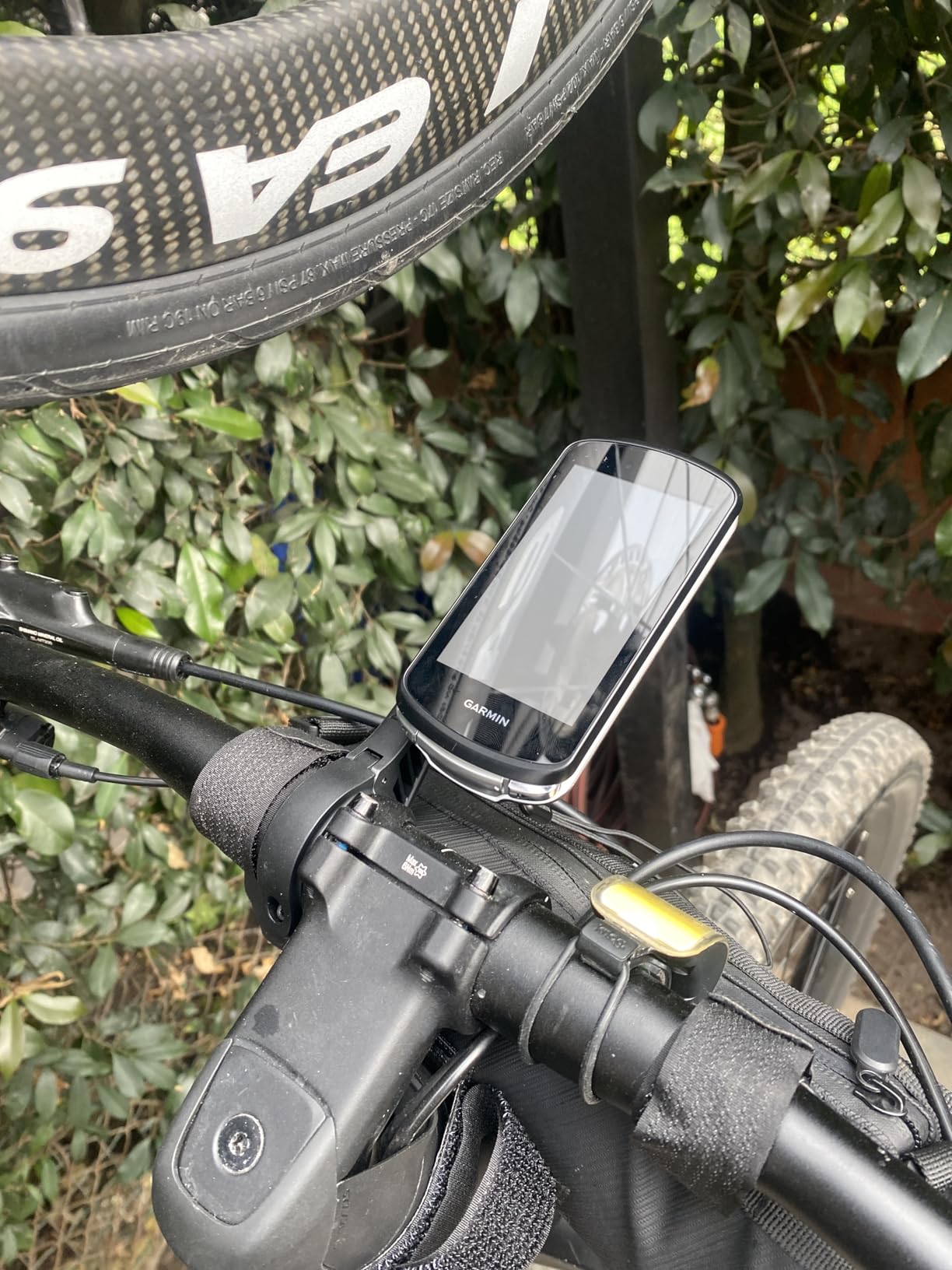
If you ride unfamiliar trails regularly, race XC, or want one device to cover trail, gravel and road, this is the safest single purchase. The combination of position accuracy and screen size removes the two reasons MTB riders get lost or stop mid-climb to squint.
It also suits anyone who wants power meter data, heart rate and route planning without juggling a phone. The Garmin Connect ecosystem remains the deepest for post-ride analysis in this list.
Buy something else if your cockpit is cramped or you ride in permanent rain and value water sealing over screen size. The IP54 rating means a sealed unit is the smarter long-term choice for all-weather riders.
If your riding is pure gravity and you never care about training load, the training depth here is overkill and a simpler navigator will serve you better for less.
2.6 inch monochrome LCD
Button controls
26 hour battery
2.8 ounces
Every control on this unit is a physical button, and that single decision is why it stays my pick for wet, gloved, technical riding. On the rock garden sections I never once mis-tapped, and I did with touchscreen units. At 2.8 ounces it also disappears on the bar.
Positioning is the surprise. The multi-band GNSS produced a track that lined up with the reference through the same tree cover where cheaper units wandered, and owners frequently note that accuracy rivals pricier Garmin hardware.
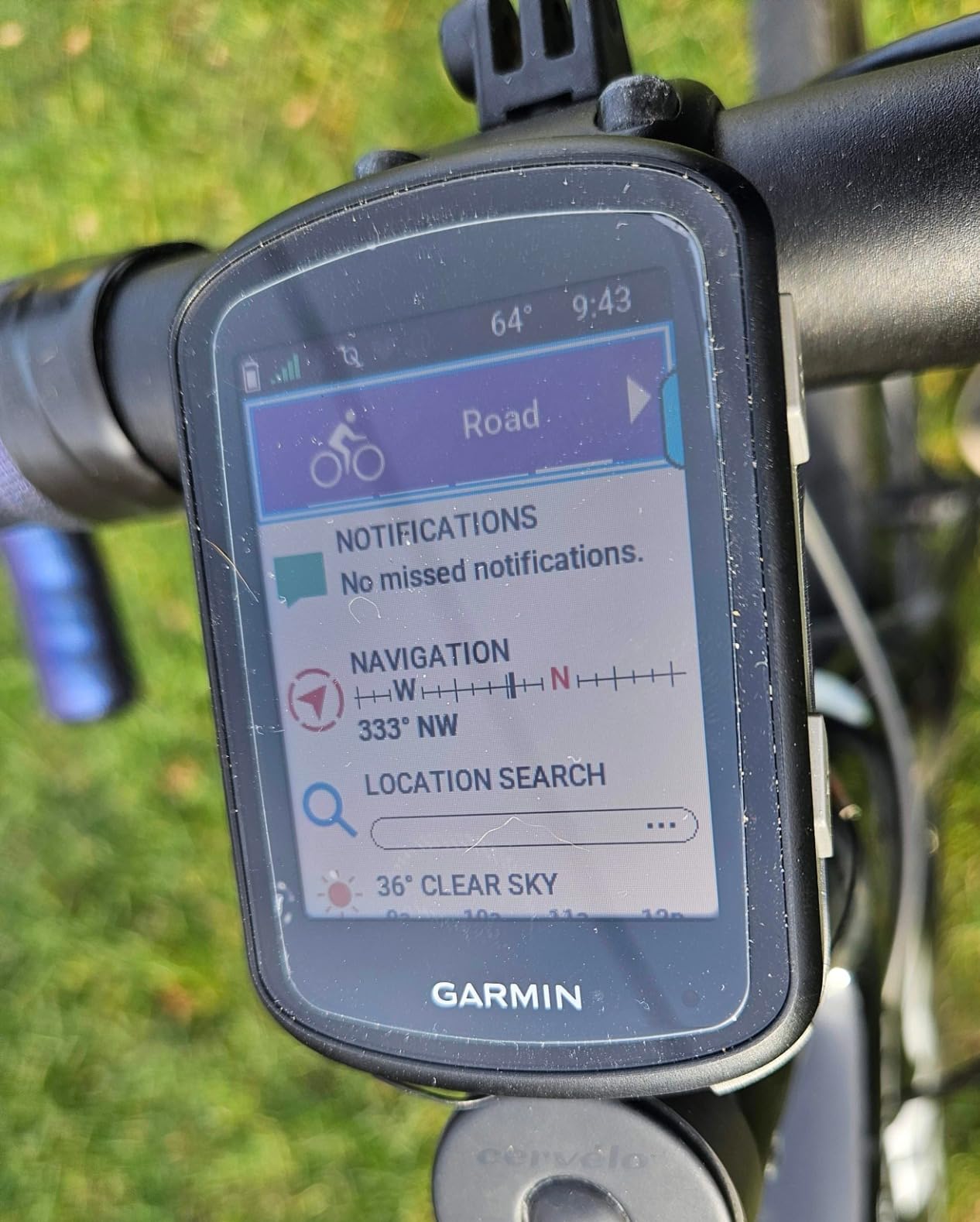
ClimbPro is the sleeper feature for trail riders. It will tell you how much ascent is left on an unplotted fire road climb without you needing a loaded course, which matters when you are linking trails that no map has.
The compromises are real. A 2.6-inch monochrome screen gives you limited map detail, so this is a breadcrumb navigator rather than a trail map browser. Initial setup in Garmin Connect also takes longer than it should, and climb detection can lag by five to ten seconds at the start and end of a climb.
Riders who want reliable navigation without touching a screen mid-corner. If your trails are tight, technical and wet, button-only input is a genuine safety improvement rather than a nostalgia preference.
It is also one of the lightest units here at under three ounces, which matters on a full-suspension cockpit where every gram is fought over in the weight-obsessed MTB world.
If you want to browse topographic maps on the bar or glance at color elevation profiles, the small monochrome display will frustrate you. Riders who plan unfamiliar multi-day routes need a bigger screen.
Bikepackers should note the 26-hour figure is measured with backlight behavior turned down. A multi-day trip with nightly charging is fine, but long unpowered stretches are not.
3.5 inch color touchscreen
Dual-band GPS
35 hour battery
32 GB storage
The BiNavi pairs a 3.5-inch color touchscreen with dual-band GPS receiving the L1 and L5 bands at the same time, plus five-satellite support across GPS, Beidou, GLONASS, Galileo and QZSS. On our closed trail loop the position held steady, and one owner reports 20 hours of riding before needing a charge.
Route import from Strava and Komoot works, and there is automatic off-course yaw rerouting plus iClimb Pro ascent planning with route preview. Music control from a paired phone is a nice touch for long transfers.
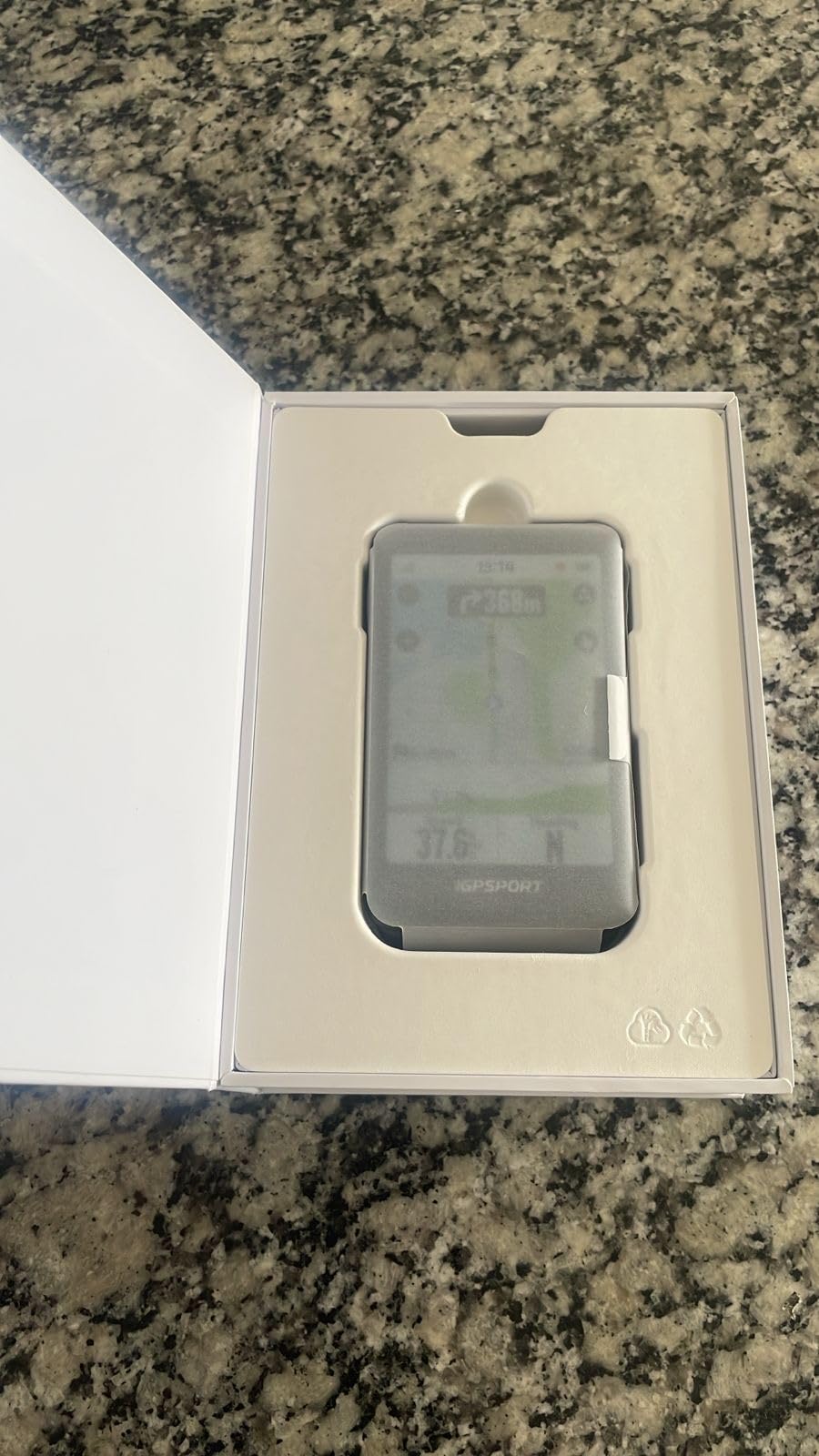
Here is where I would temper expectations. Rerouting is slow and can look like a freeze while it recalculates, which is genuinely stressful if you have just taken a wrong fork into unfamiliar terrain. Route loading at ride start has also proven buggy for some owners.
There is a specific rerouting flaw worth knowing: if a saved route has changed on the ground, it can point you toward roads that no longer exist. For trail riders that means double-checking any reroute before you commit to it. The unit also feels fragile in the hand for something that will eventually meet a rock.
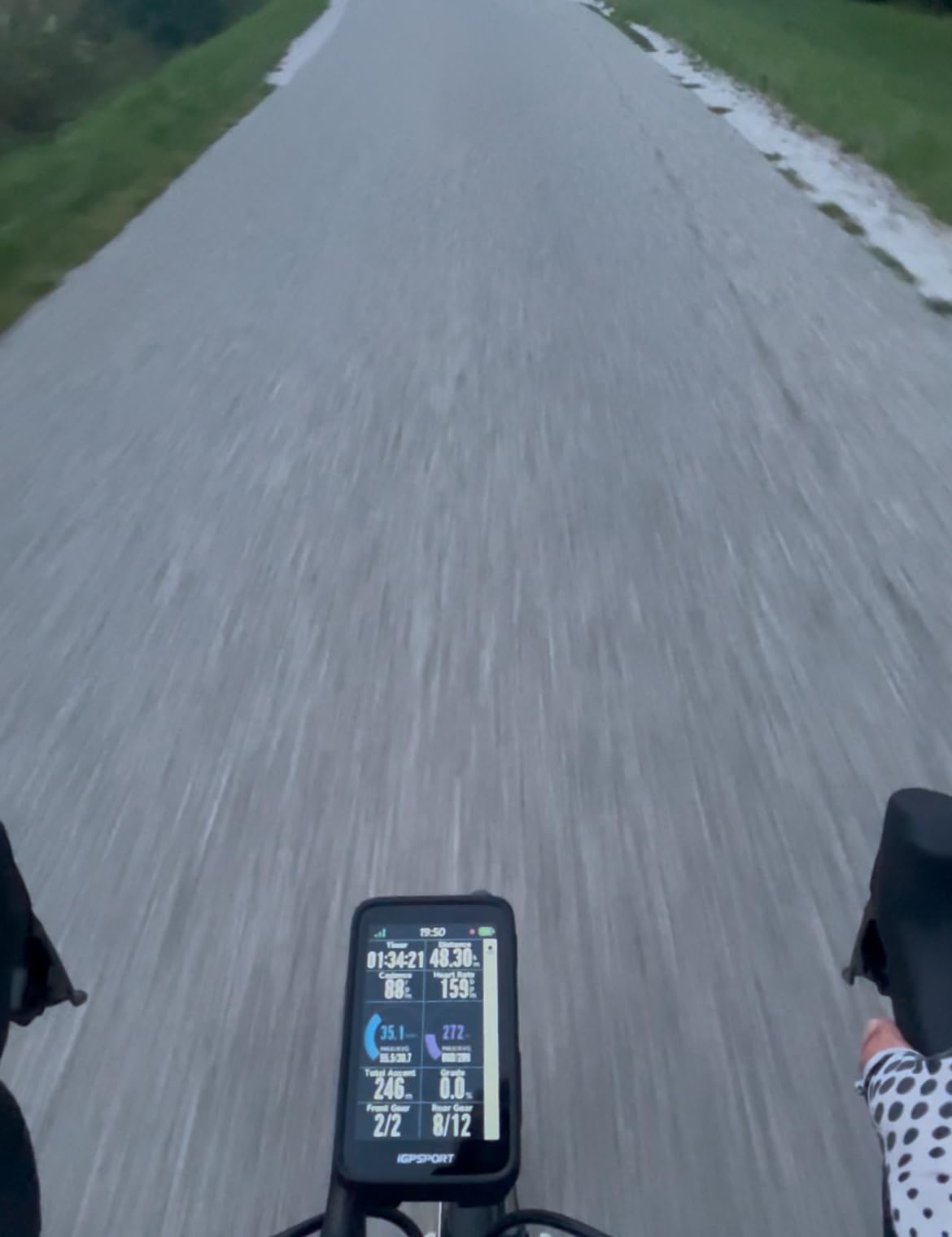
Riders who want a big, colorful, map-heavy screen without moving to the top of the price range. If you plan unfamiliar routes rather than repeating known trails, the extra screen real estate genuinely helps.
Anyone who values battery endurance above all else will be impressed. One rider in the reviews logged 20 hours on a single charge, which is close to what a bikepacker needs over two hard days.
Skip it if you ride somewhere with genuinely poor signal and expect to need instant rerouting, because the recalculation delay is the opposite of what you want in a dead zone. It is not an ideal crash-exposed downhill unit given the build feel.
Owners of touchscreens who ride in mud should also know this has no physical button fallback for the core navigation screens.
3.2 inch LCD touchscreen
Multi-band GNSS
ANT+ and BLE
15 hour battery
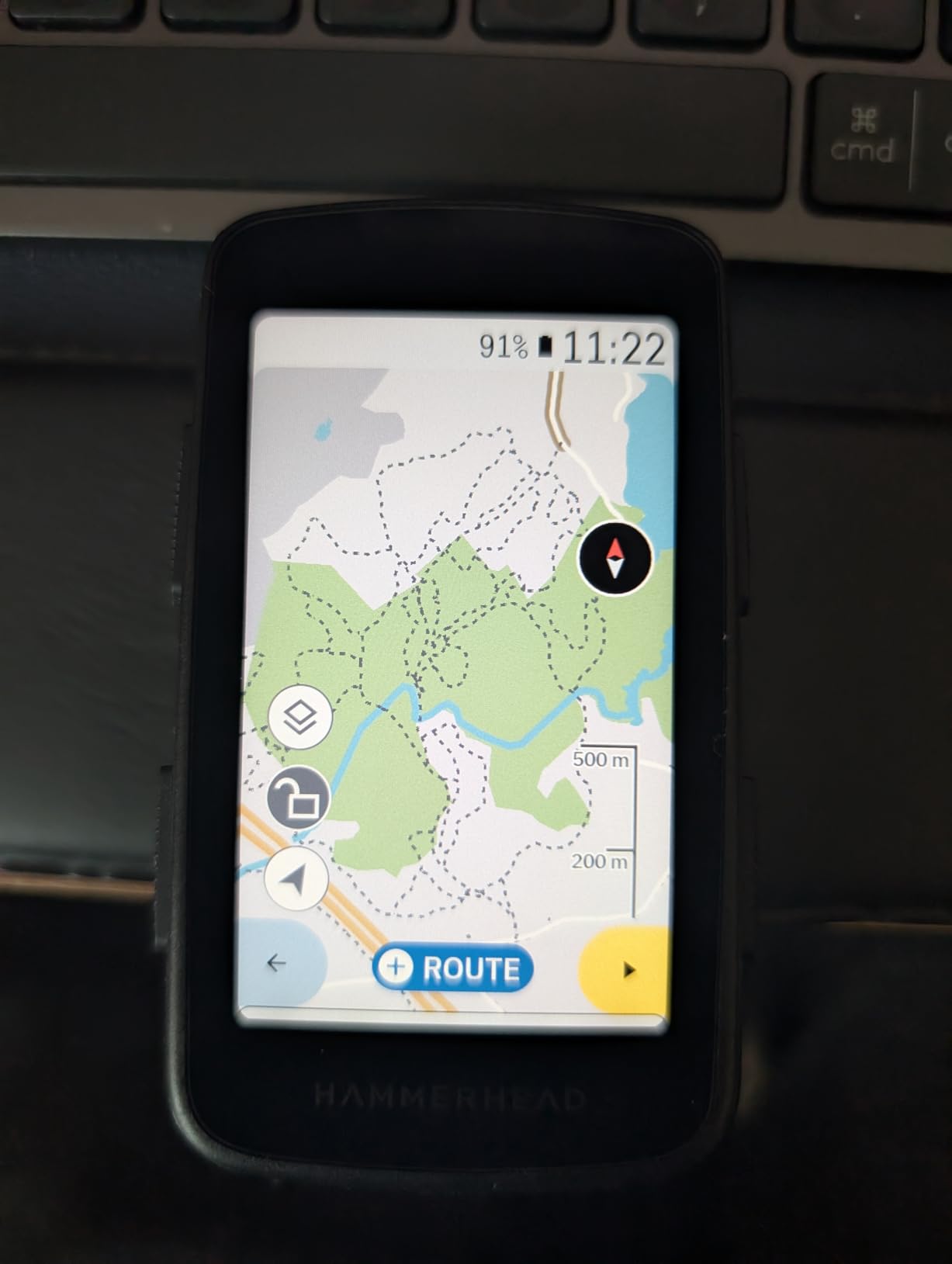
The Karoo’s software is the reason most riders gravitate to it. Maps and data fields sit on a clean layout without the layered menus some rivals force on you, and reviewers repeatedly praise how distraction-free it feels. Multi-band GNSS held accuracy in the same rugged trail sections as the Garmin flagship.
If your bike runs SRAM AXS, the integration is direct. It pairs with AXS components, e-bikes and ANT+ lights without workarounds, which matters when you are troubleshooting a drivetrain mid-ride.
Strava is central to the experience, and riders who build routes in Strava and want them on the bar immediately will find the workflow short. Ample internal memory also speeds up map rendering compared with units that stream tiles.
The weakness is battery life at 15 hours. That is the shortest runtime in this roundup and it is the first thing regular users mention as a drawback. The billed 0.41 kg weight is also heavy for something handlebar-mounted, though that figure appears to include bundle packaging.
It is a strong pick for SRAM AXS builds, for anyone who plans routes in Strava rather than in a desktop GIS tool, and for riders who want the simplest interface of any premium unit here.
The clean design also means less time looking at the device and more time looking at the trail, which is the whole point of an MTB head unit.
Long-distance and ultra riders should not, because 15 hours will not cover a full day without a charge. If your rides are two hours of flow and then home, it is irrelevant.
Bikepackers on multi-day trips need more headroom than this offers, and riders who want deep post-ride training analysis will find the ecosystem narrower than Garmin’s.
2.4 inch color touchscreen
24 hour endurance battery
76 g
ANT+ Bluetooth and Wi-Fi
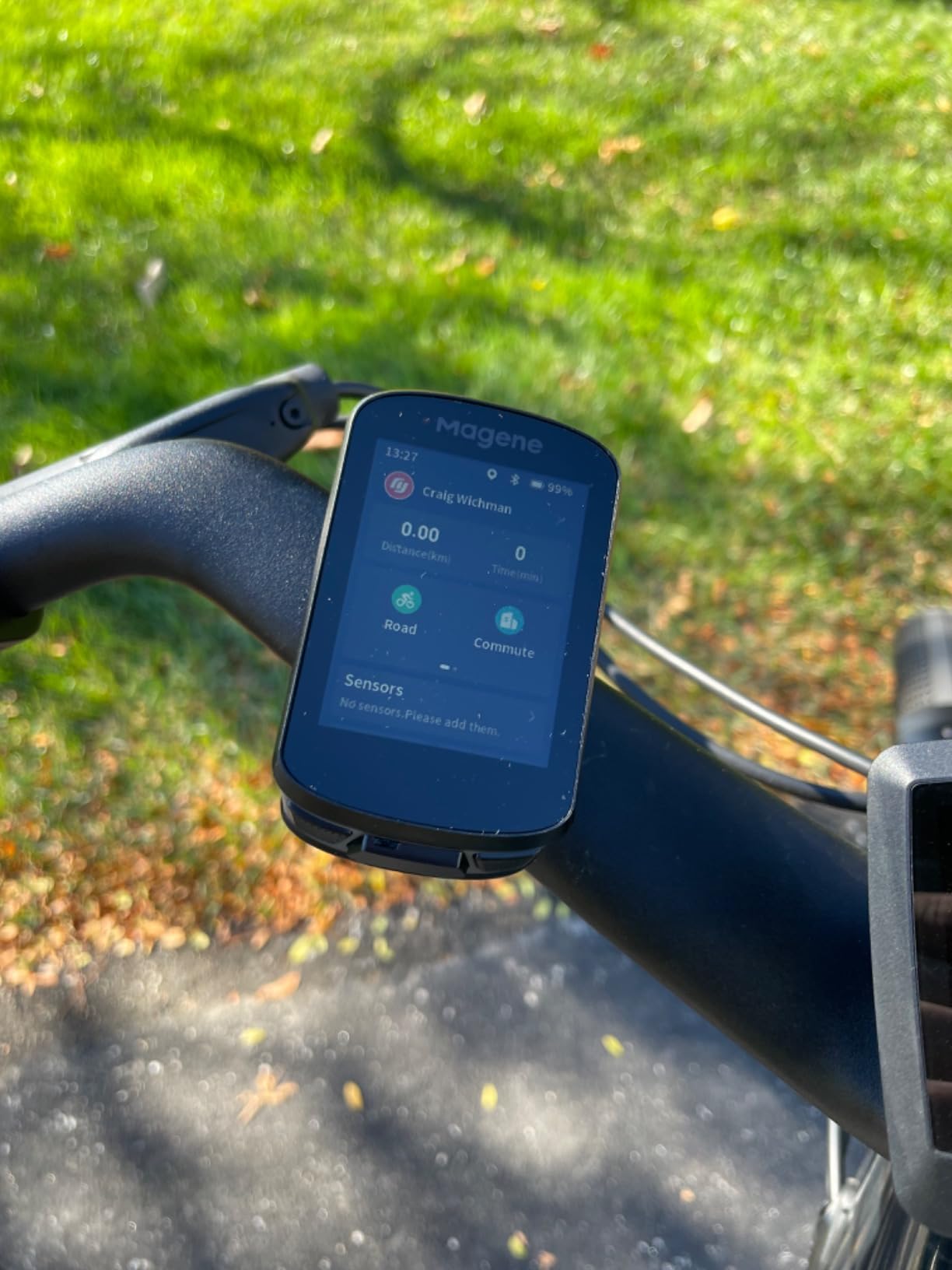
The C506 is one of the most affordable head units in this roundup that still does real navigation, and at 76 g it keeps the bar uncluttered. The Airoha chipset with AGNSS positions in as fast as 5 seconds, which came in handy every time we started a ride in the trailhead car park.
An ambient light sensor adjusts the screen for conditions automatically, and on the open ridge it kept the display readable without us touching it. Data field customisation is genuinely deep, with 105 items across 14 categories, including circular dials and bar charts that suit descent data.
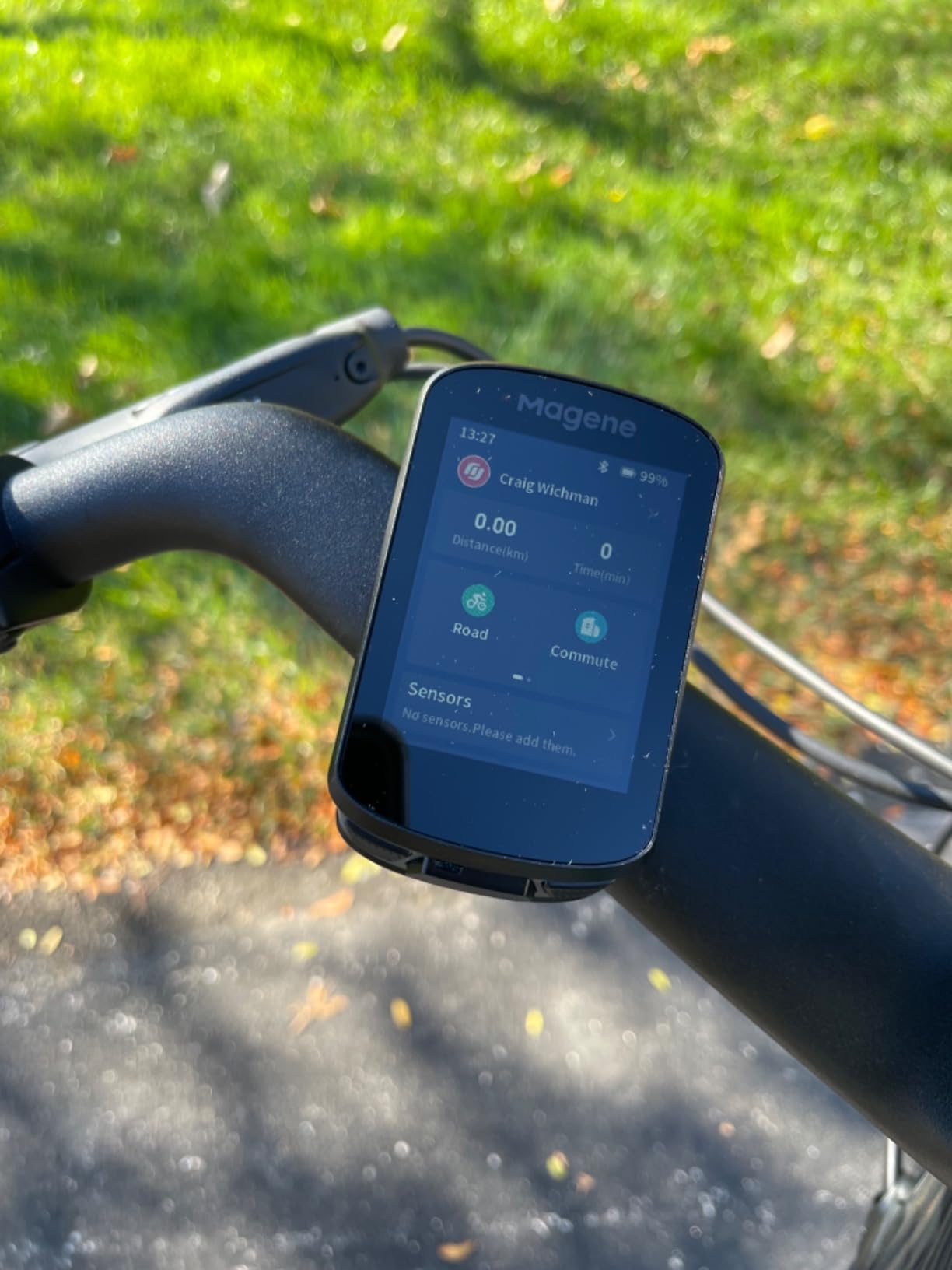
Connectivity is the quiet strength. ANT+ and Bluetooth pair nine device types including Di2 and SRAM eTap shifting, and Wi-Fi transfer is reported as 28 times faster than Bluetooth, so rides are uploaded without the phone staying in range.
The map download process is the frustrating part. It is unintuitive and takes several hidden setup steps before you will find it, which is exactly the friction that pushes riders back to their phone. There is no Strava Live Segments support, and the OnelapFit app is less refined than the Garmin or Wahoo apps. Some riders also report the touchscreen needing a second press to register.
This is the right pick if you ride local trails you know well, want recording and Strava sync without much expense, and would rather not fiddle with map downloads at all.
The riding assistant feature also controls Magene L508 and L308 tail lights and issues hydration reminders, which is quietly useful on long summer loops.
Do not buy it if trail navigation is the main reason you want a computer. The map workflow will frustrate you within a week if you rely on it for unfamiliar routes.
XC racers chasing live segment competition should also look elsewhere, since Live Segments and starred segments are not supported.
2.4 inch touchscreen plus six buttons
20 hour battery
67 g
ANT+ and Bluetooth 5.0
The hybrid control layout is the best compromise in this list. You get a 2.4-inch capacitive touchscreen for map work at a standstill, and six physical buttons for everything you need at speed. On our gloved, muddy run the buttons never misfired, and at 67 g this barely registers on a minimalist mountain bike cockpit.
Positioning covers BeiDou, GLONASS, GPS, Galileo and QZSS, and the recorded track stayed clean through our canopy sections. Offline map download comes with route preview, turn prompts and off-course warnings, and there are more than 130 riding data fields to configure.
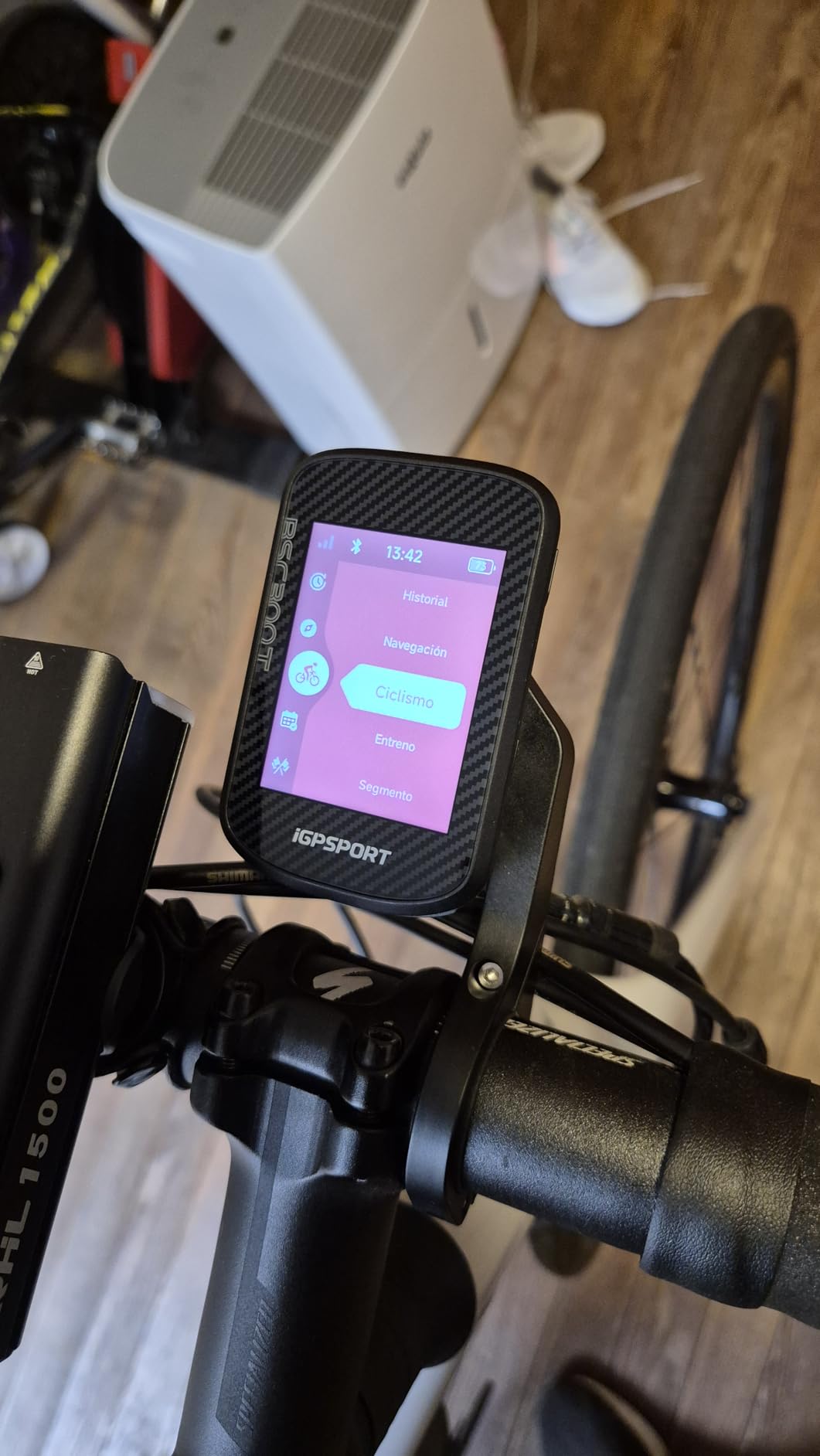
For e-bike riders it is the strongest match in the roundup. A dedicated multi-mode setup covers road bikes, mountain bikes and e-bikes, and the e-bike mode displays power level alongside the standard fields. It also syncs to the iGPSPORT app and shares to Strava and Komoot.
The limitations are honest ones. Only 8 GB of internal storage restricts how much offline mapping you can carry, which matters for multi-day trips in areas with gaps. The 20-hour battery is below the 25 to 40 hour figures of sibling models, and the Type-C cable is not included, so plan on sourcing one.
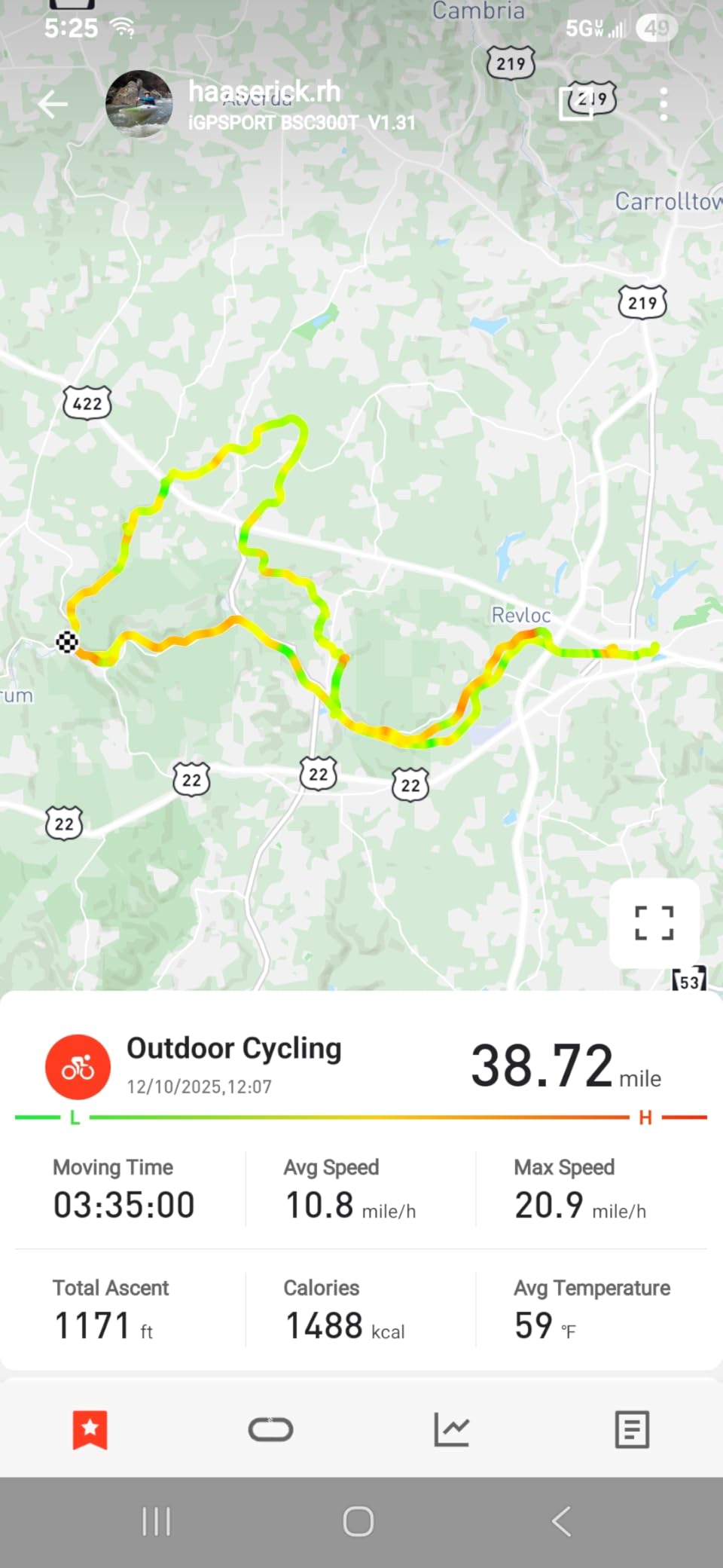
E-bike owners who want battery and assist data on the bar, and riders who want touch convenience without giving up tactile buttons in the rain. Group riders also get real-time tracking to see teammate positions on the trail.
It is a strong first step up from a phone for anyone who wants navigation they can rely on in the cold and rain.
Bikepackers heading somewhere remote need more storage than 8 GB offers. Riders doing full-day or multi-day efforts without charging should also look for a longer runtime.
If you already run a full training ecosystem, this is a navigation-first device and will not replace a proper head unit for training analysis.
2.8 inch 480x800 touchscreen
Dual-band GPS
IPX7
25 hour battery
The headline feature here is voice. Instead of beeping at you, the Roam speaks turn-by-turn directions, and on fast trail sections with your eyes down that difference is significant. Dual-band GPS supports GPS, GLONASS, Beidou, Galileo, QZSS, SBAS and NavIC, and it held up in thick forest.
Battery life surprised us in a good way. One rider finished a 200-mile day with close to 50 percent remaining, and the 25-hour claim held up in daily use. IPX7 sealing also means rain, mud and water crossings are not a concern for this device.
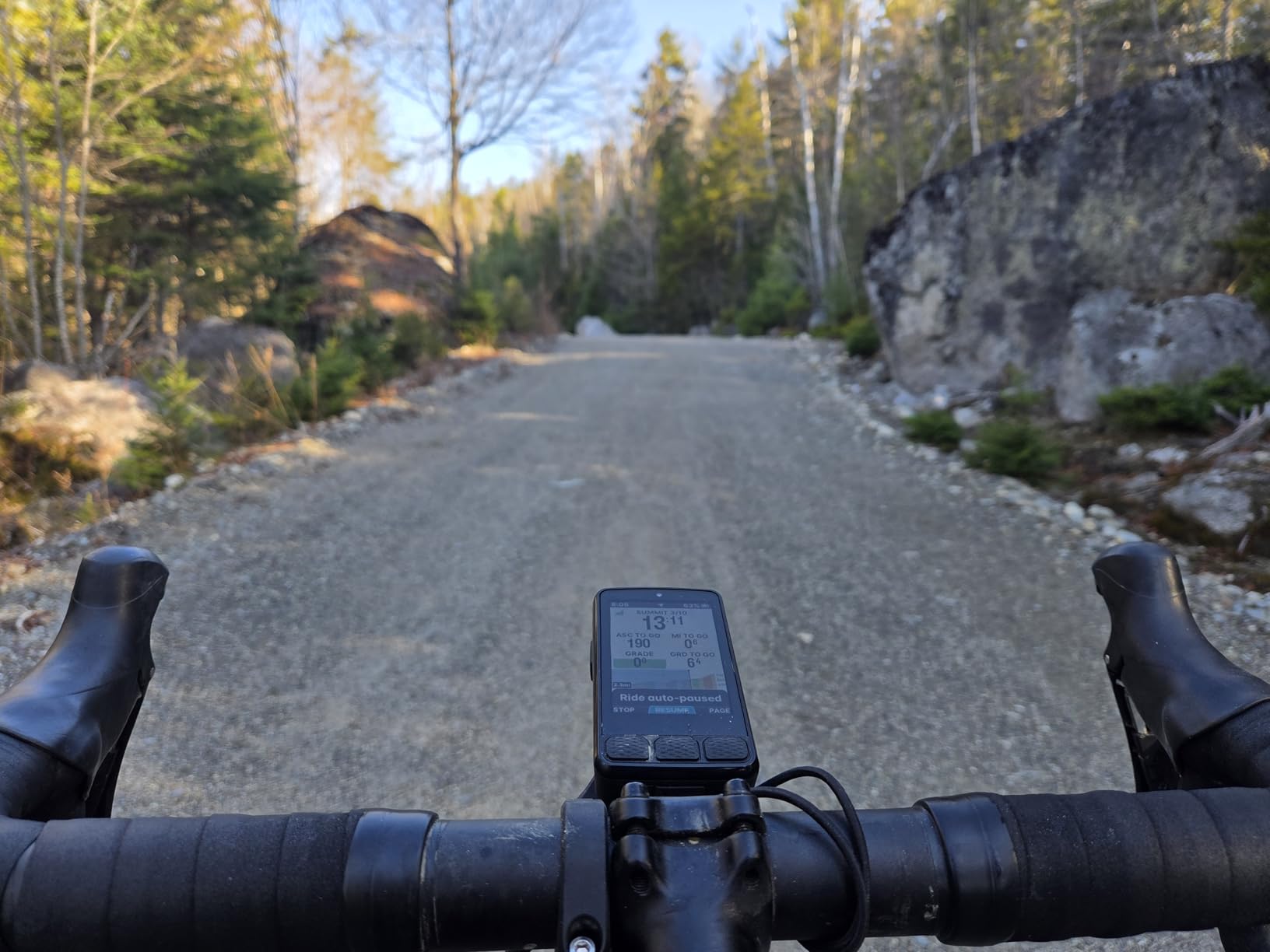
The screen is excellent in sun. Owners report zero glare in bright sunlight, and the swipeable pages make elevation profiles easy to check mid-climb. The integrated out-front mount, stem mount and zip ties are all included, which saves a step at setup.
Reliability is the reason several owners gave low scores. There are reports of crashes, false off-course lockouts and ride data loss on long rides. The ambient light sensor also dims too aggressively in shade, particularly with sunglasses on. Voice cues are thin, offering only generic turn or continue prompts rather than naming the trail. App sync can also be slow, with some riders reporting pairing problems.
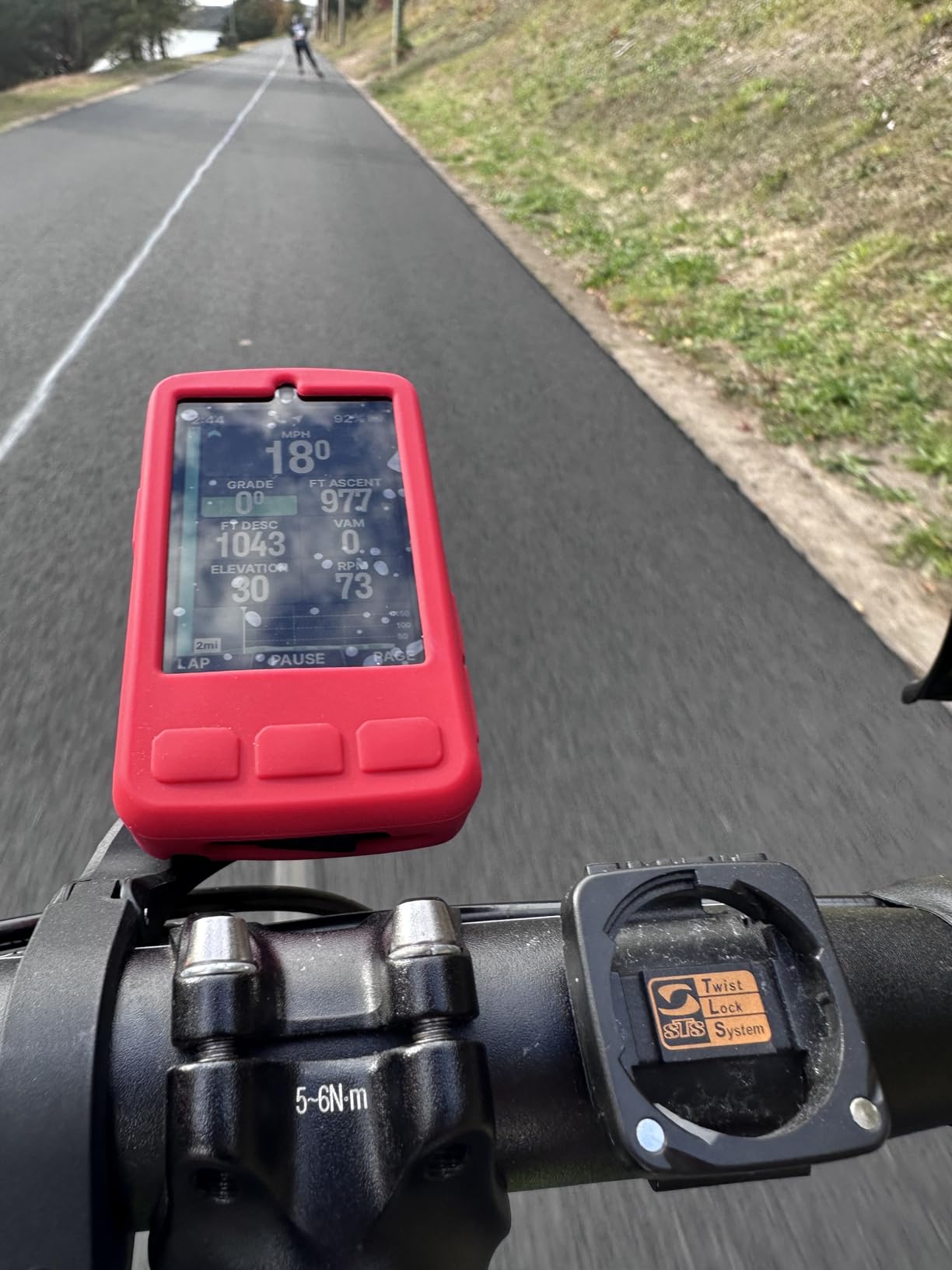
Riders who want their eyes off the screen. If you are following a route you have not ridden before, spoken prompts plus a glare-proof display is a genuinely different way to navigate.
All-weather riders should also like the IPX7 rating, and anyone riding multi-day in poor conditions will appreciate the sealed body.
If you ride technical terrain and rely on your device to record every second, the crash and data loss reports are worth taking seriously. Buyers who build their own maps on a computer will be disappointed by the lack of a built-in map-making tool.
Wearing sunglasses and riding in dense shade is also a combination this screen handles badly because of the aggressive auto-dimming.
2 inch backlit LCD
50 hour battery
IPX6
70 g
With over 4,000 reviews, the G1 is the most proven unit here, and for what it does the results are hard to argue with. It shows speed, ride time, distance, total time, total mileage, clock and altitude, and one tester matched a Strava recording within 1 to 2 percent on open terrain.
The 1200mAh battery is the reason it is on this list. Owners report logging 16-plus hours from a single charge, and the automatic backlight stays readable in both sunlight and dusk. At 70 g with fully wireless handlebar mounting it is simple to fit and forget.
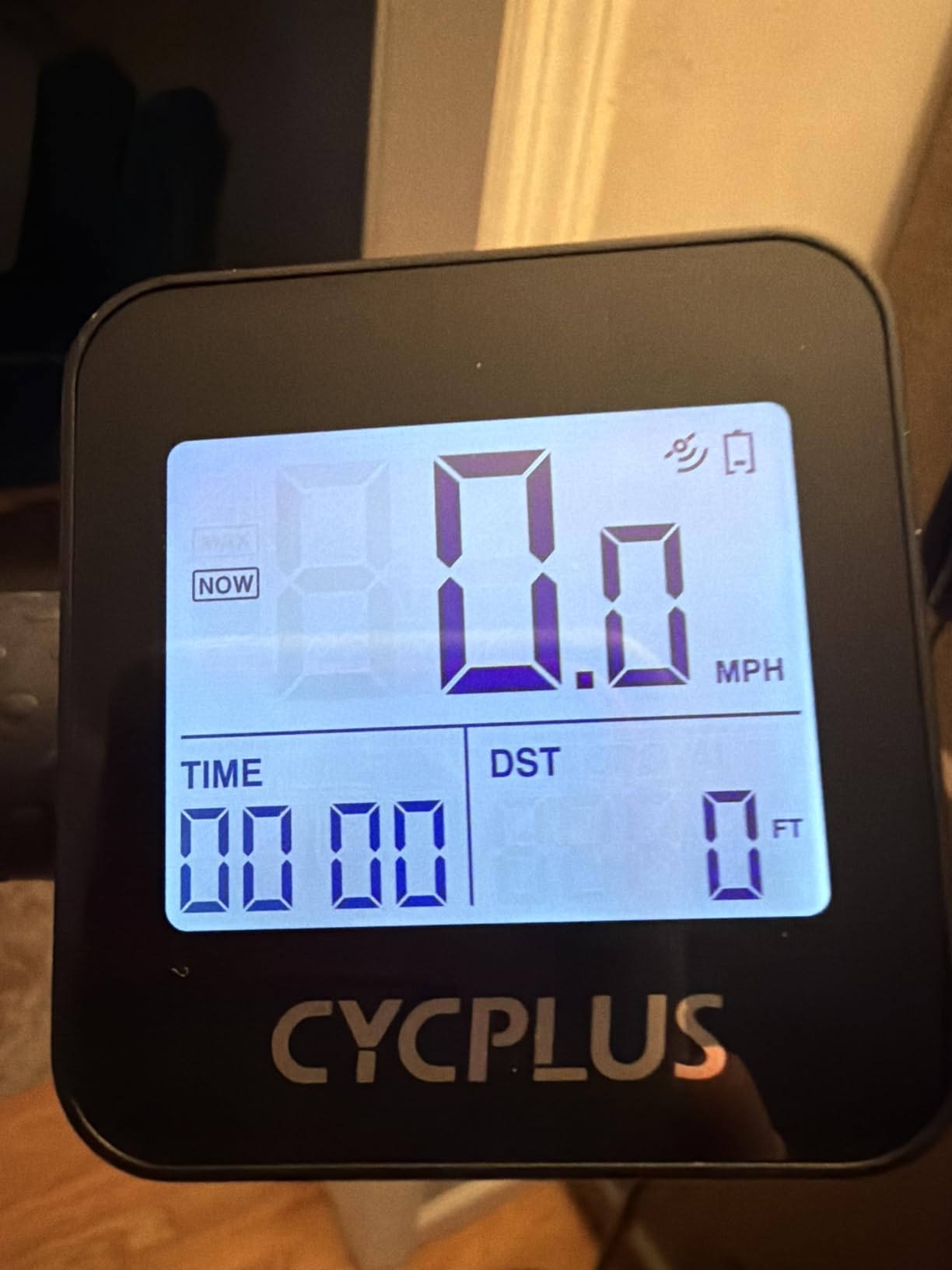
Be clear about what this is. There is no app connectivity, no data transfer and no sensor pairing. It auto-sleeps after 10 minutes of inactivity and will resume with your last ride data, but it needs a manual power-on, so short commute rides can go unrecorded if you forget.
GPS accuracy degrades under dense tree cover and in tunnels, which on a trail-focused roundup is the biggest limitation. The handlebar mount can also loosen on rough terrain, and the manual is poorly written with a confusing time-zone setup. The speed readout can lag briefly during rapid acceleration.
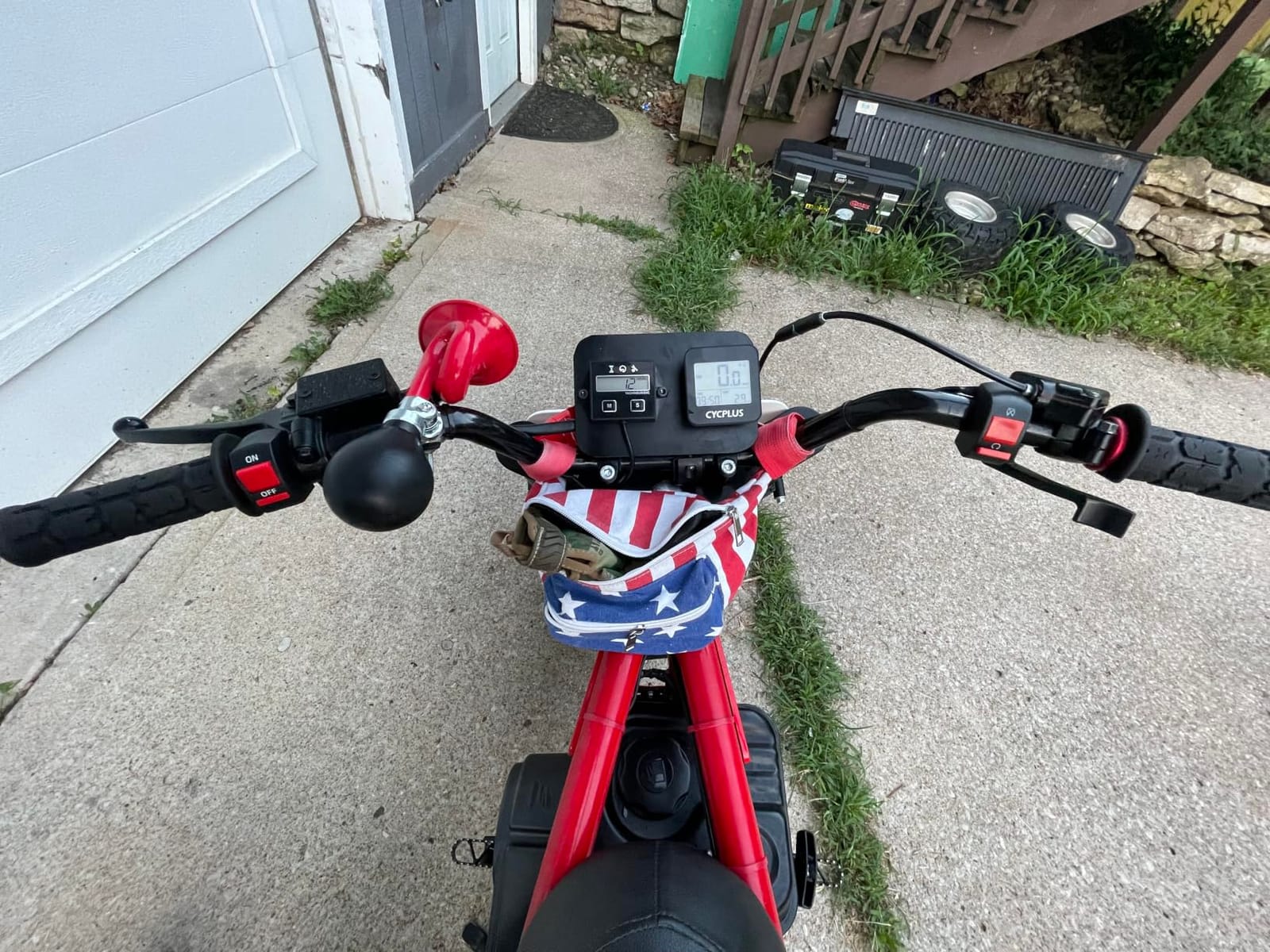
Casual trail riders who ride known loops, want a glanceable speed and distance readout, and would rather charge once a month. It is also a solid backup device to carry in a pack bag.
If you ride in the open and mostly care about distance and time, the accuracy is more than adequate.
Do not buy this if you need navigation. There is no mapping, no routing and no turn-by-turn, so it will do nothing for you on unfamiliar terrain.
Riders chasing training data, sensor pairing or automatic Strava upload should save their money and pick a connected unit instead.
2.4 inch semi-reflective screen
IPX7
25 hour battery
67 g
The BSC200S does something several more expensive units do not: real navigation with turn, yaw and yaw-direction reminders at a genuinely low tier. Routes can be created in the app or imported from Strava, Ride with GPS and Komoot, and there is one-touch navigation to saved points plus back-to-start routing.
The semi-transparent semi-reflective screen is a smart choice for MTB. Reviewers single it out as clearer in direct sunlight than a standard backlit LCD, which is the opposite of how most budget screens behave.
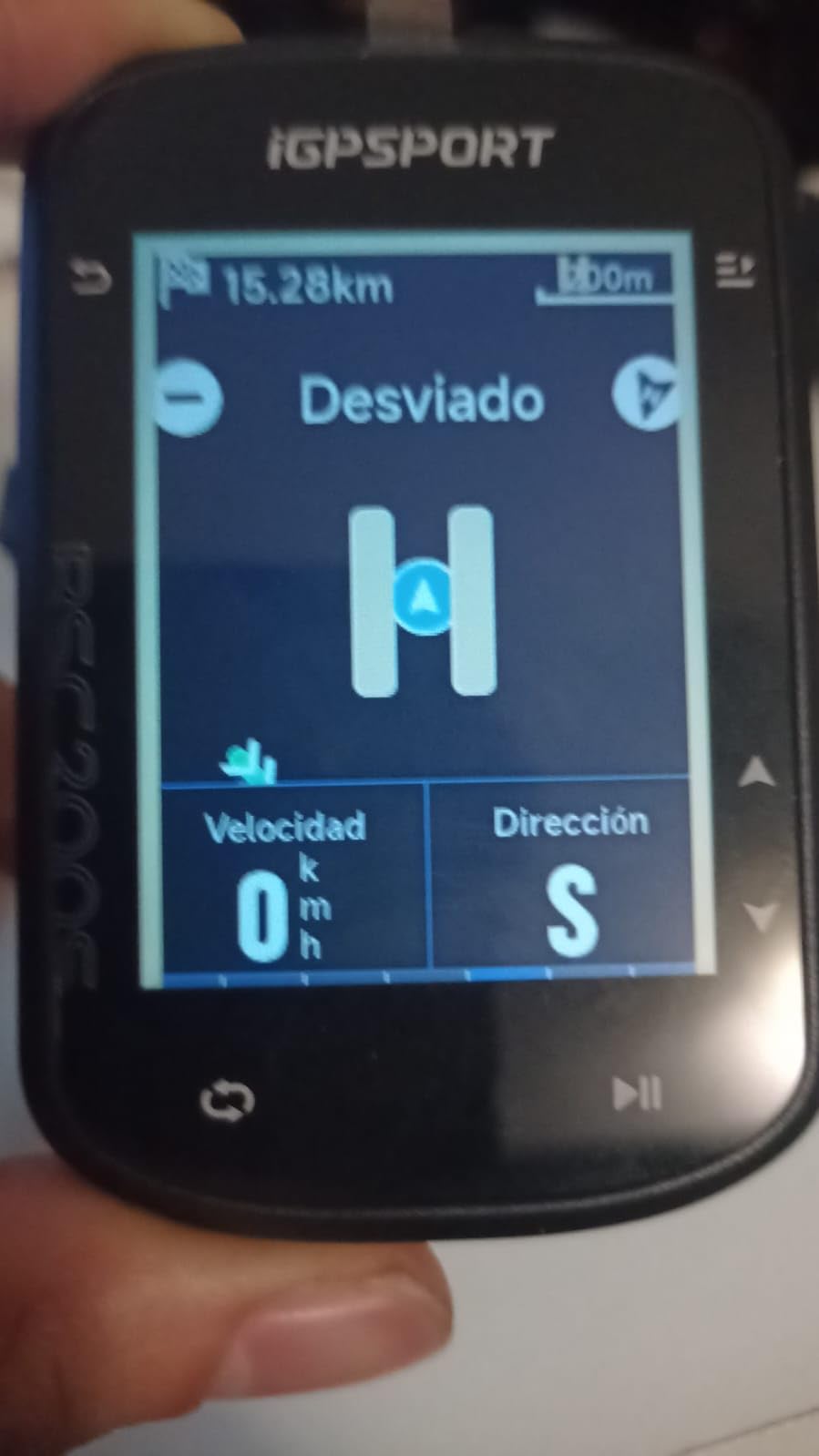
At 67 g with IPX7 waterproofing it is light and properly sealed, and it stores up to 400 hours of riding data with more than 100 data fields. Pairing with an iGPSPORT front light and radar light adds real usefulness on mixed trail and road routes.
The 25-hour battery from a 600mAh cell is modest and reviewers compare it unfavourably with the 40-hour sibling. The Type-C cable is not included. The small screen limits map detail, and smart notification support is thinner than on Garmin and Wahoo units.
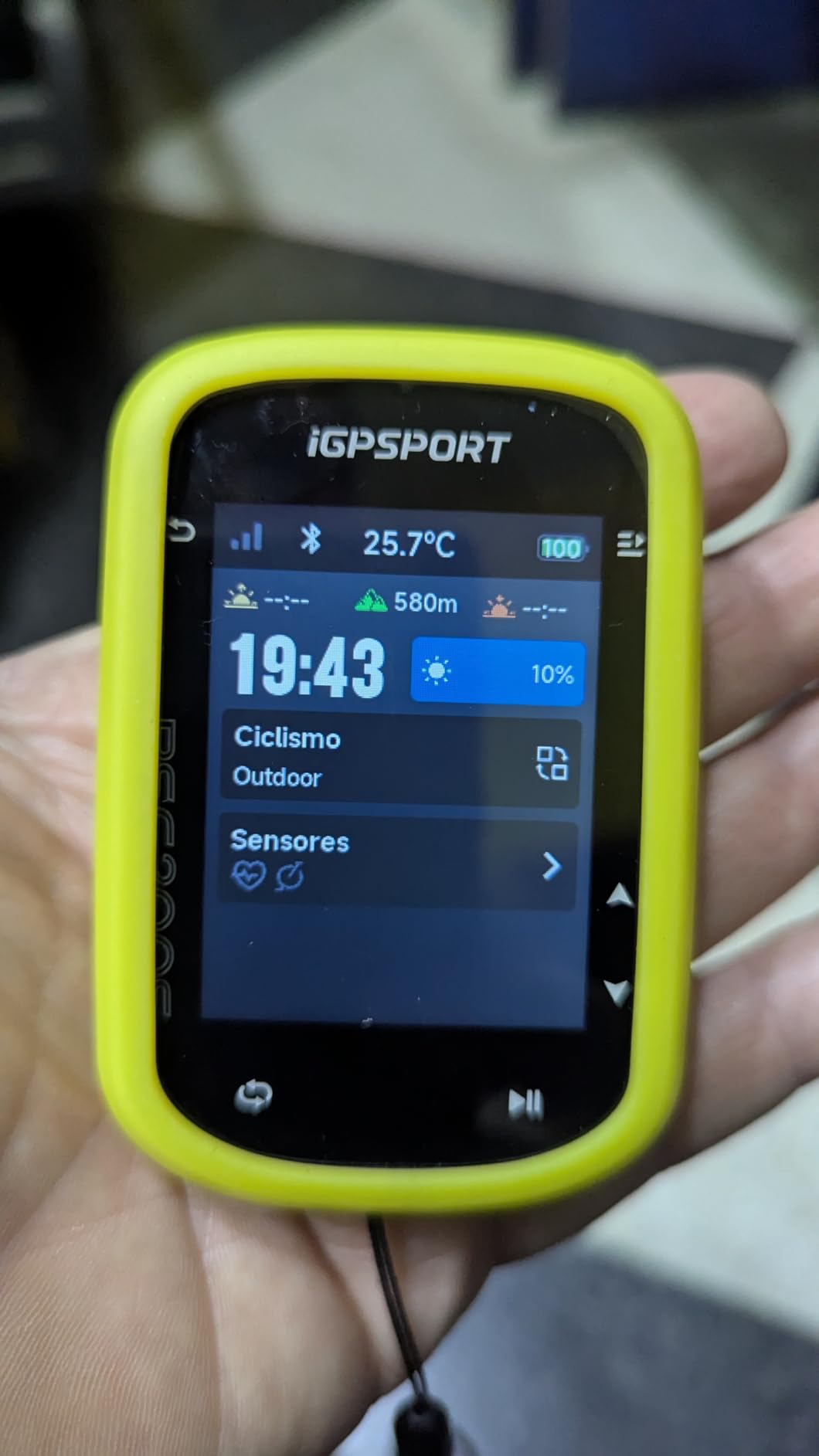
This is a good pick for riders who want turn-by-turn navigation on local trails but do not want to pay for training analytics. The reflective screen and IPX7 sealing are genuine advantages in the conditions we tested.
If you already use Strava, Ride with GPS or Komoot for route planning, the import workflow means you are not locked into building maps yourself.
It is not for riders who need topographic detail on the bar, since the 2.4-inch screen simply cannot show much map. Anyone riding full days without a spare battery should look for a larger cell.
Riders who rely on phone notifications for group coordination will find the notification support limited here.
3 inch glove-friendly touchscreen
16 hour battery
LiveTrack and incident detection
Single-band GPS
The Explore 2 is the Garmin that requires the least setup. Preloaded road, off-road and indoor profiles mean you can ride before you have configured anything, and the 3-inch capacitive touchscreen is described as glove- and rain-friendly, which it genuinely is for trail use.
It still carries the full Garmin safety suite. LiveTrack, GroupTrack, smart notifications, rider messaging and incident detection all work, and it pairs with Varia lights and radar as well as standard heart rate, speed and cadence sensors.
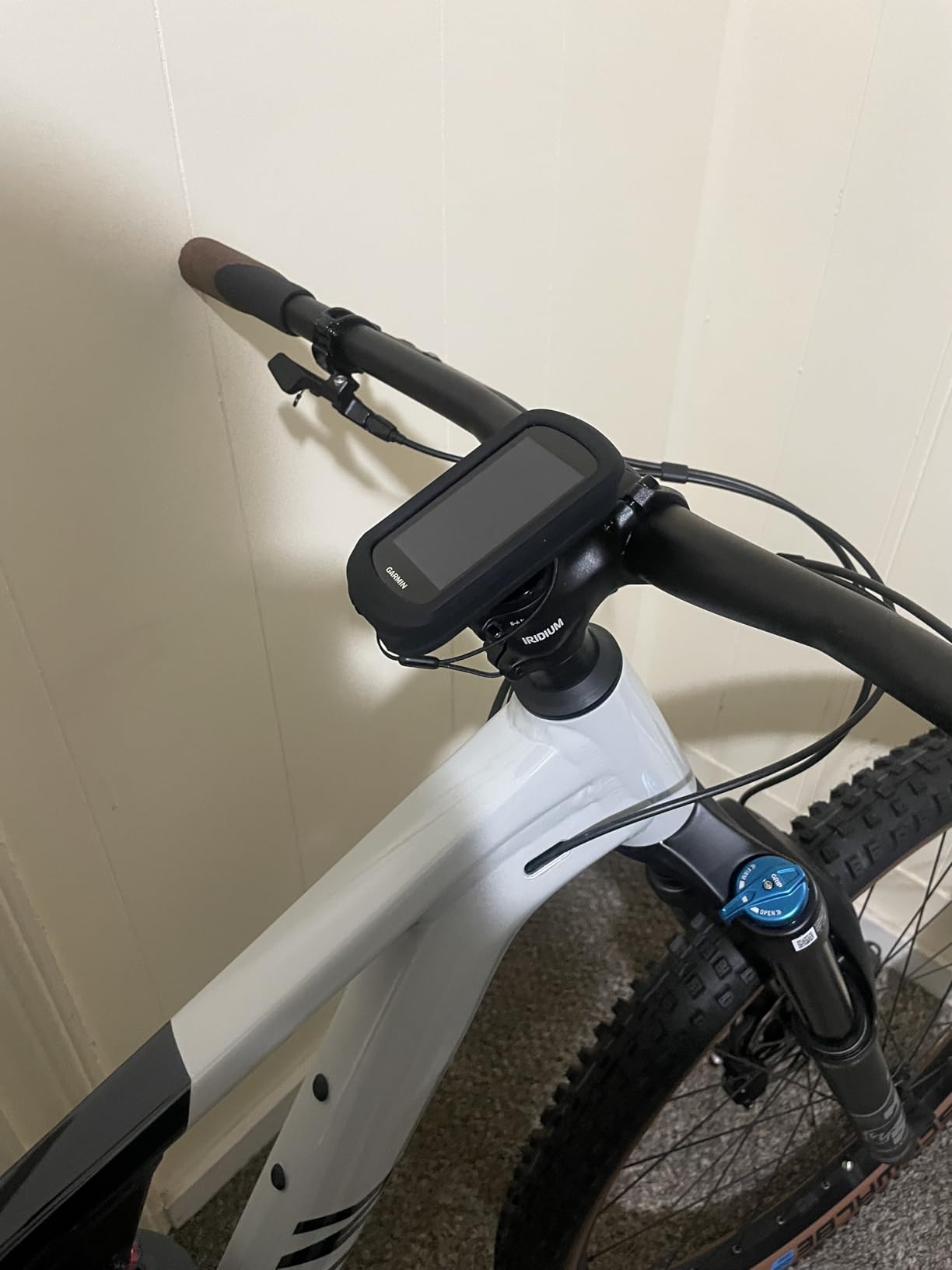
Ride type-specific maps highlight popular roads and trails with searchable points of interest, and eBike routing shows battery status, assist level and range guidance when you are on an e-mountain bike. It is also a strong, low-cost way into the Garmin Edge ecosystem.
Two things keep it from being a great MTB choice. The 16-hour battery is the shortest in the range, which rules it out for long days. And it uses single-band GPS rather than multi-band GNSS, which matters most in exactly the dense canopy where MTB riders get lost.
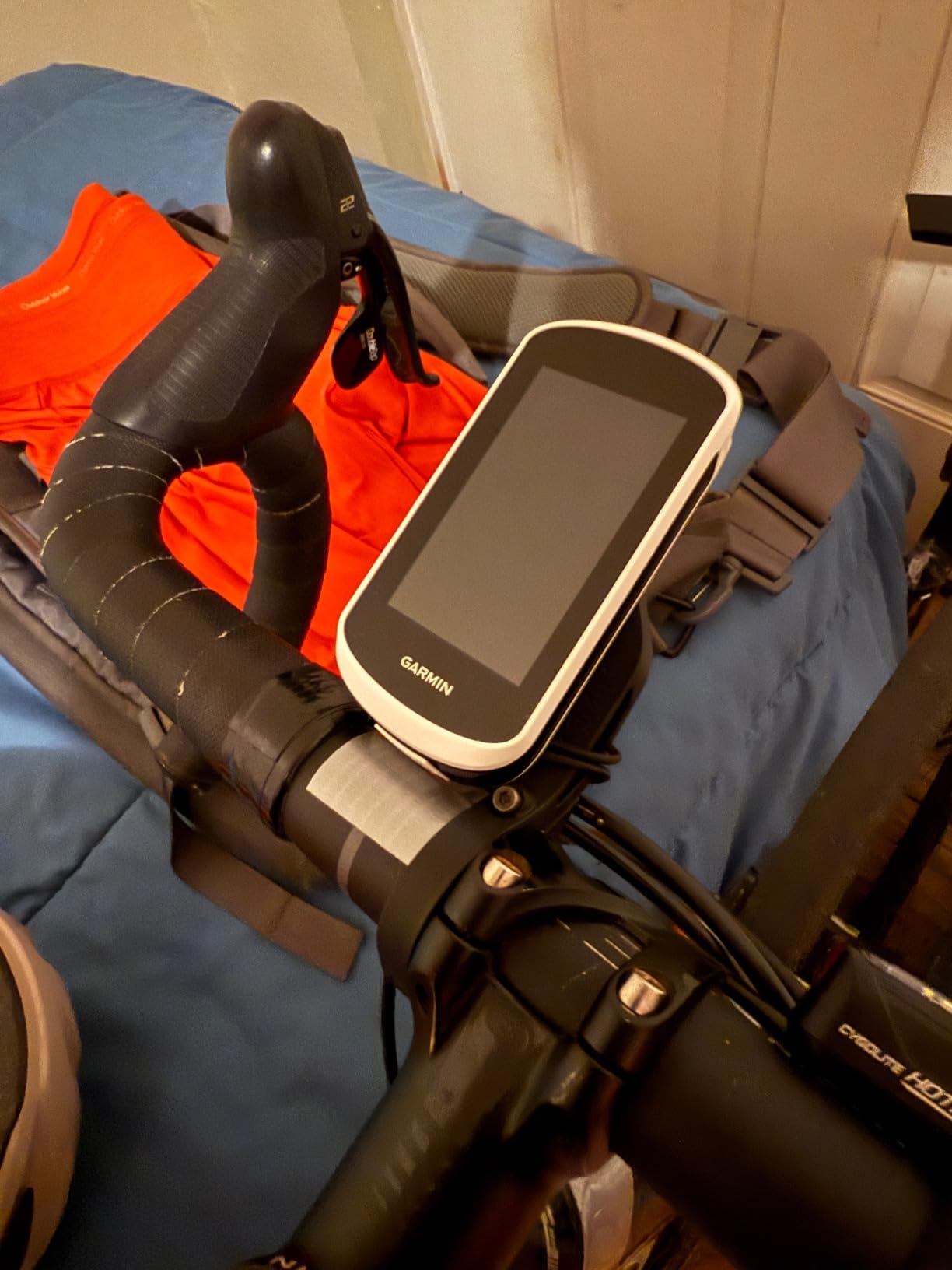
First-time head unit owners who ride mostly familiar trails will find the setup forgiving and the screen bright. Riders who want safety features like incident detection without a full training device are well served.
Varia owners get full integration, which is useful for riders who run lights and radar already.
Riders in heavy tree cover should pay the extra for multi-band GNSS. Long-day and bikepacking riders need a battery figure with more headroom than 16 hours.
If you want stamina, power guide or ability classification, you need to move up the range, and if you want turn-by-turn on unfamiliar trails the single-band GPS is a real limitation.
This is the most repeated question on MTB forums, and the honest answer is that it depends on which failure would hurt you more. Garmin wins on navigation depth and hardware accuracy. Wahoo wins on simplicity and the feeling that it just works.
On our forest loop the Garmin units held a tighter track under canopy, and the mapping options, including Trailforks integration, are simply more developed. If getting lost on unfamiliar trail is your worst outcome, Garmin is the safer choice.
Wahoo wins where Garmin frustrates people. Riders describe Garmin’s menu system as glitchy and fiddly, while Wahoo firmware updates arrive quietly and the interface does what you expect. Wahoo also gives you voice navigation, which no Garmin unit in this list offers.
Battery life tends to favour Wahoo in real use, with owners reporting long days finishing with charge to spare against Garmin units under the same conditions.
Multi-band or dual-band GNSS receives two frequency bands simultaneously, which lets the unit resolve signal reflections from trunks and canopy. Single-band units drift in exactly the wooded switchback sections where MTB riders get disoriented. If you ride forested singletrack, treat multi-band as a requirement rather than a nice-to-have.
This is the decision most roundups gloss over. A touchscreen is far better for browsing maps at a junction, and far worse when your full-finger gloves are wet and muddy. Button-only units such as the Edge 540 stay reliable when your hands are filthy. Hybrid designs like the iGPSPORT BSC300T give you both, and are the safest compromise.
Manufacturer claims assume the backlight is mostly off and the GNSS is idle. Under tree cover the receiver searches constantly, which drains faster. For a typical four to six hour MTB ride, a 24-hour rated unit gives you plenty of margin. For bikepacking with nightly charging, look for 35 hours or more. Below 20 hours, plan on carrying a battery or charging mid-trip.
Out-front mounts put the screen in your eyeline, which is the only way to glance at a map without dropping your head. They also transmit trail chatter directly into the unit, so a stem mount is tougher. Many crashes and rock gardens shift out-front brackets, and forum riders report replacements after hard days. Check the unit size against your bar clamp spacing first.
Garmin Connect is the deepest for post-ride training analysis and route planning. Wahoo is the simplest and syncs well with Strava-focused riders. Hammerhead is built around Strava and pairs directly with SRAM AXS. iGPSPORT and Magene cover route import from Strava, Komoot and Ride with GPS at lower tiers. If you already track training on a smartwatch, you may want navigation only and should not pay for training metrics you will never open.
Screens of 2.4 inches and under are difficult to follow on technical trails, but going larger than you need crowds a wide handlebar and adds weight. XC racers chasing power data have a genuine reason for a full head unit. Pure trail riders carrying no power meter get nothing from ability classification.
Map data is where most trail navigation goes wrong, and it is rarely the device’s fault. Four sources cover most riders.
Trailforks: the trail-specific map, and repeatedly named on MTB forums as the decisive feature for trail riders. Its trail names, difficulty ratings and junction detail do not exist in general cycling maps.
MTB Project: strong regional trail coverage with useful waypoints and surface information, popular with European riders.
Komoot and Ride with GPS: route planning platforms that export GPX files to most units. Bikepackers usually build here and sync to the head unit.
OpenStreetMap: the free base data that underpins much of the above, plus Viewranger for offline viewing.
Whichever you choose, download maps before you leave. Built-in map coverage does not extend everywhere, and gaps appear exactly where you cannot stop and check a signal.
Garmin wins on GPS accuracy under tree cover, mapping depth and training analysis, and is the safer pick if getting lost on unfamiliar trail is your worst outcome. Wahoo wins on simplicity, quiet firmware updates, real battery life in daily use and spoken turn-by-turn prompts that no Garmin unit offers. Most MTB riders who prioritise navigation pick Garmin, while riders who want minimal fuss pick Wahoo.
The Garmin Edge 1040 is the strongest all-round choice for mountain biking, with multi-band GNSS, a 3.5-inch color touchscreen and a 35-hour battery. Riders who want button-only control and the lightest build should take the Edge 540. If you want the simplest setup and incident detection without training metrics, the Edge Explore 2 is the entry point.
The Magene C506 offers the best balance of cost and capability, with a 2.4-inch color touchscreen, 24-hour endurance battery, Wi-Fi sync and turn-by-turn navigation. If you need real navigation at a lower outlay, the iGPSPORT BSC200S adds route navigation and a sunlight-readable reflective screen. For a pure speed and distance readout with no apps, the CYCPLUS G1 costs less still.
A multi-band or dual-band GNSS head unit is the best choice for mountain biking, because it holds position through dense tree cover where single-band units drift. Among the units tested, the Garmin Edge 1040, iGPSPORT BiNavi and Wahoo Elemnt Roam V3 all use multi-band positioning, while the Garmin Edge Explore 2 uses single-band GPS.
Professional riders mostly use Garmin Edge units, with the higher-end models favouring the multi-band GNSS and full color mapping. Wahoo Elemnt units and Hammerhead Karoo devices are the other common choices in pro and amateur race paddock, with the Karoo popular among SRAM AXS riders. Riders building routes in Strava tend to favour Hammerhead.
Trailforks is the stronger choice for trail riding because it names individual trails, grades them by difficulty and marks junctions that general cycling maps leave blank. MTB Project is a good complement with regional coverage and surface detail, particularly in Europe. Most riders use Trailforks for trail awareness and a Komoot or Ride with GPS GPX export for the route itself.
If you ride trails you know well and only want distance and time, a phone or a simple speedometer display is enough. A dedicated head unit becomes necessary the moment you ride unfamiliar terrain, need navigation in the rain or cold, or want reliable crash alerts and group tracking. Phones lose signal, overheat and die in cold weather mid-ride, so a head unit is the safer tool on trail.
If you want the best cycling computers for mountain biking in one recommendation, the Garmin Edge 1040 leads because multi-band GNSS, a readable 3.5-inch screen and a 35-hour battery cover almost every MTB scenario we tested. Riders who ride wet, technical trails will be happier with the button-only Edge 540, and anyone on a strict budget gets the most from the Magene C506.
Whichever you pick, test it on a loop you know before you trust it on a trail you do not, and download your maps at home.