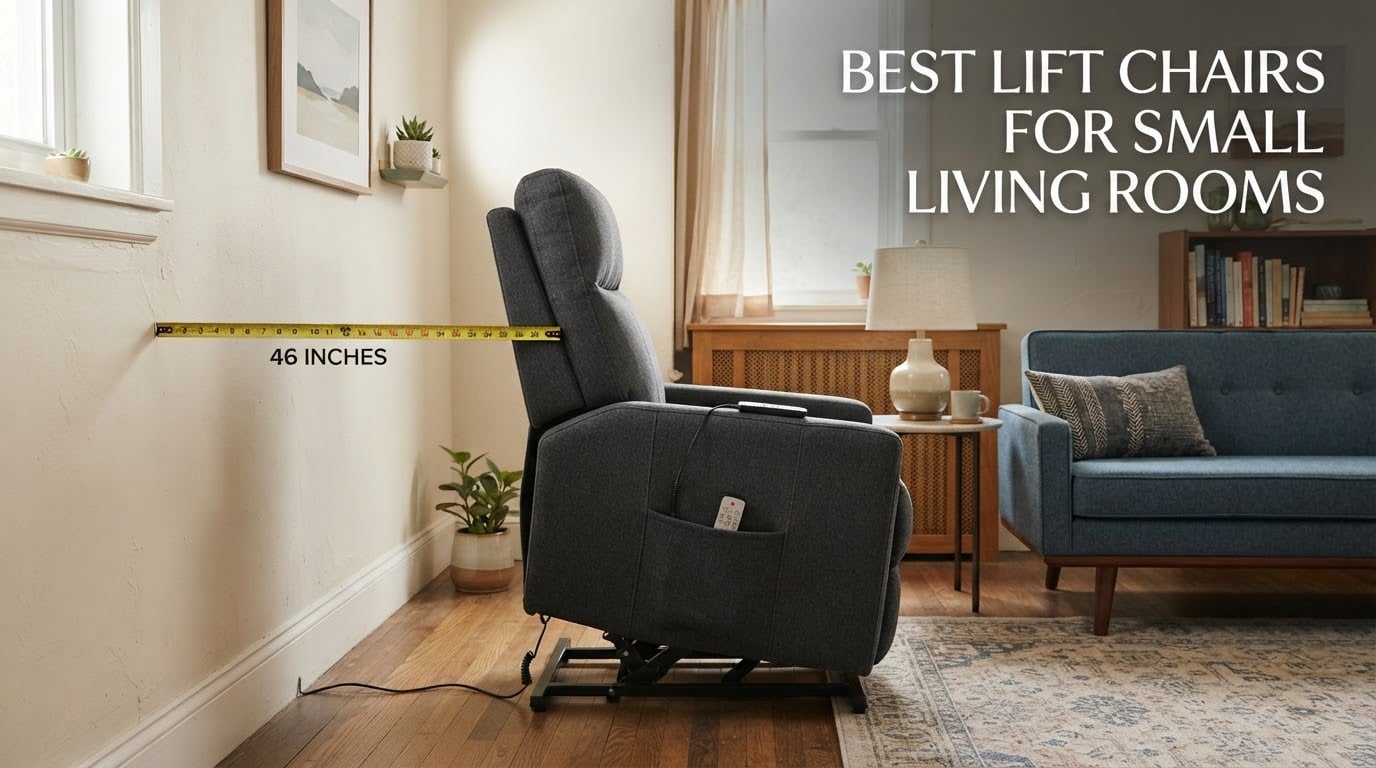

Choosing the best lift chairs for small living rooms comes down to one measurement most product pages never print: how far the chair extends when it is fully reclined. A lift chair sits quietly against the wall looking compact, then drops a footrest into the middle of your floor the first time someone leans back. Upright width tells you almost nothing about whether it will work in a roomy house. The reclined footprint tells you everything.
That distinction matters more than comfort features, brand names, or the count of massage nodes. We compared every chair in this roundup on width, depth, height, seat height, seat depth, weight capacity, and motor configuration, then asked one question: will this chair fully recline in a room that already has a sofa, a side table, and a walkway? Only the HOMCOM in this list publishes its own reclined dimensions, and its number is sobering at 61.75 inches of length.
Everything else has to be reasoned about from upright depth plus footrest extension. Our method here is published specifications and owner review patterns, not showroom testing, so treat the numbers as a planning tool rather than a promise of fit.
We also kept two practical rules. First, no chair here is marketed as a true wall-hugger, which is the design category usually recommended for tight rooms; a member writing on the ALS Forums put it plainly, that non wall-hugger models need a lot of space to recline. Second, we separated the small frames from the small seats. A 26-inch-wide chair with a 17.75-inch seat height helps a 5-foot-2 user, while a 35-inch-wide infinite-position chair may fit your wall perfectly and still leave a 5-foot-10 user hanging off the front edge.
This is a 2026 update covering ten chairs we compared side by side, with published dimensions rather than listing adjectives. If your room is tight enough that furniture placement is already a puzzle, you may also find our guides to storage ottomans for living rooms and corner shelves for living rooms useful for reclaiming the space a lift chair will need.


Those three lead the list for different reasons, and we would buy different ones depending on the room. The 7141 wins on proven reliability across the largest review base we found. The 7664 wins on rating and on the power headrest, which is the feature most often missed and most often regretted. The 7893 wins for anyone around 5 foot 2 who wants independent leg and back control.
| Product | Specifications | Action |
|---|---|---|
| MCombo 7141 Small Lift Recliner |
|
Check Latest Price |
 MAHOMICO Power Lift Recliner MAHOMICO Power Lift Recliner |
|
Check Latest Price |
| MCombo 7893 Petite Dual Motor Lift |
|
Check Latest Price |
| MCombo 7664 Triple Motor Lift Recliner |
|
Check Latest Price |
 HOMCOM Compact Power Lift Chair HOMCOM Compact Power Lift Chair |
|
Check Latest Price |
 RESTREAL Dual Motor Lay Flat Lift RESTREAL Dual Motor Lay Flat Lift |
|
Check Latest Price |
 cinkehome Petite Power Lift Recliner cinkehome Petite Power Lift Recliner |
|
Check Latest Price |
 EONIX Dual Motor Lay Flat Chair EONIX Dual Motor Lay Flat Chair |
|
Check Latest Price |
 BRTHORY Compact Leather Lift Chair BRTHORY Compact Leather Lift Chair |
|
Check Latest Price |
 LOUVIXA Compact Power Lift Recliner LOUVIXA Compact Power Lift Recliner |
|
Check Latest Price |
Read the width column against the wall you actually have, not against the room. A chair that needs 28.7 inches of width but swings its footrest forward 22 inches can be a harder fit than a wider chair with a shallower recline, and only one listing on this page tells you the reclined length outright.
Width 32.7 inch
Depth 35.8 inch
Height 42 inch
Seat height 18.9 inch
350 lb capacity
The 7141 is the chair we would put in a small room first, and the reason is unglamorous: it has more owner feedback behind it than anything else we looked at, roughly 6958 reviews averaging 4.4 stars. Owners consistently describe the lift as smooth and the seat forward tilt as gentle on knees and lower back, which is the entire point of the mechanism.
Dimensions are the real story here. At 32.7 inches wide, 35.8 inches deep, and 42 inches tall, it is narrower than most of the infinite-position chairs on this list while carrying a 350-pound capacity. The 18.9-inch seat height and 19.7-inch seat depth are genuinely petite numbers, and reviewers with shorter relatives report the fit works.
It is a 2-position chair, which is a meaningful limitation in a small room. Two-position frames recline to a fixed angle and do not offer the independent footrest of a dual motor, so the footrest and back move together. That is a real space saver, and it is also the reason the 7141 fits rooms where a lay-flat chair would not.
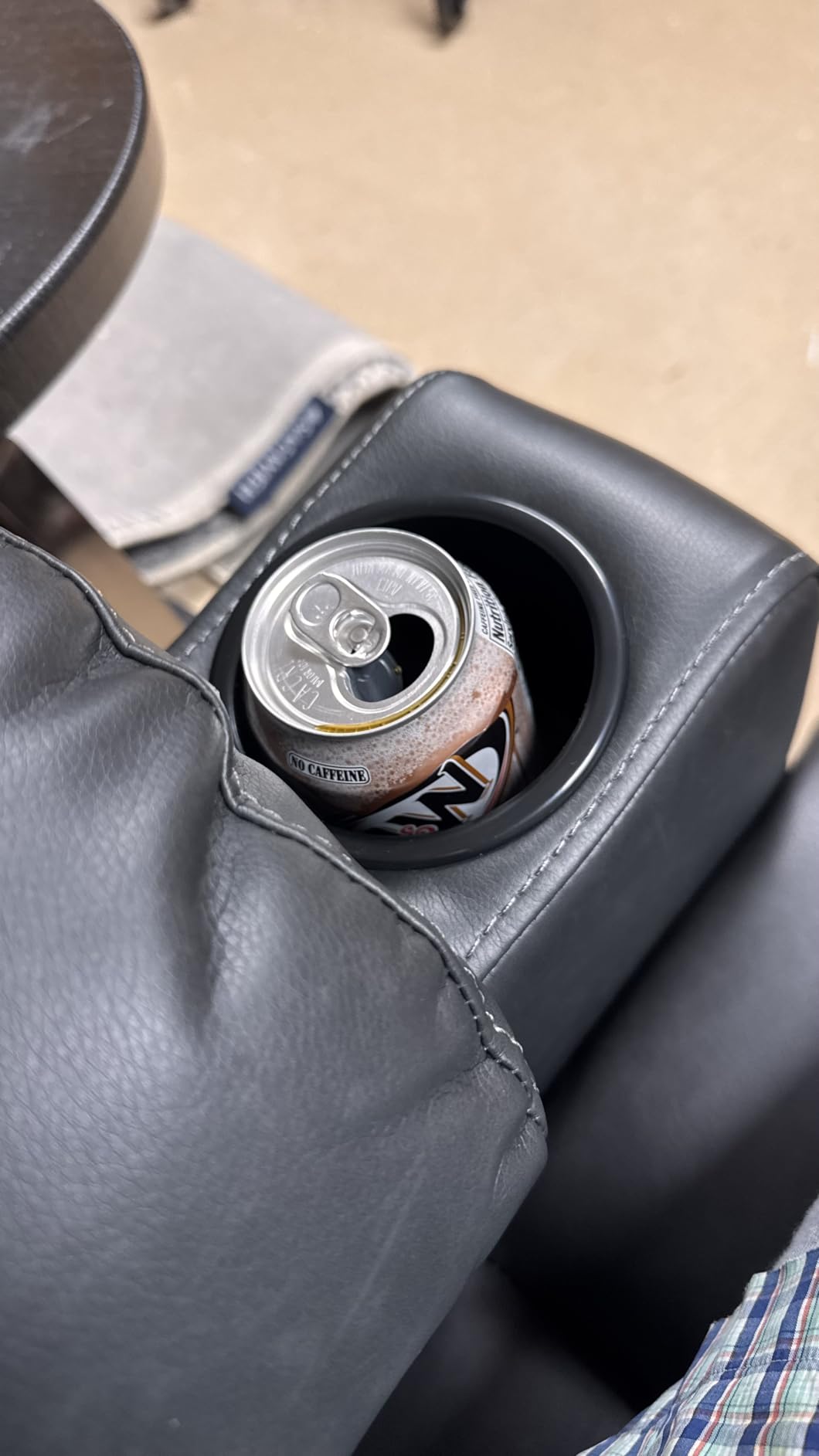
We also like the practical details for tight spaces: the frame arrives in two boxes, which helps on a stairway, and assembly is tool-free in roughly 20 minutes. The USB and Type-C ports on the arm, plus a cup holder and side pockets, keep a phone and a drink in reach during long sits.
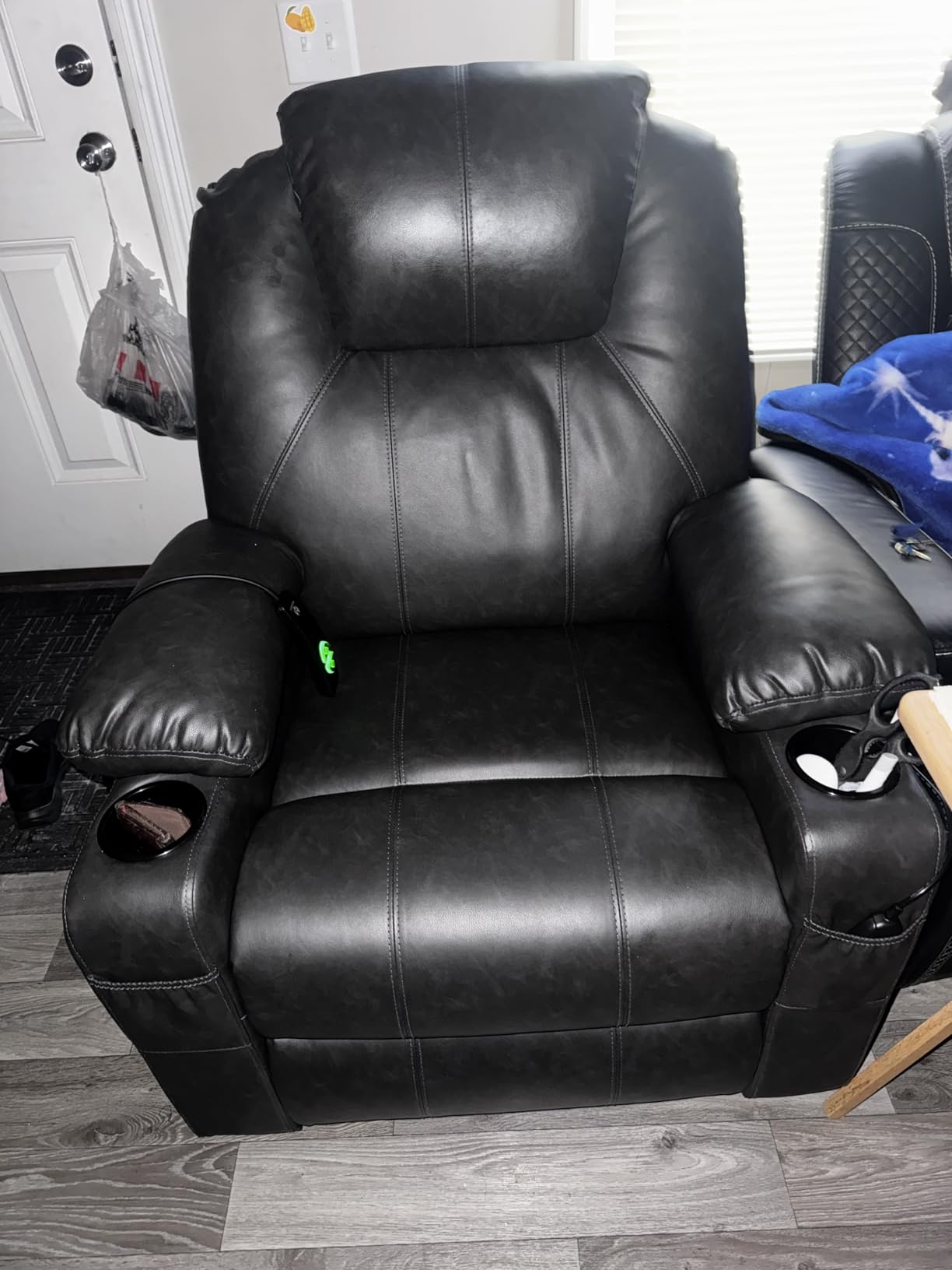
It fits better than its category suggests. Most of the compact chairs on this list are 34 to 35 inches wide, and several infinite-position models run past 38 inches deep even before the footrest extends. The 7141 stays inside a 33-by-36-inch floor area upright.
The one thing to plan for is the footrest sweep. Because the backrest and footrest are linked, the chair extends forward as it reclines, so give it at least 20 inches of clear floor in front. We would place it with its back to the longest wall rather than a corner.
Anyone who needs a true lay-flat position for overnight sleep, or who wants independent back and leg control. If you spend hours in a zero-gravity position, a dual motor model such as the MCombo 7893 or the EONIX gives you that independence and is worth the extra inches.
Also skip it if you dislike faux leather or live on hard floors without a rug. Reviewers repeatedly note that the upholstery feels slippery when standing, and that a rug improves stability noticeably.
Width 41.34 inch
Depth 37.4 inch
Height 41 inch
Seat 23.62 inch wide
350 lb capacity
We are including this chair as a counterexample, because it appears in plenty of small-room search results and would not fit our test room. At 41.34 inches wide it is the broadest frame here by more than six inches, and buyers shopping by price alone will not see that until delivery.
Where it does excel is the seat itself. The 23.62-inch contoured width is the widest in the group, padded with sponge over an ergonomic lumbar support, and at a 19.3-inch seat height and 21.26-inch seat depth it suits an average or larger adult. Recline runs continuously to 135 degrees, which reviewers describe as a comfortable television and nap angle.
Massage and heat are both present: eight vibration points with adjustable intensity, plus a separate lumbar heating zone. A cup holder, side pockets, and a USB charging port sit on the arm. The 350-pound rating and metal frame are solid for the class.
Only if you have a 42-inch wall with nothing on it. A typical 12-foot wall fits this chair alongside a small sofa, but it leaves very little for a walkway, and a small living room with a sofa, a table, and a television rarely has that much uninterrupted wall.
It also reclines rather than lies down, extending its footprint forward. Plan on clearing a wide floor area, and do not put it in a corner where the extended legrest would land against furniture.
Buyers over 350 pounds, and anyone who needs a broad seat. The three 400-pound chairs in this roundup offer more capacity, though two of them are deeper.
Buyers who want firmer build assurance may prefer a longer warranty. This chair carries one year on parts, among the shortest here, and its 4.0 star average is the lowest in the set.
Width 35 inch
Depth 28.8 inch
Height 40 inch
Seat height 20 inch
320 lb capacity
The manufacturer sizes this chair for users between 4 foot 6 and 5 foot 2, and owners with relatives around 5 foot 2 to 5 foot 5 report the fit holds up in daily use. It is one of two chairs here with an explicit height range rather than a generic small label, and that specificity is why it leads our petite category.
Two things make it compact in a way that matters. The frame depth is 28.8 inches, the shallowest of the dual motor chairs here, and the overall width is 35 inches. Independent dual motors let the backrest and footrest move separately, including a zero gravity position and a 165-degree near-flat angle that many people use for short naps.
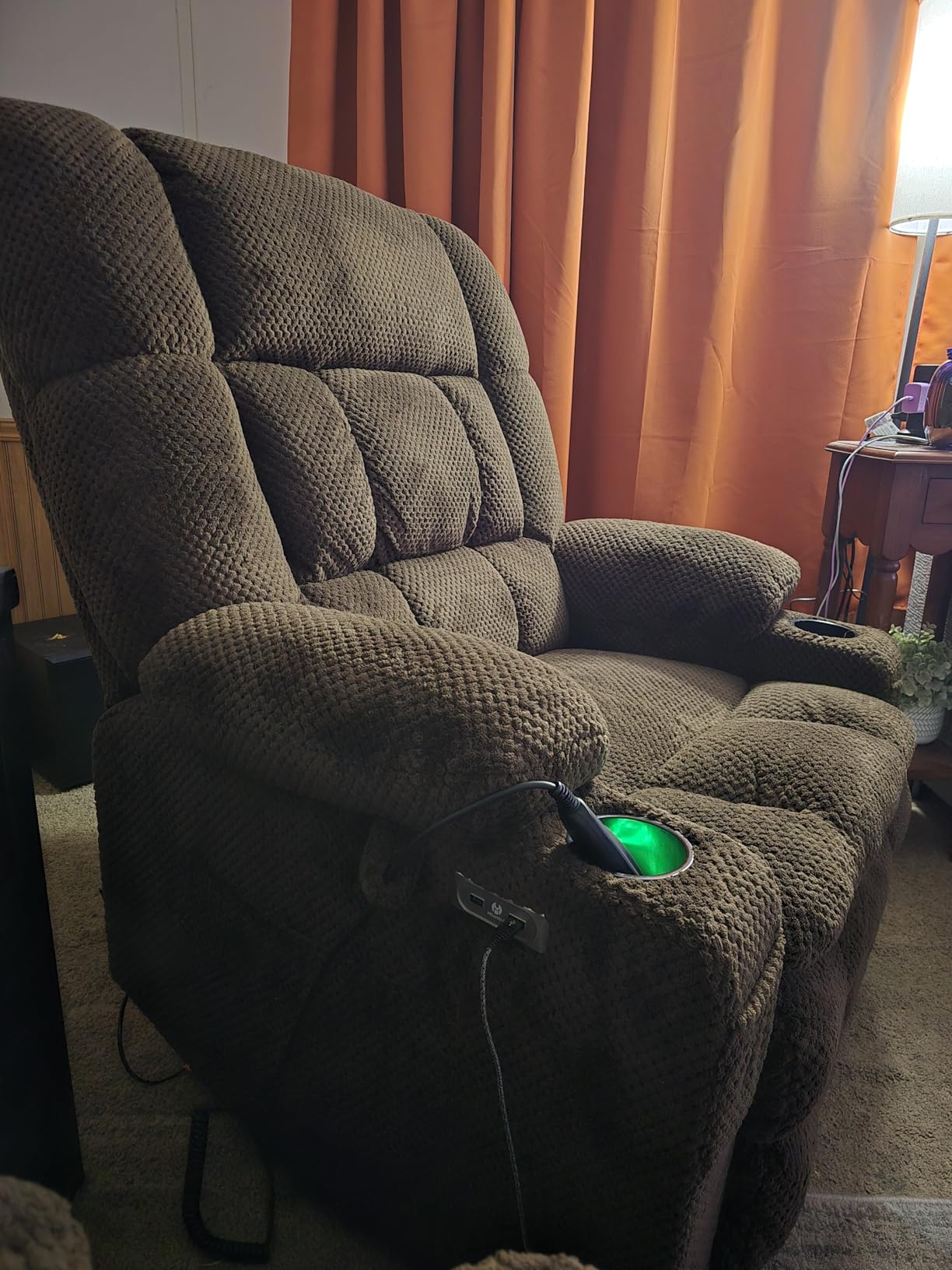
Comfort features are generous for the size: eight-point full-body vibration, a separate lumbar heating zone with 10, 20, and 30-minute auto-off, and a one-touch home button. Cup holders and USB charging are on the arm, and the frame arrives in two packages.
The compromise is armrest length. The cup holders sit on top of the arms, which shortens the flat surface, and a 20-inch seat height with a firm foam feel can cramp anyone with longer limbs. The 320-pound capacity is lower than several rivals.
It is small in depth rather than width, which is the more useful axis in most living rooms. At 28.8 inches deep you can place it between a sofa arm and a side table, and the back wall clearance is modest compared with other dual motor frames.
Because the footrest extends independently, the chair still grows forward when fully reclined, and the 165-degree position needs noticeably more floor in front than the upright frame suggests. Measure that reach before committing to a tight corner.
Anyone over 320 pounds, or anyone taller than about 5 foot 5 who wants a roomy seat. The petite frame is the whole point, and reviewers with taller users report hands dangling past the shortened arms.
Anyone impatient with slow mechanisms should also look elsewhere. Owners describe the motors as needing patience through a full recline-to-stand cycle, which is exactly the sequence a caregiver repeats several times a day.
Width 34.2 inch
Depth 37.4 inch
Height 42.1 inch
Seat depth 18.9 inch
320 lb capacity
The 7664 carries the highest average rating in the roundup at 4.5 stars across 460 reviews, with roughly 74 percent five-star feedback. It is also the only chair here with a genuinely motorised headrest, and that single feature changes how a recliner feels over a long evening.
Triple motors drive the headrest, backrest, and footrest separately, which produces true infinite positioning and a lay flat sleeping position. For someone recovering from hip or knee surgery and sleeping in the chair for weeks, that is the difference between resting and enduring.
Sizing is petite again, recommended for 4 foot 6 to 5 foot 2 users, with a shortened backrest, an 18.9-inch seat depth, and a 19.3-inch seat height. Width is 34.2 inches, narrower than most triple motor frames, though the 37.4-inch depth is on the longer side.
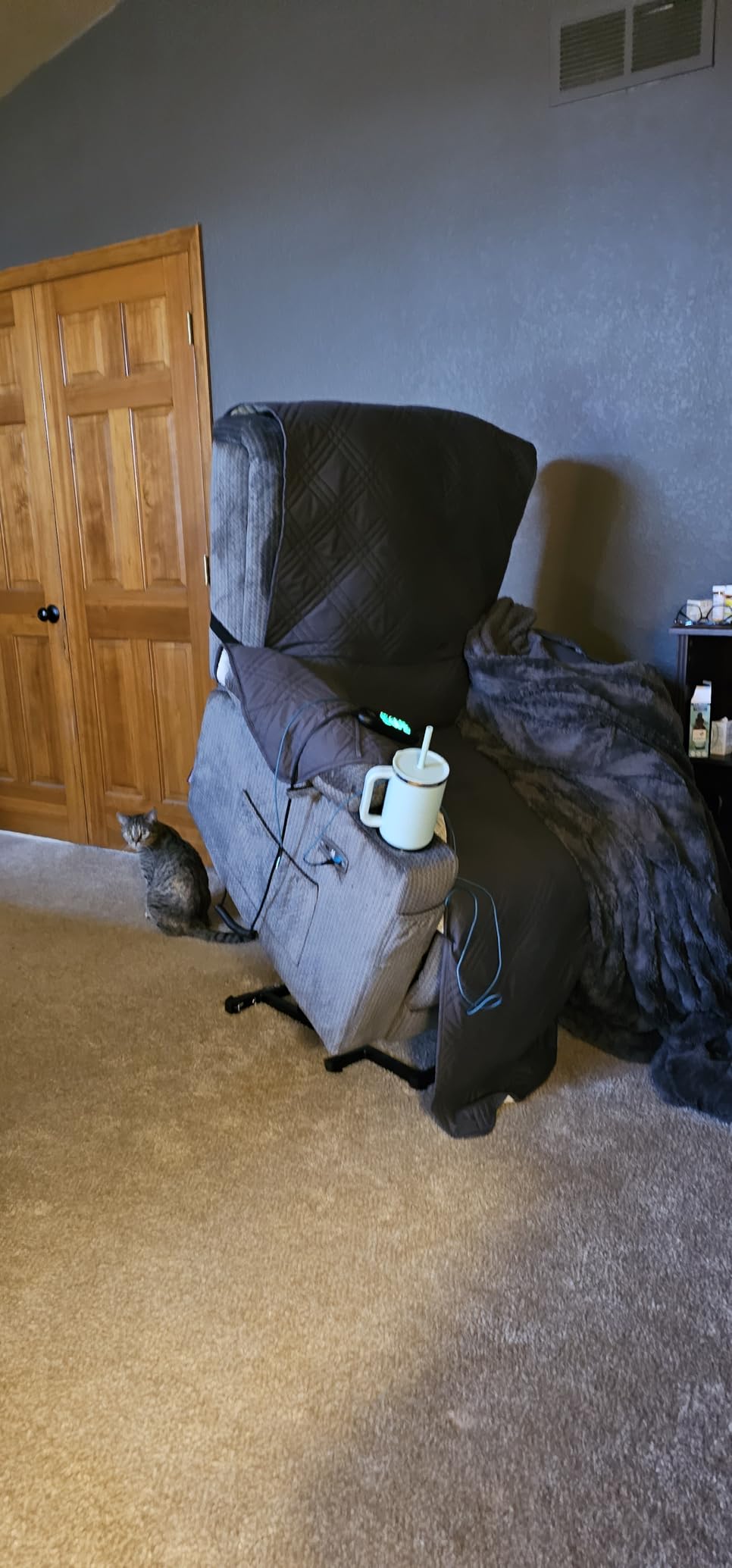
Comfort hardware matches: eight-point vibration, independent lumbar heat, two cup holders, dual USB ports, side pockets, and an included lumbar pillow. A 4.7-inch footrest extension supports the lower legs during sleep.
Two practical cautions. On some variants the lift and legrest share an engine, which means footrest support drops during the rise. And the frame is divided across two boxes that can turn up separately, each needing two people to carry indoors, which matters in an apartment with a narrow stairwell.
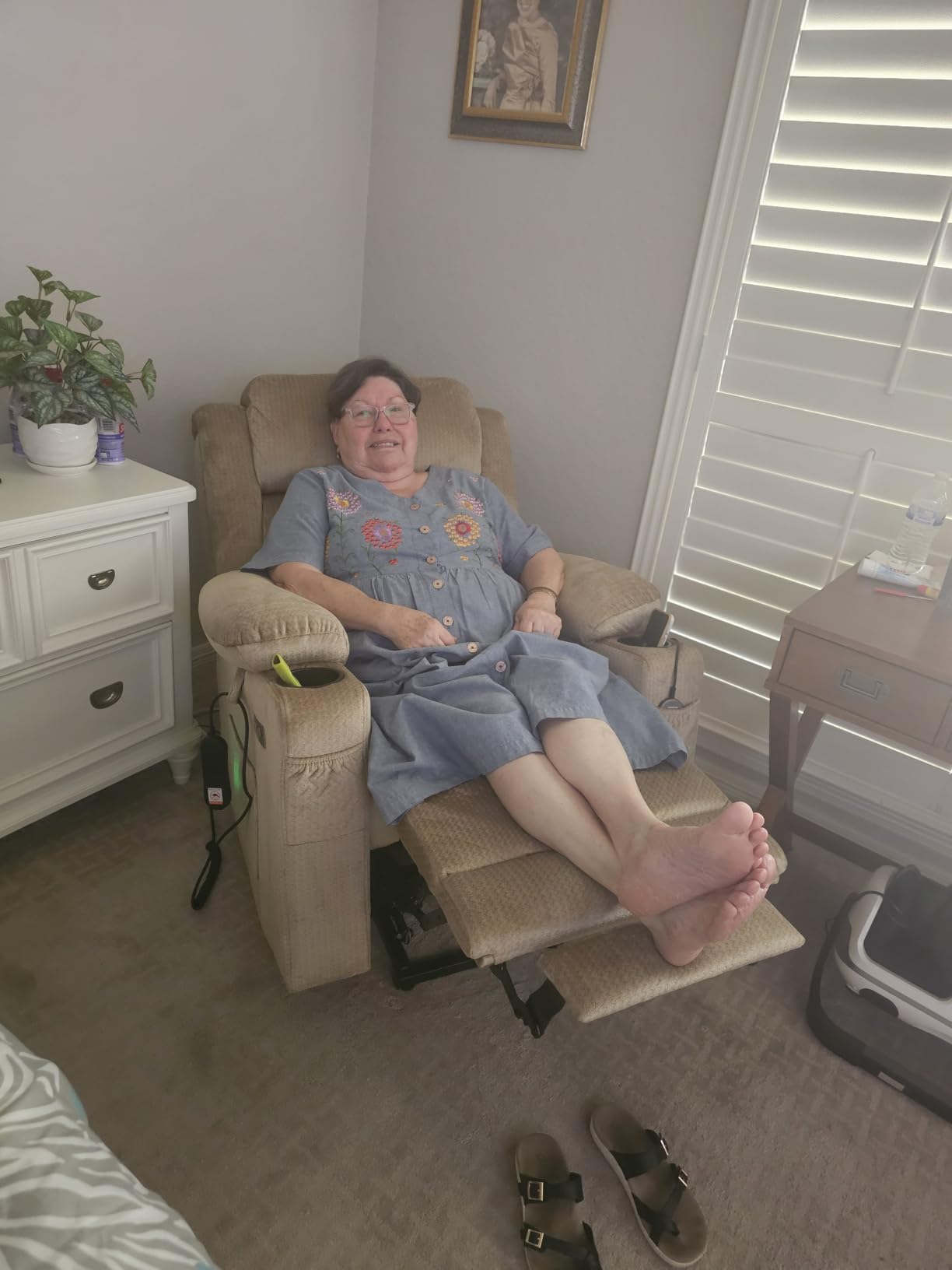
We think yes for anyone who watches television or reads while reclined, because a fixed backrest forces the neck to tip upward as the chair lies down. The headrest motor corrects for that independently of the body position.
The cost is 37.4 inches of depth in a category where 29 to 35 inches is common. In a small room, trade the headrest for depth by choosing the shallower MCombo 7893, which also gives you independent positioning but no headrest adjustment.
Households near the 320-pound limit, and anyone working alone on a two-package frame. Also buyers expecting the smoothest transitions, since the lift shifts are described as slightly clicky next to chairs with dedicated lift motors.
If you want the same headrest idea with more capacity, the EONIX reaches 400 pounds and 175 degrees, at a similar width but a longer 38.6-inch depth.
Width 26 inch
Seat height 17.75 inch
Reclined length 61.75 inch
265 lb capacity
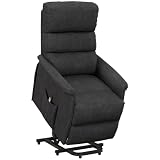
The HOMCOM is the only chair on this page that publishes its reclined dimensions, and that disclosure is the most useful single detail in the roundup. Upright it measures 35.5 inches deep by 26 inches wide and 37.75 inches tall. Fully reclined, the listing states 61.75 inches of length by 26 inches wide and 32 inches high.
That is a 26-inch-wide chair needing about 5 feet of front-to-back space when laid back. If your wall is the constraint, this is the pick. If your floor depth is the constraint, you now know exactly what you are dealing with before the chair is assembled.
At 75 pounds it is also the lightest here by a wide margin, which matters more than it sounds in a third-floor apartment. One person can move it from the doorway to the living room, and the assembly is a matter of inserting bolts to attach the backrest.
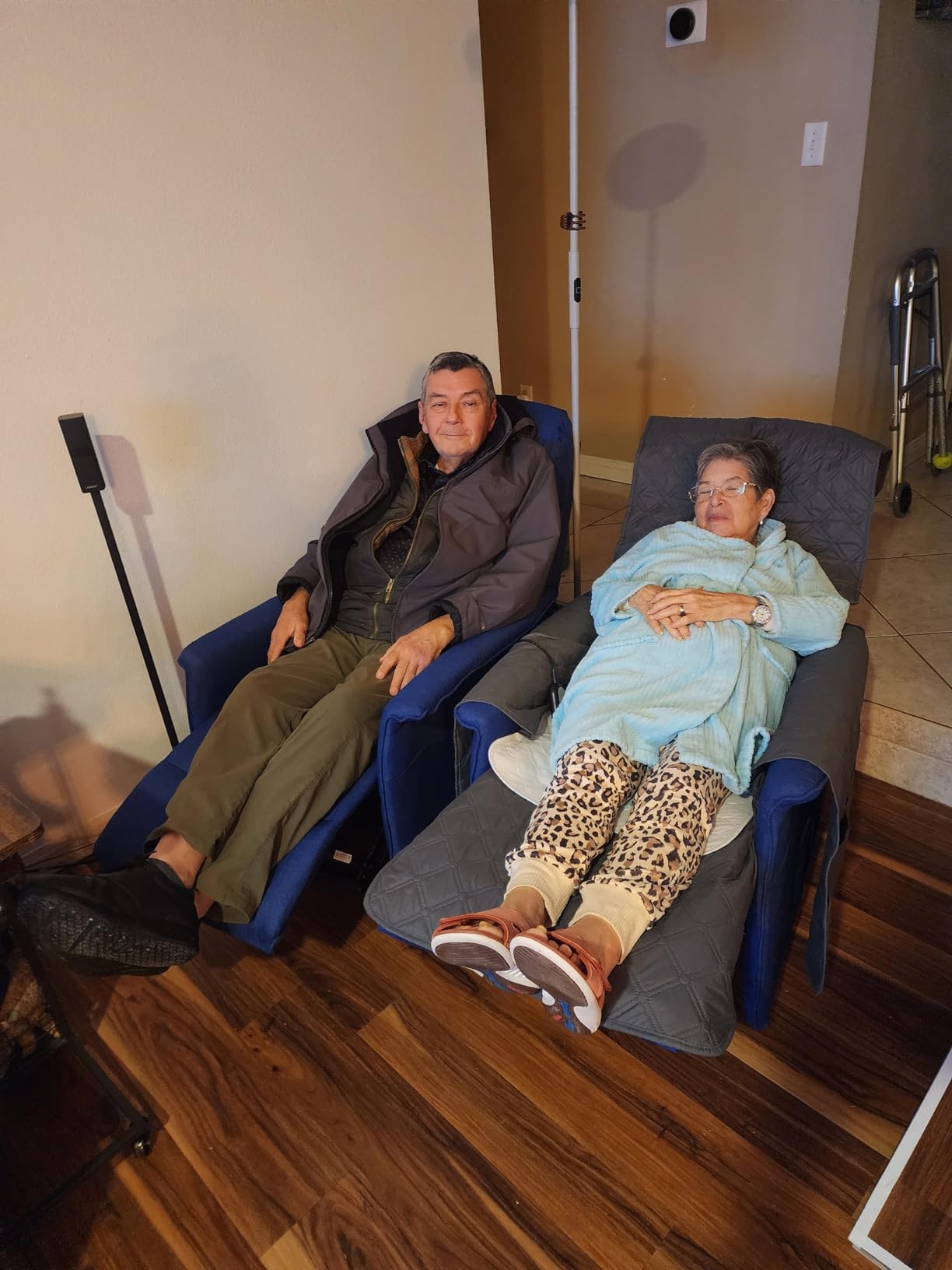
The seat is an 18.5 by 21.5-inch pad sitting 17.75 inches off the floor, built on a pocket spring system over foam and covered in polyester. The counter-balanced anti-tipping mechanism lifts to roughly 45 degrees for standing assistance, and the back reclines to 135 degrees with a hand remote.
There are no massage or heat functions, and the 265-pound capacity is the lowest here. The 20.75-inch interior back height points to this chair serving users under about 5 foot 9.
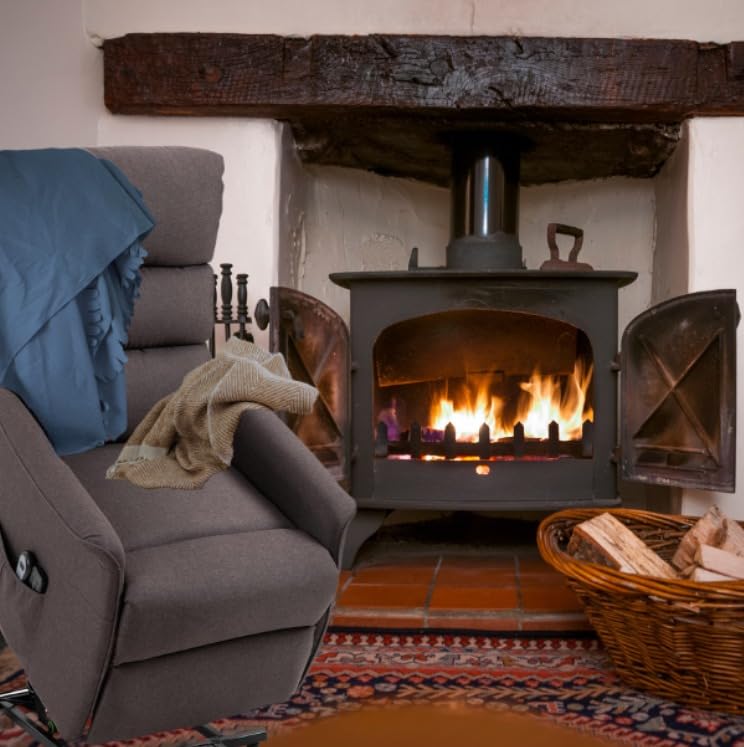
Plan 26 inches of width and about 62 inches of depth in its most reclined state, plus a few inches on each side for the arms to move. The 2-position mechanism means the footrest rises with the back, which is exactly why the number is long.
Because the width is so modest, this chair can sit in a narrow gap between a wall and a sofa where wider models cannot. The depth requirement is the trade you make for that.
Anyone over 265 pounds, or anyone wanting heat and massage for a sore back. Those are the two features most buyers in this category consider essential, and this chair simply does not have them.
Taller users should also be cautious. Reviewers treat it as a no-frills stand-assist chair, which is a fair summary, and its 4.1 star average is the second lowest in the set.
Width 28.7 inch
Depth 34.3 inch
Height 41.7 inch
Seat depth 20.5 inch
400 lb capacity
The RESTREAL answers the weight question that stops many people from buying a lift chair at all. Its frame is rated to 400 pounds, tied for the highest capacity in this roundup, on FSC-certified wood with an iron frame, which matters when a user is near the 300-pound mark where lighter mechanisms start to strain.
It is also one of the narrower dual motor chairs at 28.7 inches wide and 34.3 inches deep, with a 20.5-inch seat depth. Two silent motors give independent backrest and footrest control across infinite positions, including fully flat for overnight sleep.
The feature we did not expect is the second remote. One wand handles lift and recline, the other handles massage and heat, which owners with limited shoulder mobility describe as easier than a single crowded controller. The foldable tray table with cup holder and wireless charging stows away when nobody is eating beside the chair.
Massage covers eight points across back, waist, thighs, and legs with five modes, adjustable intensity, and lumbar heat. A removable zippered lumbar pillow lets users tune firmness, and the extended footrest suits taller users.
The width is genuinely compact for a chair of this capability. The 34.3-inch depth is reasonable, and 41.7 inches of height will clear most low ceilings and standard doorways.
Plan the delivery, not the footprint. It arrives in three boxes, and the base package alone weighs 83 pounds, so a second person is realistic on stairs. Tool-free assembly still runs 20 to 40 minutes per the manual.
Buyers on a tight budget or in a home without help on delivery day should pass. The weight is the honest downside here, and it is the trade for the 400-pound rating and a 122-pound build.
Warm rooms are also worth considering. Reviewers note the leather is easy to wipe clean but less breathable than fabric, which matters in a south-facing apartment in July.
Width 31 inch
Depth 35.4 inch
Height 36 inch
Seat height 19 inch
330 lb capacity
At 31 inches wide and 36 inches tall, the cinkehome is among the most compact frames here, and reviewers describe its motor as the quietest of the group. That combination matters in a small apartment, where a motor that runs loudly through a night-time lift is a real problem for anyone sleeping in the next room.
Dimensions run 35.4 inches deep with a 19-inch seat height and a 21.5-inch seat depth, and the manufacturer positions it for users around 5 foot 0 to 5 foot 4. The lift mechanism drives to a 60-degree standing-assist position through a simple two-button remote with large, easy-to-read buttons.
Upholstery is a soft, breathable cashmere-style fabric described as anti-skid, over high-density foam and a spring pack, on a stainless steel and wood frame rated to 330 pounds. Assembly takes 5 to 10 minutes, the fastest reported assembly time in the roundup.
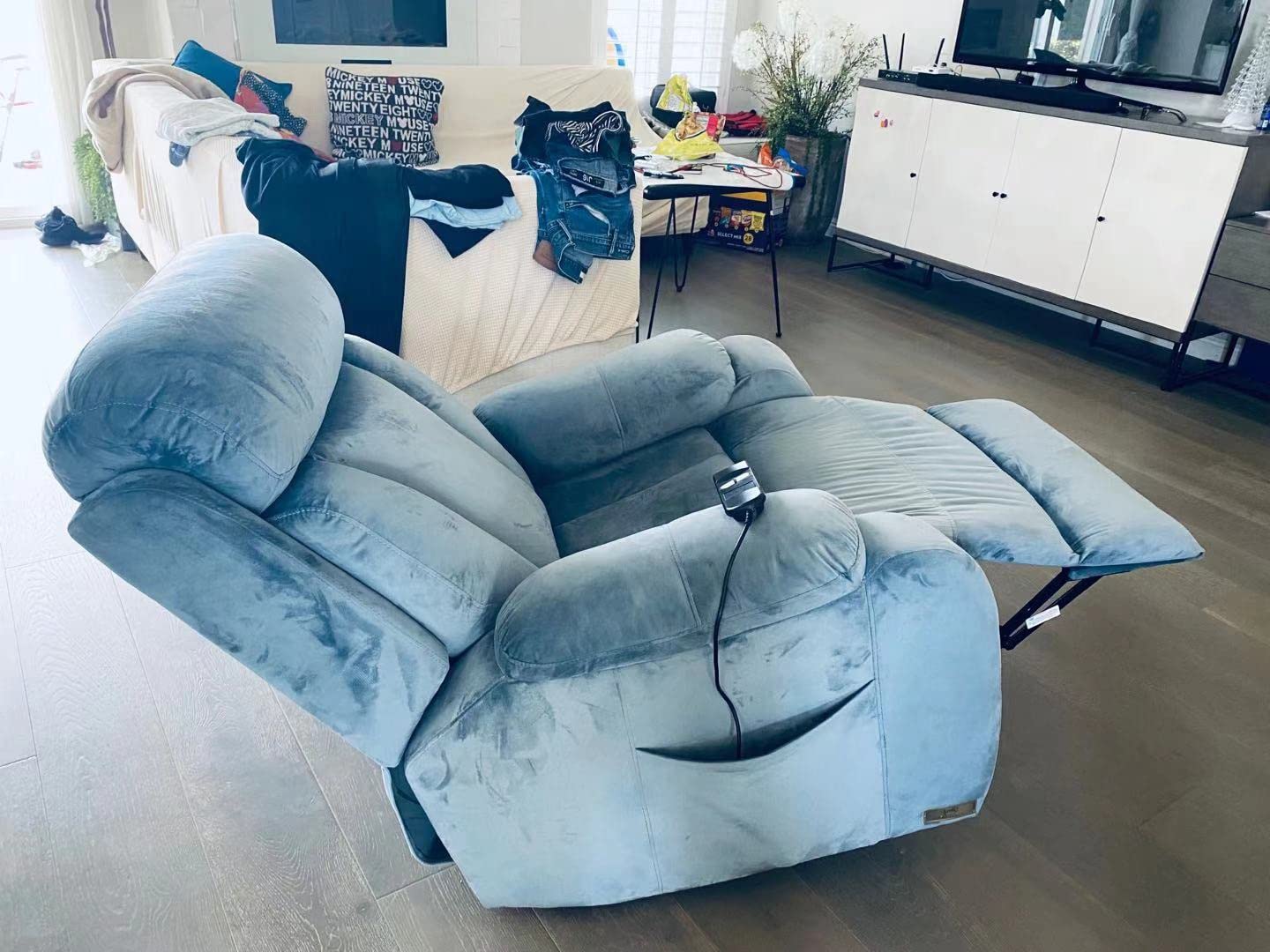
It is a 3-position chair, which gives more recline angles than the 2-position models without the depth of an infinite-position frame. There is a side pocket for the remote, and nothing else. No massage, no heat, no headrest adjustment.
Buyers also note the footrest end carries no padding and can press into the heels, and the instructions are thin enough that some owners installed the armrests on the wrong sides. Customer service is repeatedly praised for handling exactly that situation.
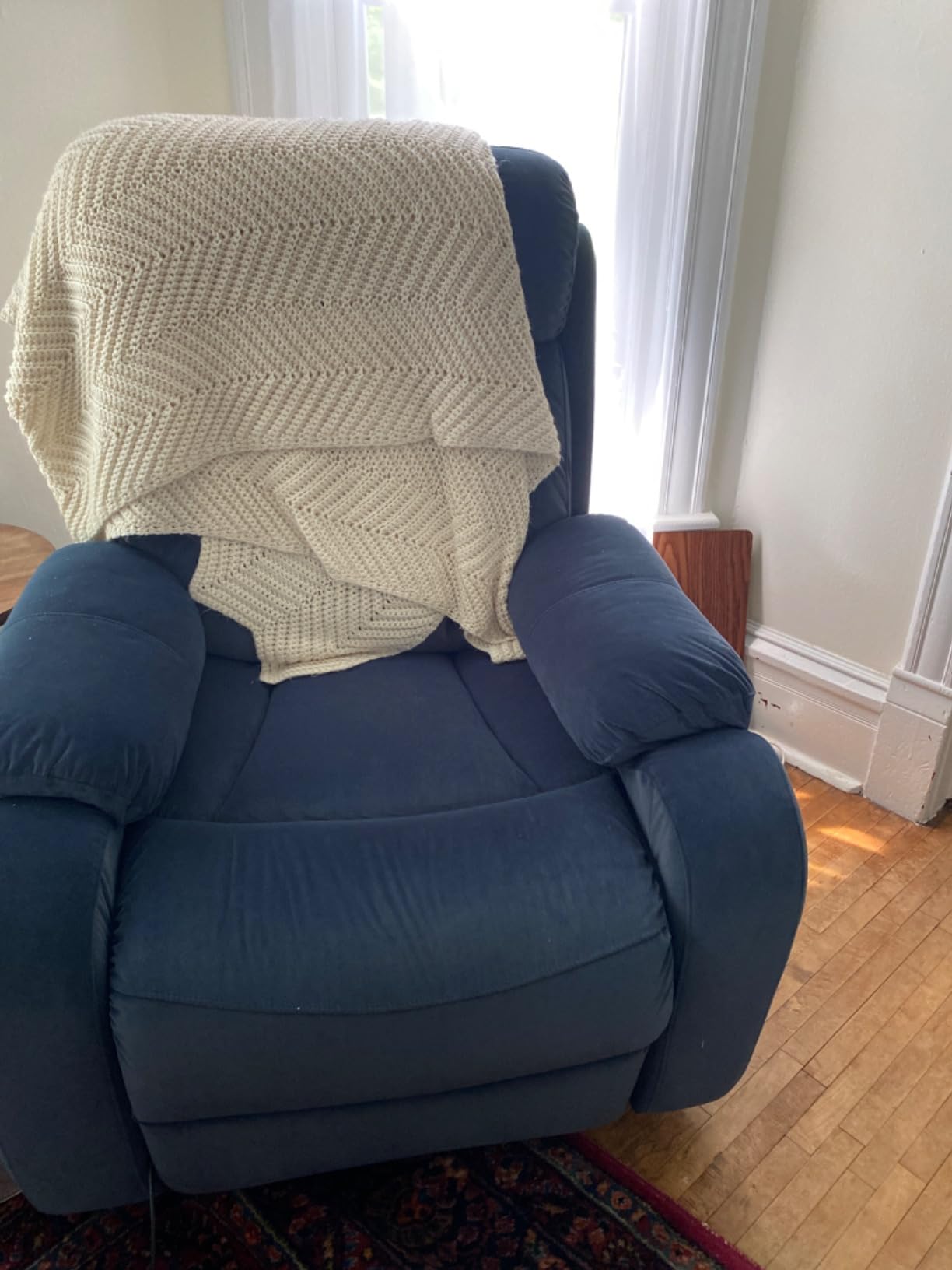
Shorter users, specifically. The 19-inch seat height and petite proportions suit someone around 5 foot 2 or shorter, and reviewers with taller users report their feet hang off the front when reclined. If you are above that height, the cinkehome will feel cramped rather than compact.
For a shared studio or a bedroom where someone else sleeps nearby, the silent motor is the deciding feature, and reviewers single out how little noise it makes through a full lift cycle.
Pain relief features. There is no heat and no massage here, so if a stiff lower back is the reason you want a lift chair, this is the wrong tool even though the fit is excellent.
The unpadded footrest edge and minimal paperwork are minor by comparison, but both are worth reading before ordering. Check the armrest orientation during assembly.
Width 35 inch
Depth 38.6 inch
Height 42.1 inch
Seat height 19.7 inch
400 lb capacity
The EONIX carries the deepest recline angle in the roundup, laying flat to 175 degrees through dual motors that move the backrest and footrest independently. For someone who sleeps in the chair after surgery, that angle is the difference between a nap and a night.
Position memory is unusually well thought through for a chair at this level. Memory, sleep, and television modes are selectable, and a one-touch reset returns the chair to upright without cycling through every position, which caregivers appreciate during frequent transfers.
The frame is FSC-certified wood rated to 400 pounds, and owners report a 2-year warranty. Upholstery is OEKO-TEX certified, dual side pockets flank the seat, and USB and Type-C charging ports sit on the arm. Eight vibration nodes and a dedicated lumbar heat zone handle the comfort side.
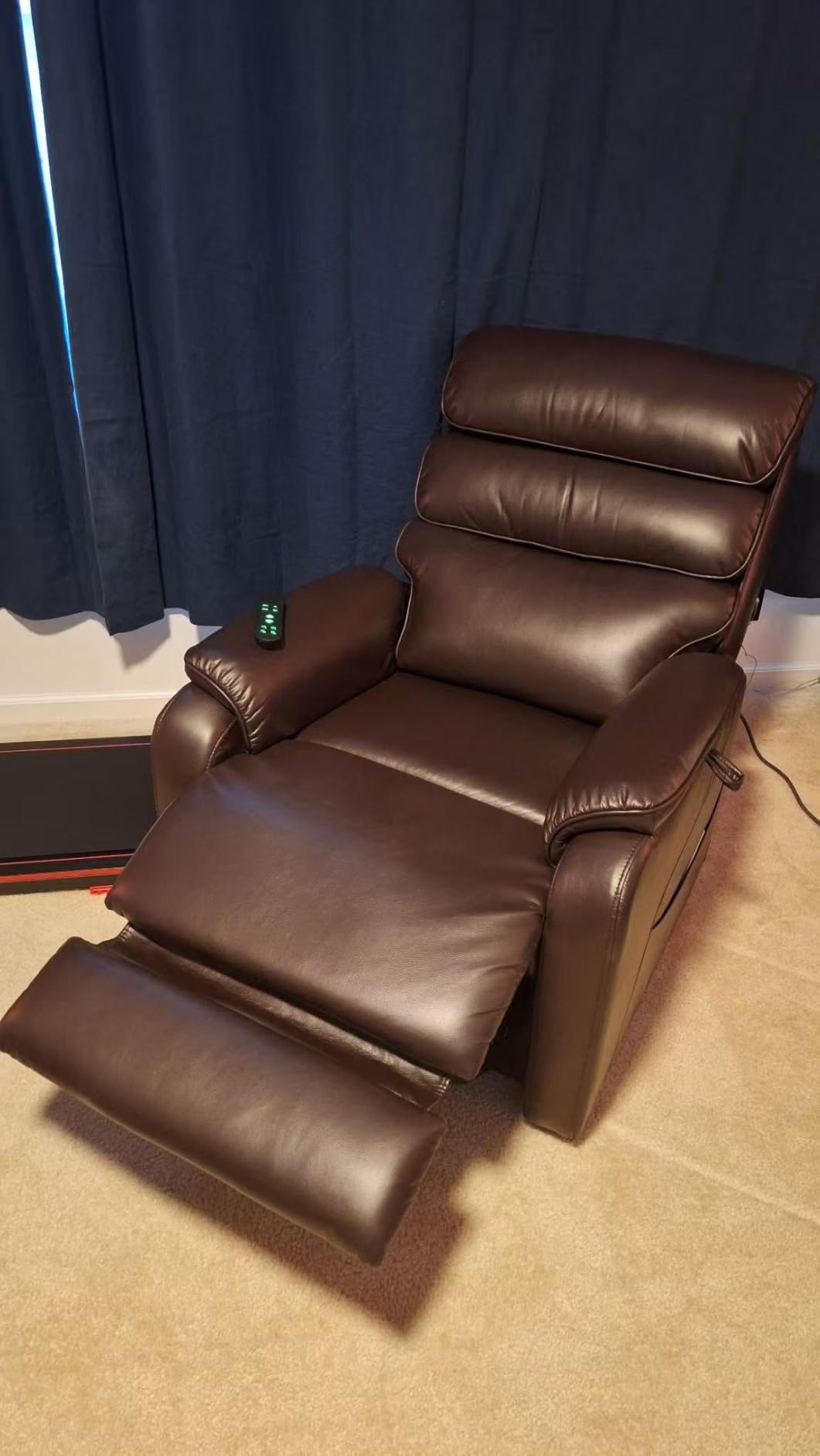
Sizing is medium, stated for 5 foot 2 to 5 foot 9 users, with a 19.7-inch seat height and a 21.3-inch seat depth. That depth reads long for the shorter half of the range, and taller users report their feet overhanging.
The trade-offs are physical. At 38.6 inches deep it is the longest chair in the roundup before the footrest even extends, and at 128 pounds it needs two people for assembly. Padding is described as firm rather than plush, and one reviewer noted the delivered color reads darker than the listing photo.
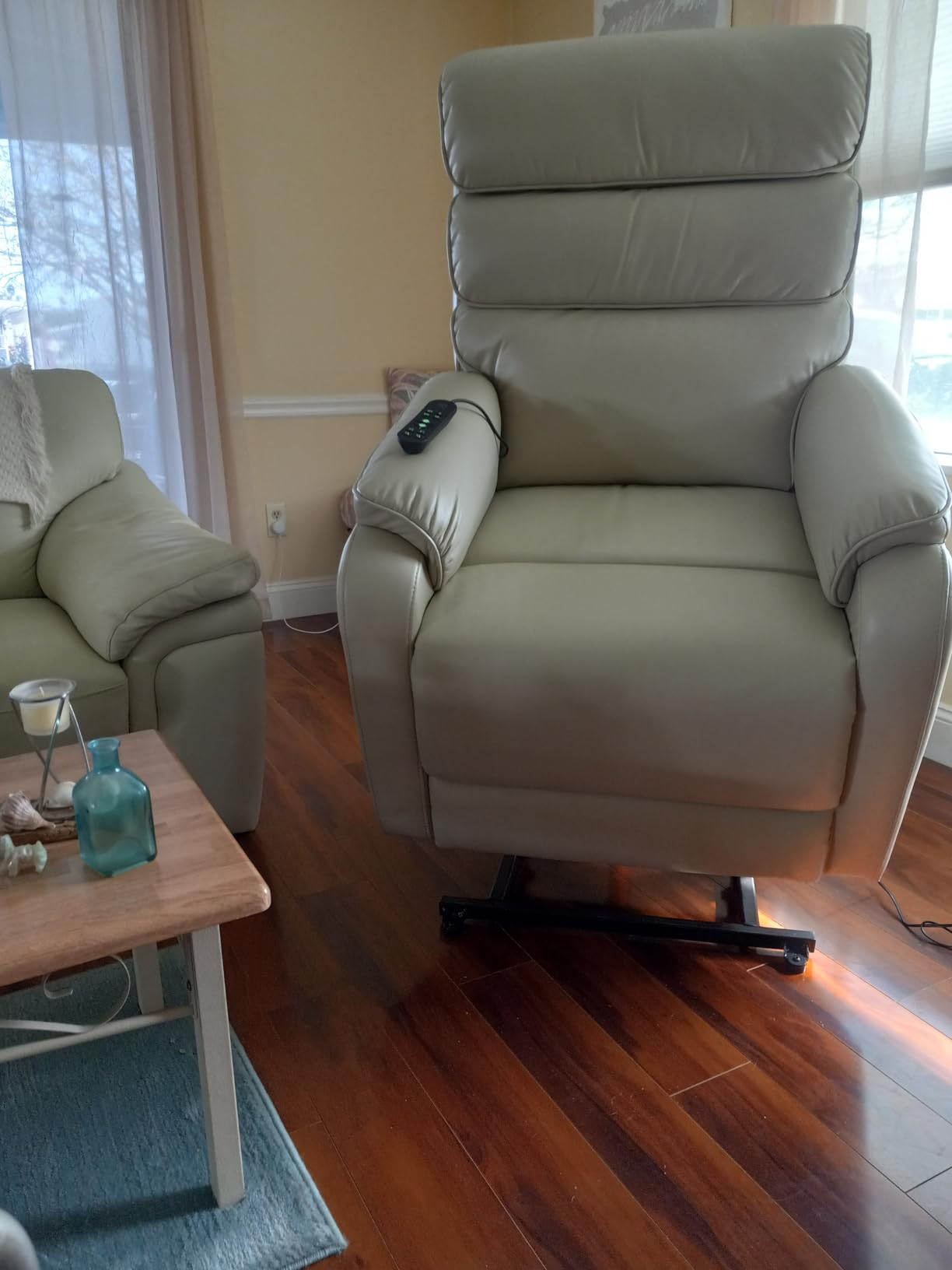
Yes. A 175-degree lay-flat position with an independently raised footrest is a genuine sleeping surface rather than a reclined seat, and that is the specific reason buyers in this range spend the extra depth. The one-touch reset matters most here, since getting back upright is a matter of pressing one button.
Plan the floor space accordingly. An infinite-position chair at this depth needs the largest reclined footprint of anything we measured, so it belongs on a long wall in a room that still has a walkway.
Anyone in a genuinely small room. This is the pick for a room that is compact but not cramped, and it is the wrong recommendation for a studio apartment where every inch is contested.
Buyers who prefer a soft, deep cushion should also look elsewhere. Firm padding comes up repeatedly in the reviews, and it is a preference worth settling in a showroom if you can.
Width 34 inch
Depth 36.2 inch
Height 40 inch
Seat 21.7 inch square
400 lb capacity
The BRTHORY is unusual in that its listing explicitly names apartments and small spaces as the target, and the dimensions back part of that claim. At 34 inches wide, 36.2 inches deep, and 40 inches tall, it sits mid-pack on width while staying fairly shallow.
The seat is 21.7 inches square, which is a good middle ground: wider than the petite models and less cavernous than a 23.62-inch frame. The lift brings you to standing through a one-touch remote, and the recline runs as a 2-position mechanism, so the frame does not need the extra depth an infinite position requires.
Comfort hardware is competitive: eight vibration nodes across the back, waist, hips, and thighs with adjustable modes and intensity, plus a lower back heat function. Side pockets, dual cup holders, and cable organizers are included, and the metal frame is rated to 400 pounds. Assembly is tool-free in under 15 minutes.
Because it avoids both of the two common space traps. It is not ultra-narrow, so it does not feel cramped, and it does not need the forward reach of a lay-flat frame, so it works against a wall in a room with a walkway. At 100 pounds it is also light enough for one person to move.
Its upholstery is breathable PU faux leather rather than a harder bonded leather, which is the better choice in a warm room.
The evidence, not the chair. With 61 reviews this is the thinnest proof base in the roundup, and new listings carry a higher risk of unresolved defects. The 4.4 star average is encouraging, but 48 or 138 reviews would tell you considerably more.
It is also a single-motor style recline with no headrest adjustment, so the back and footrest move together. If you want independent positioning, this is not the chair.
Width 28.7 inch
Depth 29.1 inch
Height 40.9 inch
Seat depth 20 inch
94.6 lb build
The LOUVIXA posts one of the shallowest depth figures in the roundup at 29.1 inches, and a 28.7-inch width that is tied for second-narrowest, which makes it a serious candidate for a small room. Depth under 30 inches upright is rare in lift chairs, and it is what buys you floor space later.
Upholstery is soft microfiber with an overstuffed seat, backrest, and armrests, which reviewers consistently prefer to the firmer foam used elsewhere. Heated vibration massage targets eight points across four selectable body areas with a timed auto-off, and a two-button remote handles the lift.
Two side pockets and a USB charging port are standard here, and owners report completing the tool-free assembly alone. At 94.6 pounds it is light to move and sits mid-pack on weight.
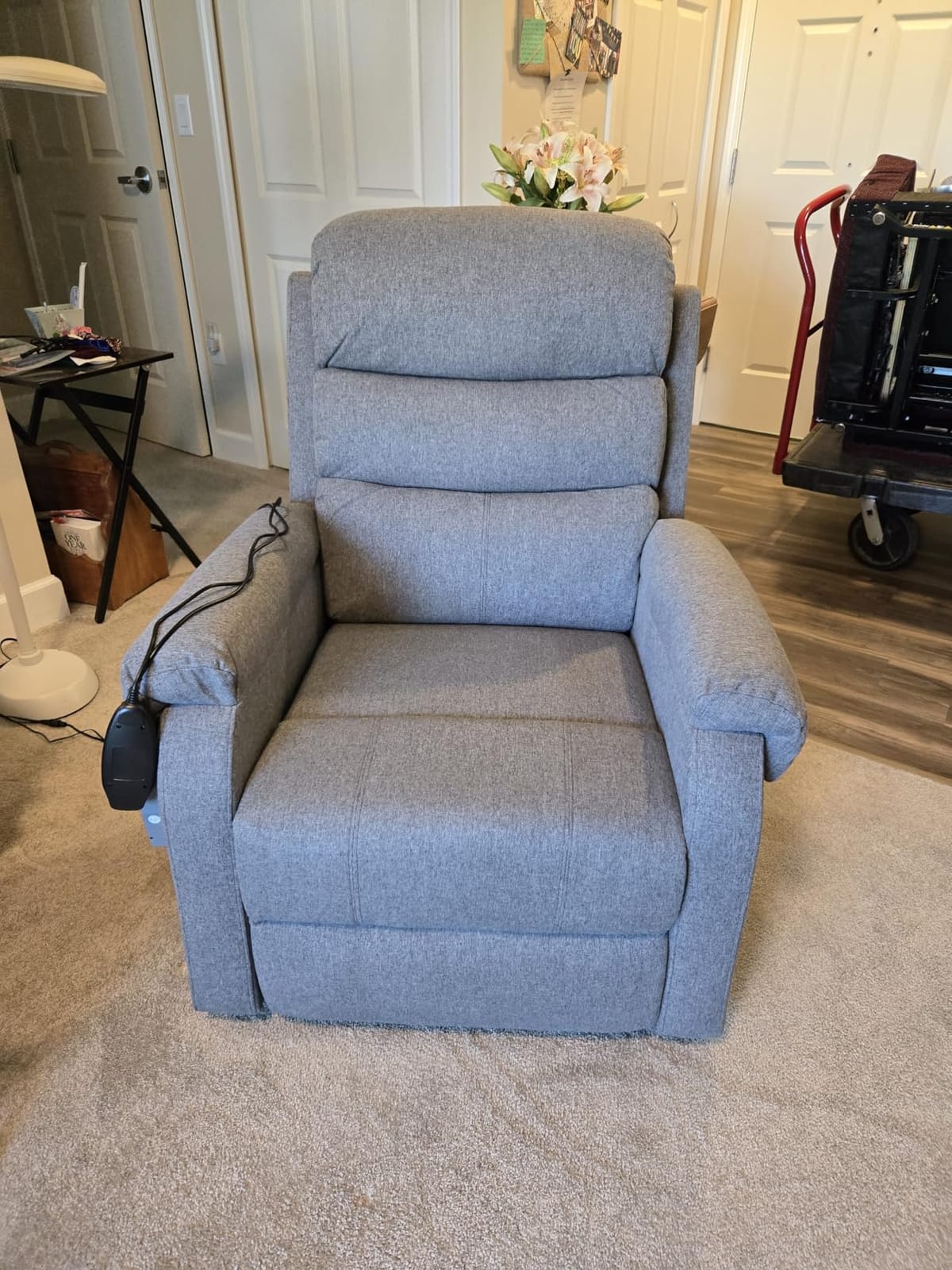
The mechanism is a 4-position linked recline, meaning the backrest and footrest move together. That keeps the depth down and is the main reason it fits small rooms, but it also means you cannot raise your legs while staying upright.
Two things to weigh. The 20-inch seat depth is deep for shorter users, who are advised to add a cushion, and reviewers report some cushions firming or lumping within weeks. The 48-review sample is the smallest here, with a notably spread rating distribution.
It is one of the two most compact options here and the softest seat we found, and it beats the 26-inch HOMCOM on depth. If your wall space is tight but your floor runs fairly deep, this is the pick.
If your floor is the constraint, the HOMCOM is narrower still, though it stretches to 61.75 inches when reclined. Compare the two numbers rather than choosing on appearance.
Anyone who needs independent leg and back movement, or who is under about 5 foot 5 and would struggle with a 20-inch seat depth. Buyers who want independent zero-gravity positioning should move up to a dual motor model.
We would also suggest confirming the cushion feel in person if that is possible, given the reports of loft loss in the first weeks of use.
Four numbers decide whether a lift chair works in your space, and only one of them appears on most product pages. Take all four before you choose a model, and use a tape measure rather than a ruler.
Usable wall width. Measure the longest uninterrupted stretch of wall and subtract 4 inches for the arms and side movement. This is the number most listings give, and it is the least important one.
Reclined depth. Stand in the spot and mark where a footrest would land if the chair lay fully back. Budget 20 to 26 inches of clear floor in front of any 2-position or infinite-position chair, and more for a lay-flat model.
Wall clearance behind the chair. Non wall-hugger frames push the backrest rearward as they recline. Leave at least 6 inches of gap behind the chair, and never place it flush against a wall.
Doorway and stair width. Measure the narrowest point on the delivery path, not just the front door. Compare it to the chair weight, since anything over 100 pounds realistically needs two people.
We use these four numbers on every layout in a small living room, and the same planning logic applies if you are arranging other furniture around the chair. If you are also short on storage, our bookcases with doors for living rooms and wall shelves for living rooms guides cover the same floor-plan constraints.
Chair type predicts the space a lift chair needs better than any feature list does. Here is how the five common types translate into floor area.
These recline to a fixed angle with the footrest linked to the backrest. They are the most space-efficient type because nothing moves independently, and they are the reason the HOMCOM and BRTHORY fit rooms that a lay-flat chair cannot. The trade is a single comfortable angle rather than a range.
A 3-position frame adds a mid-recline stop and usually a footrest that extends, so it needs somewhat more depth than a 2-position model. The cinkehome is the example here at 35.4 inches deep. It suits users who want a nap position without a full lay-flat footprint.
Infinite position means the backrest and footrest move independently through a continuous range, and lay flat means the back reaches horizontal. The MCombo 7664 and EONIX both do this, and both need the largest reclined footprints in this roundup. Choose them when sleeping in the chair is the goal, not sitting.
A wall-hugger frame slides forward along the wall as it reclines instead of pushing backward, which cuts the required clearance dramatically. That makes it the canonical answer for a small living room. None of the ten chairs here is marketed as a true wall-hugger design, which is worth knowing before you assume a compact listing qualifies.
Zero gravity raises the legs above heart level to spread weight evenly across the back. It is usually a preset on a dual motor chair rather than a separate type, and the MCombo 7893 offers it. It is comfortable but it lengthens the reclined footprint, so it costs floor space.
A single motor drives the backrest and footrest together, which keeps the frame shallower and the chair cheaper. A dual motor drives them separately, giving independent positioning, zero gravity, and a genuine lay flat at the cost of more depth and a heavier build.
For a small room, the single motor argument is mostly about depth. The LOUVIXA sits at 29.1 inches deep and the HOMCOM at 35.5 inches, while dual motor frames here run 28.8 to 38.6 inches. The variation within each group is wider than the gap between them, so the decision is model-specific rather than motor-specific.
Delivery is the other difference. Dual motor chairs tend to weigh more, and the heaviest model in this roundup arrives in three boxes, one of which weighs 83 pounds. If help is not available on delivery day, factor that into the choice.
Compact is not the same as correctly sized. A narrow chair with a tall seat can be worse for a short user than a wider chair with a low one, and the number that matters is seat height.
For users around 5 foot 0 to 5 foot 4, the useful picks are the MCombo 7141 at an 18.9-inch seat height, the cinkehome at 19 inches, and the HOMCOM at 17.75 inches. The MCombo 7893 and 7664 are explicitly built for a 4 foot 6 to 5 foot 2 range. Avoid the EONIX and MAHOMICO for anyone under 5 foot 5, since a 21-inch-plus seat depth pushes the feet forward past the front edge.
Seat depth is the second check. Anything over 20 inches is deep for a short user, who will need a cushion behind the lower back. The MCombo 7664 at 18.9 inches and the MCombo 7141 at 19.7 inches are the two most forgiving here.
Weight capacity is the safety number to check first, and it varies widely across this roundup. The HOMCOM stops at 265 pounds, three MCombo models sit at 320 pounds, the cinkehome at 330 pounds, and the RESTREAL, EONIX, and BRTHORY at 400 pounds. Buy with headroom rather than at the limit.
Battery backup matters more than most pages admit. A chair that will not lift during a power cut is an ordinary recliner, and if the household depends on it for transfers, confirm that the model has a backup supply and find out how many cycles it covers.
Medicare coverage requires a prescription and a supplier certified as a Durable Medical Equipment provider. When coverage applies, Medicare covers a portion and you pay the remainder, which for most households is still a substantial share. Confirm the exact split with your supplier before ordering, since the structure varies by policy.
Some people should not buy a lift chair at all. If the user cannot safely transfer into and out of any chair with assistance, a lift chair may not add meaningful independence, and a transfer aid or a different seating solution can be a better investment. If the intended room cannot accommodate the reclined footprint even with a wall-hugger design, buying a chair you cannot fully use is the worst outcome, which is why we start with measurement.
Plan 20 to 26 inches of clear floor in front of a standard lift chair, and 6 inches of gap behind it, because non wall-hugger frames push backward as they recline. The HOMCOM in this roundup is the only chair publishing its reclined size outright at 61.75 inches of length.
For users around 5 foot 0 to 5 foot 4, the MCombo 7141 with an 18.9 inch seat height, the cinkehome at 19 inches, and the MCombo 7893 built for 4 foot 6 to 5 foot 2 are the strongest fits. The HOMCOM sits lowest at 17.75 inches but has the lowest weight capacity in the set.
Medicare can cover part of the cost when a doctor prescribes a lift chair as Durable Medical Equipment and the chair is supplied by a certified DME provider. You still pay the remaining share, which is often substantial, so confirm the exact split with your supplier before ordering.
For a tight living room, prioritize a chair under 33 inches wide and under 36 inches deep. The HOMCOM at 26 inches wide, the LOUVIXA at 28.7 inches wide and 29.1 inches deep, and the RESTREAL at 28.7 inches wide are the three most compact options we measured.
Yes, because a wall-hugger frame slides forward along the wall as it reclines instead of pushing backward, which cuts the required clearance substantially. None of the ten chairs in this roundup is marketed as a true wall-hugger design, so check the reclined dimensions before assuming a compact chair qualifies.
Yes, and compact frames were designed with apartments in mind. Measure the narrowest point on your delivery path, since the lightest chair here is 75 pounds and most weigh between 94 and 138 pounds. Expect a second person for anything over 100 pounds and plan for narrow stairwells.
The MCombo 7141 is our pick for most small living rooms, combining a 32.7-inch width, a petite 18.9-inch seat height, and the largest review base we found at 4.4 stars. The HOMCOM goes in the narrowest spaces at 26 inches wide, and the LOUVIXA is the softest option with a 28.7-inch footprint and a 29.1-inch depth.
Whatever you pick, measure the reclined footprint before you order, not after it arrives in a doorway you cannot get it through. We update this roundup through 2026 as new compact frames appear.
While you are planning the room, our guides to floor lamps for living rooms cover lighting that works around a chair rather than behind it.