
Packing a rollator for a trip is not the same problem as choosing one for daily use around the house. A frame that feels perfectly fine on a short walk to the shops can be the reason you hand your mobility aid to a stranger at the airport. So when we lined up the best lightweight rollators for travel in 2026, we ignored colour options and marketing adjectives and sorted on the four numbers that actually decide whether a rollator travels: item weight, folded size, weight capacity and wheel size.
We put all ten through the same pass. Each one is a genuine four-wheel or three-wheel rollator with brakes and a folding frame, not a two-wheel ski walker. Every pick below gets a stowage verdict, meaning we tell you plainly whether it belongs in an overhead bin, at the aircraft door for a gate check, or permanently in a car boot.
Ten models, one question: which lightweight rollator is light enough to lift one-handed and small enough to fold away when the walk is over. We also cover the airline rules that decide your boarding experience, because half the questions people ask about travel rollators are about flying, not about frames. If you also travel with the gear rather than the gear traveling with you, our picks for the best wine travel bags and best insulated coffee travel tumblers follow the same pack-light logic.


The byACRE wins on portability: at 10.58 lb it is the only carbon frame in this roundup, and it ships fully assembled so there is nothing to unpack at a hotel room door. The PLANET WALK is the value pick, pairing a 13 lb aluminium frame with 8 inch wheels that handle more than smooth airport flooring. The HOMLAND sits at the other end of the comfort scale with a deep memory foam seat, though it is the heaviest of the three at 18 lb.
| Product | Specifications | Action |
|---|---|---|
| byACRE Carbon Ultralight Rollator |
|
Check Latest Price |
| PLANET WALK Super Lightweight Rollator |
|
Check Latest Price |
| HOMLAND Foldable Rollator with Seat |
|
Check Latest Price |
 Vive Ultra Lightweight Narrow Rollator Vive Ultra Lightweight Narrow Rollator |
|
Check Latest Price |
 HOMLAND 3 Wheel Rollator HOMLAND 3 Wheel Rollator |
|
Check Latest Price |
 Stander Space Saver Rollator Stander Space Saver Rollator |
|
Check Latest Price |
 Medline Superlight Aluminum Rollator Medline Superlight Aluminum Rollator |
|
Check Latest Price |
 soundfuse Foldable Rollator with PU Wheels soundfuse Foldable Rollator with PU Wheels |
|
Check Latest Price |
 BlessReach Hybrid Foldable Rollator BlessReach Hybrid Foldable Rollator |
|
Check Latest Price |
 Drive Medical Nitro Sprint Rollator Drive Medical Nitro Sprint Rollator |
|
Check Latest Price |
10.58 lb item weight
Carbon fiber frame
25.98 x 24.61 x 31.1 inch dimensions
Arrives fully assembled
This is the one I put in my own carry-on test. The byACRE Carbon Ultralight lists an item weight of 10.58 pounds, and that single number changes how a trip feels, because it is light enough to lift into a car with one hand while holding a suitcase in the other. The frame is carbon fiber rather than aluminium, which is where most of the weight saving comes from.
It arrives fully assembled. That detail matters more than it sounds for travel, because a rollator that needs tools at a hotel room door is a rollator that stays in its shipping carton for the first evening of your trip. Reviewers repeatedly single out the zero-assembly setup alongside the weight.
The listed dimensions are 25.98 x 24.61 x 31.1 inches for the assembled unit, so this is a compact shape rather than a flat-packing one. That compact footprint is what a gate agent weighs against the cabin allowance, and it is why this model keeps coming up in traveller discussions: an ALS community poster on mobility forums singled out a 10.6 lb byACRE carbon rollator as one they can physically carry, which for a lot of travellers is the whole deciding factor.
The carbon frame is backed by a lifetime frame warranty, which is unusual in this category, and the wheels are puncture-proof rather than pneumatic. The seat folds with the frame, so the rest break still works, though it is a light perch-style seat rather than a deep padded bench, and I would not plan a long sightseeing sit on it.
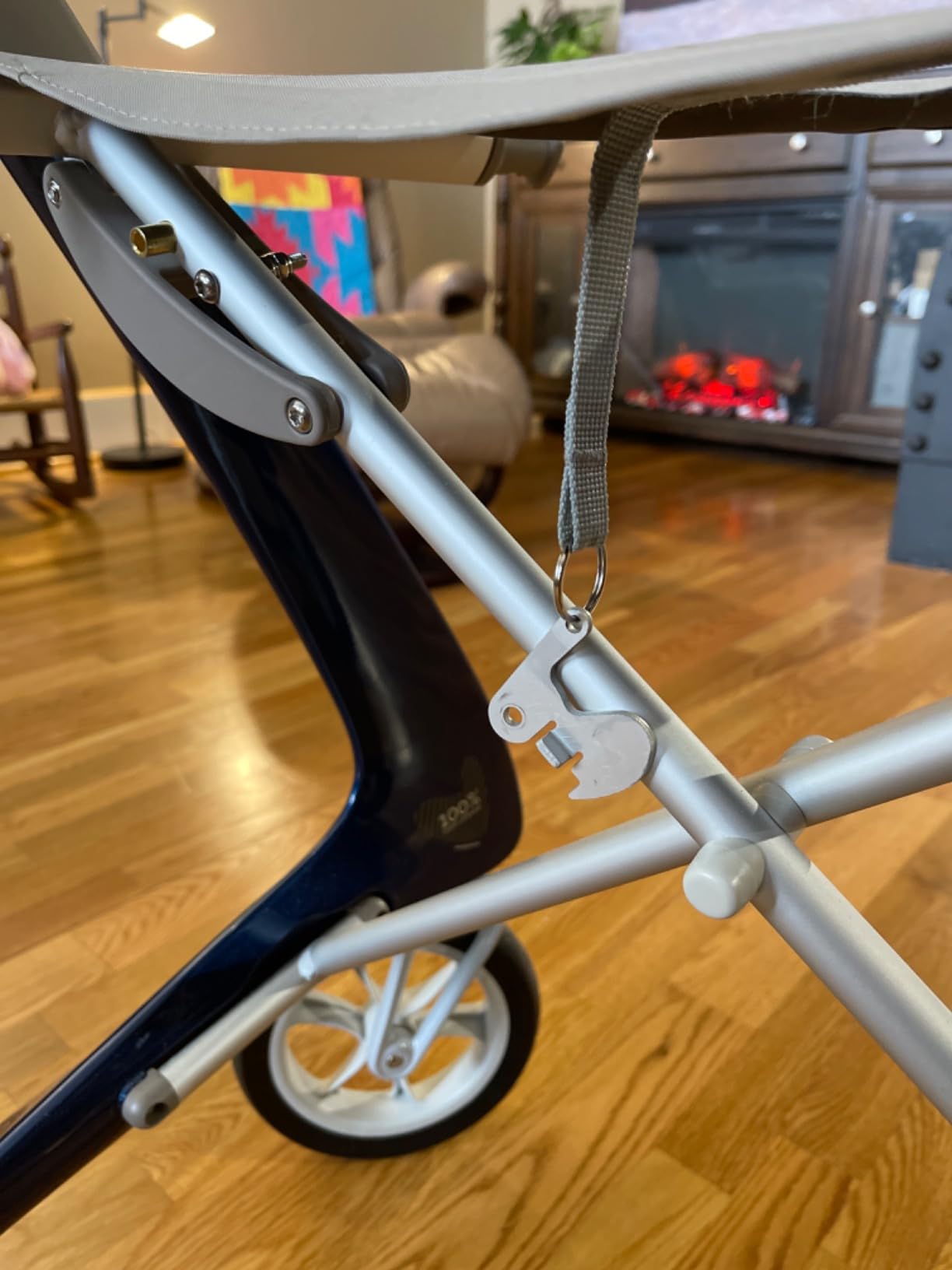
This is the pick for a traveller who lifts their own aid into vehicles without help, or for a family member packing it into a trunk. Carbon fiber does not rust, it does not dent easily in a baggage hold, and it shrugs off the kind of dropping that damages an aluminium joint. The lifetime frame warranty also means a frame failure years into ownership is a claim rather than a replacement.
The cost is the honest drawback. It is the most expensive model in this roundup by a wide margin, and the money buys portability rather than riding comfort. If your trips are mostly flat pavements and smooth indoor surfaces and you are not lifting the frame often, a lighter aluminium option will serve you for far less.
13 lb item weight
300 lb capacity
Folds to 26.5 x 10.9 x 35 inch shape
8 inch rubber wheels
If the byACRE feels like a splurge, this is the balance point of the whole list. At 13 pounds with hardened aluminium tubing and a 300 lb capacity, the PLANET WALK gives you most of the portability story at a fraction of the cost. Reviewers describe the one-hand quick fold as the feature that made them buy it.
The frame detaches as part of the fold, and the listed folded shape is 26.5 x 10.9 x 35 inches. That is a tall, thin package, which is a good shape for a narrow car boot but a poor shape for an overhead bin. My stowage verdict is a gate check or a car boot, not the cabin.
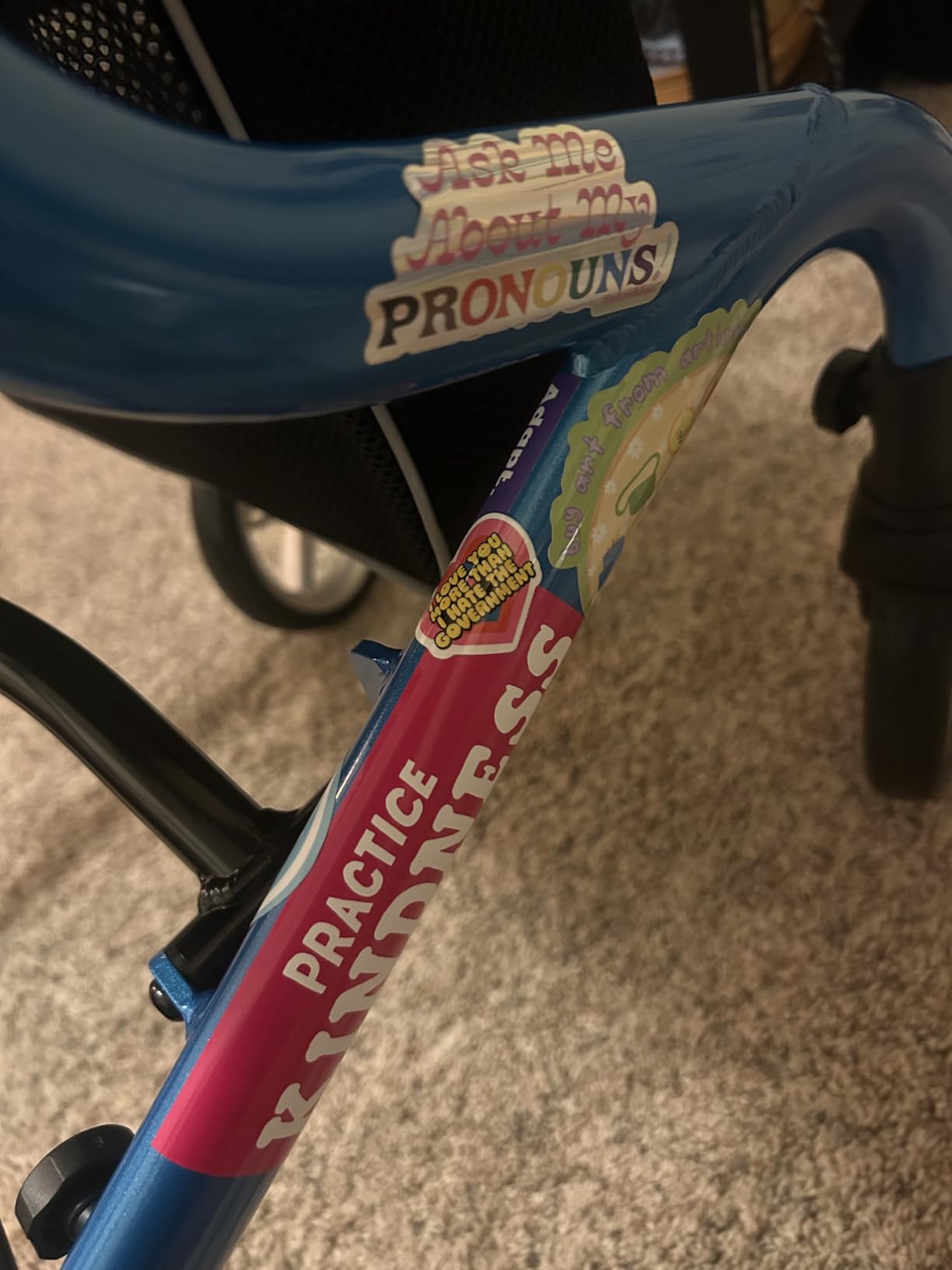
Two features make this more travel-capable than most budget aluminium rollators. The handle adjusts across five levels from 35 to 39 inches, and the front wheels swivel 360 degrees, so turning in a tight airport corridor or a ship passageway does not require a three-point turn.
Braking is a two-way parking brake plus a separate responsive braking system, so the rear wheels lock when you sit down and slow you when you release. That distinction matters on a sloped cruise gangway, and it is the reason the brakes here outperform plain lever brakes on the same frame weight.
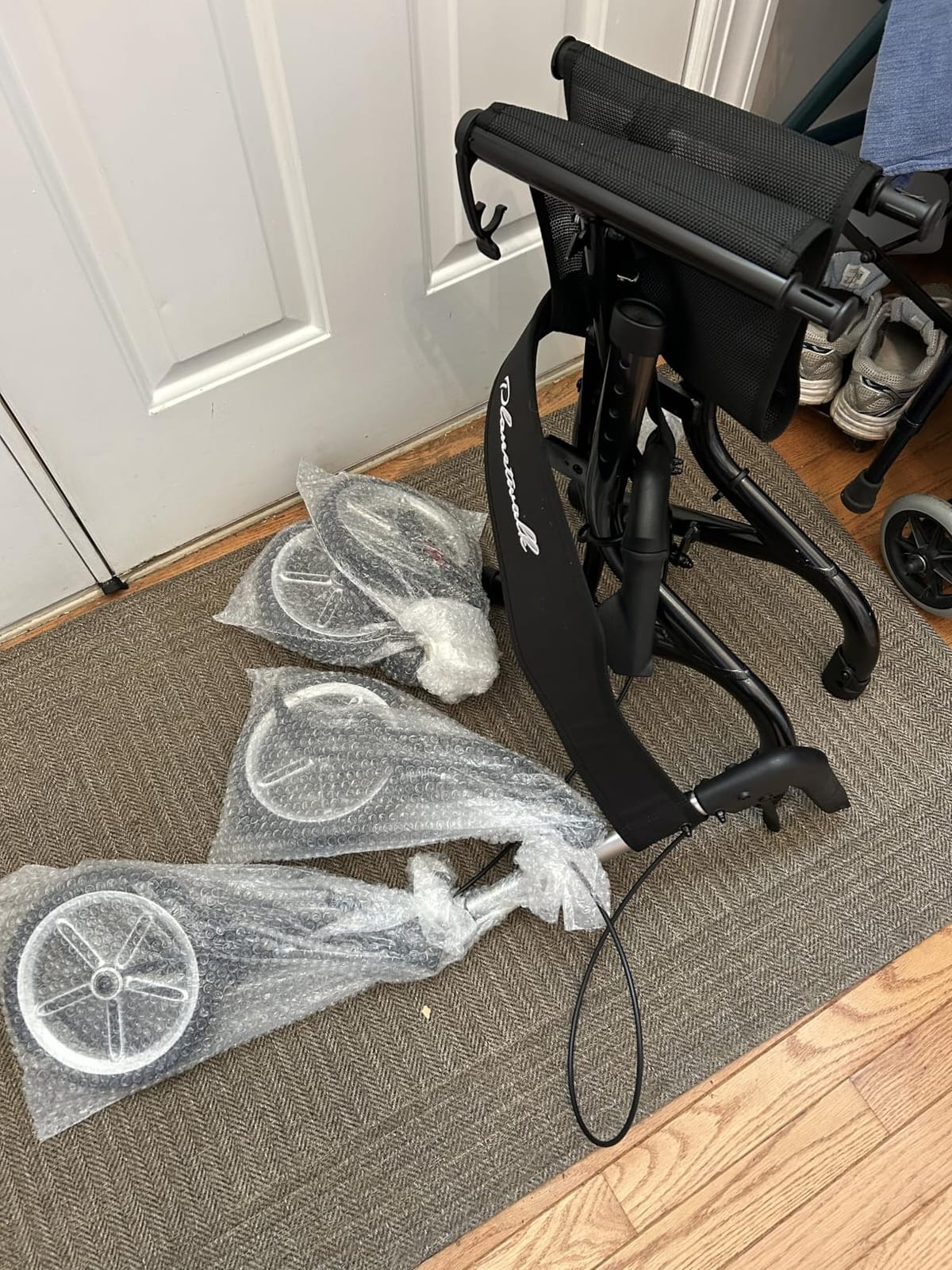
This suits anyone who wants a genuinely light frame but also needs 8 inch wheels for uneven resort paths, airport aprons and pavements. The 18.5 inch wide breathable seat and widened backrest make it a usable rest stop on a long day out, which few 13 lb frames manage.
Height is the real limitation. The seat sits high, and short users around 4 ft 11 in to 5 ft 2 in report that their feet do not reach the floor when seated. The handle stops at 35 inches with no lower position, so check your own measurements against the stated range before you order.
18 lb item weight
350 lb recommended max
27.5 x 25 x 40 inch dimensions
8 inch premium rubber wheels
The HOMLAND is the one I recommend when sitting down is a bigger part of the day than carrying the frame. The extra-wide memory foam seat is deeper than the sling and perch seats on most light frames, and at 4.6 stars across 1144 reviews, with 80 percent of those reviews at five stars, it carries the strongest review profile among the four-wheel options here.
Two people weighing the same decision: a traveller who mostly needs a seat will find 18 lb acceptable, because 18 lb is still a full third lighter than the heaviest frames in this category. A traveller whose day is mostly walking and who has to load a car unaided will not. I would not describe this as a cabin rollator.
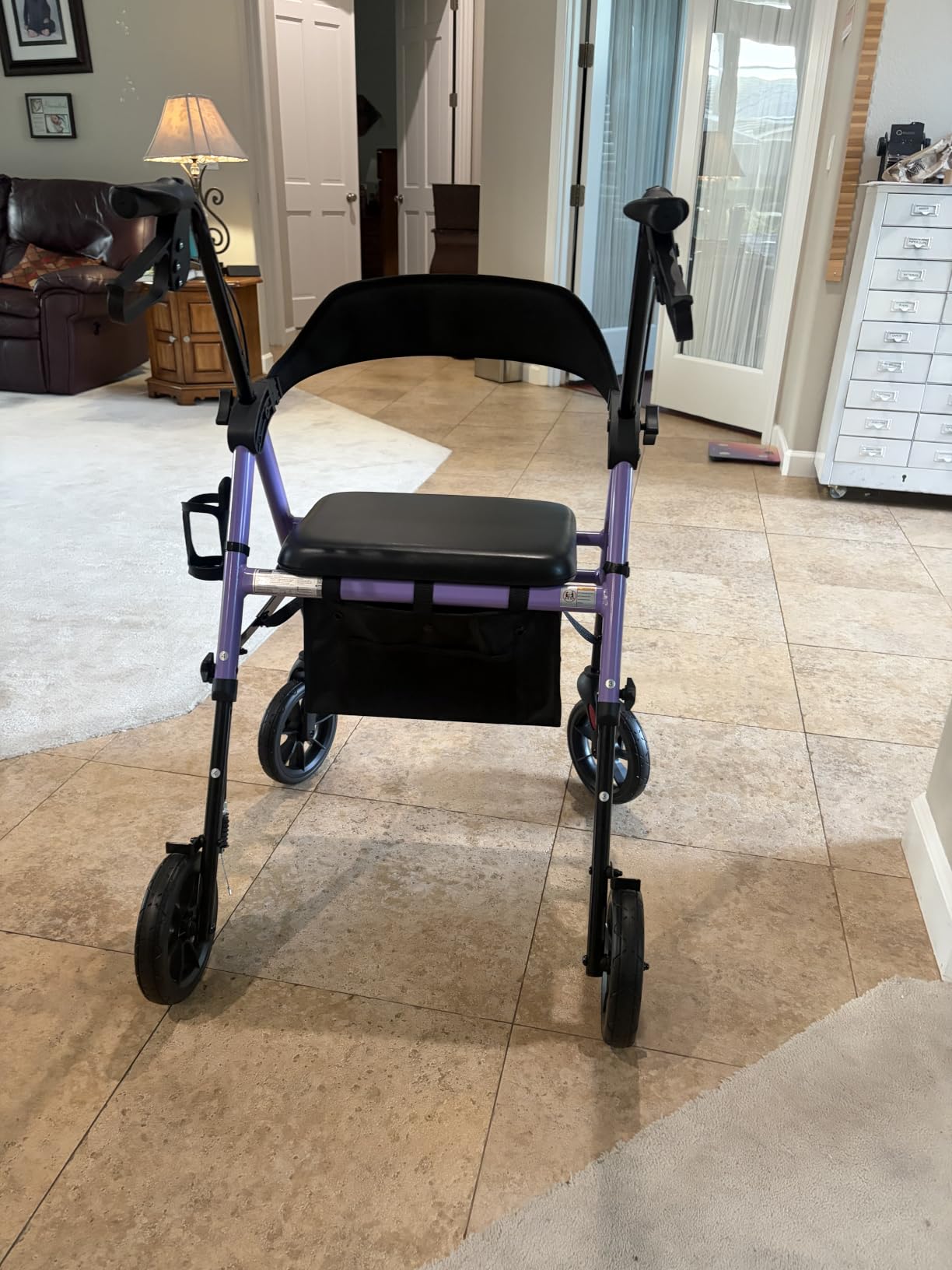
The frame uses reinforced aluminium alloy with double support bars and a recommended maximum of 350 lb, which is a genuine step up from the 250 lb and 300 lb figures on most competitors. One reviewer testing at 300 lb describes the frame as rock solid, and the doubled bars are the reason.
Wheels are 8 inch premium rubber, and the specific complaint this model avoids is vibration. Several HOMLAND users on other frames mention a humming feel from thinner tyres, and buyers of this version single out the thick rubber for a quiet, planted roll. Handle adjustment runs 33 to 40 inches and seat height 20 to 23 inches, covering users from 4 ft 7 in to 6 ft 6 in.
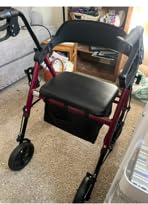
This suits long sightseeing days, market trips and any itinerary with frequent sitting. The storage compartment hangs from two poles rather than one, which makes it steadier when you load a bag, and the removable cup holder is a small touch that matters on a warm day. Customers also report responsive service, with parts replaced at no cost.
The instruction booklet is the weak point. Buyers describe it as thin and confusing, and some received units with mislabelled part numbers, so allow yourself time to sort the hardware the first time. The folded package is also bulkier than the genuinely ultralight models, which is the trade for the seat depth.
14 lb item weight
24 inch wide frame
300 lb capacity
Adjustable handles 31 to 36 inch
Width is the specification nobody else in this list optimises, and it is often the one that decides whether a trip works. The Vive Ultra Lightweight has a 24 inch wide by 23 inch deep frame, which is narrow enough for older hotel bathrooms, narrow ship corridors and the gap between a cruise cabin bed and the wall.
At 14 pounds with a 300 lb capacity, it is not the absolute lightest frame here, but the width-to-weight ratio is what matters in a confined space. Buyers report it assembles with no tools in a few minutes, and one of the more common remarks is that it rolls without marring hardwood floors in holiday rentals.
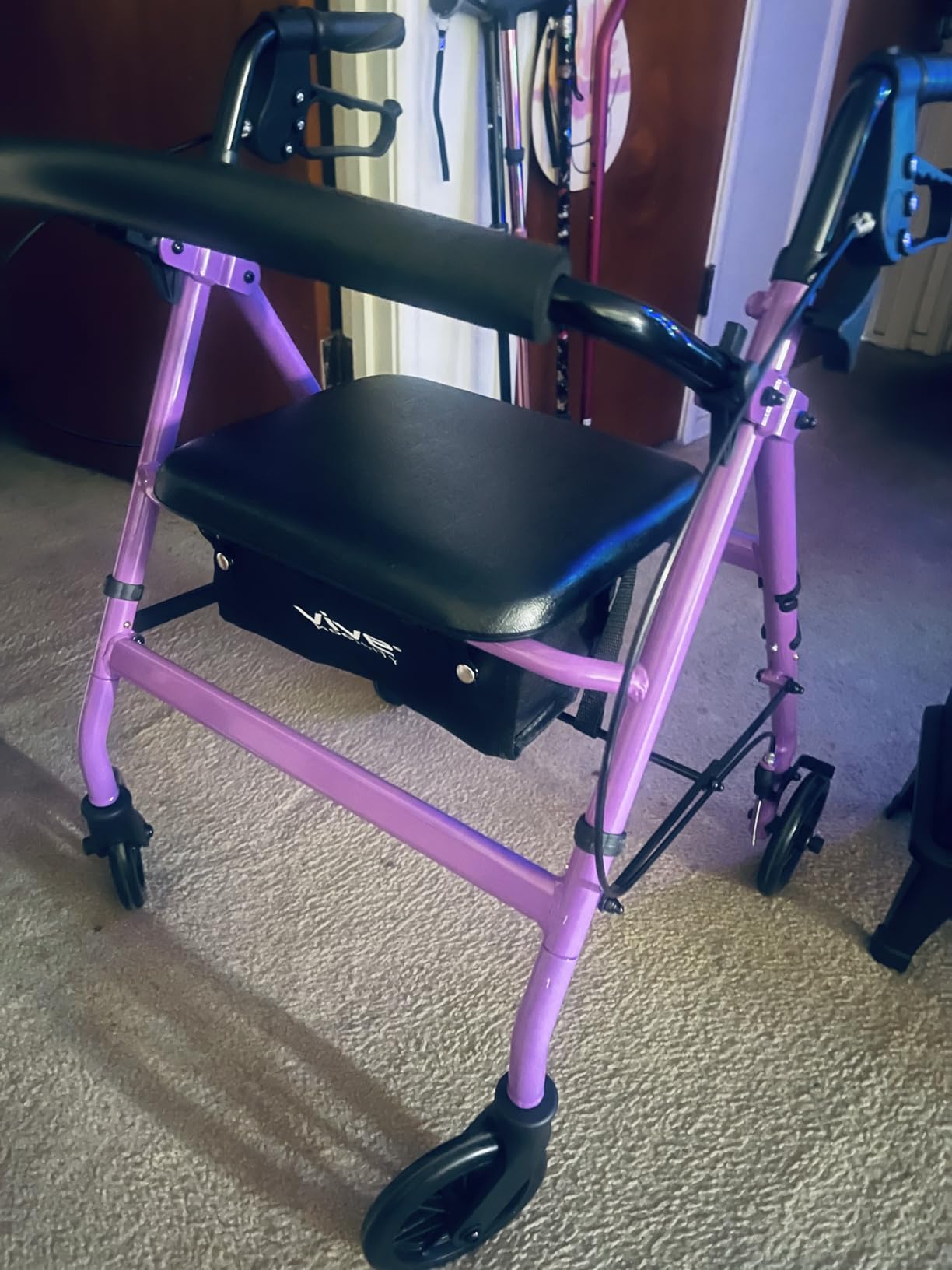
Handles adjust from 31 to 36 inches, which is a lower ceiling than most frames and one reason shorter travellers rate it well. The padded seat measures 14 by 12 inches with a seat height of 21 inches, and there is an underseat storage pouch for a folded jacket or a small bag.
Wheels are 6 inch, so this is a smooth-surface rollator. Airport terminals, hotel lobbies, cruise decks and shopping centres are all fine. A cobbled old town or a gravel path is where a 6 inch plastic wheel starts to judder, and that is the honest limit of this pick.
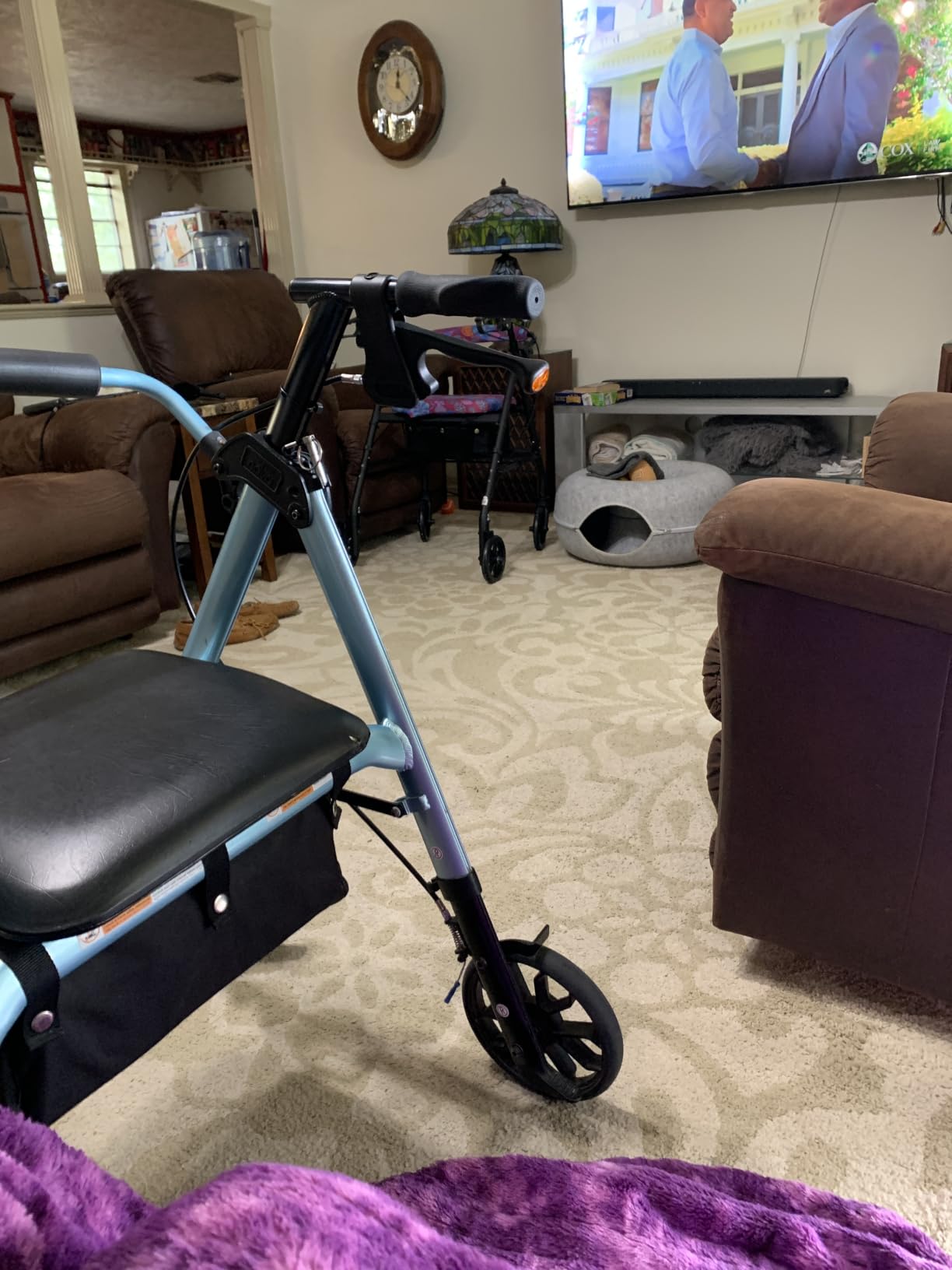
This suits anyone travelling to older buildings, small rental cars and compact cruise cabins. It is also one of the few picks listed as FSA and HSA eligible, with a 1-Year Vive Guarantee behind it, which matters if you are buying through a health spending account rather than for yourself.
The word ultra in the name oversells the weight. At 14 lb it is lighter than most frames but not lighter than the 10 to 13 lb models, and buyers do push back on the label. The seat is also small enough that a long sit becomes uncomfortable quickly.
10.4 lb listed frame
260 lb capacity
8 inch casters
Adjustable 34 to 38 inch height
This is the only three-wheel model here, and that single design decision explains both its strengths and its limits. Without a fourth wheel the footprint is narrow, the frame lists at 10.4 lb, and the 2-side folding design collapses the whole thing and leaves it standing upright on its own.
Standing upright when folded is the feature I would highlight for travel. A rollator that folds flat and stays where you put it fits a hallway, a hotel room corner or a small apartment without a wall to lean it against. The listed weight of the shipped package is 12.43 lb.
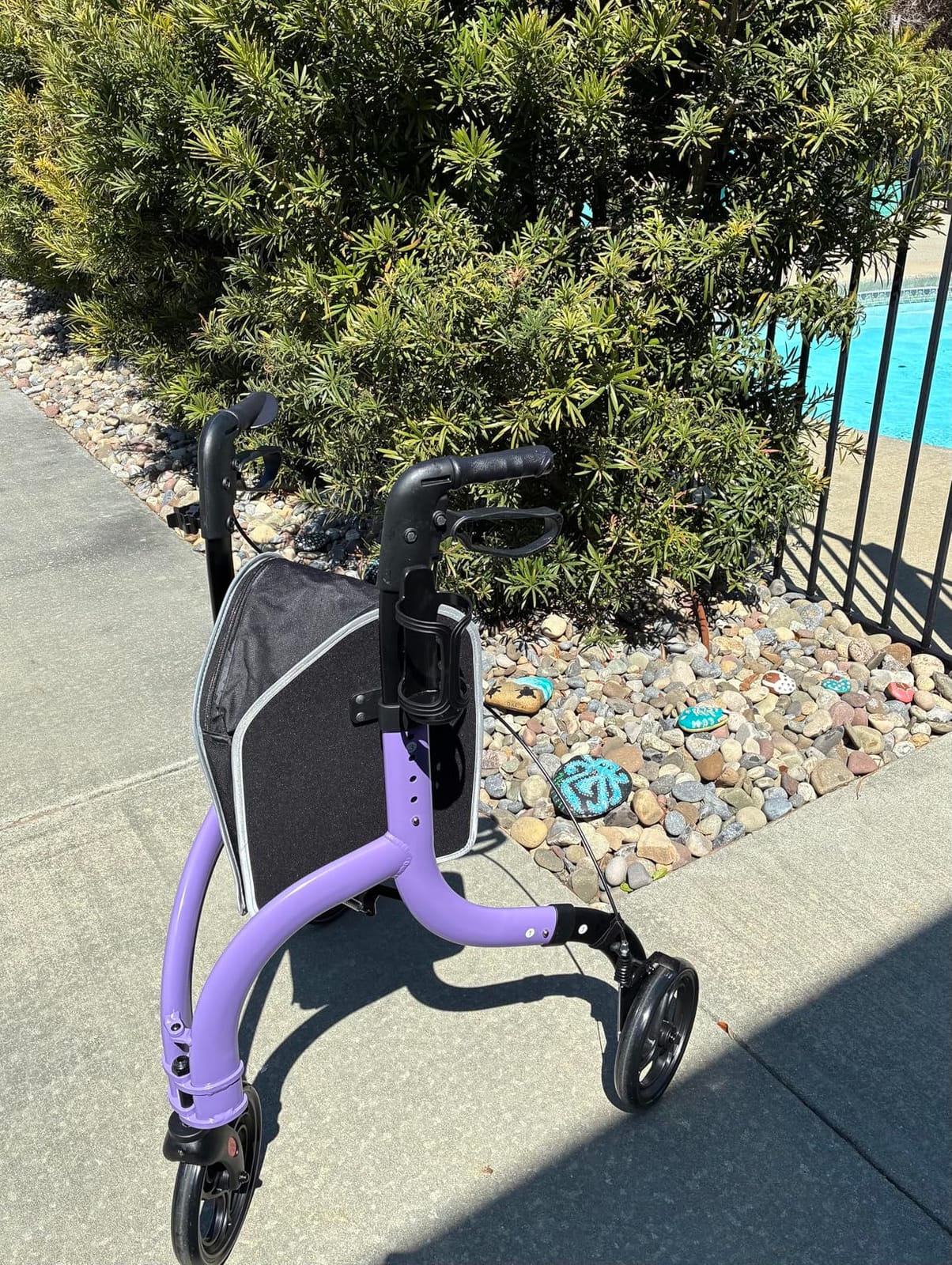
Control is a push-up brake with a separate push-down wheel lock, which is a simple, tactile arrangement that works with limited hand strength. The 8 inch casters handle both indoor floors and outdoor paths, and the storage pouch plus cup holder and cane hold cover the practical bits of a day out.
Height adjusts from 34 to 38 inches for users between 4 ft 8 in and 6 ft 1 in. There is a 1-year warranty plus a 1-year extension service, and the frame is offered in a light purple finish that reviewers mention more often than you would expect.
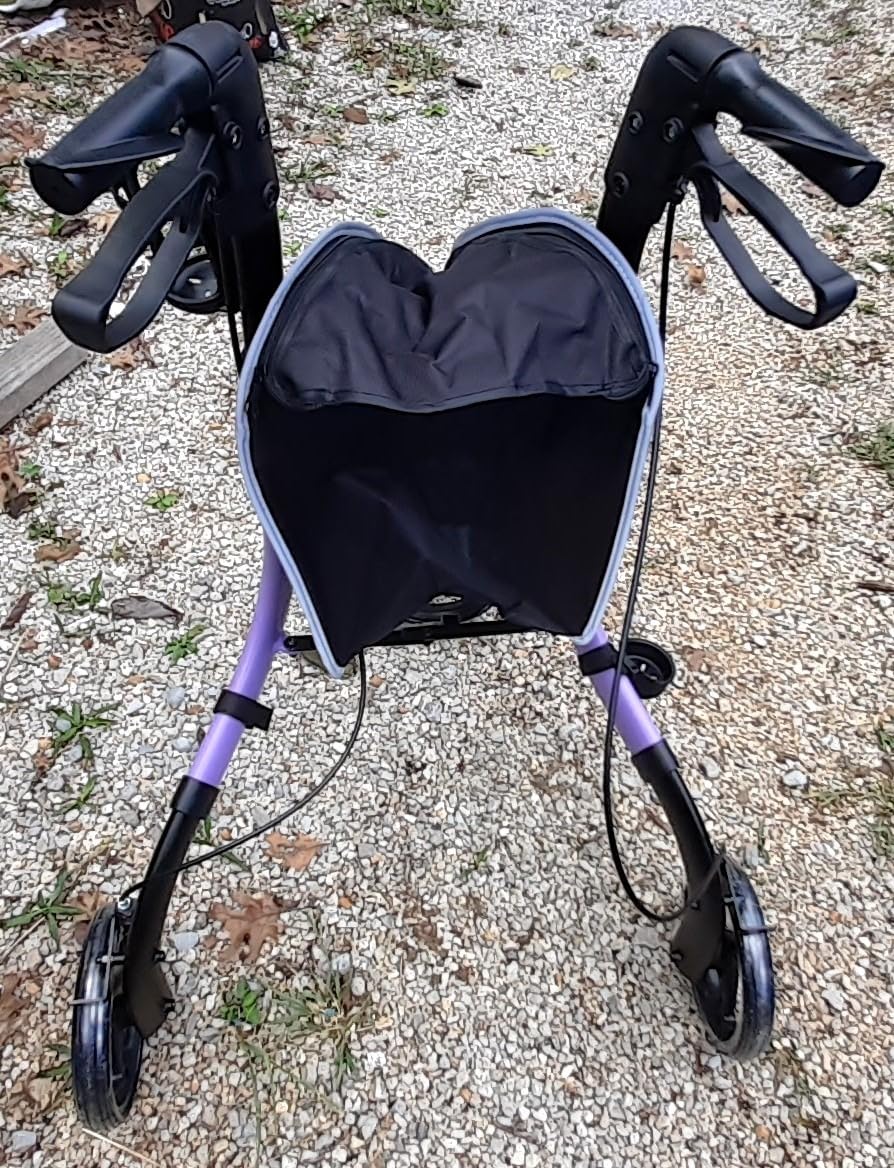
This suits a traveller who needs the smallest stored package rather than a seat, particularly in a compact rental car or a hotel room with nowhere to lean a folded frame. It is also the easier frame to control on a narrow deck or a busy boarding queue, because there is less to steer around.
Three wheels trade lateral stability for that maneuverability, and the difference shows on uneven ground and on a slope with a camber. The 260 lb capacity is the second lowest here, and there is no seat at all, so this is a walker and rollator hybrid rather than a seated rest option.
14.5 lb item weight
10 x 11 inch folded footprint
250 lb seat rating
Padded handles 33 to 36 inch
The Stander is the pick I would put in an overhead bin, and the reason is the patented EZ Fold-N-Go mechanism. It collapses to a footprint of roughly 10 by 11 inches, which is a genuinely different shape from the tall thin slab most rollators produce. That footprint fits a cabin locker or a bin where a 26 inch folded package does not.
At 14.5 lb it is also light enough to lift into a vehicle without a struggle, and it arrives fully assembled. For a first-time rollator owner buying before a trip, removing assembly from the list is a meaningful reduction in friction.
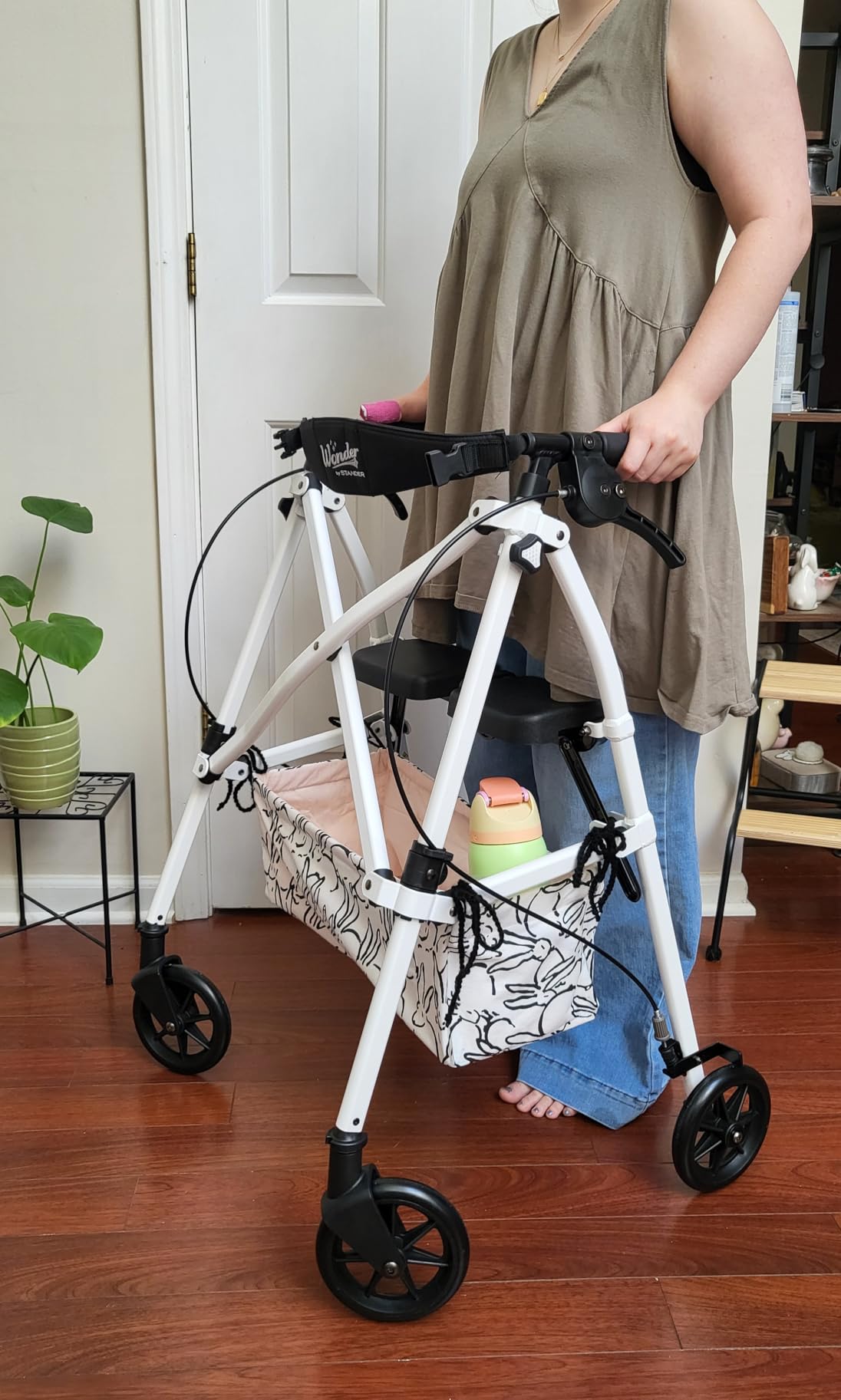
The seat is an 18.5 by 6 inch non-slip perch rated to 250 lb, and there is a back strap behind it for support. Padded handles adjust from 33 to 36 inches. The overall item dimensions are 23 inch deep by 26.5 inch wide by 36 inch high, so the assembled width is wider than the Vive and worth checking against your narrowest doorway.
Wheels are 6 inch with rear locking brakes, which again points this at smooth indoor surfaces: terminals, hotel lobbies, ship decks and pavements rather than rough ground. In exchange you get the most compact fold of any seated four-wheel model in this roundup, and that is a real trade rather than a compromise.
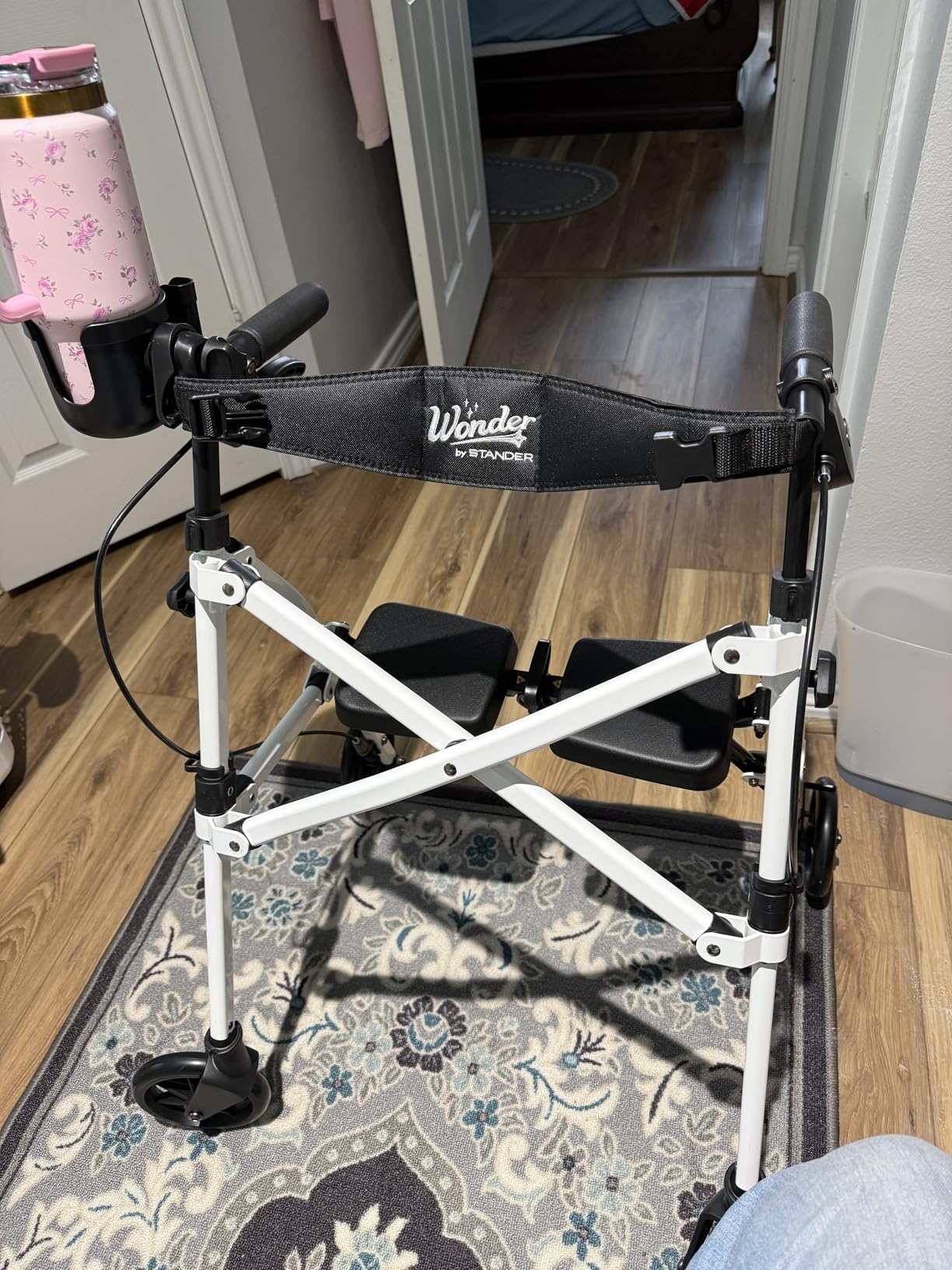
This suits flyers and cruise passengers who care about stowage above all, and anyone storing a rollator in a small flat. The perch seat is genuinely quick to sit on during a wait, which is exactly how most people use a rollator seat in transit.
The perch seat is the limitation. An 18.5 by 6 inch perch is fine for two minutes in a queue and uncomfortable for a sightseeing break, and the 250 lb rating is the lowest of the four-wheel models here. It is also offered in a single colour.
12.6 lb item weight
250 lb capacity
22.6 x 9.4 x 22.9 inch dimensions
6 inch wheels
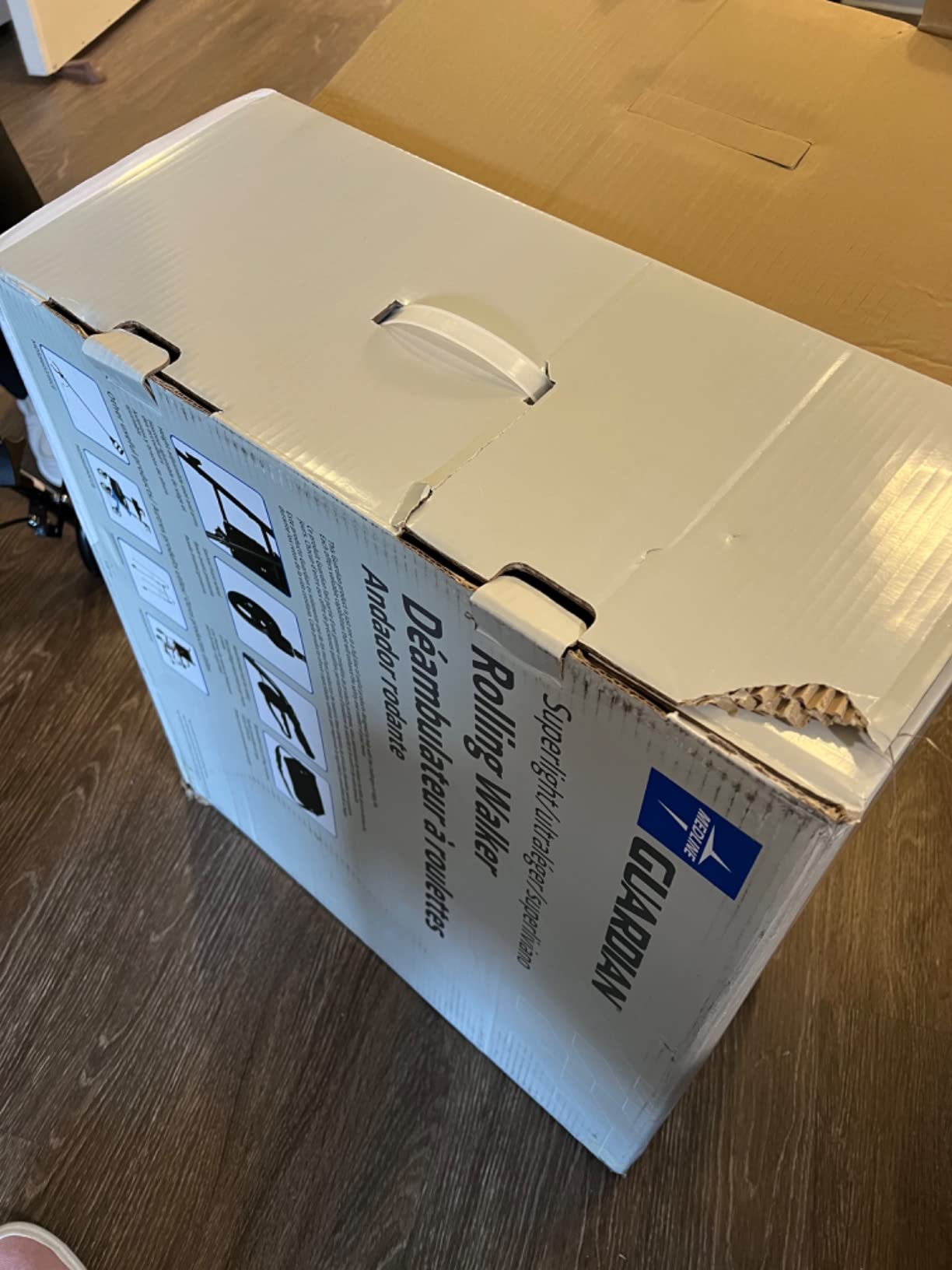
With 4419 ratings at 4.4 stars, the Medline has the longest ownership history of anything in this roundup, and that matters more for a mobility aid than for most purchases. A frame that thousands of people have used for years is a frame whose failure modes are known rather than hypothetical.
The listed weight is 12.6 pounds with a 250 lb capacity, and the assembled dimensions are 22.6 x 9.4 x 22.9 inches. That folded profile is remarkably shallow, so it sits flat in a car boot or against a wall. For daily use around a home rather than for a single trip, it remains one of the strongest value choices in this class.
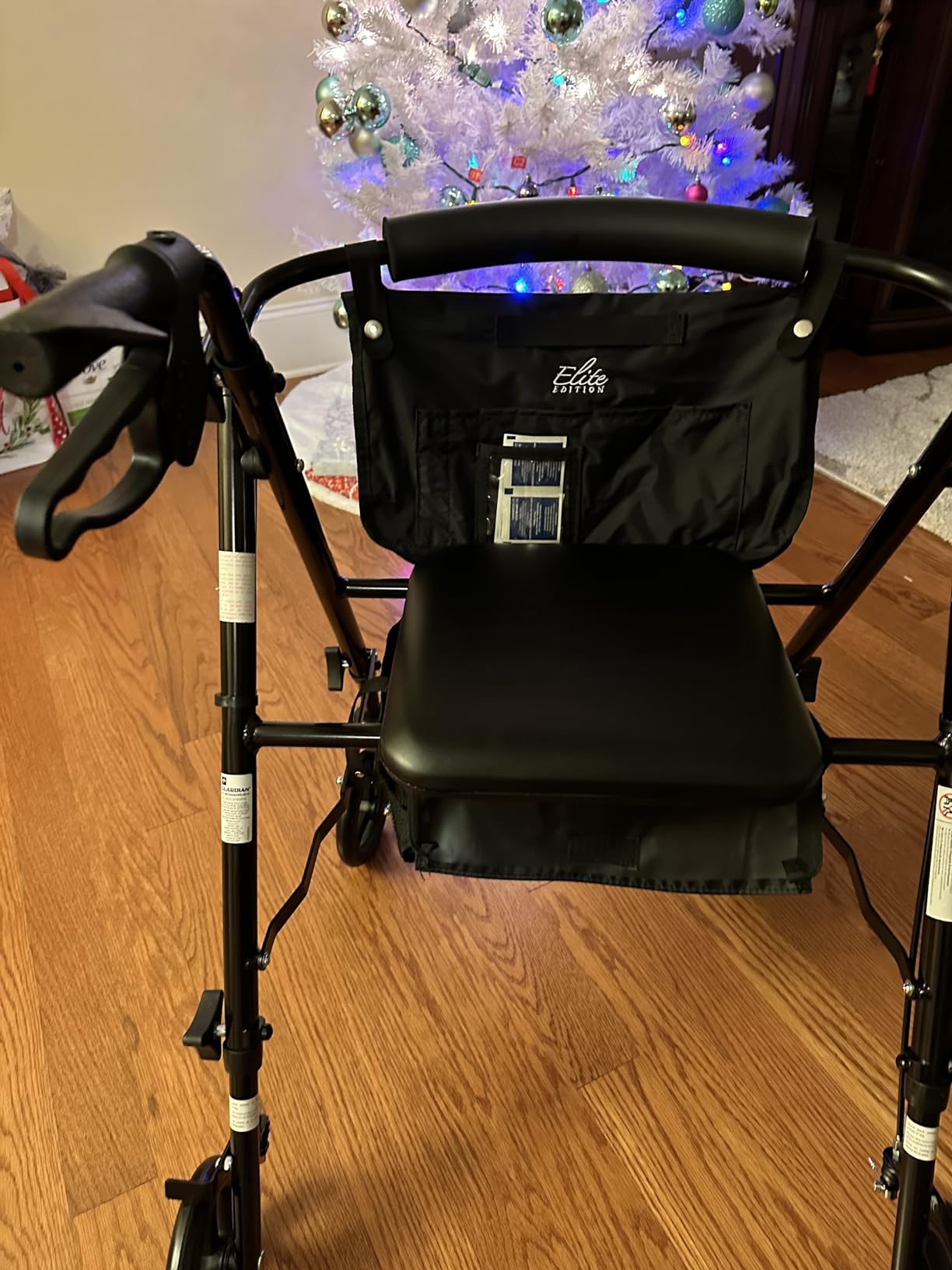
Brake handles are ergonomic and non-slip, with a push-up brake and a push-down wheel lock that is straightforward to find by feel. The padded seat measures 12 by 12 inches and adjusts from 18 to 23 inches off the floor, with handles running 29.5 to 36 inches, which is one of the lowest handle ranges in this group.
Wheels are 6 inch, suited to indoor and smooth outdoor surfaces. Buyers note the plastic wheels roll less smoothly on rough ground and wear faster than rubber, and this is the recurring criticism of a design that has otherwise been in production since 2009 without a fundamental rethink.
This suits anyone who wants a proven frame, travels mostly on smooth surfaces, and is as likely to use the rollator at home between trips as during them. The adjustable seat and low handle minimum also make it a reasonable fit for shorter users, which several light carbon frames are not.
The fold no longer collapses as tightly as the older version of this design, and that is a genuine travel penalty. The front and back legs are not clearly marked, which causes assembly confusion the first time. The fixed back brace bar cannot be repositioned, so carrying it on the shoulder is awkward.
17.6 lb listed weight
300 lb recommended
8 inch PU wheels
Handle 33 to 40 inch
The soundfuse carries the highest star rating in this group at 4.7 from 515 reviews, with 82 percent of those at five stars, and the reason is the wheels. The 8 inch polyurethane tyres are noticeably quieter and transmit far less vibration than the hard plastic and thin rubber wheels fitted to most lighter frames, which matters on a long pavement or a concrete cruise deck.
Buyers also mention the seat fits through older doorways and a standard bathroom door, which is exactly the constraint a traveller in a historic property hits. Assembly is tool-free and takes around 10 to 15 minutes, with well-marked parts.
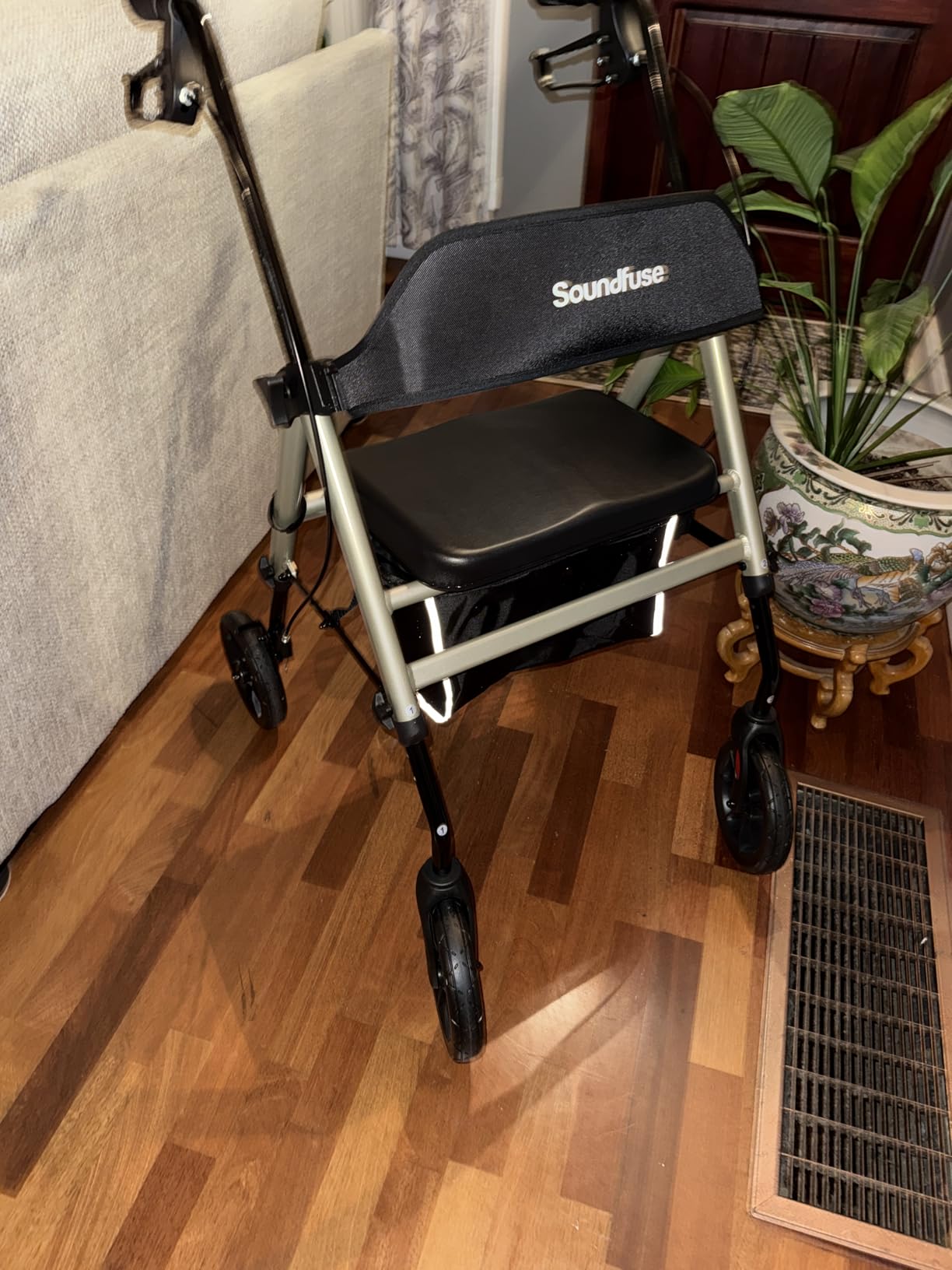
The brakes are two-mode: squeeze the handgrip to slow, push down to lock. A single pull-up strap folds the frame for transport, and the folding points are enclosed so there is nothing to catch a sleeve or a hand during the collapse. Multi-reflective strips on the frame help on an early or late crossing.
Handle adjustment runs 33 to 40 inches with the seat at 20 to 23 inches, covering users from 4 ft 7 in to 6 ft 6 in, and the reinforced aluminium frame carries a recommended maximum of 300 lb. One reviewer at roughly 245 lb reports no frame flex at all.
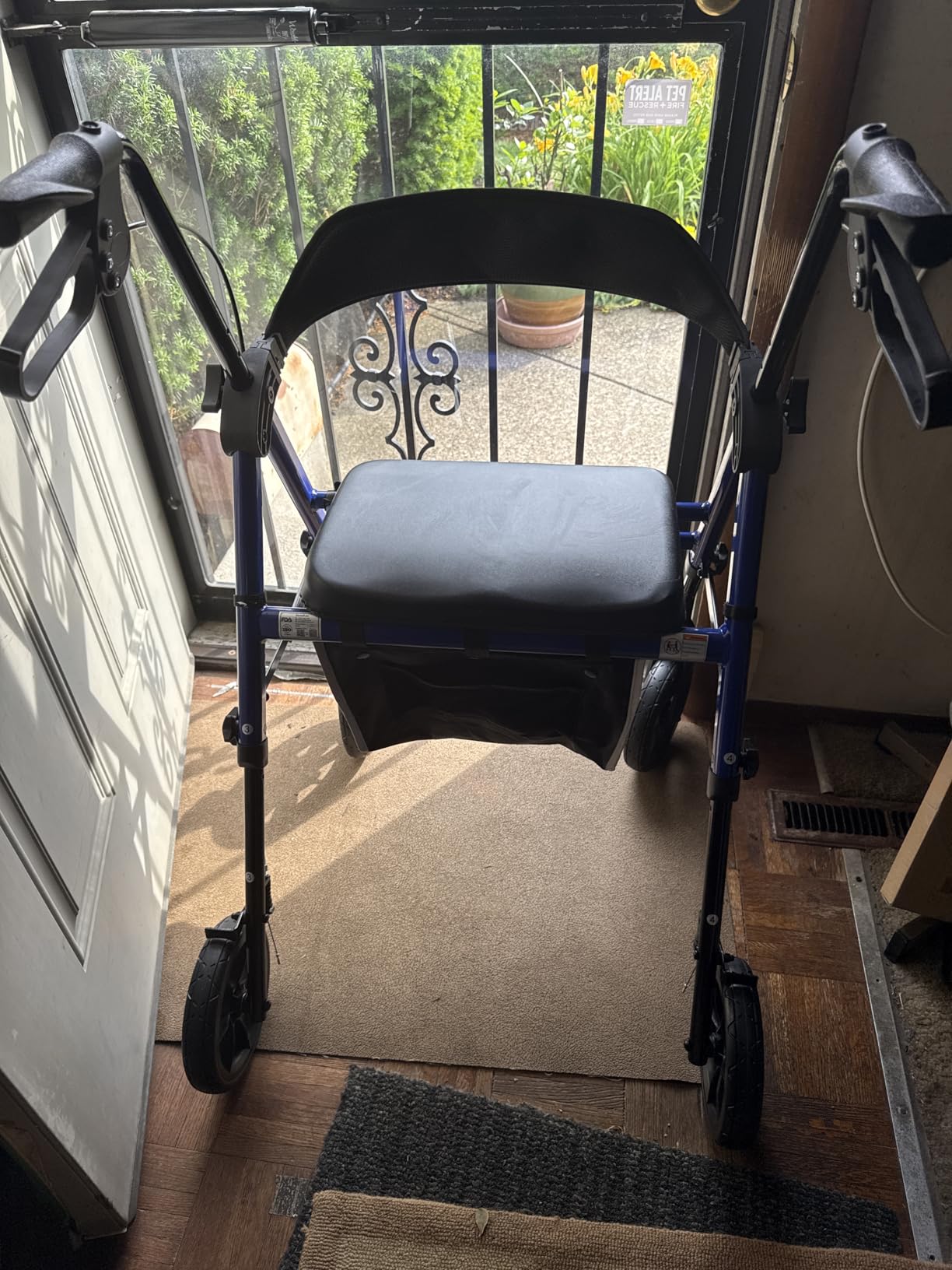
This suits a traveller who values a calm, smooth ride over low weight, particularly on cruise decks, airport walkways and paved park paths. The extra-wide memory foam seat and the wide frame make it a comfortable long-day option for larger-framed users.
The listed weight of 17.6 lb is the compromise. Several users report that loading it into a sedan is harder than loading a 12 lb frame, and users with limited arm strength describe the lift as the point where they need help. It is a car boot and gate-check rollator, not a cabin one.
19.18 lb listed weight
300 lb capacity
23 x 25 x 36 inch dimensions
3-second semi-flat fold
The BlessReach uses a hybrid frame, aluminium at the front and carbon steel at the rear, listed at 19.18 lb with a 300 lb capacity. The steel is where the mass goes, and the steel is why the brakes stay confident on a sloped driveway or a steep gangway in a way that lighter frames sometimes do not.
Buyers consistently mention how well the brakes work on uneven ground, which is the most useful thing you can say about a rollator used on hills. The 15 degree angled grip with an anatomic thumb rest and non-slip texture also shows up as a comfort note for longer walks.
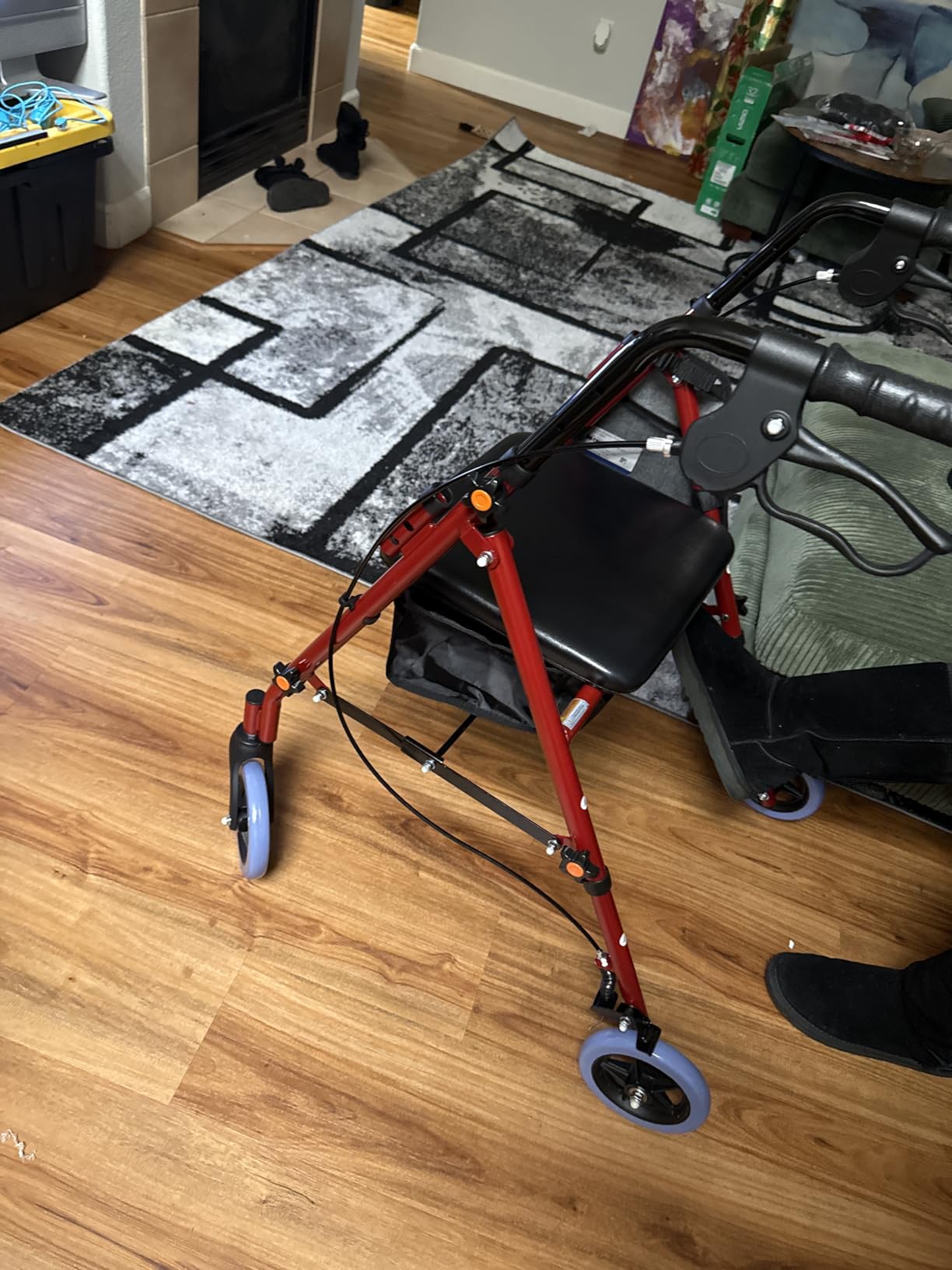
Folding takes about 3 seconds using a flip-up seat and a quick-release lever, and the frame has pinch-proof joints. Storage is a dual under-seat pouch plus multi-functional side pockets, and cat-eye reflectors on the frame help at dusk on a path without street lighting.
The handle is a 5-position ergonomic adjustment built for users from 5 ft to 6 ft, and the tubing is 30 mm with a 1.4 mm wall thickness. That handle range is the highest minimum in the group, so shorter users should measure before ordering.
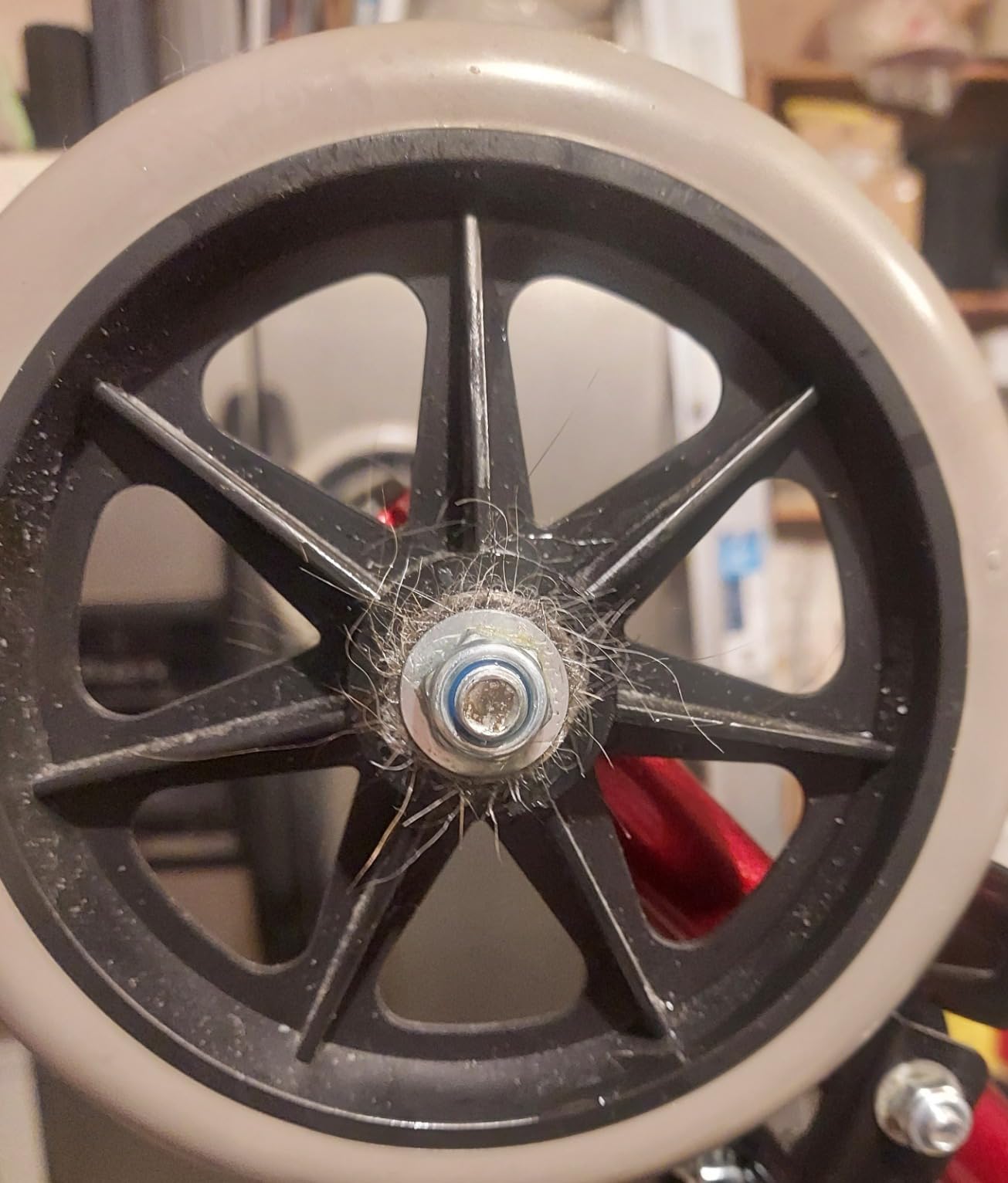
This suits anyone whose route involves hills, uneven driveways, cobbles or a cruise gangway with a slope, and taller users who want a generous handle range. It is also a straightforward choice when a family is buying for a single trip rather than for years of daily use.
It is the heaviest frame in the roundup at roughly 20 lb, and it folds only semi-flat, so it is bulky in a boot. Buyers also report the folding brake lines catching on the frame knobs, which can leave it stuck open or hard to reopen. One handle brake was reported weak out of the box.
19 lb item weight
10 inch and 8 inch wheels
Three-mode braking
33.46 x 28.94 x 9.65 inch dimensions
The Nitro Sprint is here for terrain. Its 10 inch and 8 inch wheels clear the door thresholds, broken paving and cracks that stop a 6 inch caster dead, and buyers describe the ride as noticeably more composed on bad pavement than on the smaller-wheeled frames they moved over to.
Braking is three-mode, free, park and slowdown, and the slowdown mode is the feature that earns its place on a hill. Reviewers who use this on slopes describe it as the difference between controlled descent and a hand on a railing, and at 2444 reviews it is the second most tested rollator in this roundup.
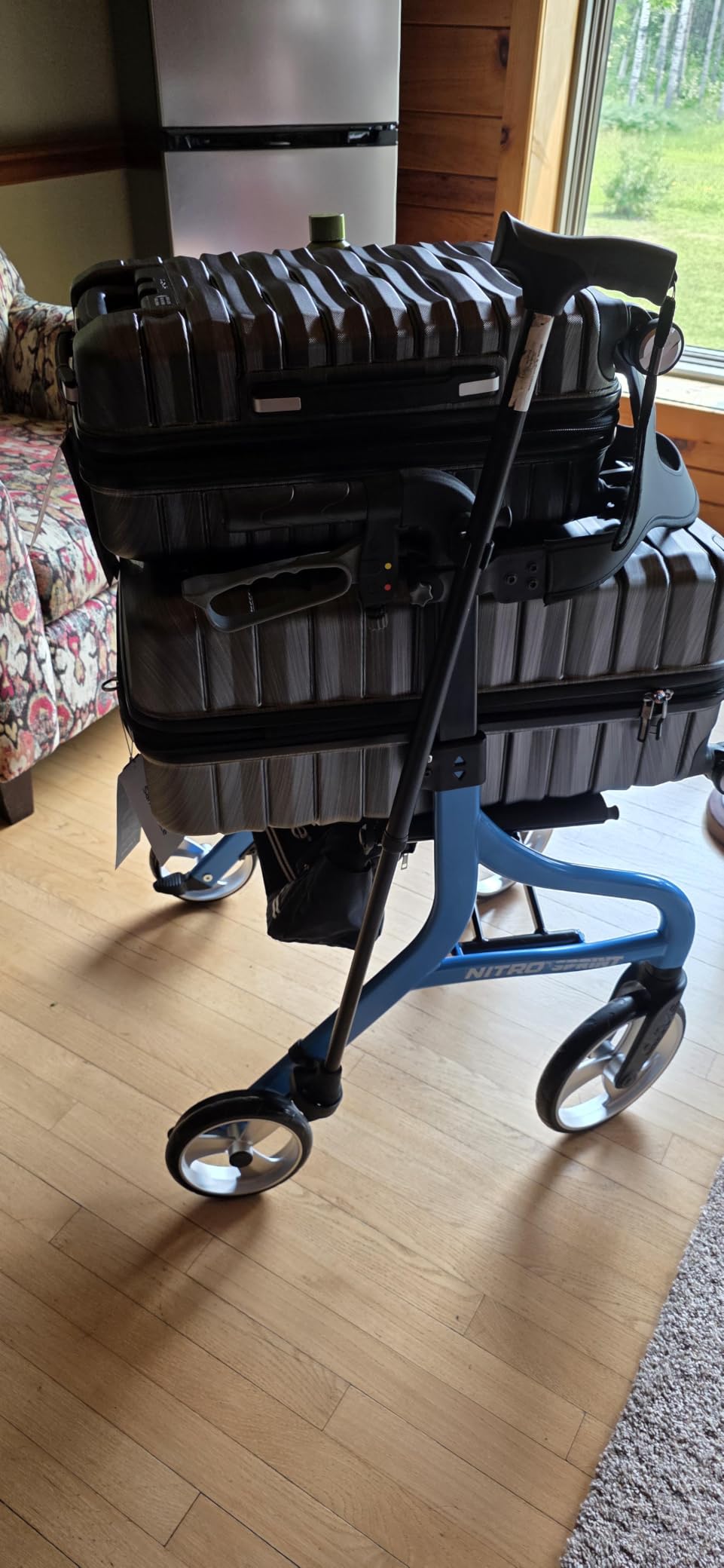
The brake cables are concealed inside the frame, so there is nothing exposed to snag on a kerb or catch a walking frame. A single strong pull on the seat handle folds the frame and clicks it closed, which means it will not spring open in a car boot the way an unlatched frame sometimes does. Three bag mounting positions and an accessory port take a cup holder or cane.
There are Petite, Standard and Tall height options, and the Petite version suits users around 5 ft 2 in who need a shorter frame. The backrest is contoured and padded with an oblong viewing port, so you can see behind you while walking.
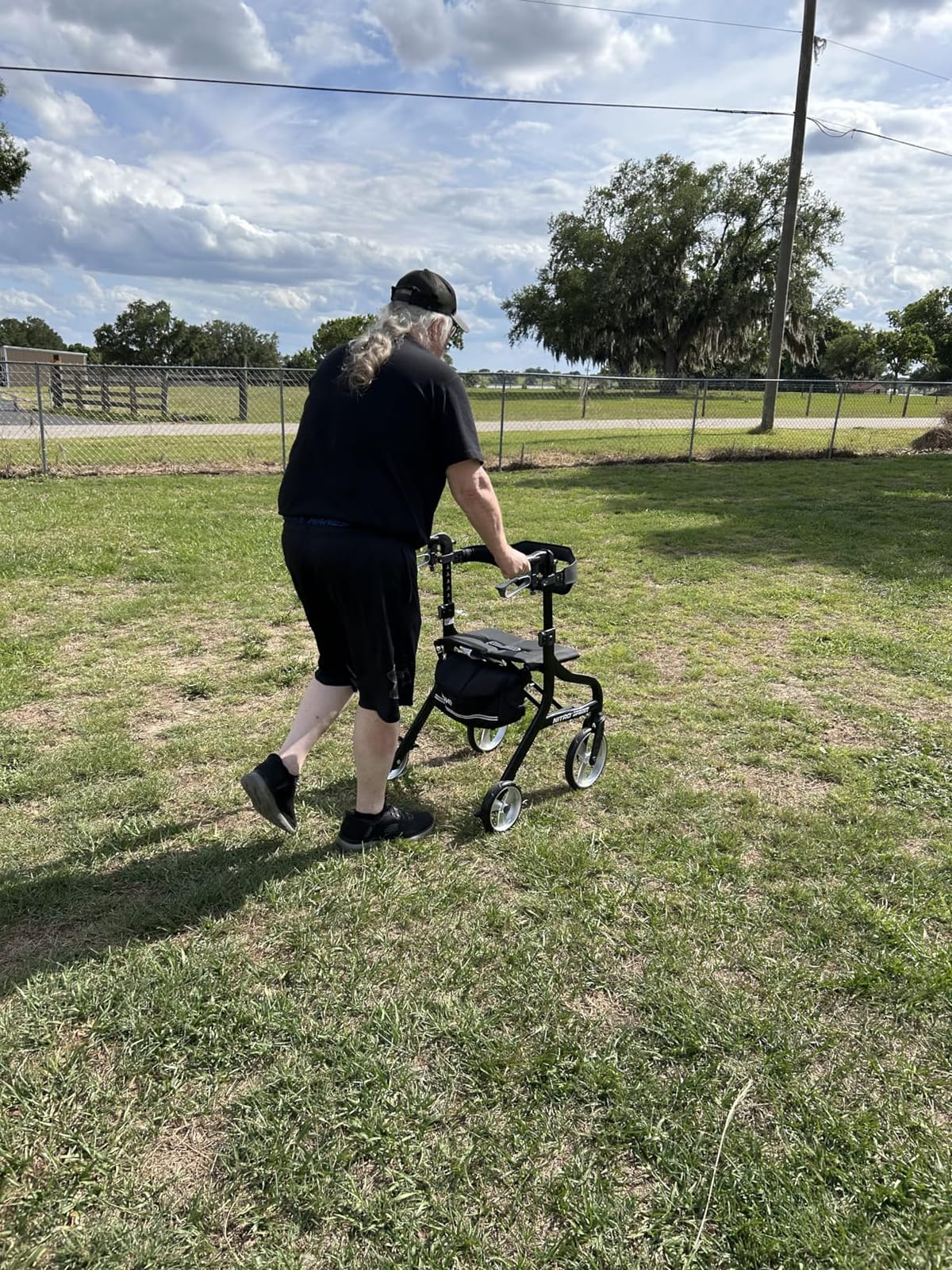
This suits a traveller heading somewhere with poor pavements, rural walking routes, park gravel or a city with a lot of street furniture. Users report a 350 lb rating in practice, which matches the top capacity figure in the group, and the accessory port keeps the frame adaptable without new hardware.
At 19 lb this is one of the heaviest frames here, and several users say it is too heavy for one person to lift into a vehicle. The brake levers sit further from the grips than on older versions, which is hard work for arthritic hands, and the accessory bag has been downgraded, with clips that fall off.
Yes. A rollator walker is a mobility aid, not luggage, and under the Air Carrier Access Act airlines must allow it in the cabin at no charge. It does not count against your carry-on allowance, you do not pay a stowage fee for it, and the airline carries it in the cabin or stows it in the hold at your instruction. Tell the airline when you book and again at the gate.
How it travels with you is where the differences between airlines and agents appear. A folded rollator that you can lift yourself is often walked down the aisle and placed in the cabin, or handed to a cabin crew member for the same trip. Some travellers on assistive technology forums report being asked to check a folded, cabin-legal rollator at the ticket counter, and the strategy that works is to arrive early, present your documentation, and ask for the request to be noted in the booking.
You can also gate check a walker, which means the airline takes it at the aircraft door and returns it at the destination door or jet bridge. That is different from ordinary checked baggage: it travels with you, it is usually handed back before you reach baggage reclaim, and it is still free of charge as a mobility aid. The Air Carrier Access Act is the rule that makes this true, and the TSA treats a rollator as an item you can keep with you through screening rather than something you must send down a conveyor belt.
Two practical notes from long-term rollator owners. First, boarding first and deplaning last is the routine that reduces the chance of being hurried at the gate, and it is the habit experienced travellers use. Second, if a rollator does travel in the hold, remove the loose accessories that can snag, write the model number on the frame with a marker, and photograph the frame before you hand it over, so a damaged or missing aid can be identified quickly.
Cruise ships are the hardest and the easiest travel environment at the same time. The hardest part is space: cabins are narrow, corridor turns are tight, and the muster stations and gangways are designed for a lot of foot traffic in a confined footprint. The easy part is that most ships lend equipment, and shore excursion ports usually have assistance available.
That is exactly the point raised on Disabled Cruise Travel boards, where travellers compare specific rollator models for ship use and separately work out what happens to a walker at each port. The recurring practical advice is to check the line’s equipment policy before you travel and to bring your own aid for the cabin and the ship, using ship-supplied equipment for excursions.
Renting at the destination is the option people most often describe as slow and uncomfortable compared with using a frame you already know. The frame you own is the one whose brakes and fold you can operate without looking down. If you do not want to fly your own rollator, that familiarity is a genuine reason to hire rather than buy.
For hotels, the two questions worth asking before you arrive are the width of the bathroom doorway and where a folded rollator can be stored. A 24 inch wide frame fits far more doorways than a 26.5 inch one, and a fold that stands upright or leans flat stores better in a small room. Bring your own cup holder expectations aside, the practical fix is to measure the room when you book a standard rather than a compact cabin.
Item weight is the first filter, and the threshold matters. The lightest weight rollator for seniors is generally considered to be anything you can lift into a car unaided, which in this roundup means the 10 to 14 lb band. Once you are into the 18 to 20 lb band, most travellers need two hands or a second person, and that changes every lift in an airport, a car park and a ship deck.
Folded size is the real constraint, not weight. A 10 by 11 inch footprint fits a cabin locker. A 26.5 by 10.9 by 35 inch package fits a car boot and needs a gate check. Measure your car’s boot opening and the smallest doorway on your itinerary before you commit, because a rollator that cannot get through a bathroom door is a trip that ends early.
Match capacity to your own body weight with margin. Figures here run from 250 lb to a 350 lb recommended maximum, and 300 lb is the most common. A useful rule is to stay at least 50 lb below the stated maximum, because the rating is a structural limit rather than a comfort target.
Wheel size decides the surfaces you can handle. Six inch wheels are for terminals, lobbies, decks and smooth pavements. Eight inch wheels add comfort and reach over cracks and light gravel. Ten inch wheels, as fitted to the Drive Medical Nitro Sprint, clear broken paving and cobbles, at the cost of weight and bulk.
Brake type is a safety decision, not a feature. You want a two-position brake that slows the frame when squeezed and locks the rear wheels when pushed down, plus a parking lock so the seat is safe to use. A one-way lever that only locks is not enough for downhill control.
Frame material sets the weight ceiling. Aluminium is the value default and the heaviest of the three. Carbon fiber is roughly a third lighter, does not corrode, and shrugs off baggage handling, but it costs several times more and typically has a smaller seat. A hybrid with carbon steel rear supports is heavier still and buys braking strength and durability instead.
One last note. A rollator is a medical device that affects how you walk and how you sit, so if you have a balance condition, a recent fall, or a weight or capacity question, have your clinician or occupational therapist confirm the frame before you buy. They will check handle height against your stature and tell you whether a rollator matches your current mobility level rather than a generic travel list.
Yes. A rollator is a mobility aid rather than luggage, so under the Air Carrier Access Act airlines allow it in the cabin free of charge, and the TSA lets you keep it with you through screening. It does not count against your carry-on allowance. Tell the airline when you book and again at the gate, and ask for a boarding time early in the process.
No. A rollator is classified as a mobility aid, not as a bag, so it sits outside your carry-on allowance. You can keep it with you in the cabin, hand it to cabin crew to stow, or have it gate checked. Ordinary baggage fees do not apply to it, and you should not be asked to pay a stowage charge for it.
No. The Air Carrier Access Act requires airlines to carry mobility aids, including rollator walkers, at no charge, whether they travel in the cabin or in the hold. Ancillary costs are prohibited, though you remain responsible for damage you cause to the frame. Requesting the aid when you book and confirming it at the gate reduces the chance of a last-minute argument.
Yes. Gate checking means the airline takes the walker at the aircraft door and returns it at the destination door, so it travels with you rather than going into the general baggage system. Because it is a mobility aid, it is carried free of charge. Tag it, photograph the frame first, and remove loose accessories before handing it over.
The lightest frames in this roundup are the byACRE Carbon Ultralight at 10.58 lb and the HOMLAND three-wheel model with a listed frame of 10.4 lb. A practical floor for travel is 12 to 14 lb, which covers the Medline at 12.6 lb and the PLANET WALK at 13 lb, both of which most users can lift into a car on their own.
Bringing your own is generally better, because you already know how its brakes and fold work. Most cruise lines lend equipment on board, and port excursions usually have assistance available, so you can travel with a smaller own-frame and borrow for shore days. Renting at the destination is the option travellers most often describe as slow and uncomfortable.
The short answer is the byACRE Carbon Ultralight at 10.58 lb, which is the only carbon frame in this roundup and the one I would trust to a baggage hold, a car park and a single-handed lift. If that is beyond your budget, the PLANET WALK at 13 lb gives you the most travel-capable aluminium package, and the Stander Space Saver is the one to look at if overhead bin stowage is the priority.
Match the frame to your actual itinerary rather than to the lightest number on the page. Measure your boot and your narrowest doorway, check the handle range against your height, and confirm the capacity sits above your own weight with margin. Then read more of our tested picks, such as our lightweight slow cooker roundup and pressure washer guide for seniors, where the same weight-versus-capacity logic applies.
Every list of the best lightweight rollators for travel in 2026 will tell you the same thing about weight. The one that helps you is the one that tells you what happens after the lift.