
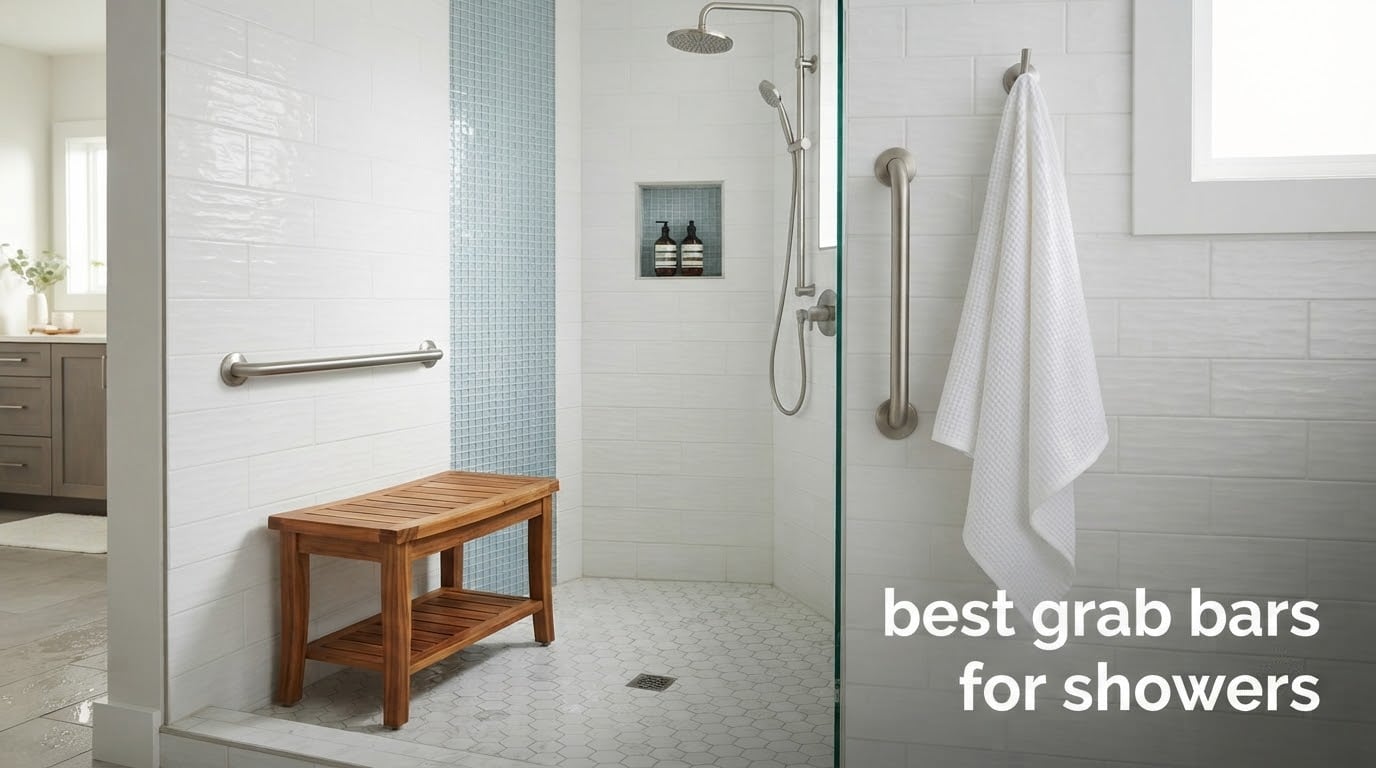
Wet tile, bare feet, and a slip are a bad combination. A properly anchored grab bar is the single highest-return safety upgrade you can make to a shower, and it is the one most people put off because they assume it means drilling into tile and living with a hospital-looking rail for the next twenty years. Both assumptions are worth revisiting in 2026.
This guide covers the best grab bars for showers specifically, not grab bars for the whole bathroom. We compared ten permanent wall-mounted bars on the things that actually decide whether a bar helps in a shower: load rating, grip texture when hands are wet, bar length, flange clearance, finish options, and whether the hardware is included. Every bar here is rated for stud mounting, and we flag the ones whose listed capacity sits below the rest of the field.
Our best overall pick is the Moen Home Care 24-Inch Stainless Steel Grab Bar. It carries a 500 lb capacity when mounted into a stud, uses concealed screw flanges so no holes show on the finished wall, is ADA compliant, and is backed by Moen’s limited lifetime warranty. It is the bar we would put on the shower wall of a house we owned. The best budget pair is the Gotega 12-Inch 2 Pack, and the best grip for arthritic hands is the Moen Designer 24-Inch with its curled handle.
One warning before any product list. A towel bar is not a grab bar. Towel bars are typically fastened with a single small screw into a drywall anchor and are rated to hold a towel, roughly 10 to 15 lb, nowhere near a person’s weight. In a fall, a towel bar either pulls out of the wall or bends in half, and the person using it goes down anyway. The same applies to the decorative knurled-looking rail sold alongside cabinet hardware. If a product does not publish a load rating, treat it as a towel bar no matter how substantial it looks.
How we picked. We read the full specification listing for each bar, cross-checked the stated load rating against the mounting type, and grouped the review data by the two things shower users complain about most: grip when wet and the strength of the wall behind the flange. We favor manufacturers that publish a verifiable capacity figure, include mounting hardware, and state the diameter and length clearly. Products with no published rating did not make this list. If you are planning a full bathroom safety remodel rather than a single shower, our walk-in shower guide covers the enclosure side of the project.


All ten bars below are permanent wall-mounted models. None of them is a suction bar, and that is deliberate: the rule we use is simple, if falling would be the result of the bar releasing, do not use an adhesive or suction product for that task. Suction cups belong in a hotel room or a rental where nothing more is needed than a steadying handhold.
| Product | Specifications | Action |
|---|---|---|
| Moen Home Care 24 Inch Grab Bar |
|
Check Latest Price |
| Gotega 12 Inch 2 Pack |
|
Check Latest Price |
 Amazon Basics 24 Inch Grab Bar Amazon Basics 24 Inch Grab Bar |
|
Check Latest Price |
 Gotega 16 Inch Knurled 2 Pack Gotega 16 Inch Knurled 2 Pack |
|
Check Latest Price |
 Ravinte 16 Inch Polished Nickel 2 Pack Ravinte 16 Inch Polished Nickel 2 Pack |
|
Check Latest Price |
 Moen 12 Inch Peened Grip Bar Moen 12 Inch Peened Grip Bar |
|
Check Latest Price |
 Rackickyer 16 Inch Matte Black 2 Pack Rackickyer 16 Inch Matte Black 2 Pack |
|
Check Latest Price |
 FANHAO 16 Inch Knurled 2 Pack FANHAO 16 Inch Knurled 2 Pack |
|
Check Latest Price |
 Gotega 16 Inch Silicone Grip 2 Pack Gotega 16 Inch Silicone Grip 2 Pack |
|
Check Latest Price |
| Moen Designer 24 Inch Curled Grip |
|
Check Latest Price |
One note on the capacity column before you read the reviews. Every bar in this roundup except one is listed at 500 lb, and that number assumes the screws land in a stud, blocking, or masonry. A bar bolted into hollow drywall with a standard plastic anchor is a different product in practice, and no listing rating should be read as a promise about that install.
24 inch stainless steel
1.25 inch diameter
500 lb when stud mounted
ADA compliant
This is the bar we keep coming back to. It has been on the market long enough that the review base is enormous, and the pattern across those reviews is consistent: solid feel, straightforward stud mounting, and a finish that still looks right after years in a humid bathroom. At 24 inches it is long enough to distribute a pull across a wide span rather than concentrating it at one point.
The 1.25 inch diameter is the standard full-size grip, and it sits comfortably in an adult hand without feeling oversized. The brushed stainless finish is lightly warm gray rather than a cold mirror, so it hides water spots better than polished chrome and coordinates with most Moen bathroom hardware.
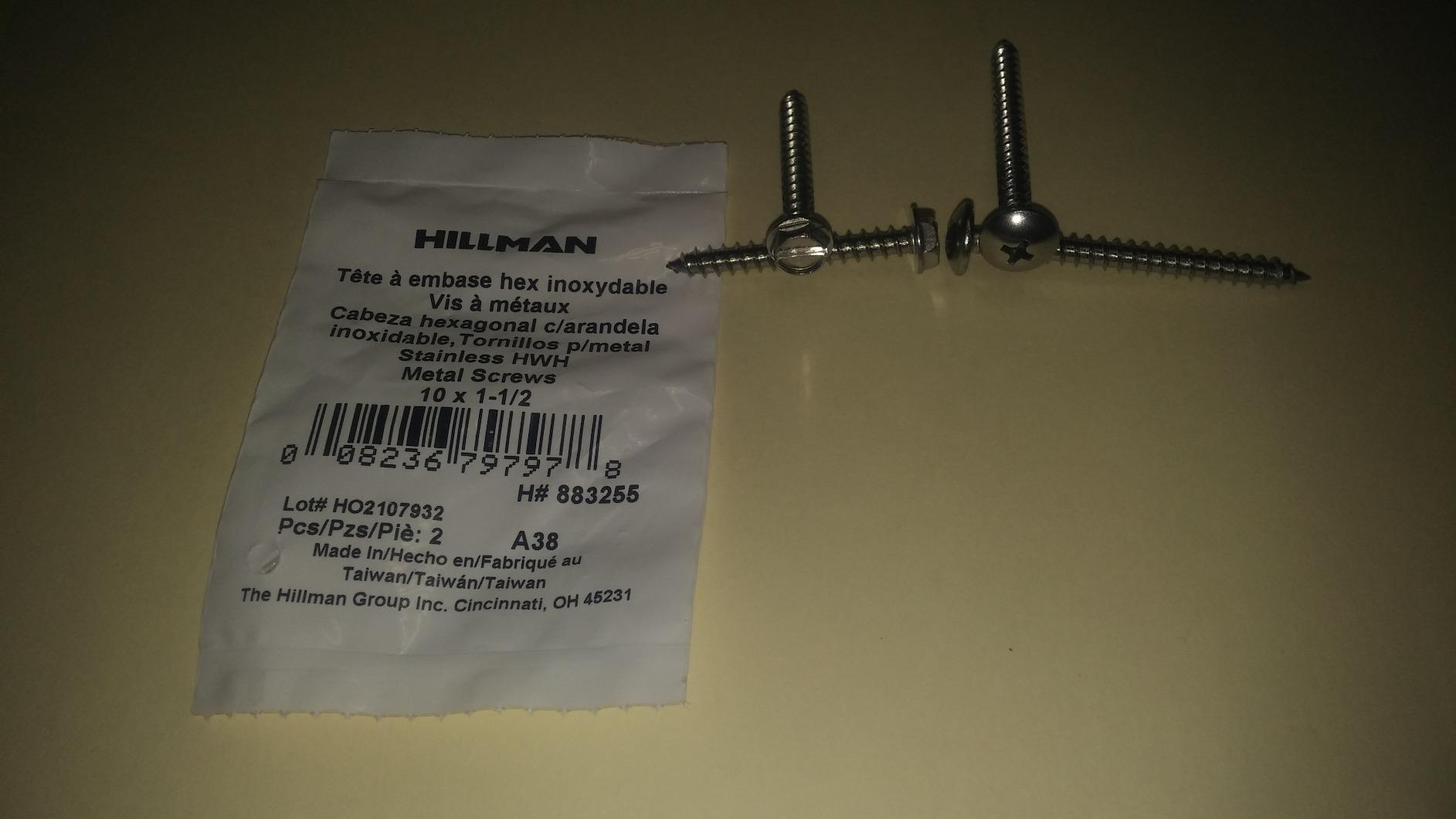
Two practical notes. First, the concealed flange design means the screw heads sit behind a cover plate, so the finished wall has no visible holes or screw heads. That matters in a shower where tile is expensive to patch. Second, the 500 lb figure applies when it is mounted into a stud or with Moen’s SecureMount anchors, which are sold separately. If your shower wall is finished in tile over a hollow wall, budget for those anchors or plan on hitting a stud.
Our one reservation is the straight cylindrical grip. It is smooth stainless with no peening or knurling, so a wet hand has less purchase than it would on a textured bar. For most users that is not a problem. For arthritic hands or anyone with genuinely weak grip, the curled model later in this list is the better tool.
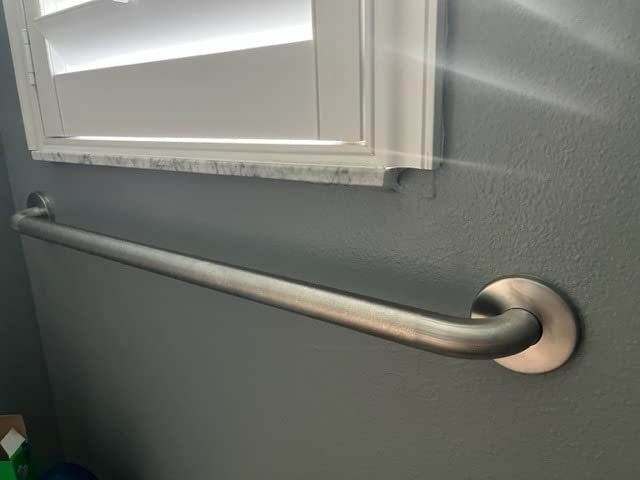
At 24 inches, this bar works as a horizontal on the back or side wall of a shower, or as a vertical at the entry if you mount it in a doorway opening. Installers on r/DIY note that standard bars sit roughly 2 inches off the wall and often use 8 screws on a full-length bar, which is the setup these flanges are designed for. Buy the hardware kit that matches your wall and this bar will hold.
If you are in a rental, this bar is the wrong purchase because it requires drilling and a permanent commitment. If you want a grippy surface for wet hands, the smooth bar leaves something on the table. And if you plan a second bar at the shower entry, a two-pack covers both positions in one purchase.
Two 12 inch bars,304 stainless steel
3-hole flange stud mount
500 lb rating each
2.6 inch flanges
This two-pack has more owner reviews than anything else we evaluated, and the volume itself is informative. Buyers are installing these in multiples across a whole home, which tells you the price point is what makes it popular. For a bathroom where you want two bars, this is the most economical way to get there.
Each bar is 304 stainless steel rated to 500 lb of pulling force, and the flanges are a 3-hole pattern with six stainless screws included. That means for a standard stud wall you need only a drill and a screwdriver. We like the small footprint: at 12 inches with 2.6 inch flanges, this fits tight shower alcoves where a 24 inch bar physically will not.
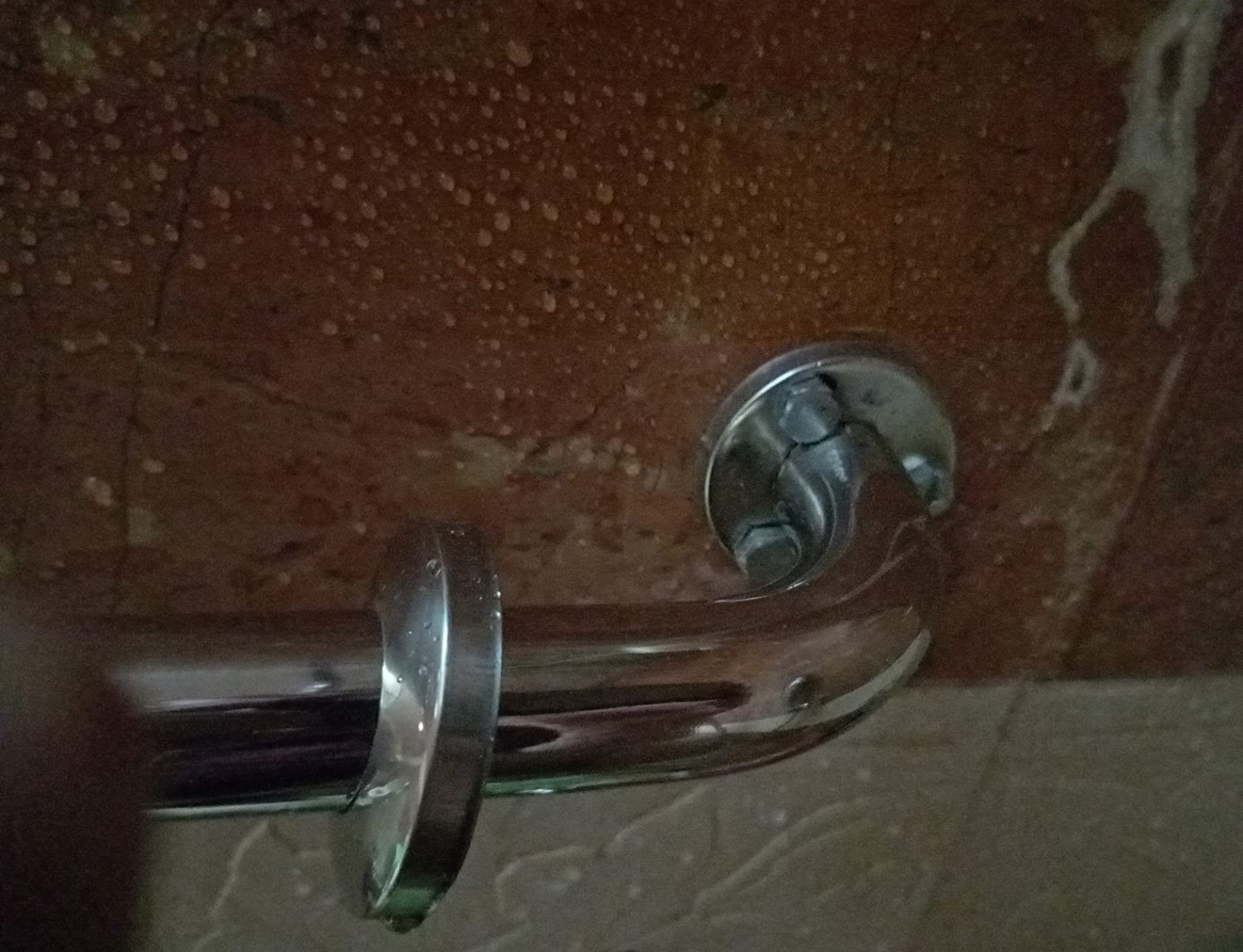
The honest weaknesses are visible in the ratings. This bar has the lowest average score in the roundup, with a larger share of three-star and one-star reviews than the others. The recurring complaint is that the steel is lighter gauge than buyers expected, and one reviewer found the bar smaller and thinner than the photographs suggested. A minority of owners also installed these in drywall and were disappointed by the result.
Twelve inches is also the shortest length here, which means less leverage for a full-weight pull than a 16 or 24 inch model. That matters most for a large person or anyone who intends to use the bar as a primary support rather than a balance aid.
The 2 Pack is a natural fit for opposite sides of a shower entry, or one bar inside the shower and one at the tub lip. Mounting the same pair on the back wall and the side wall gives you two handholds without mixing finishes. The same manufacturer also offers 18, 24, and 36 inch versions in silver, black, and white if 12 inches is too short for your reach.
Do not treat this as your only support for a user who will put real weight on it. The combination of light gauge, short span, and smooth surface is fine for balance, and thin for a rescue. Anyone over roughly 250 lb planning to load the bar fully should start with a heavier bar instead.
24 inch length,1.25 inch diameter
500 lb into a stud
ADA compliant
Brushed stainless
This is the mainstream pick: a 24 inch bar in brushed stainless with a 500 lb stud rating, sold in enough lengths and diameters that you can usually match an existing layout without a special order. Owners rate the solid stainless feel highly, and the brushed finish is the quiet hero in a shower where polished hardware shows every water spot.
At 1.25 inch, the diameter is the same full-size grip as the flagship Moen. The difference between the two is warranty length and finish texture, not strength. If you want the plainest, most universally available bar on this list, this is it.
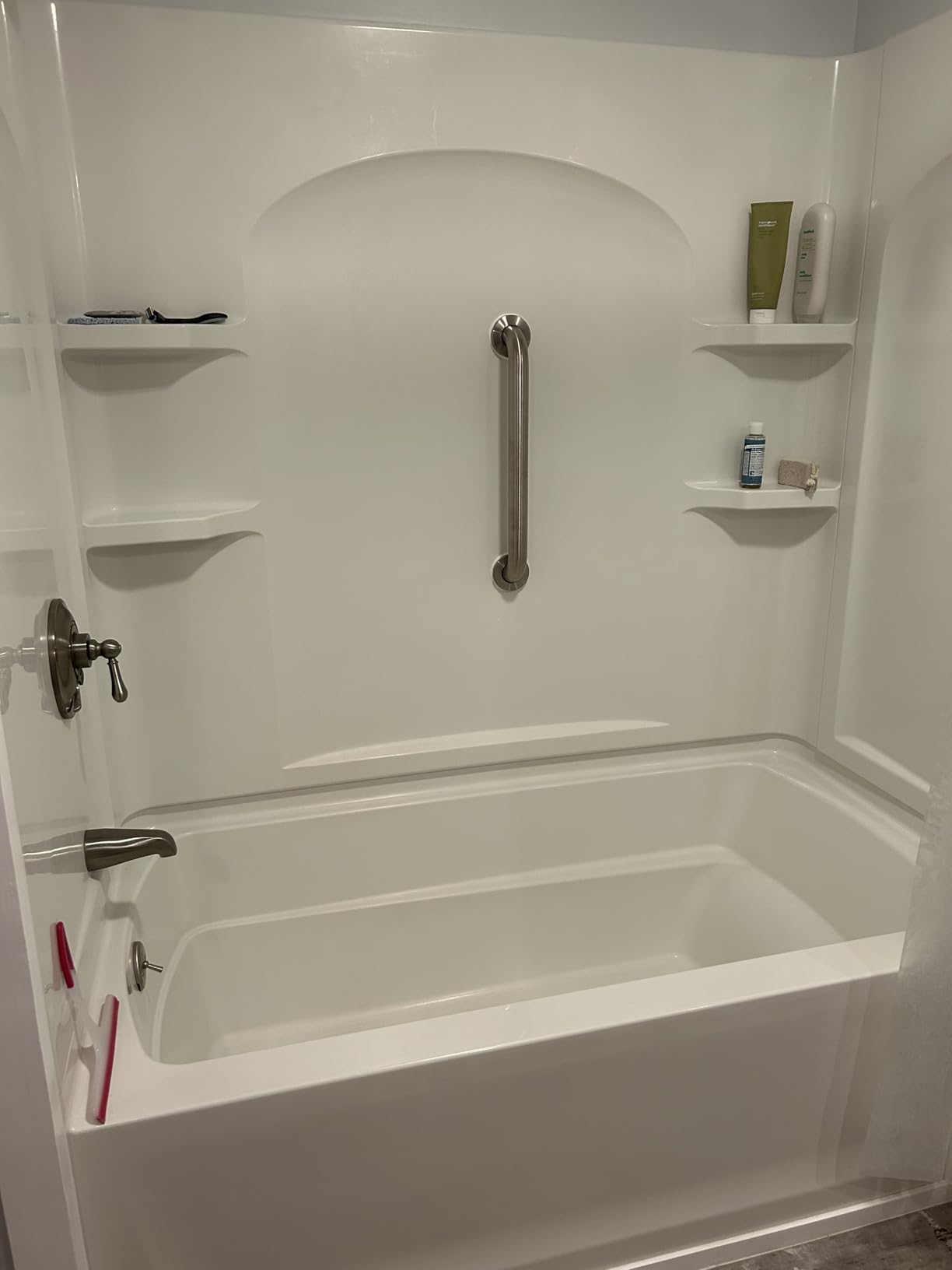
Two limitations are worth stating plainly. The warranty is one year, which is the shortest here and considerably shorter than the limited lifetime warranty Moen offers on comparable bars. A safety product that will be drilled into a wall once and left for a decade is a strange place to save money, but that is the tradeoff.
The second is the smooth surface. There is no peening or knurling, so wet-hand traction depends entirely on how hard you can squeeze. The listing also does not describe hardware for hollow drywall installs, so if you are not hitting a stud, plan to source rated anchors yourself.
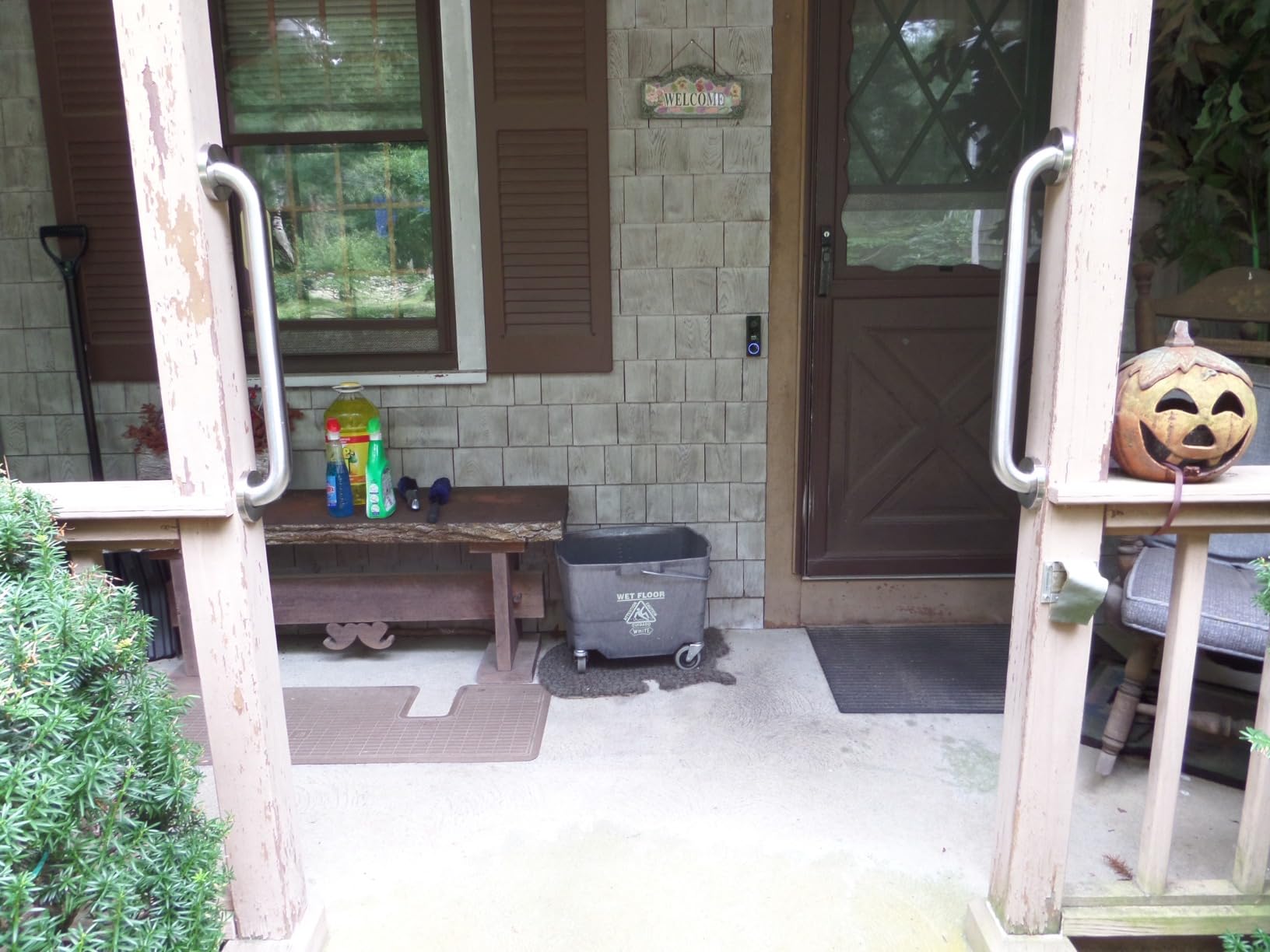
Because this bar is offered in 16, 18, 24, 36, and 42 inches and in 1.25 and 1.50 inch diameters, you can cover a shower wall and a tub surround with one visual style. Homeowners on Houzz threads about grab bars consistently recommend matching the rail to the fixture brand already in the room, and brushed stainless is the easiest finish to coordinate because it sits between chrome and nickel visually.
If your priority is a grippy surface, choose a knurled or peened bar. If warranty length is a deciding factor for you, the lifetime-warranty options cover that. This bar is the pick for people who want a straightforward, well-reviewed bar with no gimmicks.
Two 16 inch bars
Knurled non-slip surface
304 stainless, 500 lb rated
Concealed screw design
The knurled surface is what separates this bar from the smooth stainless crowd, and reviewers call it out as the standout feature. Machined texture gives a wet hand something to bite into, which is exactly the condition in a shower. At 16 inches these are also longer than the budget 12 inch pair, so they offer more leverage when someone pulls down on them.
Both bars in the pack mount at any angle with a concealed screw design, so you can install one horizontal on the back wall and one vertical at the entry with the same hardware. The review base shows repeat purchasing, with owners installing sets in stairwells and outdoor railings as well as bathrooms.
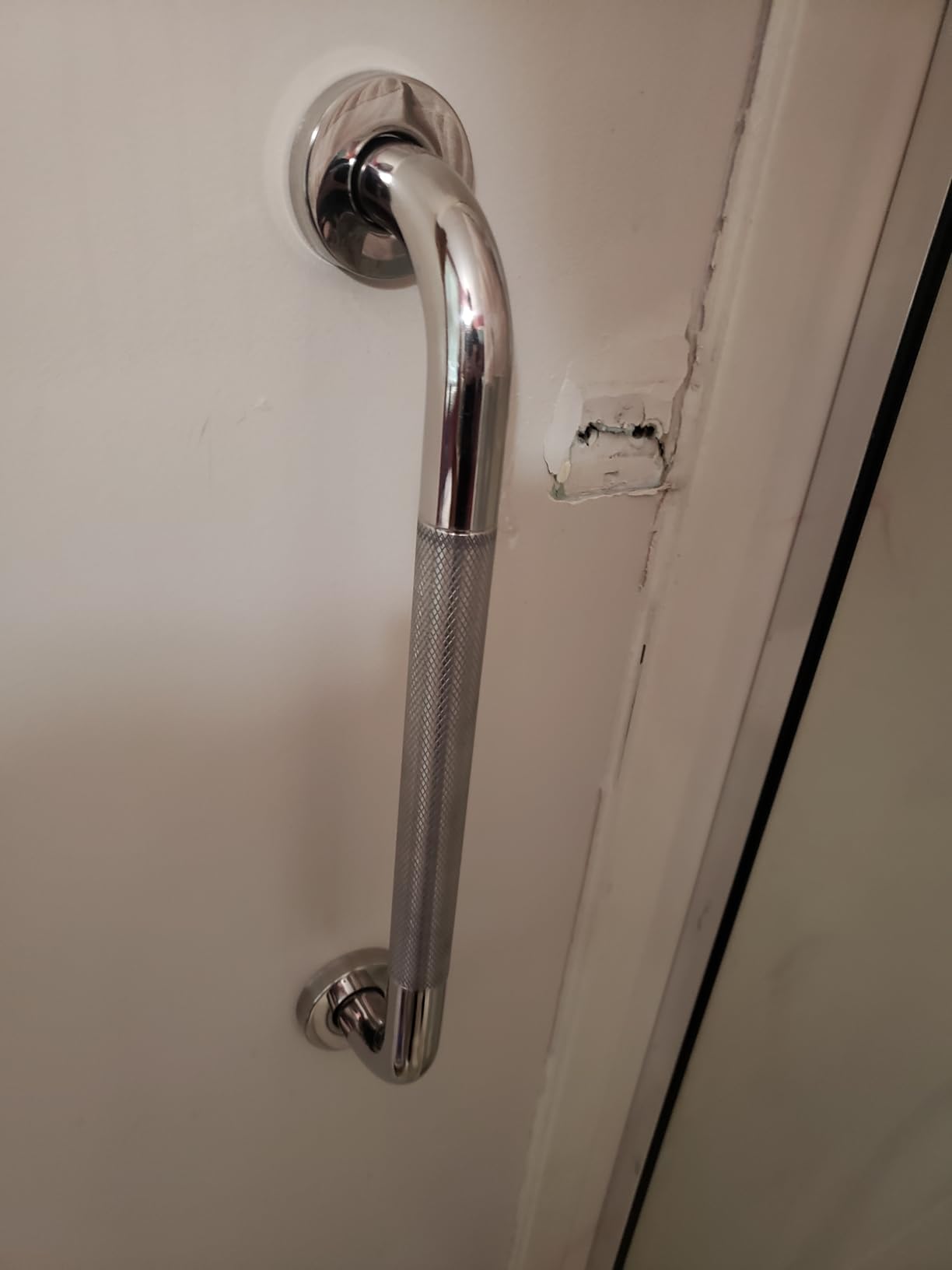
Wall material is the real caveat. Reviewers repeatedly warn that these can work loose in drywall and should be anchored into studs, blocking, or concrete. That is not a defect so much as a physics fact, but it does mean the bar is only as strong as the substrate behind the flange.
The decorative flange cover is also a recurring minor complaint. It does not stay snapped in place and may need re-seating after installation or after a hard knock. It is cosmetic rather than structural, but it is the kind of thing that annoys people.
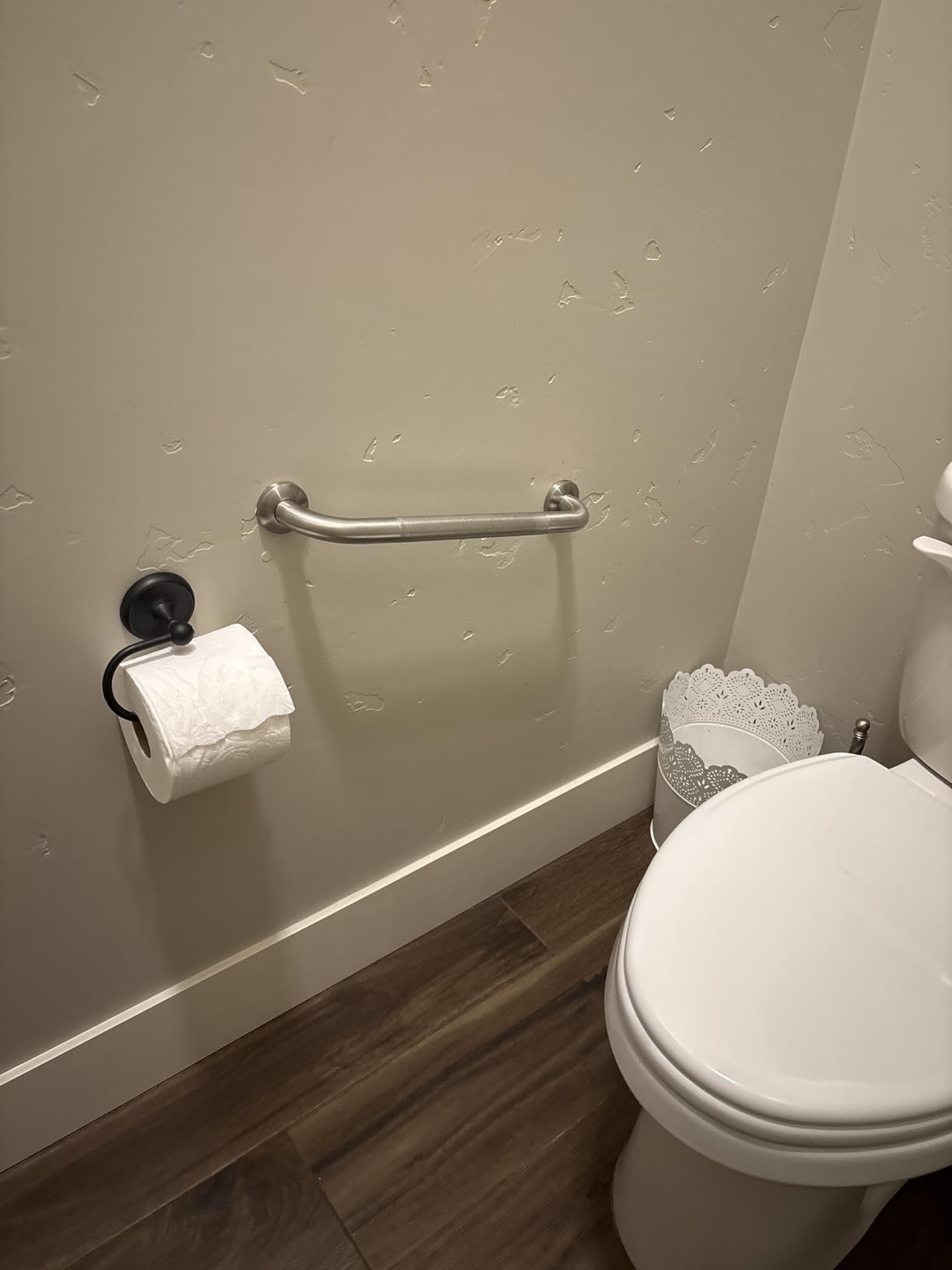
Knurling is not a gimmick for showers. Water on smooth stainless means your hand slides, and a bar you cannot hold in the moment you need it is worse than useless. The same manufacturer also sells 12, 18, and 24 inch versions of this design, so the grip is not locked to one length.
If you are installing where hands are rarely wet, such as a hallway or a bedroom wall, texture matters less and the smooth finish is easier to wipe down. This bar is also not the choice for a hollow drywall wall where you cannot reach a stud, and the 500 lb figure does not survive an anchor that is not rated for grab bars.
Two 16 inch bars,Polished nickel,Knurled non-slip grip
1 inch diameter
7 lengths available
This is the one to buy if the look of the bar is the thing stopping you from installing one at all. Aesthetic rejection is the most common reason people skip grab bars entirely, and posts on r/HomeXpert capture it plainly: people look at plain clinical rails, decide they look like a hospital room, and install nothing. A polished nickel bar with a knurled grip solves that objection without giving up any function.
The catalog is the real differentiator. Seven lengths from 12 to 36 inches and five finishes including white, black, brushed nickel, polished nickel, and polished gold mean you can match a shower that already has fixtures in any of those tones.
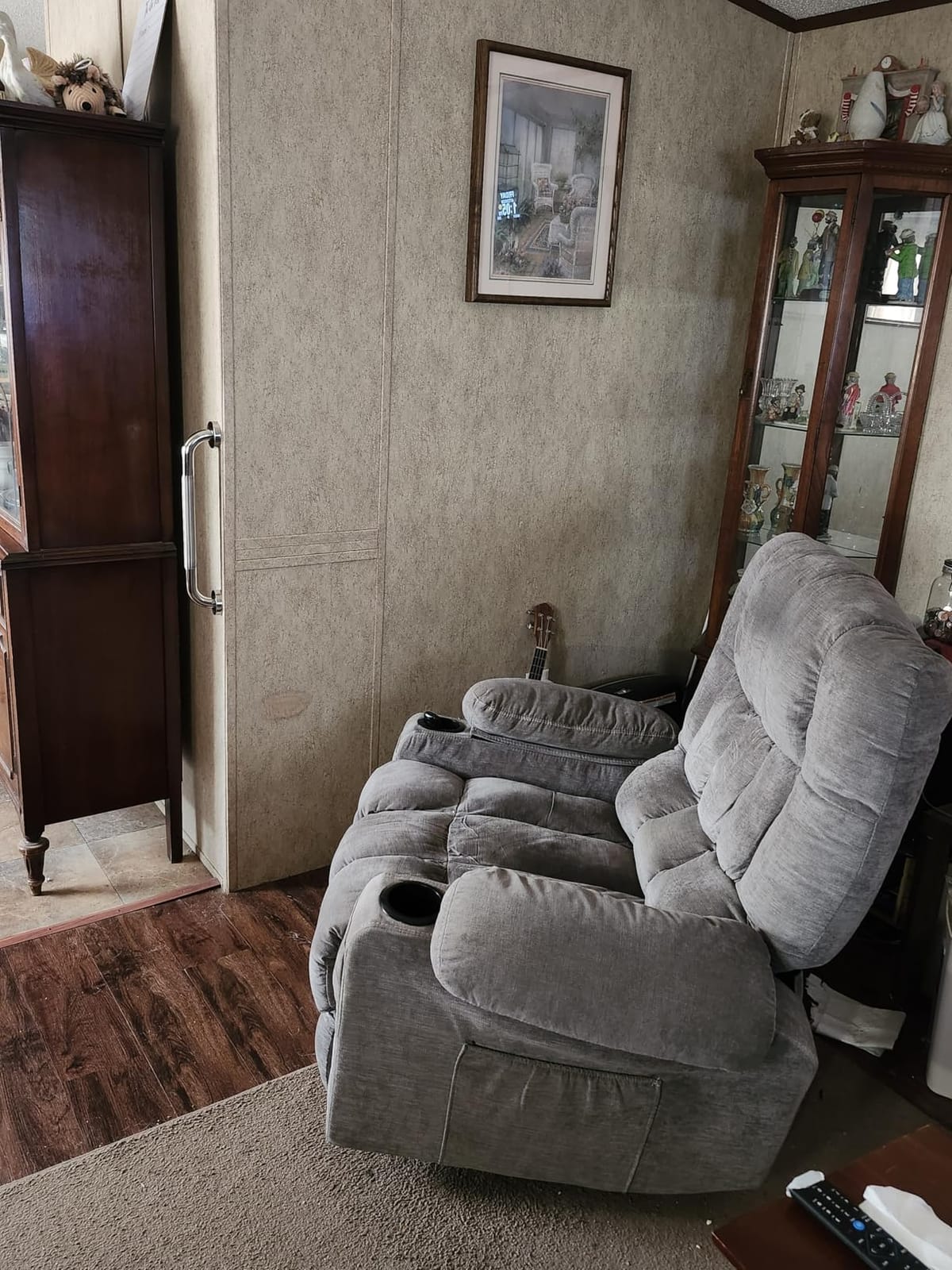
The tradeoff is diameter. At 1 inch, this is the slimmer bar, and it suits smaller hands. An adult with a larger hand or limited grip strength may find 1 inch insufficient, which is why the 1.25 inch options elsewhere on this list exist. Compare the two side by side in the store before you commit.
The listing also shows included components as none, so plan to buy your own screws and confirm the flange hole pattern matches standard 16 inch stud spacing before you start drilling.
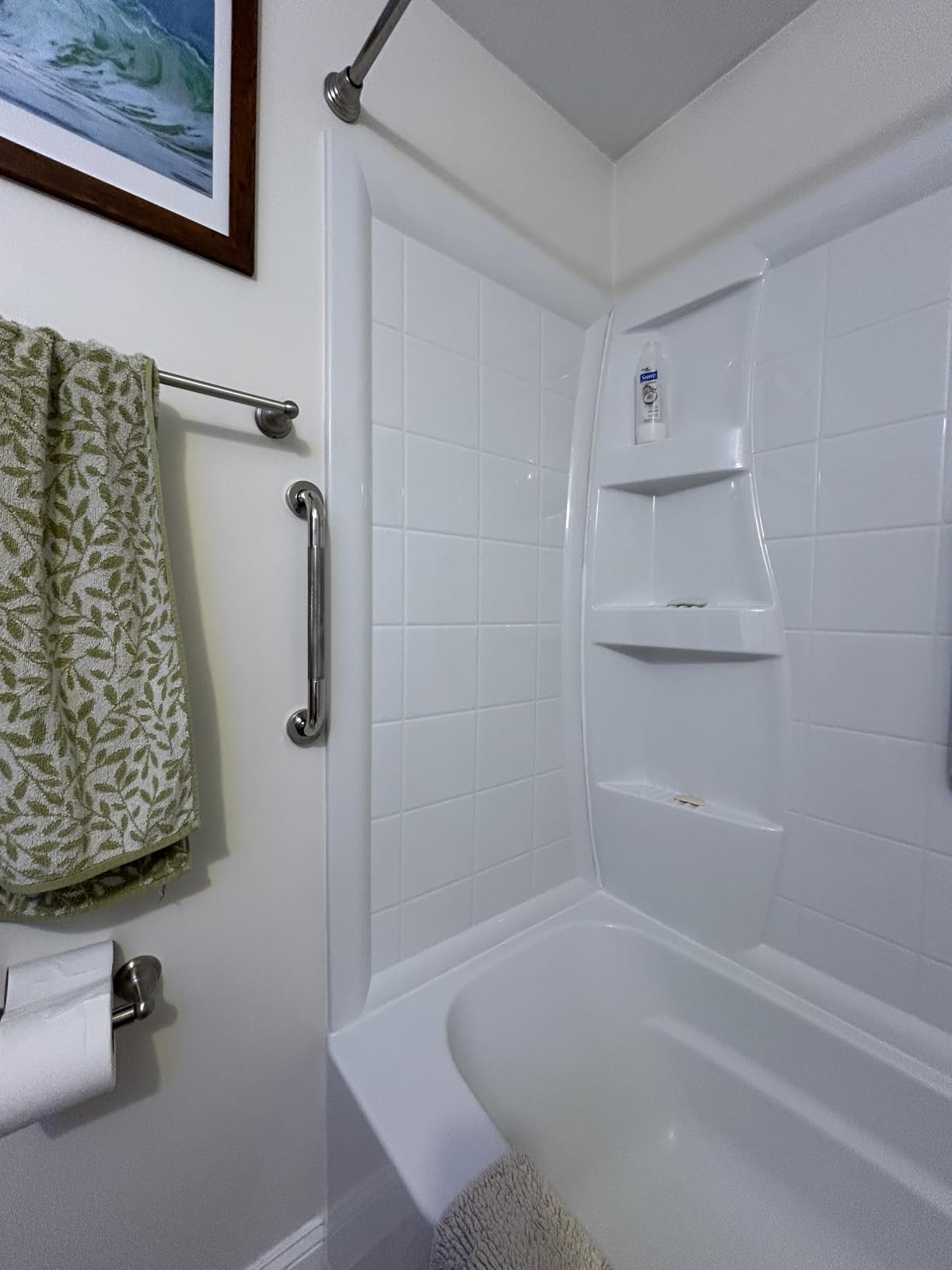
The design trick is to specify the grab bar finish at the same time as the shower trim, not after. A polished nickel rail next to polished nickel showerheads reads as part of the room. The same bar next to brushed nickel and chrome fixtures reads as an afterthought, and that is when people refuse to install it.
Skip it if you have larger hands or weak grip and the 1 inch diameter feels small during a test grip. Also skip it if you want hardware in the box. For a large user who cares about aesthetics, a 1.25 inch matte black or brushed nickel option is the better match.
12 inch bar,Peened textured grip
500 lb into a stud
ADA compliant
Limited lifetime warranty
Peening is a stamping process that leaves a fine textured surface across the whole bar, and it is a different texture from knurling. Where knurling is a pattern of cuts, peening is a uniform pebbled finish. It gives a wet hand more friction and it does not catch soap the way aggressive knurling can. This bar has one of the strongest rating profiles here, with 85 percent of its reviews at five stars.
It also carries the same limited lifetime warranty as the flagship Moen model. For a bar that gets drilled into a wall once and stays there for the life of the house, a lifetime warranty is a fair expectation and a rare one in this category.
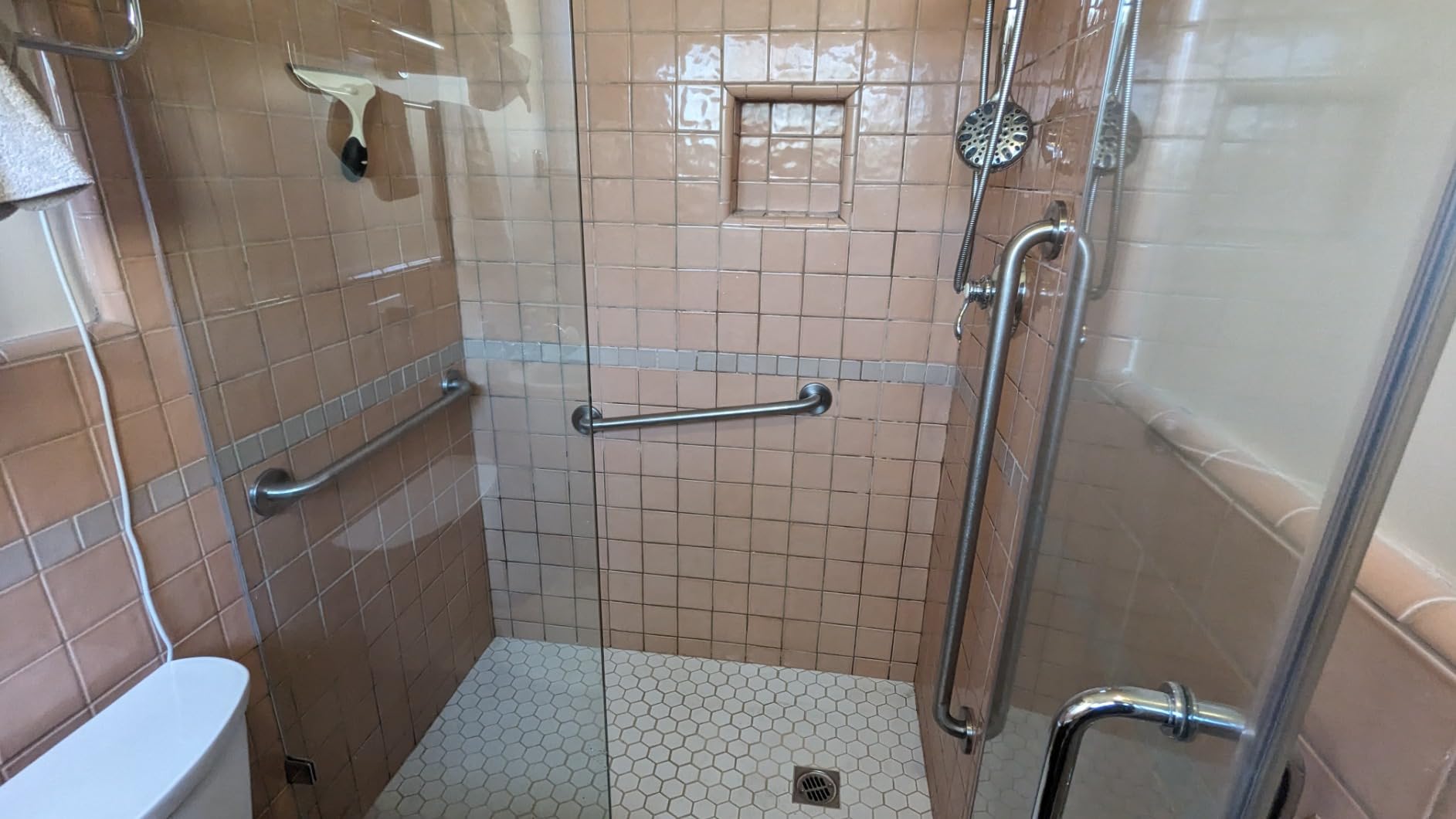
Twelve inches is the limitation. This is a secondary handhold bar, not a primary support. It works well mounted vertically at the shower entry as a push-up handle, or horizontally at a corner where a short reach is all that is needed. It is not the bar to hang full body weight from in a fall.
As with the other Moen bars, the SecureMount anchors for non-stud walls are a separate purchase. If your shower wall is solid, that is irrelevant. If it is tile over hollow framing, order the anchors with the bar.
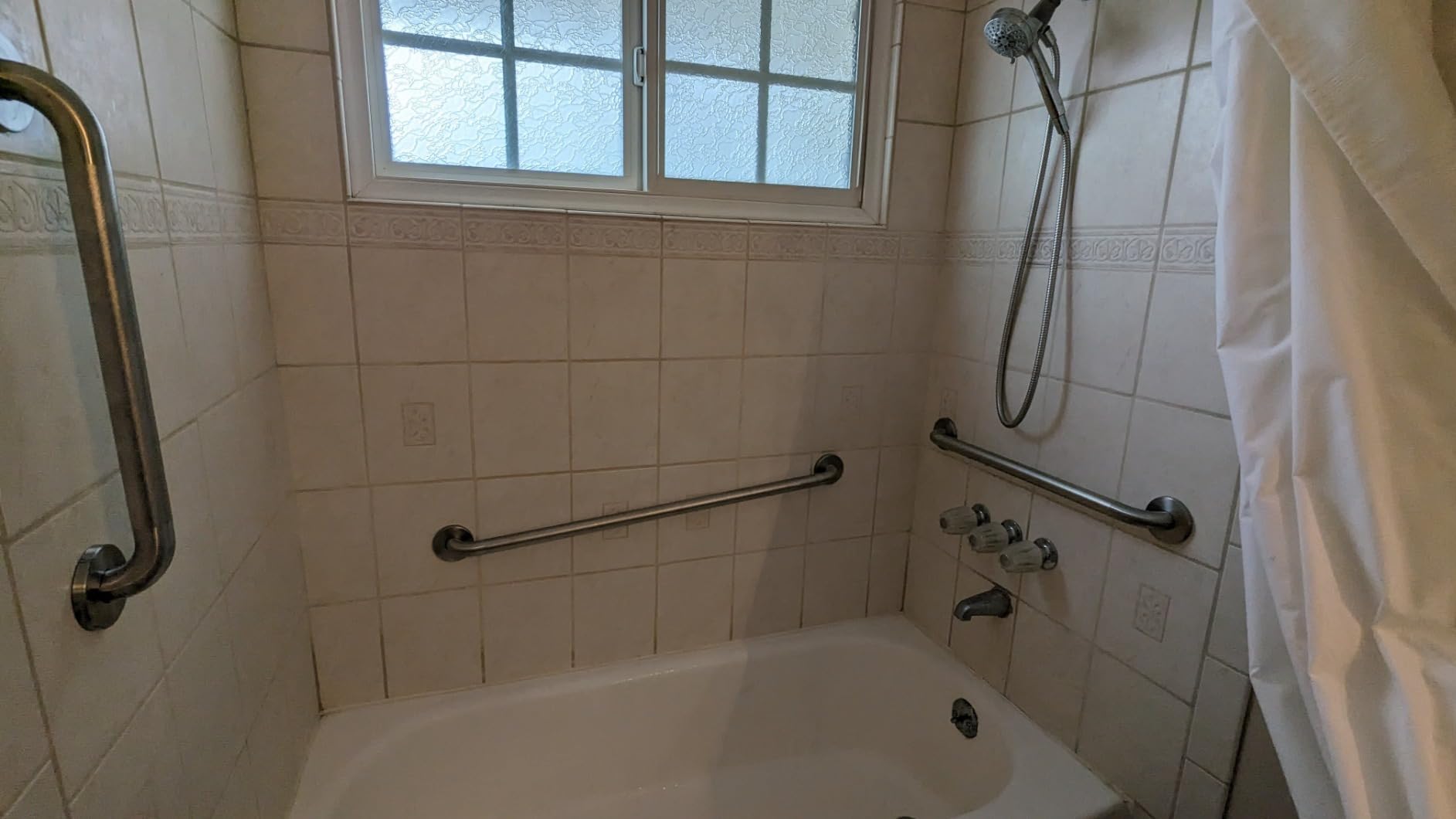
If your hand tires easily, the peened surface is often easier to hold than machined knurling because the texture is even rather than sharp. Several users prefer it for a bathroom with a lot of soap and shampoo buildup. For pure bite in a heavy pull, a knurled 16 or 24 inch bar has the longer lever arm.
This is an inexpensive add-on rather than a primary installation. Pair it with a longer bar on the shower wall so the user has a horizontal pull and a vertical push at the entry, which is the layout most three-bar kits produce. Users planning a heavier build should start with the 24 inch model instead.
Two 16 inch bars,1.25 inch diameter
304 stainless steel
Textured anti-slip mid-section
100 lb listed
Matte black is the finish that most reliably makes a grab bar disappear into a modern bathroom. It does not glare under recessed lighting the way polished nickel does, and it reads as a deliberate design element rather than an assistive device. The hardware in this box is also the most complete of any bar we looked at, with long screws, short screws, and expansion screws included.
Owners describe the bar as heavy-feeling, round, and easy to grip, and a good number of them use these well beyond showers, on stair railings and toilet transfer support. The cross-hatched mid-section adds grip in the middle of the span where a hand naturally lands.
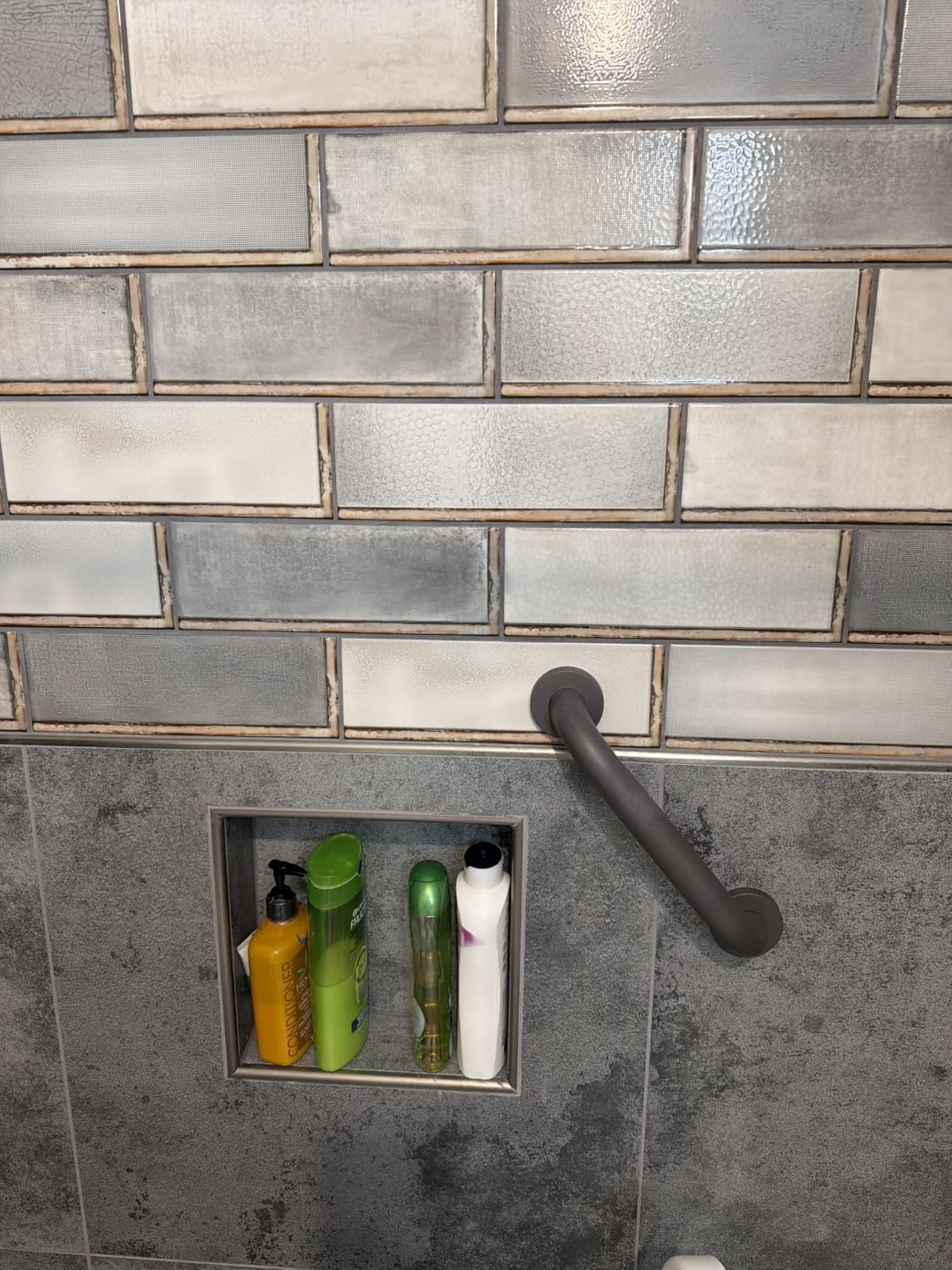
Here is the number to notice: the listed weight capacity on this product is 100 lb, while most of the field claims 500 lb. That does not automatically mean the bar fails, since real pull forces in a fall are much lower than body weight, but you should not treat a 100 lb listing as equivalent to a 500 lb one, and if the user in your shower is a larger adult, this is not the bar for them.
Two smaller issues. The decorative cover over the three-hole base fits loosely and does not stay put. And one buyer reported that the gold finish option arrived as a beige color, so if you are ordering gold, check the variant carefully.
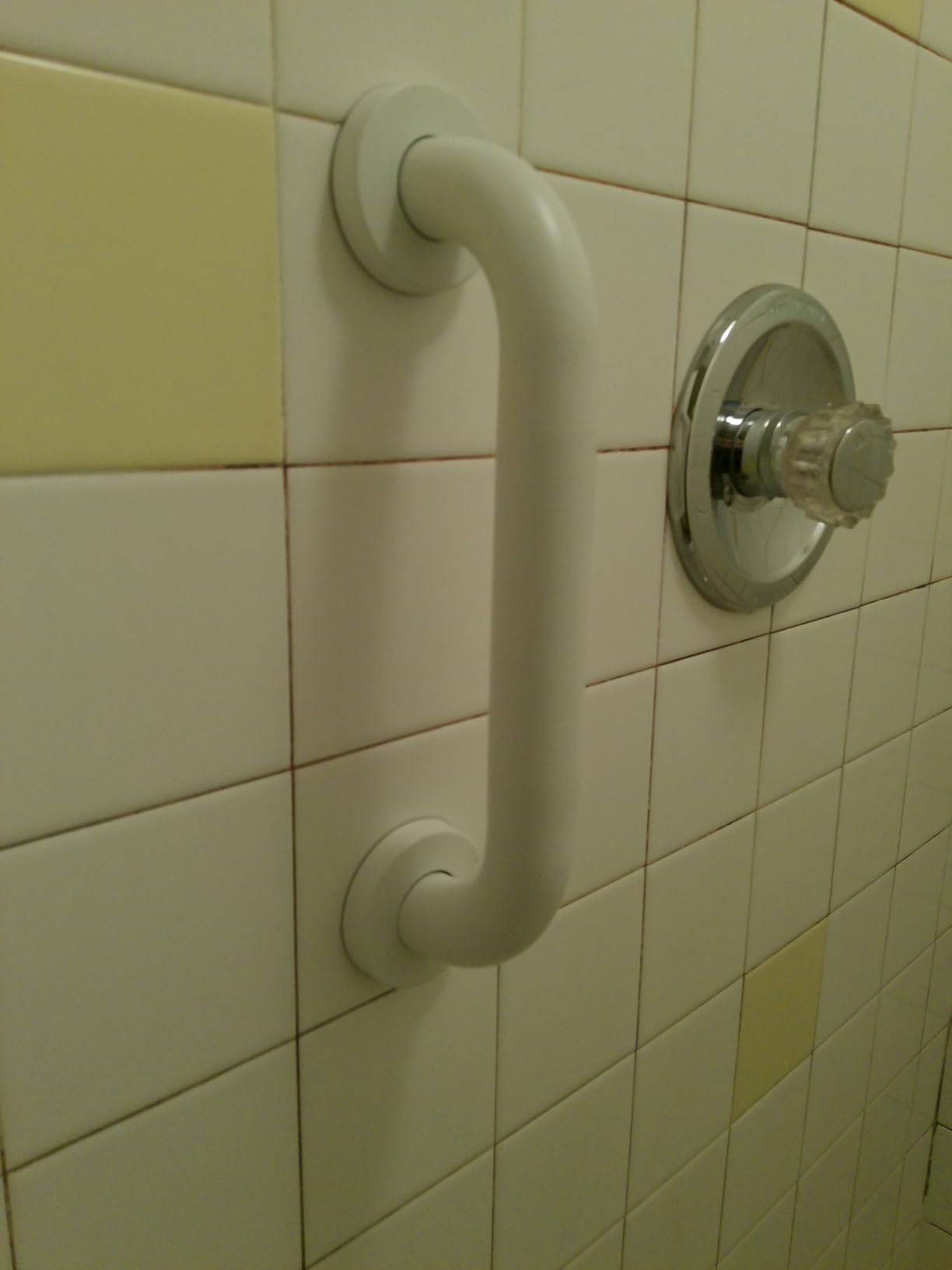
For someone who needs a handhold for balance while standing and transferring, not someone who intends to arrest a full fall, a 100 lb listing is adequate. The material is 304 stainless steel and the diameter is a full 1.25 inch, so the bar itself feels substantial. The rating gap is a labeling difference more than a demonstrated strength difference.
Heavier users should not. The frustration that heavier people report is being excluded by conservative ratings, and a 100 lb listing is exactly that exclusion written on the box. Choose a bar published at 500 lb if full body weight is the intended use.
Two 16 inch bars,304 stainless
Knurled grip
500 lb rating
Bench and chair support
Nearly every shower with a bench or chair in it eventually runs into the same problem: the user needs a handhold while transferring onto and off of the seat, and the seat is against the wall. These bars are marketed for that specific use, and a 16 inch knurled bar at the right height gives the seated user a fixed point to pull against during the transfer.
The 304 stainless body is rated to 500 lb, matching the strongest bars in the roundup, and the knurled surface does the same work it does anywhere else: giving a wet hand friction. The concealed screw design means the flanges cover the screw holes, which keeps a tiled wall looking finished.
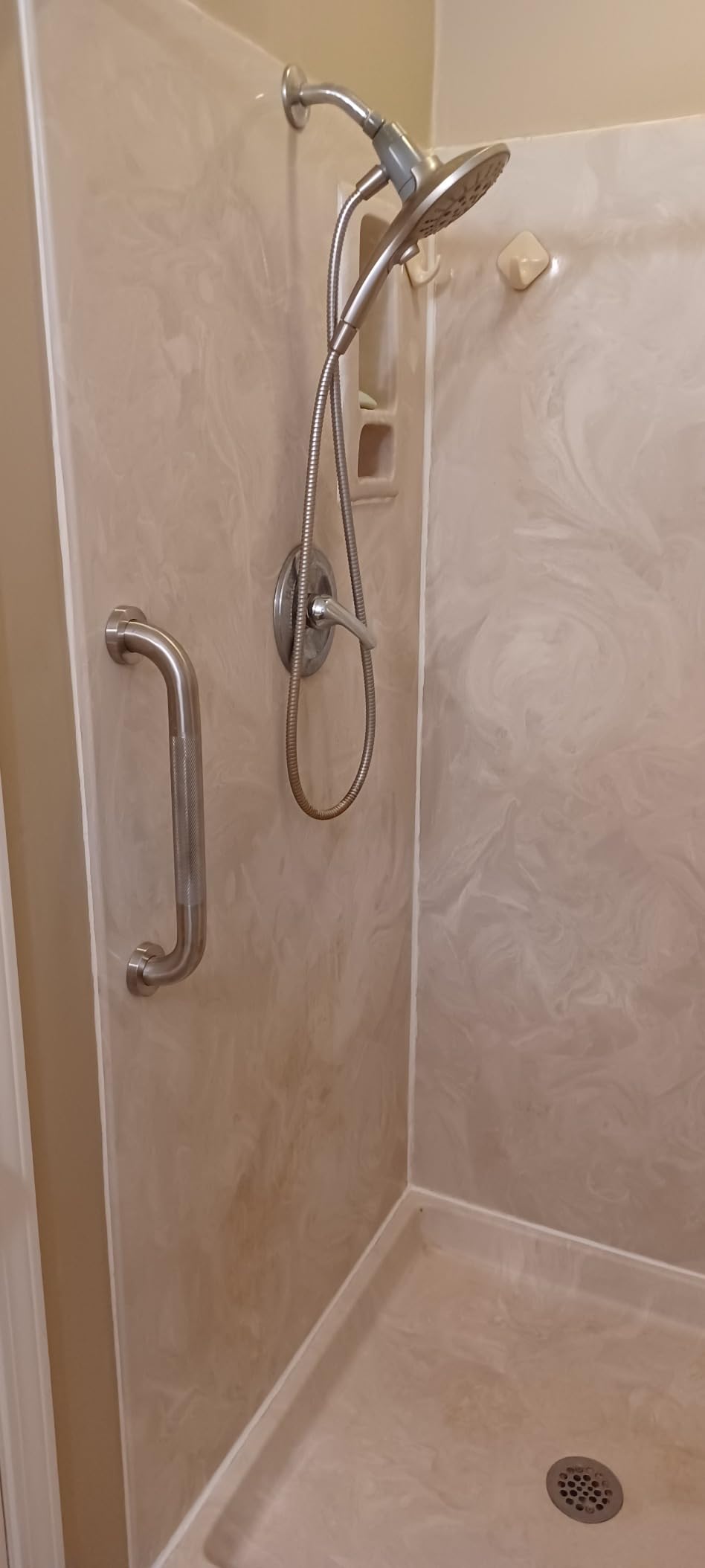
The tradeoffs are practical rather than safety related. It sits at the higher end of the price range for these two-packs, and it is available in only three colors, so matching a specific fixture finish is harder than with the seven-length catalog from the polished nickel pair. Buyers also report a lower sales rank than most rivals, which usually means less long-term field history to draw on.
Plan the position before you drill. A bar that sits where the bench needs to slide in is worse than no bar, because it blocks the transfer it was meant to support. Measure the chair’s travel path first.
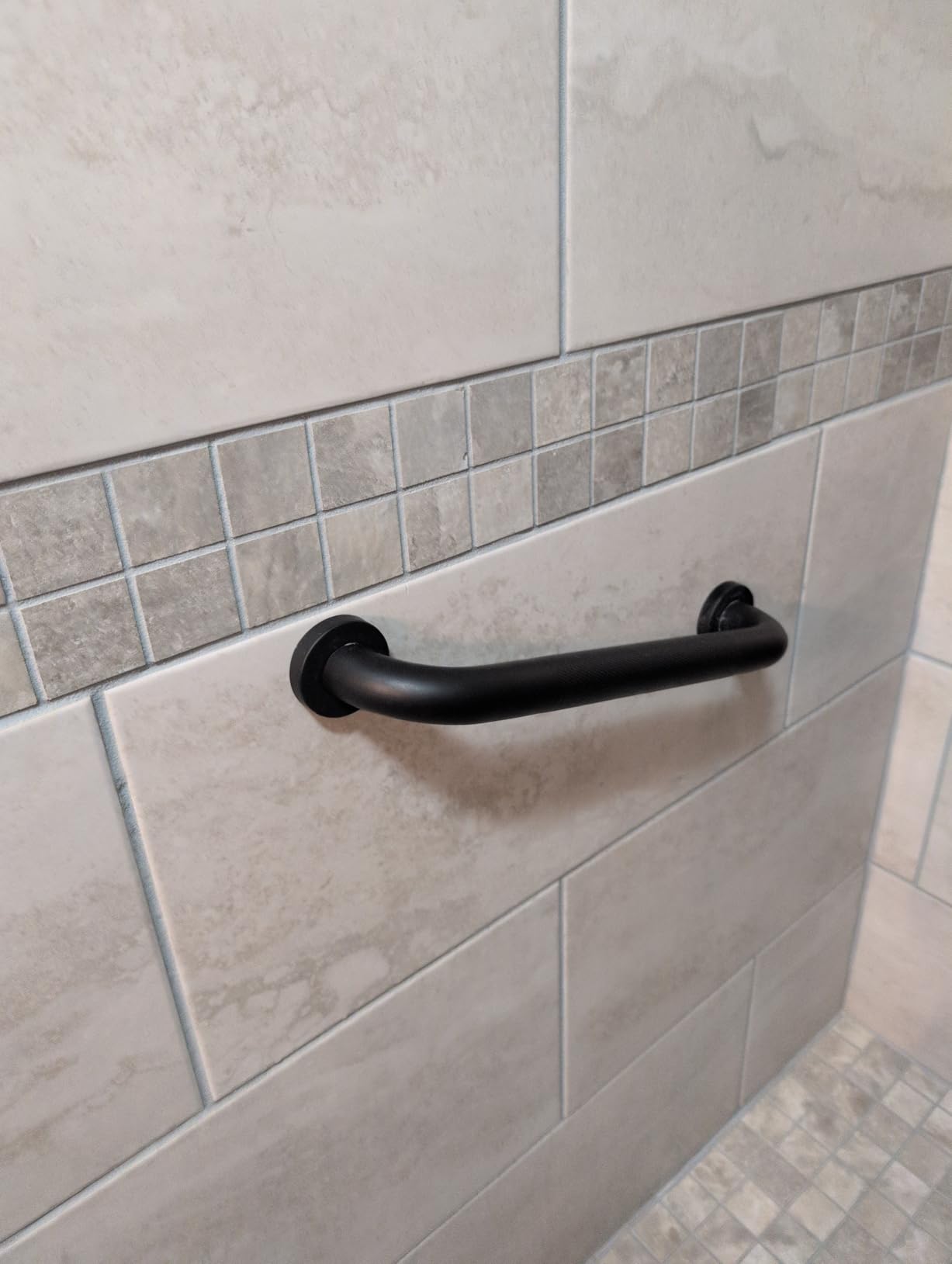
Seat a shower bench where the user can reach the wall without leaning, and place the bar on the adjacent wall at about 33 to 36 inches from the floor, high enough to pull from while seated and low enough to reach from a standing position. If the bench slides, the bar goes on the wall perpendicular to the slide, not along it.
A bar helps a user get onto a bench. It does not replace one. Anyone with limited standing endurance still needs a seat in the shower, and a non-slip mat or handheld head reduces the risk the bar is there to catch. If buying only one safety item, a bench plus a matching bar pair is the combination most therapists recommend.
Two 16 inch bars,Soft silicone grip
Five-finger anti-slip strip
Stainless and silicone,500 lb rating
This is the only bar here with a soft silicone handrail and a five-finger anti-slip strip, and for hands that cannot close hard on cold stainless it is a different experience. Buyers rate it very highly, with 82 percent five-star reviews, the strongest share among the non-Moen options.
It is 16 inches of brushed stainless with silicone, rated to 500 lb of pulling force, and it mounts at any angle with concealed screws. The same manufacturer offers 12, 16, 18, and 24 inch versions, so the grip is not tied to a single length.
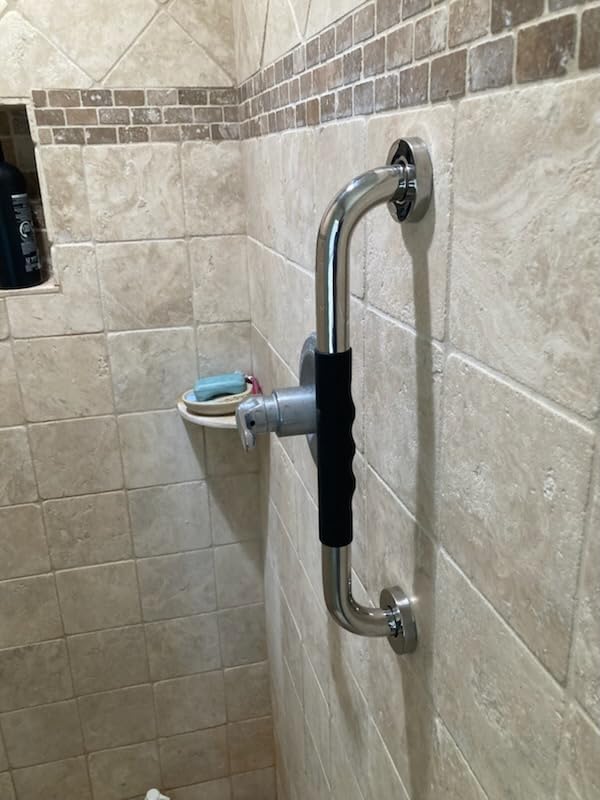
There is an honesty note in the product’s own documentation that we think matters: the manufacturer states the bar assists with part of body weight rather than all of it. That is a claim about intended use, and it lines up with how we would describe it. Treat it as a confidence and balance aid first.
Silicone also adds bulk, so the profile is larger than a plain stainless bar, and the styling is brushed stainless only, with no black or other finish if your shower is not brushed steel.
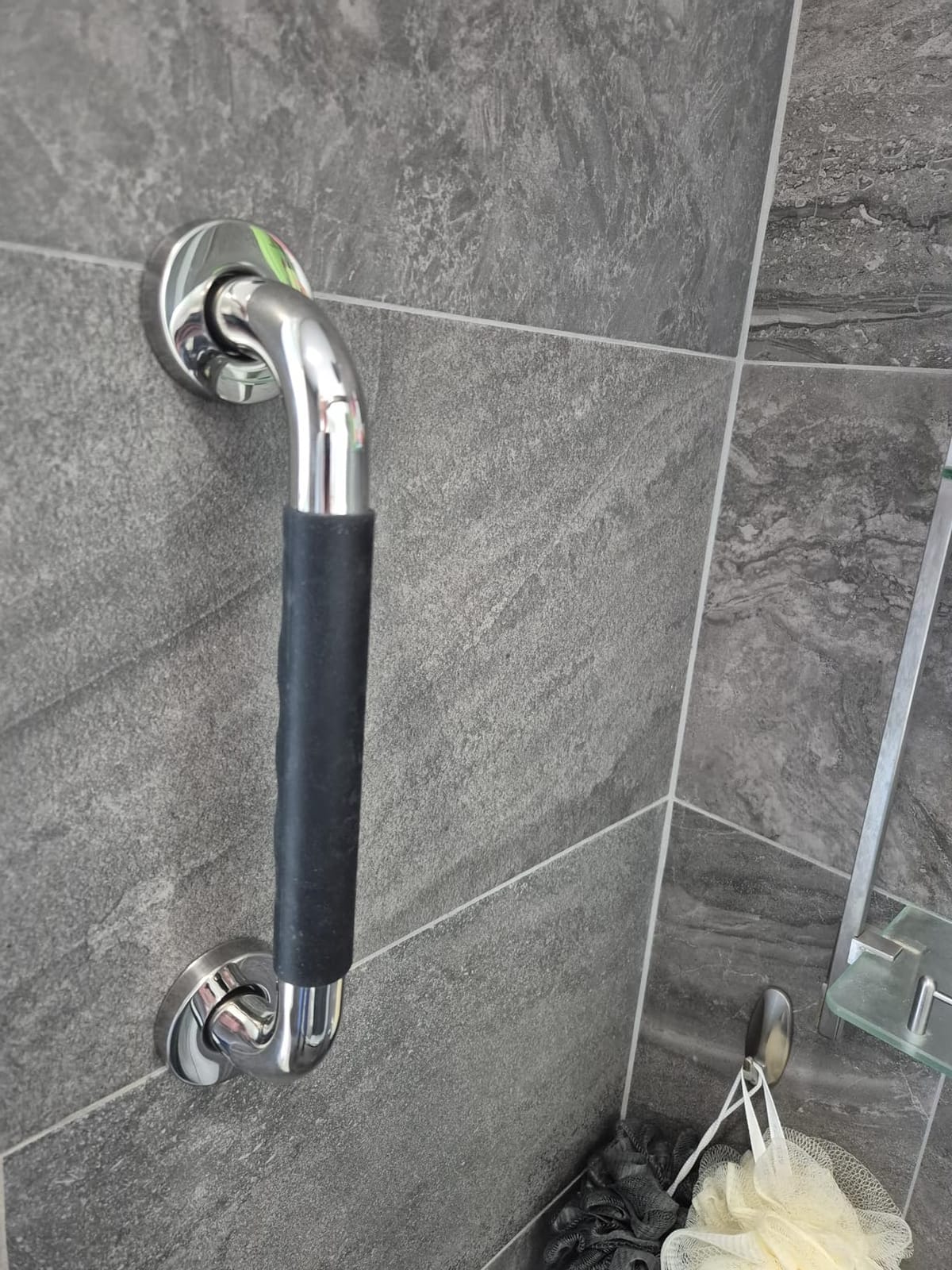
Rheumatoid arthritis, recent hand surgery, diabetic neuropathy, and advanced Parkinson’s all reduce grip strength, and for those users a harder surface can slip. A soft silicone contact patch increases the contact area and reduces the pressure needed to hold on. That is the case this bar solves well.
Do not build a primary support around a bar the brand describes as a partial-weight assist, especially for a user who weighs a lot. For full arrest of a fall, choose a full stainless bar published at 500 lb with a long lever arm and mount it into a stud.
24 inch bar,Curled finger-notch handle
500 lb into a stud
Brushed nickel
Lifetime warranty
The distinguishing feature is a curled handle with finger notches, and it is the best finger purchase of anything on this list. Instead of a straight cylinder you slide your fingers into a shaped recess, which means a hand that cannot squeeze hard still locks onto the bar. If grip strength is the limiting factor, this is the one to buy.
At 24 inches it distributes weight across a longer span, which is the geometry you want for a primary support. It is brushed nickel with a lightly warm gray metallic look that coordinates with Moen’s accessory line, and it carries the same limited lifetime warranty as the other Moen bars here.
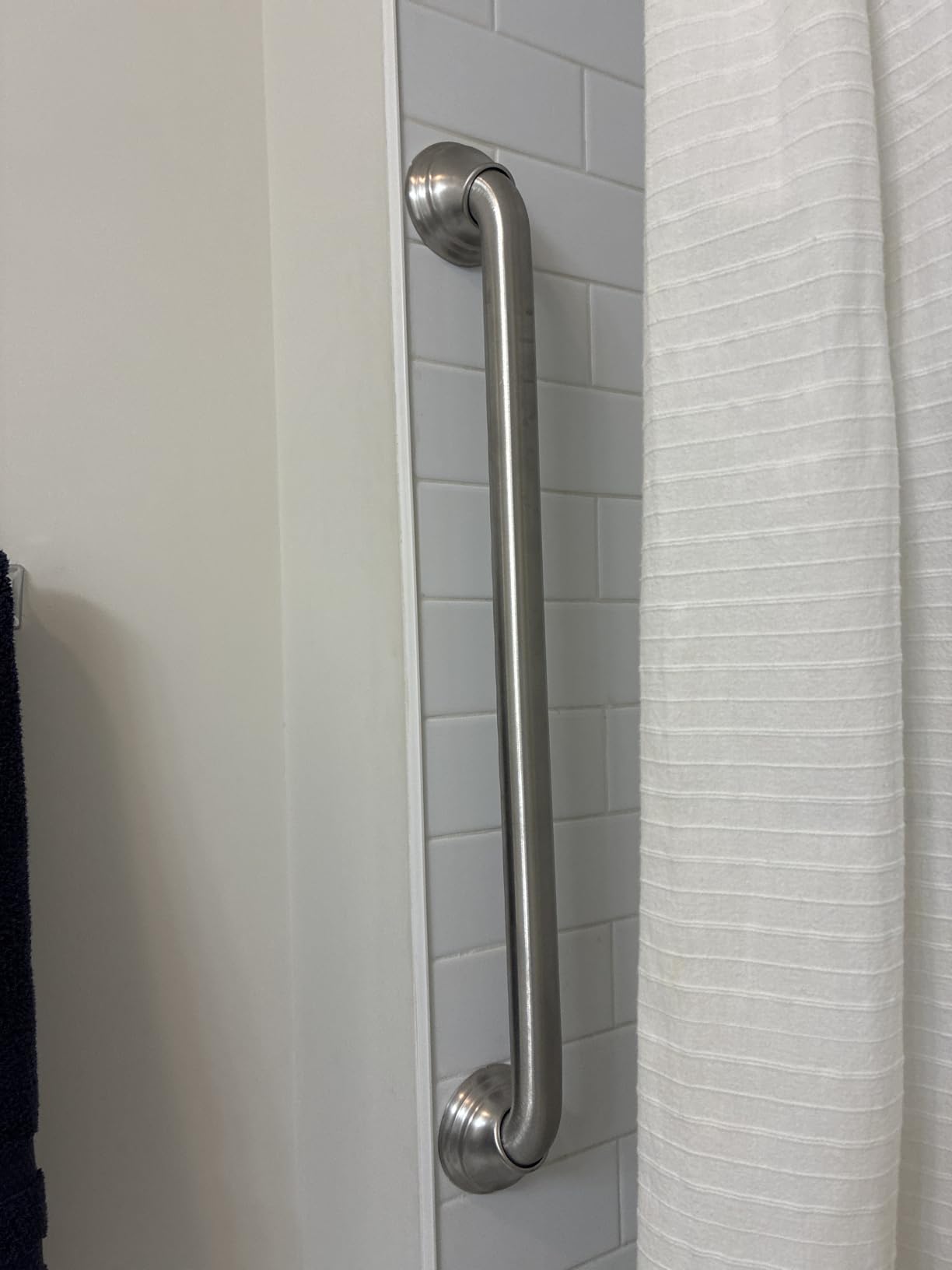
It is the most expensive bar in the roundup, and the finish range is narrow: chrome, brushed nickel, and old world bronze, all at 24 inches. If your shower needs a shorter bar or a matte black rail, this model does not cover that.
As with the other Moen bars, SecureMount anchors for hollow walls are a separate purchase. On a stud or in masonry, the included hardware is what you need.
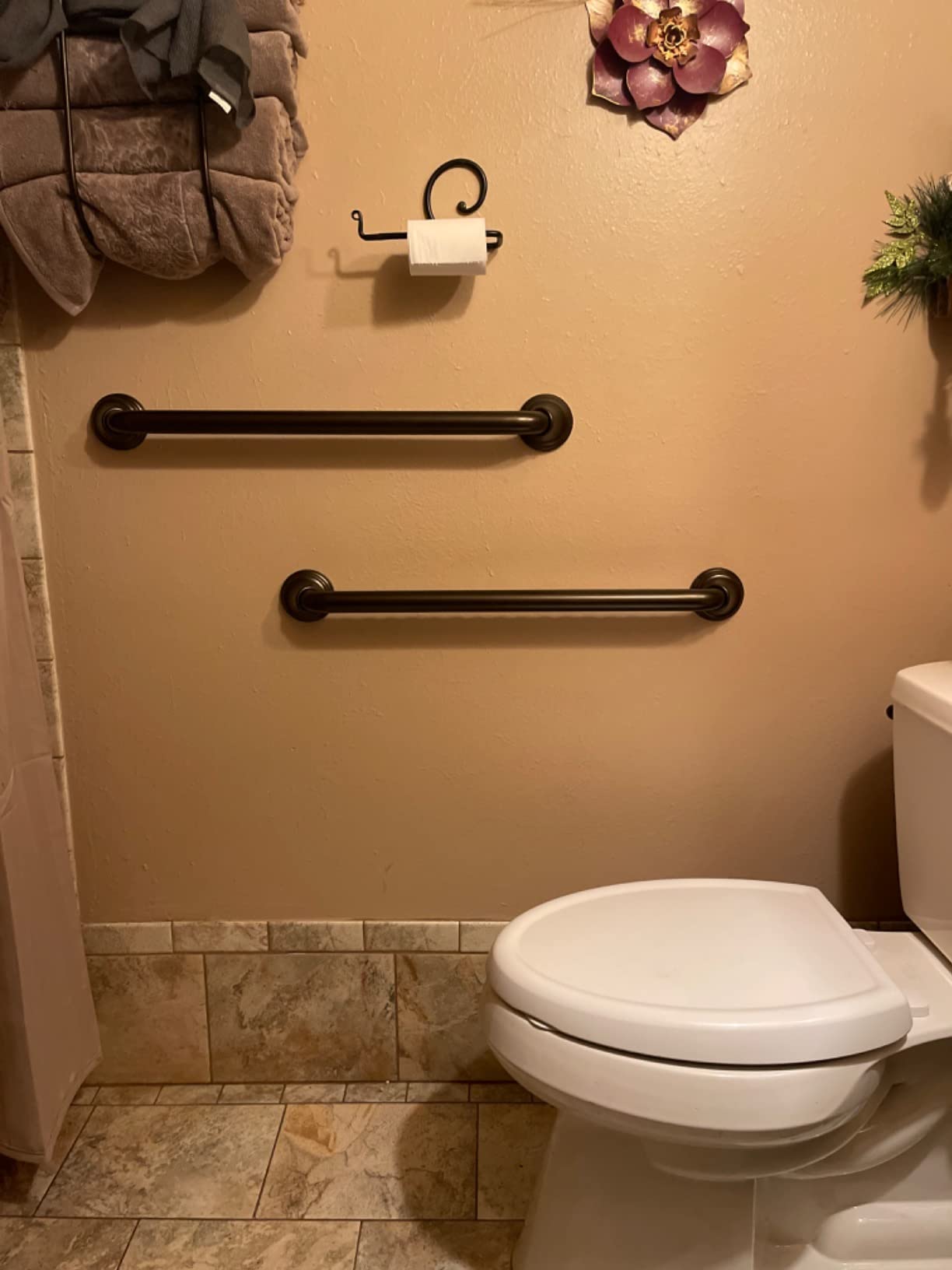
Brushed nickel is the easiest finish to live with in a busy bathroom because it hides water spots and fingerprints. Homeowners on Houzz threads on grab bar selection repeatedly recommend matching the rail to the fixture brand already in the room, and a curled designer bar in the same finish as the shower trim reads as a deliberate choice rather than medical hardware.
If hands are strong and the goal is a sturdy horizontal on the back wall, a straight 24 inch bar is indistinguishable in daily use. Spend the extra here when grip is the limiting factor, when the user will actually use the notches, or when the finish match matters more than the price difference.
The bar matters less than where it goes and what is behind the flange. A perfectly good 500 lb bar screwed into hollow drywall is worth very little, and a great bar placed where the hand cannot reach it is worth zero. Start with placement, then mounting, then finish.
Most shower accidents happen at two points: stepping over the threshold and turning around on wet tile. A three-bar layout addresses both. The first bar is a vertical bar at the entry, mounted on the wall face beside the opening, giving a push-up handle as the user steps in. The second is a horizontal bar on the back or side wall at 33 to 36 inches from the floor, the range used in ADA and ANSI guidance, giving a long pull for balance while standing. The third is an angled bar at 30 to 45 degrees near the entry, useful for a pull-up from a low seat or the floor.
Watch the clearance. Standard bars stand roughly 2 inches off the wall, and a full-length bar is often fixed with 8 screws, so leave room for knuckles and for a towel. If a bench or chair occupies part of the wall, plan its path before you drill so the two do not collide.
Length determines leverage. A 12 inch bar is a secondary handhold or a corner mount. A 16 inch bar works for most shower walls. A 24 inch bar is the right choice for a horizontal on a back wall or for a full-weight pull, because the longer span spreads the load. Thirty-two and 36 inch bars exist for double vanity walls and long tiled runs.
Diameter determines grip. The 1.25 inch bar is the standard full-size choice and suits most adults. A 1.50 inch bar is easier to hold for hands with limited grip, and a 1 inch bar suits smaller hands. Anything textured, whether knurled or peened, adds friction in a wet environment, and most of the stainless bars in this roundup offer both diameter and length options.
The 500 lb figure is a static rating: a slow, steady pull applied by a test rig. A real fall is dynamic, meaning the load arrives suddenly and peaks well above the steady value. That is why a 500 lb bar exists, and why nobody should be planning a rescue around a bar published at 100 lb, whatever the material is made of.
For body weight mapping, a 500 lb static rating leaves generous headroom for a fall involving an adult of any size, which is why heavier users are frustrated by 250 lb bars. The flip side is honest: no rating means anything if the rating assumes studs and you are in drywall. Users posting about this on r/My600lbLife are reacting to exactly that exclusion, and it is a fair complaint.
Find the studs first. In a tiled shower you cannot see the framing, so use a stud finder, knock on the wall, or check the layout before the wall was closed up. Standard spacing is 16 inches on center, and a three-hole flange often lines up with one stud and a blocking block. If the studs do not fall where the hand needs support, move the bar or add blocking behind the tile rather than reaching for a stronger anchor.
On hollow walls, use anchors specifically rated for grab bars. On tile, drill with a carbide or diamond bit and avoid the grout lines, because grout cracks and the waterproofing membrane underneath is easy to puncture. If the wall is tiled and the position is wrong, hiring a pro to add blocking is cheaper than replacing a membrane or a tile panel.
Finish is not cosmetic here, it is the difference between a bar that gets installed and one that sits in a box. Brushed nickel and matte black are the two easiest to coordinate with modern fixtures, and polished nickel suits a room with warmer brass and gold hardware. Stainless is the most forgiving because it reads as neutral against nearly everything. Match the grab bar finish to the shower trim at the specification stage, not later.
After installation, load each bar gradually with both hands before anyone depends on it. Check the flange for movement at the screws, not just the bar for flex. If you can rotate a flange by hand, the screws are not tight enough or the anchor is not taking the load. Once installed, a quick firm tug at each bar every few months is a reasonable habit, and any bar that has taken a hard hit should be rechecked immediately.
Renters and anyone in short-term recovery face a different constraint. A clamp-on tub rail or a tension pole is the honest answer there, and those products should be treated as a temporary supplement rather than primary fall protection. If you are planning a full remodel rather than a single bar, our walk-in shower breakdown covers the enclosure and threshold decisions that determine how much support you actually need.
Original Medicare generally does not cover grab bars as a standalone bathroom safety item. In some circumstances they may be covered when a physician documents a medical necessity and the bars are supplied as part of durable medical equipment in a qualifying setting, so the practical first step is a conversation with a doctor and a local supplier about whether your situation qualifies.
Most shower walls call for a 16 inch or 24 inch bar. A 24 inch horizontal bar on the back or side wall gives the longest span and the most leverage, while a 12 inch bar works best as a secondary handhold or a vertical at the entry. Match the length to the wall and to where the studs actually fall.
They work for the job they are sold for, which is light balance support on smooth non-porous tile. They are not structural. Our rule is simple: if falling would be the result of the bar releasing, do not use a suction product for that task. Textured or mosaic tile and grout lines also reduce suction reliability.
The safest option is a permanent bar with a 500 lb rating, mounted with concealed screws into a stud, blocking, or masonry, positioned at 33 to 36 inches from the floor. Strength comes from the wall behind the flange as much as from the bar, so verify the substrate before the bar goes in.
Yes, and they are temporary aids rather than primary fall protection. The main types are suction cup bars, tension pole floor-to-ceiling units, and clamp-on rails for tub surrounds. They suit rentals, hotel bathrooms, and short-term recovery, where drilling is not possible.
No single product makes a shower safe on its own. A permanent 500 lb bar paired with a shower bench or chair, a non-slip mat, and a handheld showerhead addresses more risk than any bar alone. An occupational therapist can assess the specific movements that are hardest for the person using the shower.
The Moen Home Care 24-Inch Stainless Steel Grab Bar is our best overall pick for the best grab bars for showers, because a 500 lb stud rating, concealed flanges, ADA compliance, and a lifetime warranty cover everything a shower bar has to do. Buy the Gotega 12-Inch 2 Pack if you want two bars for the price of roughly one premium rail, and pick a knurled or silicone model if wet grip is the harder problem.
Whatever you choose, install it into a stud at 33 to 36 inches from the floor, cover both the entry and the standing position, and give it a firm pull test before anyone leans on it. Safety rails are cheap compared with a single fall, and the version of the job you cannot redo is the one where a towel bar was the only thing within reach.