

A smart smoke detector is a smoke and carbon monoxide alarm that reports to your phone, names the room and type of danger out loud, and can be silenced from an app instead of by waving a pillow at the ceiling. Working alarms cut the odds of dying in a fire by more than half, yet a large share of homes still has at least one dead chirper nobody hears. If you want to know about a fire while you are at work, travel often, or sleep on a floor the alarm cannot reach, the upgrade is worth it.
Our team pulled seven connected alarms and compared sensing technology, power source, app reliability, ecosystem fit and the volume of verified feedback behind each one. The eufy Security Smoke Alarm E10 comes out on top: it is the smallest unit we tested, it runs on a five-year sealed lithium battery, and it meets the current UL 217 standard. The Kidde RGCUDR-RW with Ring takes the battery-only route with smoke and CO in one body, and the Kidde 30CUAR-W is the pick if you are rewiring a whole house.
Two entries need an upfront warning. The Google Nest Protect 2nd Gen remains the best-sounding smart alarm ever shipped, but the product line is closed and hardware on the market today is already several years into its ten-year service window. The Zooz ZEN55 is not a detector at all; it is a Z-Wave signalling module that makes alarms you already own report into a smart home hub. We include it because that is exactly the answer for Home Assistant users who refuse to replace certified alarms.
If you are outfitting a new build or an older home, our smart water leak detector guide covers the other half of the protection puzzle, and the radon detector picks matter if your basement is where you spend your weekends.


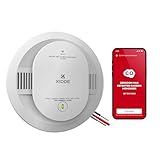
Every alarm below was checked for its sensing method, how it is powered, what it actually detects, and what it needs in order to send an alert. Two of them require extra hardware or a closed ecosystem, and we flag that in the notes rather than burying it.
| Product | Specifications | Action |
|---|---|---|
| eufy Security Smoke Alarm E10 |
|
Check Latest Price |
 Kidde P4010ACSAQ-WF Smart Smoke and IAQ Monitor Kidde P4010ACSAQ-WF Smart Smoke and IAQ Monitor |
|
Check Latest Price |
| Kidde 30CUAR-W Hardwired Smart Smoke and CO |
|
Check Latest Price |
| Kidde RGCUDR-RW Smart Smoke and CO with Ring |
|
Check Latest Price |
 Google Nest Protect 2nd Gen Wired Google Nest Protect 2nd Gen Wired |
|
Check Latest Price |
 Zooz ZEN55 Z-Wave Signal Sensor Zooz ZEN55 Z-Wave Signal Sensor |
|
Check Latest Price |
 First Alert SC5 Smart Smoke and CO Alarm First Alert SC5 Smart Smoke and CO Alarm |
|
Check Latest Price |
Diameter 70 mm
3.52 oz
5-year sealed lithium battery
UL 217 10th edition
656 ft range to HomeBase
The first thing I noticed after mounting one of these was how little of it was there. At 2.75 inches across and 1.08 inches deep, the E10 is roughly a third the volume of a conventional alarm, and on a hallway ceiling it reads as a small white disc rather than a plastic puck. That matters more than it sounds, because a smoke alarm you resent seeing every day is an alarm you eventually stop testing.
Detection is handled by a single sensor, and the listing states compliance with the UL 217 10th edition standard. That standard tightened requirements around nuisance-alarm resistance and component failure reporting, and an alarm that meets it has been through chamber testing rather than a marketing department. The siren is loud, and verified buyers consistently mention that the mounting bracket takes two screws and a level of confidence most people do not have on day one.
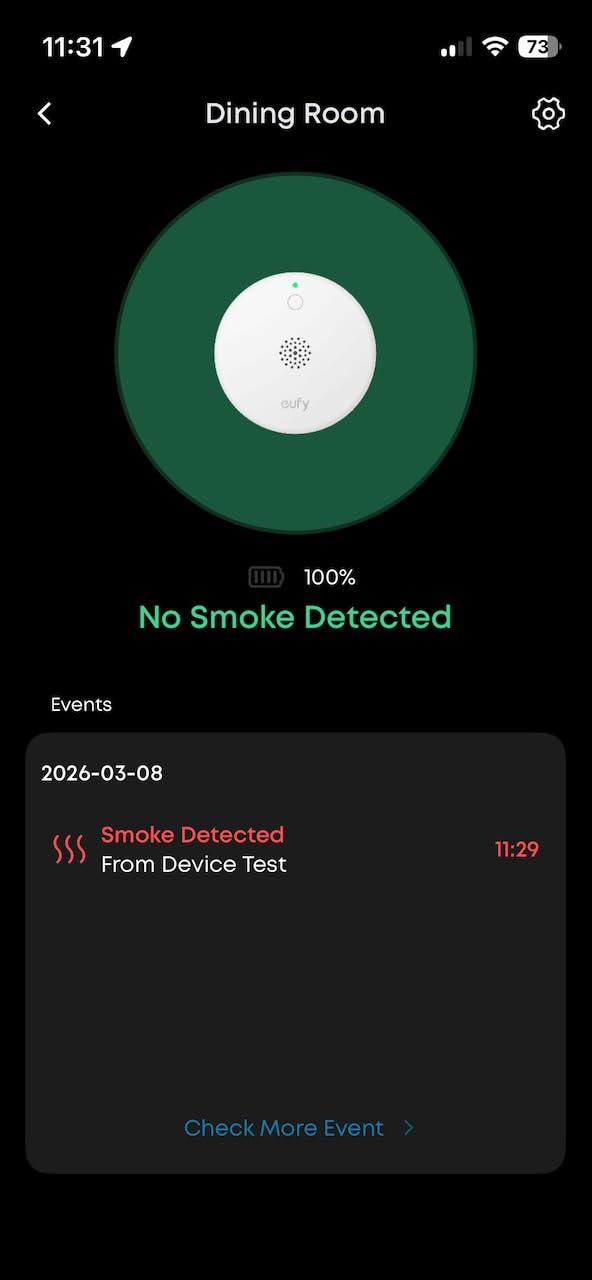
The battery is the other quiet hero. It is a sealed lithium pack rated for five years of continuous protection, so the E10 will not join the midnight chirping chorus that wakes up an entire house in February. When it does expire, you replace the alarm, not a battery in a ladder-mounted device you will never find again.
Range is measured against the eufy HomeBase, and the manufacturer rates open-air distance at up to 656 ft. In practice that number describes a clear line between the hub and the alarm, not a promise through three floors of plasterboard. Put your hub somewhere central rather than tucked in a utility closet.
The catch, and it is a real one, is that the E10 does nothing smart without a eufy HomeBase. HomeBase Mini, HomeBase 2, HomeBase 3, and HomeBase Pro are all supported, but the hub is a separate purchase and the alarm will not connect to Google Home, Alexa, SmartThings, or Home Assistant on its own. Buyers who already run one of those platforms should look at the Kidde models later in this list instead.
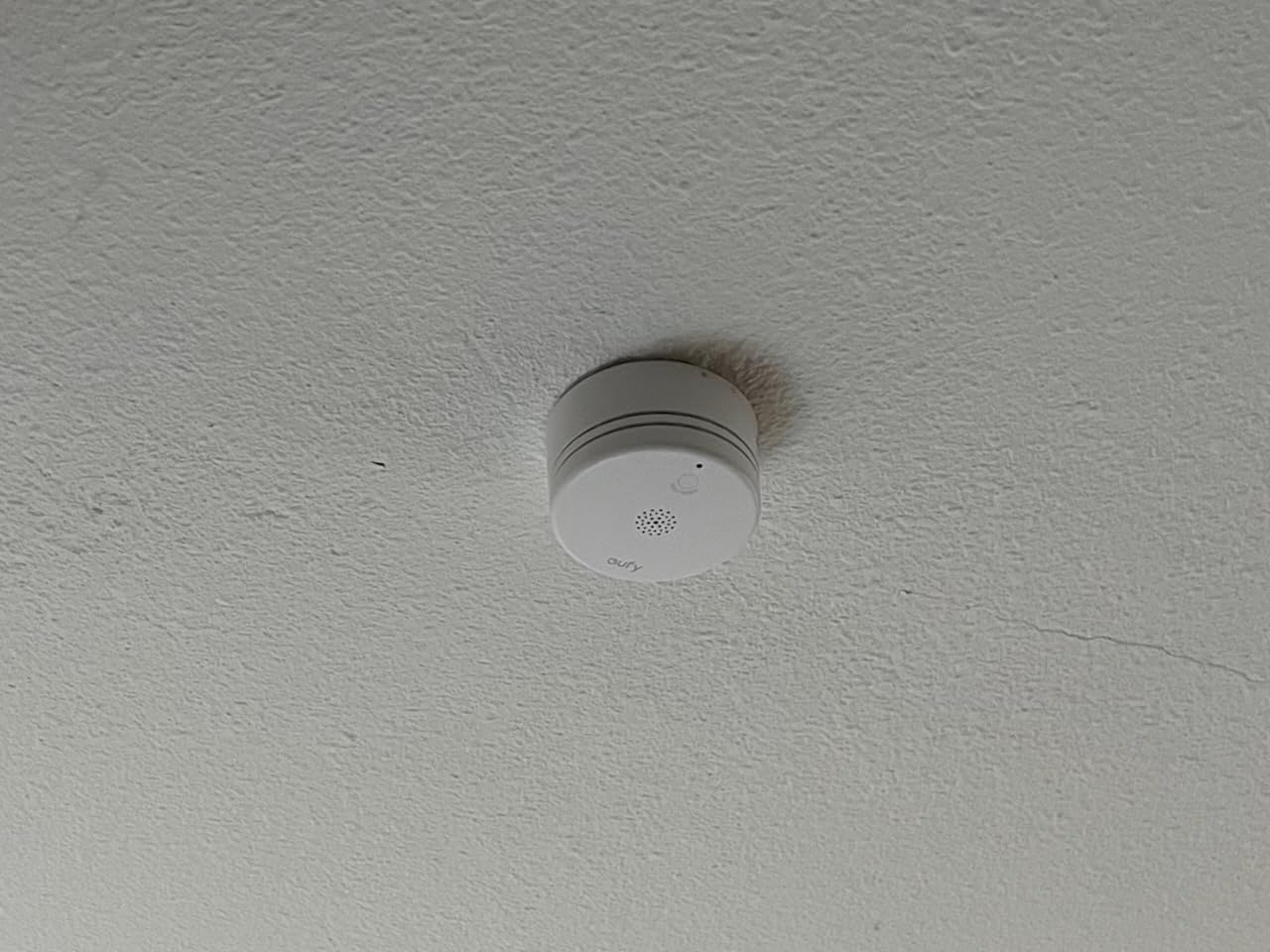
This is the one to buy if you are starting fresh, have no wiring in the ceiling voids, and want the least obtrusive object on the market to install. Apartment dwellers and renters fall into the same group. The 70mm footprint makes it a good bedroom alarm, where a bigger unit would be the first thing you take down to repaint.
It also suits anyone irritated by battery maintenance. A five-year sealed pack roughly doubles the interval between service visits compared with an AA-powered alarm, and low-battery warnings still arrive in the app.
Skip it if you need carbon monoxide detection. The E10 senses smoke only, and a home with a fuel-burning appliance, a garage, or a wood stove needs a combination alarm in a separate location regardless of what you install elsewhere.
Skip it if your household runs Google Home, Apple Home, SmartThings, or Home Assistant and you do not already own a eufy hub. Buying a second hub to make one alarm talk to your phone is a lot of hardware for a feature the Kidde units deliver natively over Wi-Fi.
Photoelectric sensor
Smoke plus TVOC and humidity
85-decibel alarm
Hardwired with AA backup
10-year limited warranty
Most connected alarms do one job. This Kidde does two: it watches for smoke with a photoelectric sensor and simultaneously tracks total volatile organic compounds and relative humidity, reporting both to the Kidde app. If you have ever wondered what is off-gassing from a new floor, a new couch, or a can of paint, this is the only unit in the group that will ever tell you.
Installation assumes existing wiring. It is corded electric, so it needs a junction box, and AA cells sit behind it as backup so it keeps warning when the power drops. The voice alarm distinguishes between a hazard, in which case it announces Fire, and a service condition, in which case it tells you to replace the alarm.
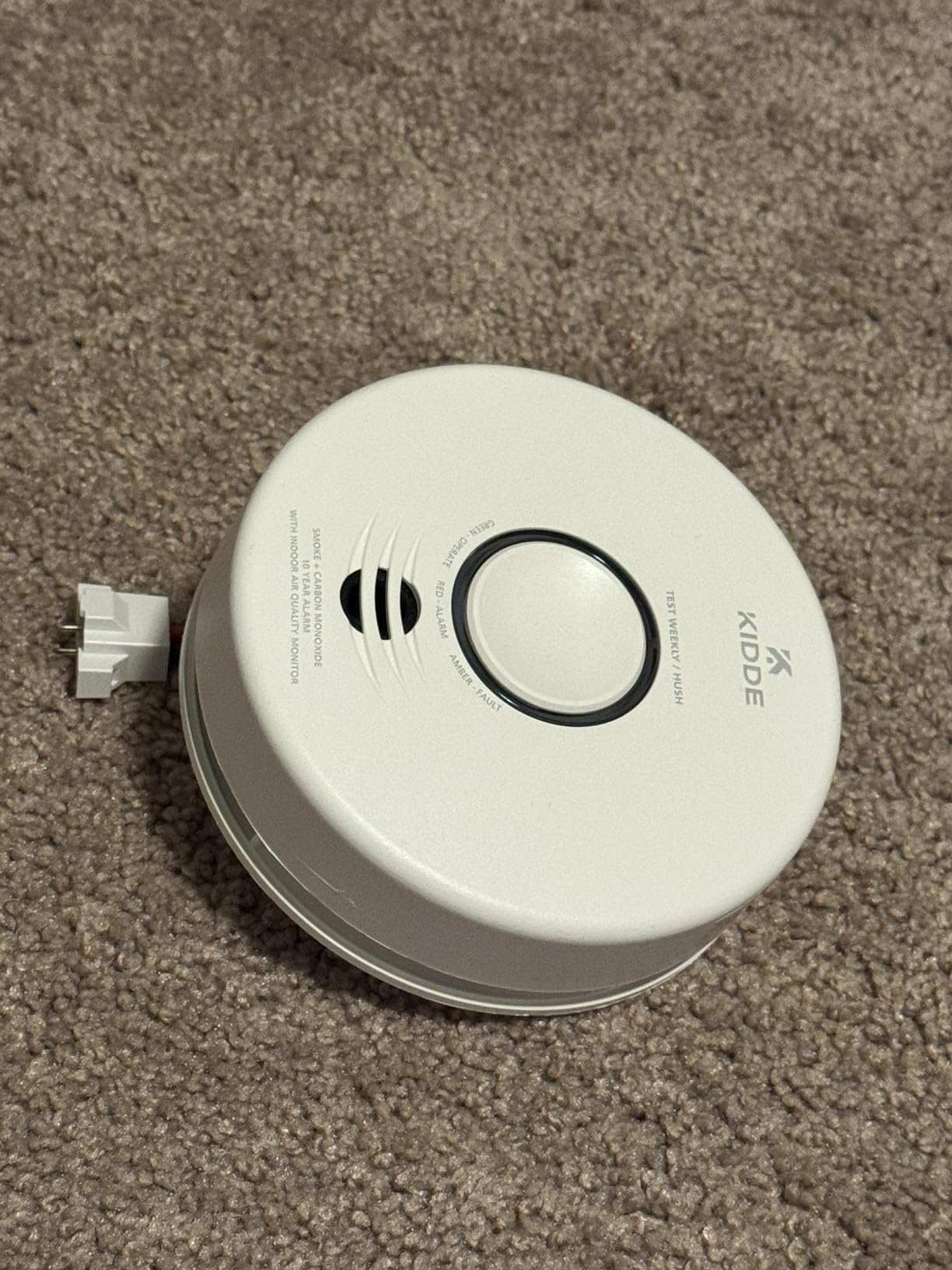
It is UL listed, and the listing describes it as the first UL listed device combining smoke detection with indoor air quality monitoring. The 85-decibel siren is joined by a three-colour LED, green for normal, amber for error, red for hazard, which is genuinely useful in a hallway at night.
Now the harder part. The review record on this model is polarised, sitting at 3.3 stars across nearly 200 ratings, with a large share of one-star feedback. The recurring theme is nuisance alarms: humidity spikes, cooking vapour, and aerosol cleaning products triggering full alerts. Some buyers report replacing the device only to find the replacement behaves the same way.
That history matters more than usual here, because indoor air quality monitoring is exactly the feature that can wander outside the alarm’s safe operating envelope. A unit reacting to a steamy bathroom or a VOC spike may be working as designed for the air quality half of the job while creating false events for the smoke half.
Buy it if you are already rewiring and you want air quality trend data alongside fire protection in a single box. New construction, a major renovation, or a home with a workshop or craft room in the basement are the cases where the extra data earns its cost in wiring effort.
It is also one of the few options here that needs no hub at all. Built-in Wi-Fi talks to the Kidde app directly, and it is listed as compatible with Amazon Alexa, Google Home, iPhone, and Android.
It is not a carbon monoxide alarm despite looking like one, so you still need a separate CO unit near any fuel-burning appliance or garage entry.
Skip it in a kitchen or near a humid bathroom, and think hard if anyone in the house is sensitive to false alerts. A nuisance alarm trains people to ignore the siren, and at a 3.3-star rating with repeated complaints about humidity and cooking triggers, that is this model’s central weakness.
Smoke and CO in one unit
Hardwired with AA backup
2.4 GHz Wi-Fi to the Kidde app
Wireless interconnect
UL 217 and UL 2034
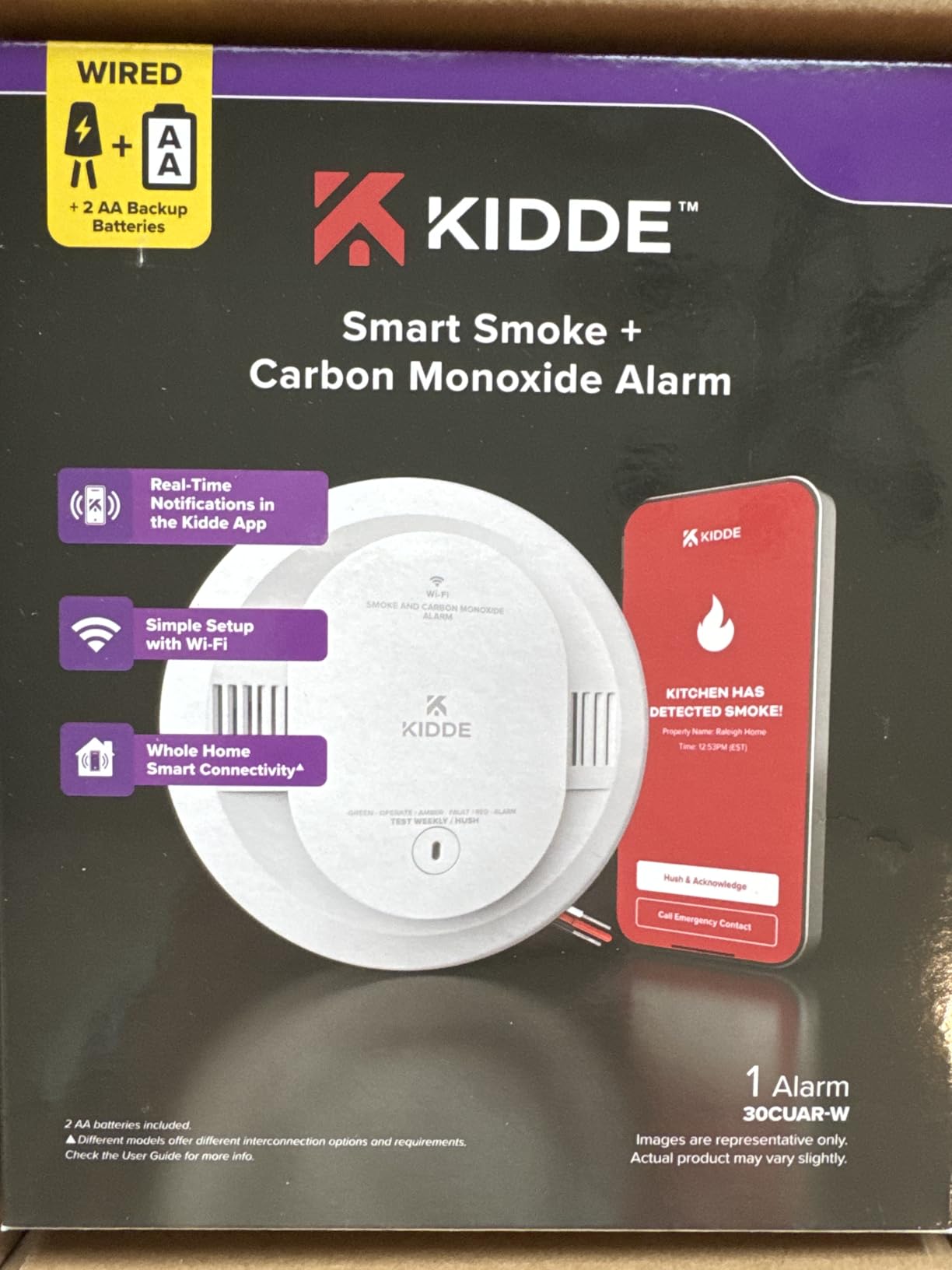
The 30CUAR-W is built for a house that already has alarm wiring, or for one where you are willing to have it installed. It is a hardwired combination alarm, meaning a photoelectric smoke sensor and an electrochemical CO sensor share one housing, with AA cells standing in when the line power fails.
Its most useful feature is architectural rather than electronic. One smart alarm in a wired system turns the rest of that system into reporting devices, so you get phone alerts for smoke, carbon monoxide, and low battery from upstairs even if the detector that triggered was in the basement. Interconnect is wireless between compatible Kidde alarms, which reduces the wiring work considerably compared with a purely hardwired chain.
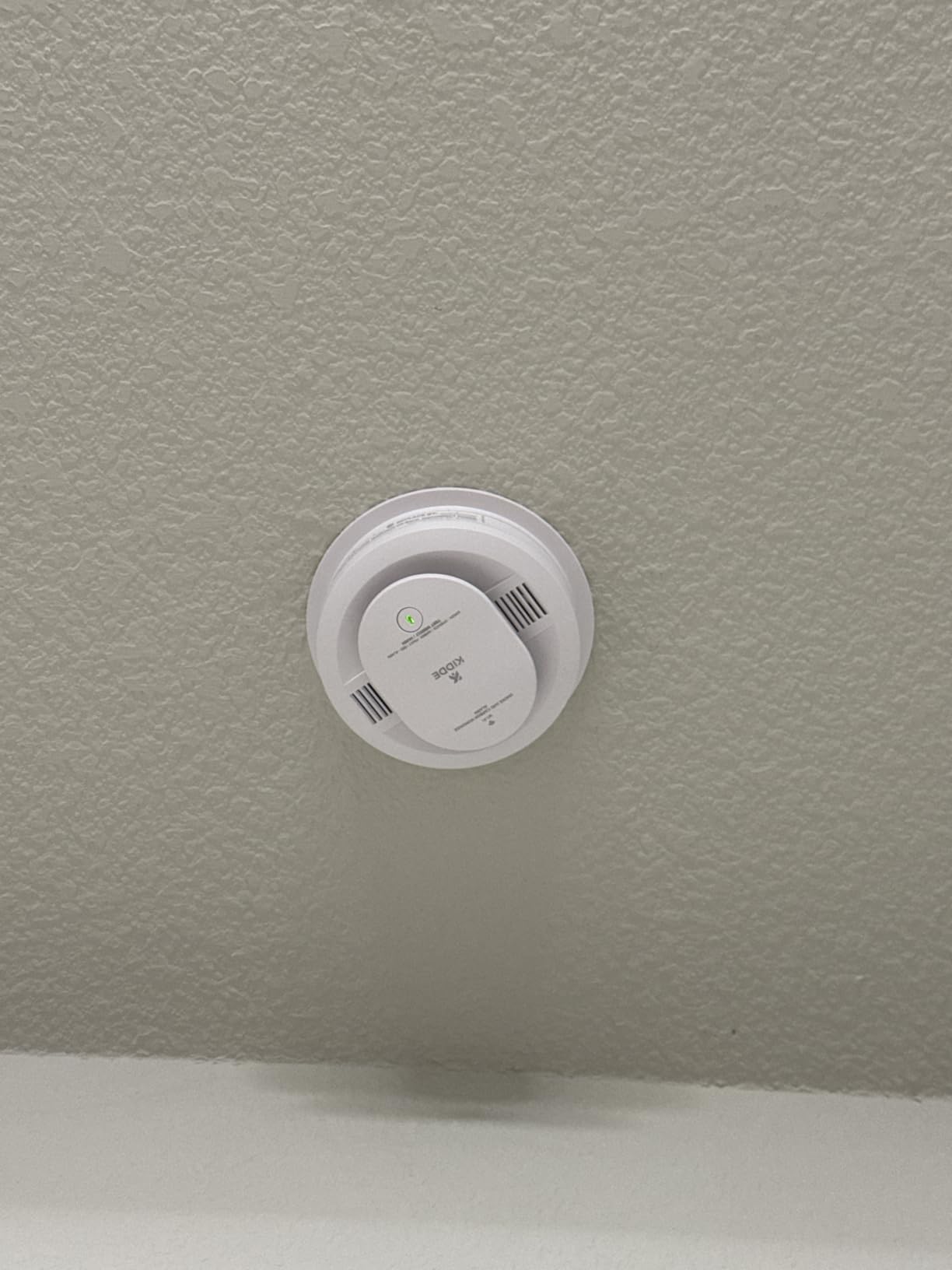
The company markets the sensing as three times more precise than a leading competitor and claims enhanced technology reduces cooking-related nuisance alarms. It carries UL 217, UL 2034, and FCC certification, and the interconnect feature means one alarm sounds throughout the home, which is exactly what people posting on r/homeautomation say they want from a whole-home system.
The rating sits at 3.7 stars across 195 ratings, with 54 percent five-star and 22 percent one-star feedback. Buyers like the app integration and the fact that no separate hub is required. Complaints cluster around false alarms and app connectivity dropouts, and the 2.4 GHz-only Wi-Fi requirement is a genuine limit on homes with modern dual-band or mesh-only routers.
Installation is the decision point. If you have a finished ceiling with no alarm wiring, this is a job for a professional, and forum discussions about retrofitting older homes consistently mention installers quoting a premium for that work. If the wiring is already there, it is a fifteen-minute swap per location.
Owners of multi-storey homes are the obvious audience. Interconnected alarms that all sound together, plus mobile alerts that reach you at work, solve the two problems a single hallway detector leaves behind.
It is also the right call for a rental portfolio or a basement workshop where CO is a genuine risk, since the CO sensor is built in rather than bolted on as a separate unit.
Renters without existing wiring should not buy this. A battery alarm gets you alerts in an afternoon; a hardwired retrofit in an apartment you do not own is not a decision you get to make.
Skip it if your router is 5 GHz only, since setup needs a 2.4 GHz network. And if your priority is a flawless app, read the one-star reviews first; connectivity complaints are the second most common theme in the feedback.
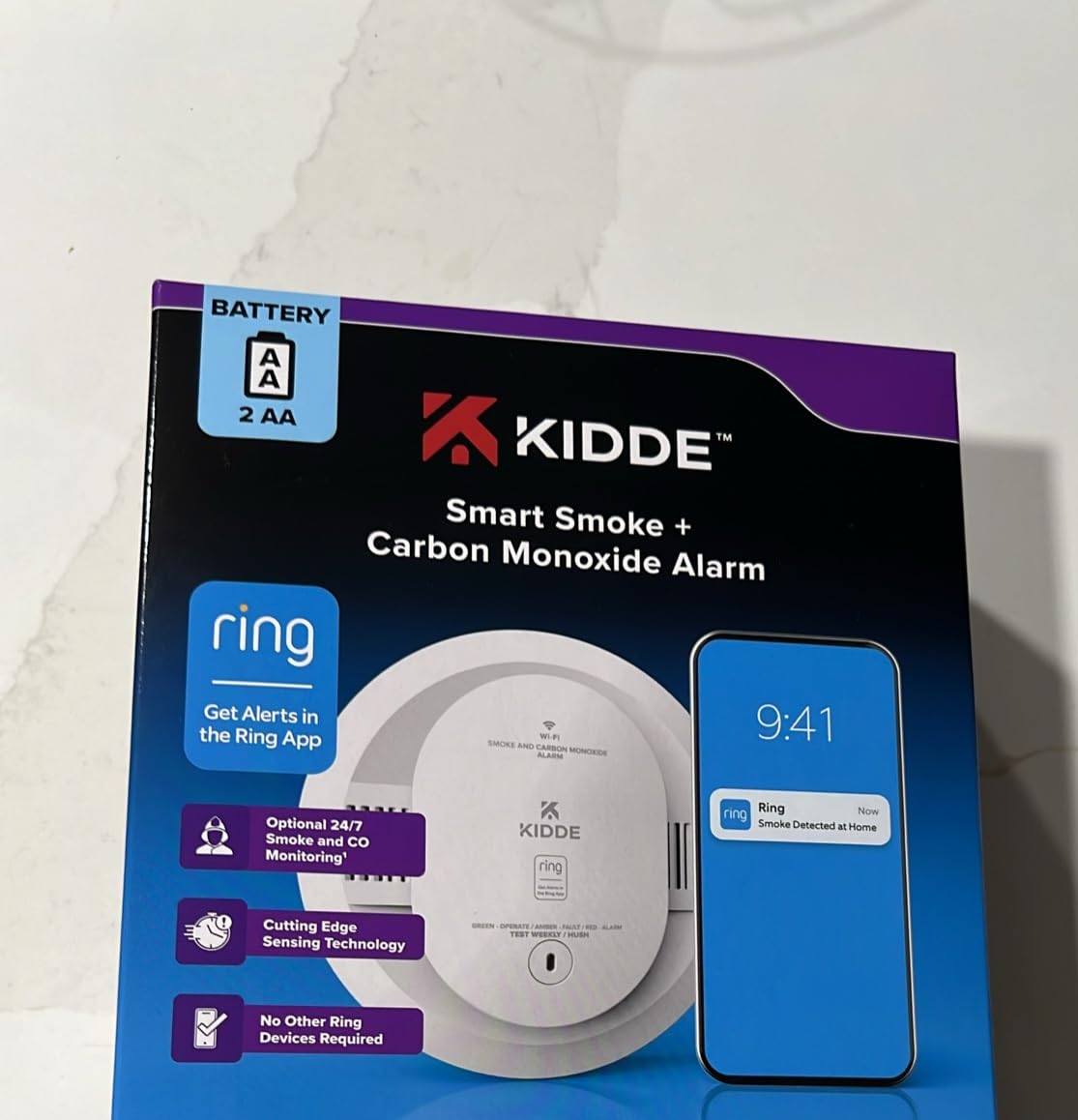
Smoke and CO dual detection
Two AA alkaline batteries included
Ring app alerts with no subscription
Wireless interconnect
Alexa compatible
The RGCUDR-RW is the most straightforward answer to a common question: how do I get phone alerts in every room without touching my wiring? It runs on two AA alkaline cells, which are included, and the housing is a battery-style unit you can mount or table-stand almost anywhere.
Detection is dual: a photoelectric sensor for smoke and an electrochemical sensor for carbon monoxide. The CO channel reports low-level readings to the app, so you get a warning trend before a dangerous concentration, which is far more useful than a single threshold alarm that either stays quiet or goes off at 2am.
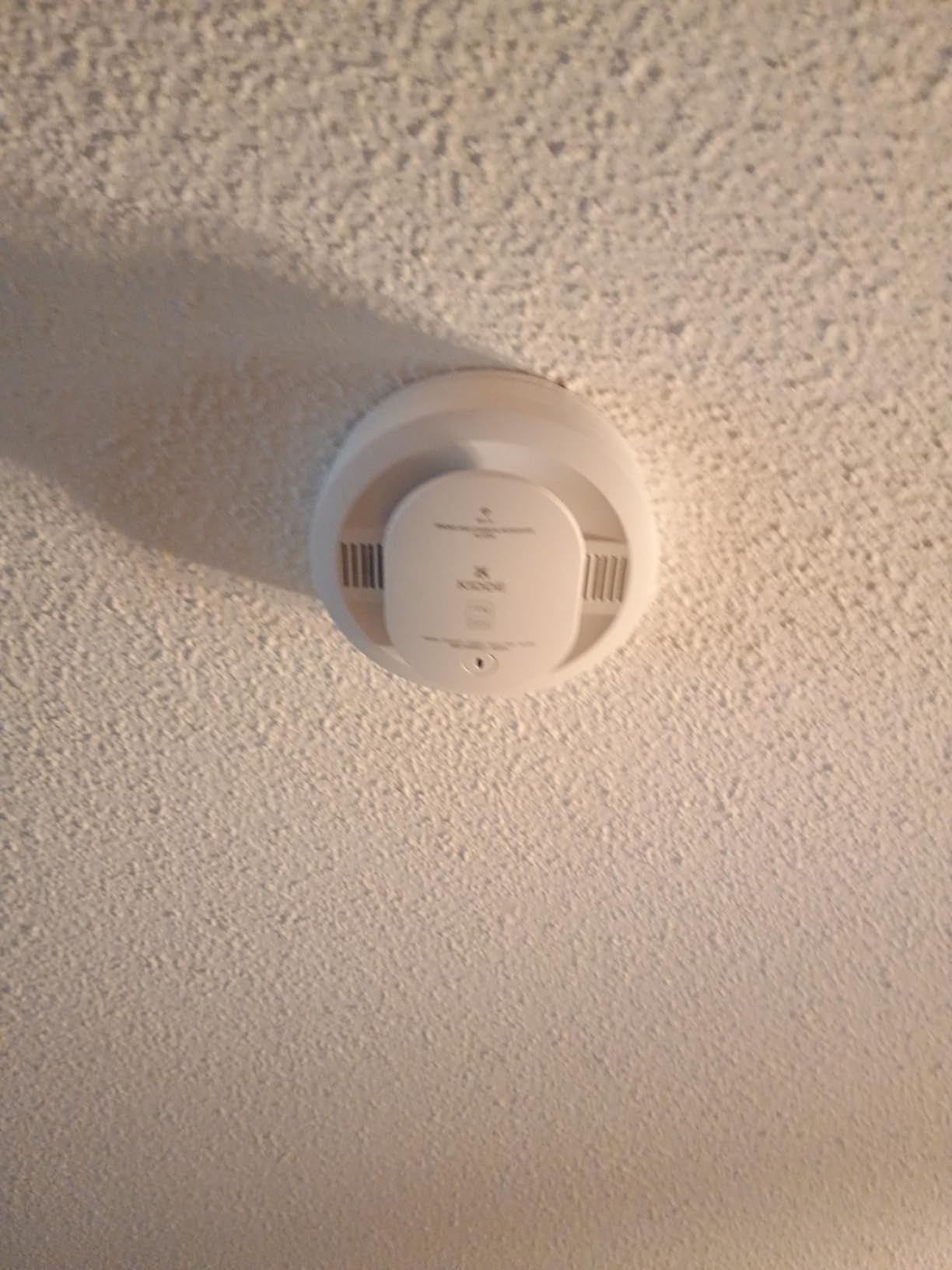
Alerts run through the Ring app and do not require a subscription. That distinction matters, because professional monitoring is available as an optional add-on, but the basic path, push notification, history, and low-battery warnings, works without paying anything. Alexa compatibility is listed for voice announcements.
This is also the pick with the deepest evidence base in the group: 4.3 stars across 426 ratings, with roughly 75 percent five-star feedback, plus steady demand in the Smoke and Carbon Monoxide Alarms category. Interconnection is wireless, so one alarm sounding brings the rest of your Ring-linked alarms with it across multiple floors.
The manufacturer claims detection 25 percent faster than a leading competitor based on internal testing. Treat that as a marketing figure, but note that the review pattern does not contradict it, and complaints centre on false alarms from cooking far less often than with the two-in-one air quality model.
This is the pick for renters, for landlords fitting out multiple properties quickly, and for anyone who wants smoke and CO coverage on every level in a single afternoon. Battery power removes the electrician from the equation entirely.
Ring users get the most out of it, since the alerts, interconnect, and history all live in the app they already have. Setup needs a 2.4 GHz network.
AA cells are the weak point. Two batteries twice a year, on every floor, is a recurring chore, and a chirp you did not hear last month is how alarms get ignored. Sealed lithium alternatives avoid that entirely.
If your household runs Home Assistant and you want local control rather than a cloud-mediated notification, the review pattern on Ring dependence is worth reading carefully. People asking for a detector that answers without a vendor cloud come up repeatedly on community.home-assistant.io, and this unit is not built for that.
Split-Spectrum photoelectric sensor
10-year CO sensor
Steam Check humidity rejection
Pathlight night light
Battery backup
Ask anyone who has lived with one which smart alarm they would put back, and the Nest Protect is usually the answer. It uses a Split-Spectrum photoelectric sensor to catch both fast-burning and slow smouldering fires, and the software layer is the best ever shipped in this category. Alerts distinguish a heads-up warning from a full emergency, name the room, and can be hushed from the app before you ever touch the ceiling.
Steam Check analyses humidity to suppress the shower false alarm that ruins so many otherwise good detectors. The Pathlight is a motion-activated night light that lights the hallway at a specific brightness, which is a real benefit for a child who gets up at night or an older adult navigating a dark landing. This wired model adds a battery backup for outages and carries a CO sensor with a ten-year service life.
And yet. The 2nd generation line is discontinued, and this is the single most important fact in this section. The review record reflects the consequences: 3.4 stars across 181 ratings, with roughly a third of feedback at one star, complaining that devices arrived several years old with much of their ten-year lifespan already spent. A smoke alarm is a ten-year purchase, and buying a five-year-old one halves its remaining value on day one.
Connectivity complaints appear too, with owners reporting units dropping offline or struggling to stay paired. The Google Home and Nest app split is another recurring irritation, since some functions moved between the two apps. If you are already deep in the Google ecosystem, the routines and voice integration are the best available; if you are not, there is no compensating advantage for accepting an aging device.
What are people replacing Nest Protect with? In practice, a hardwired combination alarm from a mainstream safety manufacturer that reports through its own app, or a battery unit like the Kidde RGCUDR-RW. Owners prioritising battery interval and app simplicity frequently point to X-Sense units, with the tradeoff that they sit outside Google Home, Apple HomeKit, and SmartThings entirely.
Buy one only if it is brand-new old inventory in a home you own for the long term and you are committed to Google Home. Mounted on 2.4 GHz Wi-Fi with a functioning account, it still produces the most useful alerts in the category.
The install is genuinely the easy part, since a standard Nest mounting bracket and wired power are most homes’ default.
Do not buy a second-generation unit today if you can avoid it. Ask the seller for the date code, and remember that sealed ten-year devices carry their manufacture date inside the housing.
It is also the wrong choice for anyone outside Google Home, for renters who cannot hardwire, and for households that need a unit whose firmware will still receive support five years from now.
Z-Wave Long Range module
Connects to existing wired alarms
Built-in signal repeater
Optional 120V relay
US support with 5-year warranty
Let us be direct about what this is, because the product itself is admirably blunt. The ZEN55 is not a smoke detector. It is a Z-Wave Long Range DC signal sensor that wires into the interconnect terminals of hardwired smoke and CO alarms you already own, then reports their status to a Z-Wave hub. The manufacturer states in the documentation that it is not a security alarm component and not a life-safety system.
That makes it the cleanest answer to a question that comes up again and again in Home Assistant circles: can I get local notifications from my existing certified alarms without a vendor cloud and without replacing every detector? Yes, and this is the device. Reports travel over Z-Wave to a hub such as Home Assistant, Hubitat, an Ezlo box, or SmartThings with a custom driver, which means your automations keep running when the internet does not.
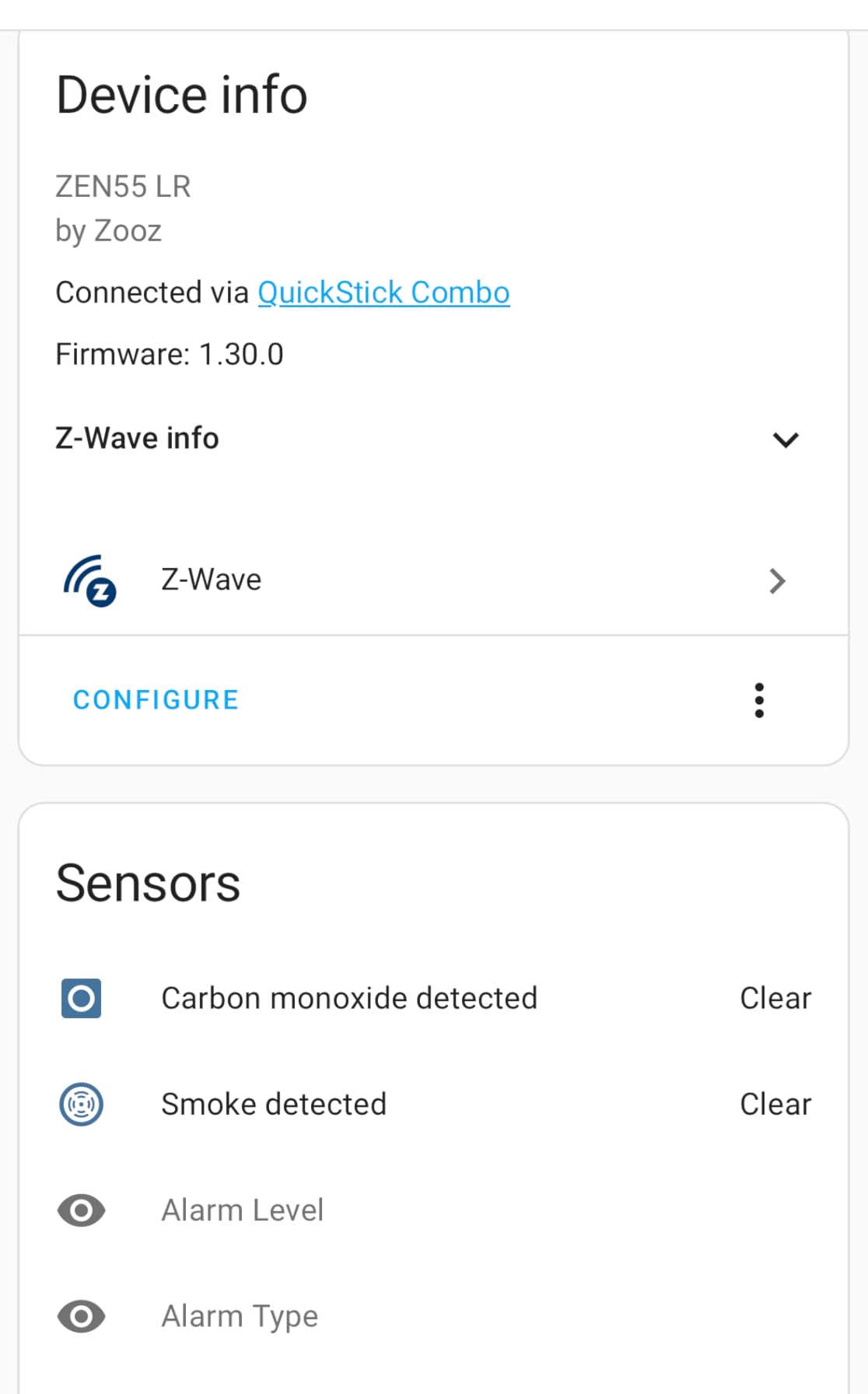
It is also the highest-rated item here at 4.9 stars, with 96 percent five-star feedback, though from a small base of 60 ratings. The hardware is sensible: a flush-mount enclosure, screw terminals, copper contacts rated to 10 A, pigtail wires included for easier fitting, and a built-in signal repeater that helps a Z-Wave mesh across a large house. An optional 120V relay gives control over lights or an external siren.
Installation is electrical work at the alarm terminals, and the documentation flags it as an advanced device that may interact with local regulations. It also implies a critical point for readers: a signalling module is a reporting accessory. It adds no detection capability, and the alarms it monitors must already be certified and correctly placed. If your existing alarms are ten years old, replace them; this does not extend their life.
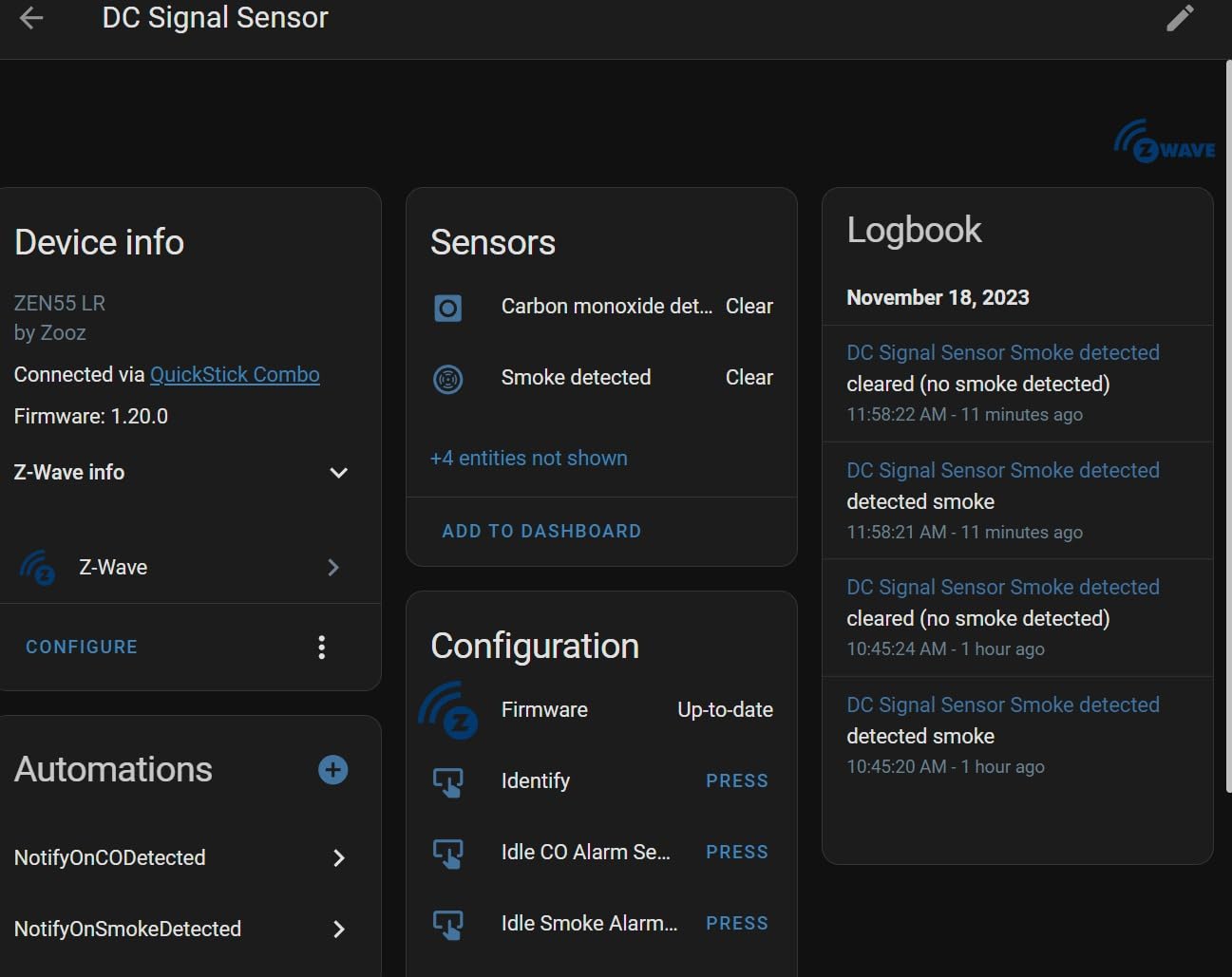
This is for people who already run a Z-Wave network, already own good hardwired alarms, and want them visible in Home Assistant or Hubitat alongside their other sensors. Support is US-based for the life of the product, with a five-year warranty when registered.
Large homes with Z-Wave mesh coverage problems are the second group, since Long Range support and the repeater function address exactly that.
Do not buy it as your first smoke alarm. There is no sensing technology in this box, and a signalling module cannot substitute for a detector in a room.
It is also the wrong tool for anyone without hardwired alarms to connect to, and for people who want plug-and-play setup. Pairing it with a real detector from this list, a hardwired combination unit, gives you local control without giving up life safety.
Smoke and CO in one unit
CR123A lithium powered
Fits existing Nest Protect brackets
First Alert app alerts
Wireless interconnect
The SC5 exists for a specific problem: houses that installed Nest Protect now need a replacement on the same bracket. It is designed to mount on existing Nest Protect brackets, which turns a wiring job into a swap, and it reports through the First Alert app rather than the Nest app.
On paper it covers the essentials. Smoke and CO in one housing, CR123A lithium power rather than AA, voice alerts with a heads-up warning that names the danger type and location, interconnect with other compatible First Alert alarms, and low-battery notifications that arrive before the midnight chirp. Precision Detection Technology is the manufacturer’s answer to nuisance alarms, and a hardwired variant exists for the same system.
The execution is where the problem lies. This is the lowest-rated product in the roundup at 3.2 stars, but it also has the largest review count at 586 ratings, so the signal is statistically solid rather than a small sample. Roughly a third of feedback sits at one star, covering false alarms, daily offline and online notifications, build quality that reads as cheaper than the Nest hardware it replaces, and units that are hard to silence.
Migration friction is real too. Moving from Nest means a new app, a new account relationship, and losing the routines and voice integration people built around. Several buyers describe the transition as a downgrade rather than an upgrade, and the absence of a Pathlight-style night light is a specific complaint from upgraders who miss it.
With that context, the SC5 is defensible on one narrow basis and hard to justify otherwise. If you have Nest Protect brackets, you want smoke and CO in one unit, and the alternative is rewiring, the mechanical compatibility is real value. If you are starting a new installation, a Kidde unit with a better review profile is the better buy.
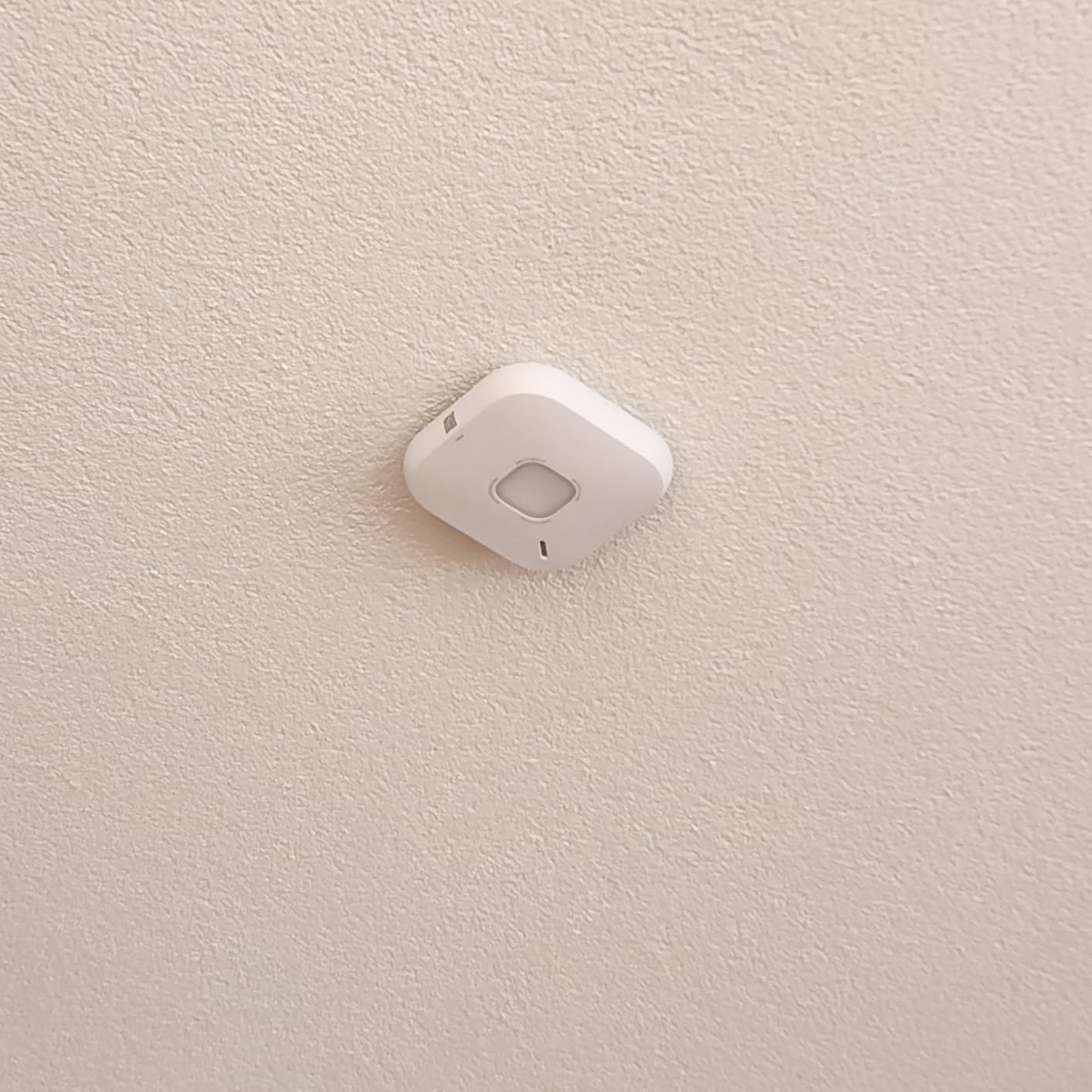
Homeowners with existing Nest Protect mounting points who need a quick in-place upgrade to a combination alarm, and who are willing to move to the First Alert app. Lithium power means far fewer battery changes than an AA alarm.
It is also a reasonable option if you are consolidating onto one First Alert system and want interconnect across the house.
Do not pick it as a like-for-like Nest Protect replacement on features. The alert experience, the app, and the false-alarm record all step down, and the one-star volume is too large to wave away.
Skip it entirely in a kitchen-adjacent location if you are sensitive to nuisance alarms, and skip it if you rely on Google Home routines for your alarm response. At 3.2 stars it is the weakest recommendation in this roundup, included because bracket compatibility is a genuine constraint for some homes, not because it is the strongest detector.
A smart detector does three things a conventional alarm cannot: it tells you what triggered it, it tells you where, and it lets you silence it from elsewhere. Everything else is about making sure the parts you cannot see still work. The decisions below are the ones that separate a system that helps from one that adds a phone app to a cheap alarm.
Photoelectric sensors respond to smoke particles from smouldering fires, which is how most fatal home fires begin. Ionization sensors react faster to the flaming stage and are more sensitive to open flame, but they are more prone to nuisance trips from cooking aerosol and humidity. Dual-sensor and multi-criteria designs run both, or evaluate smoke density against rate of change, and then filter out slow build-ups that are not emergencies.
For residential use, the practical answer is photoelectric or multi-criteria. Of the seven products here, five use photoelectric sensing, and the two combination alarms pair it with an electrochemical CO cell. If false alarms have been your problem, sensor type is the first thing to change, not the app.
Do check the certification mark, not the marketing. UL 217 sets the standard for residential smoke alarms, and the 8th edition, effective mid-2024, tightened nuisance-alarm resistance and component failure reporting. The eufy E10 is listed against the 10th edition. An alarm with any UL Listing meets the current bar; a smart feature never substitutes for the mark itself.
This question surfaces constantly in search, and the honest answer is that the two brands compete in different places. First Alert is stronger on the Nest compatibility story and on bracket continuity, which is why its units show up as drop-in replacements in homes that installed Nest Protect. Kidde is stronger on breadth, review volume, and ecosystem options, with separate models for battery, hardwired, air quality, and Ring.
Look at the ratings within those niches rather than the brand average. The First Alert SC5 in this roundup carries 3.2 stars across 586 ratings. The Kidde RGCUDR-RW, also a combination smoke and CO alarm, carries 4.3 stars across 426 ratings. Same category of product, same job, and a large gap between them.
So: choose First Alert when bracket compatibility or an existing First Alert system decides it. Choose Kidde when you are starting fresh, when you want a specific power source, or when you want the option of Ring, Alexa, or Google Home without a second hub. For overall reliability on the evidence available, the Kidde models are the stronger buy.
Hardwired units with battery backup are the better long-term choice where you can afford the install. They never run flat, they are the model most local building practice assumes, and interconnection across the house is straightforward. The cost is the installation, which in older homes without alarm wiring is the single largest line item in the project.
Battery units are the better choice for renters, for additions, and for covering levels you will not rewire. Their weakness is the maintenance interval. Sealed lithium packs, like the five-year cell in the eufy E10 or the CR123A cells in the First Alert SC5, remove almost all of it. AA-powered alarms, like the Kidde RGCUDR-RW, mean a battery visit twice a year on every floor.
Whichever you choose, replace every alarm in the home on a ten-year cycle, whether or not it is smart, and test each one monthly using the test button rather than the test canister. The smart models add self-testing and low-battery reporting, which removes most of the reason alarms end up ignored.
Firefighters repeatedly say the same thing on forums: an alarm in a hallway is not coverage. The starting point is one alarm on every level, including the basement, one inside each bedroom, and one just outside each sleeping area so the sound reaches a closed door. Add one in the garage if you park there, one in any workshop, and one near a fuel-burning appliance.
Placement follows a simple geometry. On a ceiling, mount at least 4 inches from a wall and roughly in the centre of the room. On a wall, place it between 4 and 12 inches below the ceiling. Stay away from drafts, air returns, and the kitchen doorway, where cooking vapour produces false alerts that erode trust in the whole system.
A two-bedroom, two-bath, single-storey home usually lands between six and eight detectors once garage and basement are counted. A three-storey house with a basement typically needs ten or more. If your budget allows, buy the whole set at once so the interconnect works across every unit from day one.
Decide your platform before you buy, because it is the choice you cannot undo later. Google Home and Apple Home users get the most from the Nest Protect while the ecosystem supports it, though the current generation situation makes the commitment murkier. Alexa and Ring users get clean, hub-free setup from the Kidde units. SmartThings users have working paths through both, plus a Z-Wave option for local control.
Home Assistant and other local-first users care about one thing above all: does the alert work when the internet is down? A Z-Wave signalling module attached to certified hardwired alarms gives local reporting without a vendor cloud, and it is the approach people on community.home-assistant.io and r/homeassistant keep circling back to. It requires wiring and a hub, but it is the only one in this group that answers that requirement directly.
Two more practical notes. Most of these alarms need a 2.4 GHz Wi-Fi network, so a 5 GHz-only router will block setup. And check how many household members can receive notifications, since a smoke event that only alerts one phone is a half-installed system.
Total cost of ownership is where smart alarms quietly diverge. A sealed lithium alarm is close to a zero-maintenance five-year cost. An AA-powered unit adds two battery purchases per alarm per year across the whole house, plus the cost of finding each one to change it. A hardwired retrofit adds installation once and then very little after that.
Watch the optional monitoring tier. The Kidde RGCUDR-RW offers 24/7 professional monitoring through a paid Ring plan, which is a genuine benefit if you want someone to call a fire department while you are travelling. For most households it is unnecessary, and the basic app alerts on every product in this roundup work without a subscription.
One last line item that is easy to forget: the manufacturer. Standard coverage on these models ranges from a limited ten-year warranty on the Kidde air quality unit to a five-year registered warranty on the Zooz module. Read the terms before you plan to keep an alarm past year seven.
For most homes, yes. A smart alarm pushes a notification to your phone, names the room and the type of danger in spoken words, and can be silenced from the app instead of by reaching the ceiling. It also warns you about a dying battery before the chirp starts, which removes the most common reason a working alarm goes unnoticed. The value is highest in multi-storey homes, for people who travel or work away, and for anyone who already runs a smart home platform. A smart alarm never replaces a certified detector, and it does not replace an escape plan.
The advice that comes up most often in firefighter forums is simple: interconnect your alarms so one trigger sounds throughout the house, and use a combination smoke and carbon monoxide unit rather than smoke alone. Place at least one alarm on every level including the basement, one inside each bedroom, and one outside each sleeping area. On a ceiling stay at least 4 inches from a wall, and on a wall mount between 4 and 12 inches below the ceiling. Test monthly with the test button and replace every alarm at ten years old.
A photoelectric or multi-criteria alarm is the practical choice for homes. Photoelectric sensors catch the smouldering phase where most fatal home fires begin, and multi-criteria units add rate-of-change analysis to filter out slow nuisance build-ups. Ionization sensors react faster to open flame but nuisance-alarm more from cooking and humidity. In practice, choosing a photoelectric or dual-sensor model with UL 217 Listing matters far more than the phone app attached to it.
Judge reliability within a product line rather than by brand averages. In this roundup the Kidde RGCUDR-RW combination alarm holds 4.3 stars across 426 ratings, while the First Alert SC5 combination alarm holds 3.2 stars across 586 ratings, and both do the same job. UL 217 Listing is the more reliable filter, since it is a tested certification rather than an opinion. Whatever the brand, check for the Listing mark and replace the whole alarm at ten years old.
It depends on your wiring and your ecosystem. First Alert wins when you are replacing Nest Protect hardware, because its SC5 fits existing Nest mounting brackets, and it is a reasonable choice inside an established First Alert system. Kidde wins on breadth and on the numbers within comparable niches, offering battery-only, hardwired, air quality, and Ring-enabled models with stronger review profiles. For a fresh installation, start with Kidde and pick the power source and app you actually want.
Most owners are moving to a hardwired combination alarm from an established safety manufacturer that reports through its own app, or to a battery unit such as the Kidde RGCUDR-RW. People who prioritise battery interval and app simplicity often move to X-Sense hardware, accepting that those units sit outside Google Home, Apple HomeKit, and SmartThings. Home Assistant users frequently keep their existing certified alarms and add a Z-Wave signalling module instead of replacing detectors at all.
A smart detector never stops detecting because of a power or network failure. Hardwired units carry backup cells so the siren and interlinked alarms keep sounding during an outage, and battery units run on their own cells regardless of your router. What you lose is the remote notification, since the alert travels over Wi-Fi. That is why most manufacturers build low-battery and self-test reporting into the app, so a failing unit is visible before the siren goes quiet.
The eufy Security Smoke Alarm E10 is our pick for the best smart smoke detectors in 2026. It is the smallest alarm we found, it carries a five-year sealed lithium battery, and it meets the current UL 217 edition, which makes it the least annoying certified option to live with. Buy a HomeBase if you have none, and pair it with a separate combination alarm for carbon monoxide.
For a quick battery-only install, the Kidde RGCUDR-RW gives you smoke and CO in one body with Ring alerts that require no paid plan. If you are rewiring, the Kidde 30CUAR-W turns your whole wired system into a reporting network. The Nest Protect 2nd Gen still sounds better than anything new, but a discontinued line with aging hardware is a poor 2026 purchase, and the First Alert SC5 only makes sense when you are reusing Nest mounting brackets.
Whatever you choose, treat it as one layer. Interconnect the alarms, place them inside and outside every sleeping area, test them monthly, and plan your exit route before you need one. Our smart thermostat picks for older homes cover another system worth modernising, and if you rent rather than own, start with the battery units and stay inside your lease terms.