
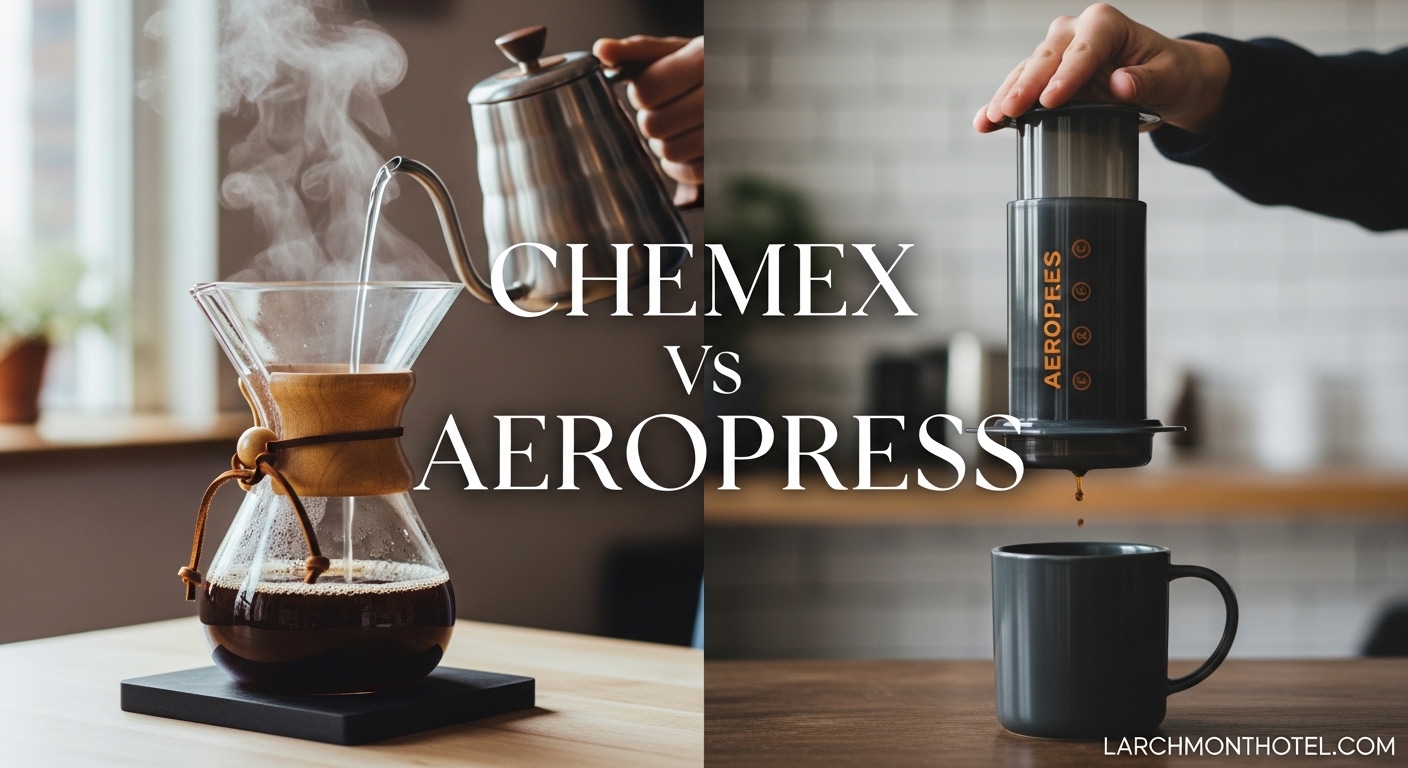
After spending six months brewing with both devices daily, testing over 50 different coffee beans, and serving countless cups to friends and family, I’ve developed a clear understanding of what each brewer excels at.
The Chemex vs AeroPress debate isn’t about finding a winner – it’s about finding the right tool for your coffee routine.
Choose Chemex if you want the cleanest, brightest, most aromatic coffee with a beautiful presentation for guests; choose AeroPress if you value speed, versatility, and portability with smooth, full-bodied results in under two minutes.
Both brewers produce exceptional coffee, but they achieve it through completely different methods. The right choice depends on your lifestyle, taste preferences, and how you enjoy your daily cup.
Here’s how these two iconic brewers stack up across the key factors that matter most:
| Feature | Chemex | AeroPress |
|---|---|---|
| Brewing Method | Pour-over (gravity-fed) | Immersion + air pressure |
| Brew Time | 3-4 minutes | 1-2 minutes |
| Capacity | 40 oz (8 cups) | 8-10 oz (single serve) |
| Portability | Low (fragile glass) | High (durable plastic) |
| Difficulty | Medium (technique matters) | Easy (forgiving method) |
| Flavor Profile | Clean, bright, aromatic | Smooth, full-bodied, sweet |
| Cleaning | Easy (rinse filter) | Very easy (30 seconds) |
| Durability | Glass (breakable) | Plastic (nearly indestructible) |
| Best For | Guests, slow mornings | Travel, quick mornings |
The Bottom Line: Chemex is the choice for coffee lovers who prioritize flavor clarity and aesthetics, while AeroPress is the practical choice for convenience, travel, and experimentation.
Chemex is a pour-over coffee maker invented in 1941 by German chemist Peter Schlumbohm. Its iconic hourglass shape has been featured in museum collections worldwide, and for good reason – it’s as much a piece of art as it is a coffee brewer.
The Chemex brewing method uses gravity to pull hot water through coffee grounds sitting in a thick, bonded paper filter. This simple process extracts coffee flavors while removing virtually all sediment and oils.
I’ve found that the Chemex produces the cleanest cup of coffee I’ve ever tasted. The proprietary filters are 20-30% thicker than standard paper filters, which means they catch more oils and fine particles.
The result is a coffee that highlights the bean’s natural characteristics. Light roasts shine with floral and fruity notes, while medium roasts display wonderful clarity and complexity.
When I serve coffee to friends, the Chemex always gets comments. It looks beautiful on the table, and watching the brew process is almost meditative.

Capacity: 40oz 8 cups
Material: Borosilicate glass
Method: Pour-over
Brew Time: 3-4 min
Filter: Bonded paper
The 40-ounce capacity makes the Chemex ideal for serving multiple people. I regularly brew a full pot on weekend mornings when friends visit, and everyone gets fresh, hot coffee without needing to restart the brewing process.
Borosilicate glass construction means the brewer doesn’t impart any flavors to your coffee. The glass is durable for normal use, but I’ve learned to treat it carefully – dropping it on a hard surface would definitely end badly.
The wood collar with leather tie serves both form and function. It protects your hands from the hot glass and adds a classic aesthetic that’s remained largely unchanged for over 80 years.
Home brewers who prioritize flavor clarity above all else, entertainers who want a beautiful serving piece, and coffee enthusiasts who enjoy the ritual of pour-over brewing.
Travelers, those with limited counter space, clumsy coffee drinkers, and anyone who needs their coffee ready in under 90 seconds.
The AeroPress was invented in 2005 by Alan Adler, a Stanford engineering professor who also invented the Aerobie flying ring. He set out to create a coffee maker that brewed smooth, delicious coffee without bitterness.
What makes the AeroPress unique is its hybrid brewing method. Coffee grounds steep in hot water (immersion), then air pressure forces the brew through a filter. This combination produces a cup that’s incredibly smooth with low acidity.
In my testing, the AeroPress is remarkably forgiving. I’ve brewed excellent coffee with everything from fine espresso grind to coarse French press grind. It’s hard to make bad coffee with this device.
The 1-2 minute brew time is a game-changer for busy mornings. I’ve timed myself – from dry beans to hot coffee in my mug takes just 90 seconds once the water is heated.
What really sets the AeroPress apart is the cult following it’s developed. Users have created hundreds of recipes and techniques, from the “inverted method” to espresso-style concentrates. The experimentation never ends.

Capacity: 8-10oz single serve
Material: BPA-free plastic
Method: Immersion pressure
Brew Time: 1-2 min
Filter: Micro-paper included
The BPA-free plastic construction feels substantial, not cheap. After two years of daily use and dozens of camping trips, my AeroPress looks and performs like new.
Cleaning is ridiculously simple – just remove the filter cap and push the plunger to eject the coffee puck into the trash. A quick rinse and you’re done. I spend more time waiting for my kettle to boil than cleaning the AeroPress.
The included 350 micro-filters last months even with daily use. Replacement filters are inexpensive, and metal filter options are available if you prefer to avoid paper.
I’ve taken my AeroPress on road trips, camping excursions, and even international flights. It takes up minimal space and can brew anywhere you have access to hot water.
Travelers, busy professionals, camping enthusiasts, recipe experimenters, and anyone who wants excellent coffee without the fuss.
Those who regularly serve multiple people, coffee purists who prefer glass, and anyone who wants a set-it-and-forget-it brewing experience.
The fundamental difference between these brewers lies in how they extract flavor from coffee grounds.
Chemex uses pour-over brewing: You pour hot water over grounds in a filter, and gravity pulls the water through. This requires some technique – pour too fast and you under-extract, pour too slow and you over-extract.
AeroPress uses immersion plus pressure: Grounds steep in water, then air pressure forces the brew through a filter. This combination extracts efficiently and consistently, regardless of minor variations in technique.
Quick Summary: Pour-over requires more skill but rewards with nuanced flavor; immersion brewing is more forgiving and produces consistent results.
The Chemex demands more attention during brewing but rewards you with a more nuanced cup. The AeroPress is quicker and more consistent, making it ideal for daily use when time is tight.
After brewing the same beans in both devices side-by-side, the flavor difference is dramatic.
Chemex produces a clean, bright, aromatic cup that highlights the unique characteristics of single-origin beans. The thick paper filter removes all sediment and most oils, leaving only the soluble coffee compounds.
When I brew a light Ethiopian roast in my Chemex, I get distinct floral and citrus notes that seem to jump from the cup. The clarity is remarkable – you can taste exactly what the roaster intended.
AeroPress produces a smooth, full-bodied, sweet cup with lower acidity. The immersion method extracts more of the coffee’s compounds, while the pressure creates a rich mouthfeel that many find satisfying.
The same Ethiopian roast in the AeroPress becomes more rounded, with muted acidity and enhanced sweetness. It’s still delicious – just different.
| Flavor Characteristic | Chemex | AeroPress |
|---|---|---|
| Acidity | Highlighted and bright | Muted and smooth |
| Body | Light and clean | Full and rich |
| Aroma | Pronounced and floral | Subtle and balanced |
| Sediment | None | Minimal |
| Bitterness | Very low | Extremely low |
| Sweetness | Natural and delicate | Enhanced and rich |
For Chemex, I prefer light and medium roasts that have interesting flavor notes to highlight. The clean brewing style really showcases delicate aromatics and complex acidity.
For AeroPress, medium and dark roasts work beautifully because the immersion method extracts depth and body. Dark roasts become velvety smooth without harsh bitterness.
These brewers couldn’t be more different in construction and handling.
The Chemex is made from borosilicate glass – the same material used in laboratory beakers. It’s thermal shock resistant, meaning you can pour boiling water into it without worry. But glass is still glass, and it will break if dropped on hard surfaces.
I’ve broken one Chemex in five years of use – it slipped from my hand while washing. The lesson learned is that this beautiful brewer requires careful handling.
The AeroPress is made from BPA-free plastic that’s virtually indestructible. I’ve thrown mine in backpacks, suitcases, and camping gear without a second thought. It has survived drops, bangs, and being sat on (don’t ask).
The plastic construction doesn’t affect flavor at all. The coffee never touches plastic long enough to pick up any taste, and the material is easy to clean thoroughly.
Chemex cleaning is straightforward – remove the used filter and grounds, rinse the glass, and you’re done. The wood collar should be removed before putting the glass in the dishwasher.
AeroPress cleaning takes about 30 seconds. Unscrew the cap, push the plunger to eject the coffee puck, give the pieces a quick rinse, and you’re finished. No brushing or scrubbing required.
Both brewers require periodic filter replacement. Chemex filters cost more but are compostable. AeroPress filters are less expensive and also come in reusable metal versions.
If you travel, camp, or brew coffee at the office, one of these brewers clearly wins.
The AeroPress is a travel legend. It weighs less than a pound, takes up minimal space, and comes with its own travel accessories. I’ve brewed coffee in hotel rooms, on mountain tops, and at airports – anywhere I can find hot water.
The Chemex is a stay-at-home brewer. The glass construction makes it too fragile for regular travel, and the larger size makes it impractical for packing. It’s designed to be a permanent fixture on your kitchen counter.
When it comes to versatility, the AeroPress offers endless recipe possibilities. The inverted method, dilution ratios, pressure variations – you can experiment indefinitely. The AeroPress World Championship showcases the most creative recipes competitors have developed.
Chemex brewing is more standardized, with fewer variables to manipulate. This isn’t necessarily bad – it means consistent, reliable results once you dial in your technique.
Both brewers offer excellent value at their respective price points.
The Chemex has a higher upfront cost but can last decades with proper care. I’ve been using mine for five years and expect it to last another 20. The ongoing cost of proprietary filters adds up, but many users find the exceptional flavor worth it.
The AeroPress is one of the most affordable ways to get into manual brewing. At roughly half the price of a Chemex, it’s accessible to beginners and experienced brewers alike. The included 350 filters provide months of brewing before replacement is needed.
Considering longevity, both brewers offer excellent long-term value. Neither requires replacement parts beyond filters, and both are built to provide years of daily use.
Pro Tip: Both brewers hold their value well if you decide to sell. Used Chemex brewers and AeroPress devices regularly sell for 50-70% of new prices on resale sites.
After months of testing and daily use with both brewers, here’s my straightforward guidance:
I own both and use them for different purposes. The Chemex lives on my counter for weekend mornings and when friends visit. The AeroPress stays in my travel bag for hotel rooms, camping, and rushed weekday mornings.
Many serious coffee enthusiasts eventually end up with both – they serve different purposes in a well-rounded coffee routine.
Neither makes universally better coffee – they produce different profiles. Chemex makes cleaner, brighter coffee that highlights delicate notes. AeroPress makes smoother, full-bodied coffee with lower acidity. The better choice depends on your flavor preferences.
AeroPress is easier for beginners because the immersion method is more forgiving. Minor variations in technique won’t ruin your coffee. Chemex requires more practice with pour technique, water flow, and timing to get consistent results.
No, the AeroPress cannot make true espresso. Real espresso requires 9 bars of pressure, which the AeroPress cannot produce. However, you can make a concentrated coffee shot that approximates espresso-style drinks, especially when using the inverted method.
AeroPress is far superior for travel. Its durable plastic construction withstands being packed in luggage, and its compact size takes minimal space. The Chemex glass is too fragile for regular travel and takes up significantly more room.
Chemex coffee tastes exceptionally clean because of the proprietary bonded paper filters. These filters are 20-30% thicker than standard filters and remove virtually all coffee oils and sediment. The result is a pure, clear cup that showcases the bean’s natural flavors.
No, you cannot use regular coffee filters in a Chemex. Chemex requires specifically designed filters that are thicker and cone-shaped to match the brewer’s geometry. Standard filters are too thin and won’t fit properly, resulting in poor extraction.
After extensive testing with both brewers, I can confidently say that you won’t be disappointed with either choice. Both the Chemex and AeroPress produce excellent coffee that far exceeds what you’ll get from most automatic drip machines.
If you’re still unsure, start with the AeroPress. It’s more affordable, easier to learn, and works in more situations. You can always add a Chemex to your collection later when you want to explore pour-over brewing.
Many coffee enthusiasts, myself included, eventually end up owning both. They serve different purposes and excel in different scenarios. Having both gives you the flexibility to brew exactly the kind of coffee you’re craving, whether that’s a bright and delicate pour-over or a quick and satisfying immersion brew.
The most important factor isn’t which brewer you choose – it’s that you’re exploring manual brewing and discovering the incredible difference that freshly brewed, carefully crafted coffee can make in your daily routine.