

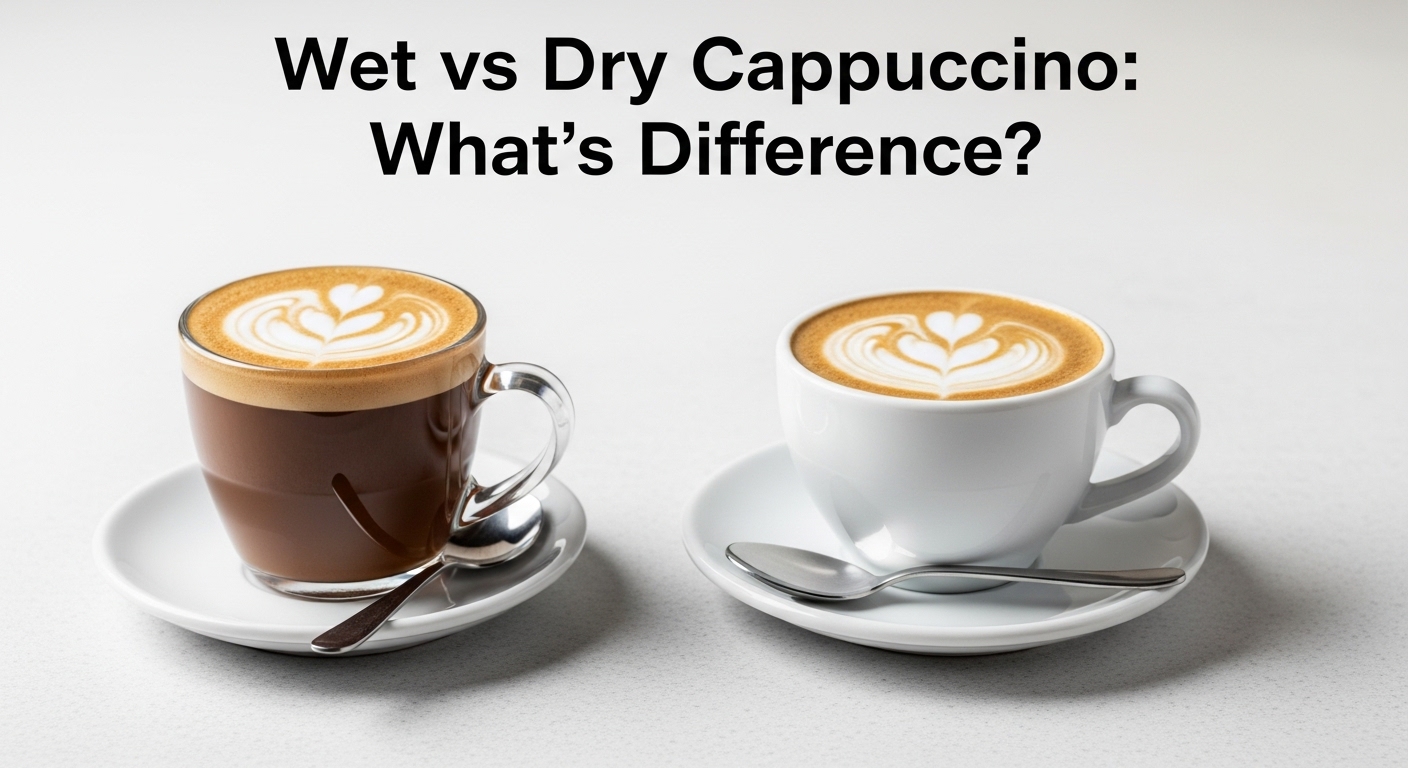
The difference between wet and dry cappuccino comes down to the ratio of steamed milk to foam. A wet cappuccino has more steamed milk and less foam, making it creamier and milder. A dry cappuccino has more foam and less steamed milk, resulting in a stronger espresso flavor with a thick, airy foam layer on top.
I’ve spent years working in coffee shops and sampling cappuccinos across different cities. The confusion between these two styles is incredibly common. Even experienced coffee drinkers sometimes struggle to articulate exactly what they want when ordering.
This guide will help you understand the differences, know which one suits your taste, and order with confidence next time you’re at a coffee counter.
A dry cappuccino is an espresso drink with a thick layer of microfoam and minimal steamed milk. The term “dry” refers to the lack of liquid milk, creating a drink dominated by stiff, airy foam.
Traditional Italian cappuccinos are actually closer to what we now call dry. The classic ratio is one-third espresso, one-third steamed milk, and one-third foam. A dry version pushes that even further with significantly more foam than milk.
The foam in a properly made dry cappuccino should be thick enough to hold a spoon. I’ve seen skilled baristas create foam so stable that you could literally carry the cup upside down without spilling. This dense layer insulates the espresso, keeping it hot longer.
When you drink a dry cappuccino, you experience the espresso first and most prominently. The foam adds texture without diluting the coffee’s intensity. Each sip starts with bold espresso and finishes with the light, creamy sweetness of the foam.
After testing both styles extensively, I found dry cappuccinos perfect for morning drinking when you want maximum coffee flavor. The foam layer also provides an ideal canvas for latte art, though the stiff texture makes intricate designs challenging.
A wet cappuccino is an espresso drink with more steamed milk and less foam than the traditional version. This creates a creamier, smoother drink that bridges the gap between a standard cappuccino and a latte.
The wet style emerged as American coffee culture developed. Many drinkers found traditional cappuccinos too intense and began requesting milkier versions. Baristas responded by increasing the steamed milk ratio while reducing the foam layer.
In my experience testing various coffee shops, wet cappuccinos typically contain roughly equal parts espresso and steamed milk, with just a thin layer of foam on top. The steamed milk is velvety and integrates seamlessly with the espresso.
The taste profile is noticeably milder than a dry cappuccino. The increased milk volume cuts the espresso’s bitterness and creates a smoother, more approachable drink. This makes wet cappuccinos appealing for newer coffee drinkers or those who find straight espresso too intense.
I’ve observed that wet cappuccinos are often the default in many American coffee shops. If you don’t specify, you’ll likely receive something closer to the wet style. This isn’t necessarily bad, but it’s worth knowing if you have a preference.
The key difference between wet and dry cappuccino is the milk-to-foam ratio. Dry emphasizes foam and espresso intensity, while wet emphasizes steamed milk and creaminess.
| Feature | Dry Cappuccino | Wet Cappuccino |
|---|---|---|
| Steamed Milk | Minimal (1-2 ounces) | Generous (3-4 ounces) |
| Foam Layer | Thick, stiff (2+ inches) | Thin, light (0.5-1 inch) |
| Coffee Strength | Bold, pronounced | Mild, balanced |
| Texture | Airy, light | Creamy, velvety |
| Temperature | Stays hot longer | Cools more quickly |
| Best For | Espresso purists | Mild coffee drinkers |
After serving hundreds of customers and watching their reactions, I’ve noticed clear preferences. Regular coffee drinkers often migrate toward the dry style as their palates develop, while casual drinkers tend to prefer the wet version’s approachability.
The strength difference is significant. A dry cappuccino delivers espresso flavor with minimal dilution. Each sip tastes primarily of coffee, with foam adding sweetness without much volume. A wet cappuccino tastes more like a balanced coffee-milk beverage, similar to a latte but with slightly more intensity.
Texture differences are equally pronounced. Dry cappuccinos feel lighter and airier due to the foam dominance. Wet cappuccinos feel heavier and more substantial because of the increased liquid milk volume. This affects mouthfeel and overall drinking experience.
Beyond wet and dry, you’ll encounter extreme variations at specialty coffee shops. Understanding these terms helps you order exactly what you want.
A bone dry cappuccino contains only espresso and foam, with absolutely no steamed milk. The foam sits directly atop the espresso shot with no liquid milk in between. This is the most extreme foam-forward version.
I’ve found bone dry cappuccinos to be polarizing. Espresso enthusiasts love them for maximum coffee intensity. Others find them too intense or difficult to drink, as you’re essentially consuming straight espresso topped with airy foam.
A super wet cappuccino pushes toward latte territory with minimal foam. It contains just a thin foam cap atop generous steamed milk. This version is essentially a latte with a slightly smaller volume and perhaps a touch more espresso intensity.
The traditional Italian cappuccino follows a 1:1:1 ratio of espresso, steamed milk, and foam. This sits between wet and dry by modern American standards. If you’re unsure what to order, asking for a “traditional cappuccino” typically yields this balanced middle ground.
Quick Tip: When ordering, you can specify your preference by saying “extra dry” for more foam or “extra wet” for more milk. Most baristas understand these terms immediately.
Ordering with confidence starts with knowing exactly what to say. Use these phrases to get your ideal cappuccino:
Don’t be afraid to specify your preference. Good baristas appreciate clear instructions and want you to enjoy your drink. I’ve found that most coffee professionals prefer you ask than receive something you won’t like.
If you’re unsure what a shop’s default style is, you can always ask: “Do you make your cappuccinos more wet or dry?” This simple question has saved me from disappointing drinks many times.
After years of tasting and testing, my recommendation is to try both styles at least once. Your preference might surprise you. I initially favored wet cappuccinos but gradually developed a taste for the dry style’s intensity.
The beauty of understanding these differences is that you can order with confidence and get exactly what you want every time. Whether you prefer bold espresso punch or creamy smoothness, knowing the terminology ensures you never leave disappointed.